

When Saudi Arabia began issuing tourist visas in 2019, many observers openly wondered how this hermit kingdom could cope with the sudden birth of modern tourism. While Riyadh, Jeddah, and the two holy Islamic cities had long welcomed business travelers and religious pilgrims, the rest of the country was not accustomed to hosting foreign visitors. As part of the Saudi Vision 2030 initiative, the country’s nascent tourism sector went into overdrive. The flashiest among them are the ultra-luxury resort developments on the Red Sea, such as the otherworldly Desert Rock Resort and the Maldives-style Shebara Resort. But for average travelers on an average budget, no place is more emblematic of Saudi tourism than the fabled city of AlUla.
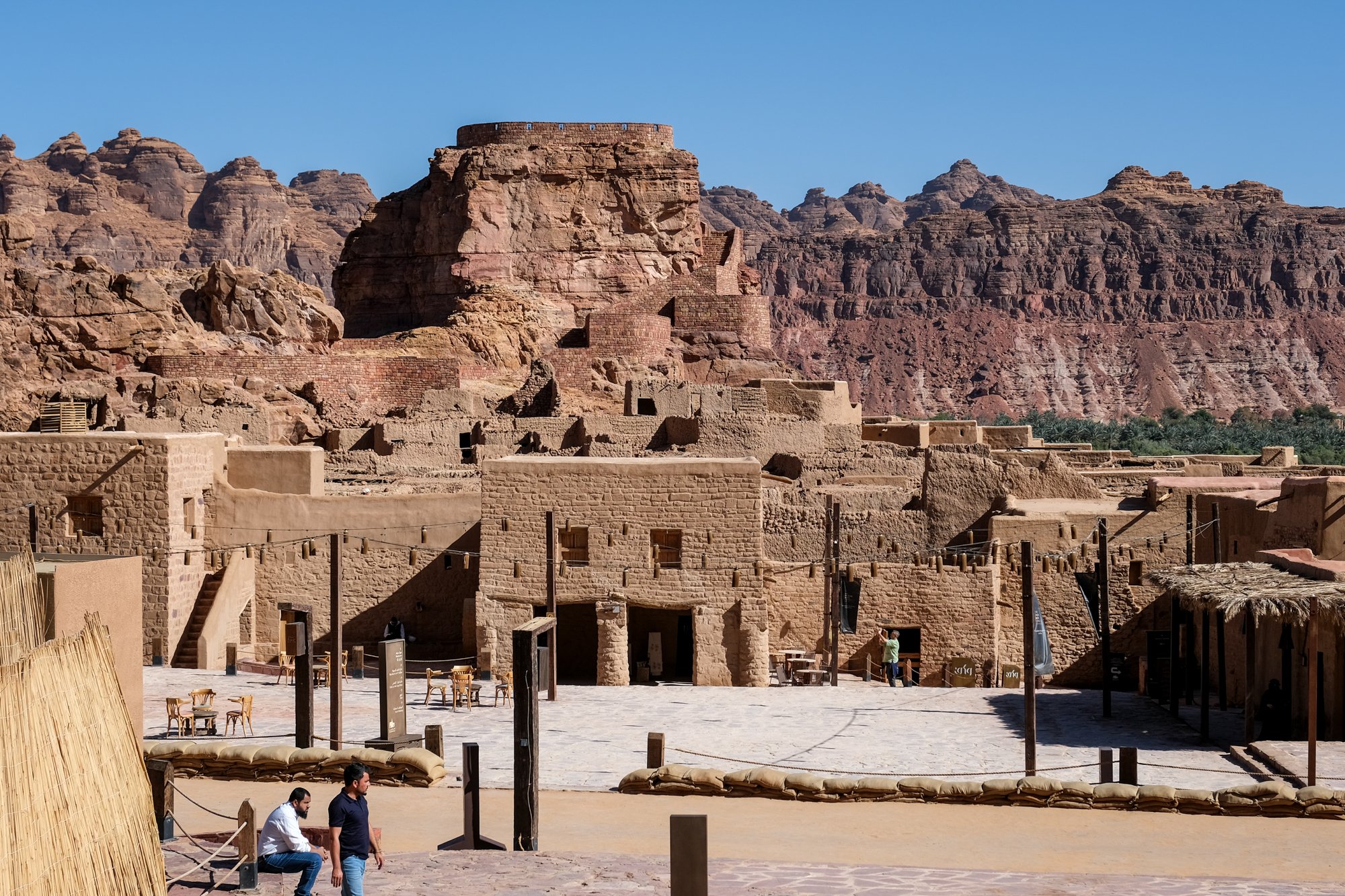
Old AlUla is the Saudi's marquee showcase of ancient Arabia.
Located in the northwest of the country, AlUla is roughly a 12-hour drive from Riyadh. Most visitors opt for a direct flight, which takes about 1 hour and 40 minutes to save time. I was thoroughly surprised that Saudia actually operated a 777-300ER on this domestic route to a city of sixty thousand in the middle of the desert. Even more amazingly, it was a sold-out flight with a healthy mix of foreign and Saudi passengers. From the moment we disembarked at the AlUla Airport, I was immediately impressed with the top-down approach to tourism. The airport terminals had live musicians and staff handing out free cups of Saudi coffee. From the website and local taxis to the road signage, AlUla's branding is remarkably consistent.
After picking up the rental car, it was a thirty-minute drive to the city center on the brand-new expressway. The modern city of AlUla looks much like any Saudi city, filled with low-rise concrete buildings. One thing that immediately jumped out to me was the number of construction cranes dotted along the town’s edge; it was clear that a builidng boom was under way. After a big roundabout, we passed by an area with earthened mound on one side and a green oasis on the other. I did not realize that that was actually the ancient city of AlUla. With no onstreet parking along the main road, I was not entirely sure how to get to the old town.
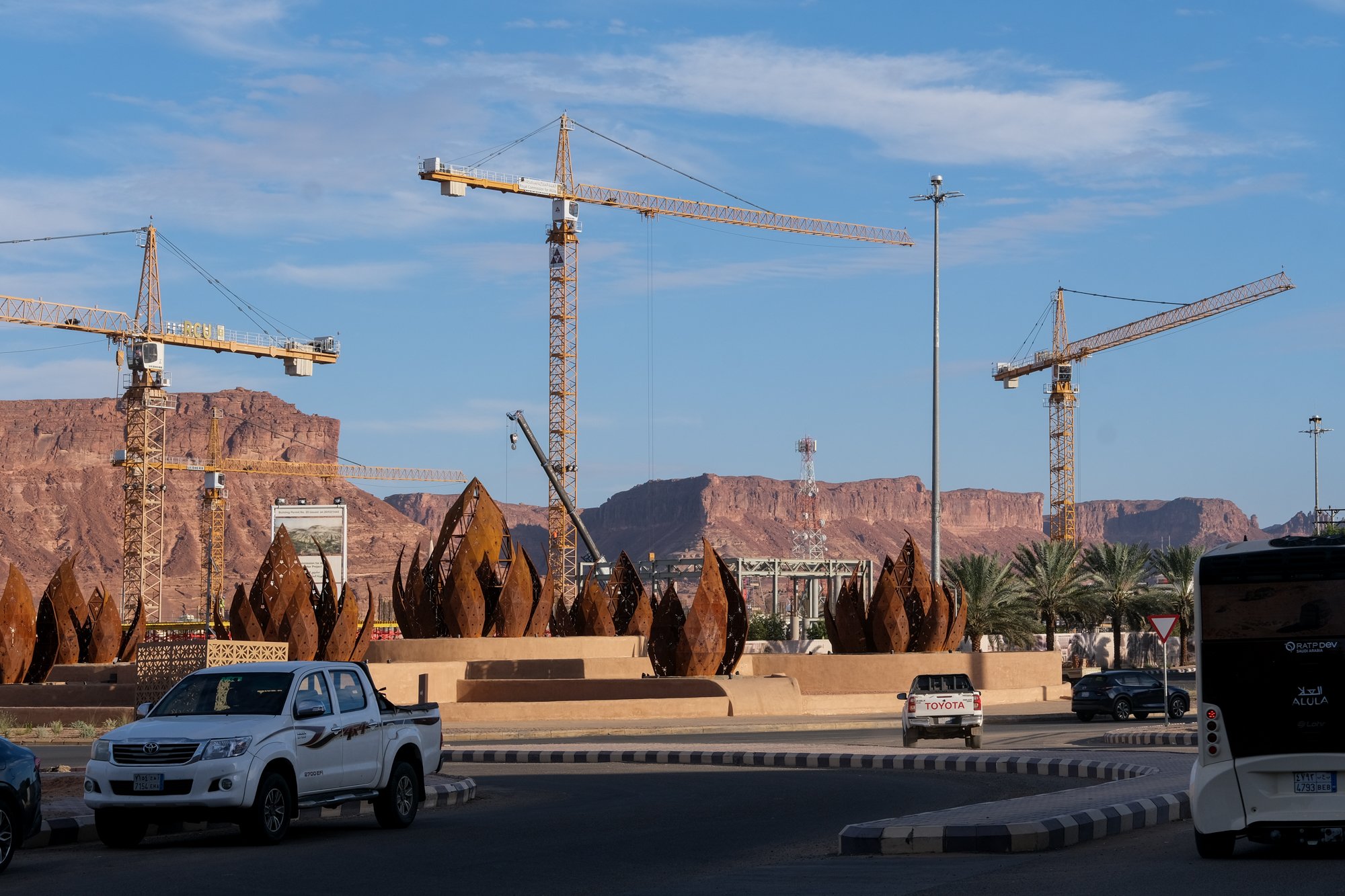
A building boom was under way in AlUla.
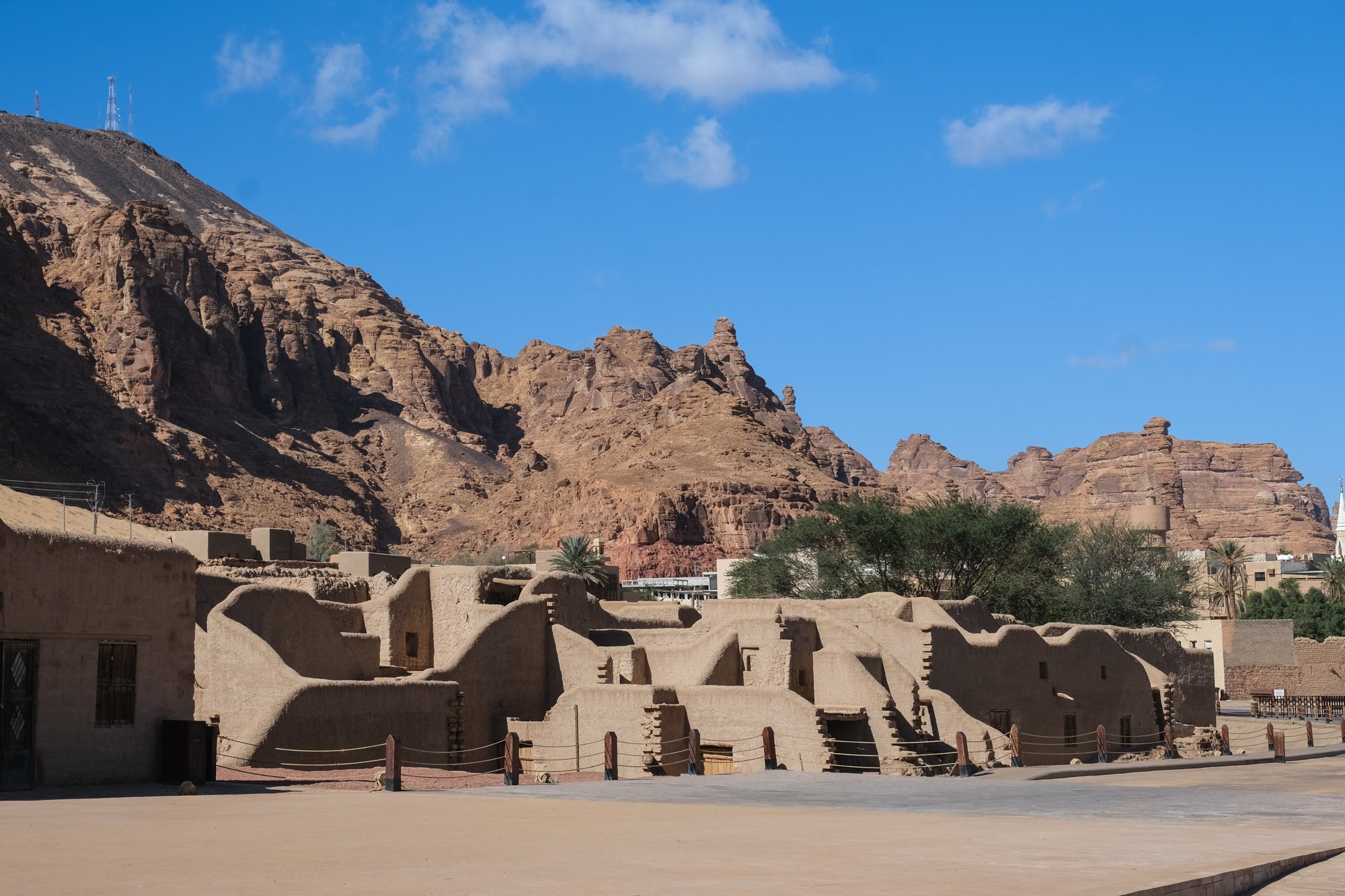
So… this is the old town?
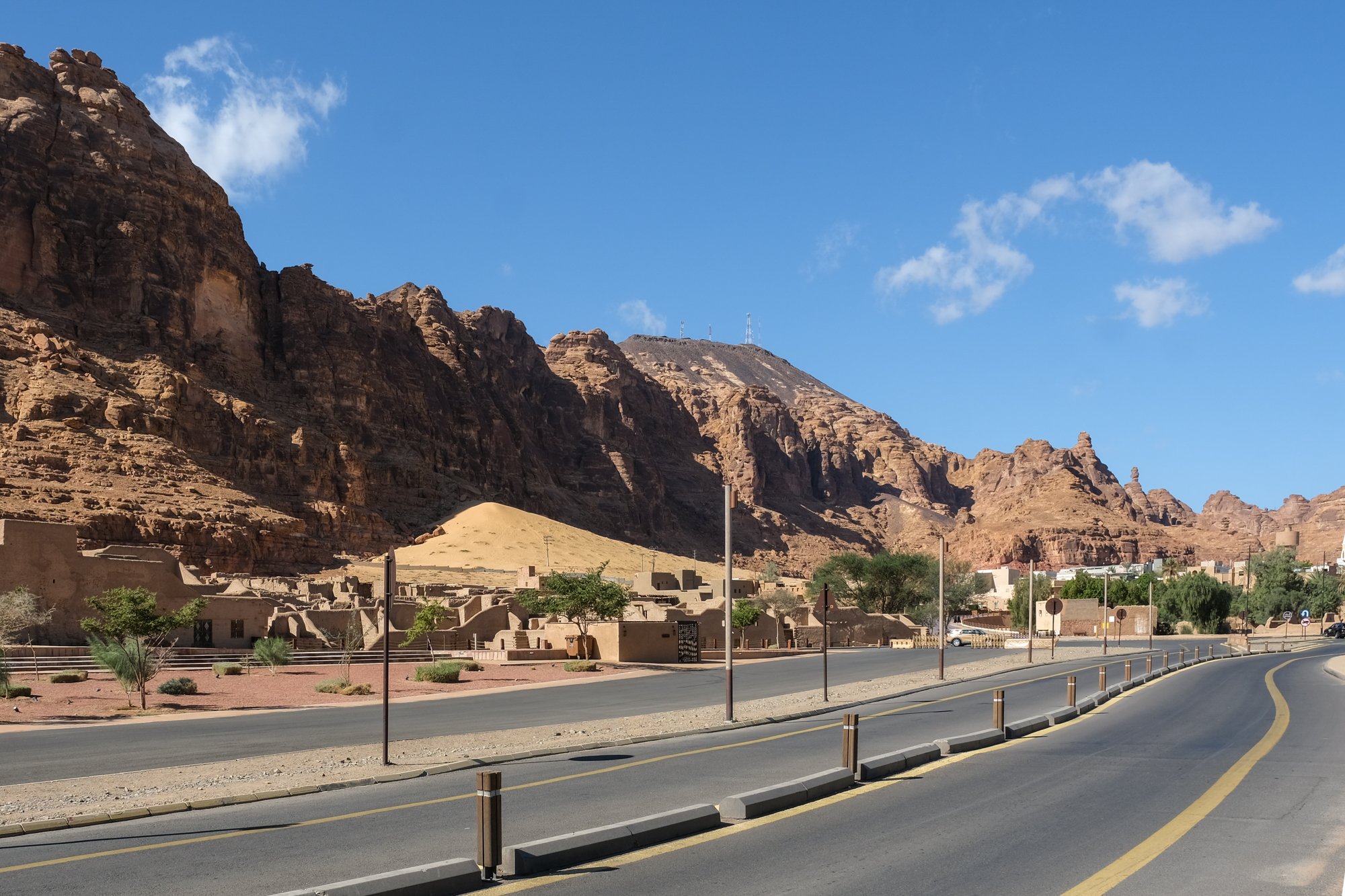
All should be forgiven for missing the old town while driving on the main road.
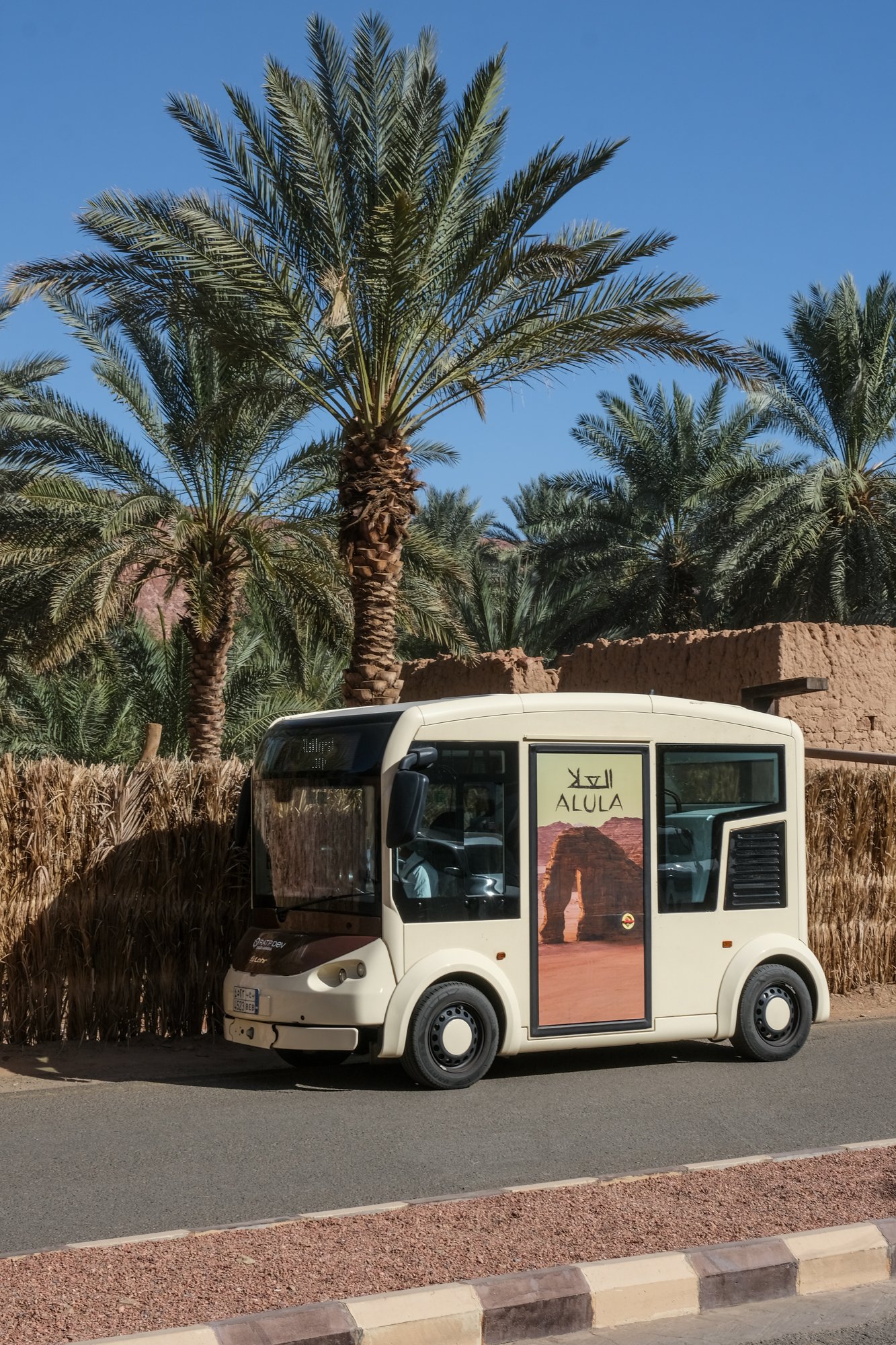
After some quick research, we found two public parking lots, one at each end of the old town. The lots are quite a distance from the old town, but the government runs an around-the-clock shuttle service that brings visitors and locals back and forth. Depending on demand, the shuttles could be either golf carts or 20-passenger electric buses. We were pleasantly surprised that most of the drivers we encountered were Saudi women in full Saudi burqa, a testament to a society in transition. The ride itself took only three and half minutes and were a stress-free experience. This simple shuttle system not only solves the parking issue but also helps preserve the town’s historic ambiance.
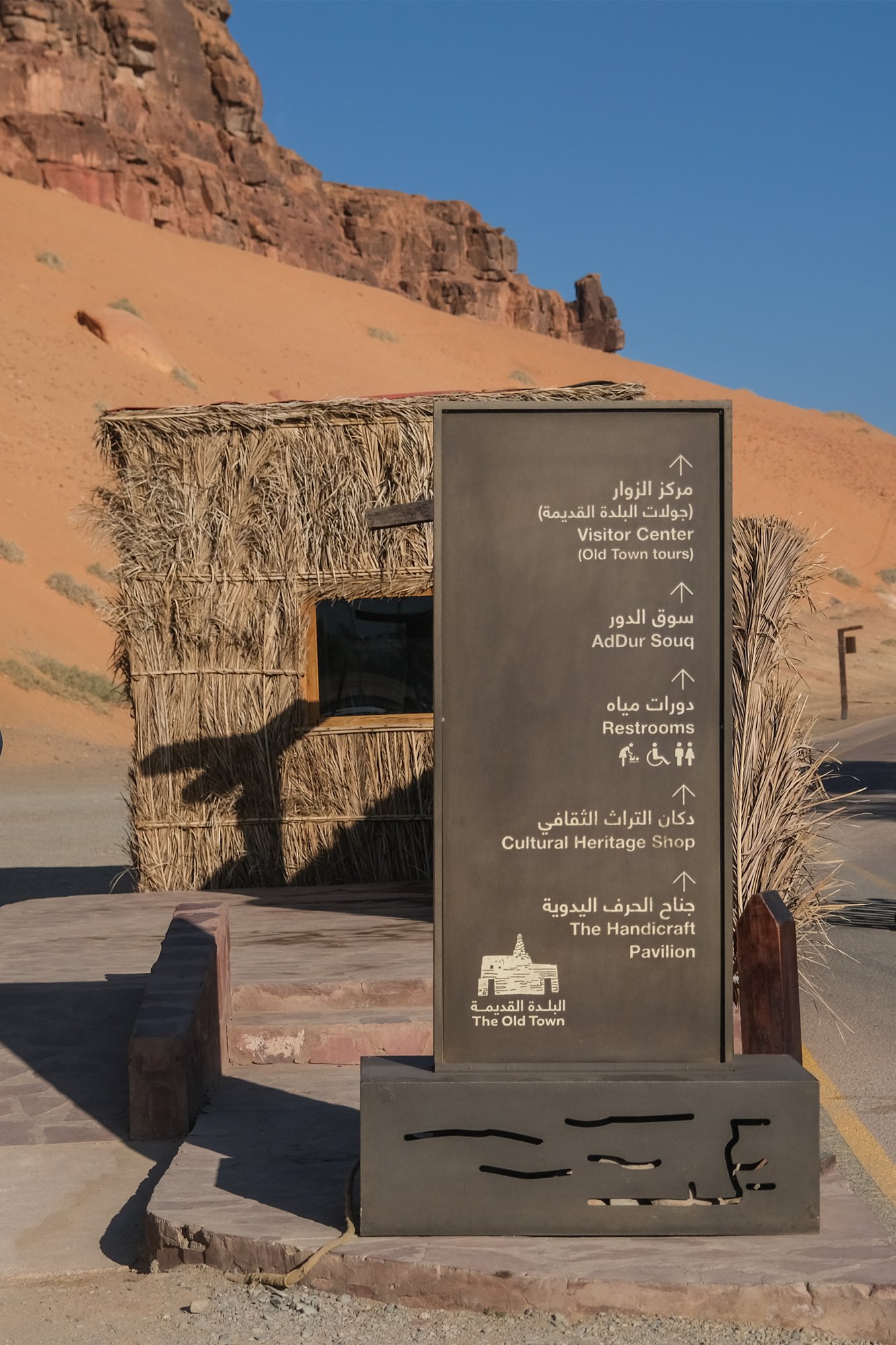
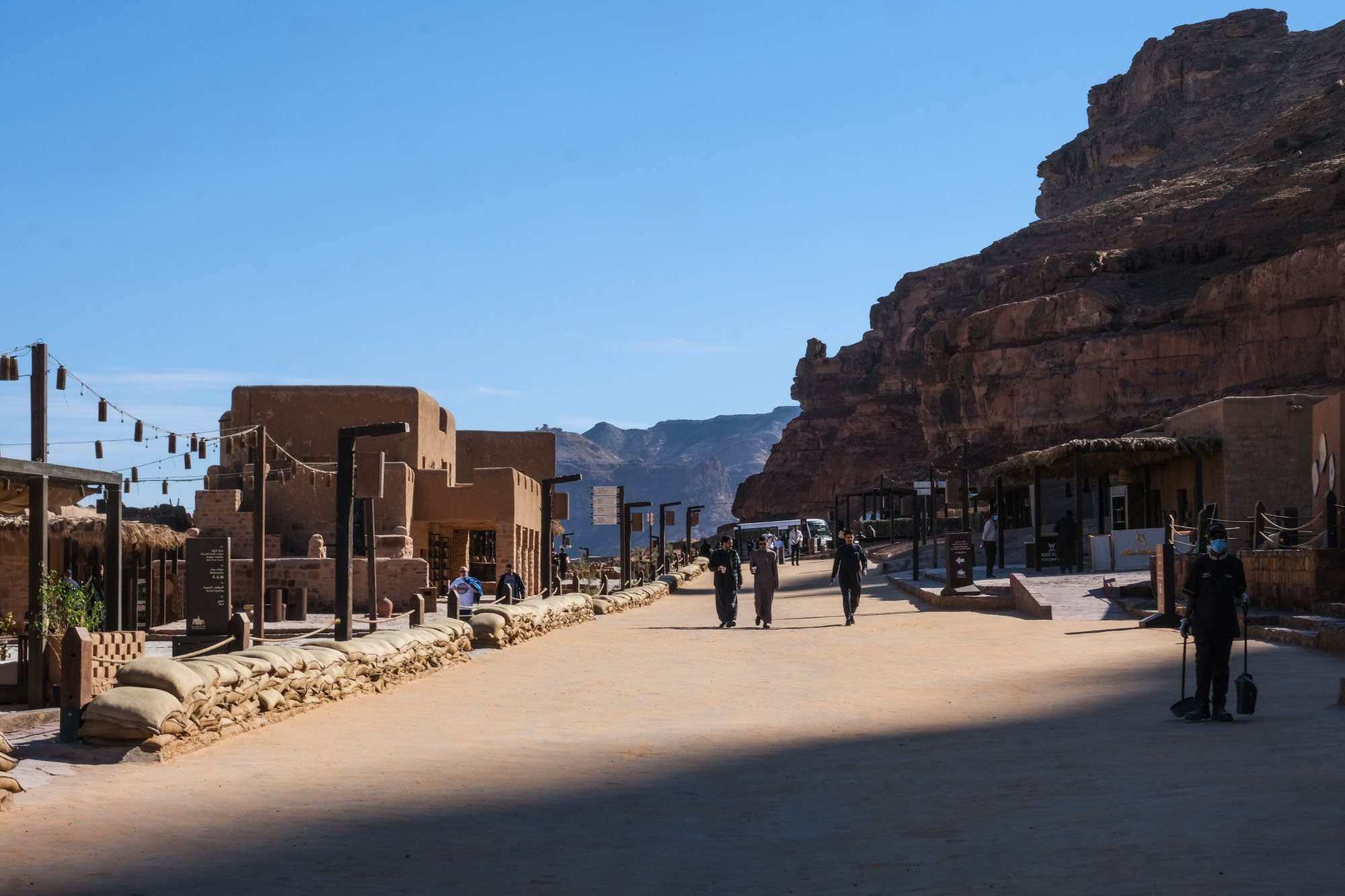
As soon as we stepped off the shuttle, it felt as if we had been transported to a different world. Today’s old town is organized around a board pedestrianized boulevard, with tall rocky sandstone cliffs on one side and the mud brick ruins. This main street was once the a major caravan route that connects Indian subcontinent with the Levant. The oasis of AlUla has been settled since the ancient time. The most notable inhabitants were the biblical Kingdom of Lihyan, which had the capital, Dedan, here in the oasis. They were succeeded by the Nabataean Kingdom, which created the fabled necopolis of Hegra. However, archaeologists believe the Old Town we see today was dated to the 12th cenruy, during which time this place was also an important pilgrimage stop between Damascus and Mecca.
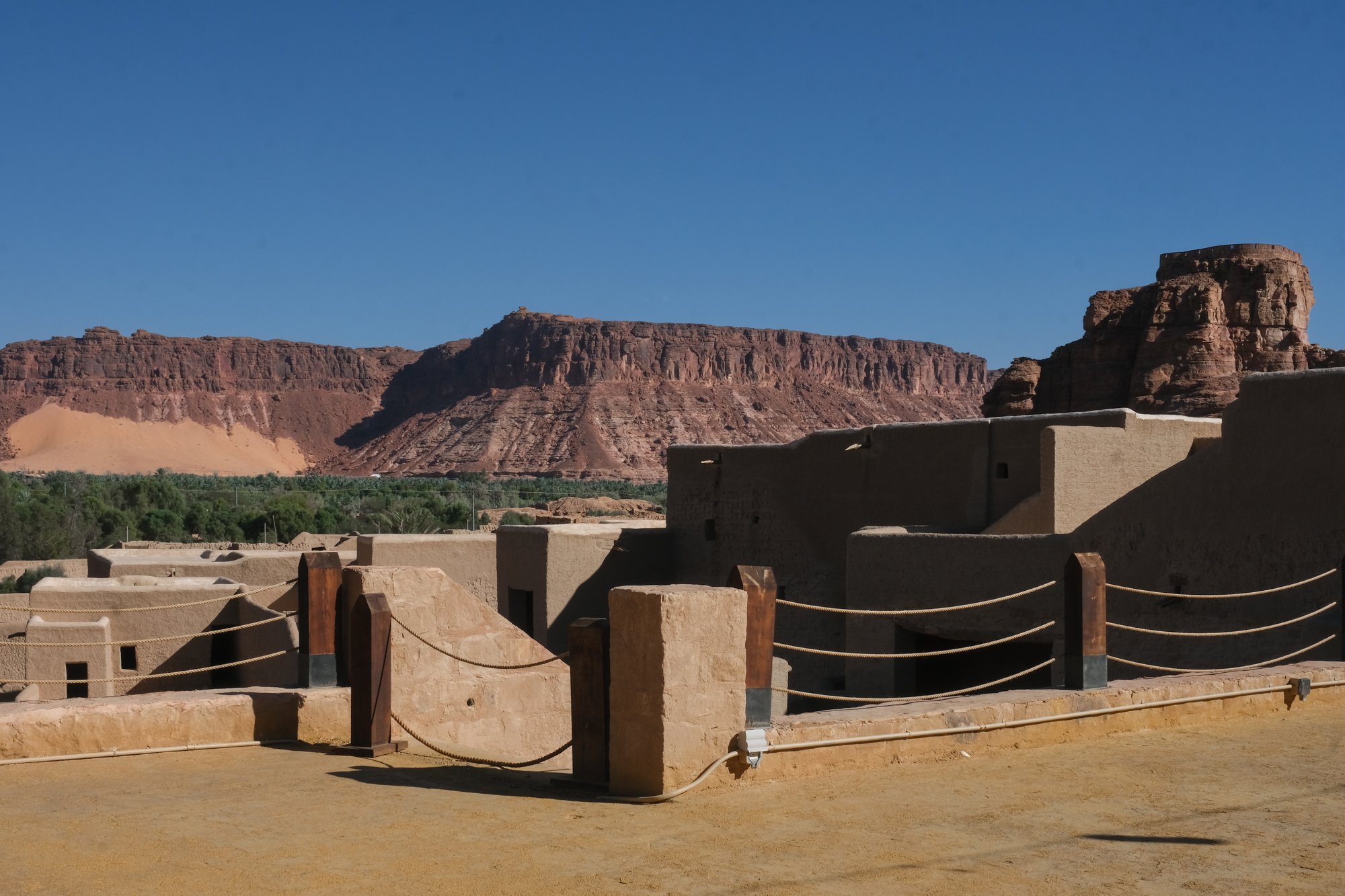
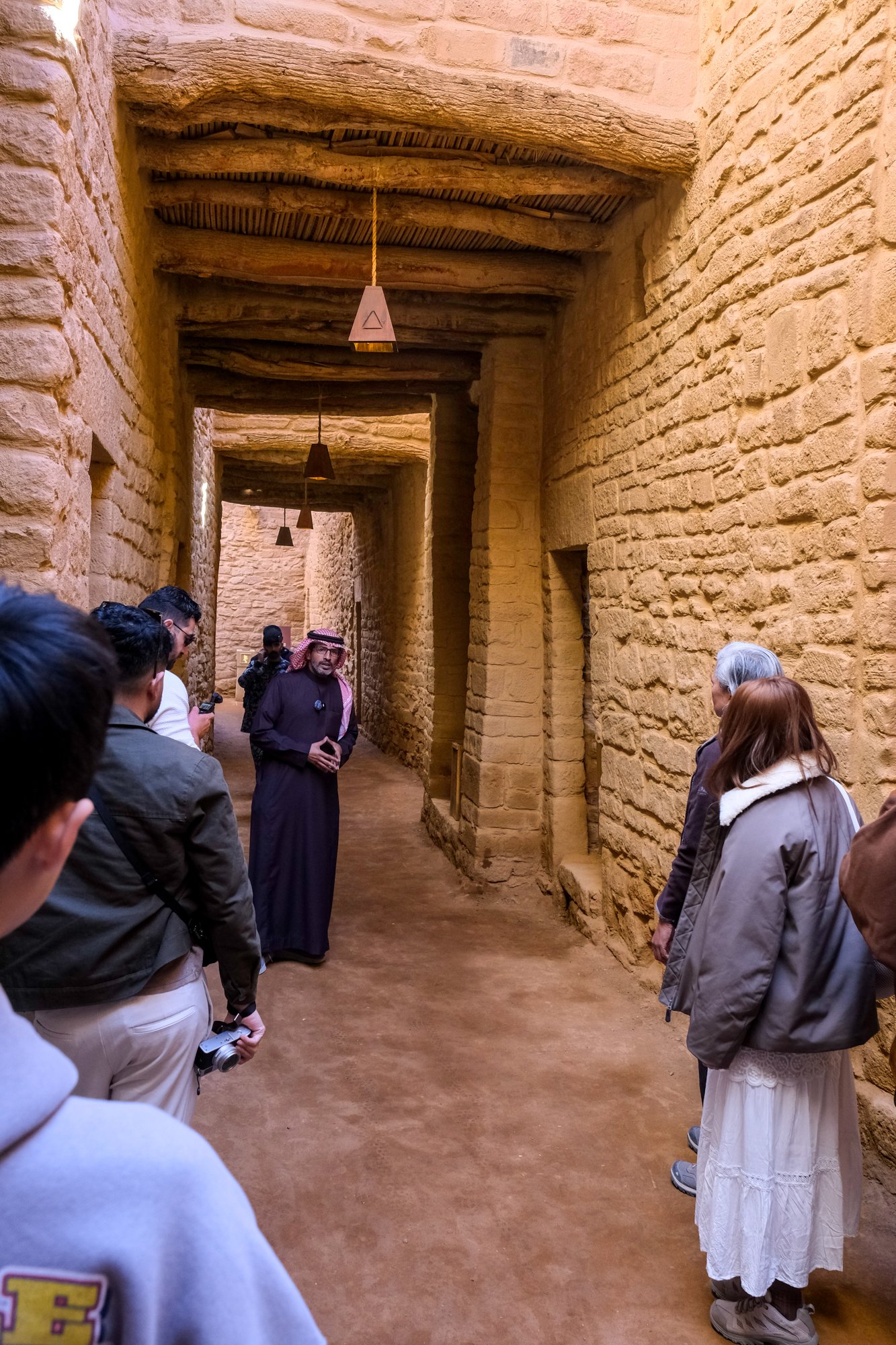
To better learn the storied history of the old town, we signed up for an official guided walk through AlUla’s official tourism website. Led by a rawi, a local storyteller, the guide led us through the narrow lanes. Described as a living time capsule, the old city was continuously occupied until the 1980s, when the government relocated the last residents to the modern town to the south. Despite its relatively compact footprint, the city has more than 900 buildings within its fortified walls. The settlement has several wells and elaborate networks of water channels for its inhabitants. Back in the day, the residents of AlUla lived on their farms in the oasis much of the year. They only migrated back to the urban home during the winter months, partly because of the cold. They relied on urban density to keep warm, so the seasonality has always been an integral part of AlUla’s identity.
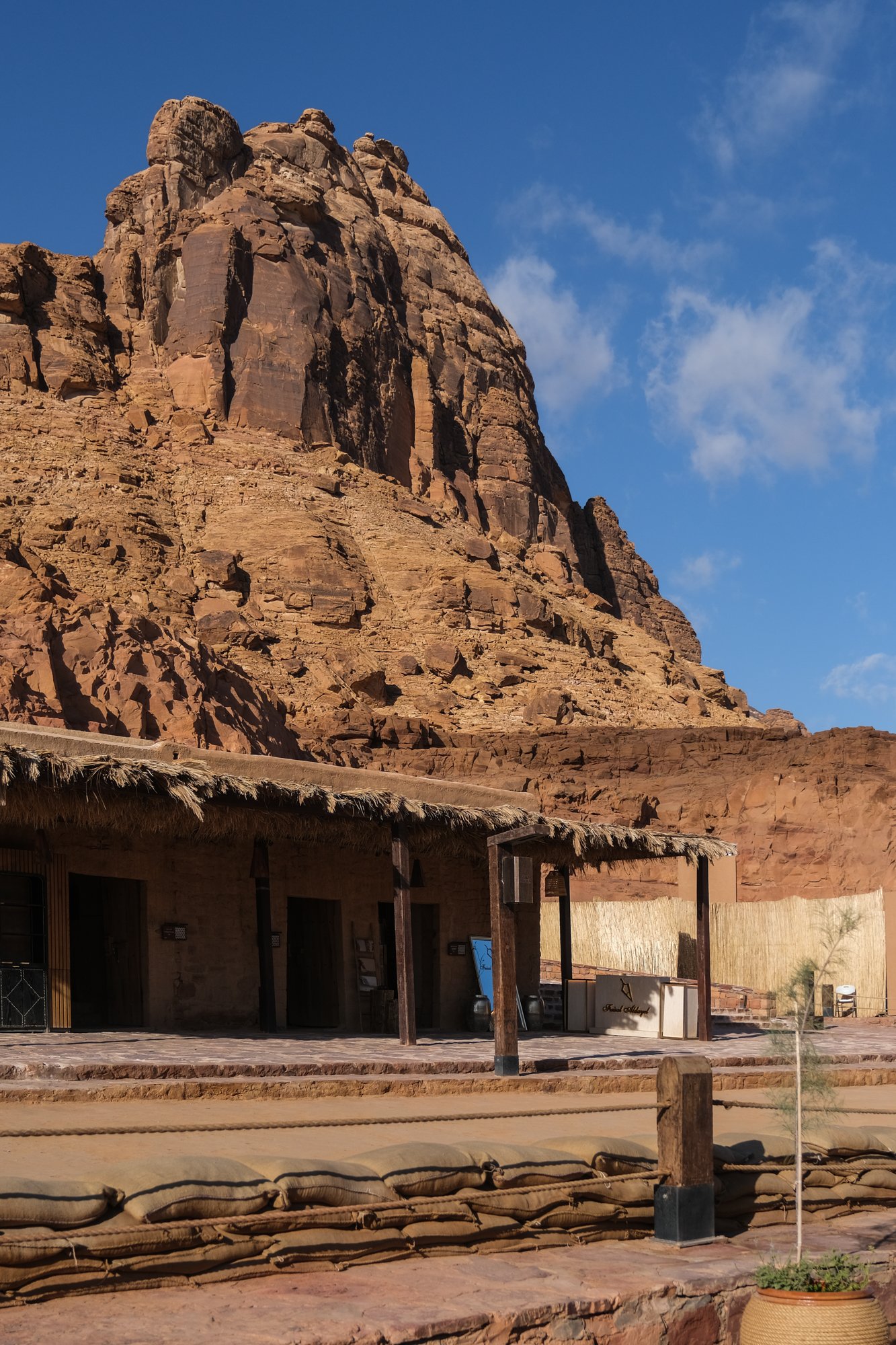
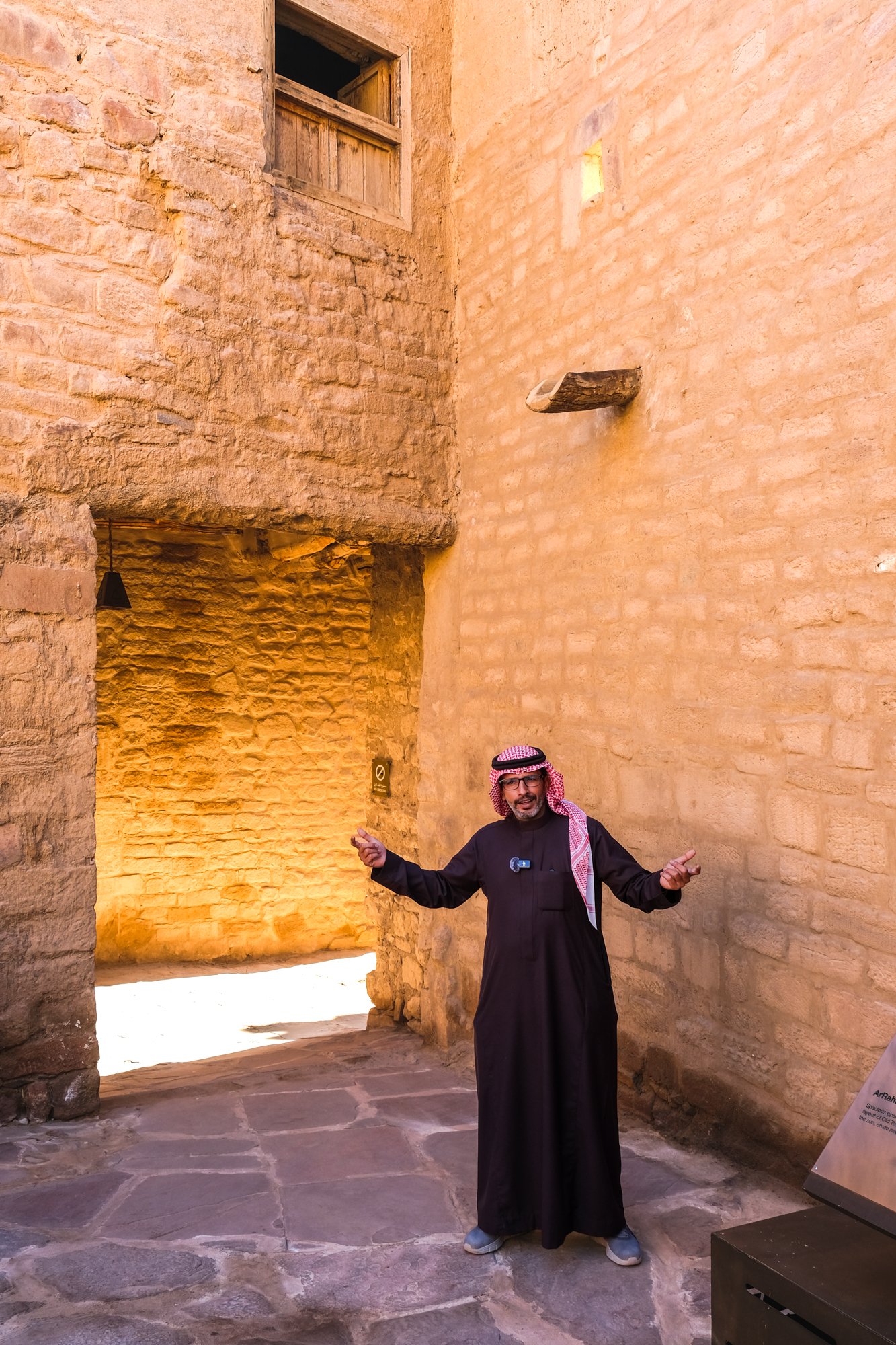
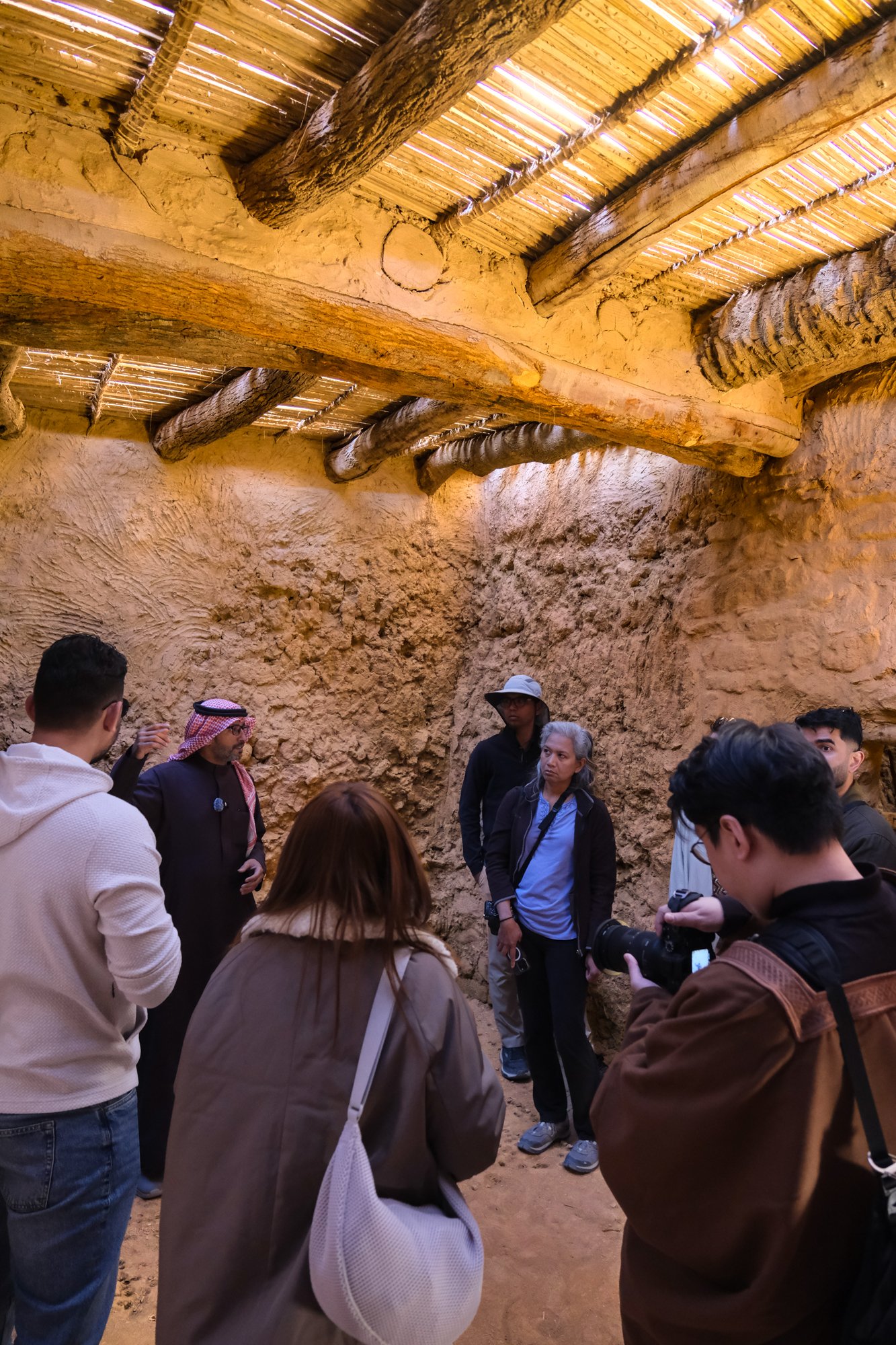
The tour led us into one of the better-restored residences. Most houses here are two stories. The ground floor was the main reception area, and the animals were kept under the staircase to provide warmth for the families upstairs. To create additional space, many families extend their upper floors over the public rights of way. As a result, the streets are well shaded throughout the years. It was unfortunate that much of modern urban development in Saudi Arabia seems to turn its back on the wisdom of its vernacular architecture. Given the rustic conditions, it was shocking that some residents stayed here as late as the 1980s. I was sure the final few residents were more than happy to leave this behind for the comfort and convenience of modern homes.
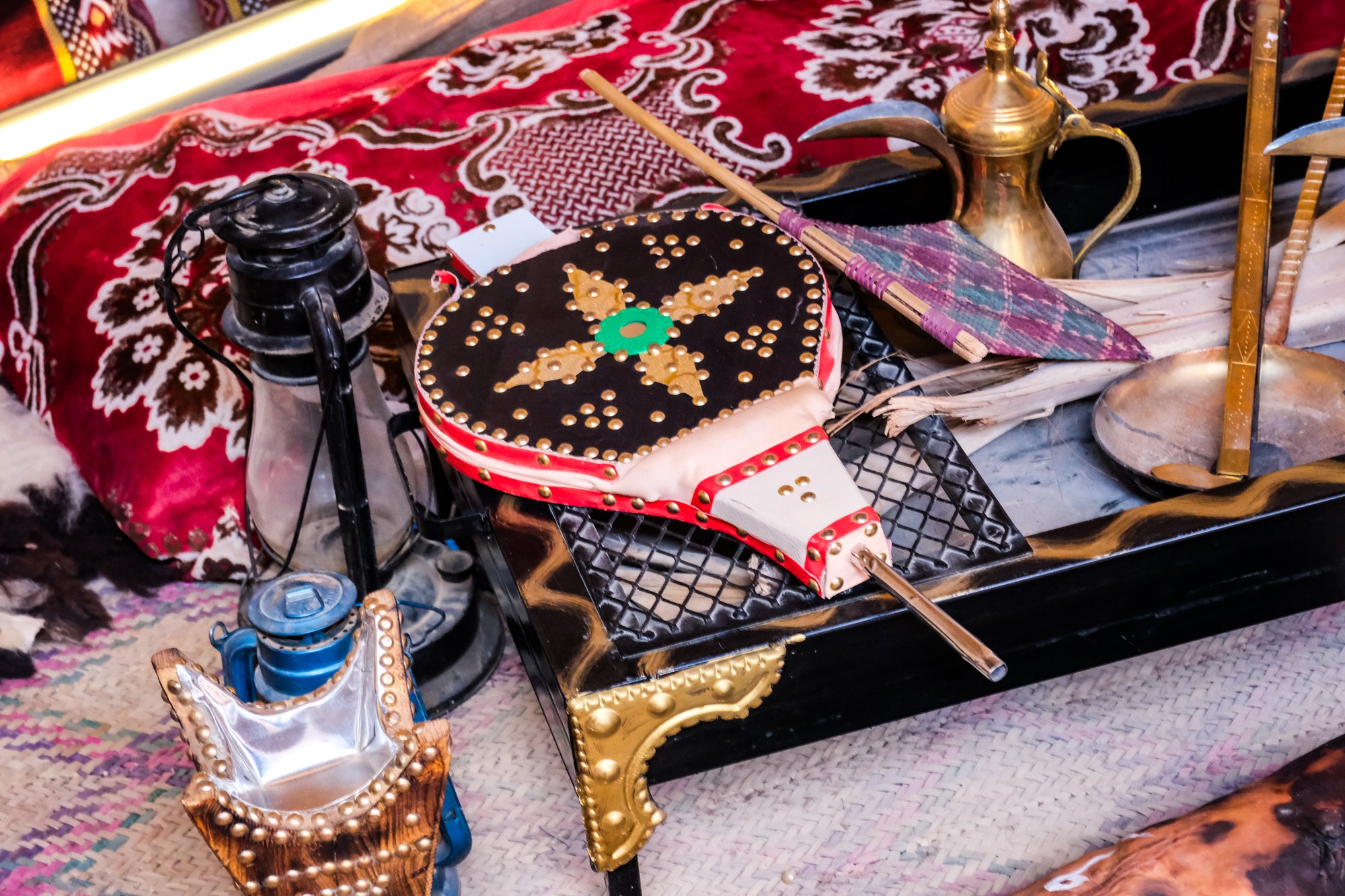
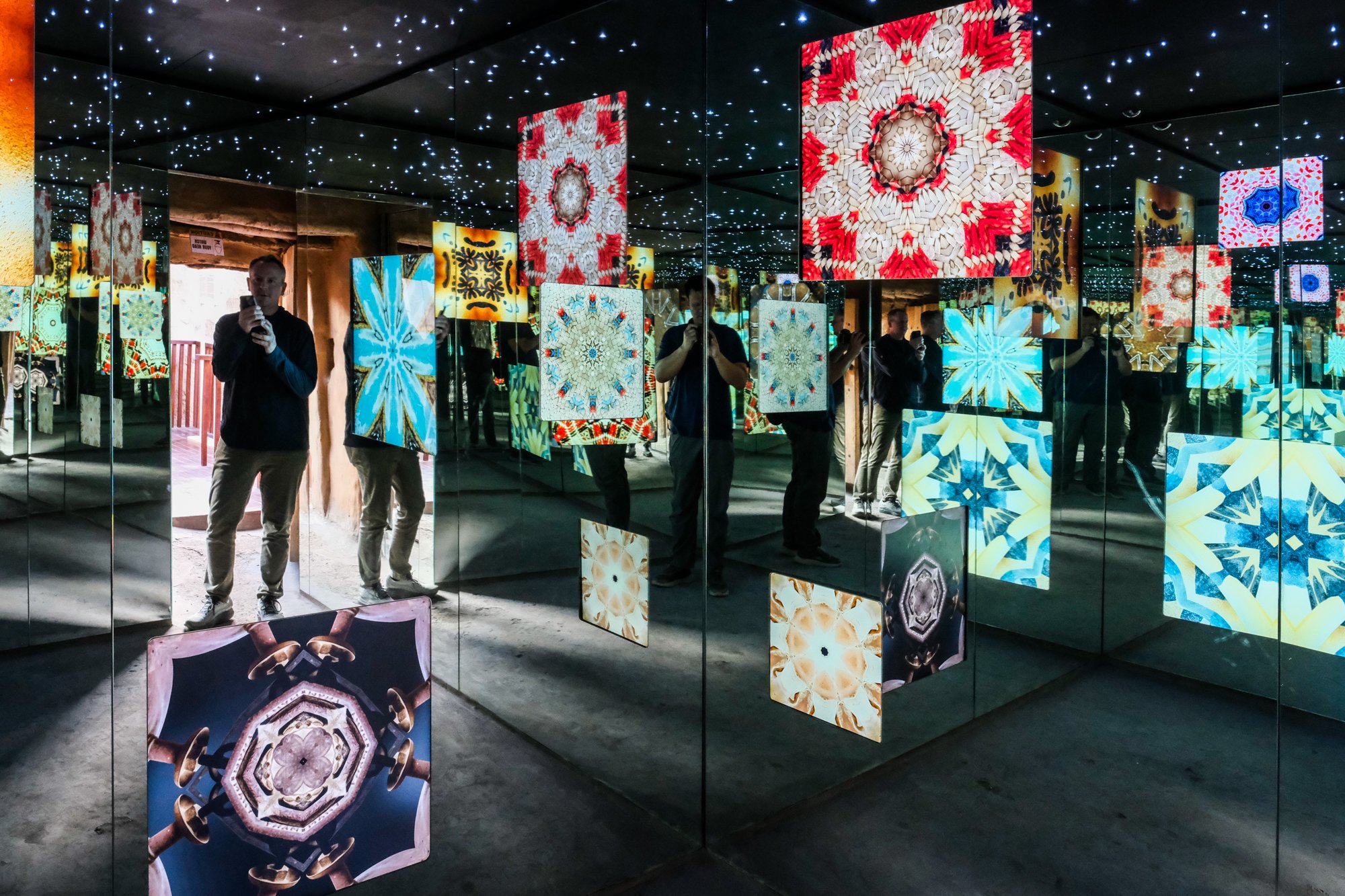
Along the passageway stand three interconnected homes converted into a free museum called A Place of Remembrance. The museum uses digital projection to tell AlUla's stories through a folktale. It highlights different stages of life, from childhood and weddings to the wisdom of the elders. The place also features numerous artifacts providing much-needed context for visitors. Not far from the museum is one of the most photographed points of interest around: a faint signature carved into a wall. It was apparently left by Prince Charles, now King Charles, during his 2015 visit, well before the recent liberalization efforts. The king is known for his interest in Islamic history and culture. Coupled with his interests in architecture and historic preservation, it was no surprise that he took a great interest in AlUla. Of course, it was interesting that Prince Charles would commit an act of “vandalism” in a historic place.
Because AlUla’s historic restoration was still in its infancy, only a fraction of the city has been restored. It would probably take them a few decades to complete the full restoration. Only one passageway was fully open. About a dozen of the renovated houses along the way were rented out to various boutique shops, ranging from fragrance shops to jewelers. There was only one passageway that cut across the historic neighborhood. With the ongoing war with Iran impacting Saudi tourism, I am very curious to see how the town may be transformed a decade from now. Riyadh will be smart to invest public resources in preserving its historical heritage rather than in vanity projects such as NEOM.
One of the most exciting businesses here is Dar Tantora The House Hotel, an upscale boutique establishment that occupies a network of old mud-brick homes. The hotel retains all the historical elements, ranging from hand-carved doors to traditional murals. Its rooftop pool sits amid AlUla’s historic skyline and is arguably the most evocative pool in the country. The hotel may have electricity but opted to illuminate the property with candlelight. Needless to say, you need deep pockets to stay at this hotel. The nightly rate during our visit started at $1,300 USD, and it is among the most exclusive properties in town. This was a lot of money to spend on a hotel room with no air conditioning. As AlUla aims to be a Saudi showpiece, there seems to be a conscious effort to gear toward high-end tourism.
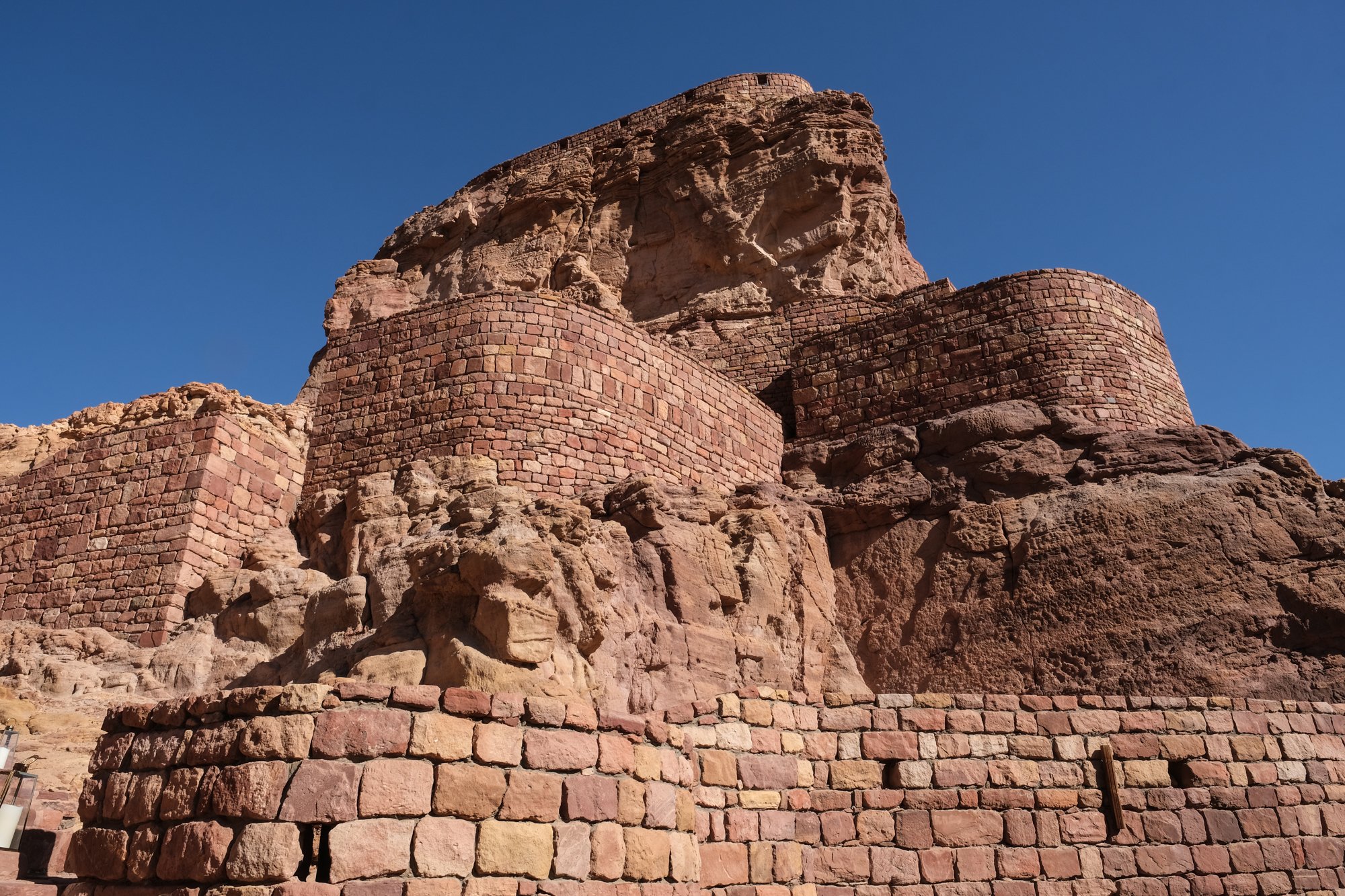
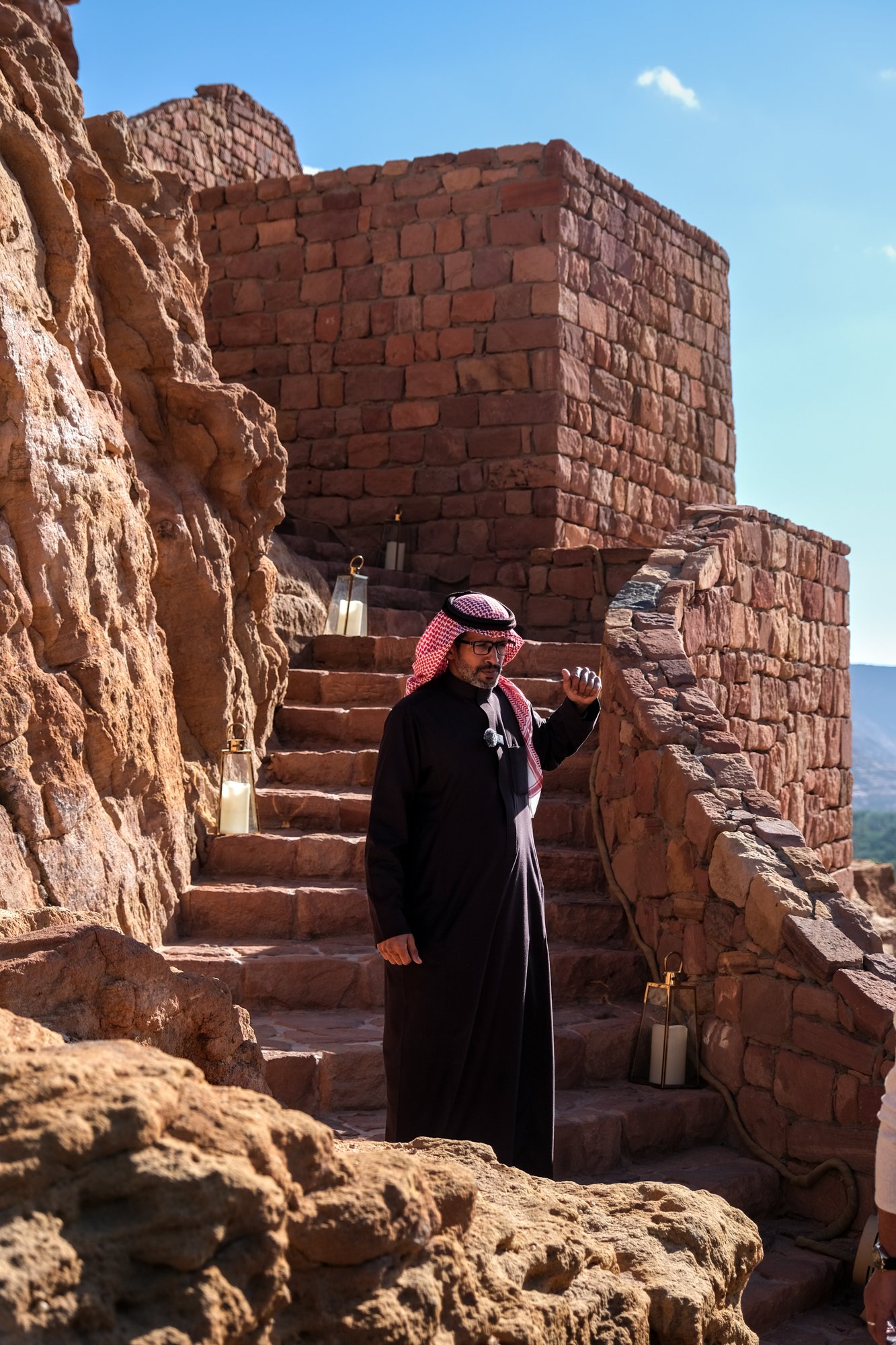
Eventually, we emerged from the maze of dark alleys to AlUla’s small but mighty fortress. Built into a 150-foot natural outcrop, the fortress was also known as Musa Bin Nusayr Fort, named after the 6th-century commander who allegedly stayed at an earlier fortress on the same spot. A set of stone steps along the perimeter snakes up toward the top. As far as I know, the fort was open to visitors only on official guided tours. Because of the heavy-handed approach to tourism management, the government is very good at monetizing its heritage while keeping a tap on the downsides of mass tourism. As much as I wish for open access, there was definitely something special about exclusive access.
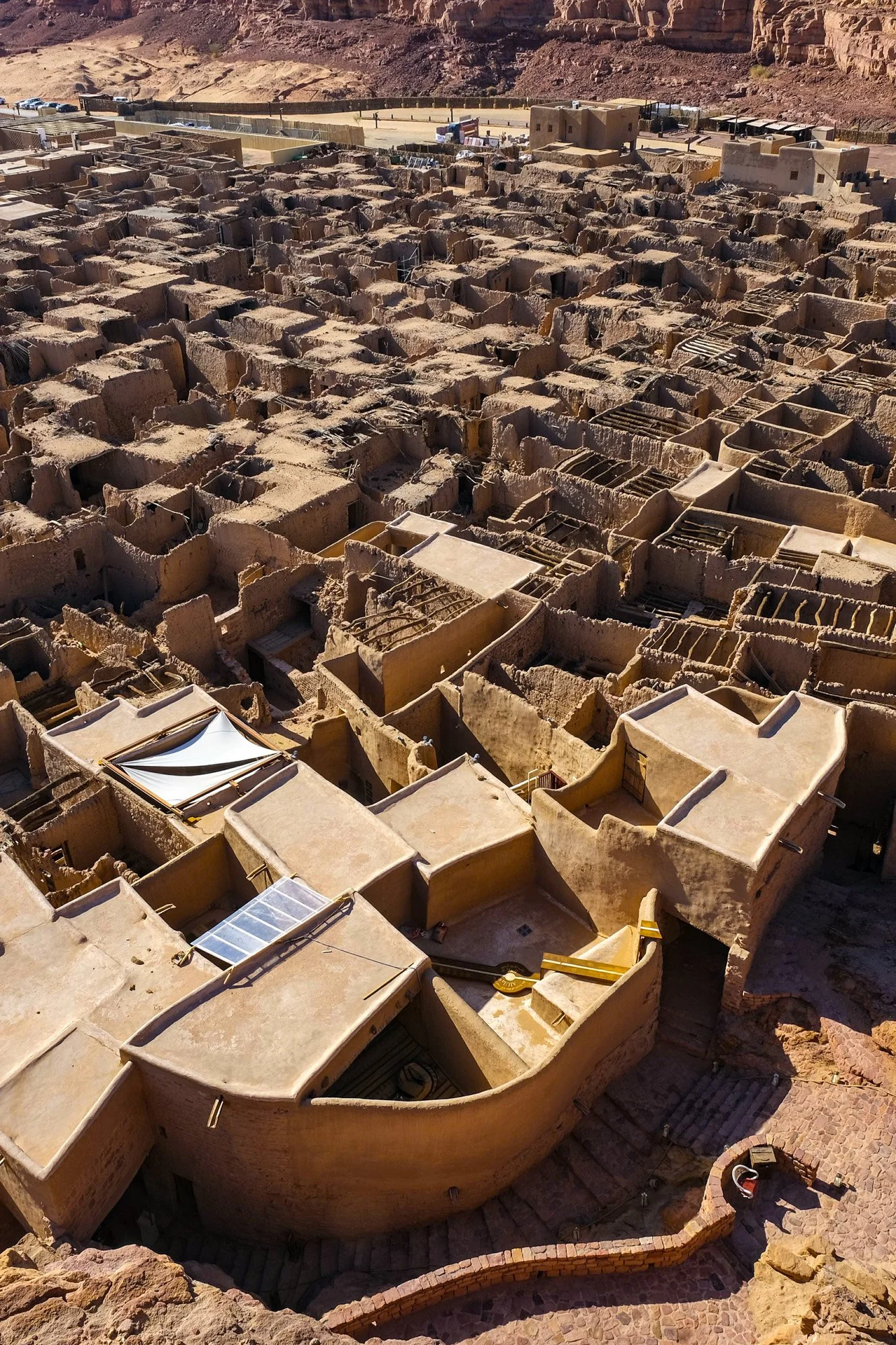
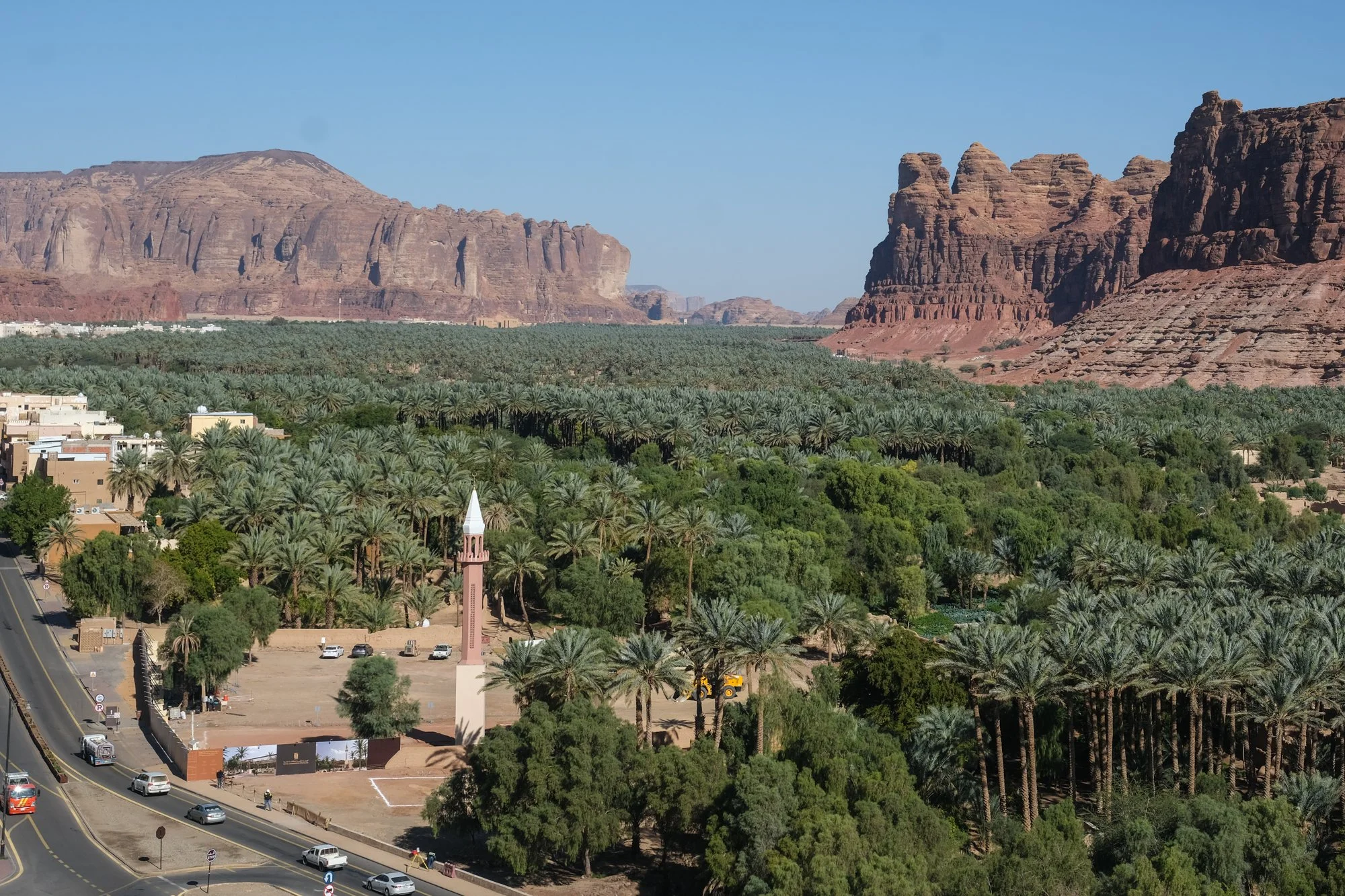
From the top, visitors are greeted with panoramic views of the ancient town and the surrounding oasis. One could clearly tell how the renovated parts of the old town stood apart from the rest. It probably would take a few decades to renovate the whole place. The lush palm groves and picturesque valley gave us a clear sense of Al Ula as a critical stop along the caravan trade route. Compared to most fortresses, there was very little enclosed space. Our visit coincided with Winter at Tantora, a new annual cultural celebration with days of performances and cultural festivals. One of the festival’s most luxurious experiences was a cultural performance show followed by a candlelit dinner at the top of the fortress. If it weren’t for our last-minute reservation for Hegra After Dark, this would have been an unforgettable evening—albeit very touristy.
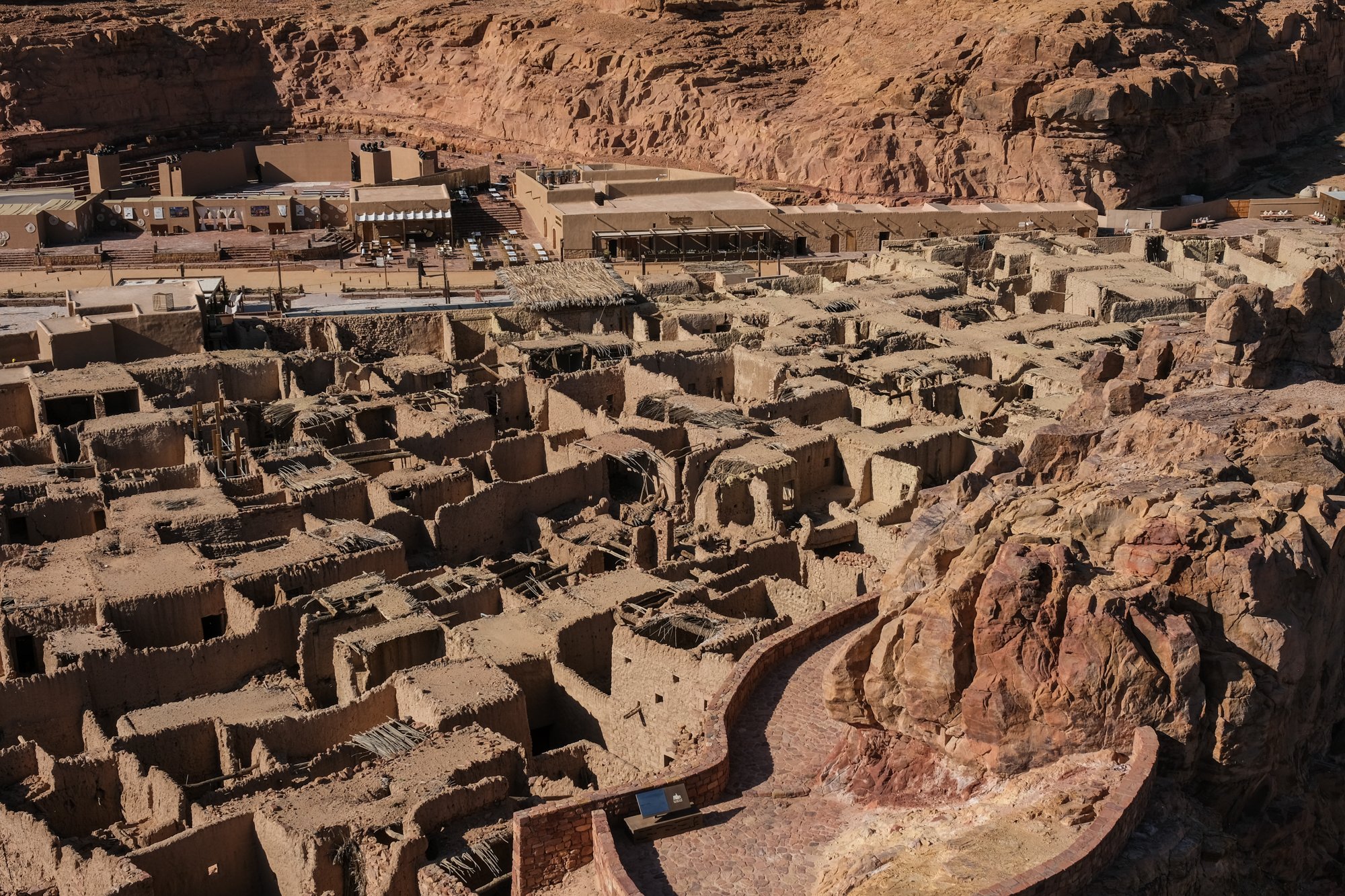
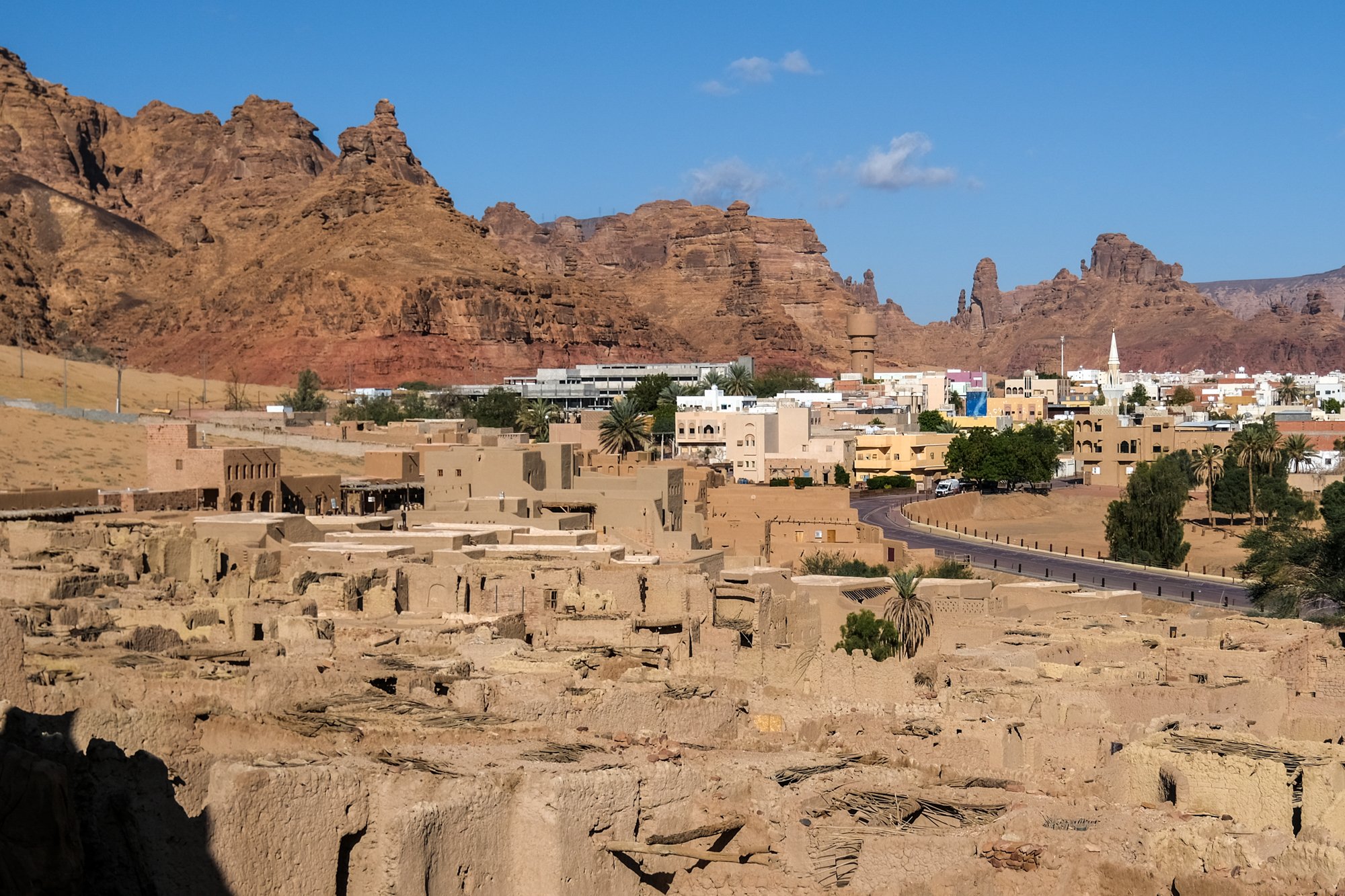
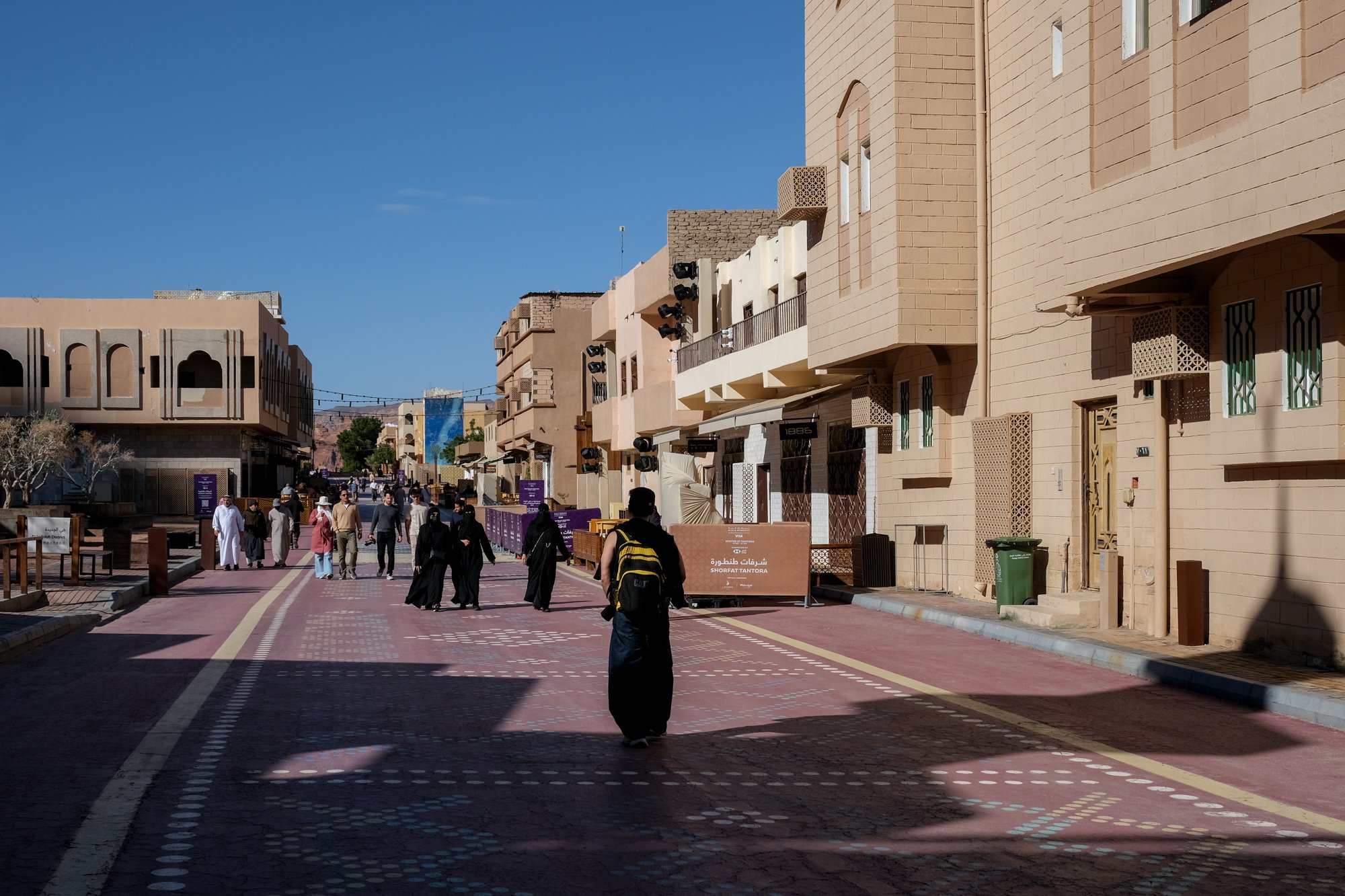
Back on the ground, we made our way back to AlUla’s main street. Typical of Saudi Arabia, the street was largely deserted in the morning and didn’t really come alive until late afternoon. We visited during the coldest month of the year, and the temperature was pleasant even in the middle of the day. The avid sightseer in me felt it was a waste that so many shops and restaurants were closed for much of the day. I'd read somewhere that the Old Town’s main drag was closed off in midsummer due to the oppressive heat, but that might just be a rumor. But with temperatures regularly reaching above 105 degrees Fahrenheit, visiting AlUla in the summer may not be worthwhile, despite the enticement of steep hotel discounts.
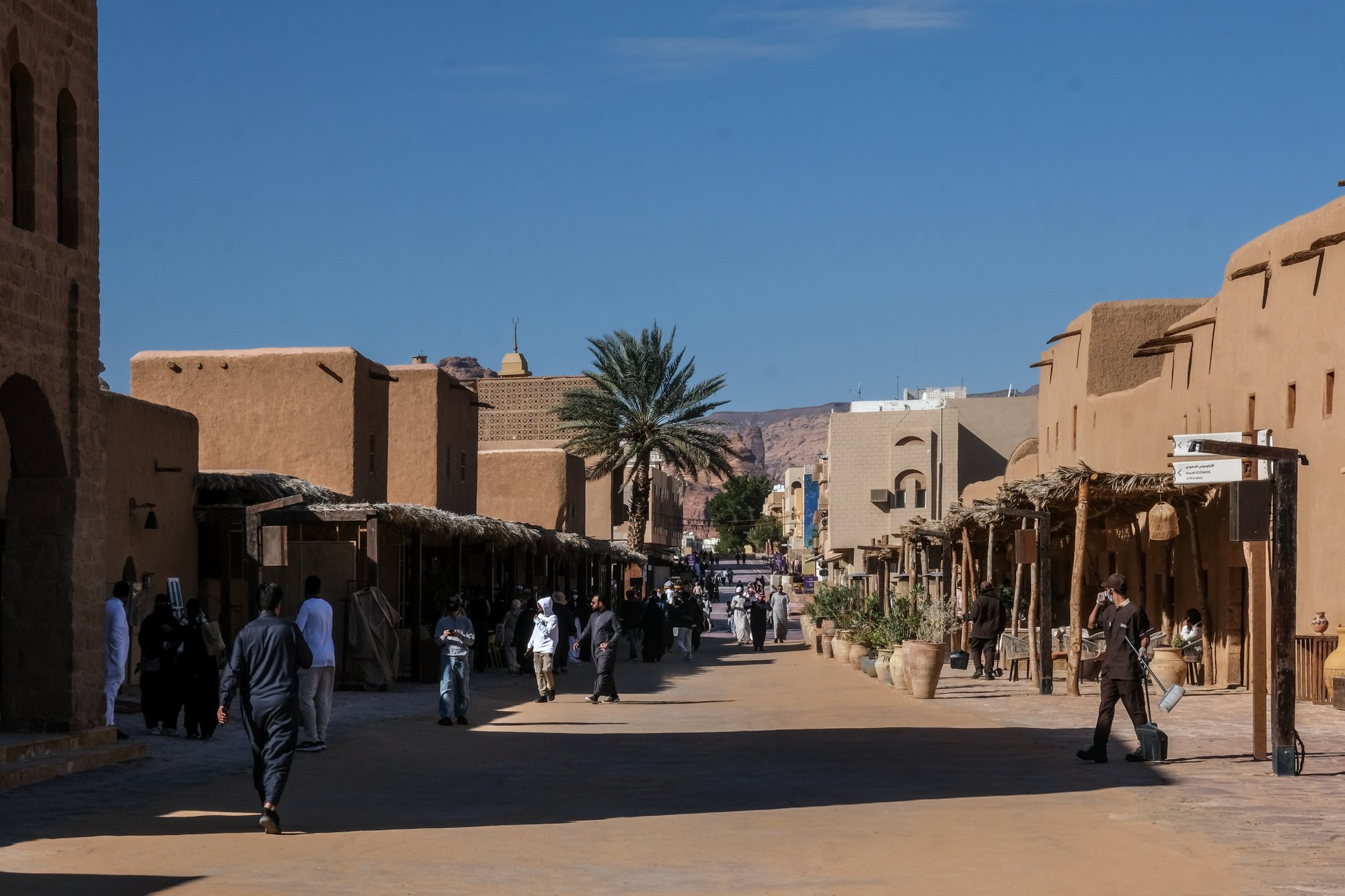
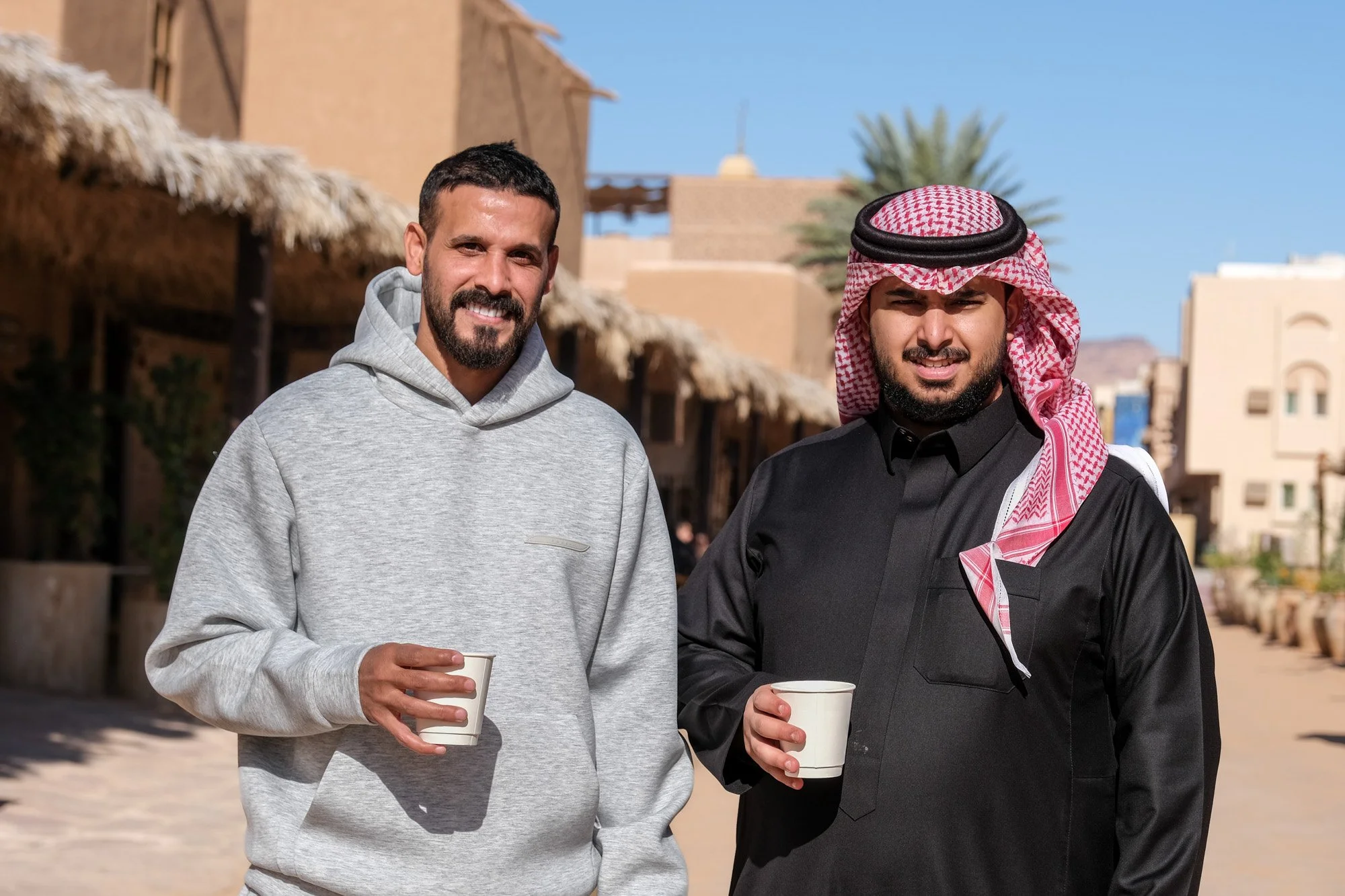
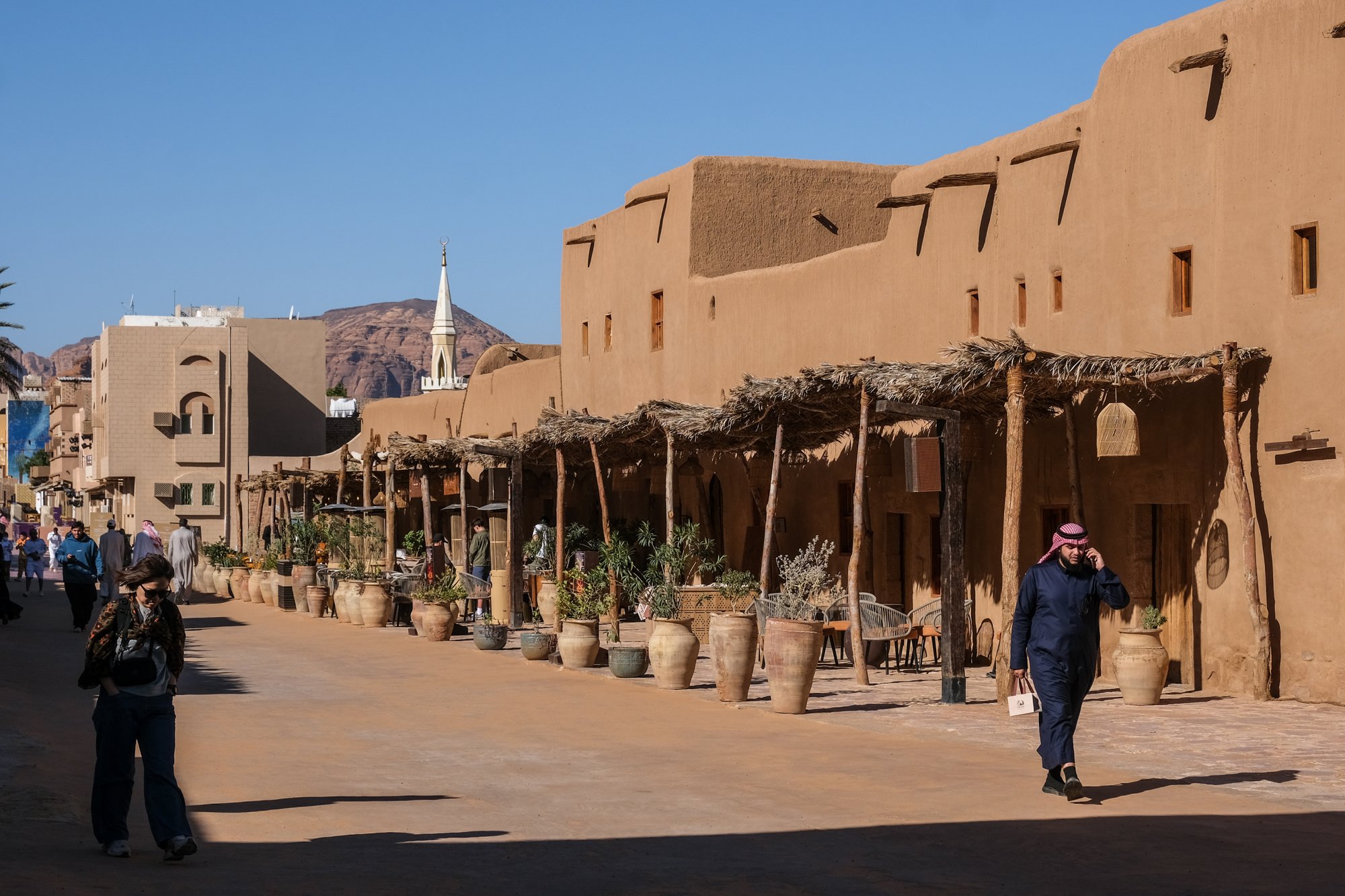
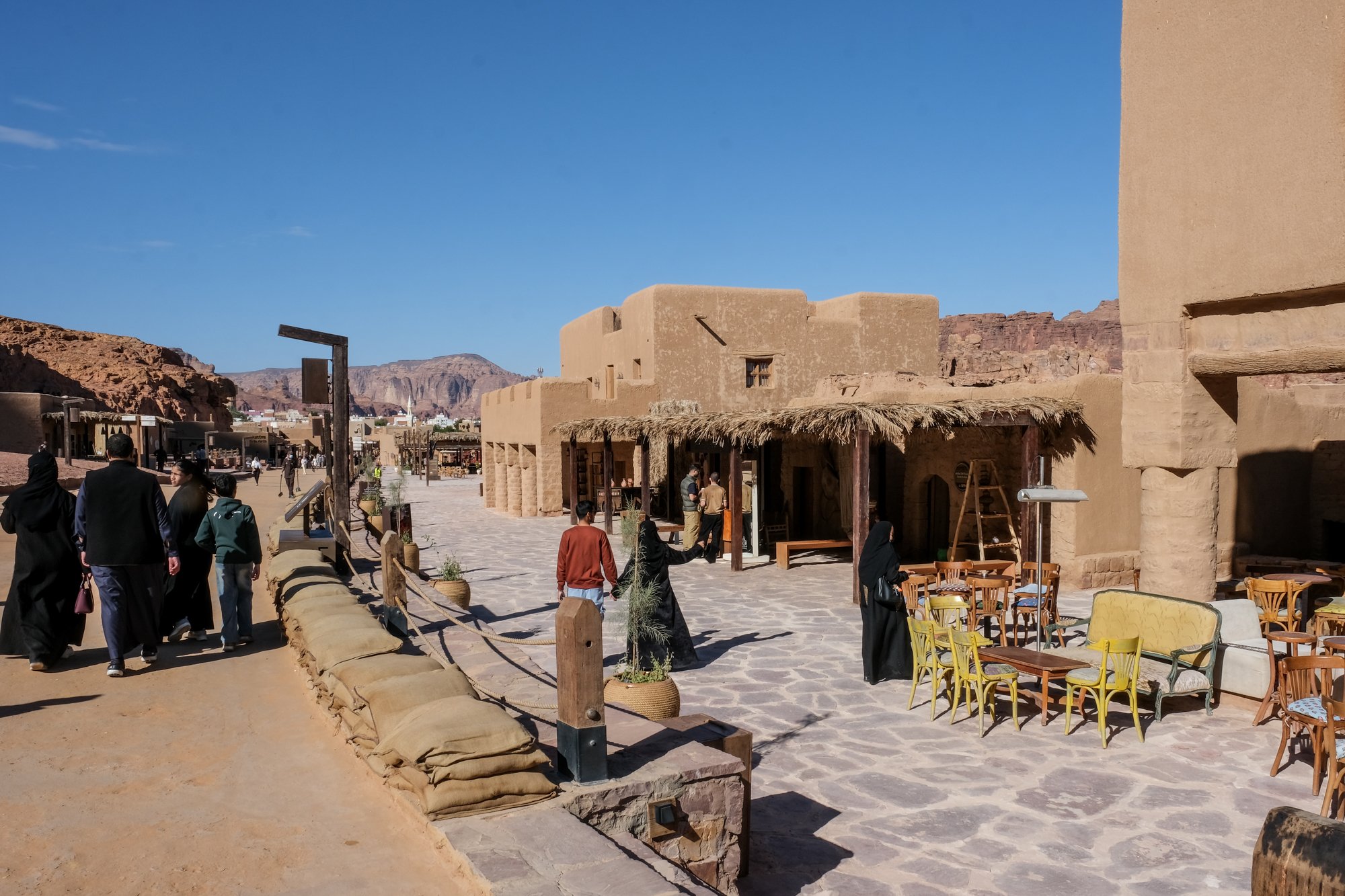
Many of the structures along the main drags were meticulously restored and now resemble a pristine film set. Everything from the street furniture to the street signage is meticulous and on-brand. In addition to an open-air theater, the street is lined with boutiques, high-end restaurants, and a Dunkin’ Donuts. The most surprising restaurant on the street was Entrecôte Café de Paris, an outpost of Geneva’s famous steakhouse. It was interesting that a desert town in Saudi Arabia could attract such a high-profile restaurant. It speaks to Saudis’ ambition to elevate AlUla onto the global stage, one restaurant at a time.
Despite the presence of Western and international businesses, AlUla knew visitors came here not for Dunkin’ or Starbucks. Most shops here showcased the best of Saudi crafts, including jewelry, apparel, and fragrances. Our personal favorite would be House of Otta, which offers hand-glazed ceramics with distinct Saudi characteristics. With such careful curation, AlUla may just be the best and most convenient place to shop for high-quality souvenirs in Saudi Arabia. For visitors craving interactive experiences and with an extra budget, it might be worth checking out the “Awaken The Tales” Escape House and the immersive “Incense Road Experience”.
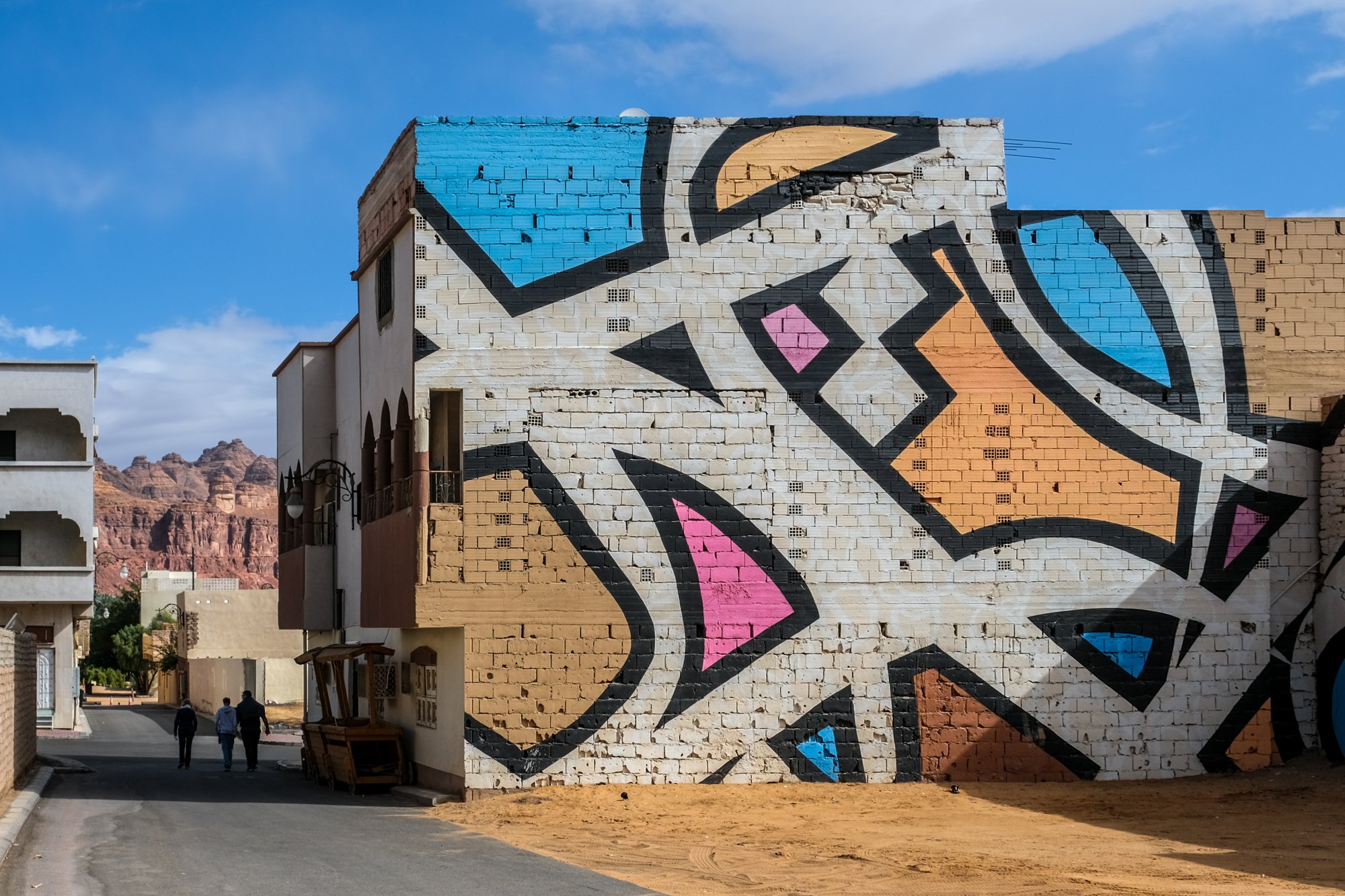
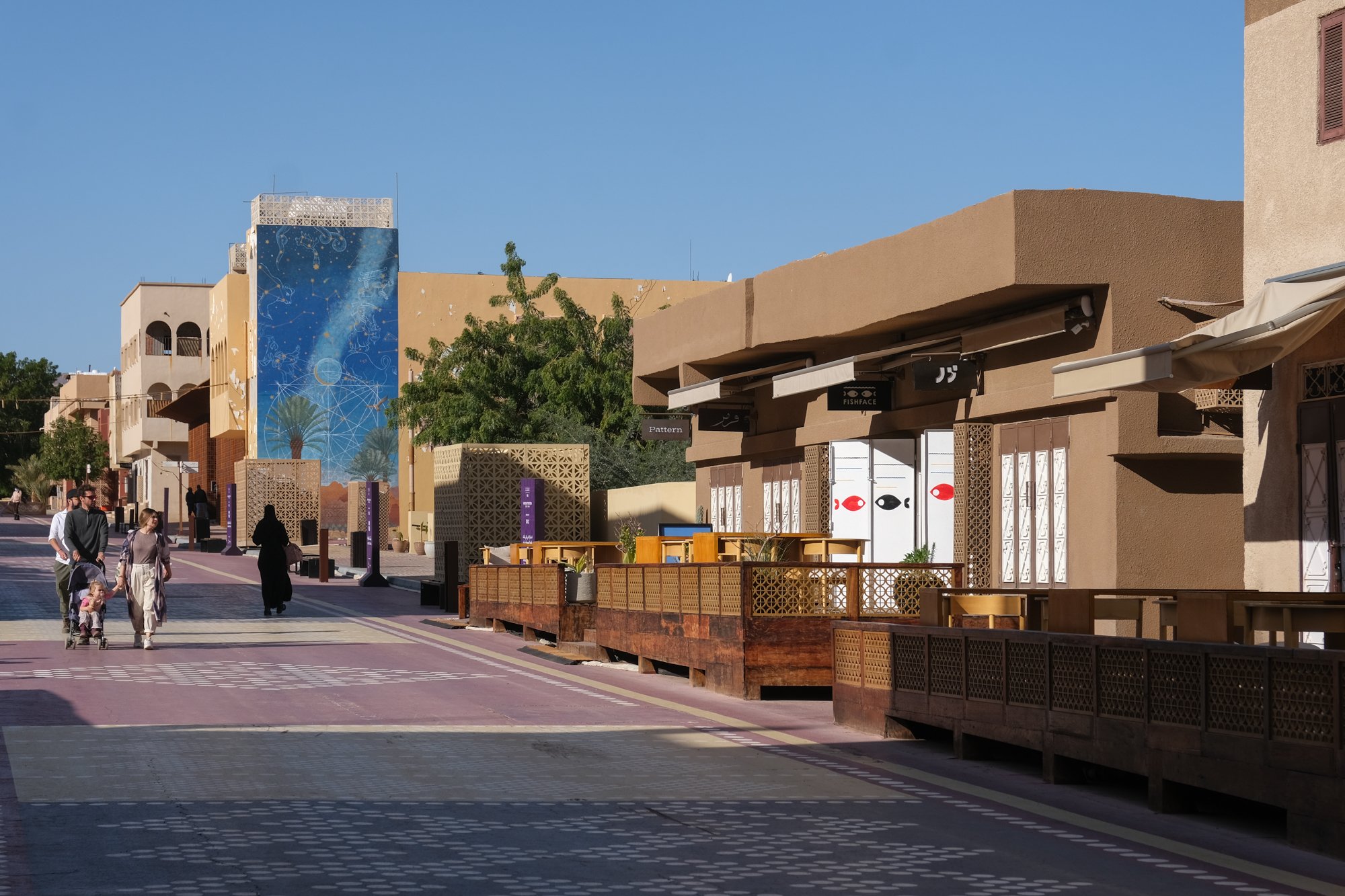
Immediately north of the old town is a modern neighborhood called AlJadidah Arts District. Although technically a residential neighborhood, the district is covered in beautiful murals and filled with small cafes and eateries. While the old city must conform to historical restoration guidelines, this area has a far more bustling atmosphere that feels more familiar to foreign visitors. An outdoor food court here offers some of the more affordable, international dining options in AlUla. There were half a dozen food trucks, including a Tim Hortons, as well as an excellent restauirant specializing in Cajun-style seafood boil. Visitors to OId Town AlUla could eat very well at any budget.
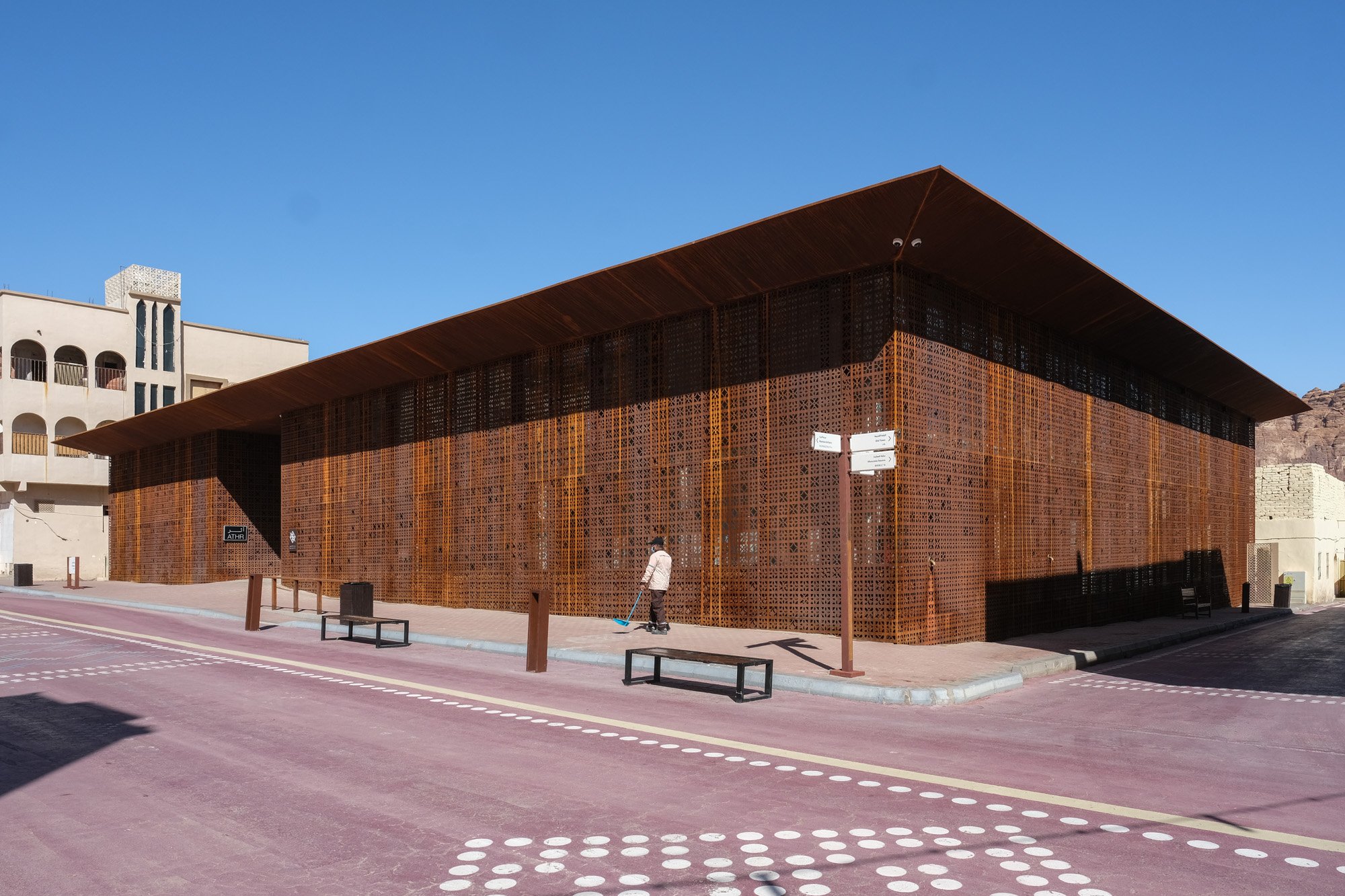
While the district’s most popular landmark was a large sign spelling out #AlUla, the cultural anchor here is Design Space AlUla. The center is clad in a perforated Corten steel screen reminiscent of mashrabiya, the traditional Arabian screen. This decidedly modern venue by Italian architect Giò Forma features rotating exhibits focused on the works of Saudi artists or artworks inspired by northwestern Saudi Arabia. It was the region's first permanent art gallery and features an archive and workshop space for visiting artists. While AlUla’s nascent art scene is heavily subsidized by the government and still has a long way to go, there is no doubt that the tourism dollars indirectly encourage cultural development.
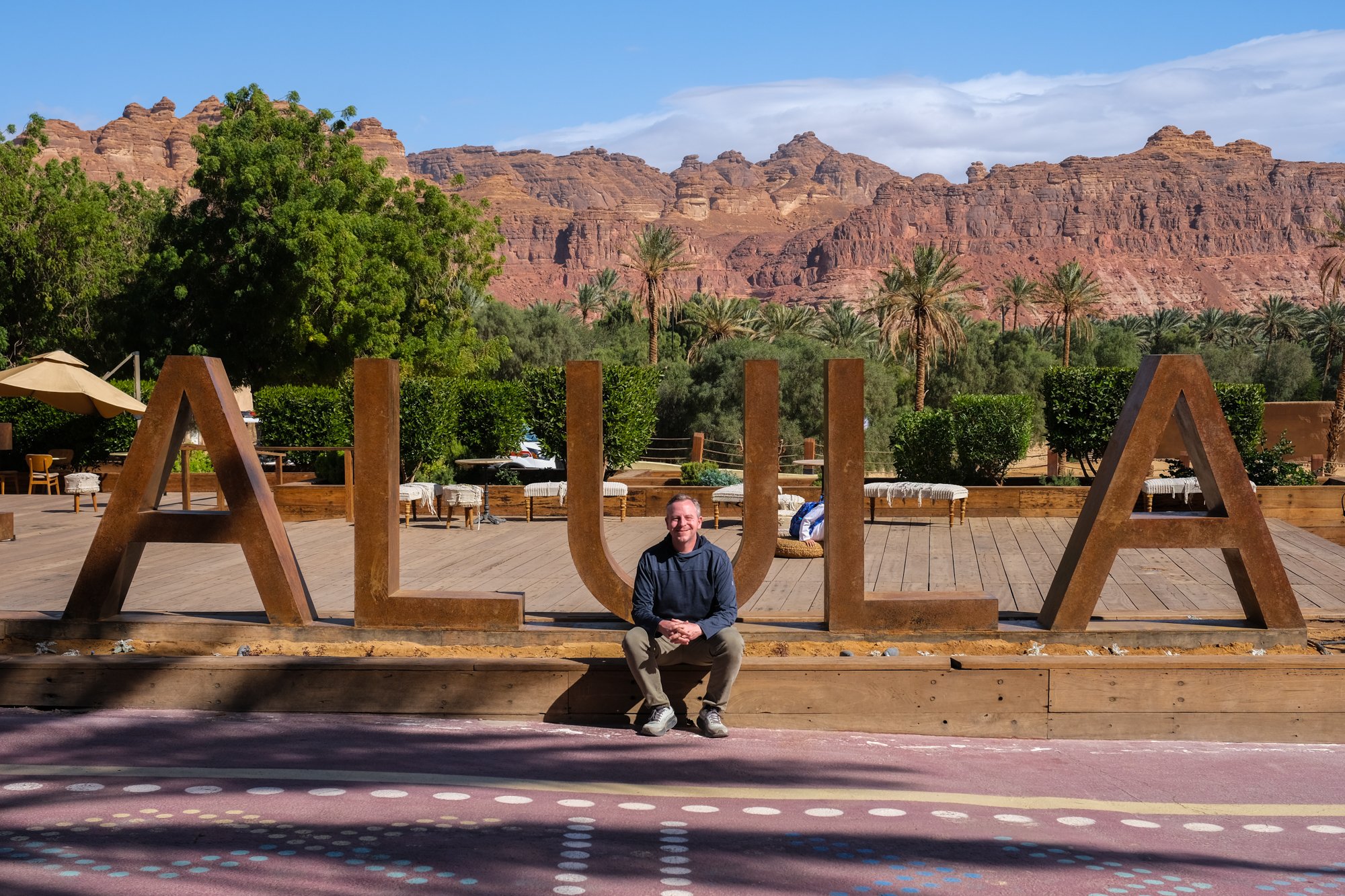
During our visit, we spoke with many locals about their take on rapid changes to AlUla. Almost everyone said they never imagined their little desert hometown could become a global destination in just a few years. The infusion of tourists and capital dramatically improved their livelihoods and outlooks. More than anywhere else we visited on this trip, Saudi Crown Prince Mohammed bin Salman (MBS) seemed genuinely popular here. People genuinely brought him up in conversations without prompting. A young lady we spoke with was nearly in tears as she expressed her gratitude for what the Crown Prince had done for the region. Highly educated and fluent in English, she never thought she could meet foreigners without going abroad. Her curiosity about the outside world was evident.
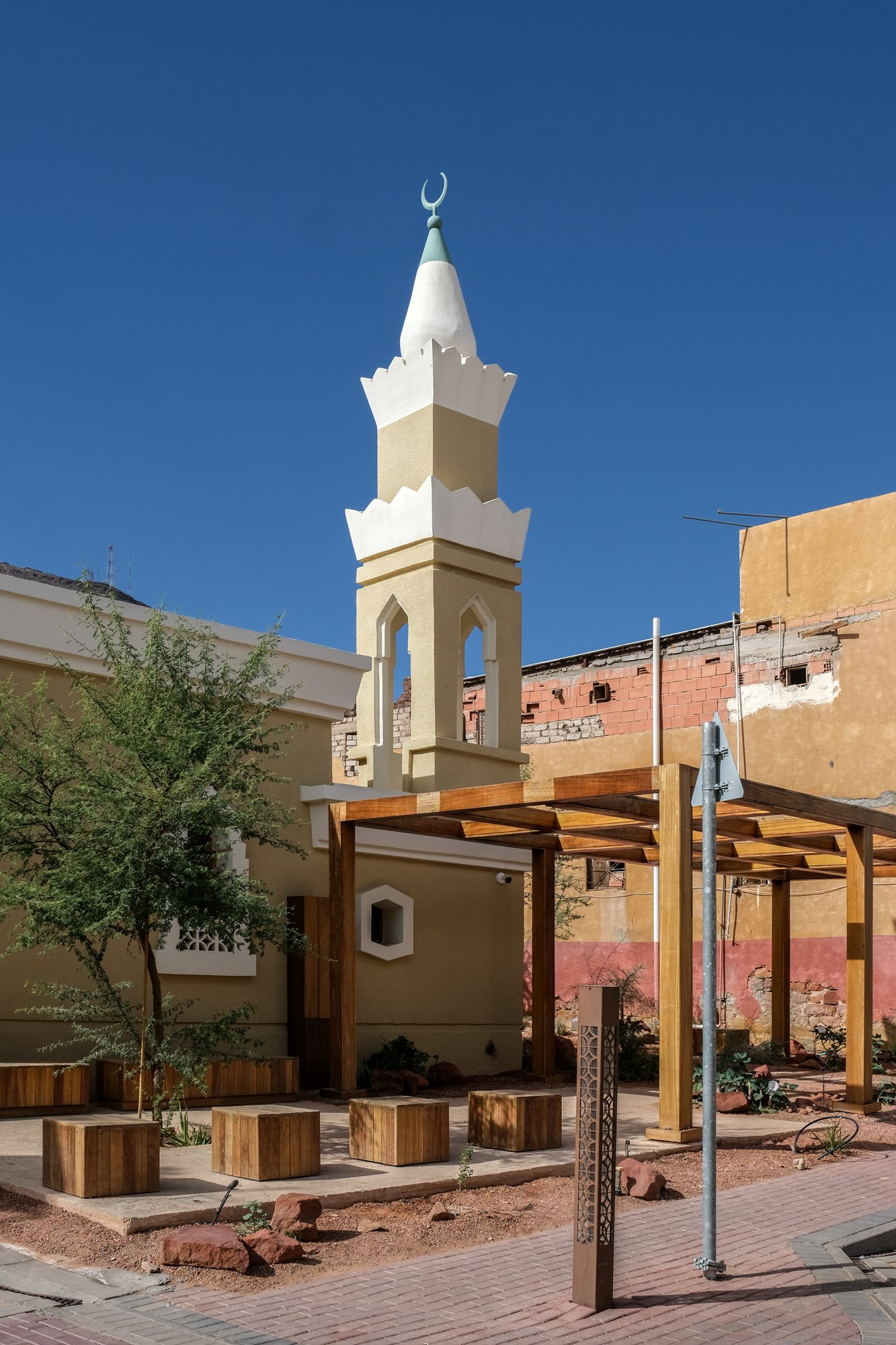
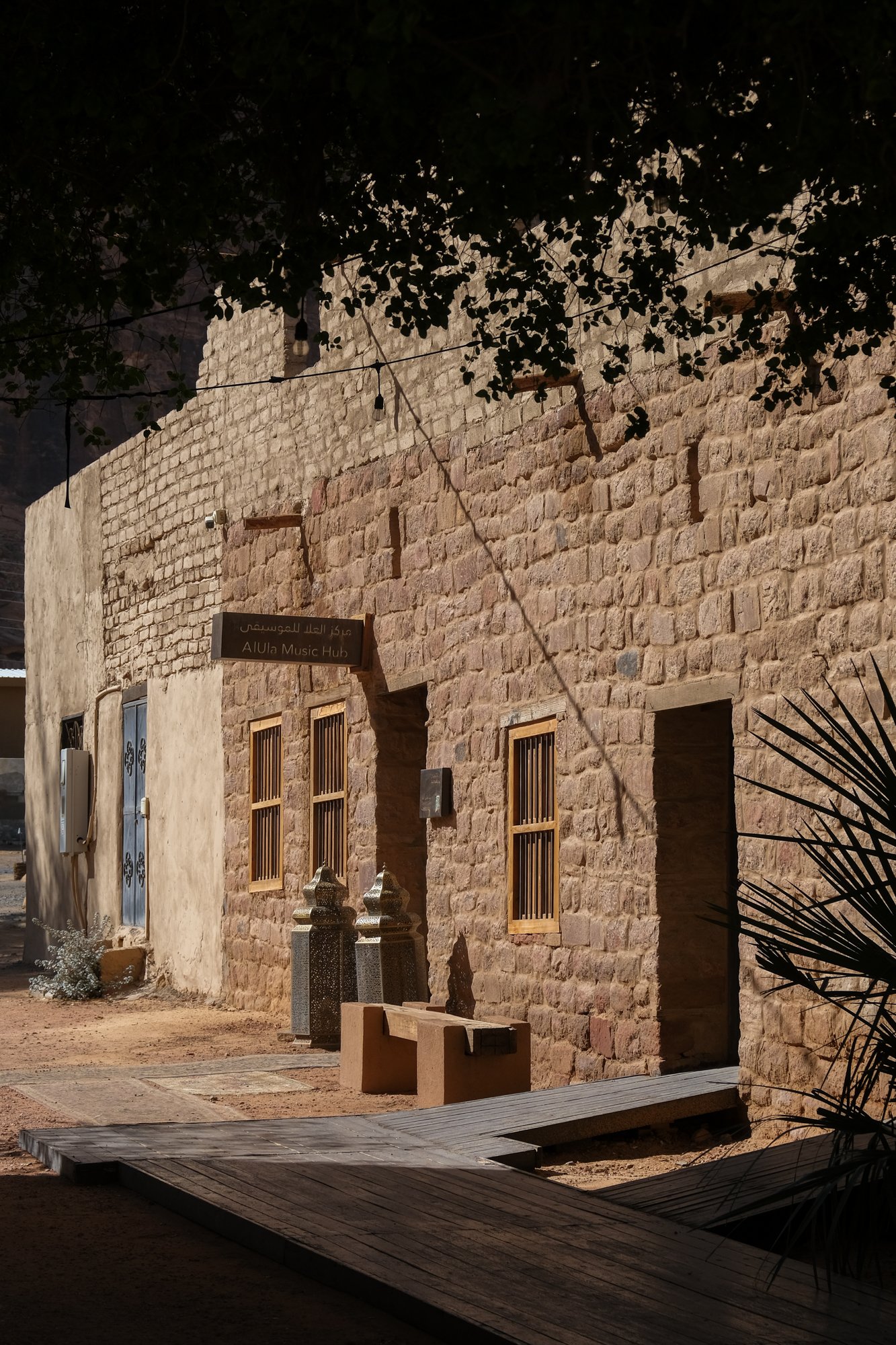
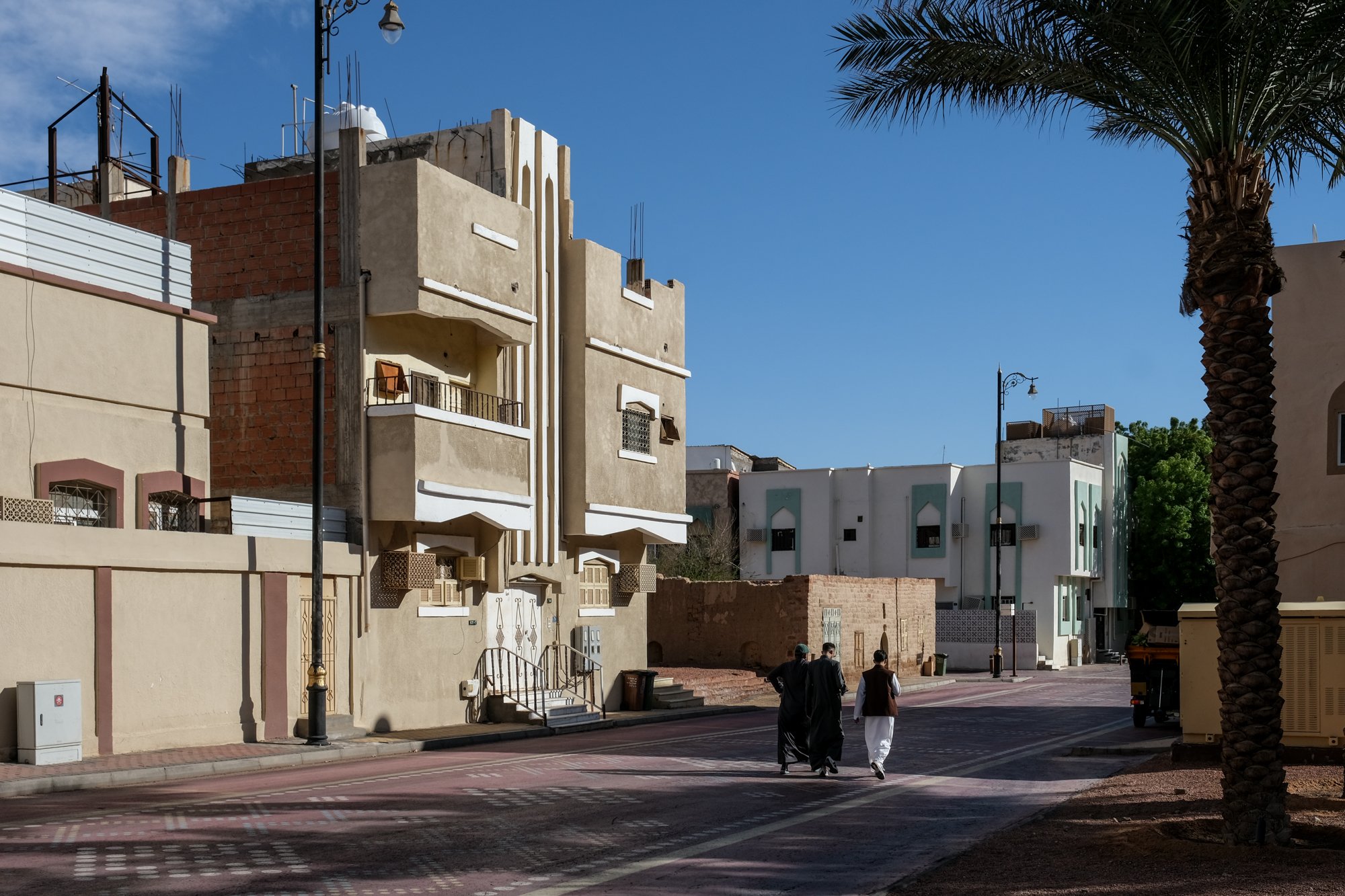
Despite the influx of visitors and the rise of the tourism economy, much of AlJadidah retains its traditional residential character. The neighborhood mosque remains the center of local life. From the street, foreign tourists can peek through the mosque windows to observe worship up close. After nightfall, the entire neighborhood takes on an entirely different character. The overhead stringing lights and bustling energy make Old Town AlUla perhaps the country’s most pleasant walking street. Many of AlUla's civic institutions, such as the public library, also received special architectural treatment. It really looks more like a hipster book club than a full-fledged library. AlUla’s brand of desert luxury is remarkably consistent.
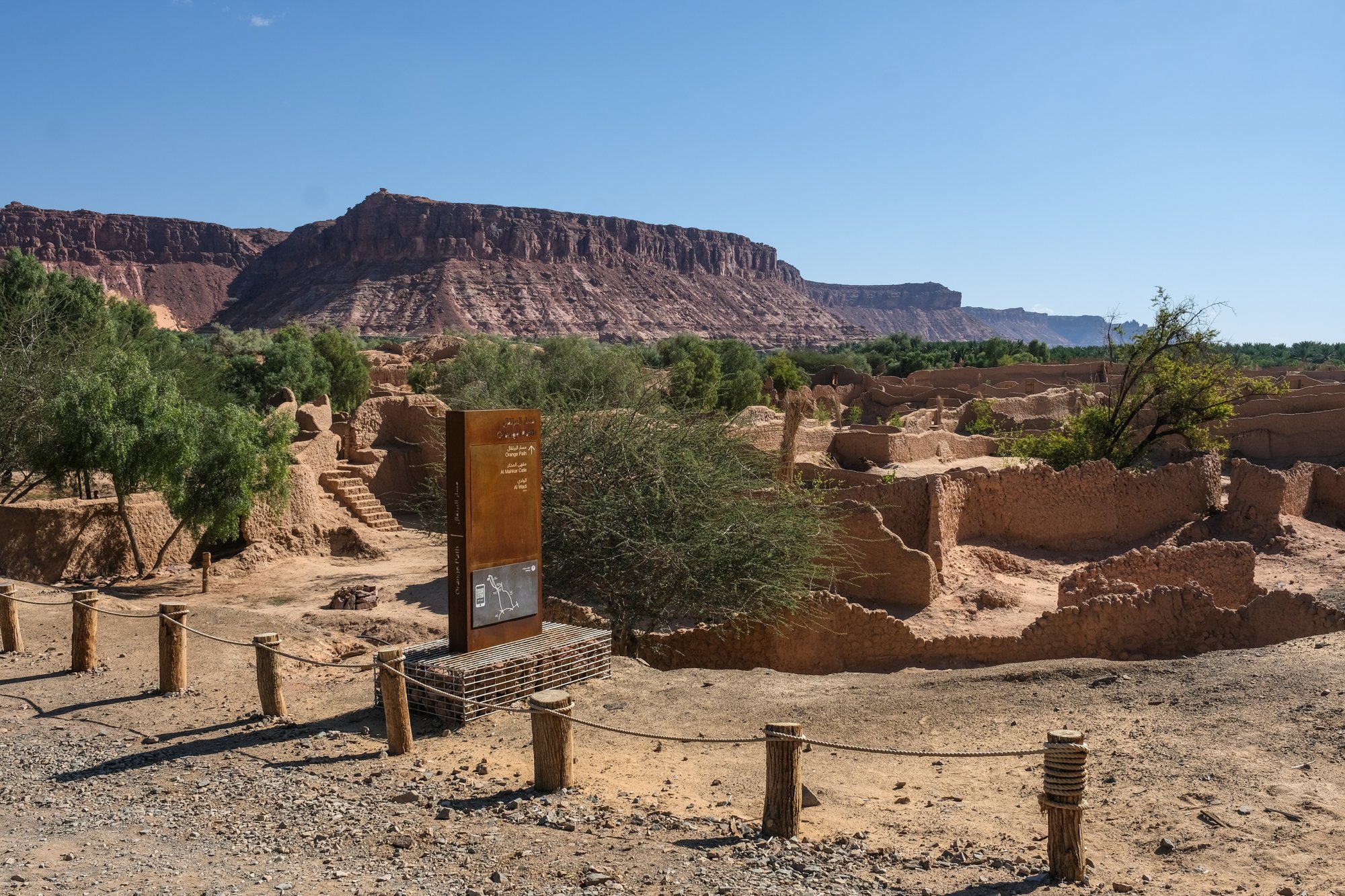
Old Town AlUla may be the main draw, but the visit would not be complete without exploring AlUla’s sprawling oasis. Situated on the opposite side of the busy expressway, the oasis is home to two million date palms and numerous working farms. The farm directly across from the old city has been abandoned and converted into a series of heritage trails for visitors. AlUla does offer official guided walks, but the trails are fully accessible at all hours. Many of the paths were also beautifully illuminated in the evening. The farmland was subdivided with earthen walls and irrigation channels. The system here was as picturesque as the falaj in Oman, as most waterways in Saudi Arabia were buried underground.
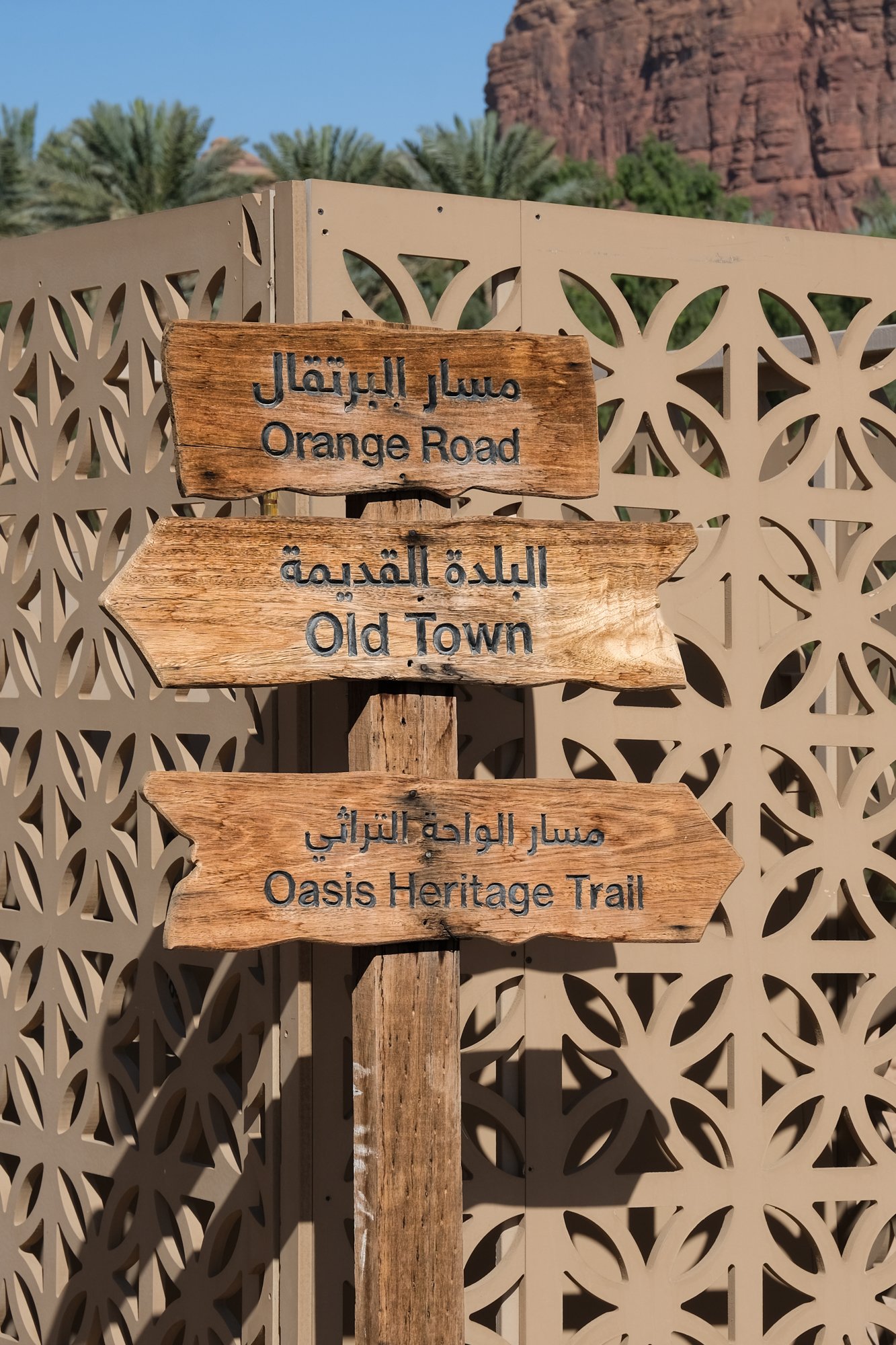
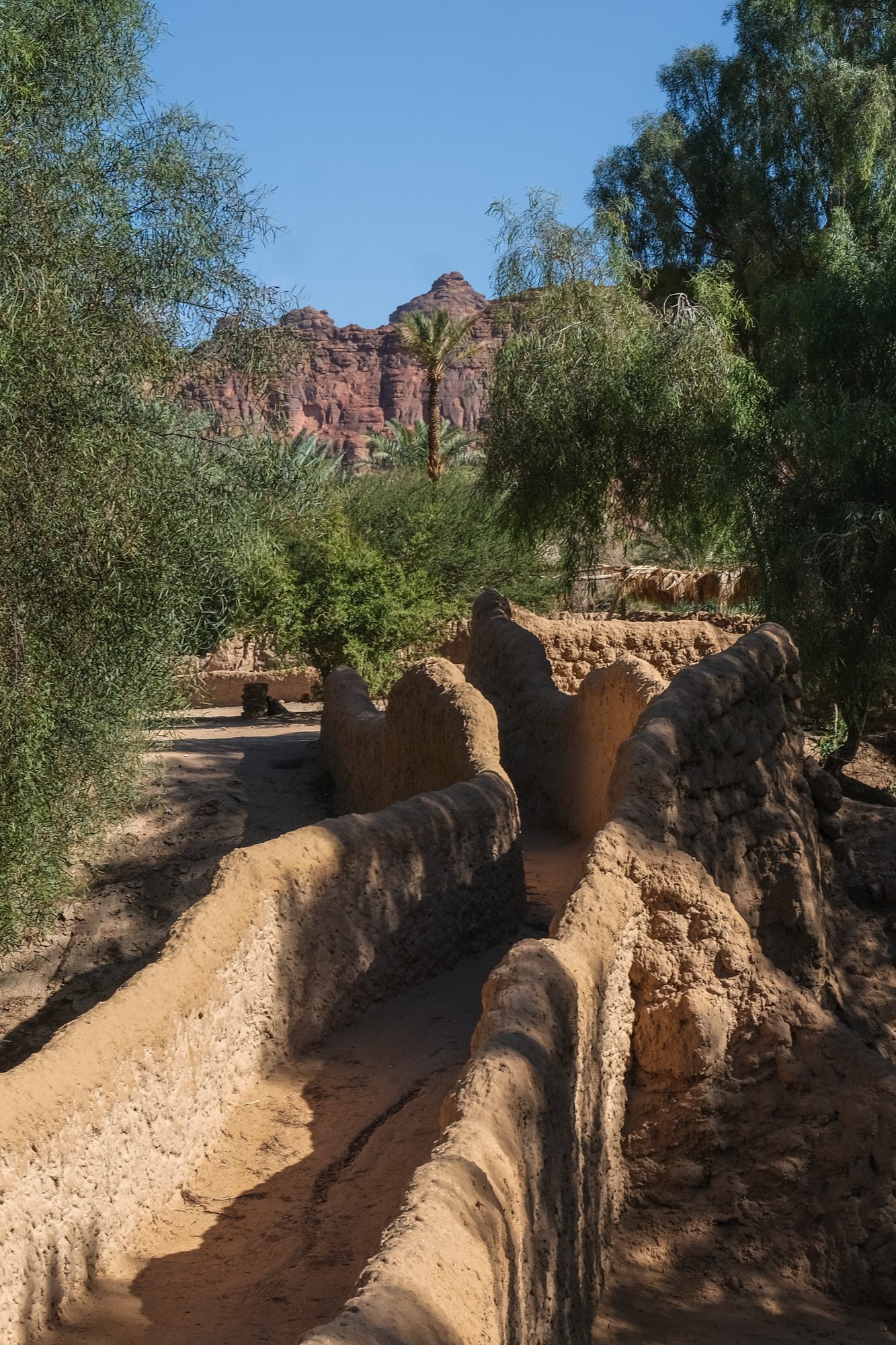
As we trekked through the maze of trails, we were surprised by just how deserted the area was. Aside from a farmer or two, we practically had the place to ourselves. Since many of the abandoned houses weren’t barricaded, I assumed we could explore the interiors of a couple of them. Compared to the cramped conditions of the Old Town, these farm estates of the oasis were absolutely beautiful. The lush palm groves certainly provide the much-needed canopy from the harsh desert sun. The temperature may be pleasant during the winter months, but I could see why the people of AlUla used to settle here during much of the year. It was perhaps the Garden of Eden on earth.
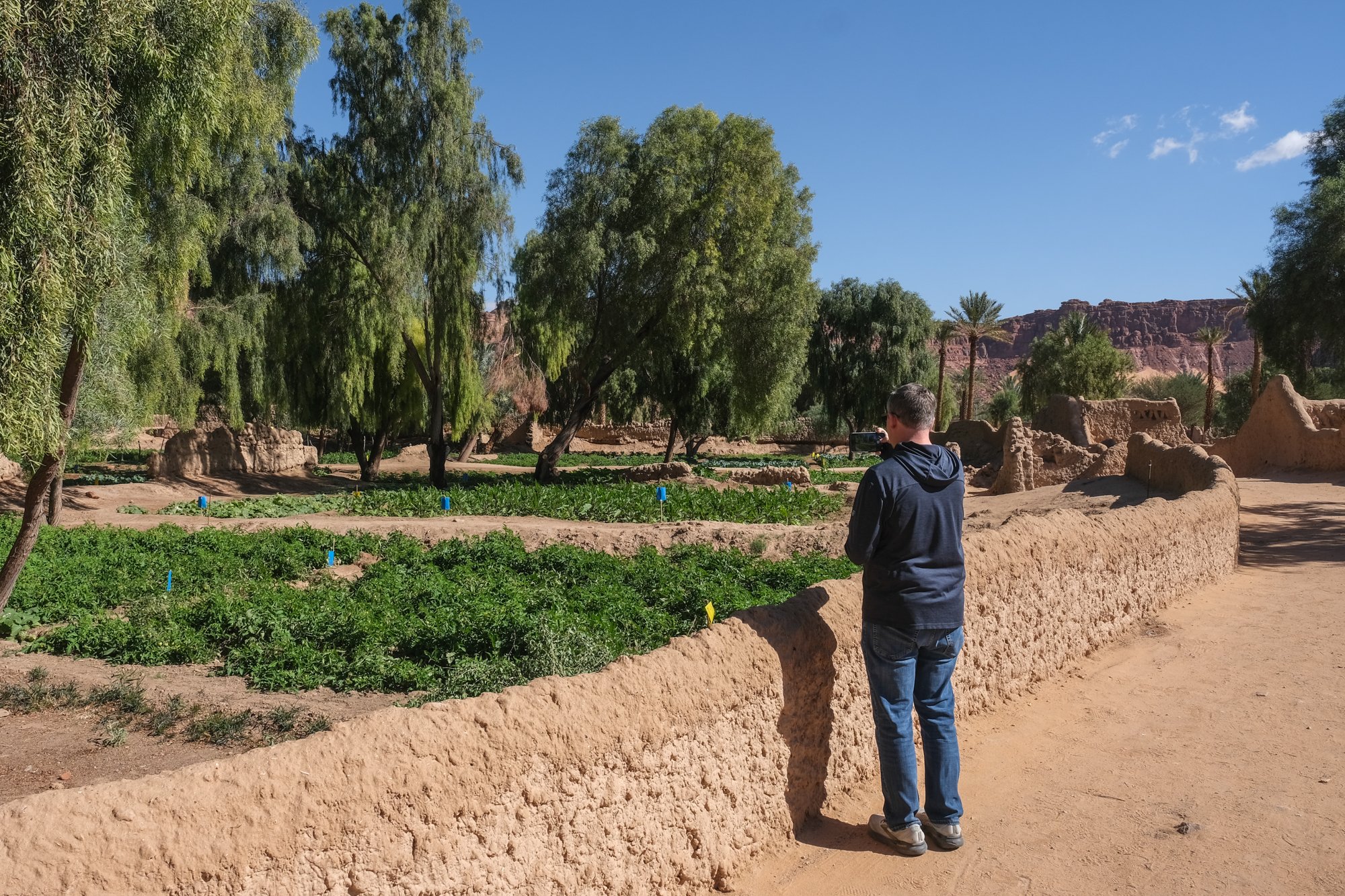
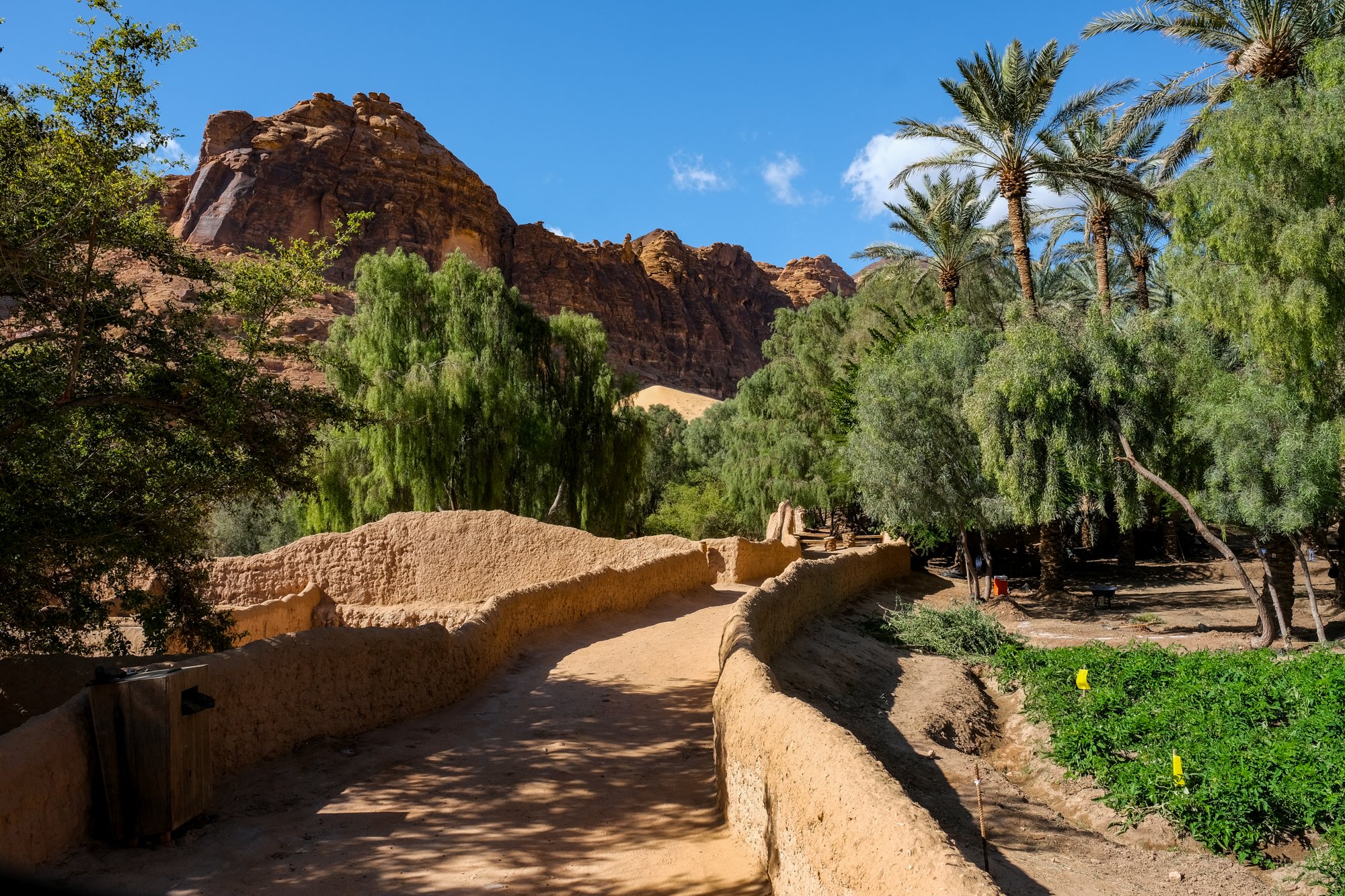
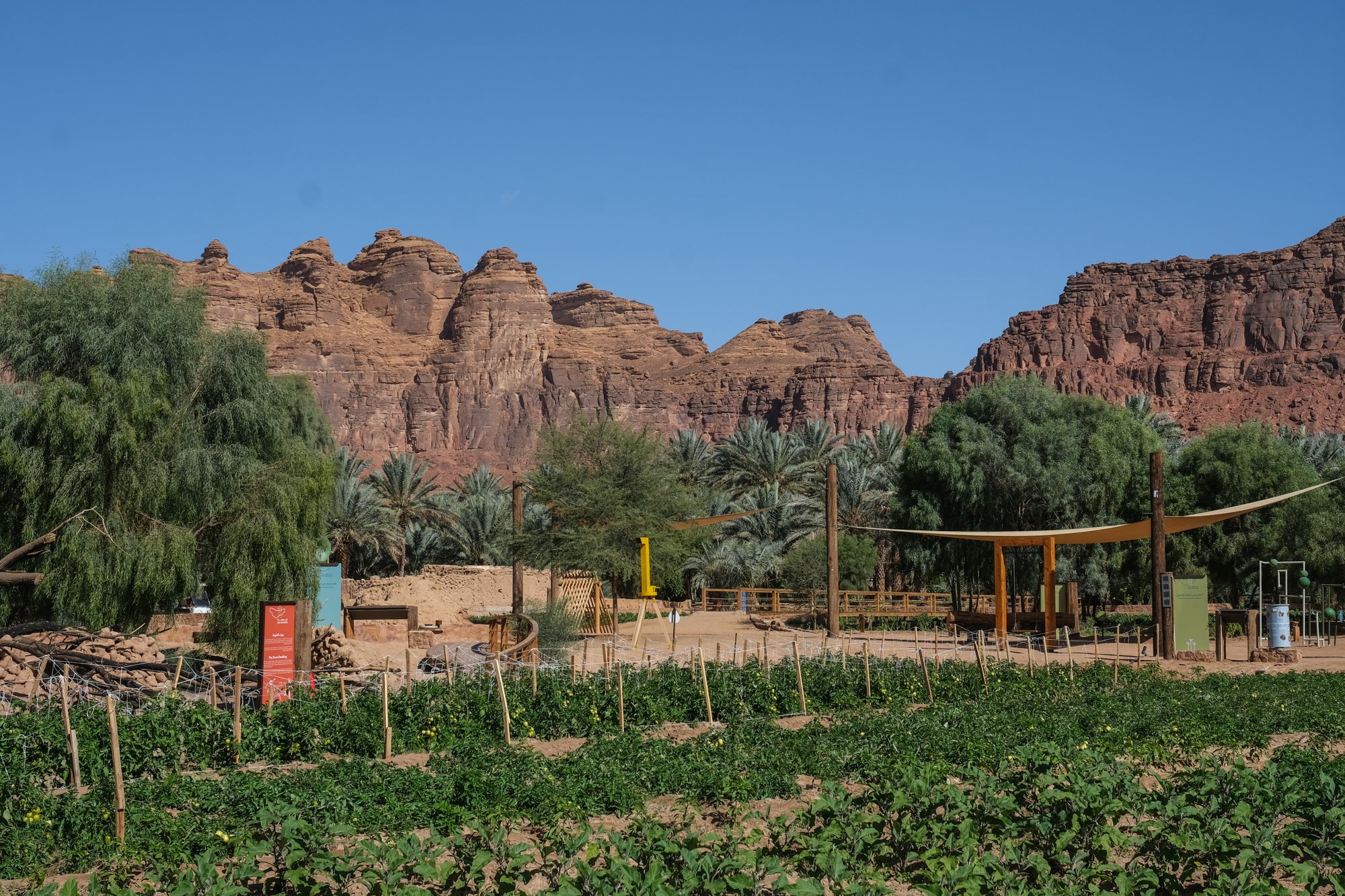
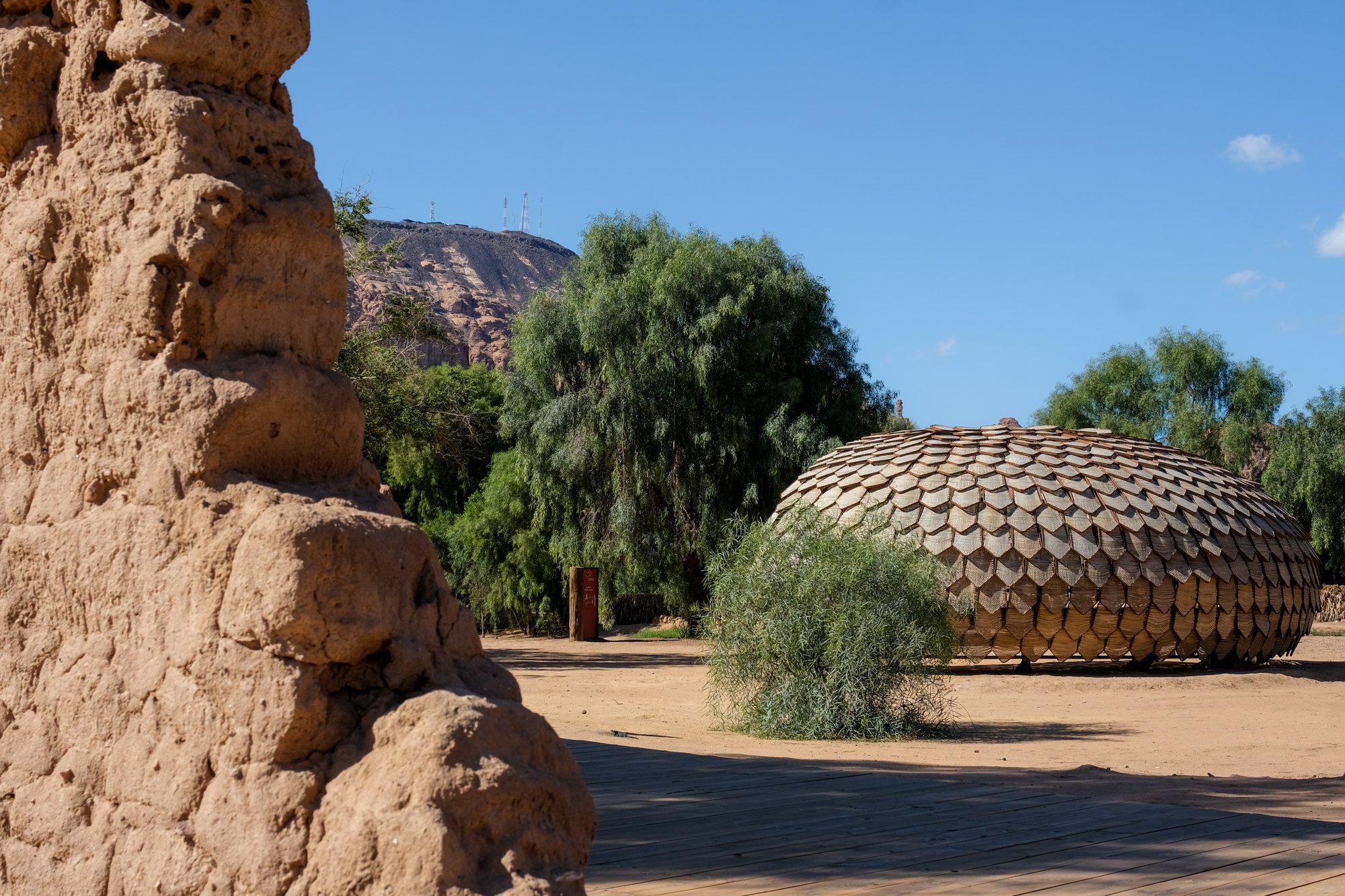
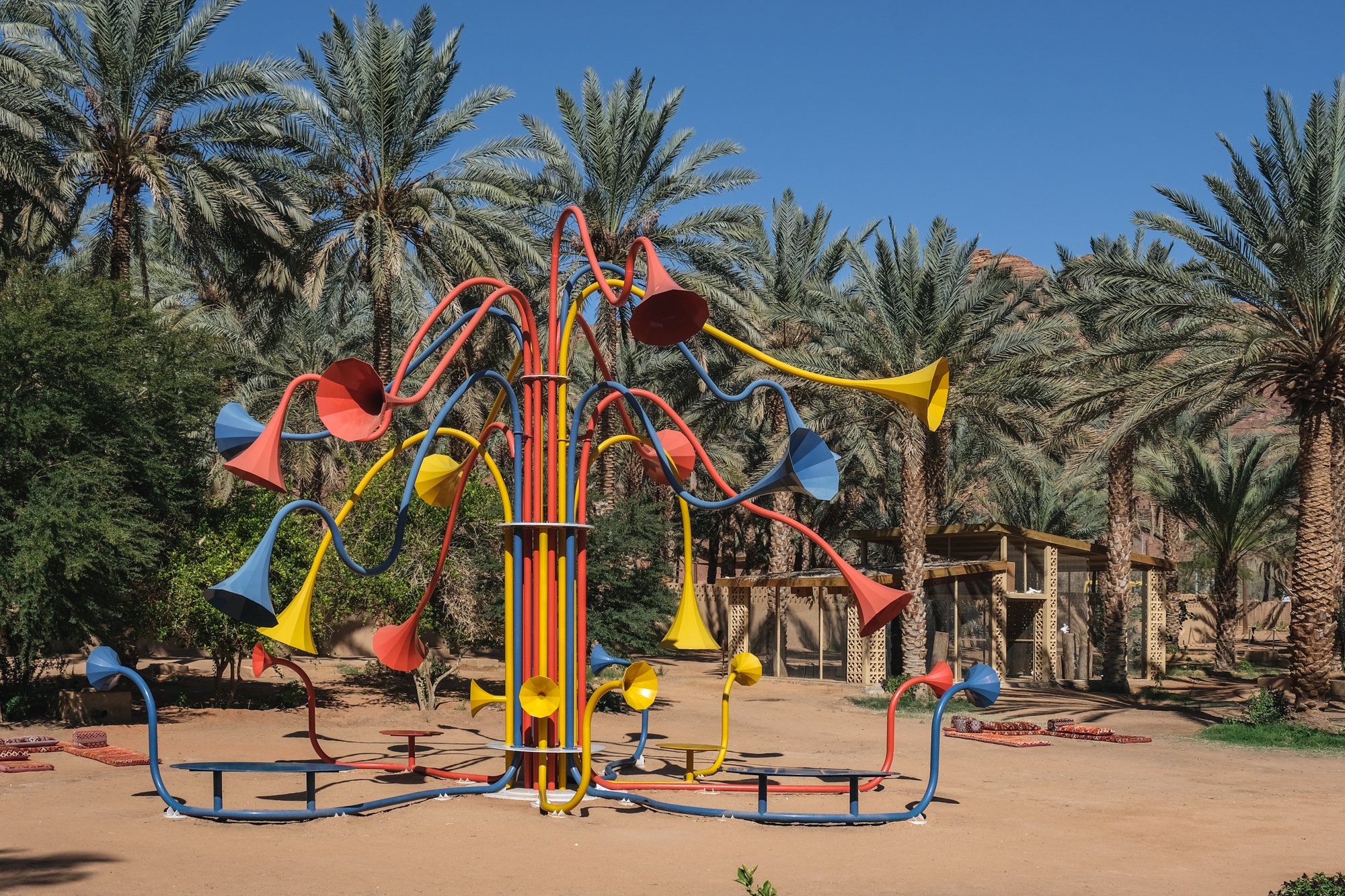
While wandering the oasis, we accidentally stumbled upon Daimumah, an interpretive center and garden focused on the oasis's culture and ecology. The most important feature there was a demonstration of traditional irrigation methods. Their garden also features a wide array of local crops native to the region. In my observation, Daimumah seems more popular with Saudi locals than foreign tourists. In addition to all the fauna, the place also hosts a variety of temporary exhibits, interactive displays, and contemporary artworks. A series of small pavilions near the main entrance features informative displays on AlUla hydrology and climatic patterns. Others include artist workshops for local youth. The place has a unique ambiance that is hard to put into words.
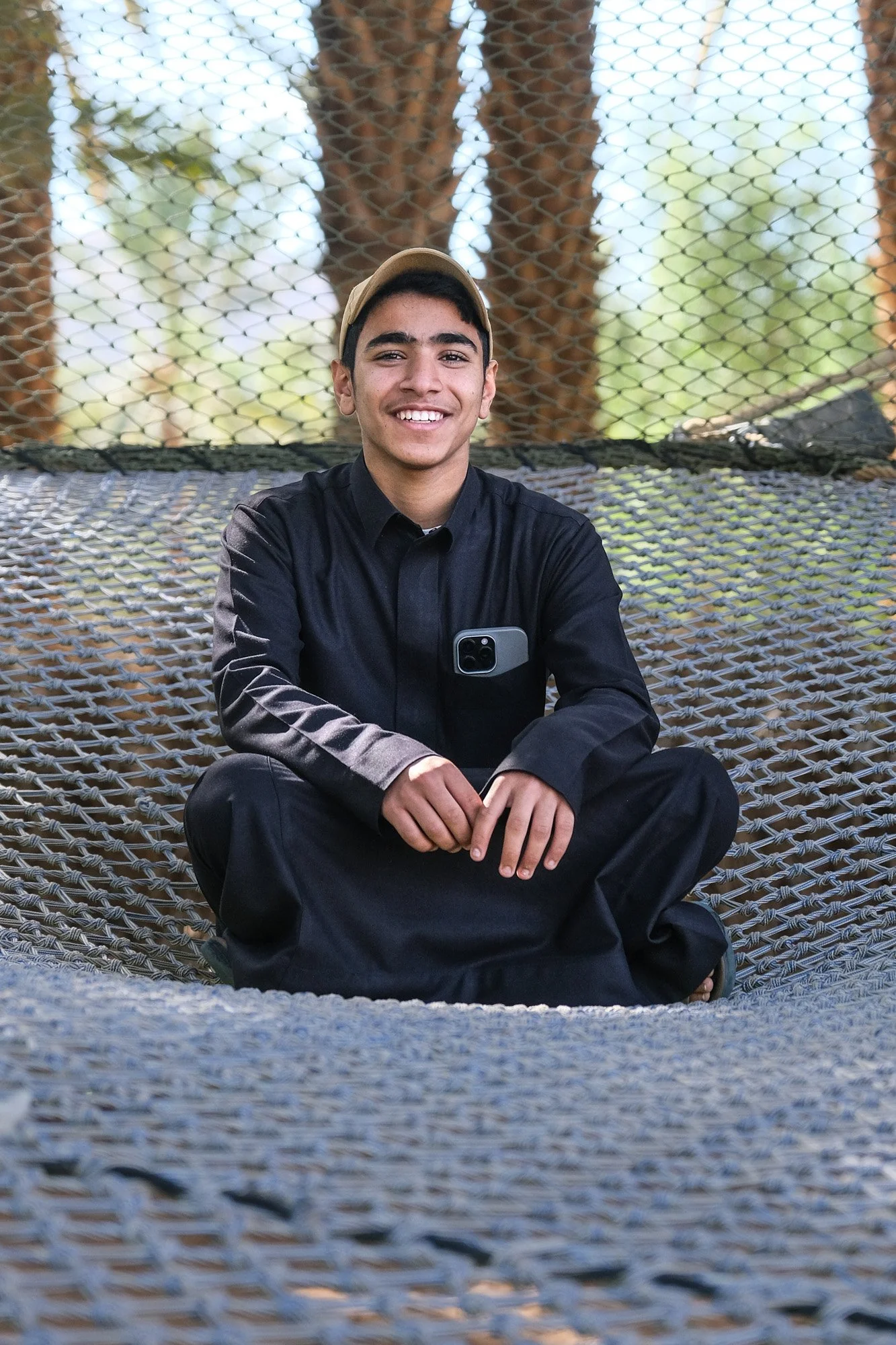
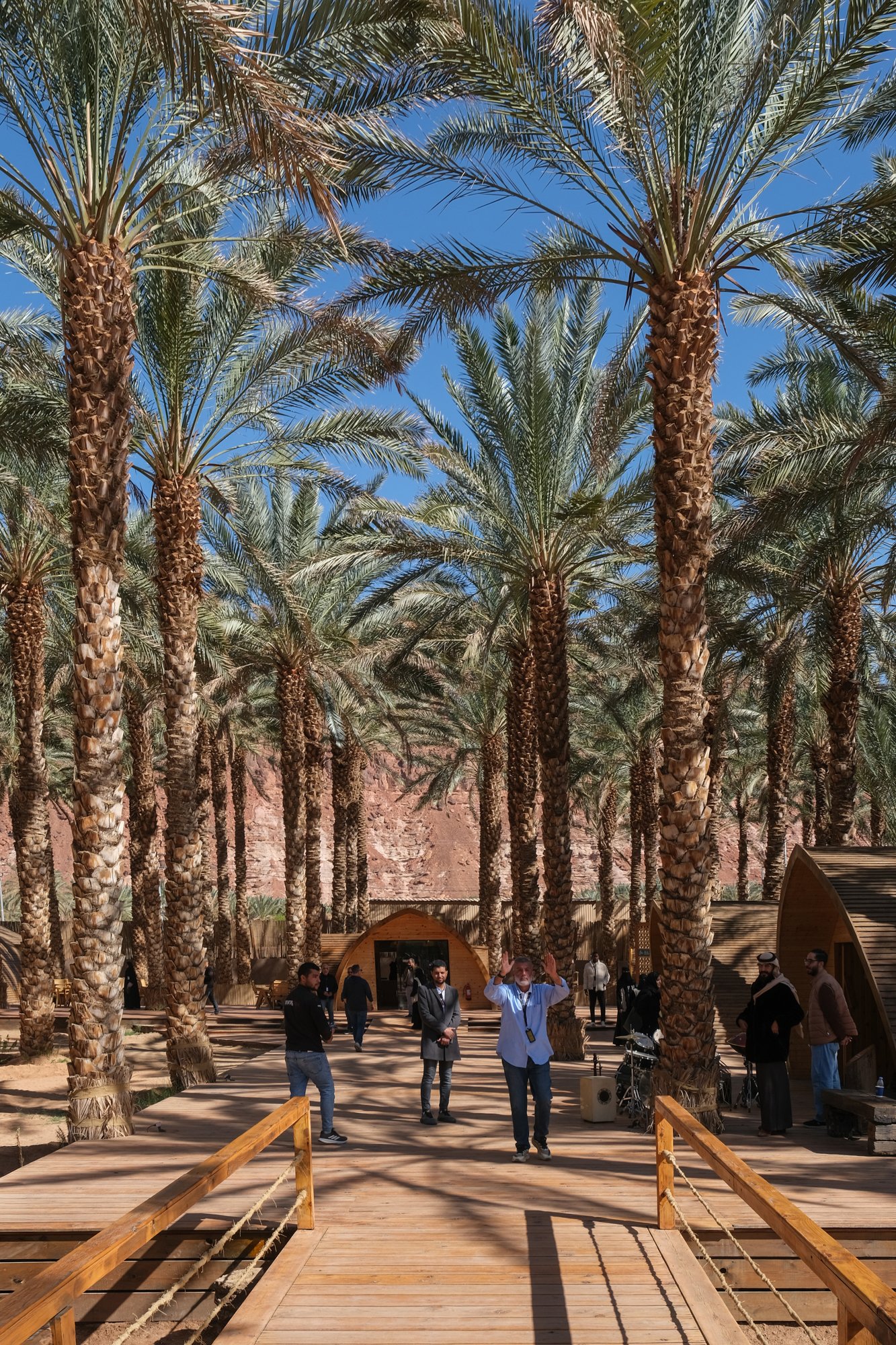
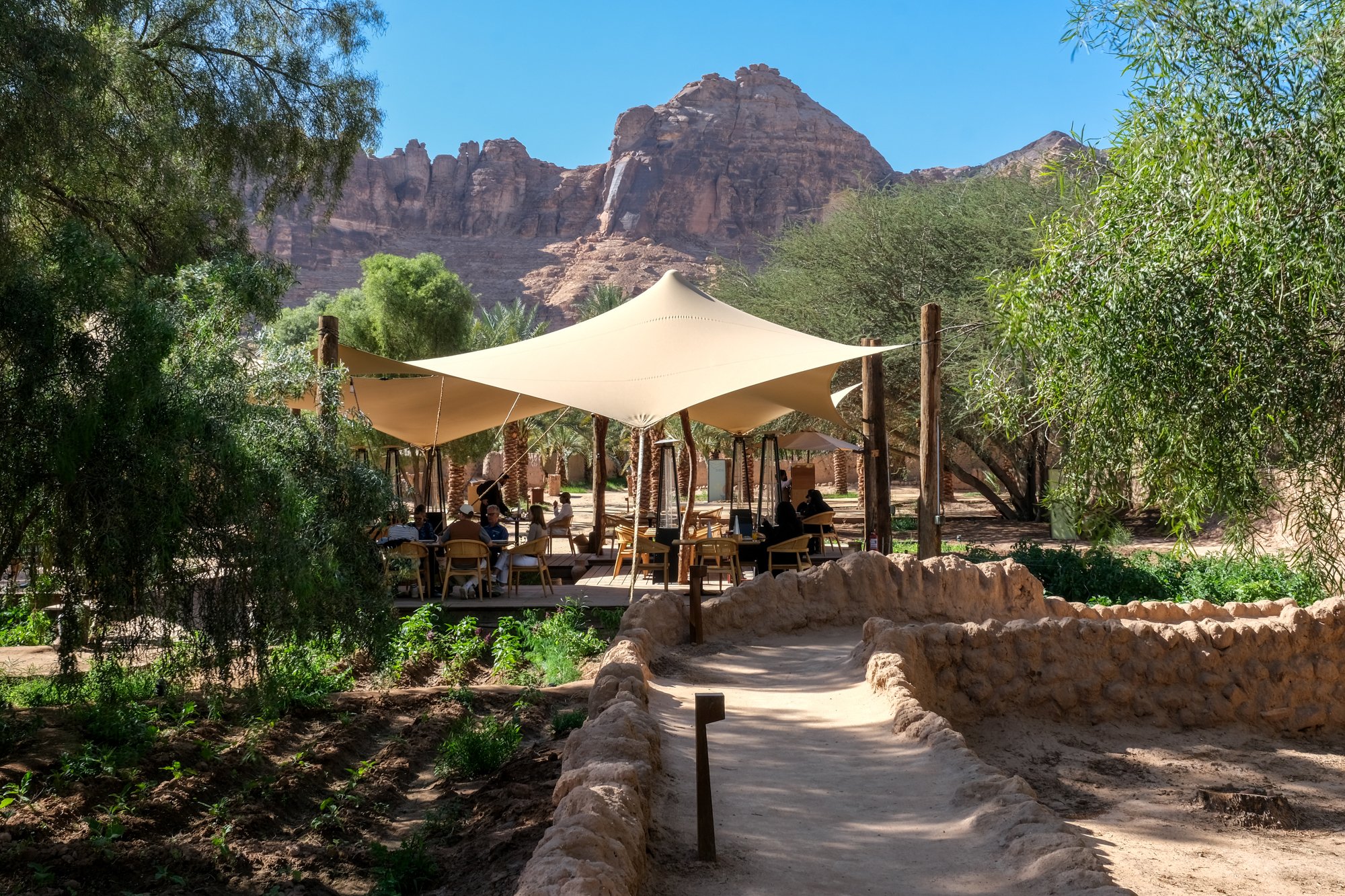
Daimumah may be a fun day out for young families, but it was also a great place to recharge after a day of busy sightseeing. The dining venue, called Ratio, was probably the loveliest restaurant we dined at in Saudi Arabia. Their outdoor pavilion was simple yet extremely elegant. Like the rest of AlUla, every detail of the tourism infrastructure here has been so carefully thought out and executed. We could easily see why AlUla has become the face of Saudi tourism. Just three months after our visit, the United States and Israel launched the war in Iran, crippling Saudi Arabia’s burgeoning tourism. With tourism so heavily dependent on public subsidies, we could only hope AlUla’s long-term development is secured.
Ironically, the old town and the adjacent oasis are relegated to secondary attractions. With so few accommodation options within the old quarter, most tourists stay outside it and visit only in the evening. As the government continues to plow ahead with historic restoration, I could see more boutique hotels opening in the heart of the old city, making the area an all-day destination. AlUla may still have a way to go to become the next Cappadocia or Matera, but it is certainly a role model for responsible tourism development.