

We were quite lucky to spend more than three nights in Riyadh, which is probably not high on travelers’ bucket lists. As much as I enjoyed our time in Riyadh, I couldn’t help but feel there is something disjointed about the sprawling Saudi capital. We may have enjoyed our time in Riyadh, but it is not a city particularly known for its charm or blockbuster sights. While I had originally planned on an overnight trip to Al Hofuf, I ultimately abandoned the idea due to the distance and mileage cap on our rental car. Fortunately, the most popular side trip from Riyadh is only 70 miles away and can easily be done as a half-day excursion. Known as the Edge of the World, this place is easily one of Saudi Arabia’s most magnificent natural wonders. It was unlike any other place we ever vistied.
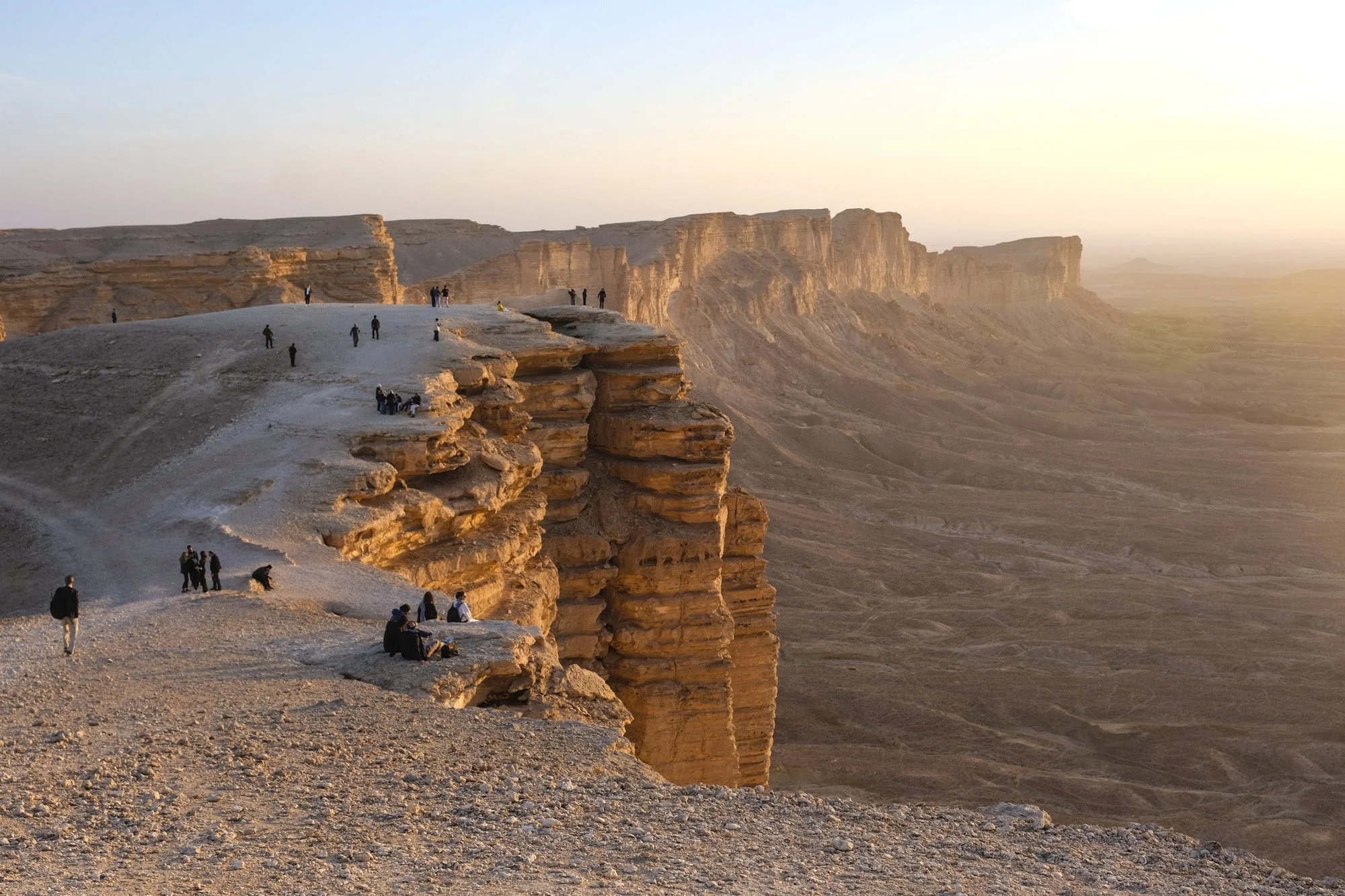
Edge of the World is the most popular excursion from Riyadh for good reasons.
Before our trip, I did a lot of research on how feasible it is to visit the Edge of the World on our own. Since we already had our own rental car in Riyadh, I was reluctant to pay extra for a guided tour. While I found blog posts with detailed instructions on self-driving, it would require a proper four-wheel-drive vehicle and nerve of steel. The last few miles of the road were unpaved and hard to see, especially after sundown. Much of the area also lacked cell service, which made any roadside emergency challenging and dicey. The extra cost of a proper car and the risk of getting stranded led me to sign up for a last-minute group excursion.
Since Edge of the World is the most popular excursion from Riyadh, numerous tour agencies are available. I went with a random operator called Riyadh Hiking, with seemingly decent reviews on GetYourGuide. The tour started at two o’clock at the King Salman Oasis metro station. Our small group of ten included a couple from Japan and a Chinese couple who lived permanently in the Bay Area. I was eager to talk with them about why they chose Saudi Arabia for vacation. It is interesting that none of them had the same ethical concerns that most Americans might have. Saudi Arabia apparently doesn’t seem like an “exotic” destination to them.
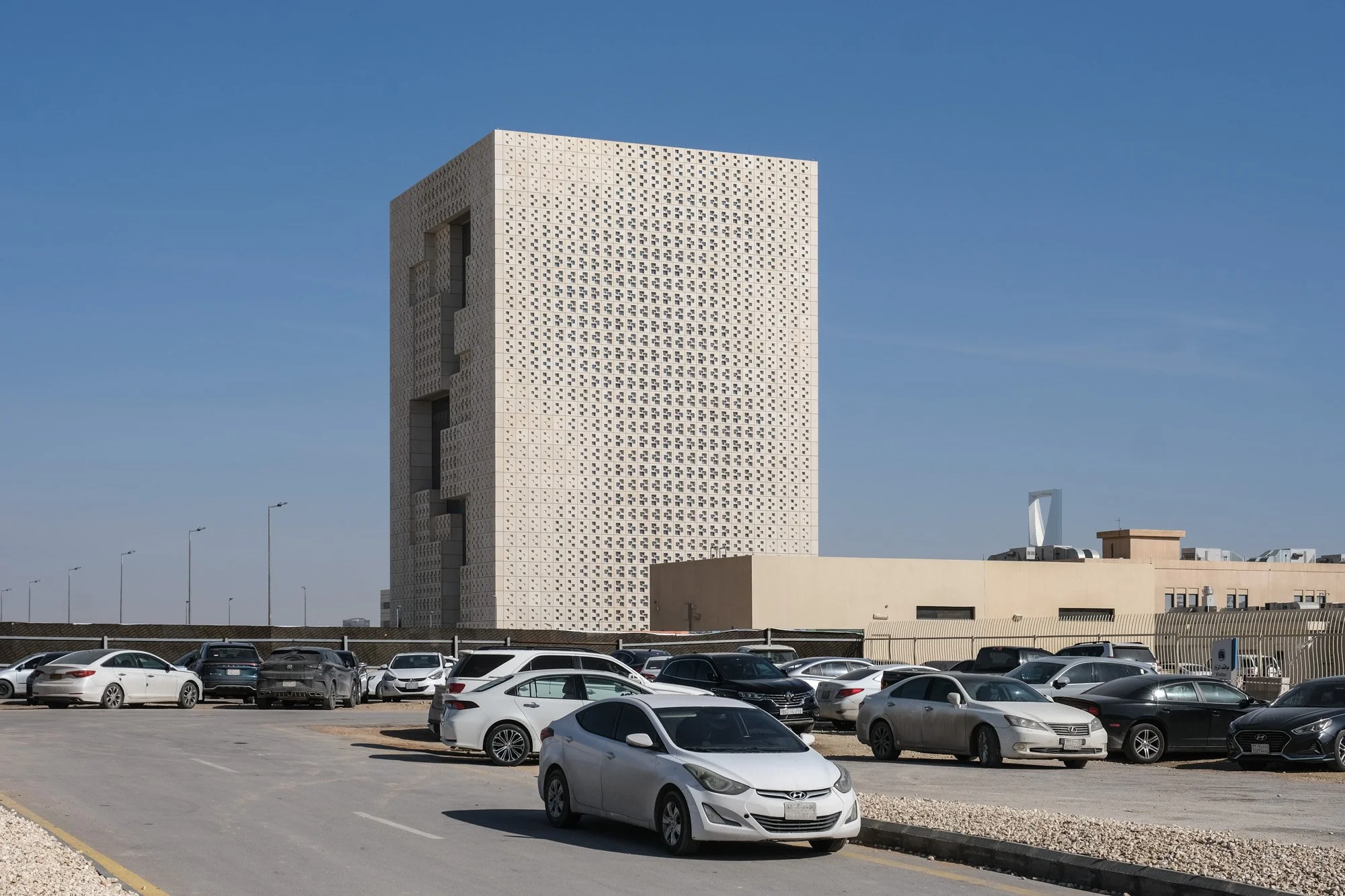
The meeting point for for excursion was at King Salman Oasis metro station.
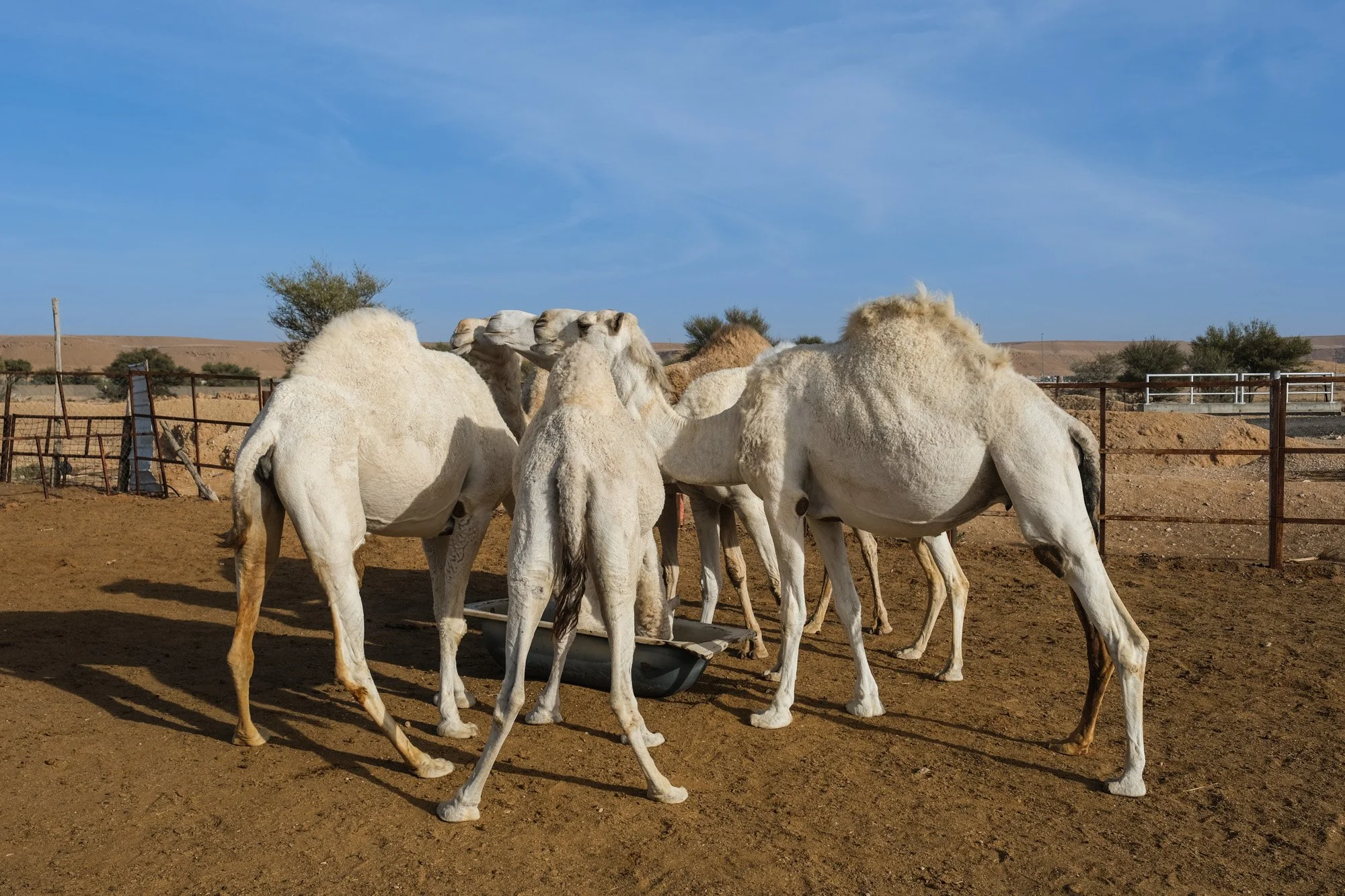
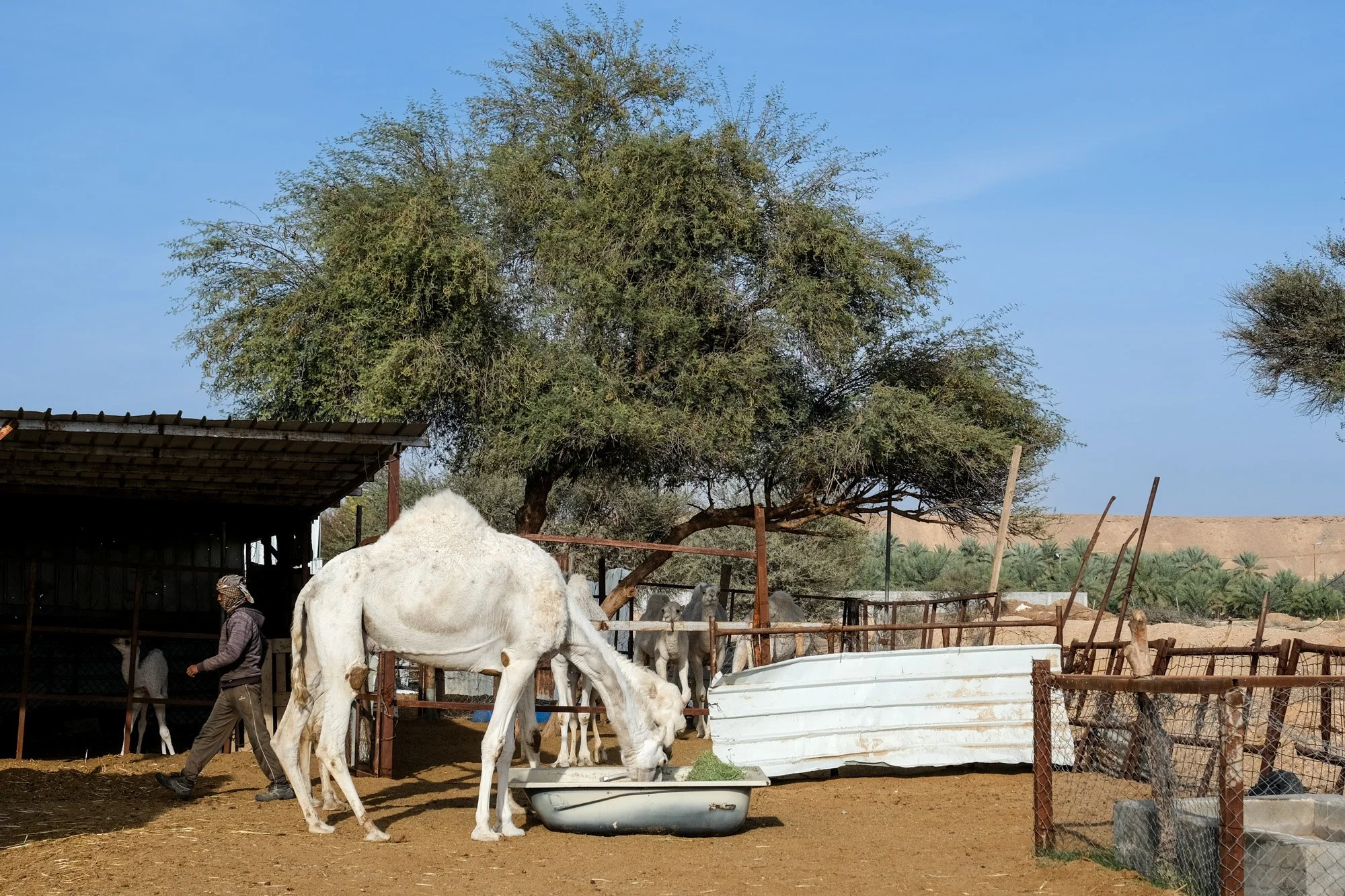
The ride to the Edge of the World took just under two hours. To break up the journey, we made a couple of stops. The first was a quick bathroom break, where we tried local tea and dates. We were then driven to a camel farm in the middle of nowhere to feed some camels. Camels were once integral to Saudi life, and they still hold an important place in the national psyche. Since Brian and I had already encountered camels plenty of times, this ten-minute stop was not particularly interesting. However, it was fun to see how excited some of our fellow travelers were to get up close and personal and feed a couple of these magnificent beasts.
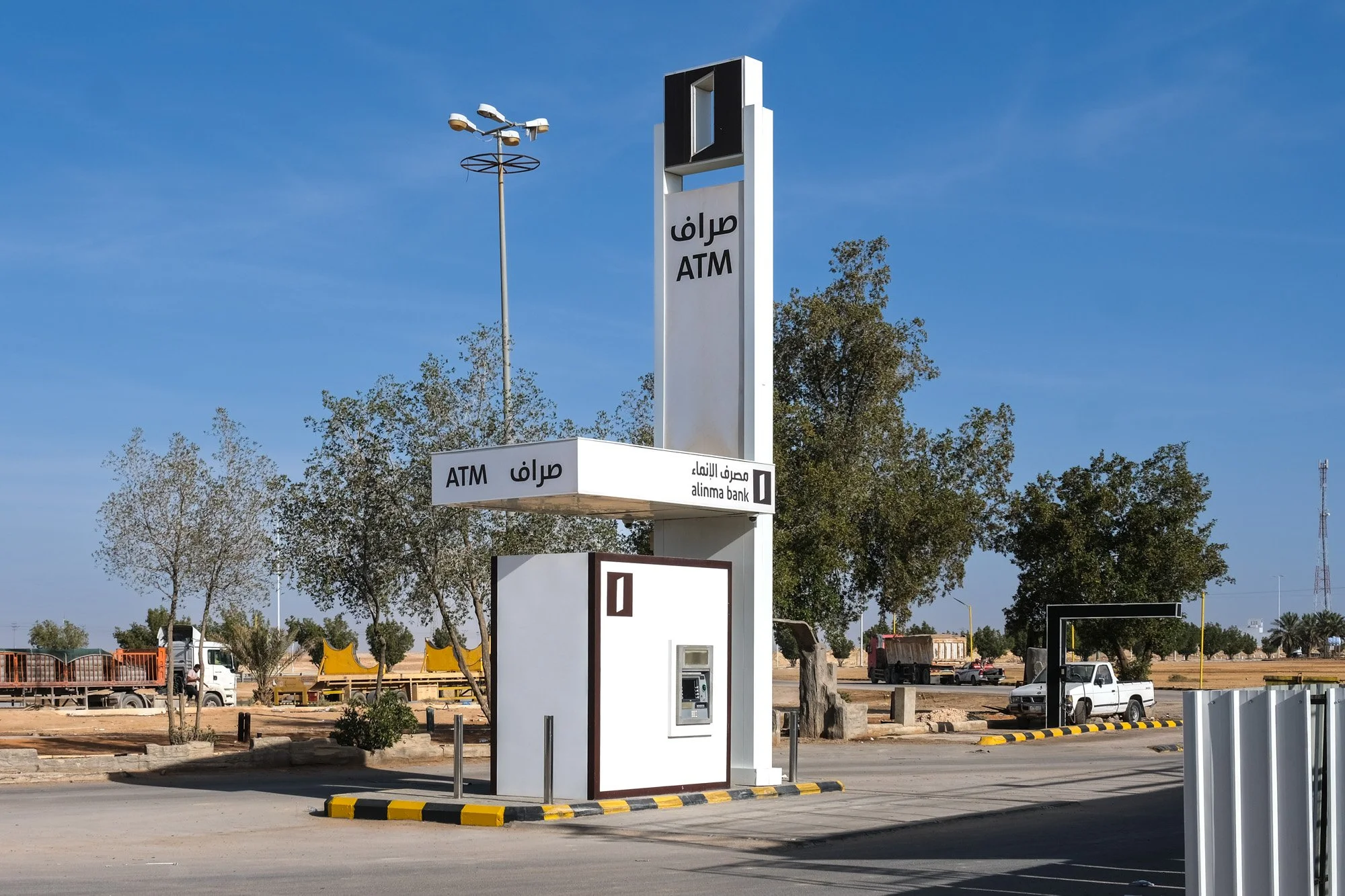
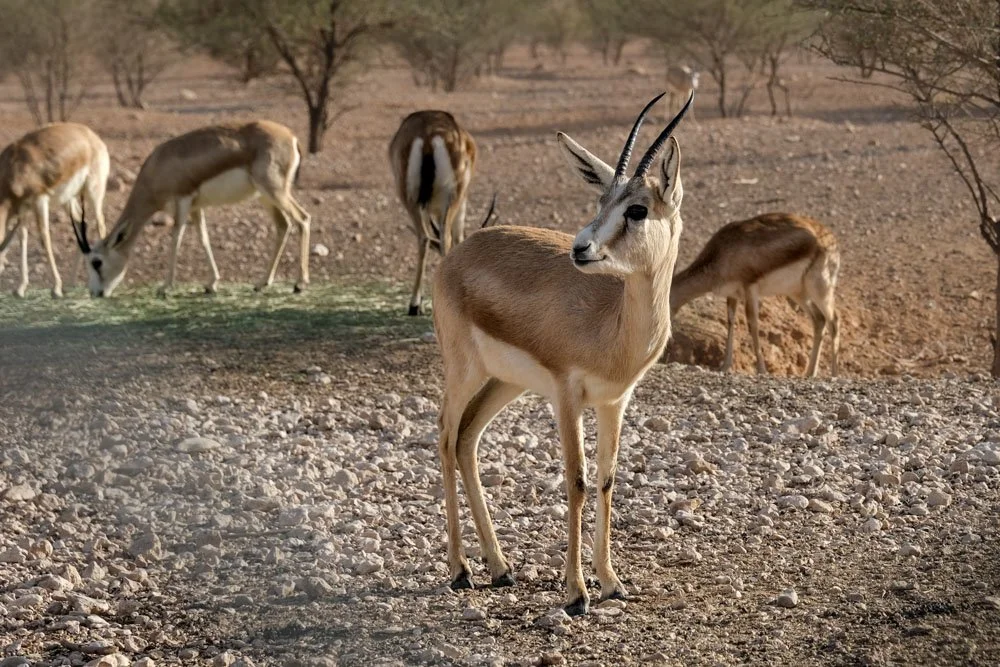
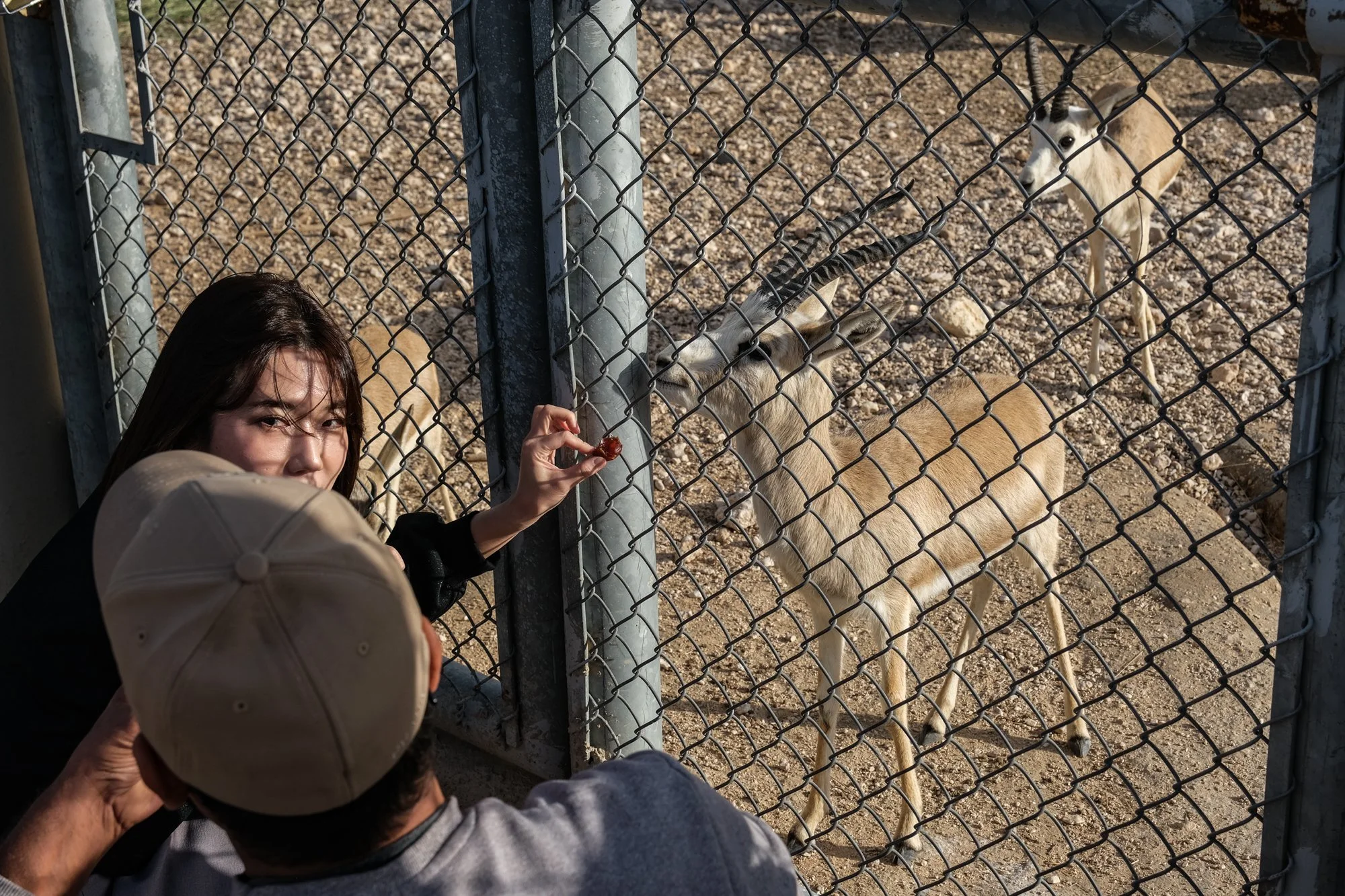
Twenty minutes later, we arrived at the entrance to Huraymila National Park. Although the park is a common stop on Edge of the World excursions, little was written about it online or mentioned on our tour. We were dropped off at the Arabian Gazelle Sanctuary just a quarter mile from the park entrance. Even before we arrived, a group of “wild” gazelles were already gathered along the perimeter chain-link fence, grazing on alfalfa the rangers had put out for them. Arabian gazelles once roamed the Arabian desert but have been vulnerable for decades. Some estimates suggest fewer than two thousand wild gazelles in Saudi Arabia, with half living on the Farasan Islands, a protected nature reserve in the Red Sea. If that figure is correct, the few dozen gazelles here account for a significant percentage of the total population, which is quite surprising. Despite a placard on the fence warning visitors not to feed these “wild” gazelles, the guides were keen to give guests carrots to feed them. It was definitely cute to see them up close, but I didn’t see any rangers around to stop it, which seemed pretty common.
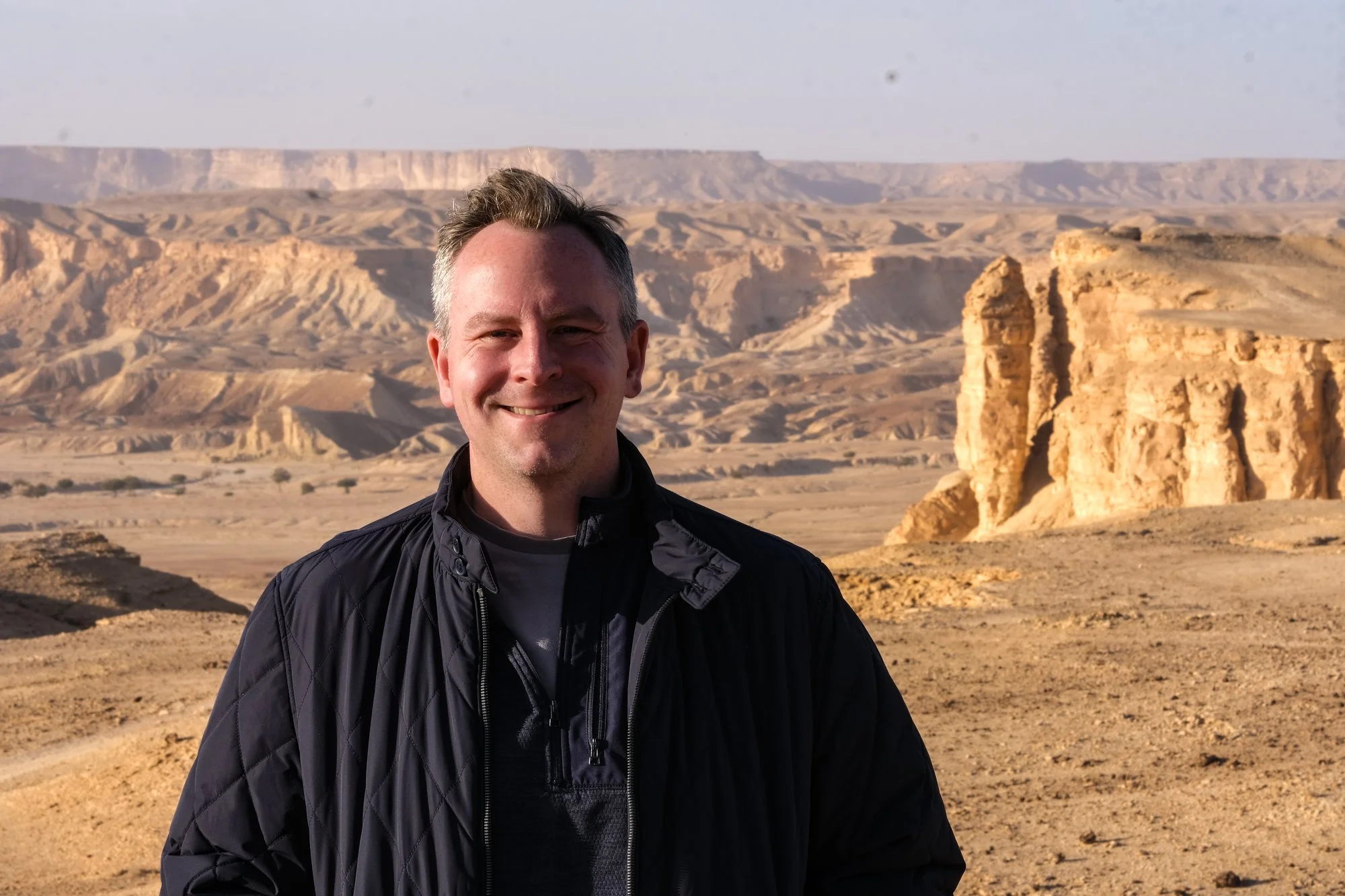
From the gazelle sanctuary, the drive was 40 minutes through rugged terrain. Well-worn dirt tracks ran along the way, but no visible signage pointed the way. Unless you have preloaded GPS tracks or can follow a professional tour operator, the odds of getting lost or stranded might be too high. Especially if you want to visit at sunset, driving in the dark wouldn’t be any fun. It is definitely doable, but given the cost of renting a 4WD versus the guided excursion, it is simply not worth the risk of self-driving for this one. As we arrived at the plateau, the vista opened up, giving us a glimpse of the magnificent landscape ahead. To satisfy everyone’s burst of enthusiasm, the guide made a quick photo stop. Little did we know the views here did not come close to what awaited us at the destination.
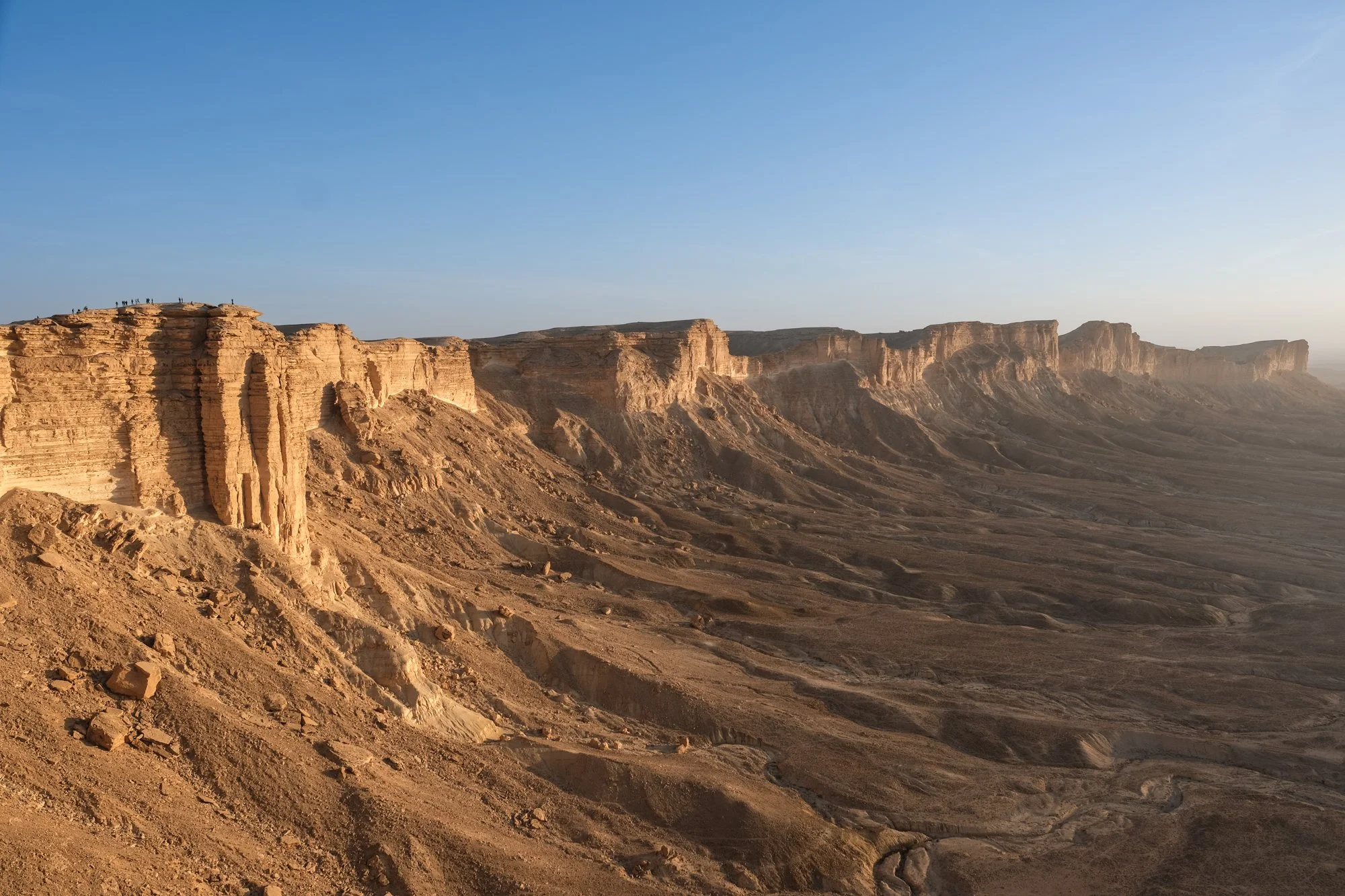
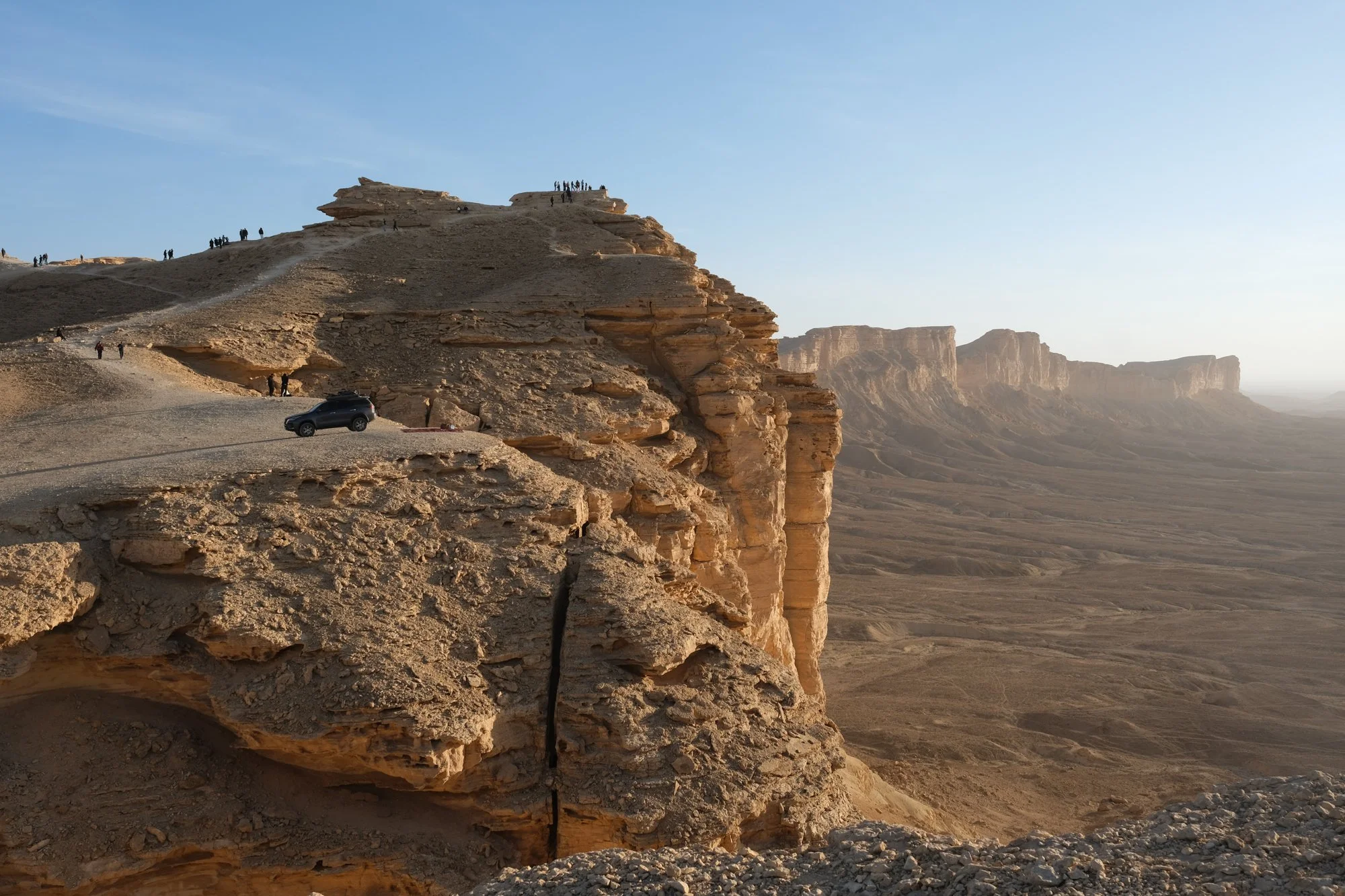
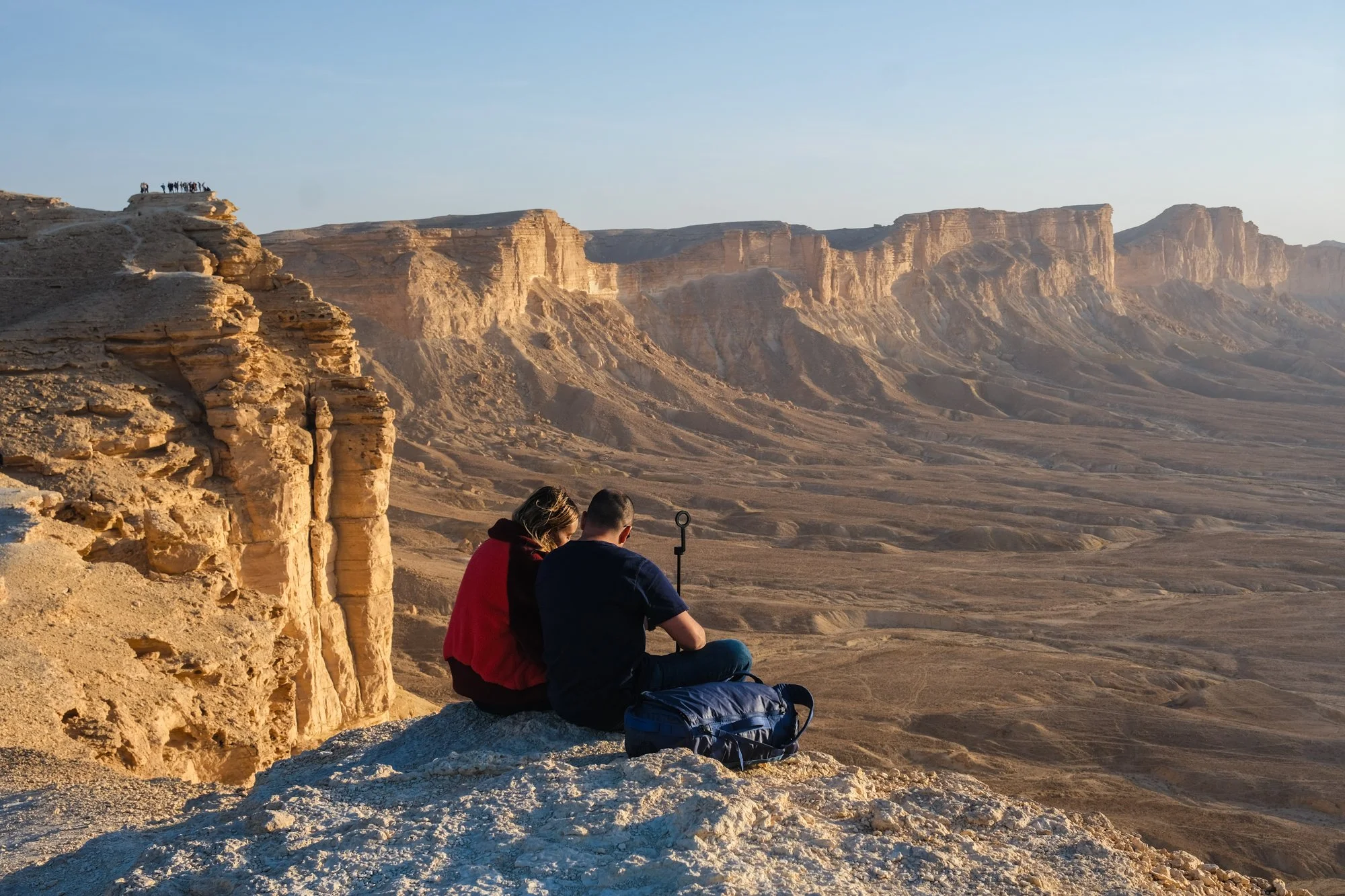
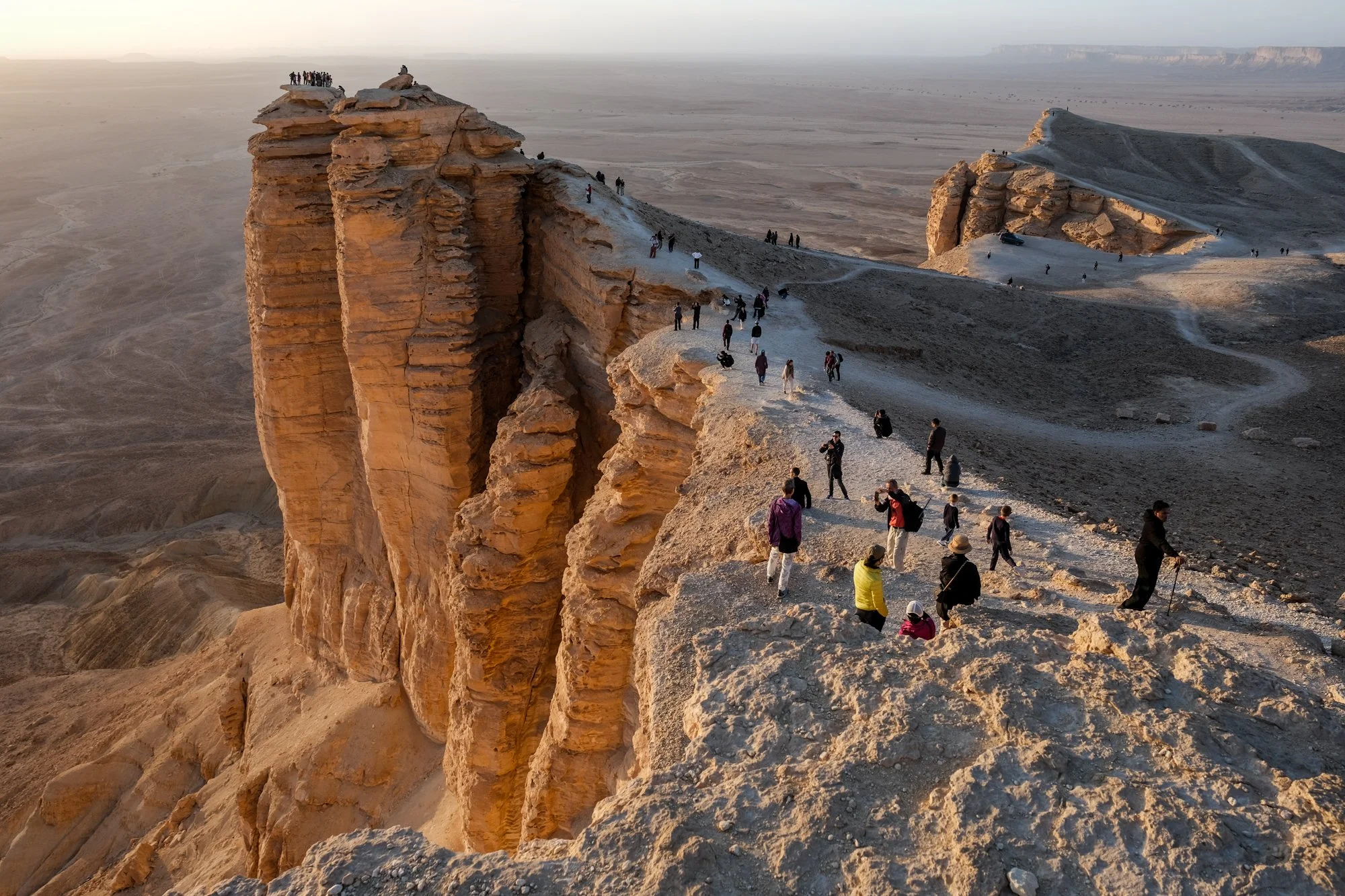
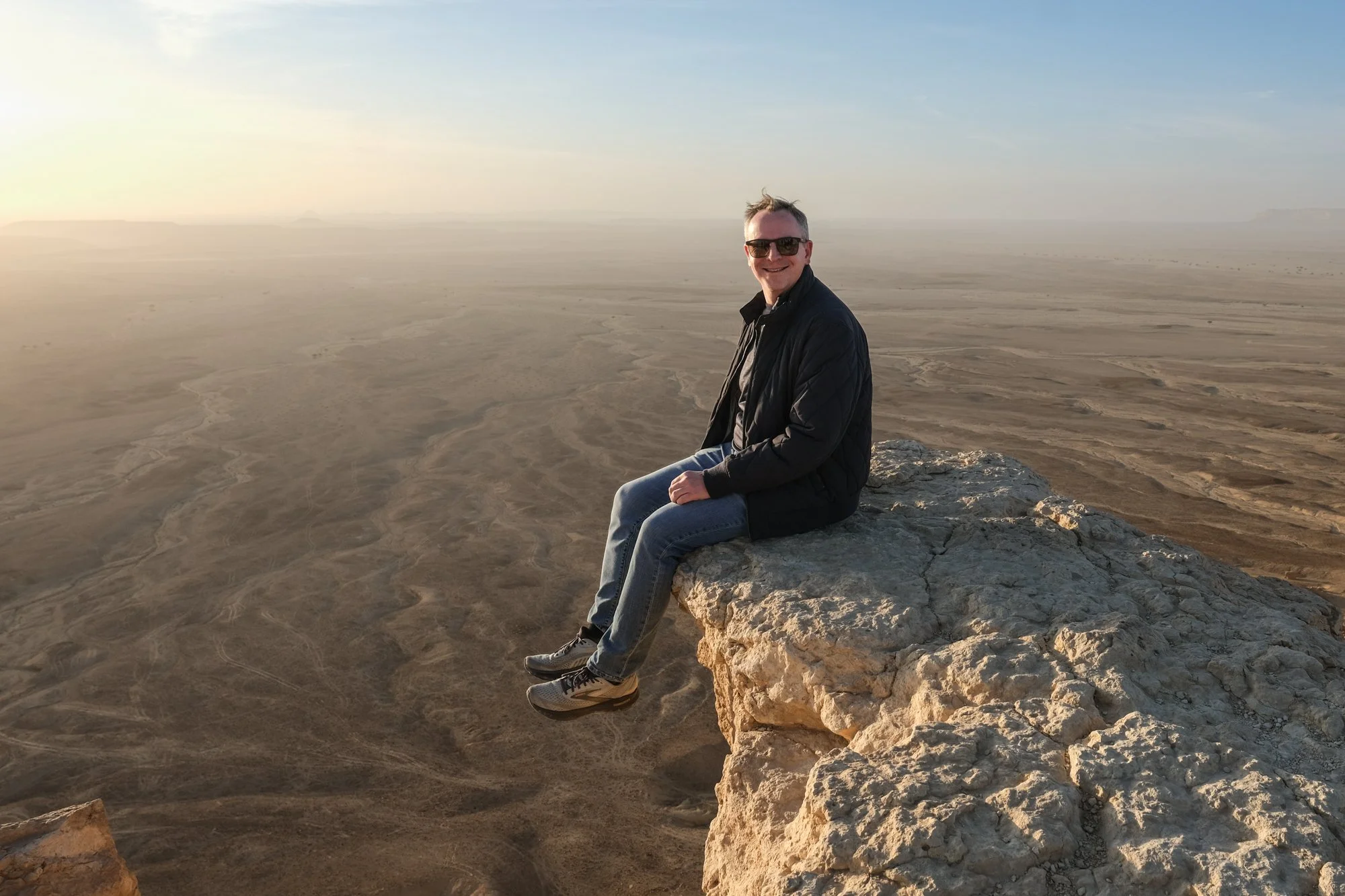
After another ten minutes, we arrived at the parking area, and two dozen vehicles were already there. By my estimate, only one or two were private vehicles self-driven by foreigners. As soon as we got out of the car, everyone scrambled in all directions, much to the tour guide's frustration. The sheer vertical drop at the edges was dizzying, and it was definitely not for the faint-hearted. In fact, the Chinese woman in our group did not dare climb the hill, let alone get close to the edge. She stayed close to the car the entire visit, which was very unfortunate. As we stood at the edge and admired the landscape's majesty, we could see why this spot earned the nickname “Edge of the World.” Despite all the people around us, we still felt oddly alone in nature.
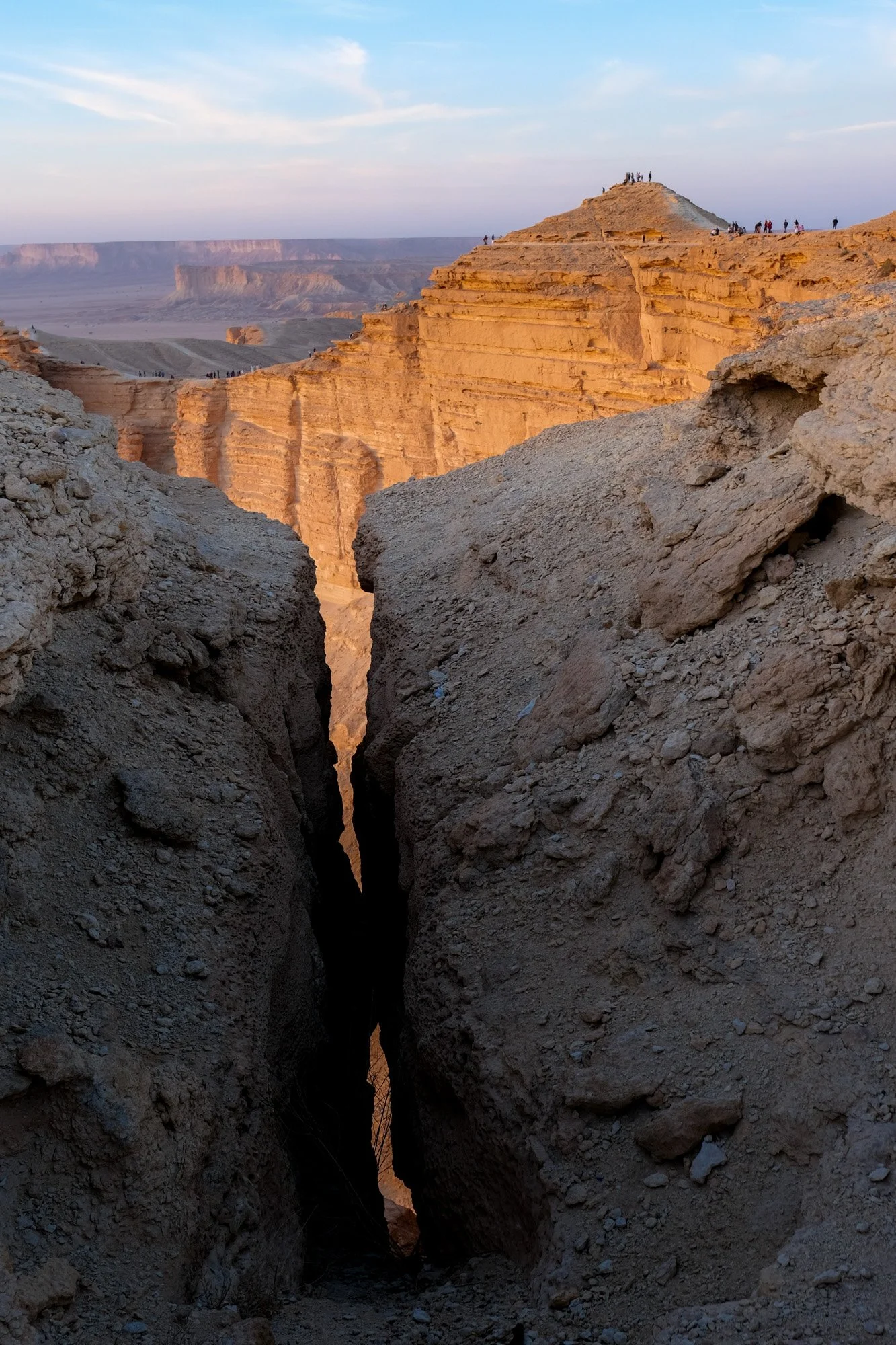
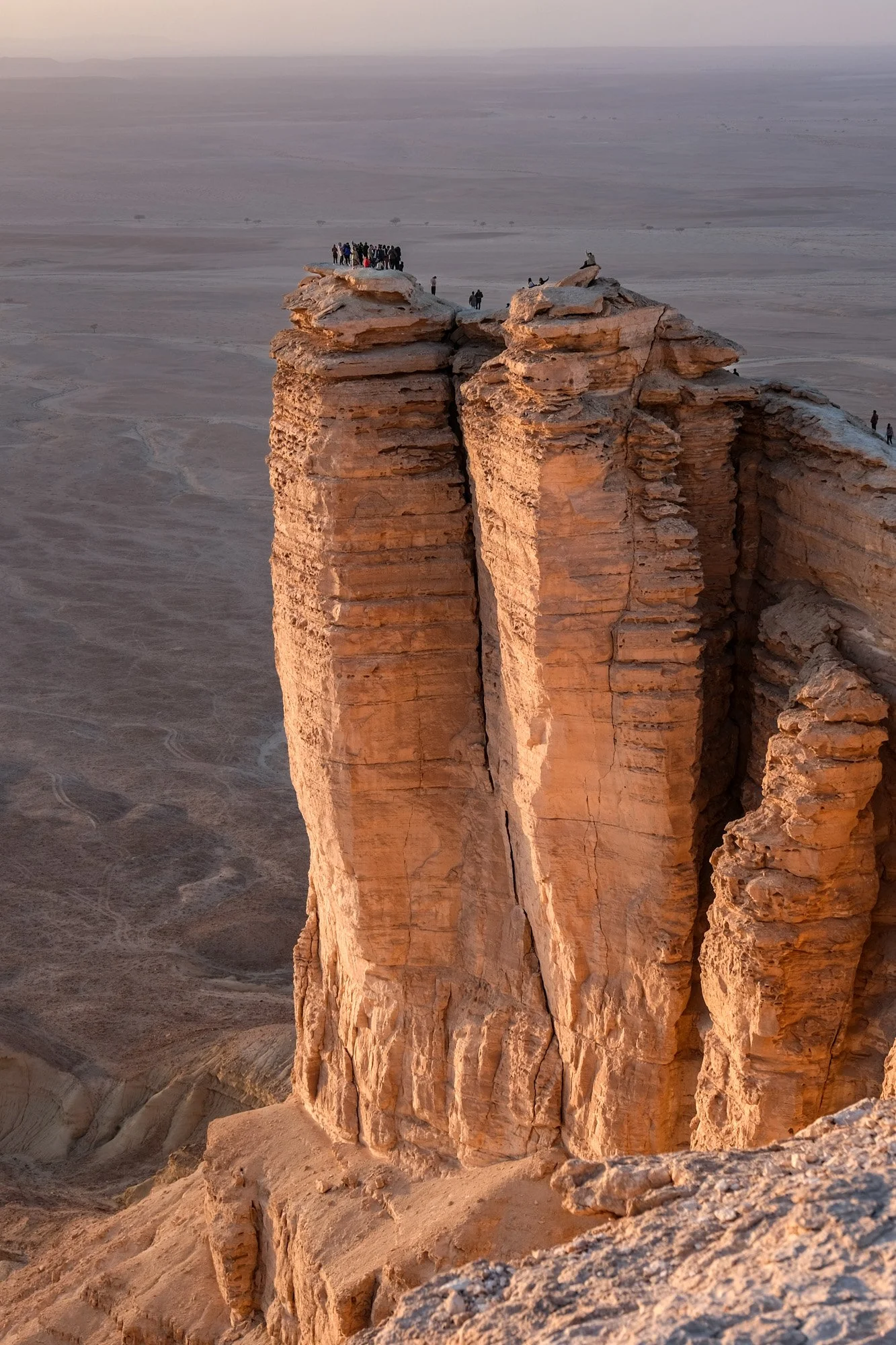
Known as Jebel Fihrayn, this dramatic landscape is an escarpment—a geological formation created by the Arabian tectonic plate's movement along the fault lines. At the bottom of the 1,000-foot cliff lies the ancient seabed. The seafloor is flat as a pancake, and we can clearly see the remnants of ancient riverbeds. Although central Saudi Arabia is now arid as bone today, it was once a lush landscape full of flora and fauna. It's easy to forget that the country’s rich fossil fuel deposits are physical reminders of a lush, thriving ecosystem. Aramco, the Saudi state-owned oil producer, believes this is one of the world’s largest oil reservoirs and remains largely untapped.
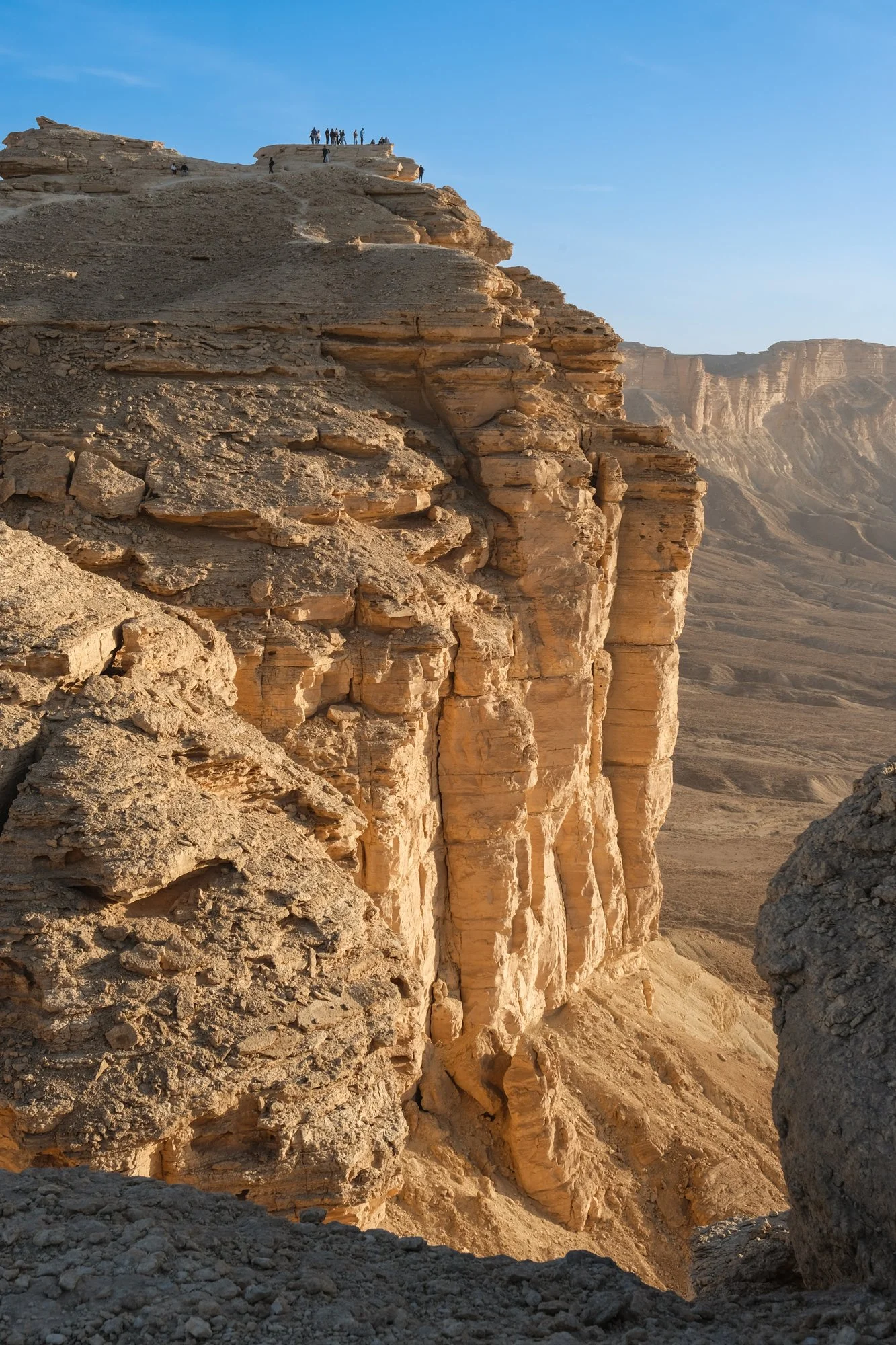
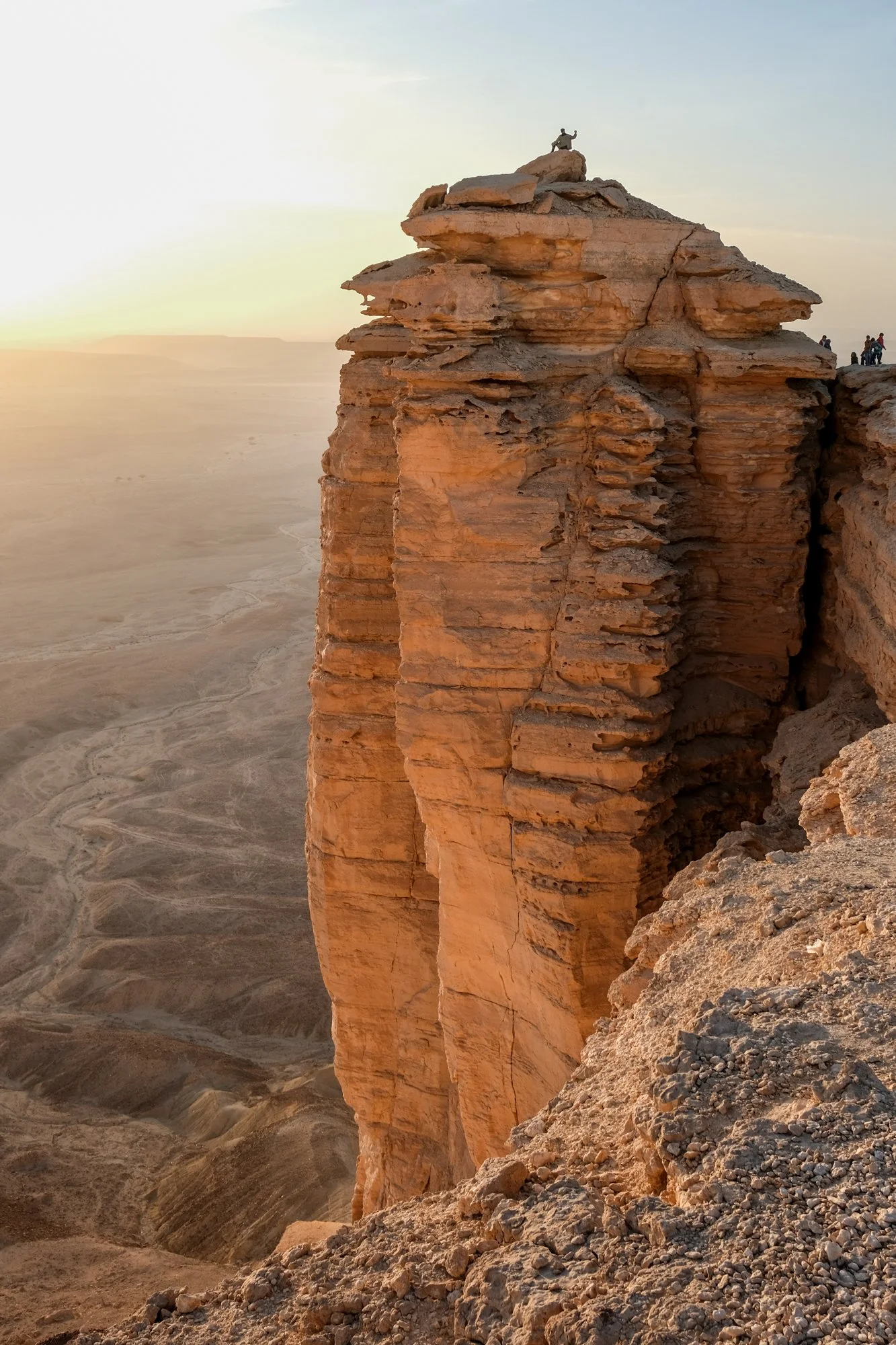
One of Edge of the World's most iconic features is a pair of twin pillars that seem to jut out from the cliff edge. Even though it was only a short five-minute hike from the parking area to the pinnacle, standing at the pinnacle of the pillar felt like being on the top of the world. It was also the best spot to look back at the cliff face, as the pillars protrude from it. As the sun began to dip toward the horizon, the rocks were illuminated in a gloriously golden hue.
Along the way, I met an American couple who were wearing