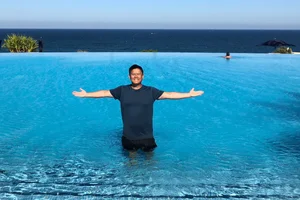

Travel Rant #7: The Ethic of Visiting Saudi Arabia
Besides North Korea, few countries elicit as much consternation and controversy as Saudi Arabia. When I first floated the idea of visiting the kingdom, I knew it could be a hard sell to Brian. As a gay couple, we certainly need to be mindful of personal safety, but I am always reluctant to let that be a major impediment in our travel. Although I may be quite nonchalant when it came to visiting a conservative muslim country, Brian is far more self-conscious. Our experience in Egypt made him quite uncomfortable, so I was honestly surprised that I managed to convince him to go along with this “exotic” adventure.
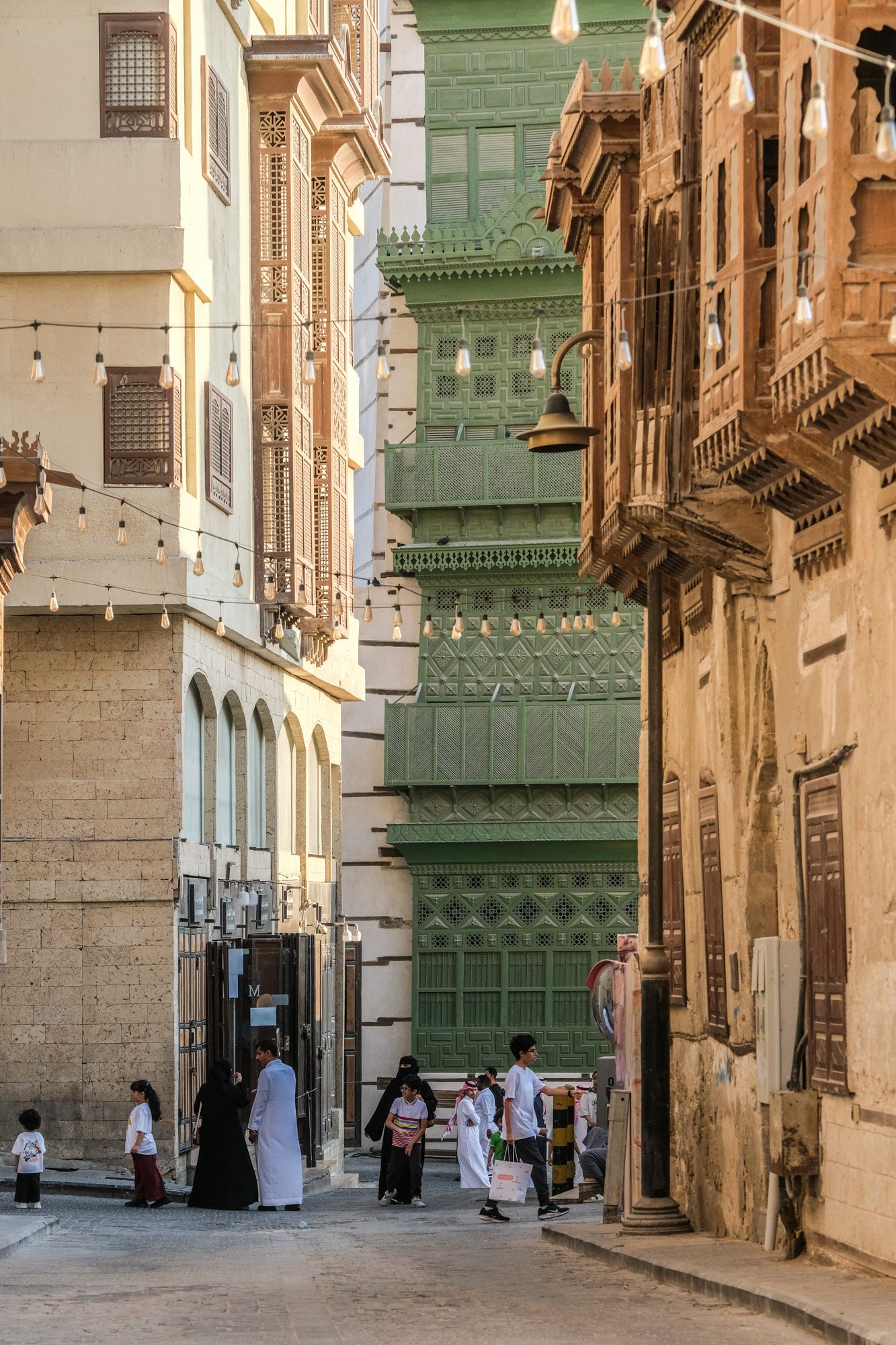
Saudi Arabia has been one of the most exciting travel destinations in the Middle East over the past few years.
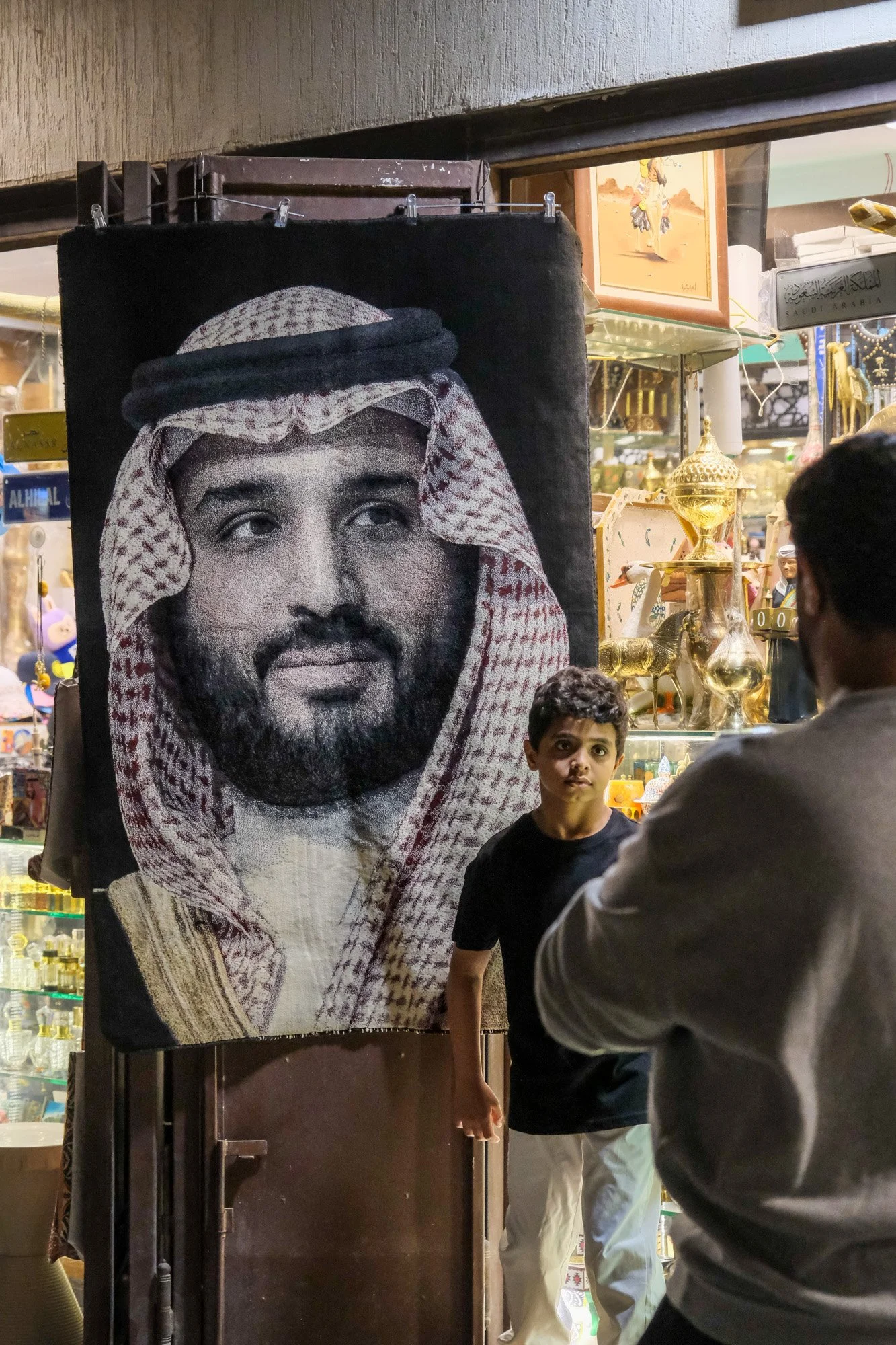
Much to our surprise, we did observe a cult of personality for Mohammed bin Salman in Saudi Arabia.
You might have heard that Saudi Arabia has been undergoing rapid and unprecedented changes in recent years. After an audacious palace coup in 2019, Mohammed bin Salman, or MBS, became the de facto ruler of the kingdom as the crown prince to the aging King Salman. Branded as part of the Saudi Vision 2030 initiative, the reform aims to diversify the economy away from the fossil fuel industry. The liberalization effort aimed to attract foreign capital and make the society more open. One important pillar of the program is to open the kingdom to tourism, which the country hopes will foster the kingdom’s soft power.
Remarkably, the country did not issue its first tourist visa until 2019. However, the country does have a long tradition of hosting muslim pilgrims. Core to the country’s national identity is the “Custodian of the Two Holy Mosques,” which is also the honorary title for the Saudi monarch. Saudi Arabia may be an enigma to Western tourists; it is no stranger to hosting visitors from around the world, including millions of muslim pilgrims each year. And like other GCC countries, the kingdom also has a sizeable expat community, most notably from South Asia and the Philippines. So it is fair to say that I found it amusing when Western bloggers portrayed this place as some kind of hermit kingdom like North Korea or Bhutan.
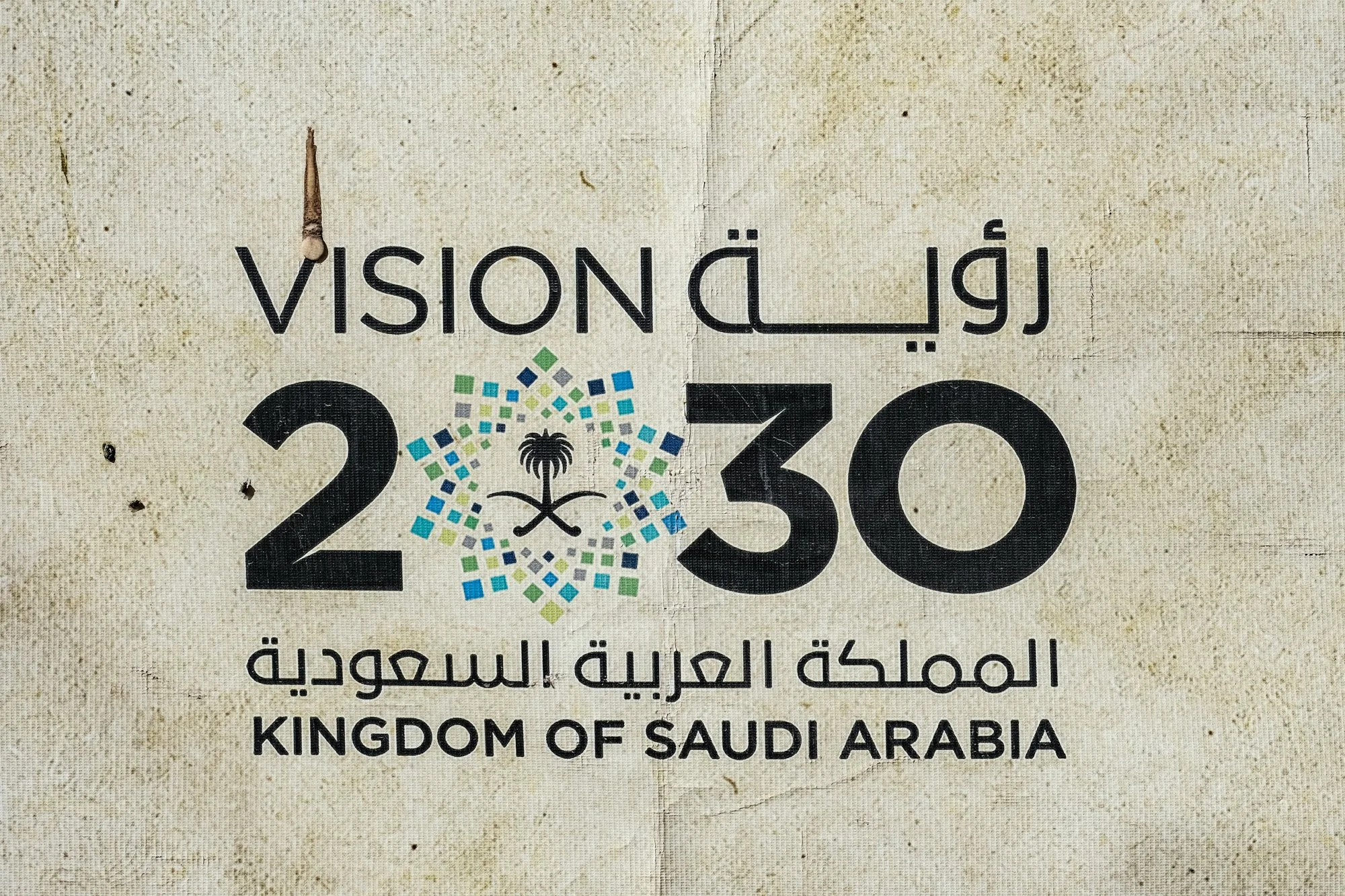
Saudi Vision 2030 was the marquee project of the crown prince.
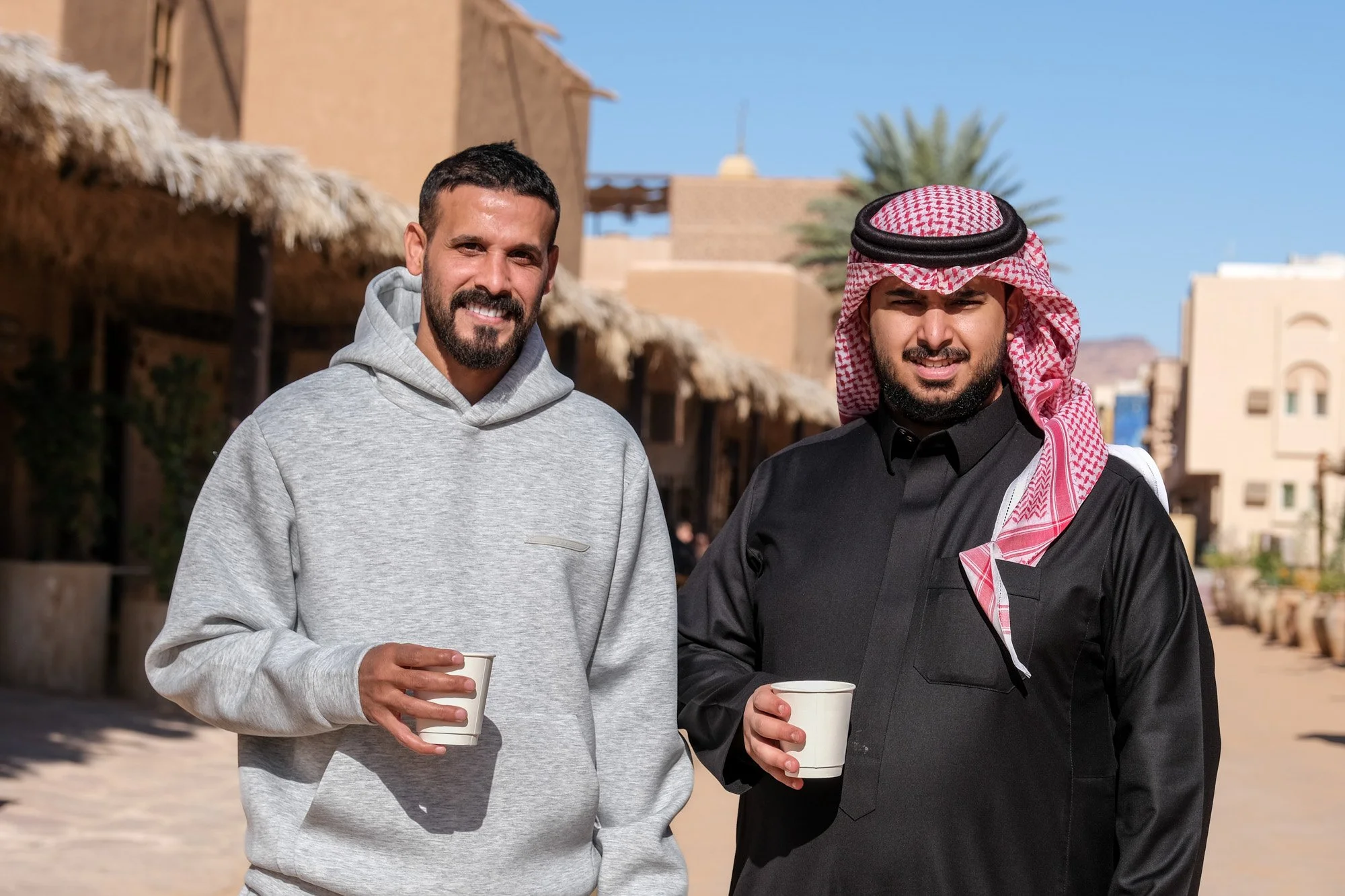
Meeting Saudis at Old Town Al Ula.
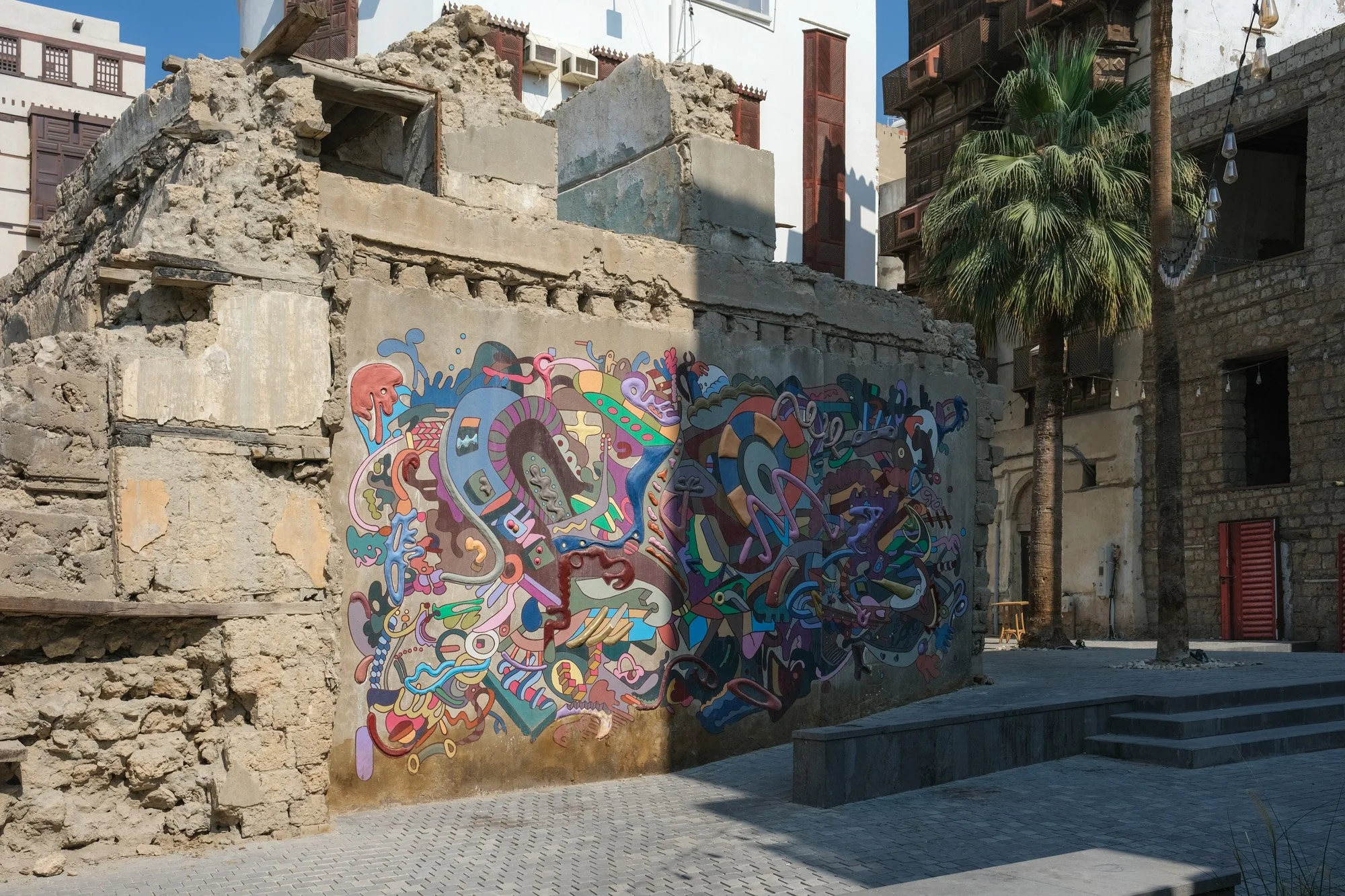
A juxtaposition of contemporary street arts and historic old Jeddah.
For liberal democracies, Saudi Arabia has long been a political pariah because of a long litany of human rights abuses. Chief among the issues are severe restrictions placed on Saudi’s women and the LGBT population. Until only five years ago, Saudi women were not legally permitted to divorce, register the birth of their children, work, or travel internationally without explicit approval from their “male guardian.” The so-called male-guardianship, or walī, is deeply rooted in fundamentalist Islam, and is not unique to Saudi Arabia. Varying forms of walī could be found from Yemen to Mauritania, but none are more notorious on the international stage than in Saudi Arabia. What made Saudi’s program especially notorious was the religious police, the mutawa.
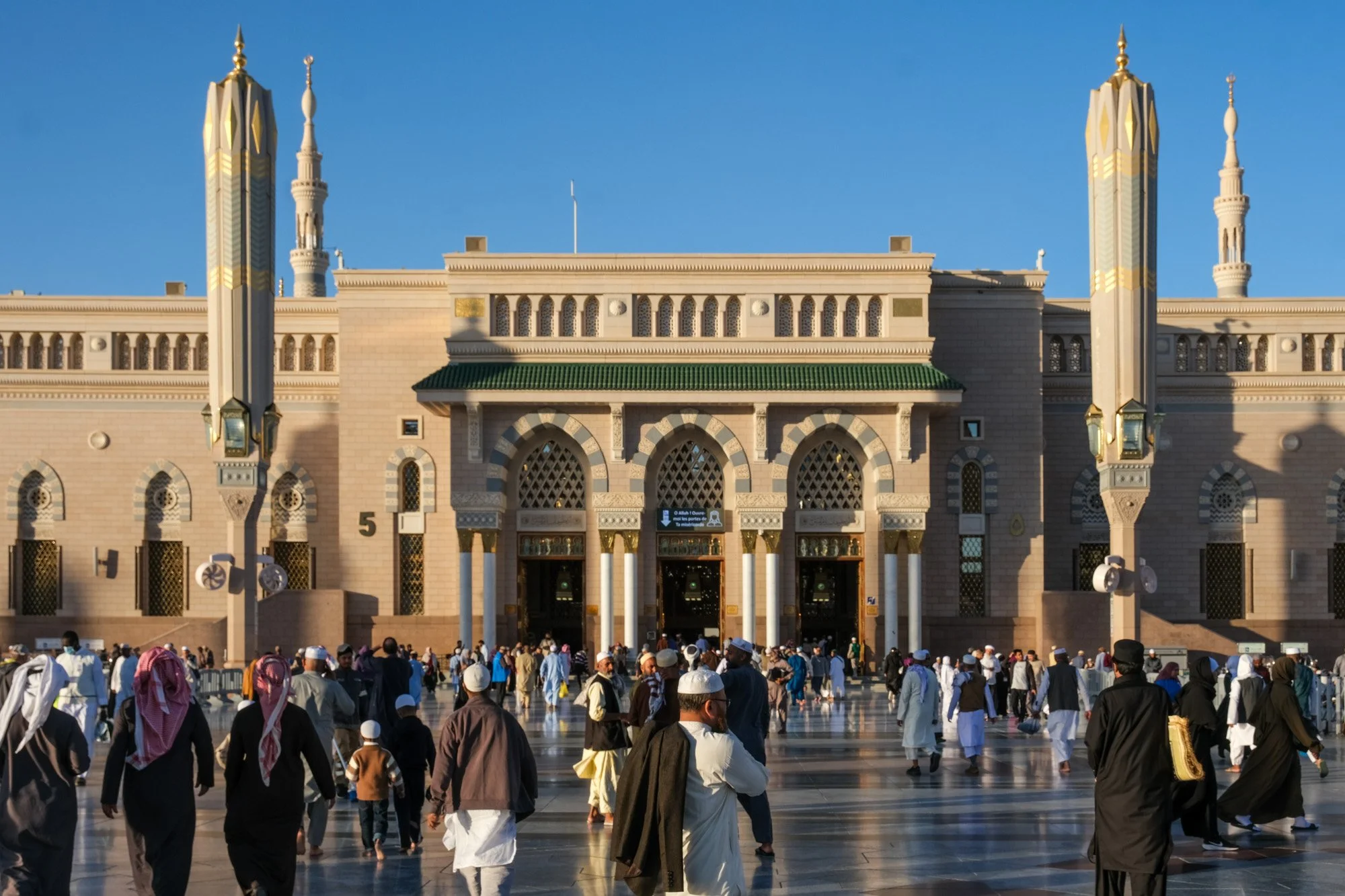
Millions of pilgrims visited Saudi’ holy sites, such as Prophet's Mosque in Medinah.
From 2018-19, the government cracked down on women's rights activists. Many Saudi women were imprisoned and tortured for their political activism and made headlines around the world. So it came as a surprise to many that the crown prince announced the lifting of various gender-related restrictions in 2019, including curtailing the legal power of the religious police. In reality, the latest reforms are likely more economic than a genuine cultural shift. Unlike its Gulf neighbors, Saudi Arabia has a relatively large population, but its per capita income is significantly lower. The country simply needs to increase productivity and the labor participation rate before its oil wells run dry.
Having read much about the state of Saudi gender equality, I honestly did not know what to expect. I was immediately surprised that about a third of immigration officers at Riyadh Airport’s passport control were women. There was no gender segregation as far as I could tell. The female officers politely apologized for the line and warmly welcomed us to their country. Much to Brian’s relief, there was no question of our relationship or giving us a lecture on the Saudi code of conduct. It was apparent that the Saudi had made strides toward gender parity, but obviously still had a long way to go.
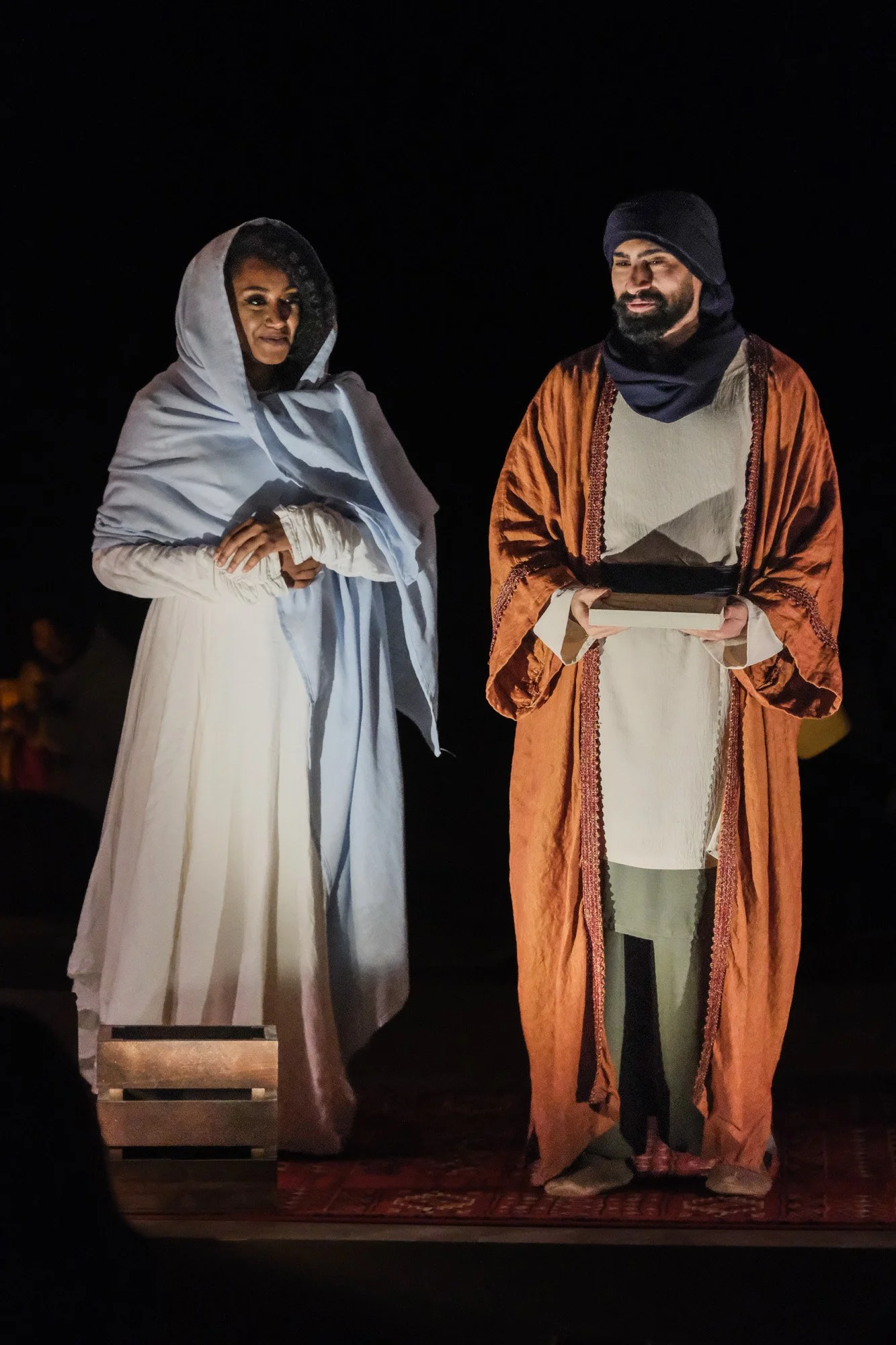
A nighttime performance at Hegra.
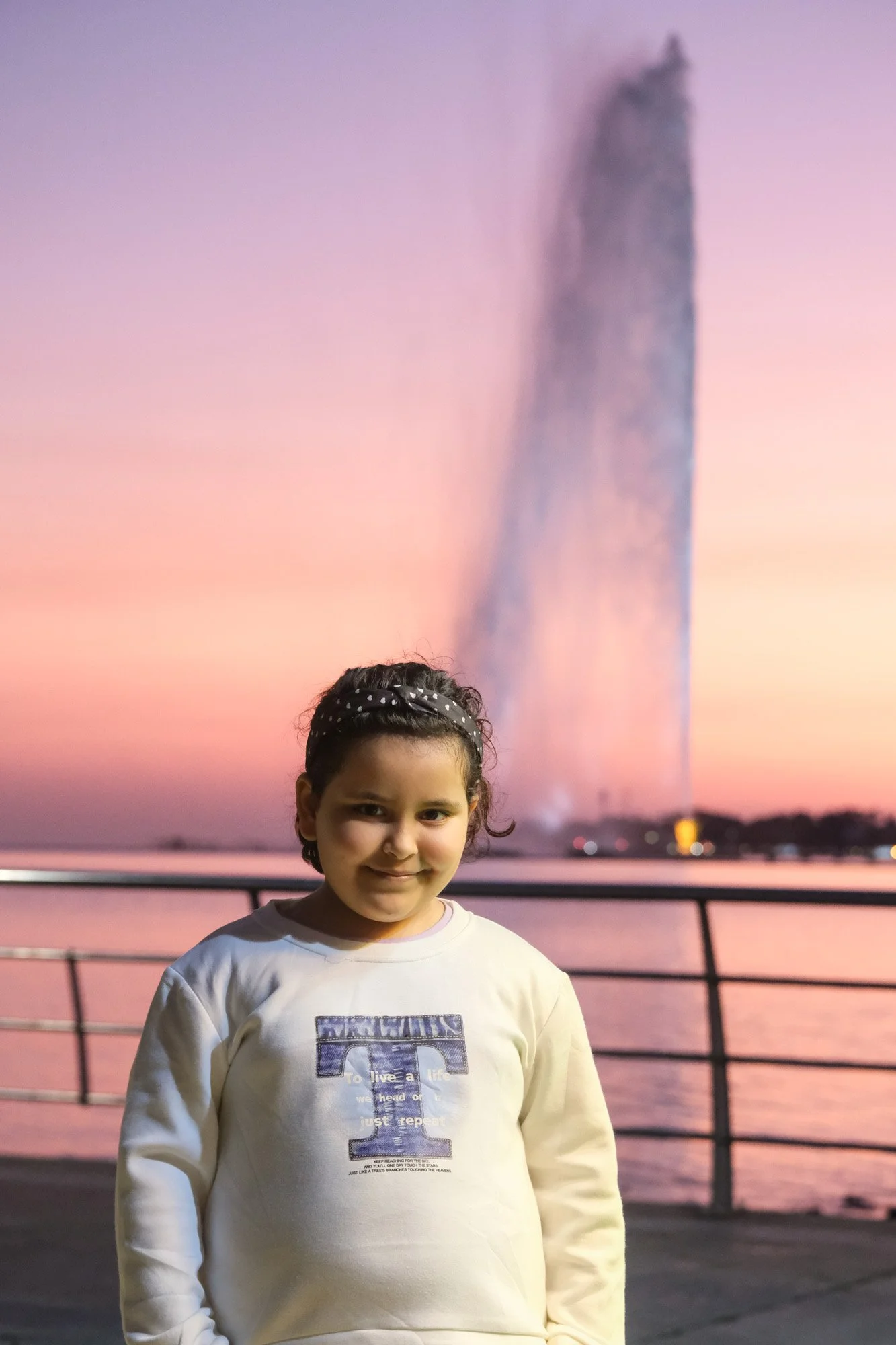
The girl’s mother asked me to take a photo in front of Jeddah’s King Fahad's Fountain.
For outsiders, one major point of contention about gender equality is the burqa, the traditional garment for women in public. All-black outfits not only remove a woman’s individuality but also trap heat in the intense Saudi heat. Although Saudi women are not required to wear burqas or religious veils, it seems that the majority do so regardless, either out of habit or due to general societal expectations. Because of the country’s expat population and the inherent diversity within the muslim world, conformity in the religious dress code is almost impossible to enforce.
During our two-week visit, we saw a range of religious “modesty” among Saudi women. Although most wore the full niqab, some showed their hair, and a few even wore Western dress without a headscarf. Based on my observations, most wear headscarves as a form of modesty. At restaurants, many Saudi women would request private booths or tables in the back so they could take off their niqab while eating. We also did not encounter restaurants with segregated sections for men and women, although I am fairly certain they are prevalent in more rural and conservative areas.
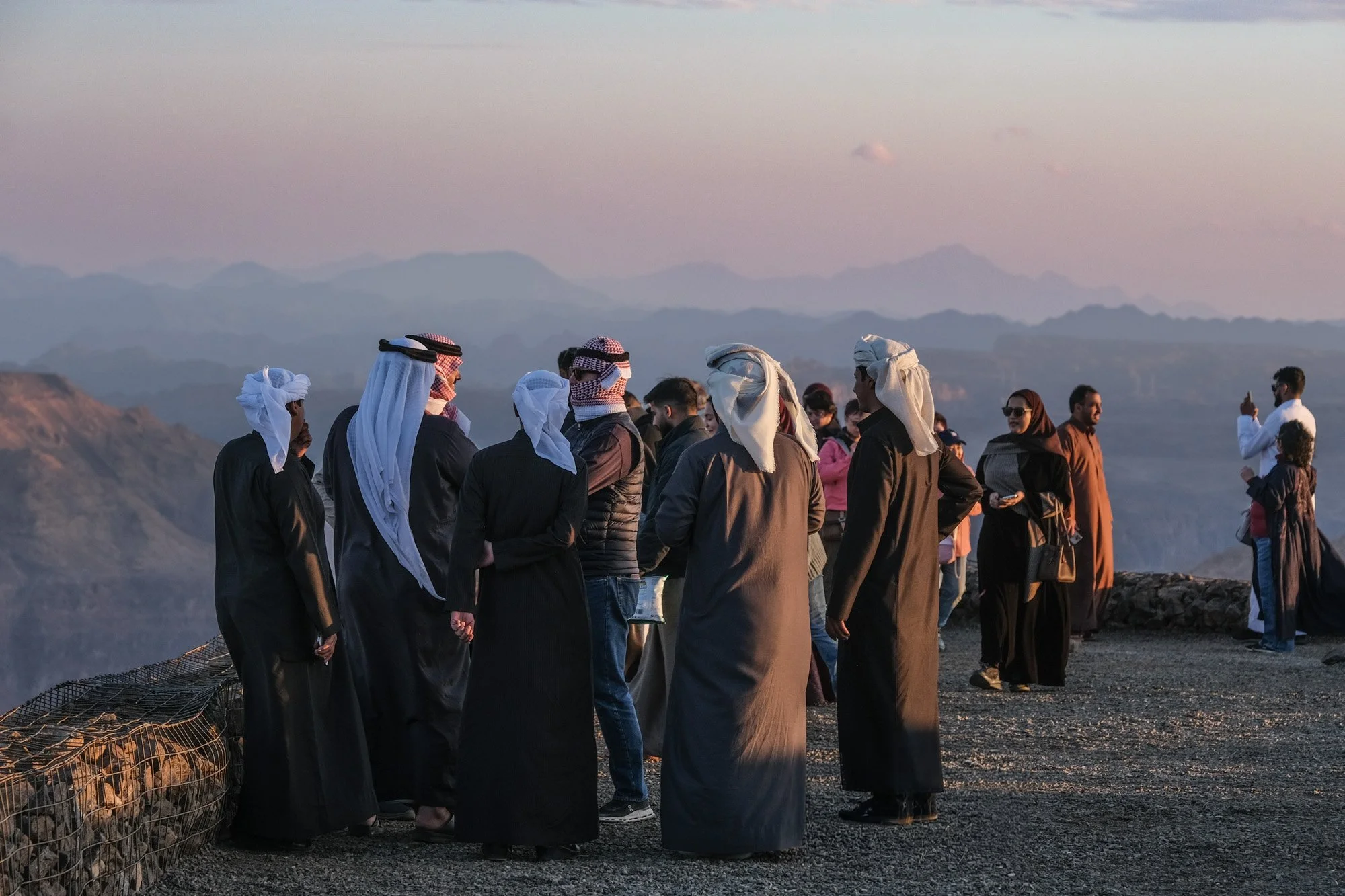
Harrat Viewpoint above Al Ula.
Since there is technically no legal restriction on women's dress, I do wonder how quickly society is changing under the current liberalization effort and whether there is considerable backlash beneath the surface. I do think most men, including the youth, also prefer traditional dishdashah over Western garb, and I could personally understand why for practical and cultural reasons. Ultimately, it is a fine line between cultural practice and religiously imposed regulations. I would be curious to see how Saudi men and women might adapt to Western clothing over the next decade, particularly in the cosmopolitan cities of Jeddah and Riyadh. However, Saudi dissidents abroad are quick to point out that none of these social reforms is codified in law. It is an absolute monarchy after all.
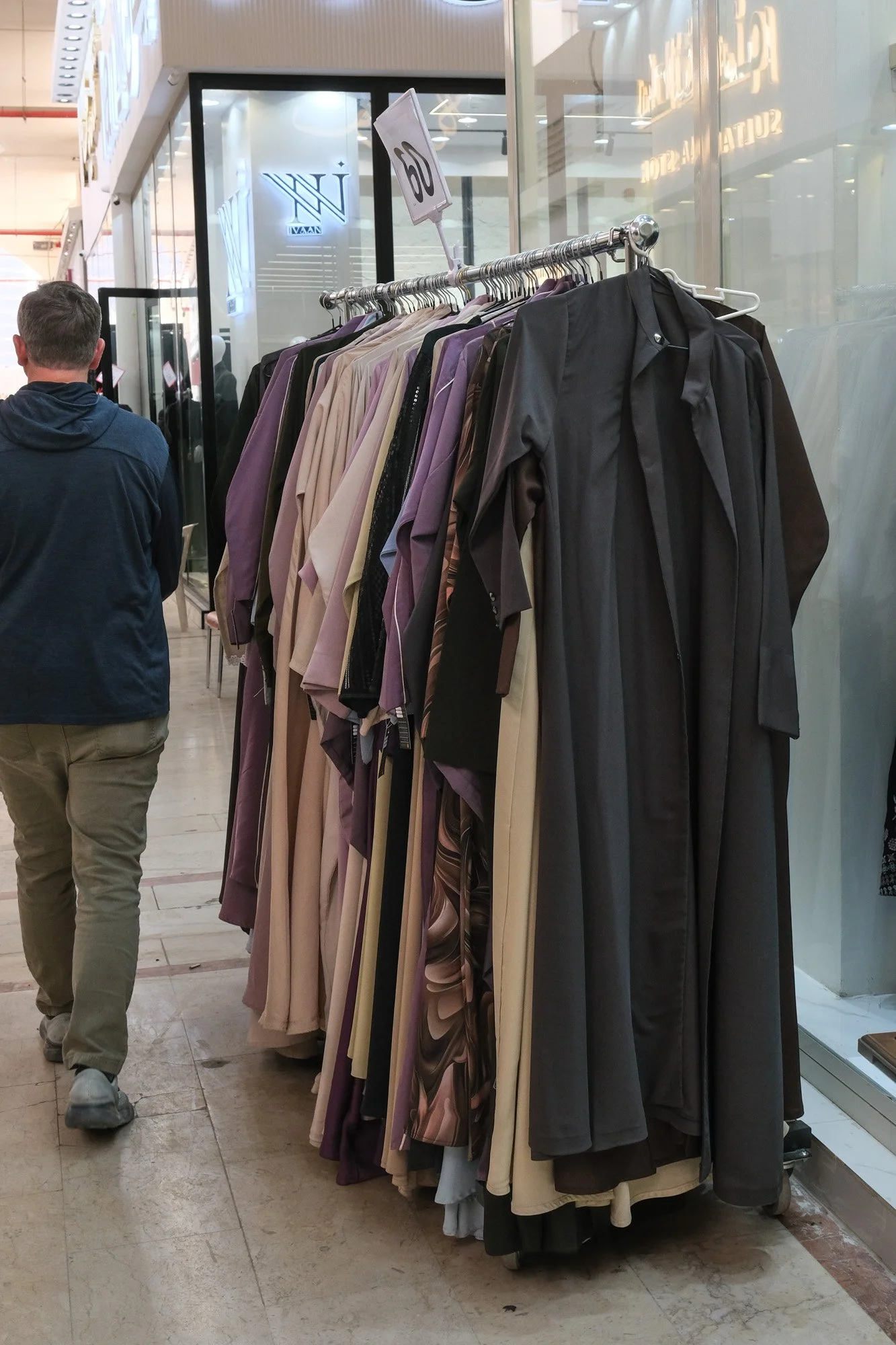
A wide assortment of traditional garments for Saudi women.
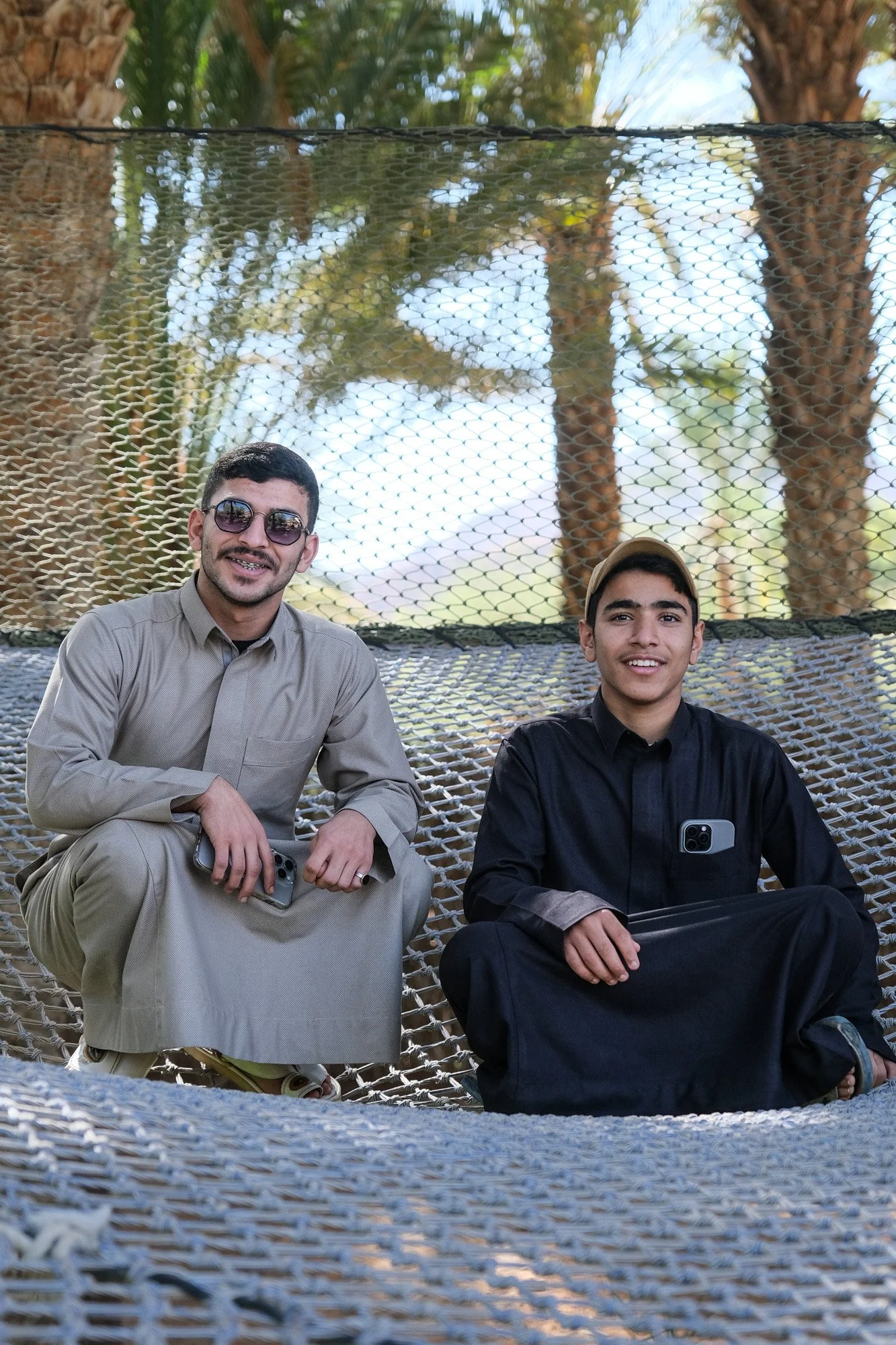
Most Saudi young men also seem to prefer traditional garbs, although with modern modern flare.
Of course, one could not speak about the ethics of visiting Saudi Arabia without mentioning the brutal murder of the exiled Saudi journalist Jamal Khashoggi in 2018. A general consensus agreed that Khashoggi was lured into the Saudi consulate in Istanbul, under the ruse of conducting a regular consular affair. He was allegedly dismembered, and his body parts smuggled back to Saudi Arabia on a secret diplomatic flight. His murder sparked international outrage. With the exception of President Donald Trump, Western leaders widely condemned the Saudi government, with most intelligence officials concluding that the order came directly from the crown prince himself.
After Joe Biden assumed the presidency, he famously labeled Saudi Arabia as a “pariah state” in 2019 and refused to meet with the Saudi crown prince out of respect for human rights. However, the reality of geopolitics and Saudi’s economic might forced Biden to make an about-face to make nice with the crown prince in 2022, much to the criticism of many Americans. The episode perfectly illustrated the limitations of value-based diplomacy. I personally found it an appropriate analogy for how visitors might approach a complex society like Saudi Arabia.
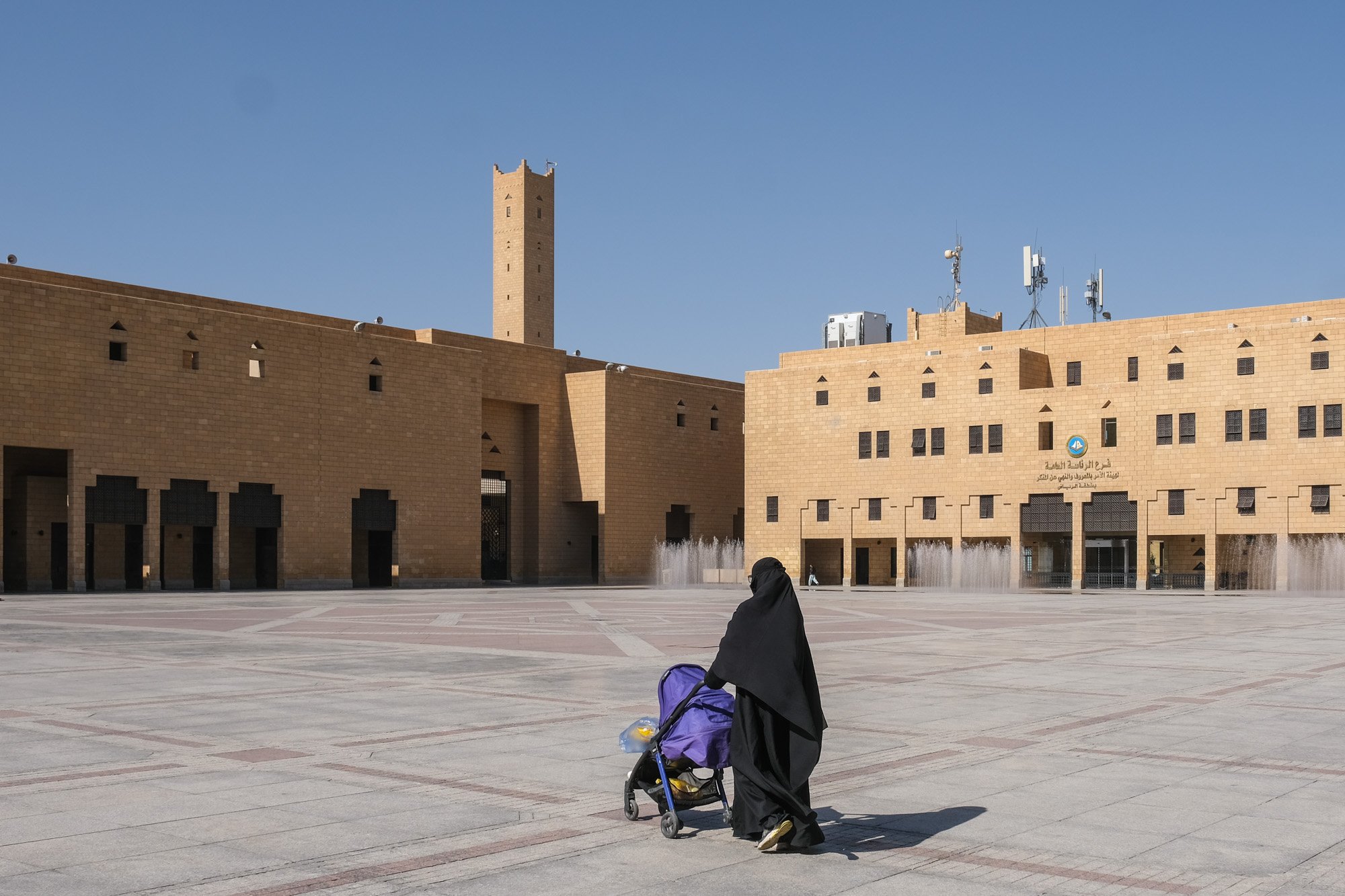
Riyadh’s Alsafat Square is famous as a place of public beheading until just a few years ago.
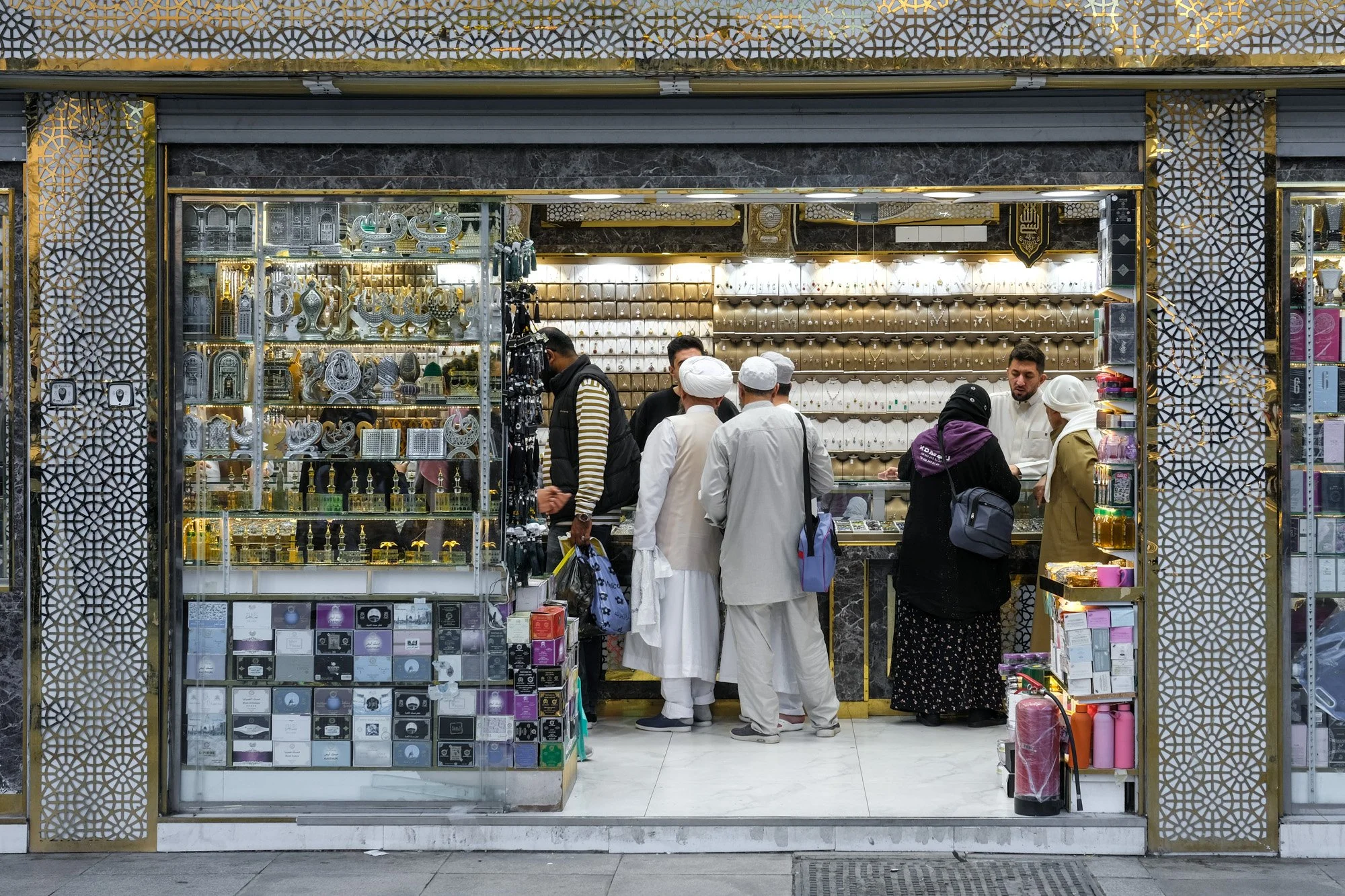
The jewelry store in central Medinah.
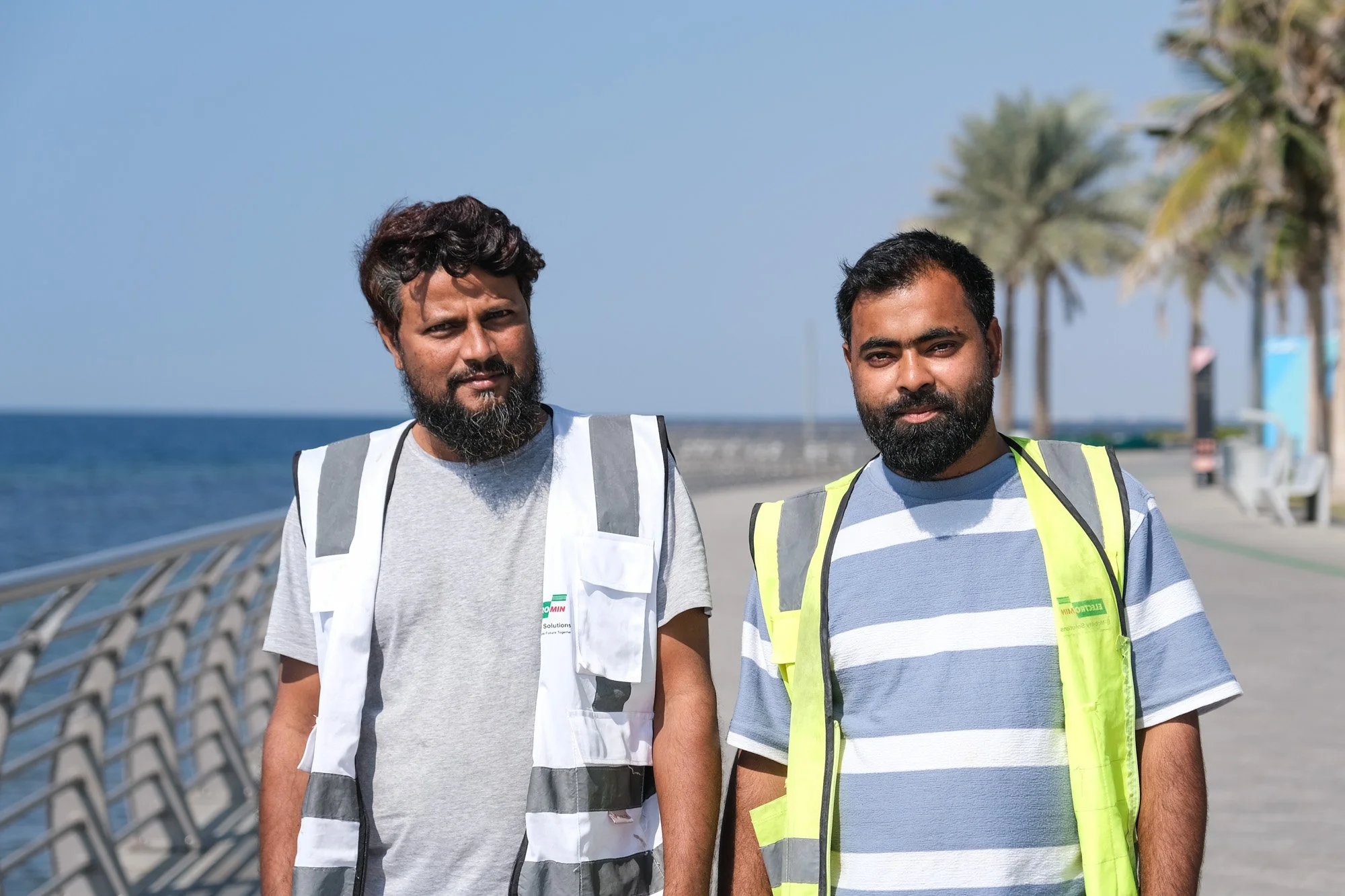
Foreign expats represents a sizable population in major cities like Riyadh or Jeddah.
To boycott a country because of human rights abuses is a tricky topic. I certainly understand why many Westerners will blacklist Saudi Arabia because of Khashoggi’s murder or the treatment of women or minorities. At the same time, I can’t help but wonder if we ought to apply the same standards to places like the United Arab Emirates, Malaysia, or China. Similarly, many Europeans and Canadians now consider Trump’s America as a place of concern, and the talk of boycotting the United States is sadly a reality. Ultimately, this is an intensely personal experience shaped by one’s politics, place of origin, and personal experiences.
Before the trip, Brian told me he was very uncomfortable with spending money in a country where homosexuality is criminalized. I reluctantly had to remind him that Saudi laws are not any less strict than those in Oman, a country we both loved. Strict relativism could be a slippery slope toward hypocrisy. It is wrong that I am willing to visit Saudi Arabia but not Russia in 2026? If we refused to visit a country simply because of the policies of a national government, our world would definitely become narrower, wouldn’t it? I think it is more important to distinguish between the government and its people. For me, visiting a country is neither an endorsement of a country’s politics, nor turning a blind eye to its ills.
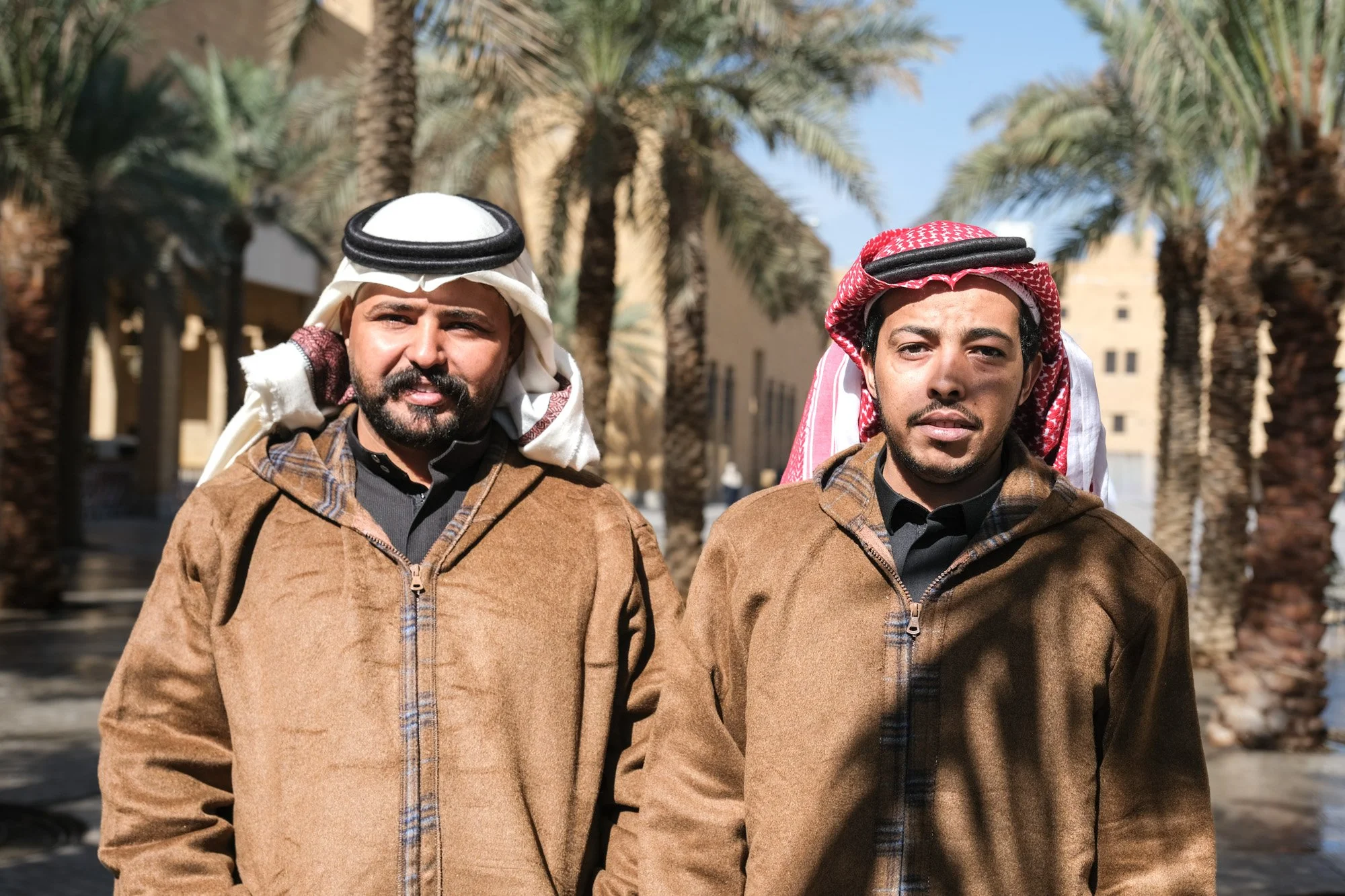
Meeting locals at Riyadh’s Souq al-Zal.
To quote Rick Steves, the number one reason for not traveling is fear, and the best antidote for fear is understanding. In addition to seeing amazing monuments and natural sites, the rewards of traveling include speaking with locals and seeing how they view their country. Do they have a sense of optimism, or are they fearful of the outside world? From our experience, Saudis are extremely hospitable and friendly to foreign visitors. Having sealed itself off from tourists for so long, the people we met seemed especially curious and delighted by all the international visitors. One of the locals’ default English greetings to foreign visitors is “welcome,” and I honestly believe they were genuine.
One of the most memorable interactions we had on this trip was with a young Saudi woman working at the visitor center of Hegra. Spoke in pitch-perfect English, she told us she had never been outside of the Al Ula region, and she never dreamed a small town girl like herself could one day meet visitors from around the world. She was grateful to have earned a degree in archaeology and to be able to contribute to the heritage of her hometown. At one point, she asked us how many years Brian and I had traveled together and how many countries we had traveled to thus far.
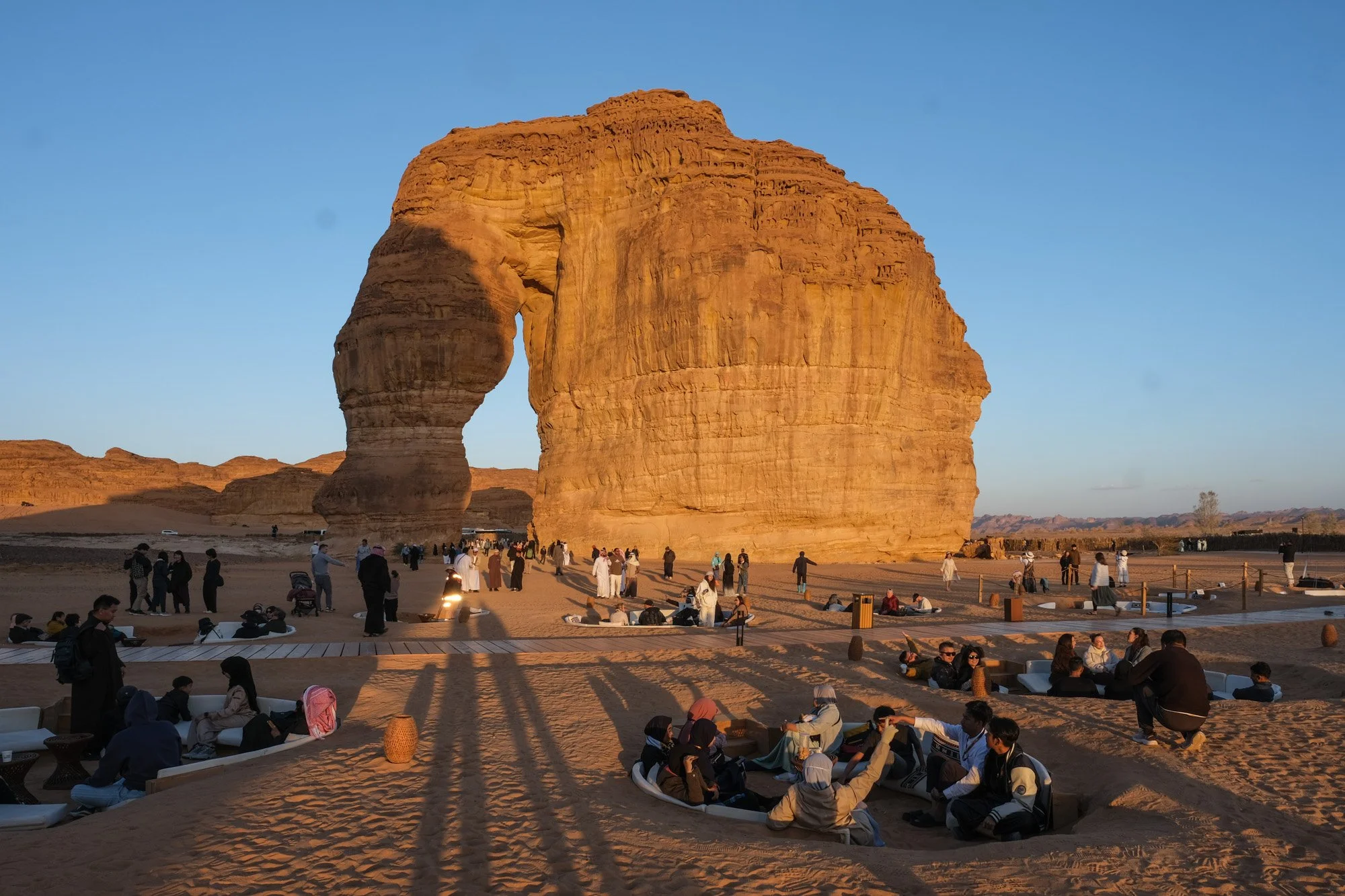
The Elephant Rock is a prime example of the Saudi investment in the tourism infrastructure.
We were a little taken aback, as nobody had ever phrased the question in such a way. She told us she could tell we are really close and have a special friendship. We suddenly realized this might be her code for “same-sex relationship.” Being in a conservative part of Saudi Arabia, we were immediately guarded with these conversations. But we quickly realized that she was genuine with no ill intent. I like to think she was curious about people like us, and it was a polite way to learn about the “forbidden” lifestyle. Interestingly, among all the locals we met during our two-week visit, she was the only individual who proactively brought up the crown prince. She was extremely grateful for the transformative effects Mohammed bin Salman has had on her hometown.
Saudi Arabia’s rapid development is not limited to infrastructure or tourism. Following the footsteps of Qatar and the UAE, the country also aims to become a global destination for pop culture and sports. Saudi Arabia has been selected as the host of the 2034 FIFA World Cup, and the country’s sovereign wealth fund has invested heavily in entertainment and sports, such as LIV Golf and a long-term partnership with World Wrestling Entertainment. It is not all that different from the playbook of the Gulf neighbors.
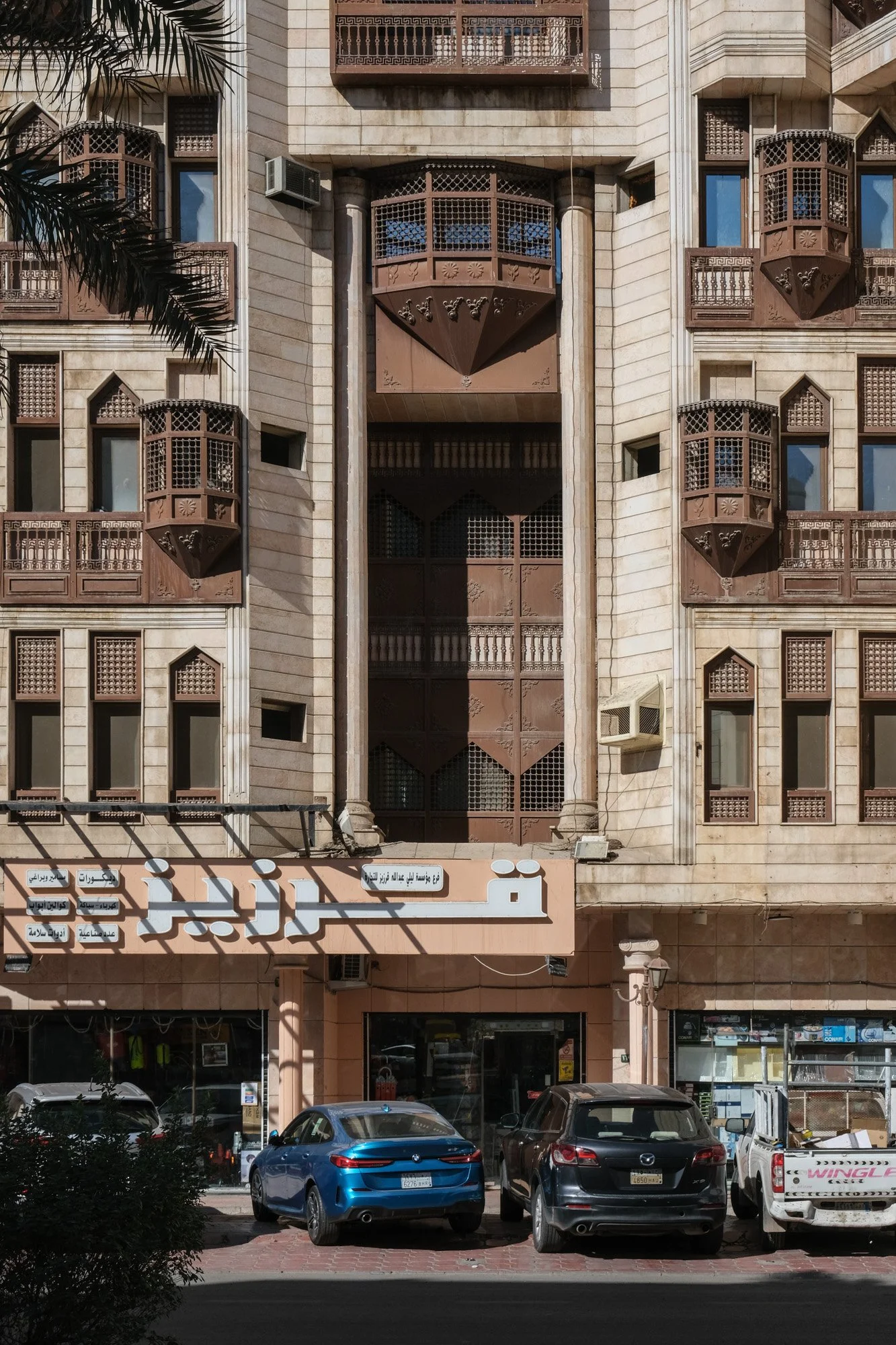
Residential neighborhood of Medinah.
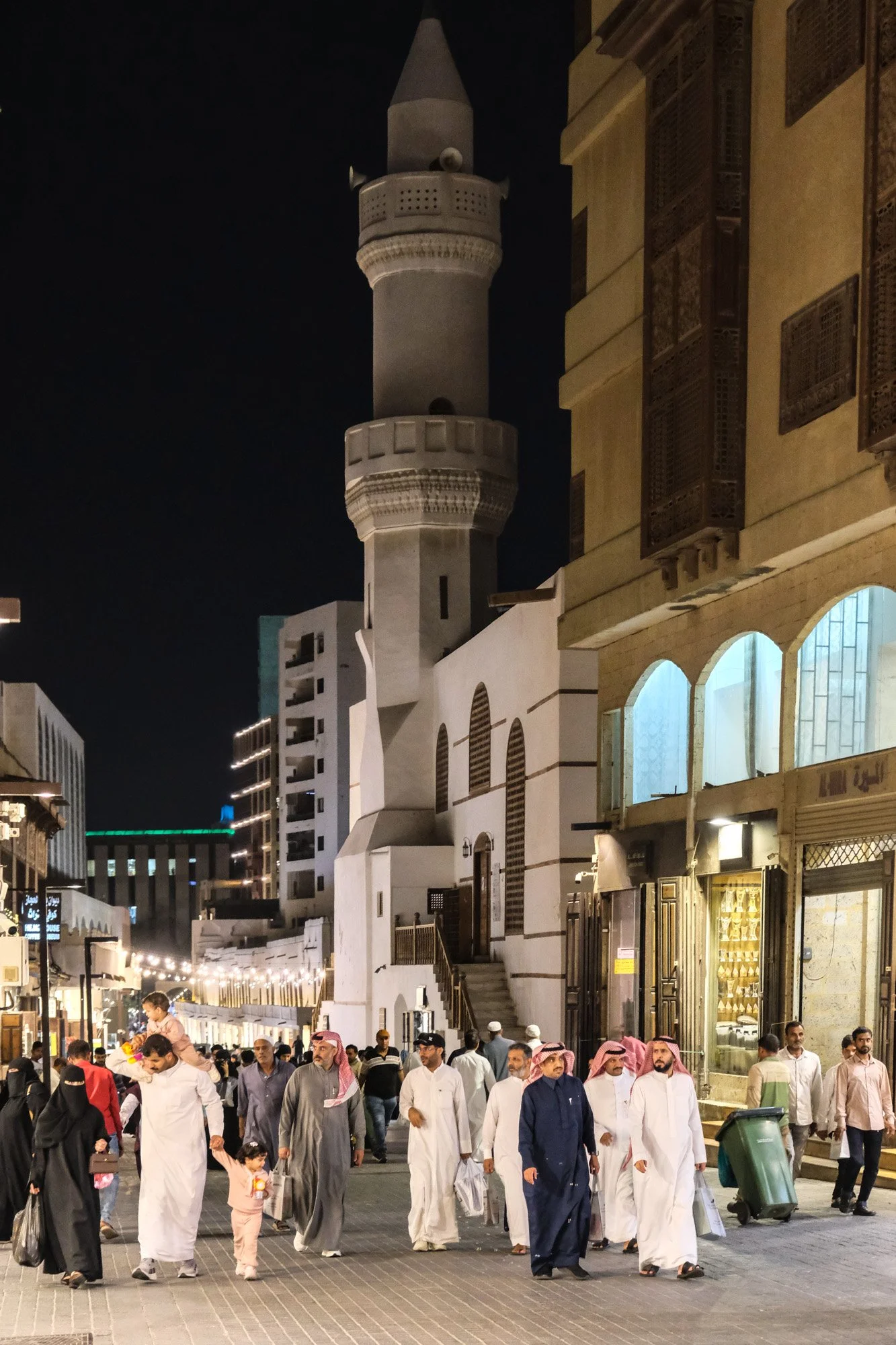
The bustling night scene in Al Balad, Jeddah.
Three months before our planned visit, the little-known Riyadh Comedy Festival suddenly became a lightning rod in the Western media. The two-week event in the Saudi capital features a few dozen of the world’s most celebrated comedians from the West. Among them are the likes of Dave Chappelle, Louis C.K., Whitney Cummings, and Kevin Hart. Many in the United States were appalled that all these comedians were paid by the Saudi government, a regime antithetical to freedom of speech. American comedian Atsuko Okatsuka famously disclosed the terms and conditions that came with her invitation: there shall be no joke on Islam, the Saudi royals, or the country’s legal system. She went on to describe the compensation as blood money coming straight from the crown prince.
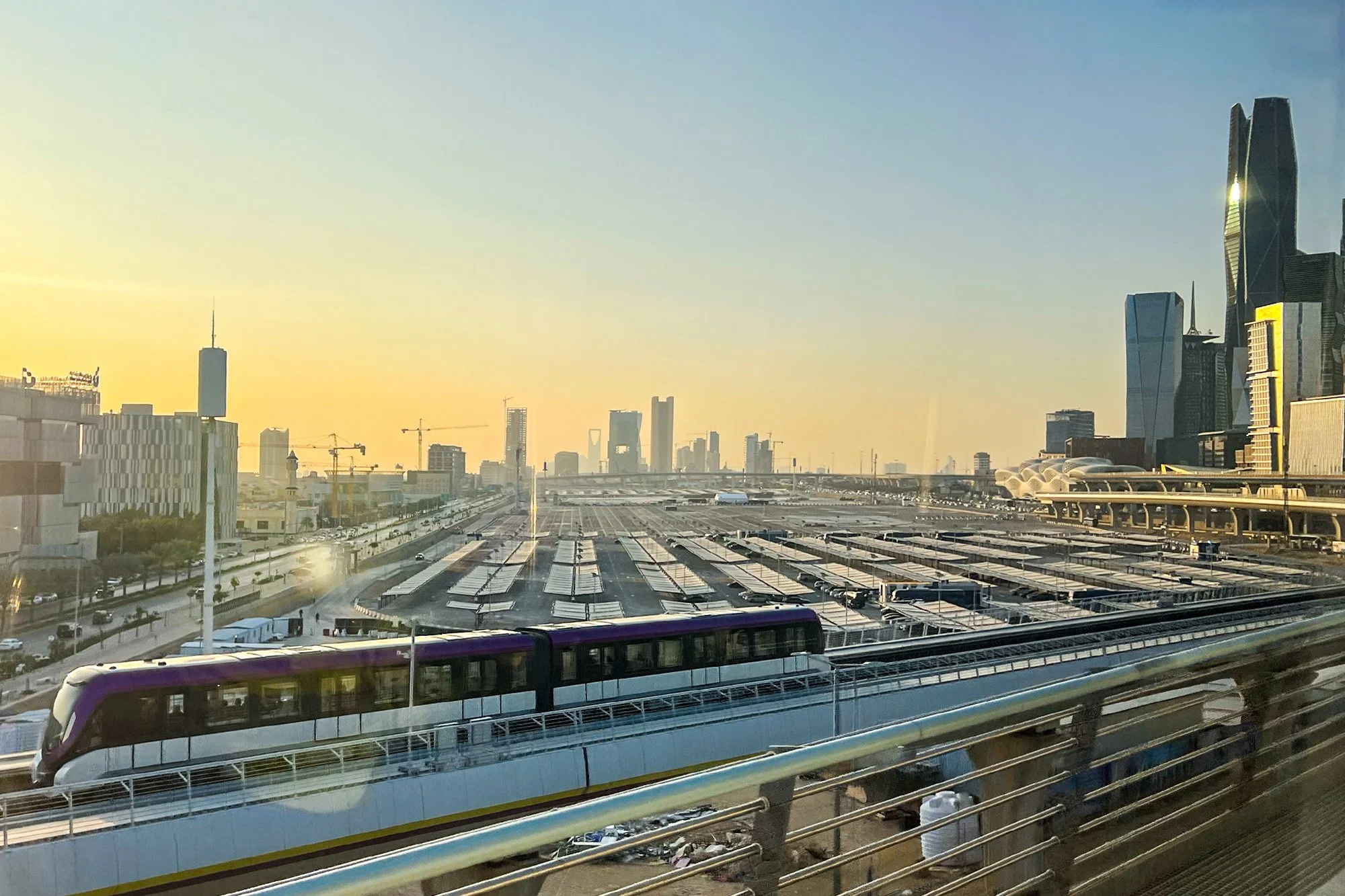
King Abdullah Financial District in Riyadh.
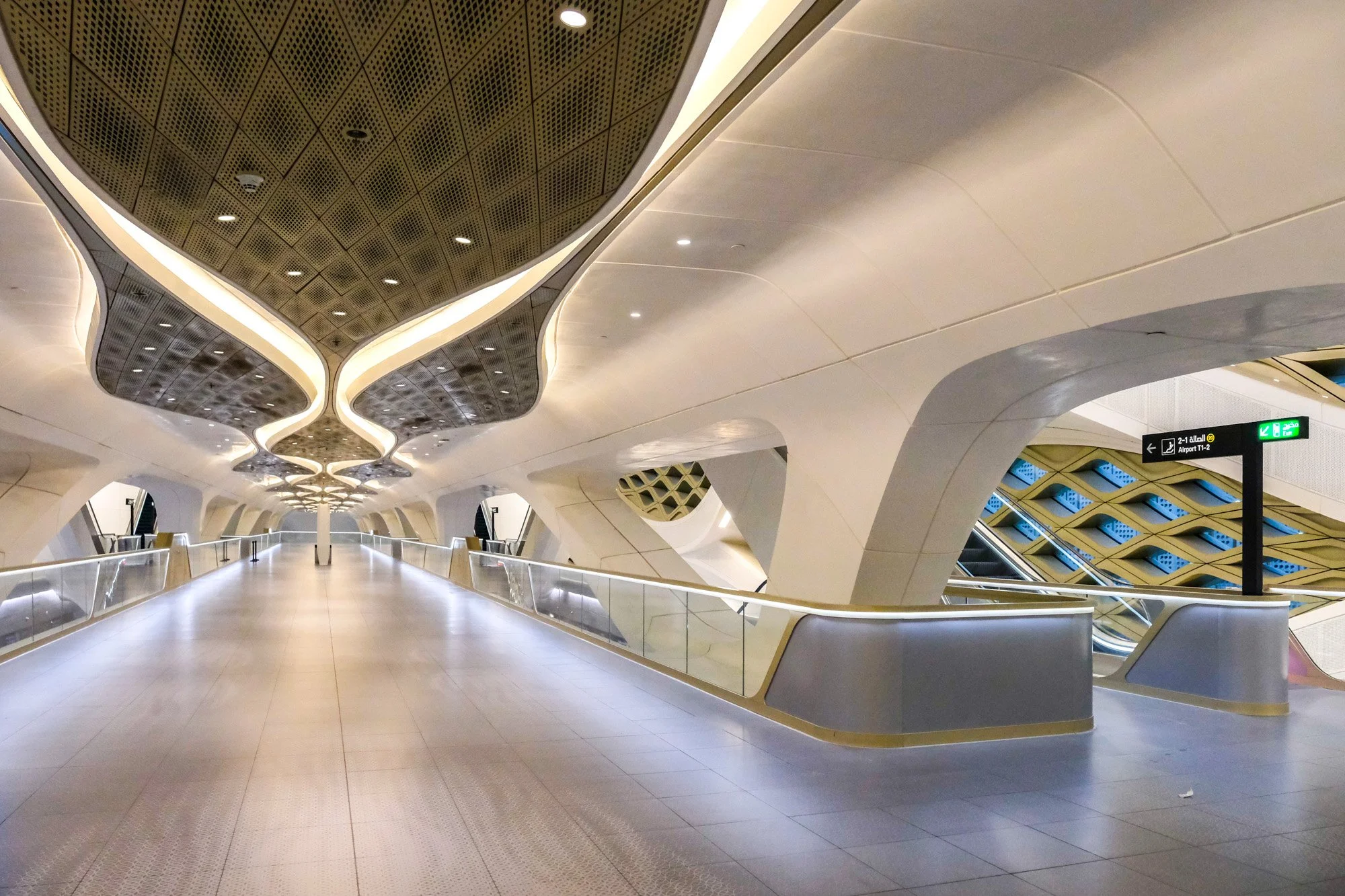
King Abdullah Financial District Metro Station is a symbol of Saudi modernity.
As this controversy developed in the press, I must say I felt a little conflicted about our upcoming trip to the kingdom. Were we complicit in whitewashing the country’s appalling human rights record? As visitors, we inevitably contributed to the Saudi economy and praised the country's beauty. I took comfort in the fact that our visit was not a press trip paid for by the Saudi government and we were able to travel independently. I like to think we had our own agency and did not succumb to government propaganda. As you could probably tell, I could be quite cynical, and that certainly came in handy in visiting Saudi Arabia.
Just before our trip, I came across this video of comedian Trevor Noah talking about his take on the Riyadh Comedy Festival. A former host of The Daily Show, Noah offered a thoughtful and nuanced observation on the current Western discourse on Saudi Arabia. I encourage everyone to watch the entire video and see whether you might see things from a different perspective. For me, his most insightful point was that comedy has historically been a gateway to free speech. Saudi Arabia is not a free society, but it is at least moving in the right direction. The silver lining of the Riyadh Festival was the debate on free speech itself.
So… is visiting Saudi Arabia ethical? It is ultimately a personal matter, and don’t let anyone tell you one way or another. For me, visiting a country undergoing rapid transformation was very exciting. However, we all have different comfort levels and philosophies when it comes to travel. The ethic of travel is often neglected in the travel blogging world, and I would love to hear your thoughts on this topic. That said, please all be kind to each other and understand the differences in opinions and perspectives.