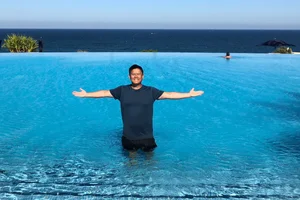

Saudi Arabia & Qatar Itinerary - Winter 2025
This trip to Saudi Arabia actually came about completely out of the blue. Back in July 2025, I came across rare availability for a one-way business-class award seat from Doha to New York. After spending years accumulating credit card points and miles, I was keen to redeem them for Qatar Airways’ Q Suite, one of the best business-class cabins in the world. It took me a few more months to figure out exactly where we would vacation. India and Jordan were on top of my list, but I noticed that from Doha, the most affordable airfare was to Saudi Arabia. Are we really going to spend our Christmas holiday in Saudi Arabia, a country where public displays of Christmas were prohibited just five years ago?
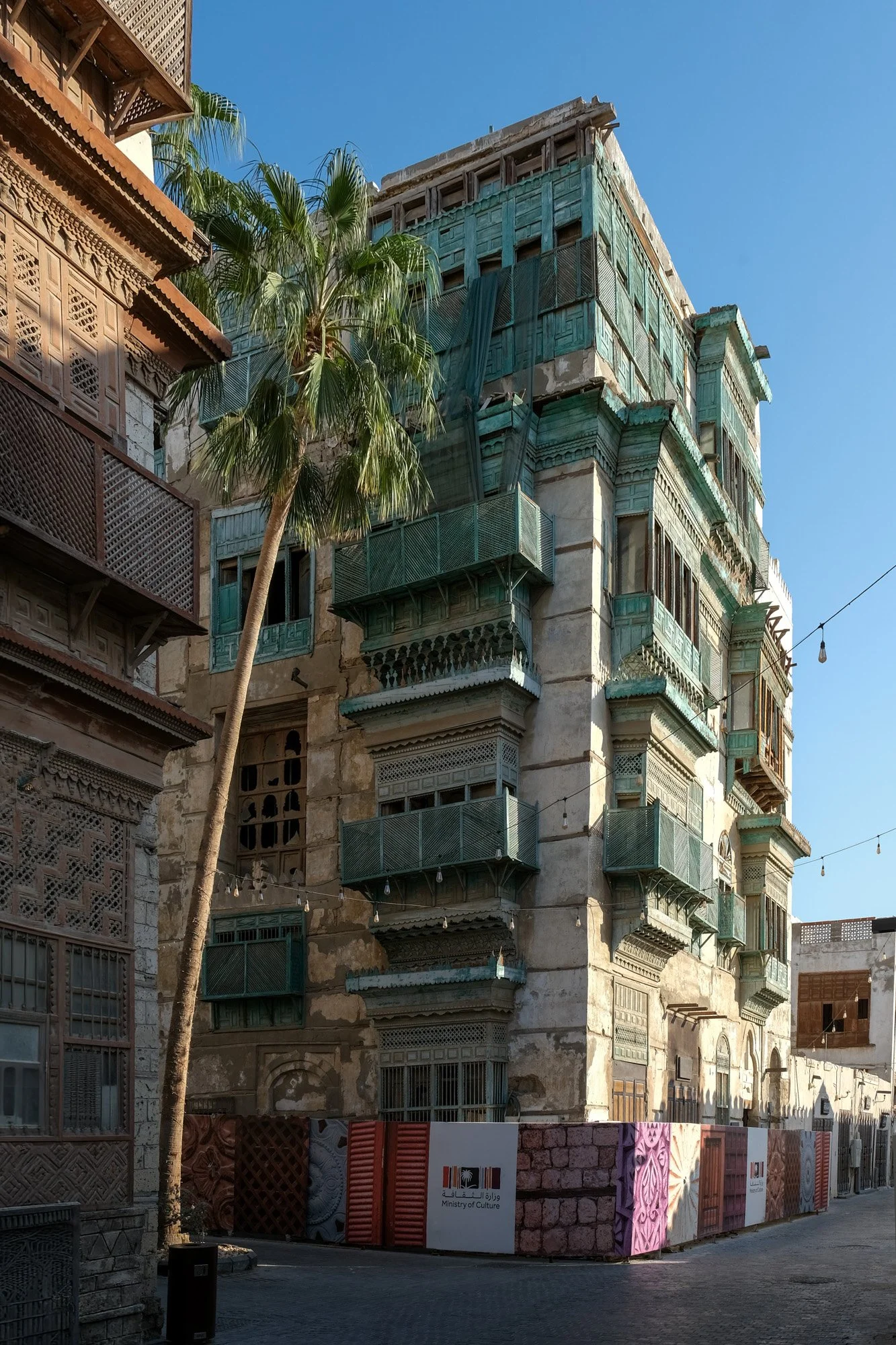
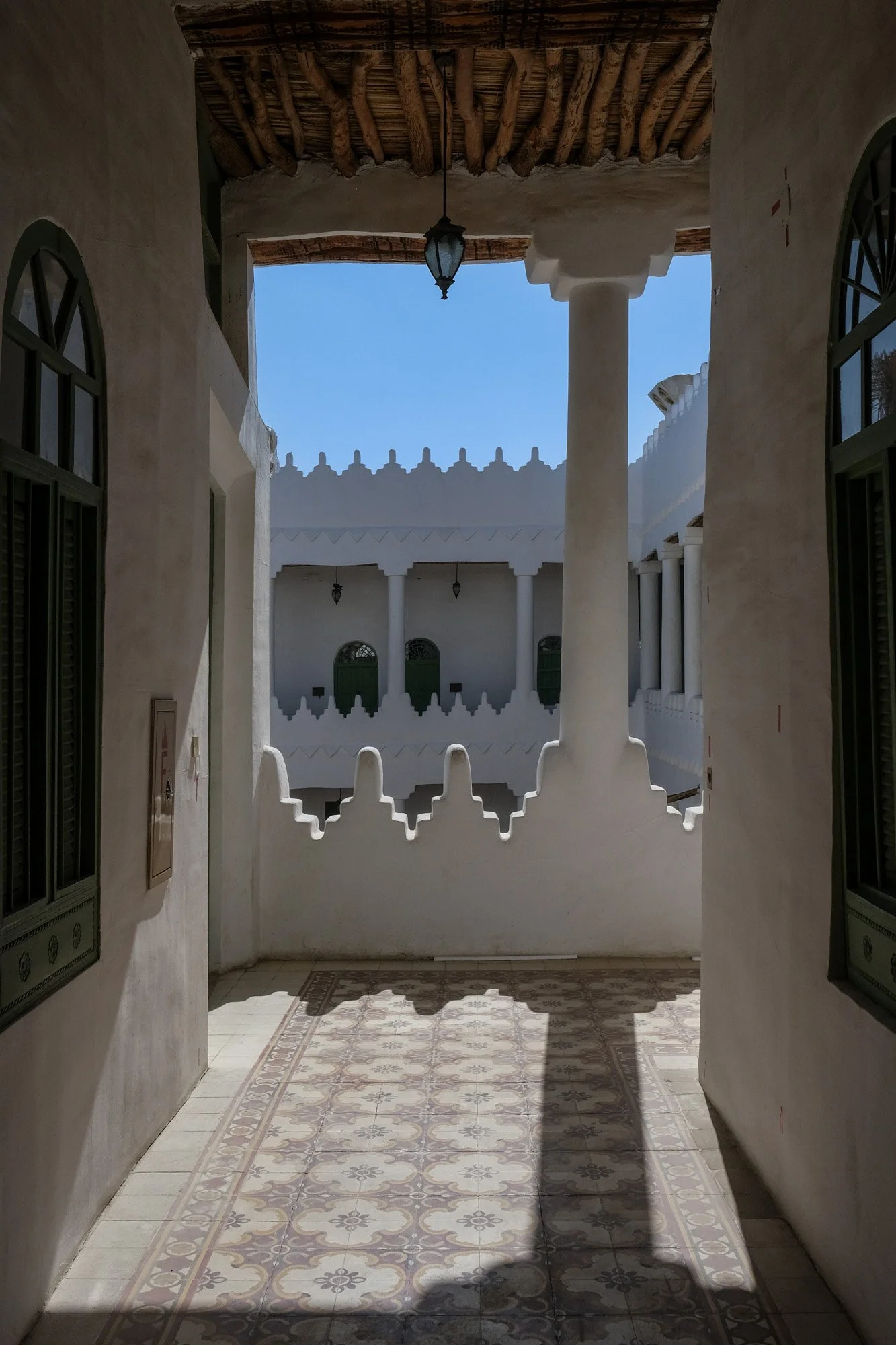
The charming Al-Balad in the historic center of Jeddah.
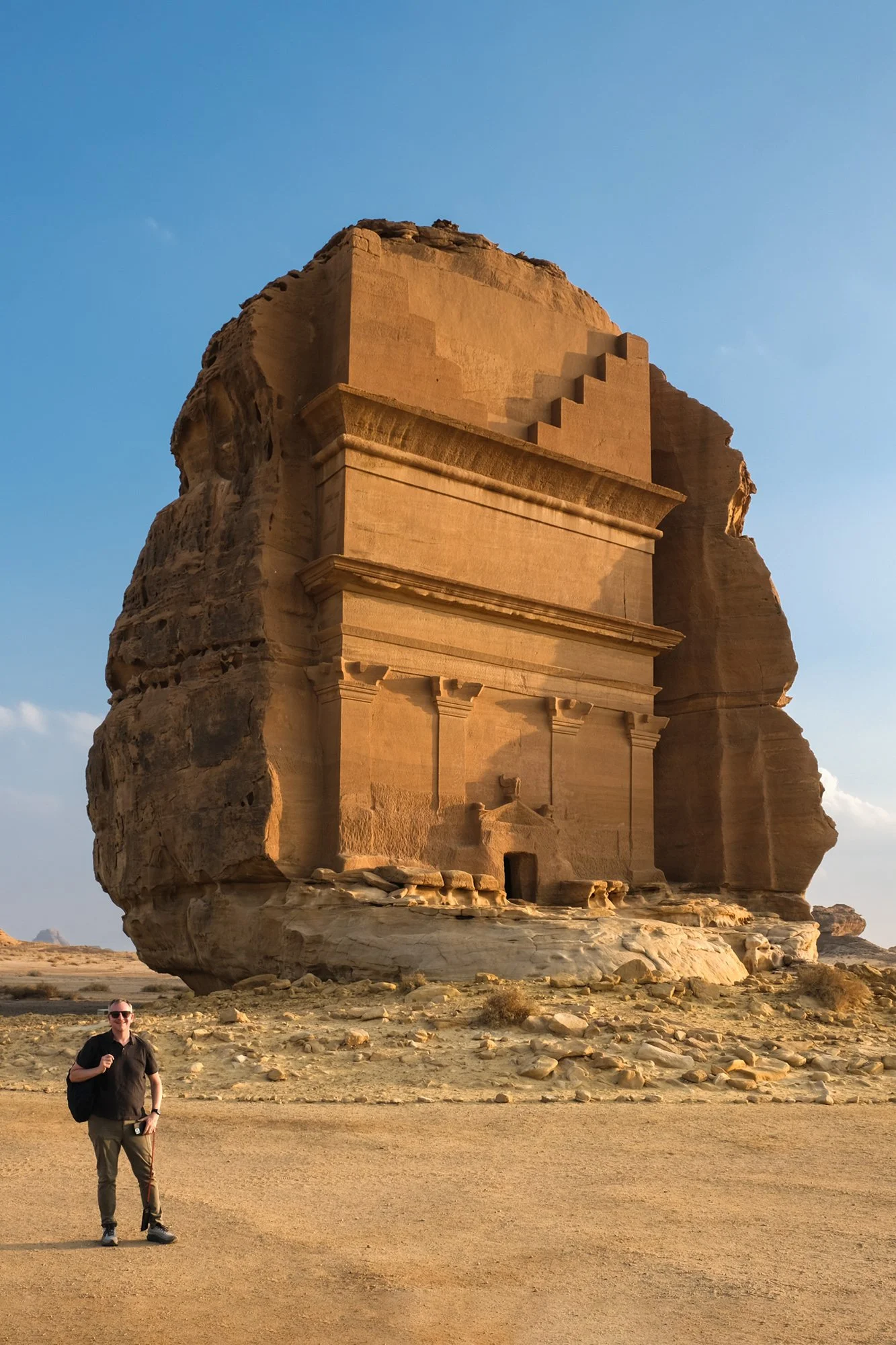
Hegra has been on my travel bucket list for a very long time.
The ethics of visiting Saudi Arabia are undoubtedly complicated, and they should not be taken lightly by thoughtful travelers. It took me quite a while to sell Brian on a Saudi holiday, and I was quite surprised he agreed. I made sure to apply for the Saudi visa and book the flights as soon as possible, just in case he got cold feet. Ever since the country began issuing tourist visas in 2020, I felt a real sense of urgency to visit Saudi Arabia. The Middle East is traditionally one of the most unpredictable corners of the world, as illustrated by the ongoing war between Iran and the United States.
Obviously, two weeks were hardly enough to properly see a massive country like Saudi Arabia. That said, I was quite pleased that we were able to visit four of the most exciting destinations: Riyadh, Al Ula, Madinah, and Jeddah. Each of these places showcases distinct facets of Saudi Arabia. I would have loved an additional week to explore Al-Ahsa Oasis in Al-Hofuf and the mountain villages in Rijal Almaa or Thee Ain.
Day 1: New York - Milan - Dubai - Riyadh
Our trip had an inauspicious start when we received a last-minute notification that our KLM flight from Amsterdam to Riyadh had been canceled. Curiously, the airline did not automatically rebook us, so it was a nerve-wracking morning as we tried to figure out whether we could make it to Riyadh. In the end, we were rerouted through Milan and Dubai on Emirates. It was already one in the morning when we landed in Riyadh. We definitely had a little trepidation with the immigration control. Would they ask about our relationship and find a reason to deny our entry? Much to our surprise, the female officer we got was so pleasant and apologized profusely for the long line.
After picking up our rental car and navigating the ever-changing maze of Riyadh’s expressway, I finally arrived at our hotel: Novotel Riyadh Sahafa. It was almost four when we went to bed. Needless to say, we were exhausted. But I honestly can’t wait to wake up to begin our exciting Saudi adventure.
Day 2: Riyadh
Surprisingly, we managed to wake up around nine-thirty, just in time for the included breakfast. From our hotel room, Riyadh looked like your typical urban sprawl, as charming as Phoenix or Dubai. To get a dose of Arabian charm, the day's itinerary is a visit to Diriyah, often dubbed the birthplace of Saudi Arabia. Half an hour from central Riyadh, Diriyah was the former capital of the Emirate of Diriyah, the first kingdom of the House of Saud. After the emirate's demise in 1818, the site stood abandoned until the 1970s. In 2010, Diriyah became the kingdom’s second UNESCO World Heritage Site and has since undergone massive restoration over the past decade.
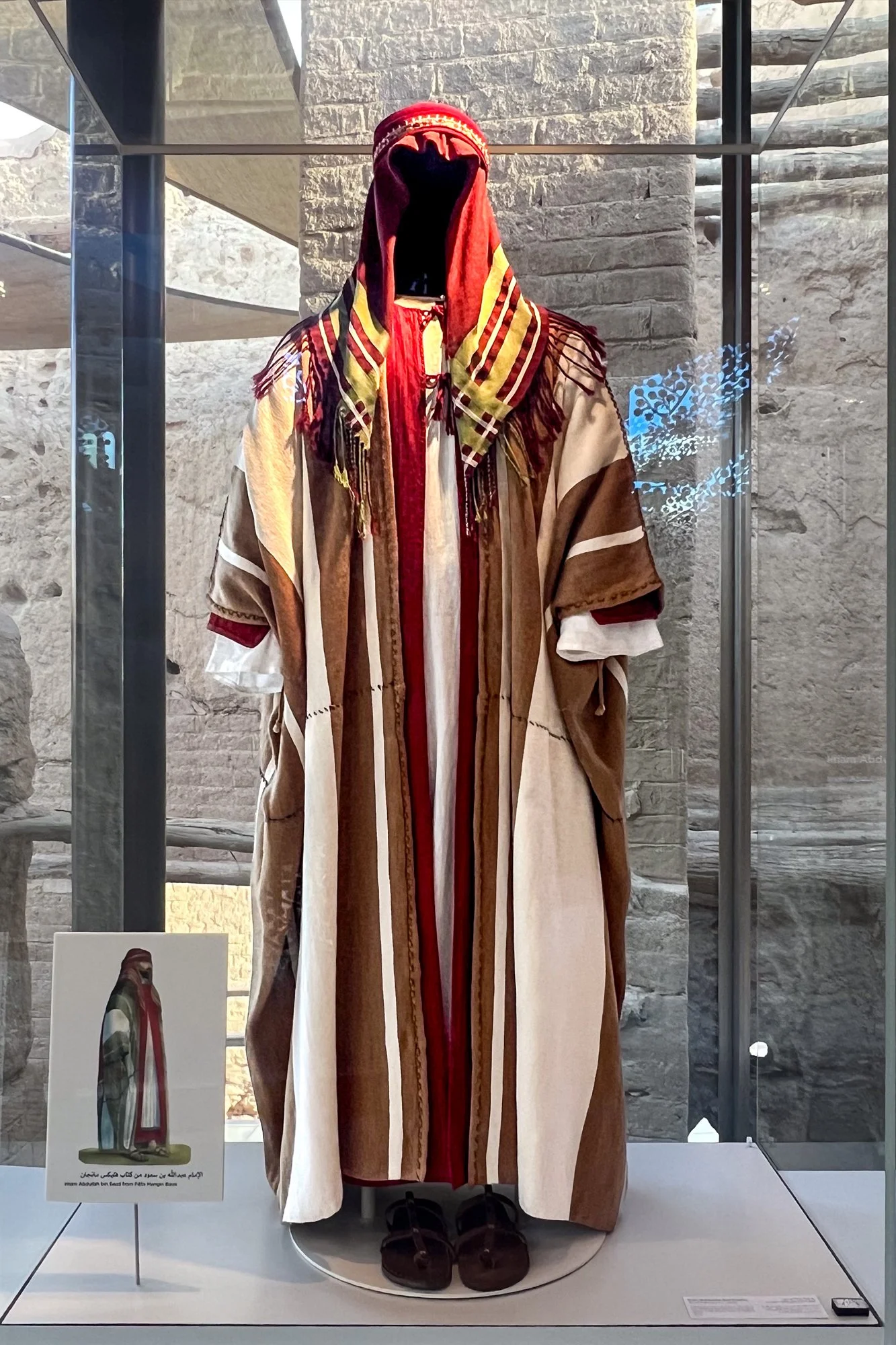
The replica of the garment of Abdullah bin Saud Al Saud, the last emir of Diriyah.
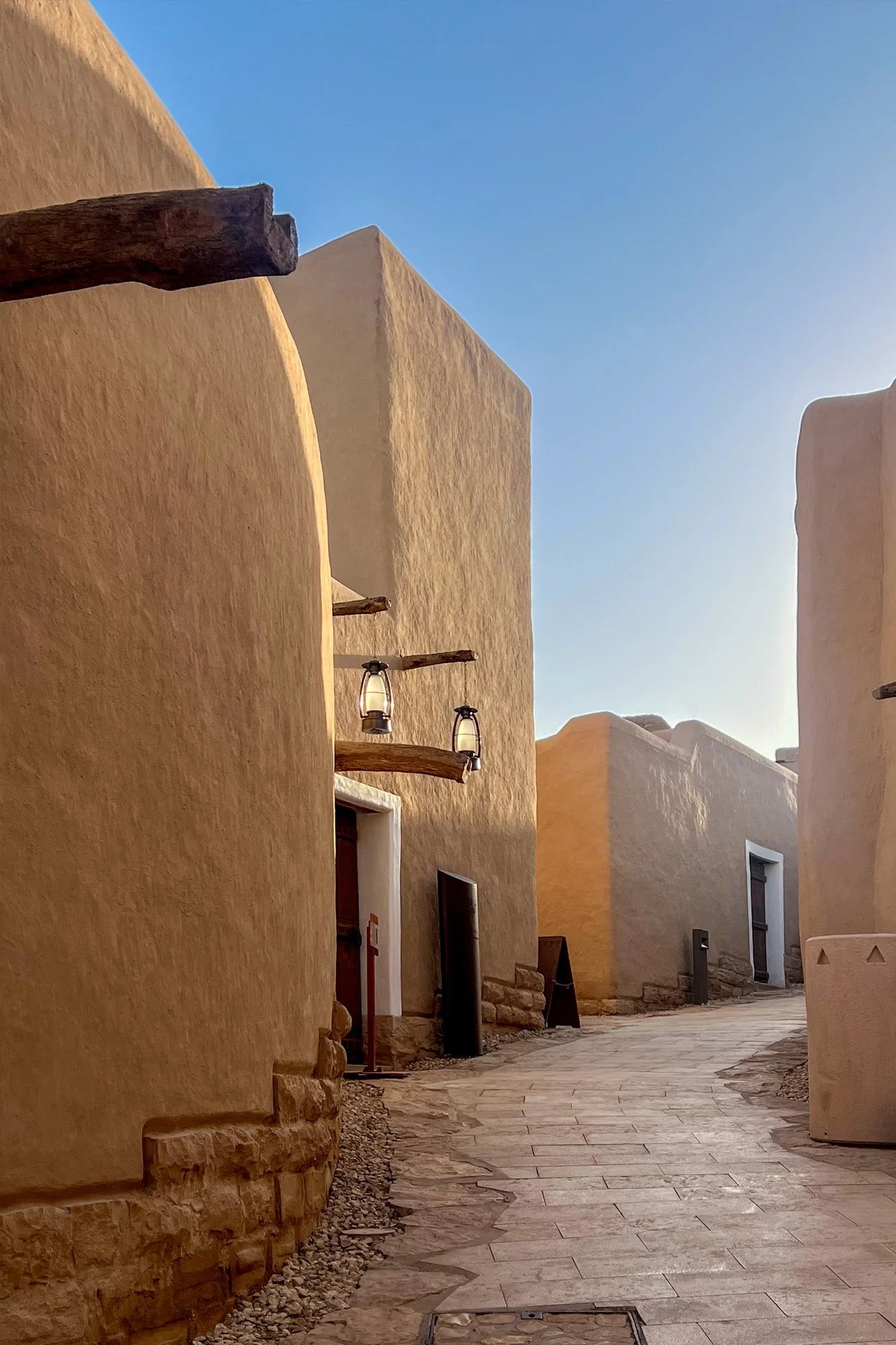
The beauty of At-Taurif is indisputable.
After signing up for a free access pass on the spot, we were granted access to Bujairi Terrace, a modern restaurant and shopping complex, and the historic ruins of At-Turaif. The revival and development of Diryah is part of the massive Saudi Vision 2030 initiative. The government reportedly invested $ 52 billion in the restoration of At-Turaif and in massive development in the surrounding area, including luxury resorts and branded residences. Not only is everything new and immaculate, but there seemed to be staff members stationed at every corner to direct visitors.
Nestled within the ruins were half a dozen small museums; the highlights among them would be Diriyah Gallery and the Arabian Horse Gallery. I do think the collections are still catching up with the pace of development; I would love to come back to see how Diriyah evolves over the next decade. For many Saudis, Diriyah is simply a great place to meet up with friends and bring families for a relaxing evening. With dozens of sophisticated restaurants to choose from, it is a great place for a fancy night out. We found ourselves at Somewhere, an upscale Middle Eastern fusion restaurant.
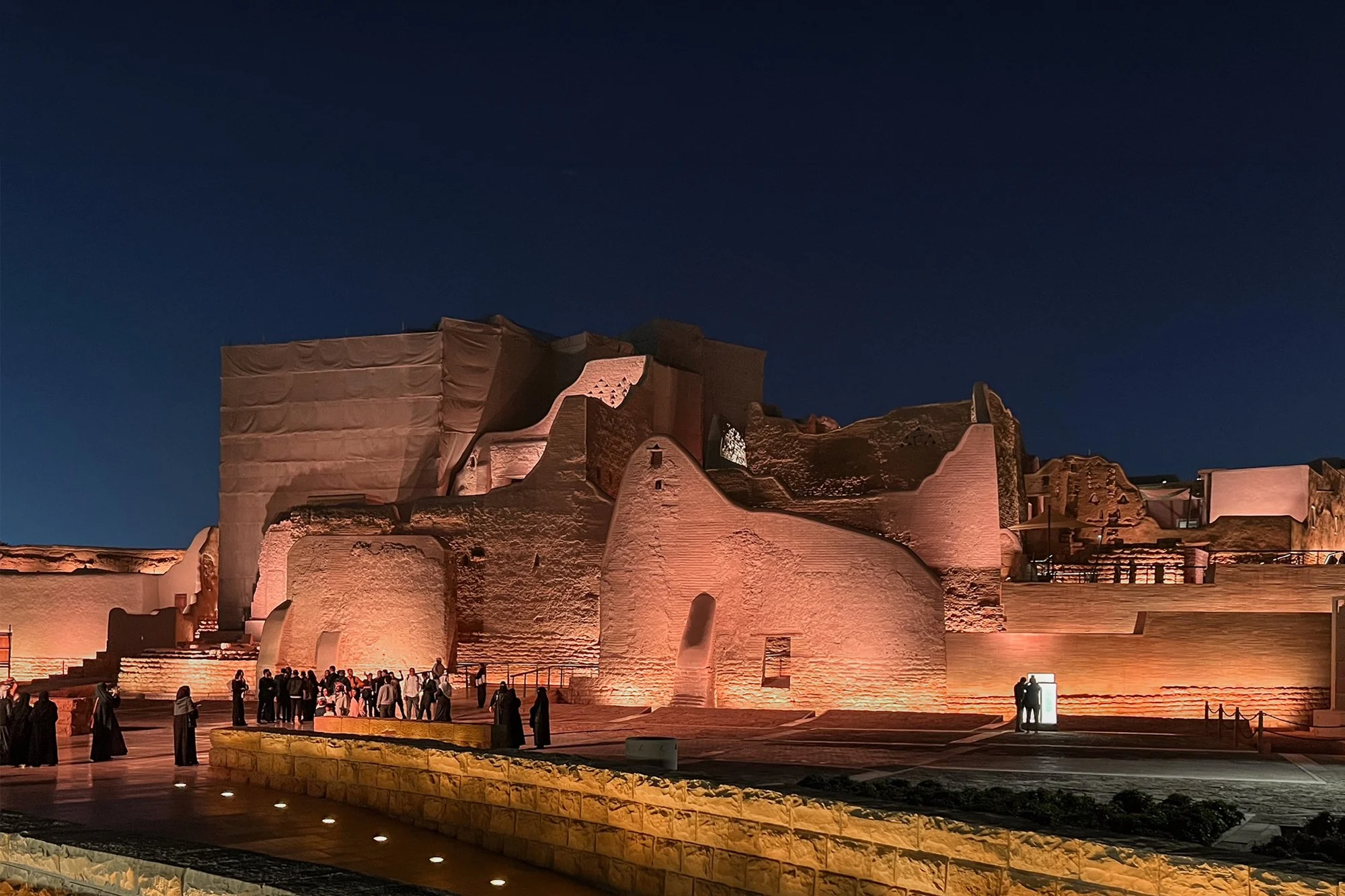
At-Turaif looks absolutely magical in the evening.
Like much of Saudi Arabia, Diriyah truly came to life after sunset. The ruins of At-Turaif were beautifully illuminated by floodlights, and visitors were treated to numerous light-and-sound shows across different corners of the historic site. There were also poetry readings and other cultural performances throughout the complex. The convivial atmosphere here is certainly very different from what we would typically think of when we think of Saudi Arabia. This may be a relatively slow day when it came to sightseeing, but I could not think of a better introduction to the kingdom.
Day 3: Riyadh
We woke up refreshed and were ready to explore Riyadh. Following breakfast, we drove half an hour south toward the city center. Our first stop was Masmak Palace, a modest fortress commissioned in 1865 by Abdullah bin Faisal Al Saud. By the turn of the twentieth century, Riyadh and Najd were under the rule of the Rashidi Emirate. In 1902, the exiled Ibn Saud mounted a daring raid to capture the palace from the Ottoman rivals. The Battle of Riyadh became the spark of the unification of Saudi Arabia. While Diriyah was the birthplace of Saudi Arabia, Masmak Palace is regarded as the birthplace of the modern kingdom, also known as the Third Saudi State. The palace housed numerous artifacts not only about the House of Saud and the Battle of Riyadh, but also fascinating information on pre-modern Riyadh.
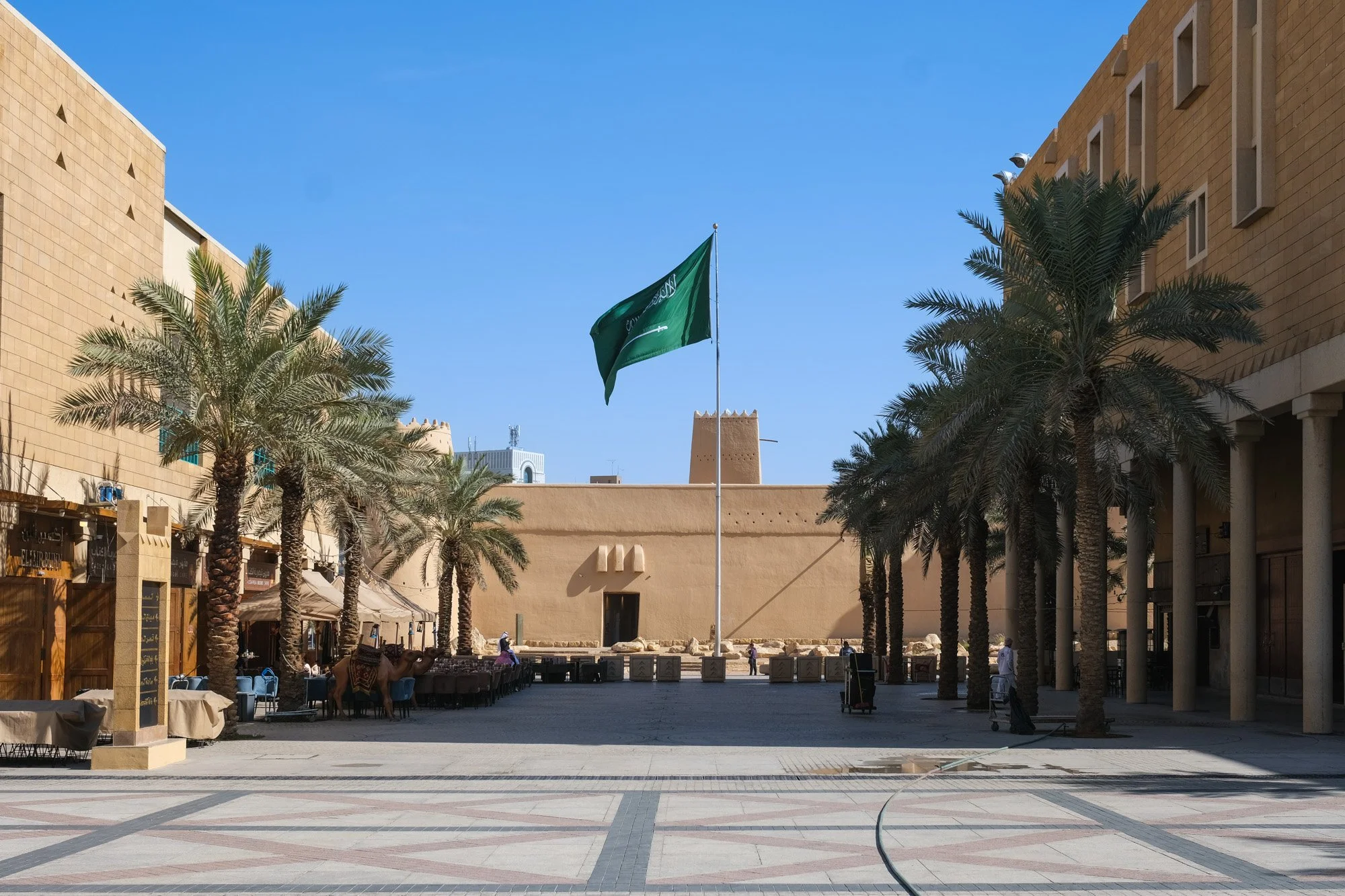
Masmak Palace is regarded as the birthplace of the modernSaudi kingdom.
Adjacent to the fortress is one of the most notorious public spaces in the Middle East: Deera Square. As recently as 2019, this conspicuous plaza was the venue for weekly public beheadings after the main Friday prayers, earning it the nickname “Chop-Chop Square.” Nowadays, the square is surrounded by cafes and restaurants; unsuspecting visitors would not know of its recent bloody past. Adjacent to the square are the Imam Turki bin Abdullah Grand Mosque, the city’s Friday mosque, and the historic Souk Al Zal. Unfortunately, both places were definitely deserted at this hour.
A short drive away from the city center was Murabba Historical Palace, one of the oldest buildings outside of the former city wall. It was the residence and office of Ibn Saud and one of the most popular sites in Riyadh. Unfortunately, the palace was closed for renovation, but we did get to visit the attached King Abdulaziz Darah Public Library, which houses numerous artifacts related to the eventful life of the Saudi founder. The most interesting exhibit is the king’s beloved collection of luxury cars.
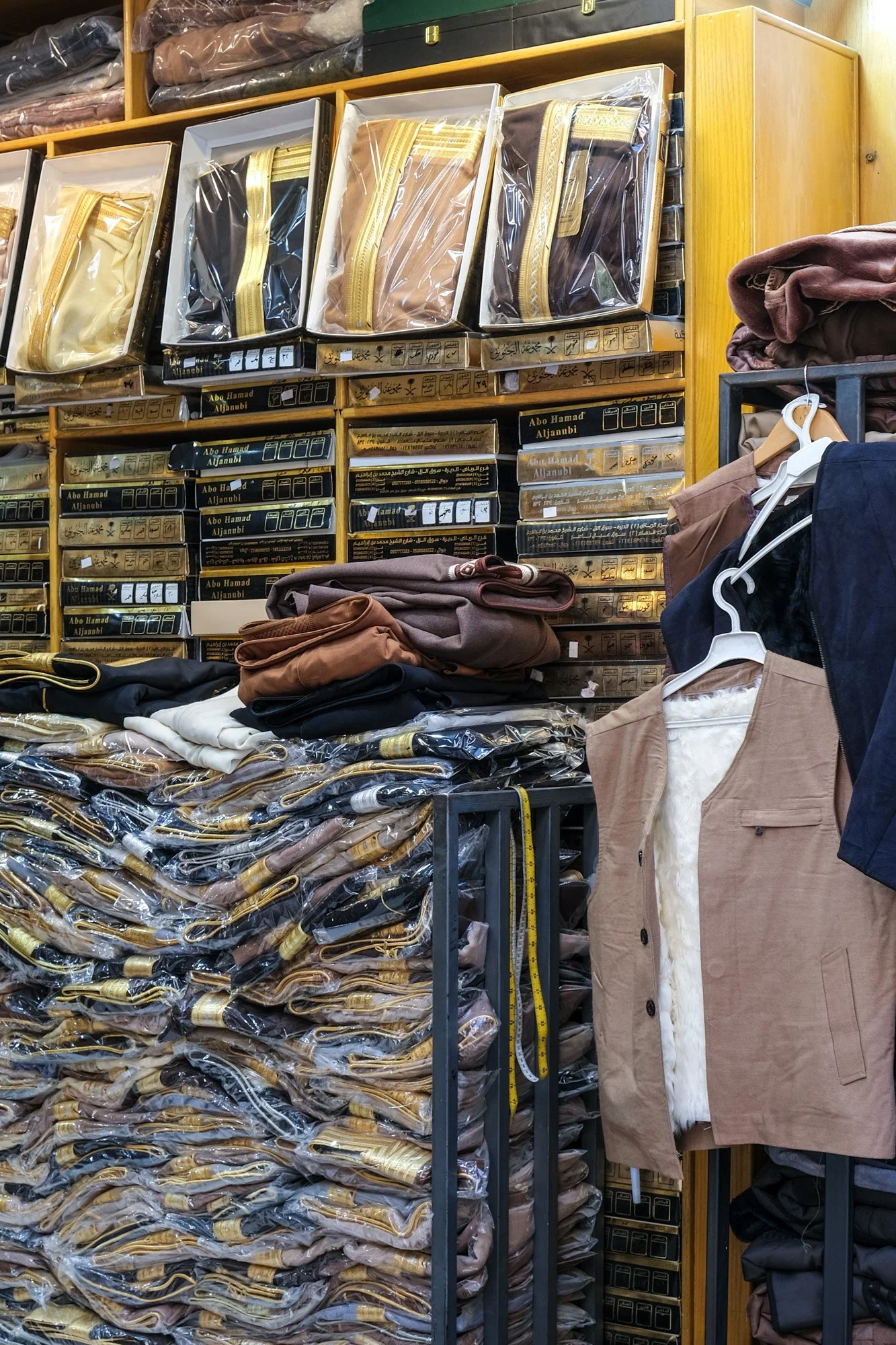
The apparel shop at Souk Al Zal.
I got a sneak peek into the Murabba Historical Palace,
The main destination for today was the excursion about two hours outside of the city. Before the 2 pm meetup, we stopped for a quick lunch at Mama Noura, Riyadh’s favorite Saudi fast-food chain. It may be fast food, but it is wicked good and very authentically delicious. This was where we first encountered the deliciousness of Saudi broasted chicken. They were perhaps the most amazing fried chicken I ever tried. Afterward, we went a few shops down to Hacked for a few scoops of ice cream.
The highlight of the day is certainly The Edge of the World, or Jebel Fihrayn. The 1,000-foot cliff drops off the Arabian plain that extends all the way to the Red Sea. To break up the journey, the tour group made quick stops to watch some camels and a gazelle reserve. After about ninety minutes, we got the first glimpse of this majestic landscape. I could certainly see where the place’s name came from; it really felt like we were standing at the edge of the world. I could understand why this is the most popular excursion in the country.
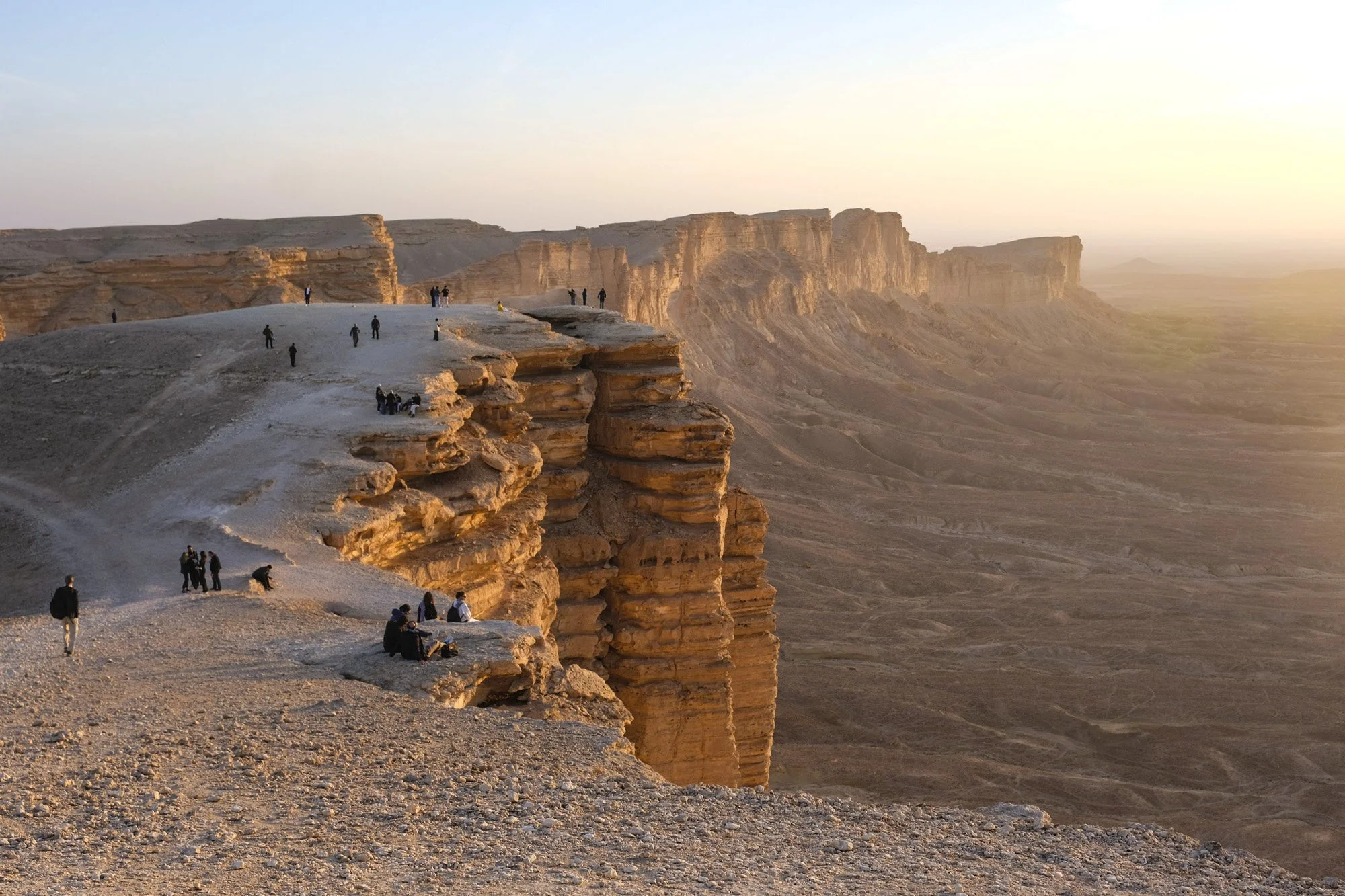
The Edge of the World was truly majestic and otherworldly.
We arrived just in time for sunset, and it was an absolutely magical experience. Visitors were free to roam among the craggy landscape. Despite its popularity, the vastness of the landscpae really provides a sense of solitude. I never imagined I would be able to visit Saudi Arabia, let alone stand at this spot. After sunset, the group was taken to a nearby camp for dinner under the starry night. We connected with many fellow travelers and exchanged our first impressions of the kingdom. This was a wonderful experience.
Day 4: Riyadh
We woke up this morning with an overcast sky and a hazy atmosphere. It was definitely not the ideal weather to be outdoors. Thankfully, our plan for the morning was to visit the National Museum of Saudi Arabia. I always enjoy visiting a national museum when we visit a new country, as it is often the best portal into a nation’s heritage. The museum in Riyadh is massive, but the quality of the exhibits does not seem to do Saudi Arabia justice. I suspect that as Saudi tourism develops and matures, the government will revamp the museum in the near future. Considering the amount of investment put into Diriyah, it will be a shame if Riyadh cannot outdo the national museum in Doha.
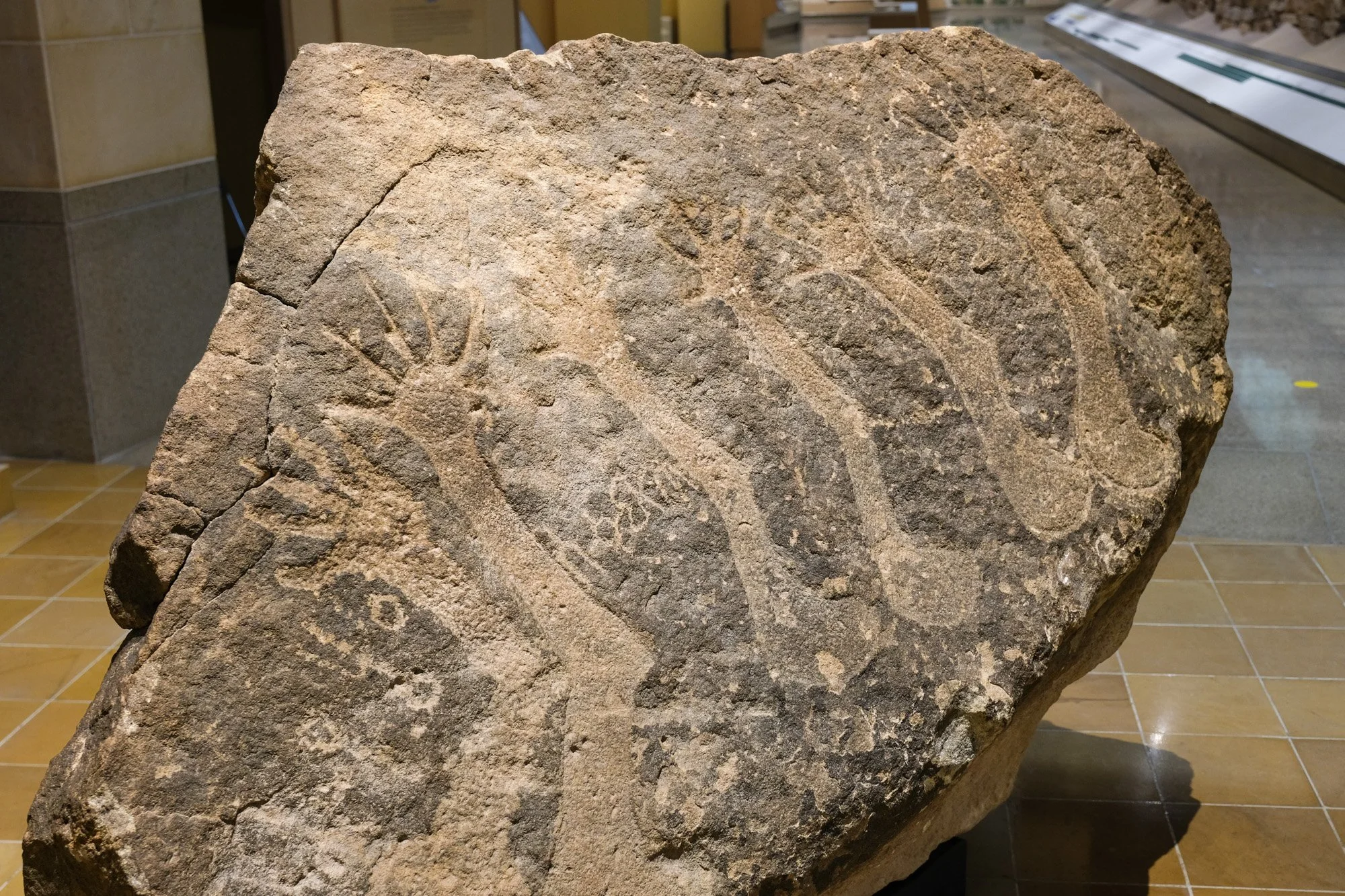
The National Museum of Saudi Arabia.
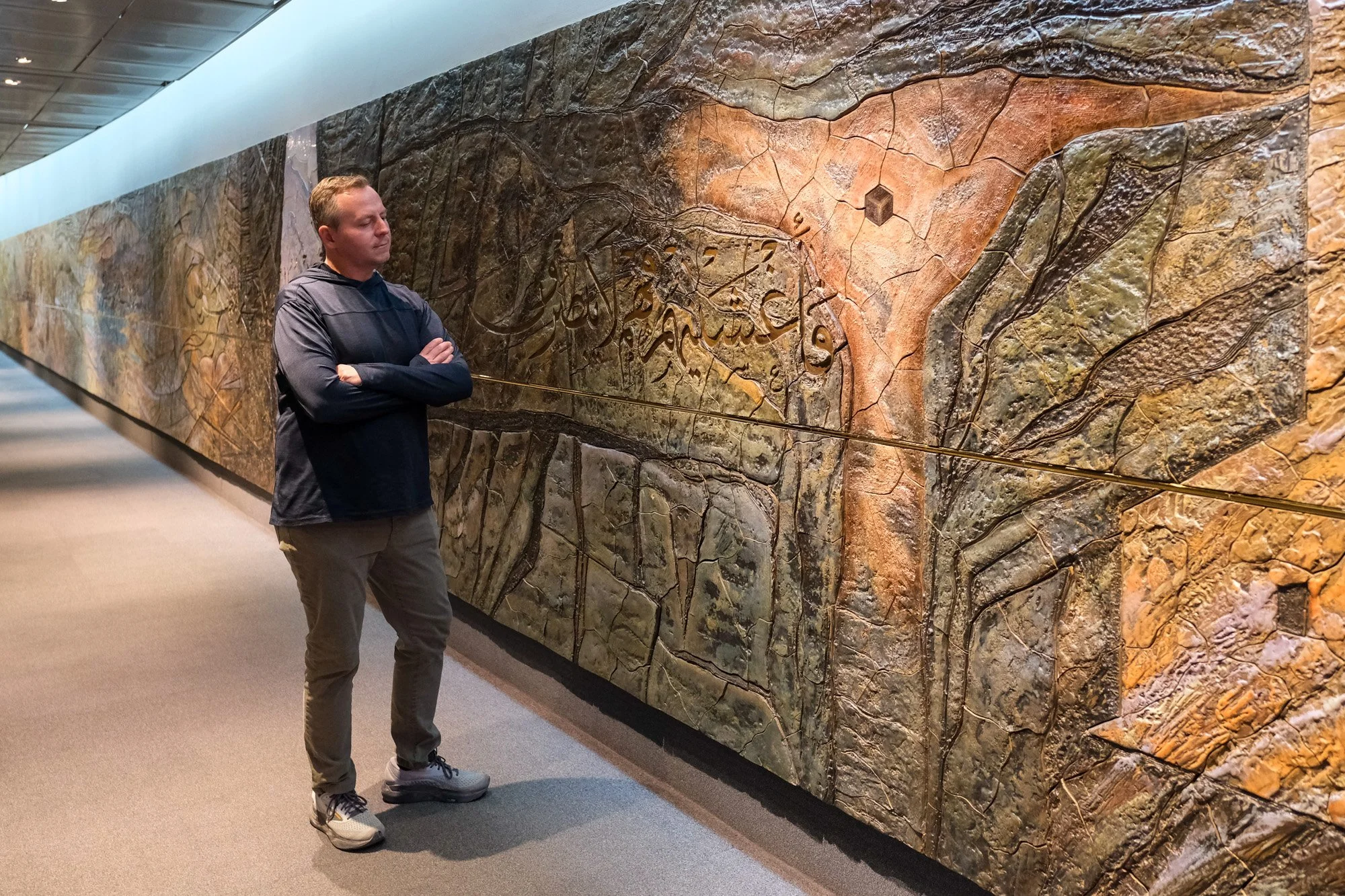
The National Museum of Saudi Arabia.
For lunch, we purposefully ventured out to Riyadh’s suburb to get off the tourist trail. We somehow ended up at Meez The House, an upscale neighborhood Saudi restaurant. The food, presentation, and service were all out of this world. As we had planned an eventful night, we decided to take it easy in the afternoon. We stopped by Taiba Market, a souk best known for gold and traditional apparel. Even though we were in the market for either, I thoroughly enjoyed seeing all the items on offer. Afterward, we stopped for coffee at Wo’ool Coffee across the street from our hotel. Riyadh’s coffee culture is unlike anything I had known. I was pleasantly surprised by just how many 24-hour coffee shops there are all over town. Who would need a cappuccino at three o’clock in the morning?
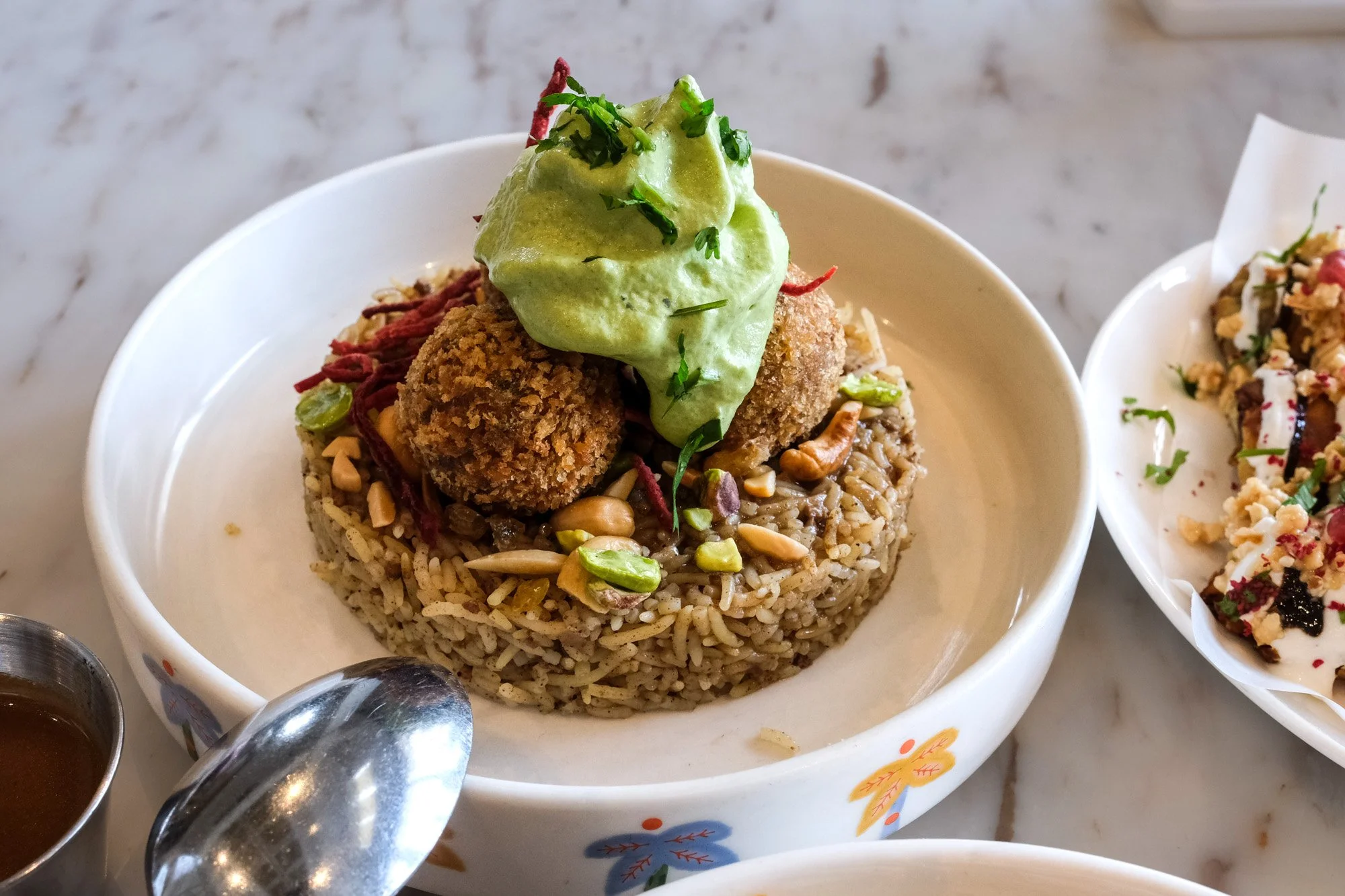
The crispy ouzi is the Saudi answer to Italian aracini.
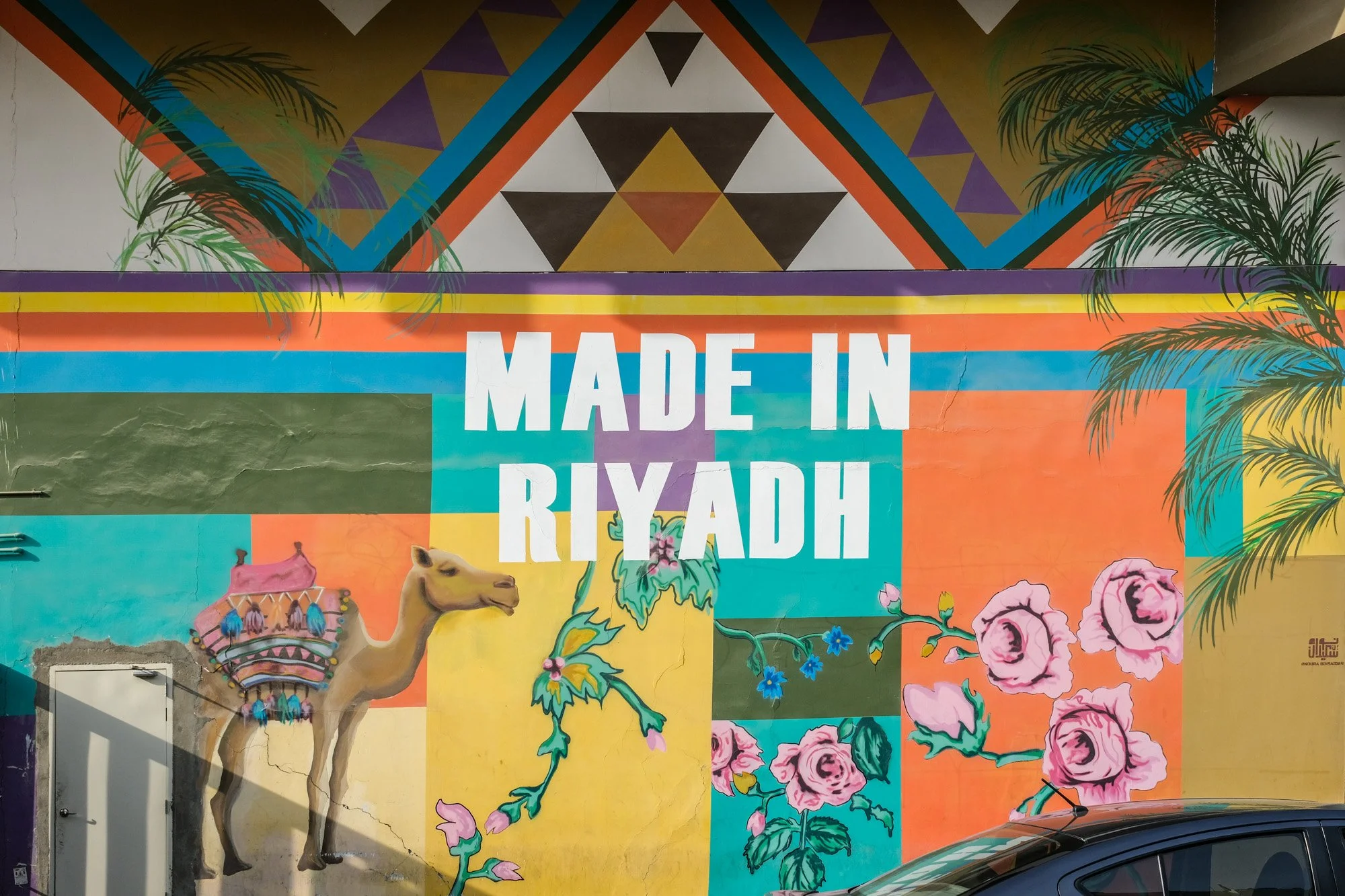
There are many colorful corners in Riyadh.
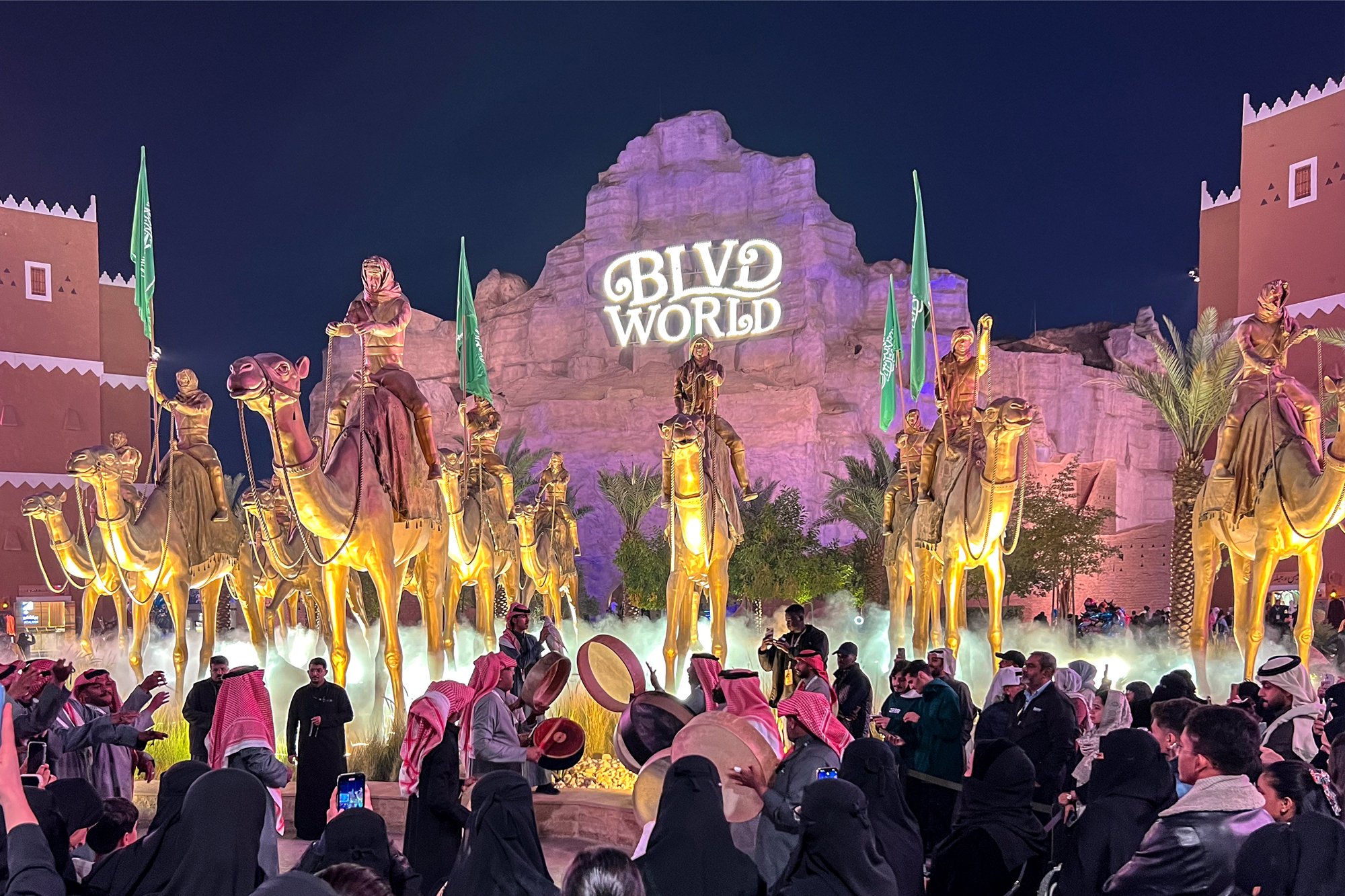
Boulevard World is Saudi’s portal to the world!
Today’s main activity was to visit Boulevard World, an amusement park on the outskirts of Riyadh. Normally, Brian and I avoid amusement parks like the plague, but I do think this seasonal theme park embodies the kingdom’s new global outlook. Surrounding the world’s largest manmade lagoon are two dozen “cultural zones” representing major countries from around the world. Boulevard World could be regarded as the Saudi’s portal to the world. Visitors could basically do an around-the-world trip in one evening. There was nothing more satisfying than seeing young Saudi women wearing American cowboy hats over their niqab. Of course, there were also plenty of hilarious instances of cultural appropriation. My favorite was seeing Domino's represented in the Italian zone.
Day 5: Riyadh - Al Ula
Since we had a 10:15 flight to Al Ula, I made a point of getting up at the crack of dawn to visit a part of Riyadh that had fascinated me: the King Abdullah Financial District (KAFD). Similar to MIBC in Moscow, it is a purpose-built financial center that aims to create an architectural ensemble typically associated with a financial hub. The particular draw for me was the KAFD Metro Station by Pritzker Prize winner Zaha Hadid. It is among the world’s most extravagant metro stations and clearly reflects the level of government investment. However, the unexpected highlight was actually the Riyadh Metro itself. It is one of the very few metro systems that offer separate first-class cabins.
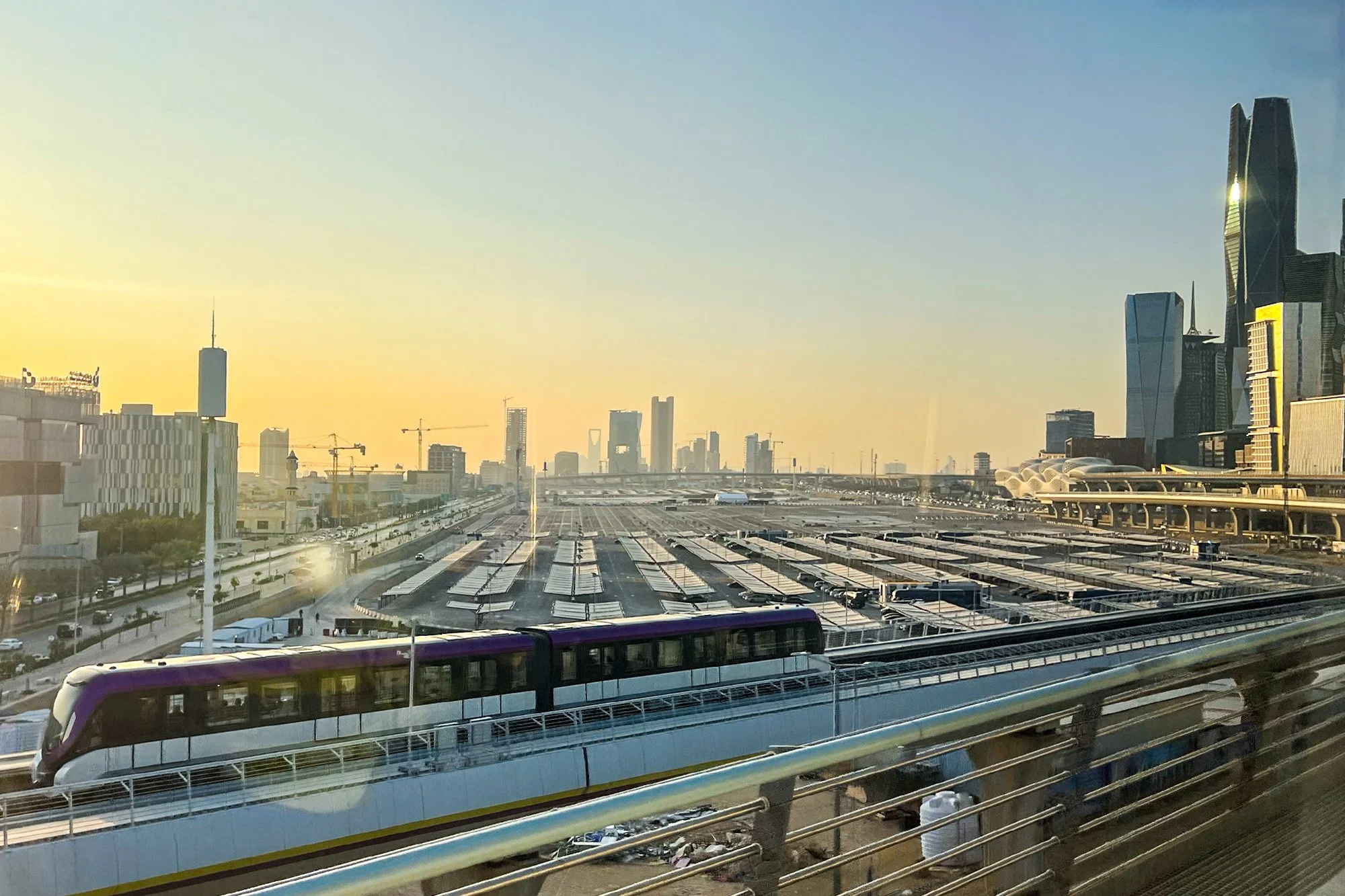
ing Abdullah Financial District (KAFD).
Much to my surprise, our 50-minute journey on Saudia’s B777 was fully booked. It was a testament to the government’s initiative to turn Al Ula into a world-class tourist destination. From the moment we landed at the airport, I was impressed by how cohesive the branding was and by the quality of the tourist infrastructure. From the free dates and Saudi coffee at the arrival hall to the beautiful branded taxis, little touches like these really reassured us that a visit to Al Ula is well worth the exorbitant expense.
It was a half-hour drive from the airport to reach the city center. We stopped by Athlath Shawaya for an authentic chicken-and-rice lunch. Al Ula’s modern town is not particularly charming; it was not until we passed by the Old Town that we understood the city’s magnetic charm. Our lodging for the next two nights was Caravan AlUla, a more “affordable” alternative to the luxury Our Habitas AlUla next door. But at $590 a night, it was still more expensive than the Four Seasons in Riyadh. It was our first time staying inside an Airstream, and the seclusion within Ashar Valley made it an otherworldly experience the moment we arrived.
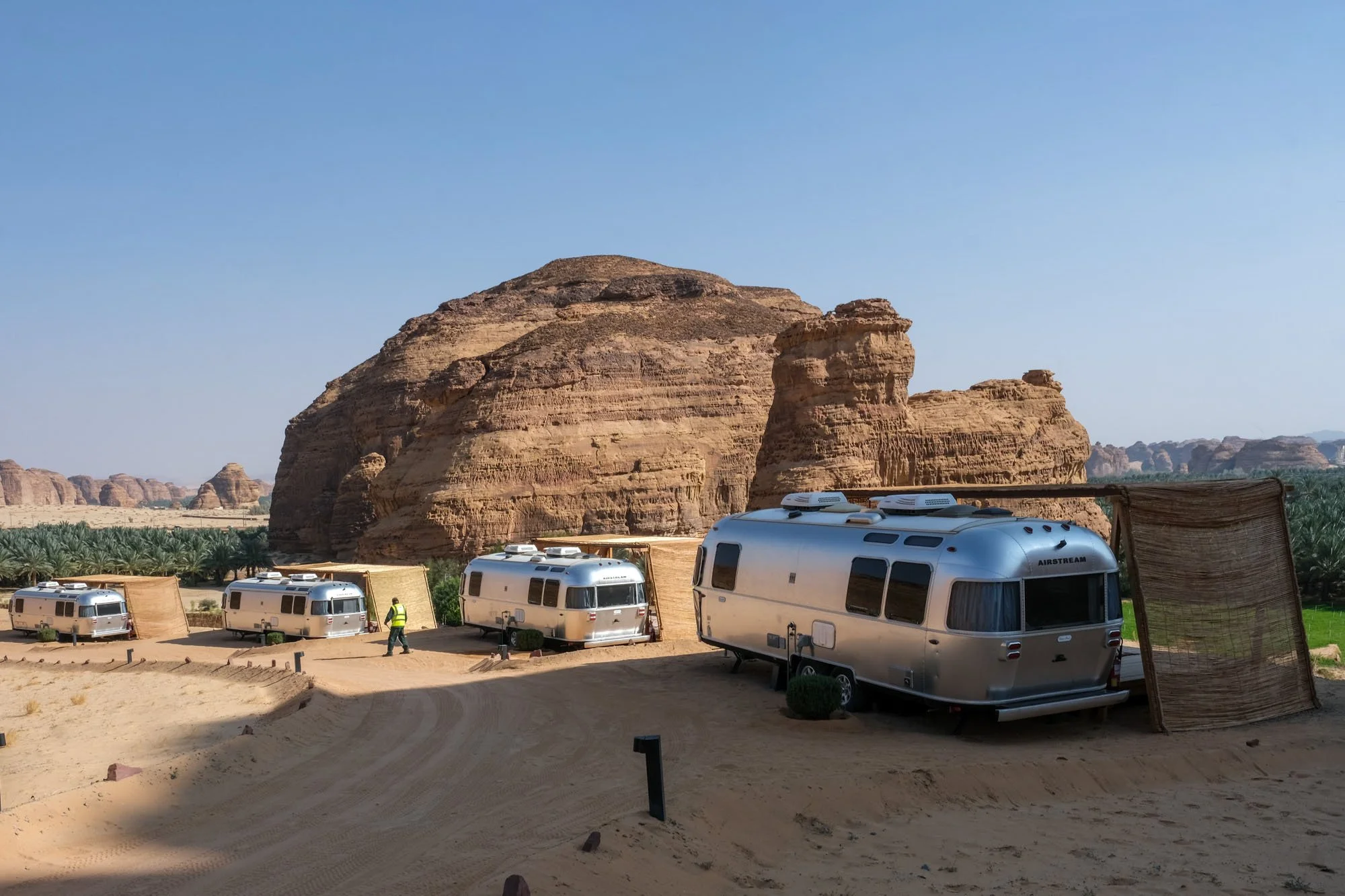
As much as we wanted to maximize our time at the caravan park, we made a quick trip to the famous Elephant Rock. This unique sandstone formation has since become a symbol of Al Ula, not only for its dramatic shape but also for the great ambiance and various amenities. It was without a doubt one of the prettiest places in the kingdom. Afterward, we returned to our caravan and had a delicious dinner from their food truck. The evening ended with an outdoor movie screening on the nearby cliff. This was quite a wonderful introduction to Al Ula.
Day 6: Al Ula
As much as we want to diss the food truck at the caravan, the breakfast this morning was absolutely outstanding. One tangible benefit of staying at the caravan is the complimentary access to the main resort. Our Habitas AlUla is situated within a picturesque valley dotted with art installations left over from the DX 20 AlUla exhibition. For most visitors, the main draw of the resort is the super Instagrammable infinity pool located at the end of the valley. It is probably among the top three Instagram hotspots in Al Ula. We certainly could not pass up the opportunity to take a dip here before heading back to our humble caravan for lunch.
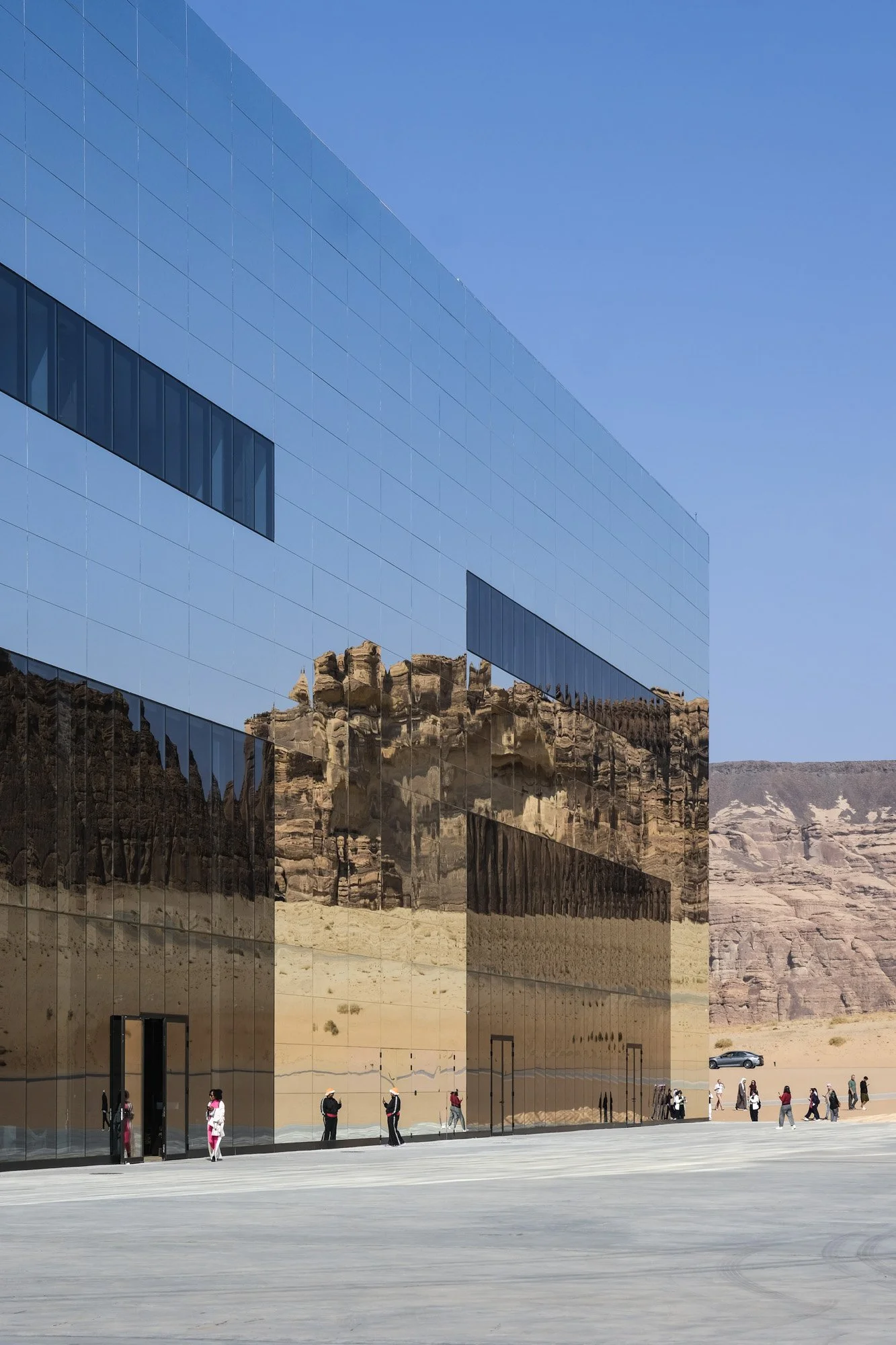
Maraya is the largest mirrored building in the world.
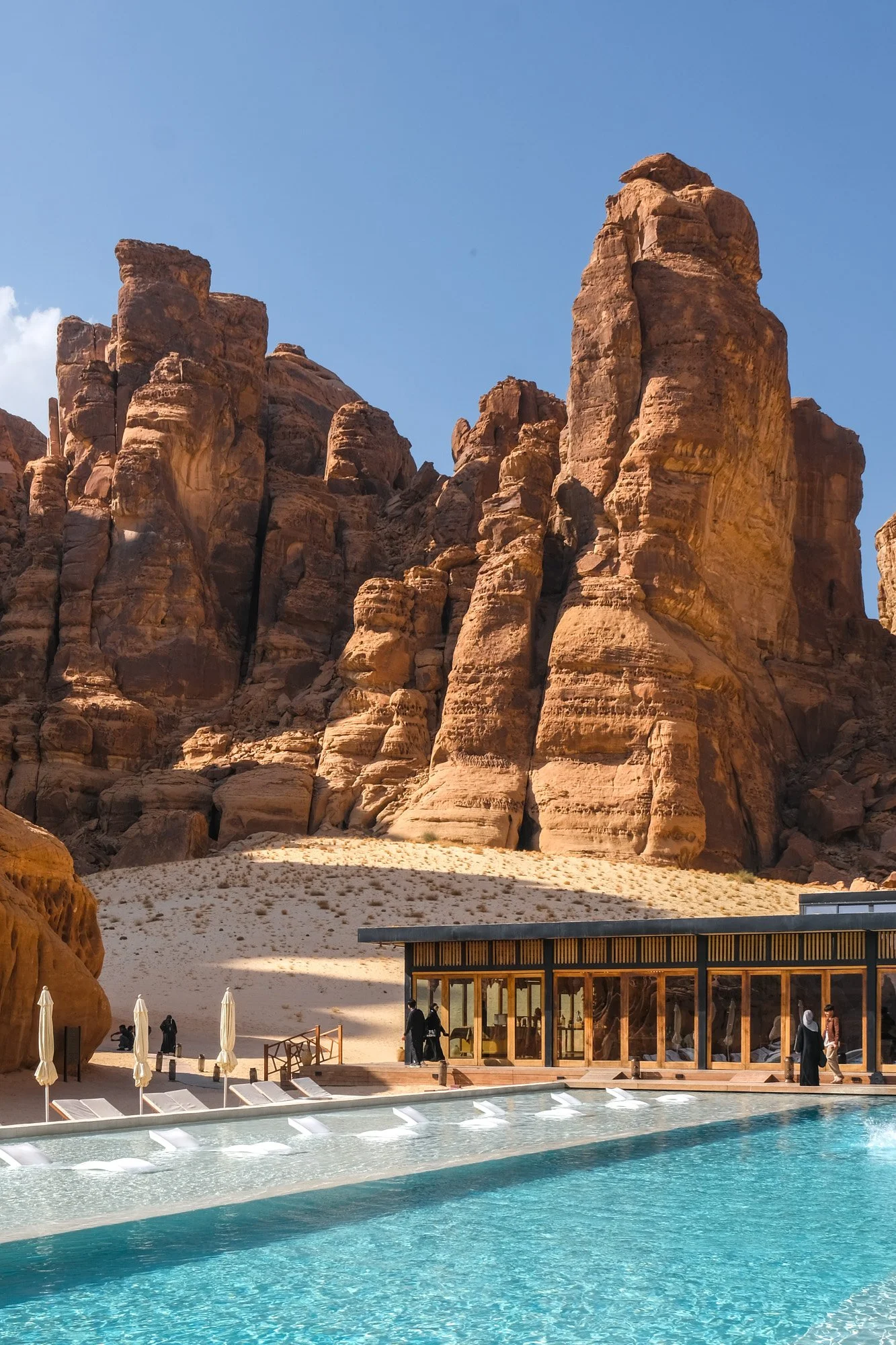
Like it or not, the pool at Our Habitas AlUla has become a symbol of Al Ula.
Within the Ashar Valley is another famous landmark of Al Ula: Maraya, meaning “mirror” in Arabic. Covered entirely in mirrors, this landmark performance venue is an artwork in its own right. It is the world’s largest mirror building and one of those projects that are deceptively simple yet so difficult to execute. For those who followed the news about Saudi Arabia in recent years, Maraya also seemed to be a prototype for The Line, a ludicrous 110-mile-long, 100-story-tall mirrored structure running through the middle of northwestern Arabia. Needless to say, the project had since scaled back by ninety-eight percent. It was just an approval that there is still a limit to the oil wealth.
As impressive as Maraya is, the purpose of our trip to Al Ula was to visit Hegra. Also known as Mada’in Salih, the archaeological site was the second city of the Nabataean Kingdom. The first UNESCO World Heritage Site, Hegra was essentially sealed off from the outside world until very recently. It has been on my travel bucket list forever; I could barely contain my excitement. Unlike Petra, Hegra is a massive site and is only accessible through guided tours by bus or vintage Land Rovers. The tour included four stops, with the final one being Qasr al-Farid, the Lonely Castle. This massive, unfinished tomb is the single most awe-inspiring site in Saudi Arabia in my book. As I stood in front of this majestic rock, I told myself just how lucky I am.
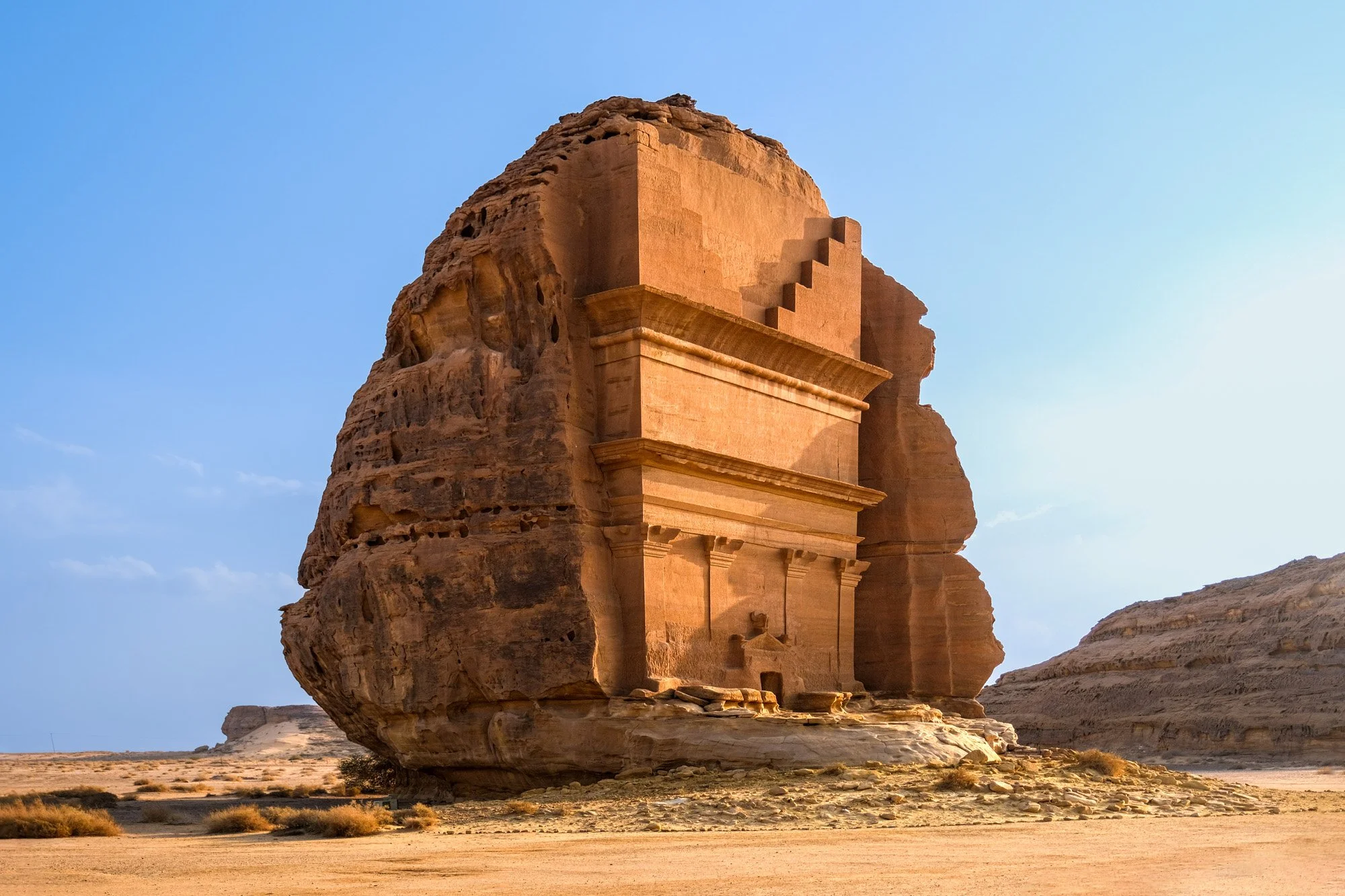
Qasr al-Farid of Hegra.
It was already dark by the time we returned to Hegra’s visitor center. After checking into our hotel at Cloud 7 Residence AlUla, we headed to the Old Town in search of dinner. From the architecture to the general ambiance, everything about the Old Town blew us away. Unlike Diriyah, this place felt far more genuine. I could hardly wait to come back the next day. After nearly a week in the country, we were ready for a change. The Cajun seafood boil from Shrimp Nation definitely fitted the bill.
Day 7: Al Ula
Because of the price tag, I could not justify staying at the caravan for more than two nights. We reluctantly bid farewell to our lovely Airstream. Our first stop was Shalal Cafe, a well-known “secret” spot hidden deep in an exceedingly narrow slot canyon. Afterward, we headed back to the Old Town to discover a deserted place. There were barely anybody around in the middle of the day. We practically had the whole place to ourselves. In fact, it was not until later that I learned the Old Town is essentially closed down during the summer months. Fortunately, there were still a couple of lunch spots open when we were there.
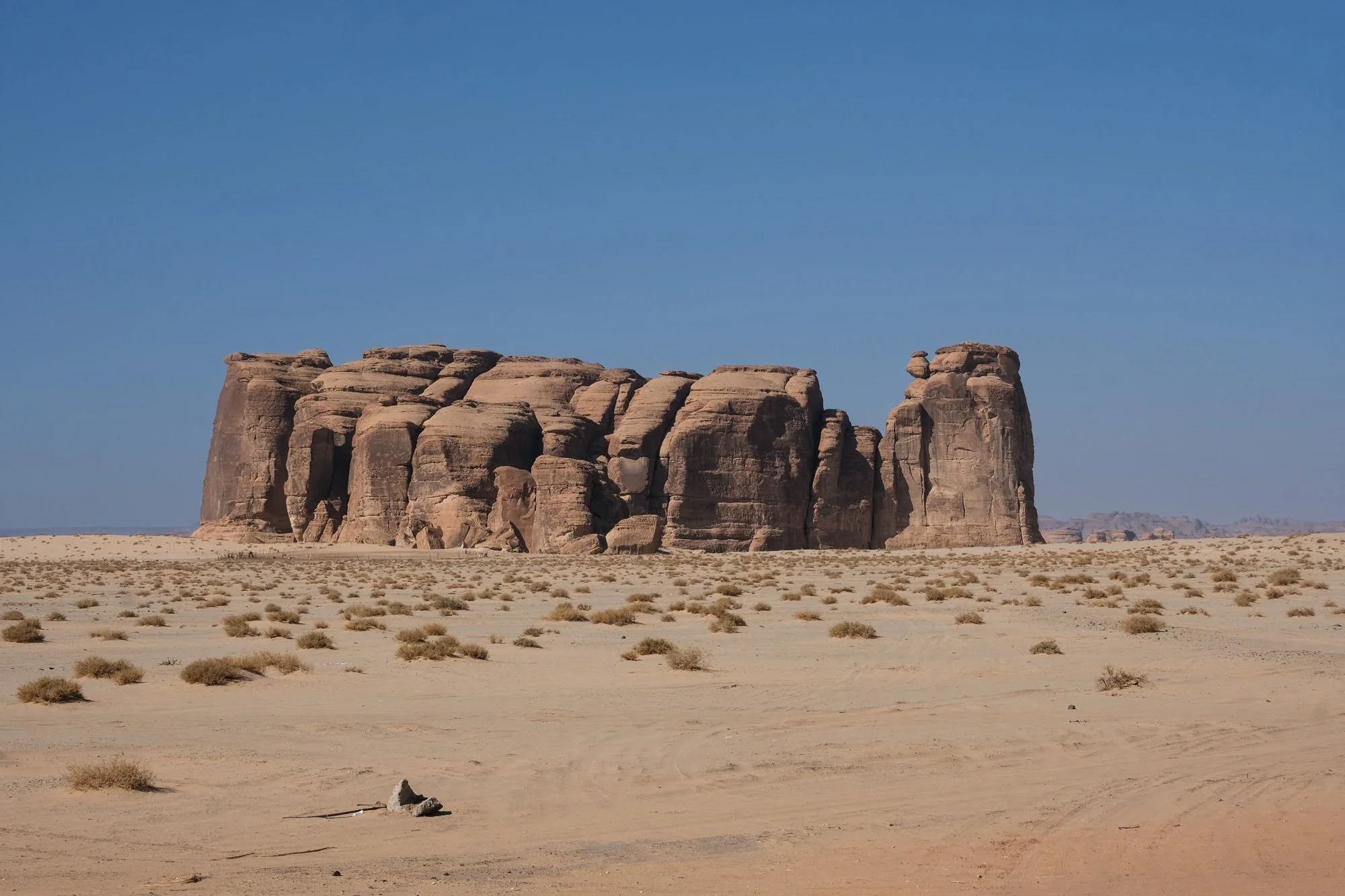
Beautiful geological formations near Al Ula.
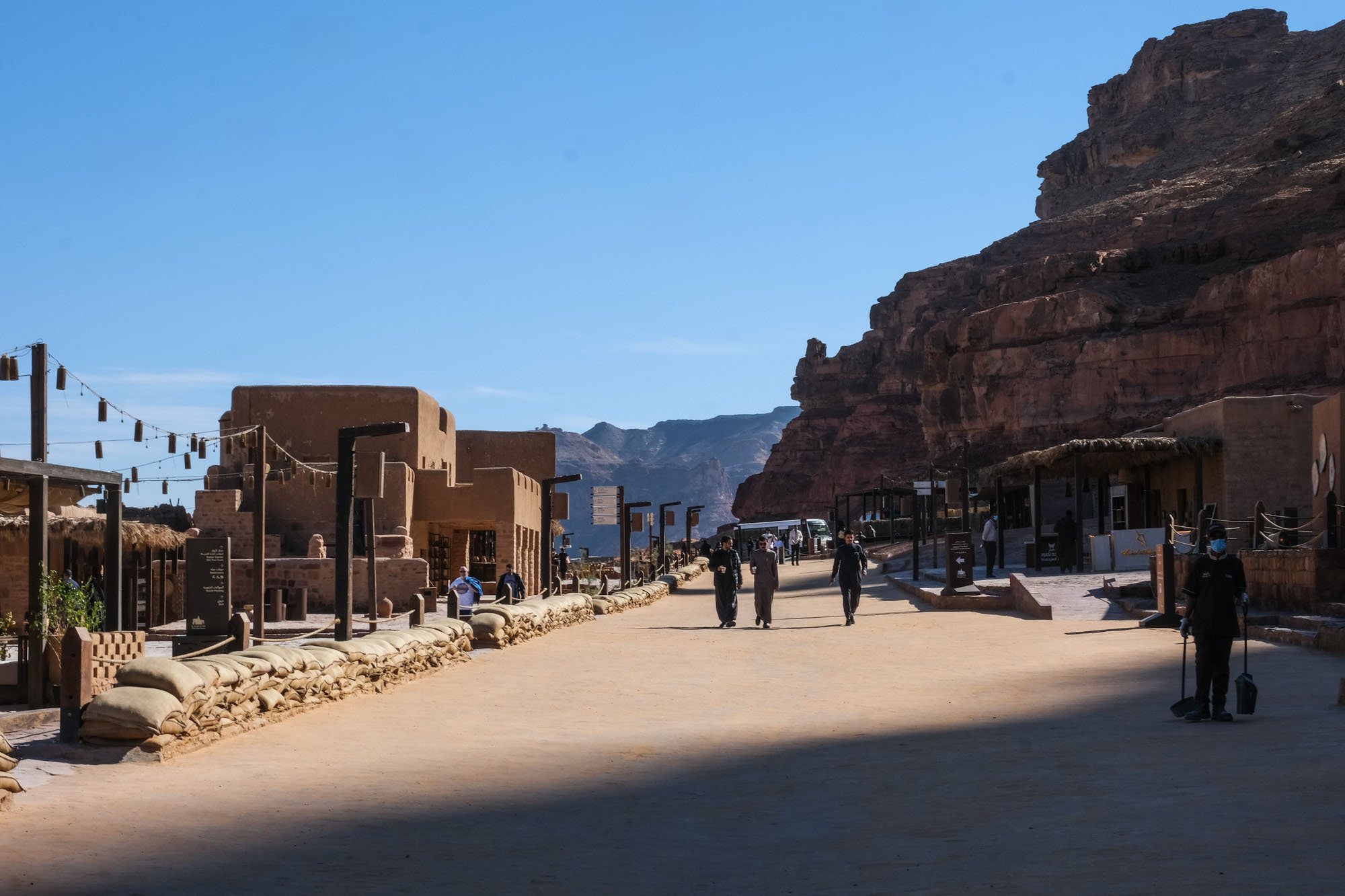
Old Town Al Ula was pretty much deserted during the day.
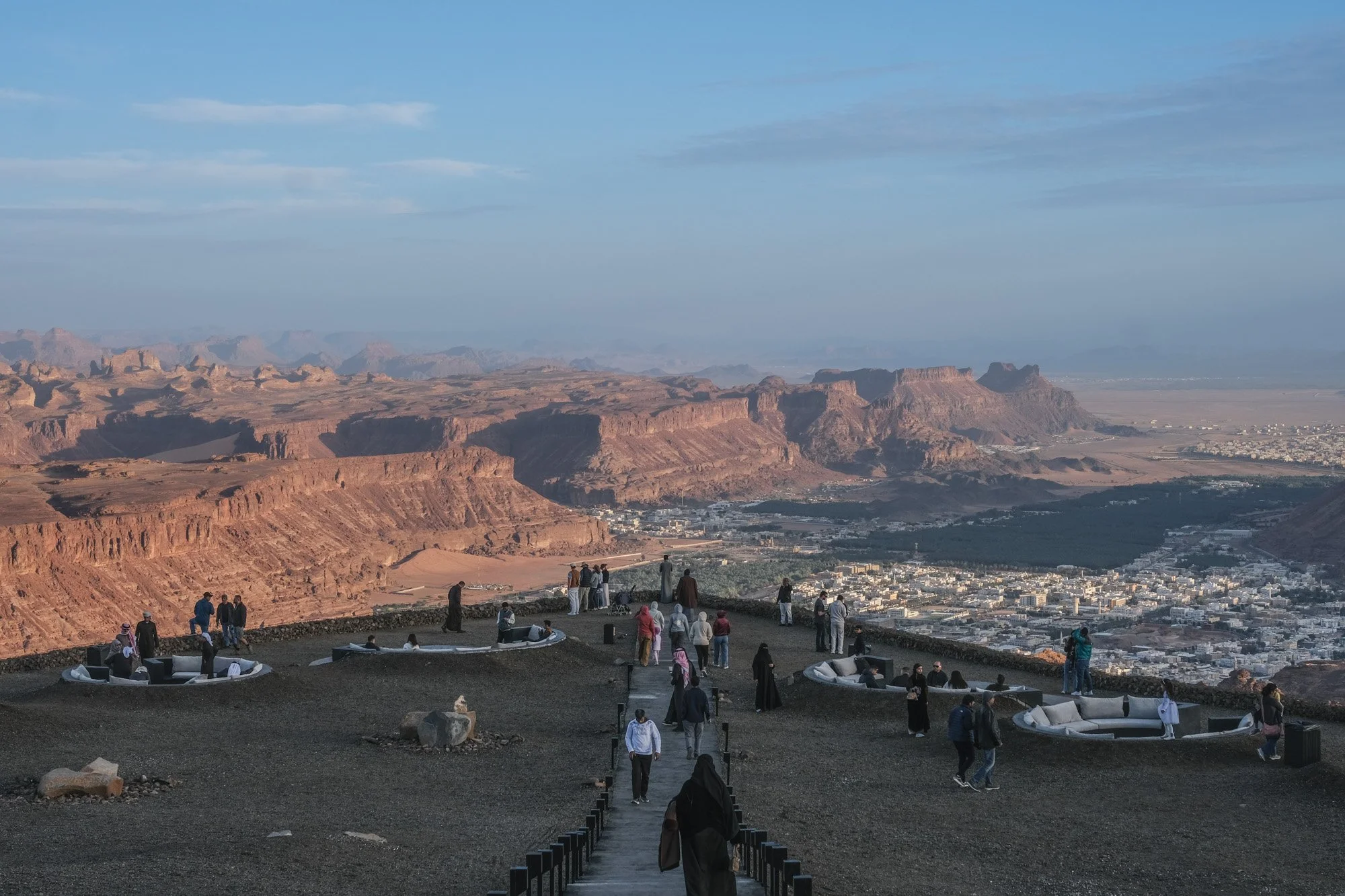
The panoramic views from Harrat Viewpoint.
After a quick nap and a refreshing dip in the hotel pool, we ventured out to Harrat Viewpoint on the plateau high above Al Ula. The panoramic views of the oasis and surrounding desert landscape were absolutely stunning. Sharp-eyed visitors could even spot the ruins of Hegra from this spot. Like at the Elephant Rocks, there is a series of well-maintained conversation pits set up along the cliff edge. The viewpoint is open to all without the need for admission or reservation. I could not think of a better perch to enjoy the sunset.
The pièce de résistance for the day was a tour of Hegra After Dark. This special experience began with a horse-drawn carriage from the visitor center through the desert landscape. We were dropped off at a rocky outcrop called the Al-Khuraymat Group. Containing upwards of fifty tombs, this part of Hegra was not part of the standard bus tour. The cliff faces were beautifully illuminated with floodlights, and the footpath was lined with lanterns. A theater group dressed up as ancient Nabataeans and welcomed us to their kingdom. Although the performance was bilingual, it was clear that the non-Arabic-speaking guests got an abridged version.
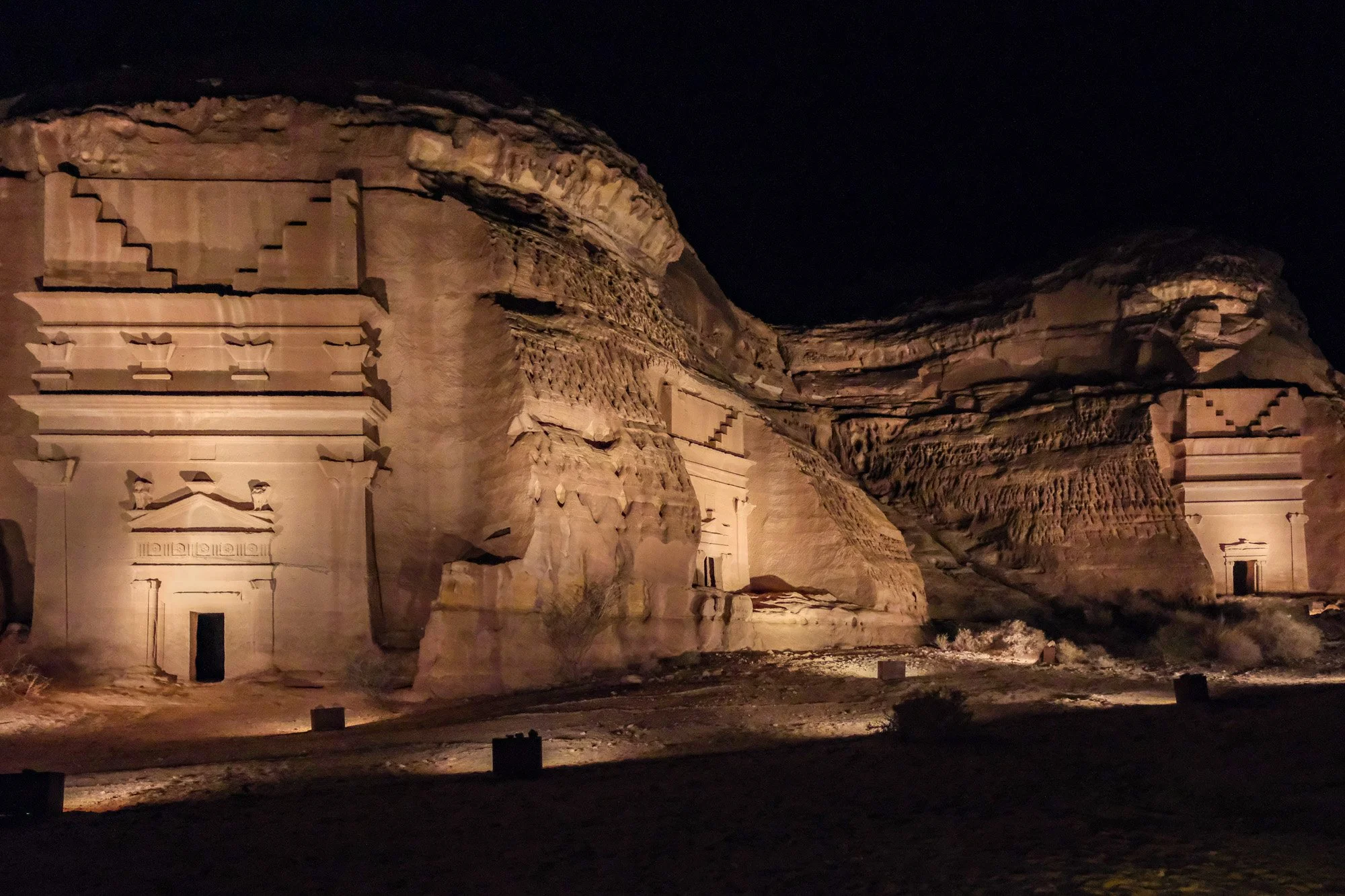
Hegra After Dark is an expensive but well worth it.
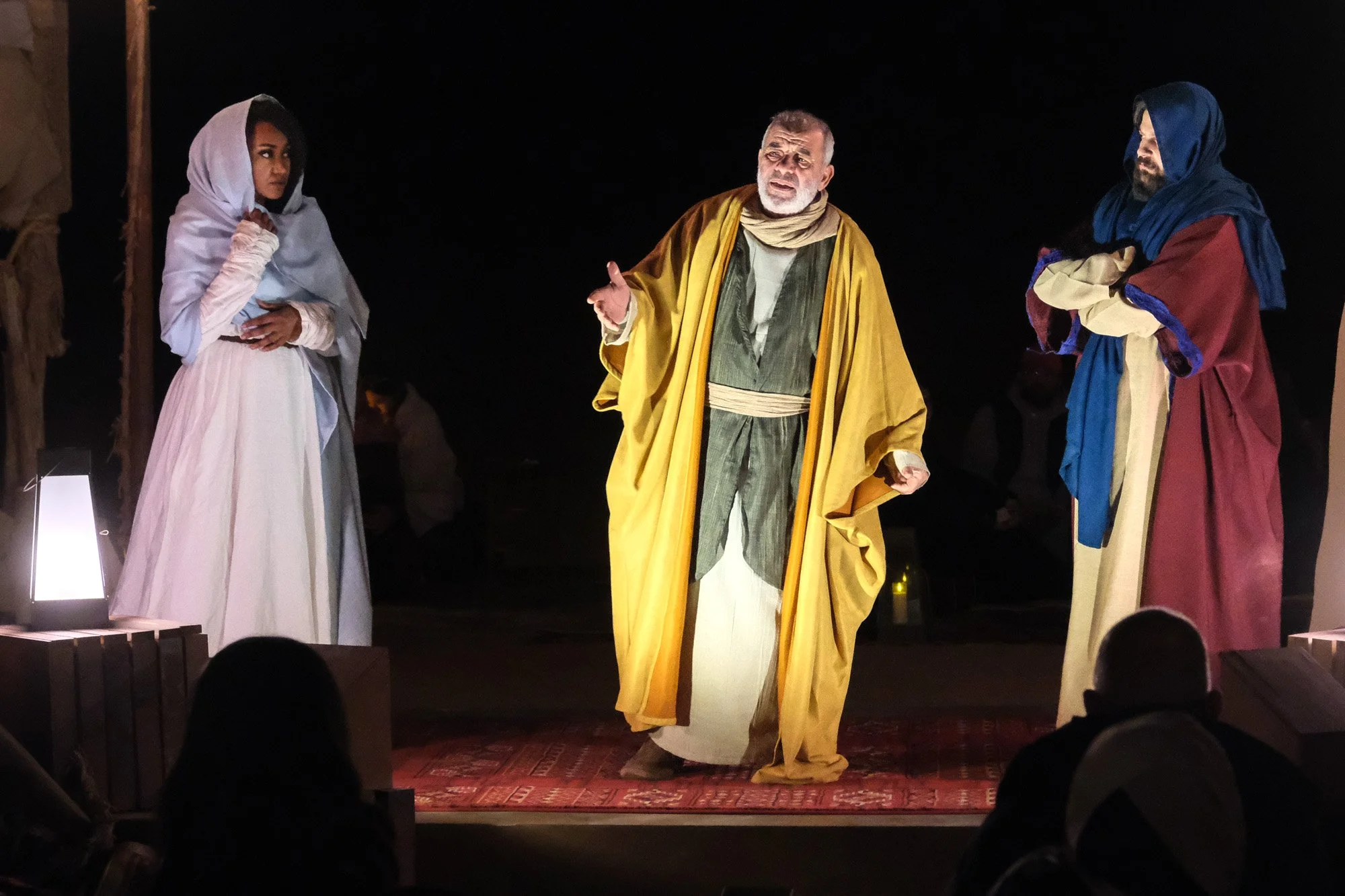
Live storytelling of Nabataean life.
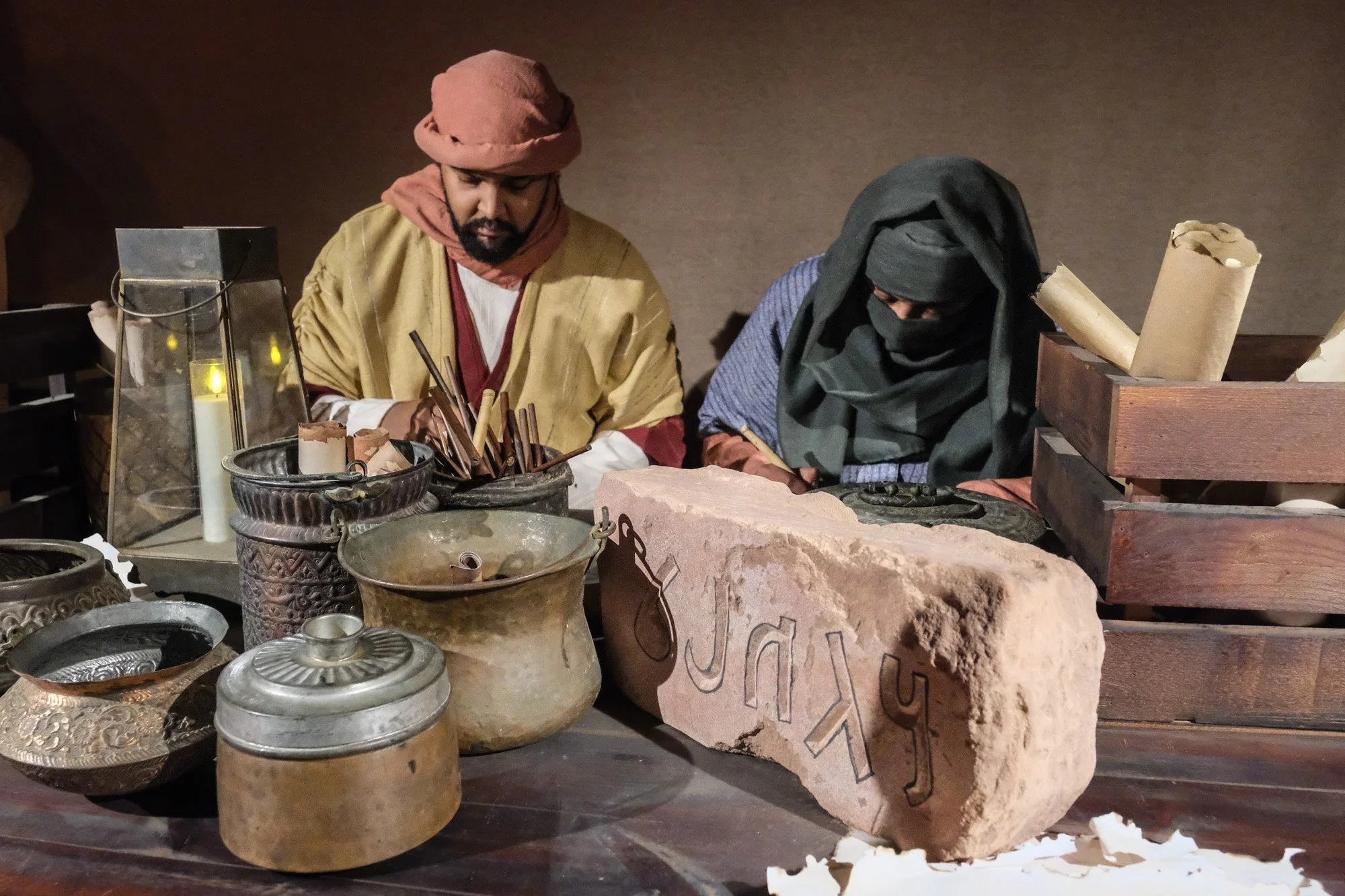
We were able to explore different aspects of Nabataean culture.
Before long, we were directed toward a different section, which was set up with a “nomadic” marketplace. There, we learned about various aspects of Nabataean life, including jewelry, written texts, spices, and fashion. Before long, a series of delicious canapés and drinks were served, all fully consistent with the Nabataean theme. In all honesty, I did not quite comprehend the plot of the performance, but it was nevertheless one of the most unforgettable experiences. Brian regarded it as a highlight of the entire trip, as it reminded him of the scenes from Indiana Jones and the Last Crusade. At 250 SAR, this experience may be pricey, but it is definitely worth every penny in my opinion.
Day 8: Al Ula
After a few busy days of sightseeing, we were prepared for a slower pace. I signed up for a guided tour of the Old Town. Despite the ongoing restoration, only a fraction of the historic city has been renovated and opened to visitors. But among the accessible sections, there are numerous boutiques and a few cultural spaces nestled among the narrow alleys and courtyards. If we have the money, I would certainly love to stay at Dar Tantora The House Hotel, a five-star mud-brick resort with no electrical lights or air conditioning. The Old Town was a magical place, and I am curious to see how the place might transform over the next decade. The one-hour walk included a visit to the Al Ula Fort, which offers panoramic views of the city and oasis.
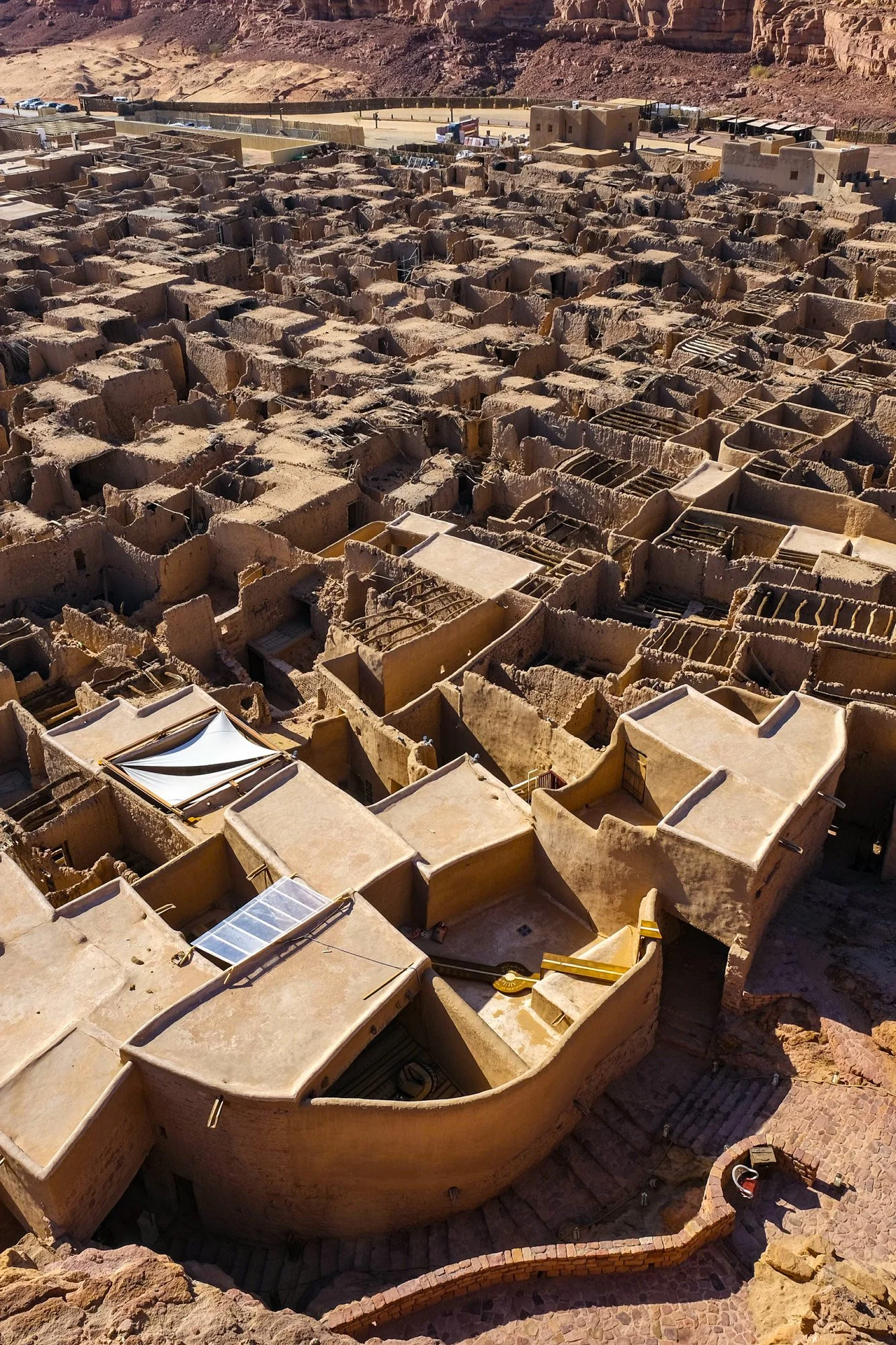
A birds eye view of Old Town from the fort.
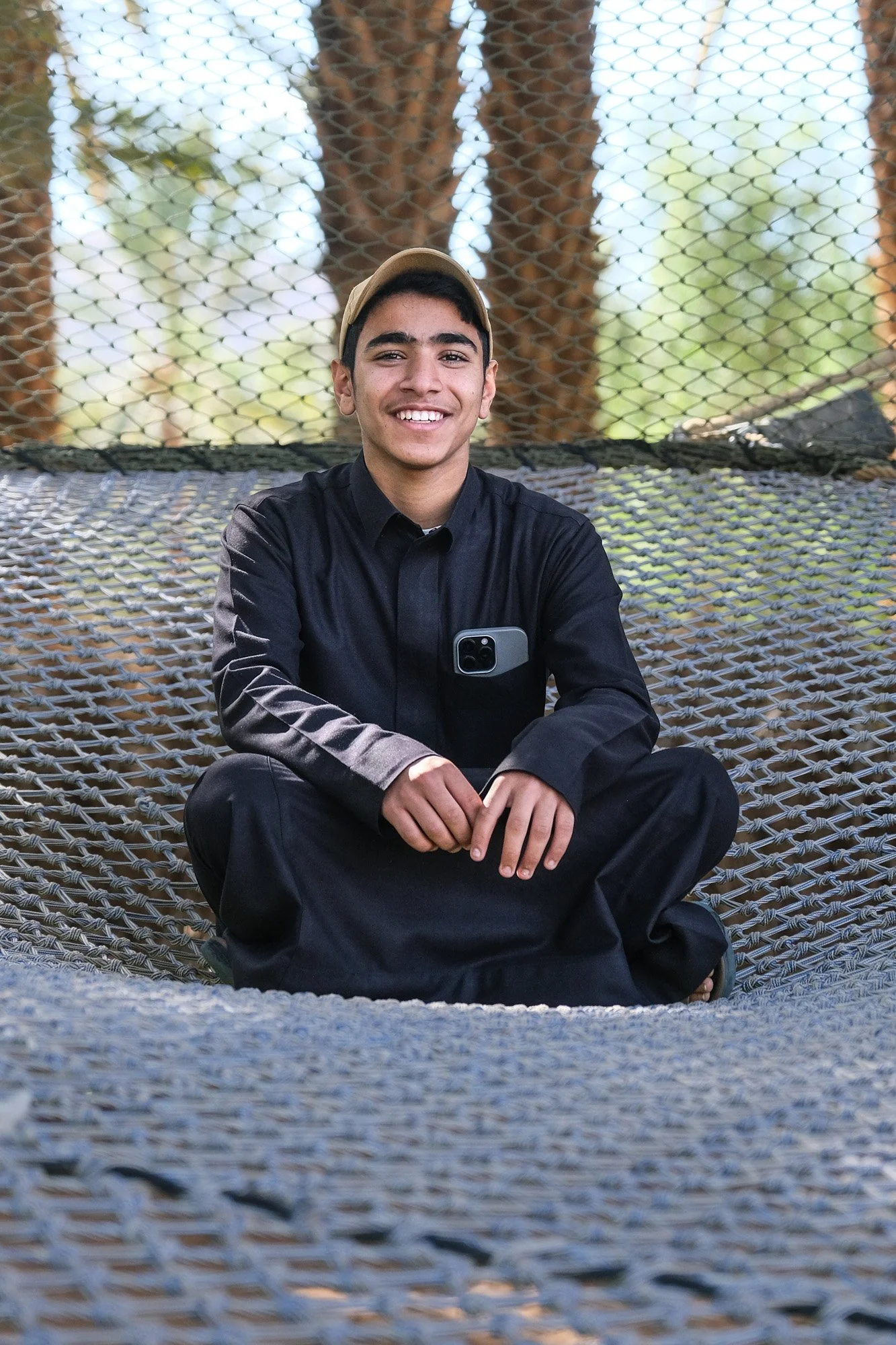
Young Saudi at Daimumah.
Across the roadway from the Old Town is Al Ula’s oasis. During pre-modern times, the locals lived on their individual farms in the oasis for much of the year and only resided in the Old Town during the winter. While agriculture is no longer an economic driver in the area, it still is a symbolic and ecological cornerstone of Al Ula. Much of the oasis was open to visitors, and we explored the crumbling walls of the farm estates. A great place to learn about the oasis was Daimumah. It is a living laboratory for ecology, culture, and creativity. In addition to public arts, Daimumah also demonstrates the traditional irrigation system that made the palm grove possible. Their lovely Wild Flower Restaurant was one of the most delightful lunch spots on this trip.
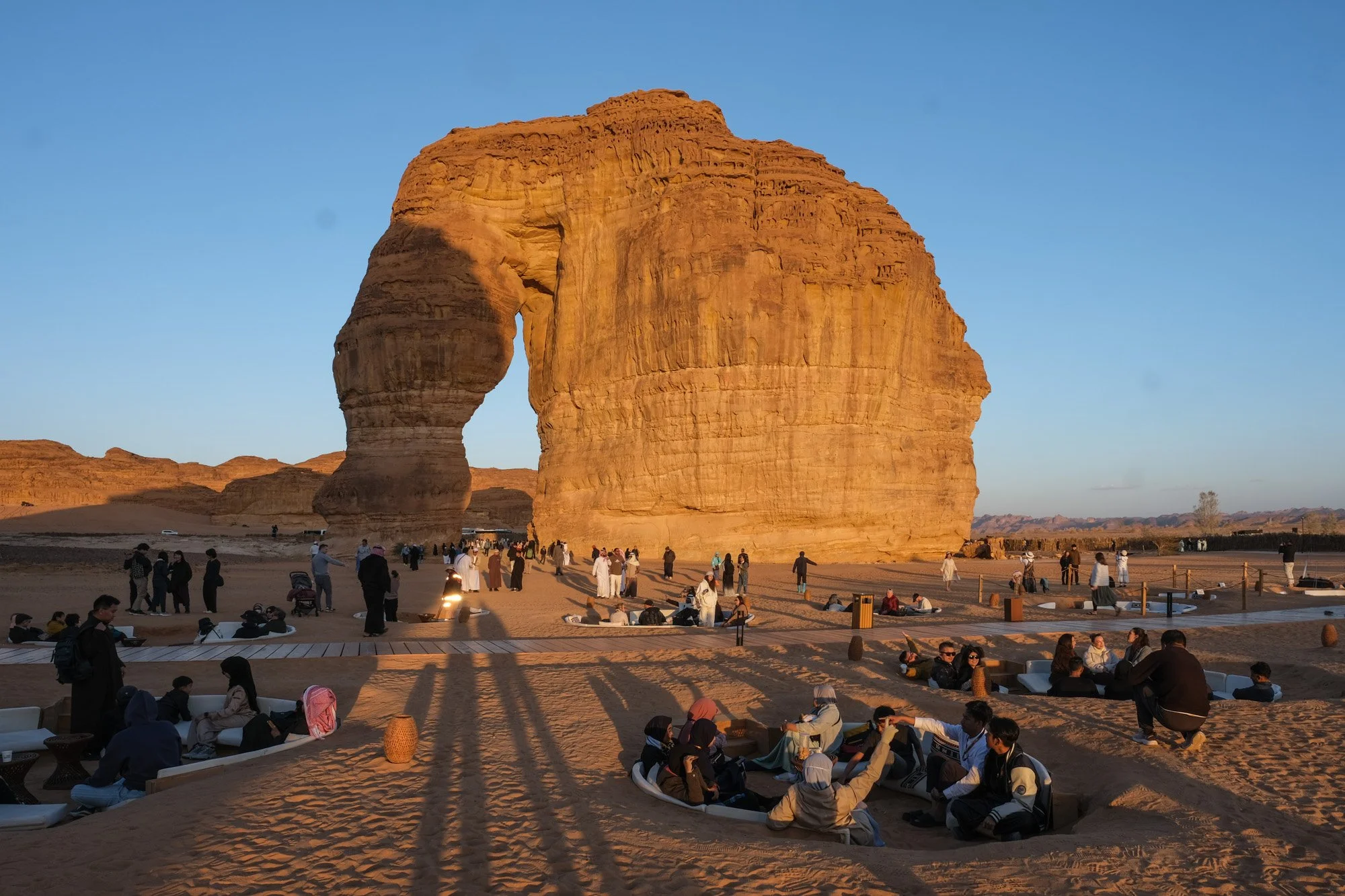
Elephant Rock is probably the most popular sunset spot in Al Ula region.
Time really flew in Al Ula. For our final sunset, we decided to revisit Elephant Rock. It was just as magnificent as our first night here. We wrapped up our final evening in Al Ula at Tofareya, an upscale Saudi restaurant at the base of the old fort. As we sat on the terrace and watched the world go by, I had to remind myself that none of these existed just five years ago. As much as I was grateful to be there, I am even more glad to see that the Saudis can cherish and celebrate their cultural heritage.
Day 9: Al Ula - Madinah
This was our last day in Al Ula, and we were surprised to wake up to a rainstorm. After checking out of the hotel, I made a point of visiting Al Manshiyah Railway Station at the edge of the modern town. This abandoned, dilapidated station was once a major stop on the historical Hejaz Railway, a narrow-gauge railway that connected Damascus to Madinah in the early 20th century. This was the only railway line built by the Ottoman Empire, commissioned to connect Constantinople to the holy city of Mecca. Although this was hardly a popular tourist stop in Al Ula, this humble station has been placed on the tentative list of UNESCO World Heritage Sites.
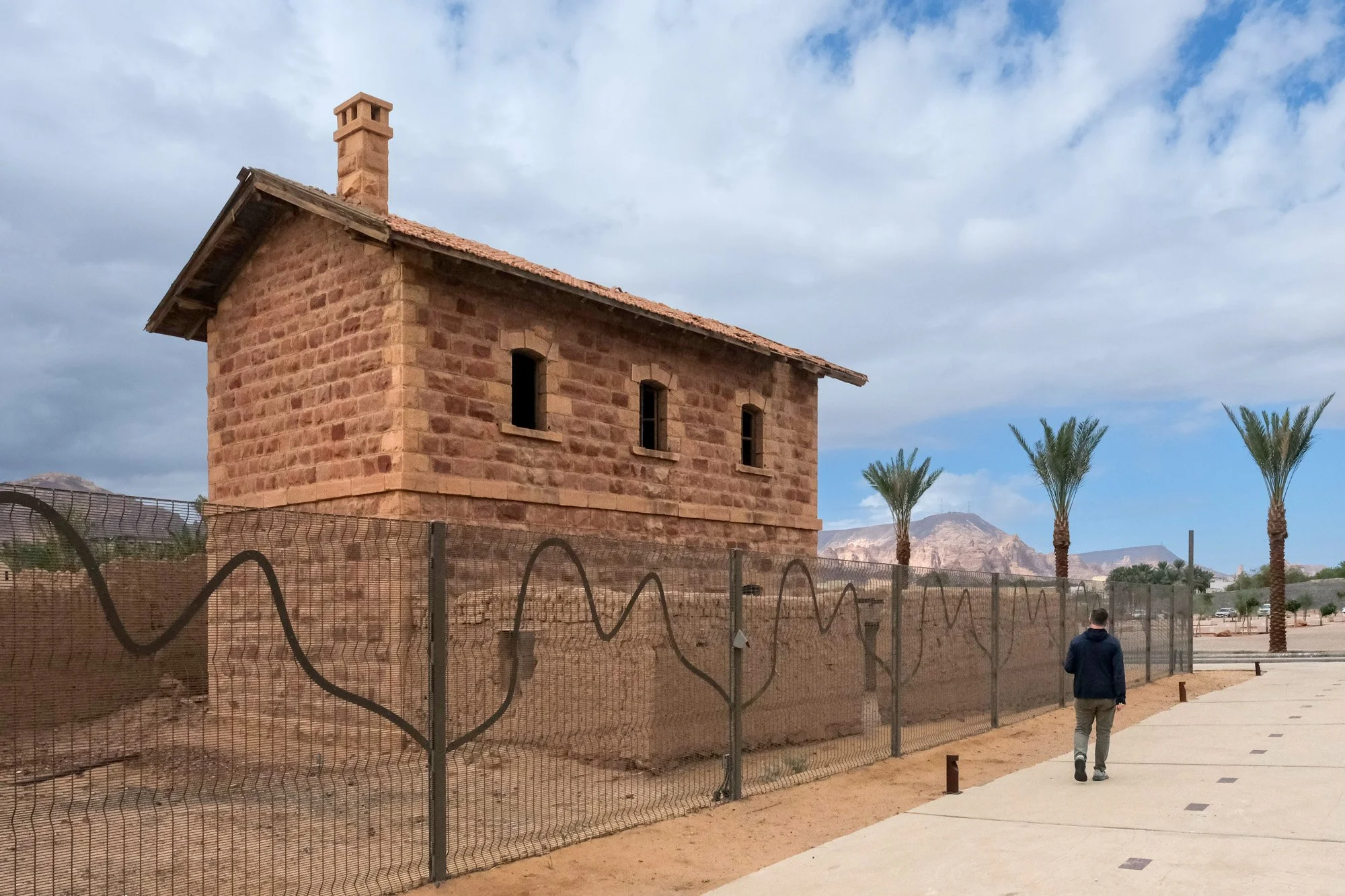
Al Manshiyah Railway Station is a tentative UNESCO World Heritage Site.
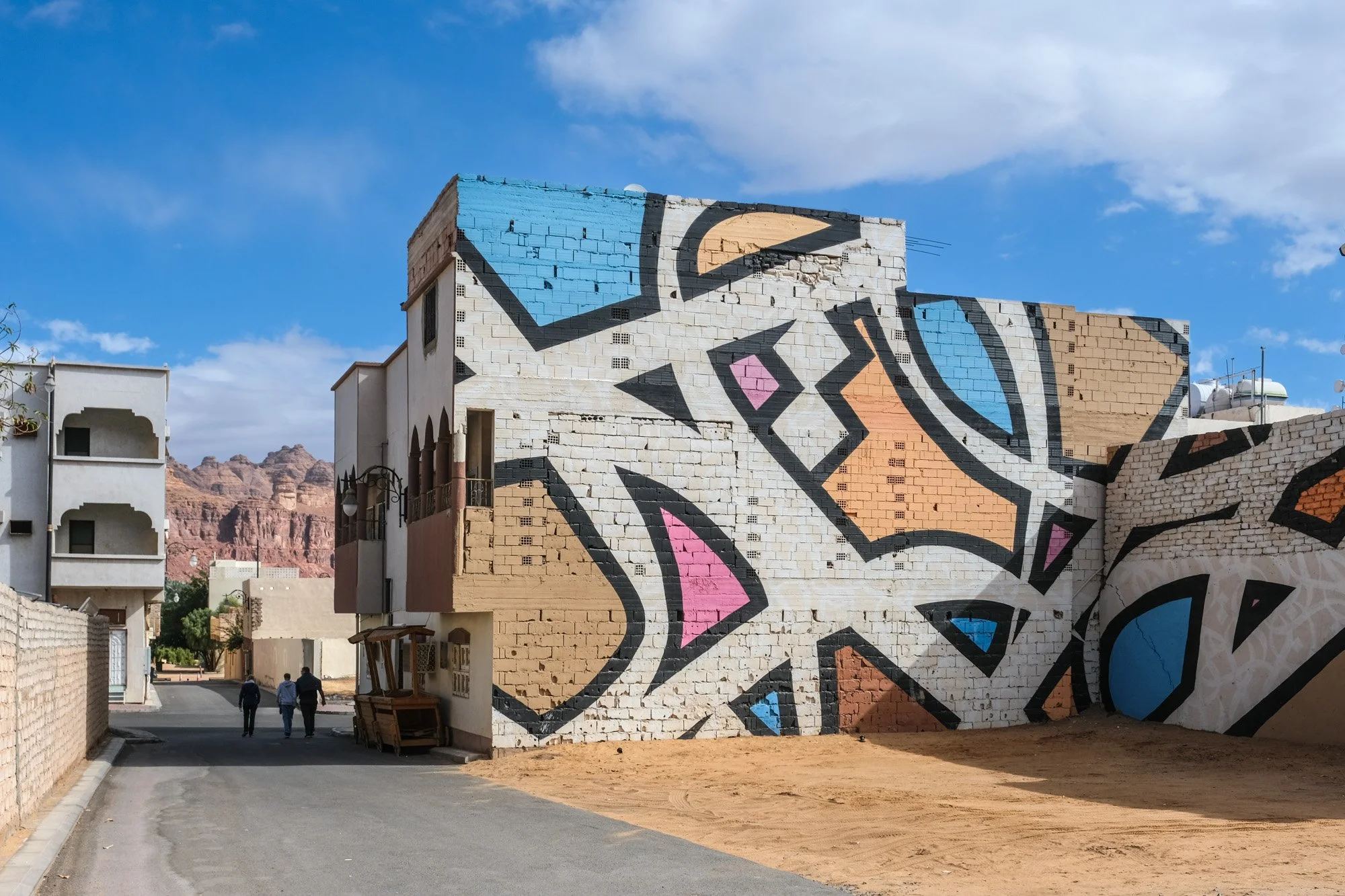
Al Ula certainly embraces the contemporary arts in stride.
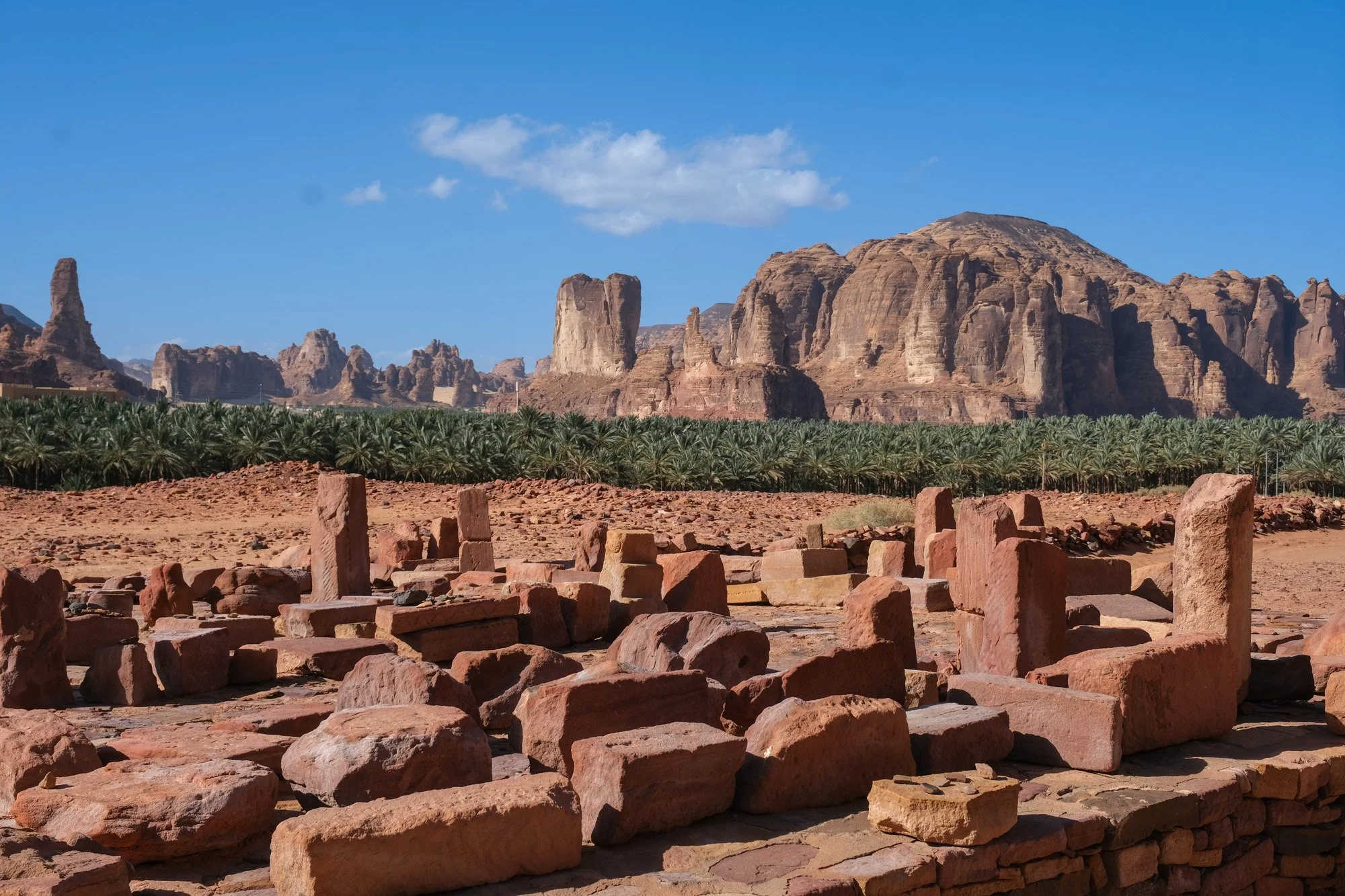
The ancient capital of Dadan.
Our final activity in Al Ula was a guided tour to Dadan & Jabal Ikmah. While they are not nearly as famous as Hegra, they are just as enigmatic and fascinating. Dadan was an ancient kingdom and a rival to the Nabataeans. Although the kingdom is mentioned in the Book of Genesis, little is known about the Dadanite culture. Like most ancient cultures, Dadan is best known for its unique funerary monuments. A series of perfectly cut tombs was carved on the cliff face, and some were decorated with beautifully carved lion wall reliefs. A sizable settlement was also discovered nearby, and it was still an active excavation site. The most spectacular structure is an enormous cylindrical basin carved out of a single rock.
The second part of the tour was to Jabal Ikmah, which is only a ten-minute bus ride away. This narrow valley has the highest concentration of petroglyphs in the region. The stone carvings span a few millennia, and the site is often referred to as an open-air library. The texts are still in remarkable condition despite thousands of years of erosion. While most petroglyphs were in Dadanitic, numerous languages are represented here, including Nabataean and Arabic. The coexistence of different languages and the absence of vandalism over the ages illustrate how Al Ula has been a center of regional trade throughout much of its history.
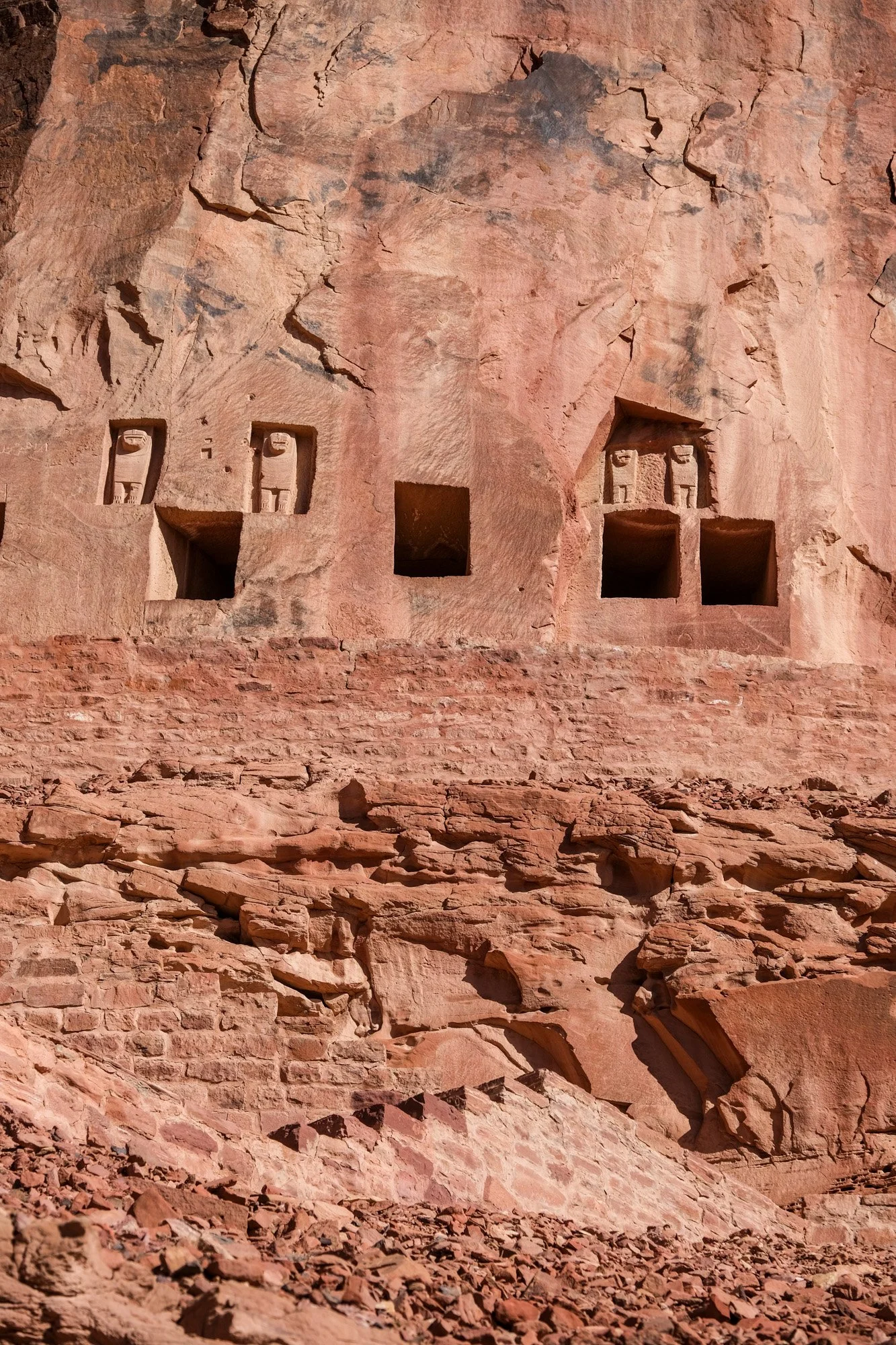
The famous lion tombs of Dadan.
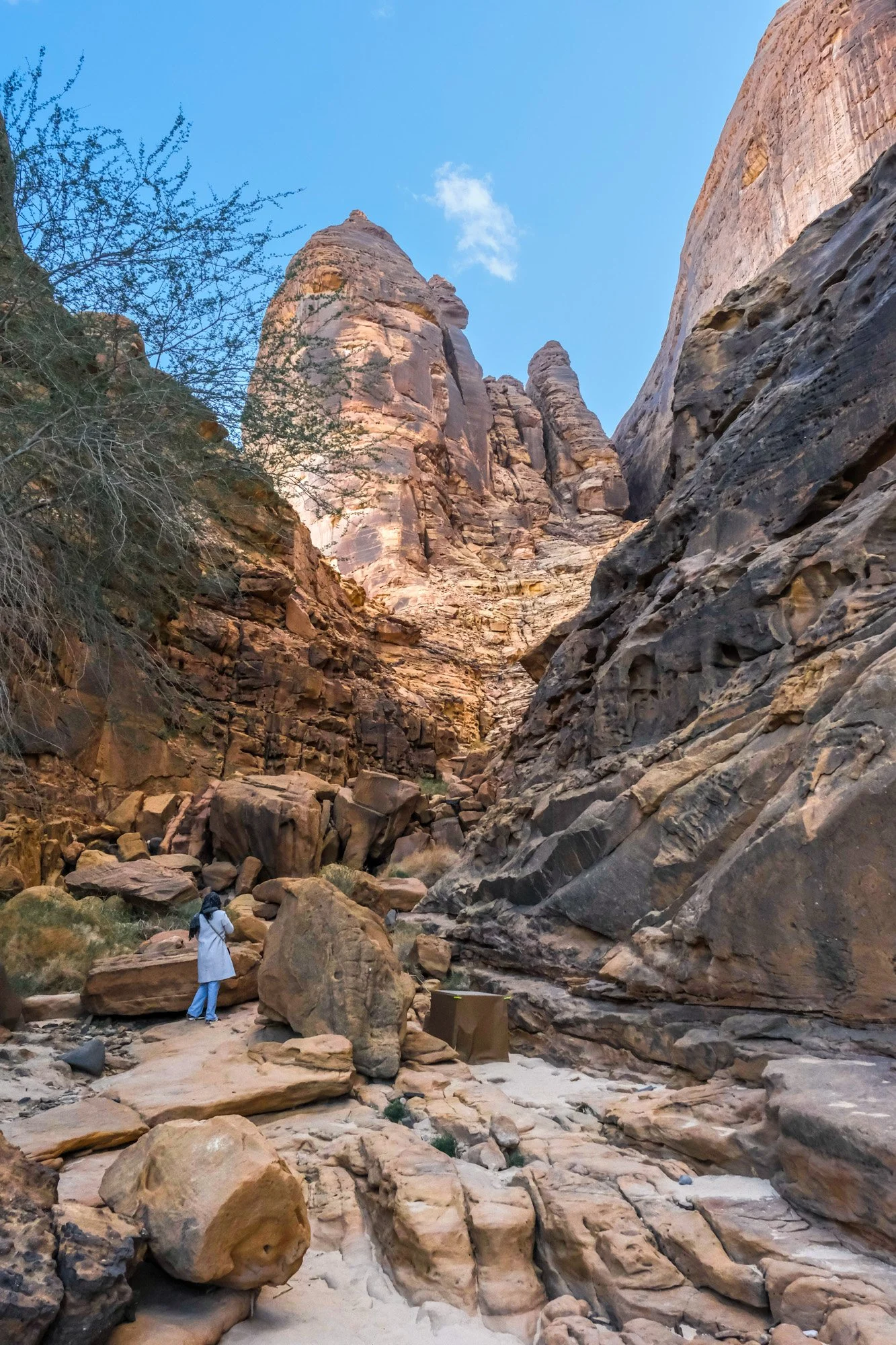
Jabal Ikmah is referred as an open-air library.
It was already late afternoon by the time the tour wrapped up. We reluctantly bid our farewell to Al Ula and made our way to Madinah, the second holiest city in Islam. The four-hour drive south was a breeze. As we approached Madinah, I couldn’t help but be a little nervous. After all, Madinah was closed to non-Muslims as recently as four years ago. We actually passed through the former religious checkpoint that was on the outskirts of the city. However, our hesitation was quickly abated. At first glance, Madinah looked awfully like an American city. We even spotted Ashley Furniture and Chuck E Cheese on our way to the hotel. We arrived at DoubleTree by Hilton Madinah Gate late in the evening, so we just had a quick dinner at the hotel restaurant.
Day 10: Madinah
I woke up this morning to the skyline of Madinah. Since we only had one full day in this holy city, I knew we had to be strategic. After battling hordes of pilgrims at the breakfast buffet, we drove to our first stop, Quba Mosque, the world's first mosque. It was established by the Prophet Muhammad on the first day upon his return from Mecca and later completed by his companions. I have always been fascinated by religious pilgrimage. Obviously, we were not allowed to enter the mosque itself, but we were content to observe the proceedings from the outside. From the mosque, it was just a 10-minute walk to the historic Quba Castle and Al Jum'ah Mosque, where the first Friday Prayer took place. I could only imagine what an excitement it was for Muslim pilgrims to be here.
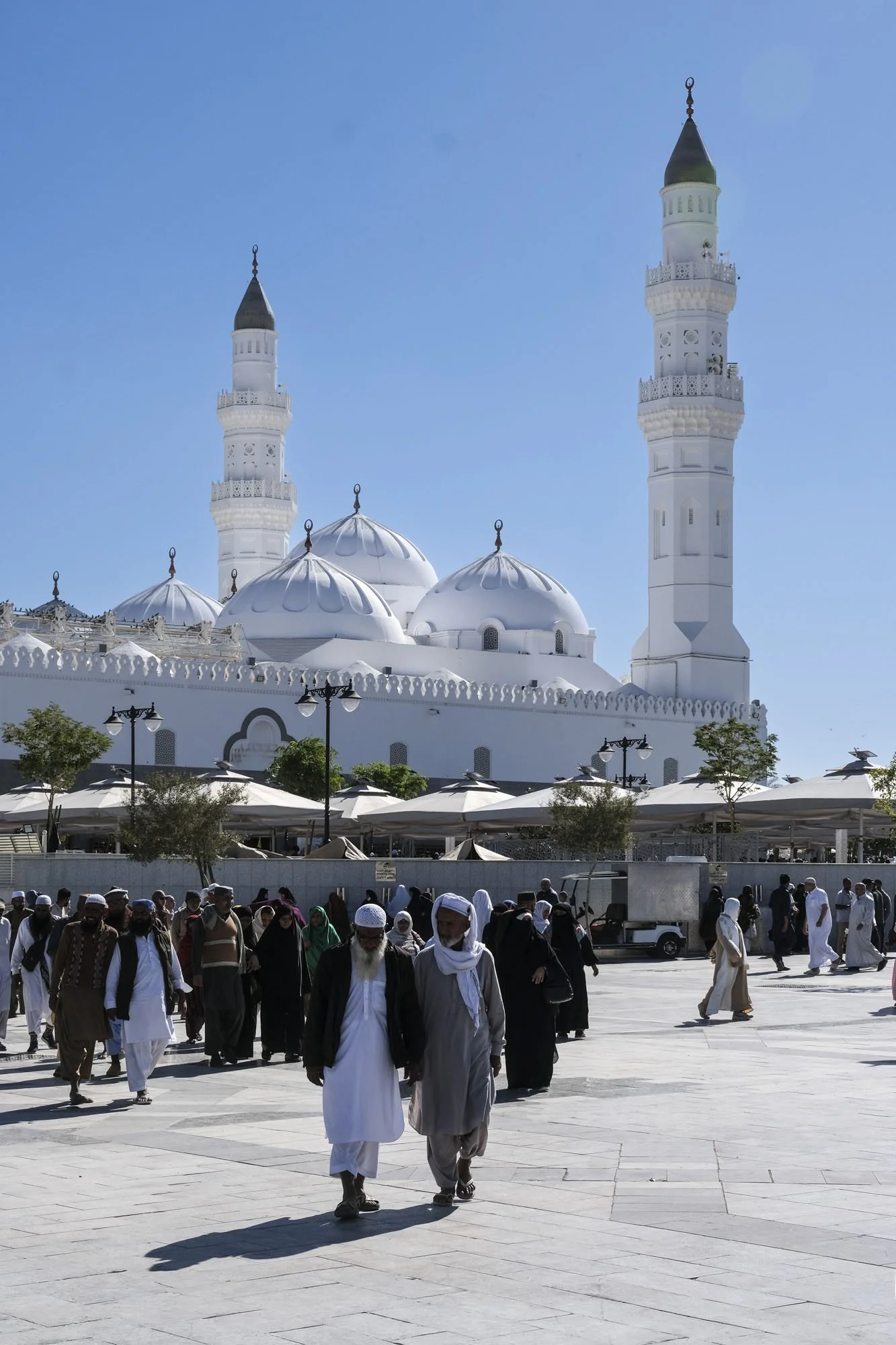
Quba Mosque is one of the top pilgrimage site in Madinah.
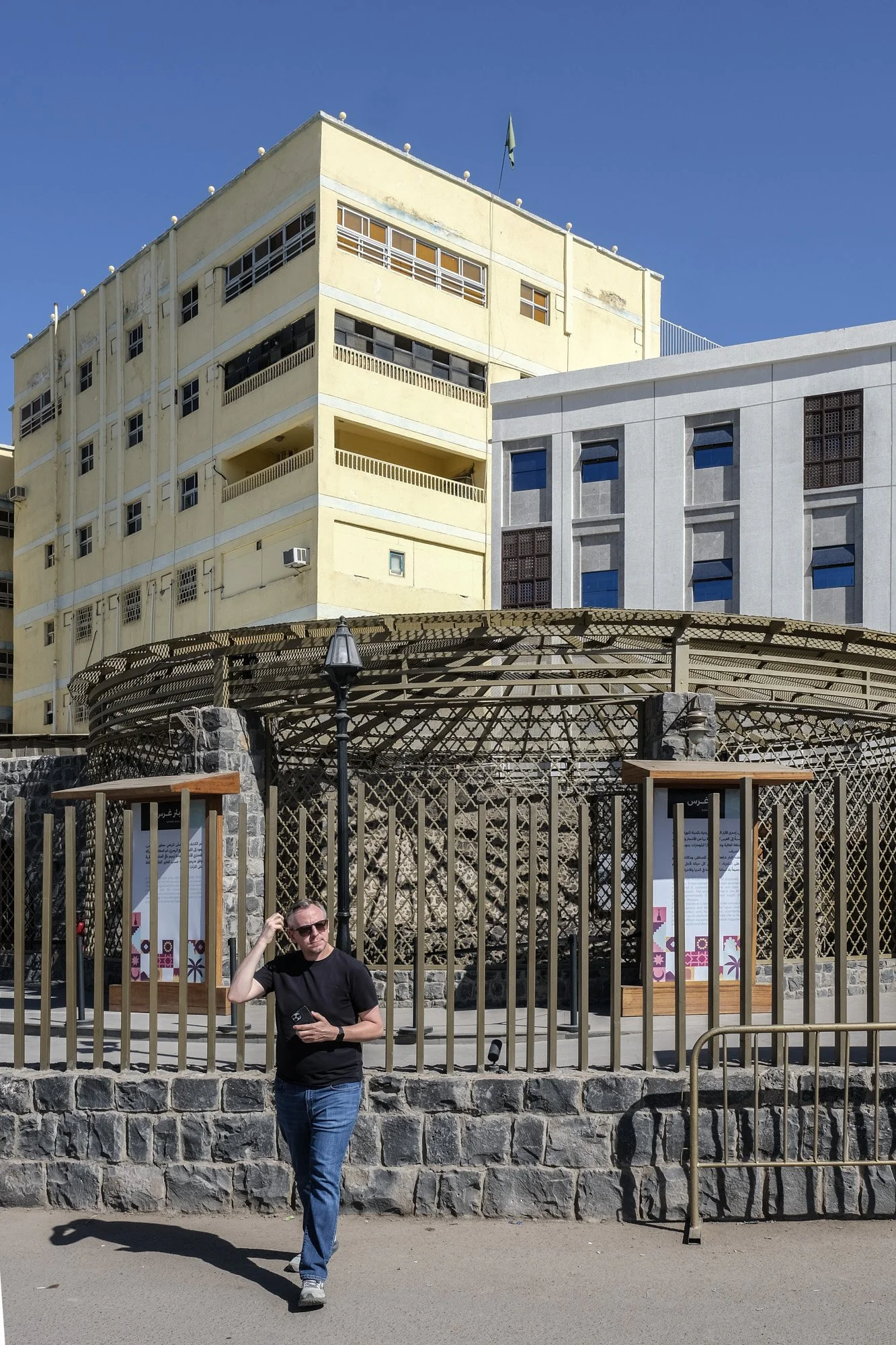
Ghars Well was decidedly underwhelming.
Our next stop was Ghars Well, a historic well from which Prophet Muhammad drank. Allegedly, his body was bathed in this water upon his death. Even though this was a critical pilgrimage site, it was locked behind cages and situated at the back of some mundane residential building. Sadly, the well was closed at that hour, so we drove a few minutes away to Kebun Kurma Abu Faisal, a date market popular with pilgrims. I had no idea how I learned about this place, but it was definitely a lot more touristy than our liking.
The traffic was absolutely horrendous, and we were just unsure about just how close non-Muslims could legally get to the Haram, the sacred area of a holy city. In the end, we decided to park the car at the outskirts and took an Uber in. It was already two o’clock by the time we arrived at the city center. Central Madinah was definitely what we expected. Aside from a few mosques, just about every structure here is a mid-rise modern building. We were starving by the time we arrived, so we ordered lunch at YURT, a fast-casual eatery serving Kazakh and Uzbek dishes. It was certainly a cuisine underrepresented back home.
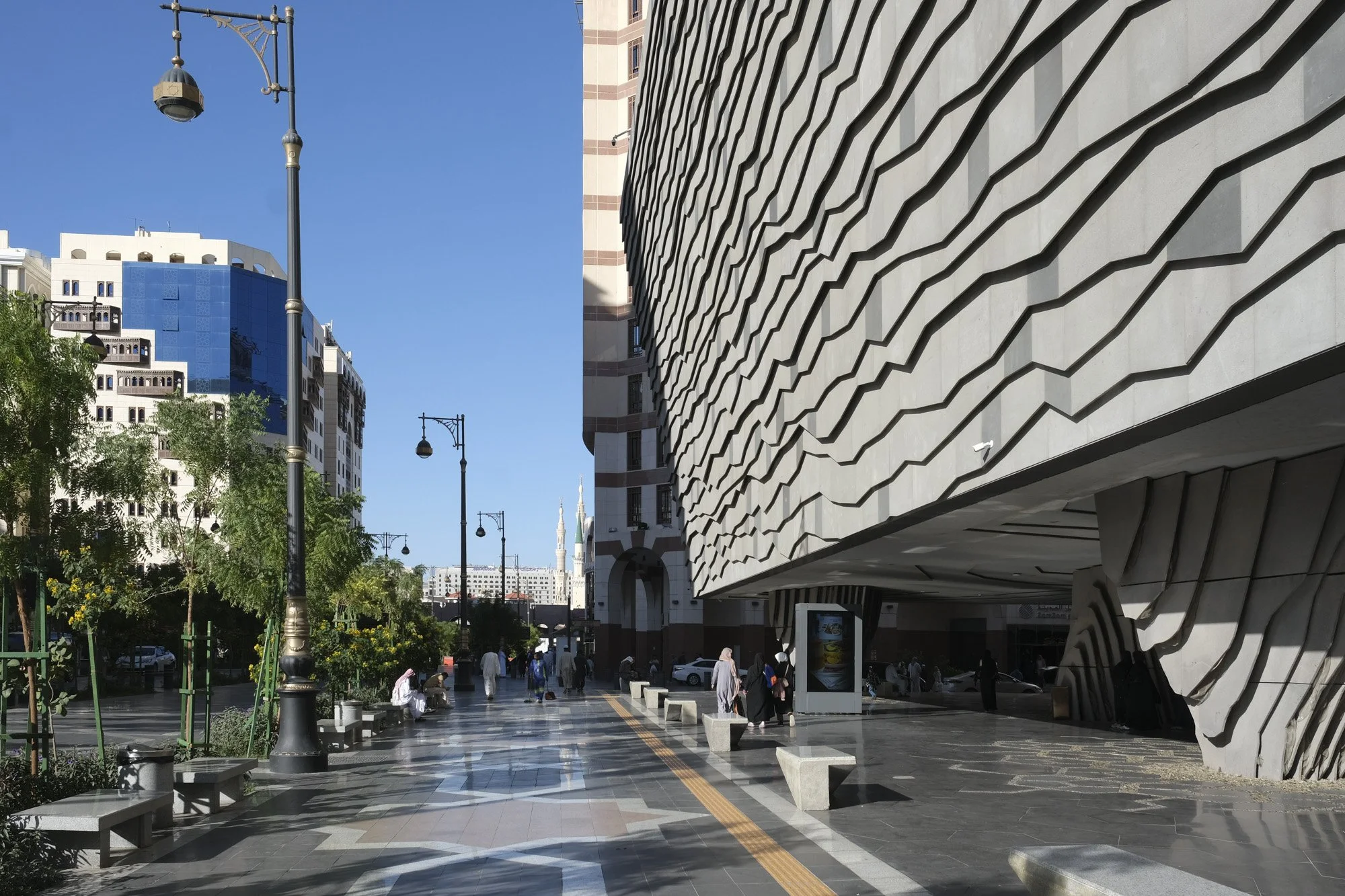
It was difficult believe this is the “historic center” of Islam’s second holiest city.
After lunch, it was finally time to get closer to the Prophet’s Mosque, the second holiest place in Islam. This massive complex is the resting place of the Prophet and the second-oldest mosque in the world. What surprised me was the absence of any visible security measures. For a holy site, there were no guards stationed or bag searches at the gated entrance, like you would expect at the Vatican or Jerusalem. The place was heaving with thousands of pilgrims at all times, and yet, I felt a great serenity and even joy. It was perhaps one of the best places to people-watch I have ever been to. Even though I am irreligious and agnostic, I could sense people’s excitement, especially knowing that for many of them, this was a trip of a lifetime.
As much as I enjoyed the religious pilgrimage, Brian couldn’t help but feel uncomfortable in an overtly conservative and religious space. He ended up returning to the hotel early while I hung out around the Haram. I ended up striking up a conversation with a group of Singaporean pilgrims outside the Prophet’s Mosque, who invited me to go hang out with them at the outer courtyard. There is so much conflicting information on whether non-Muslims could enter the outer courtyard. But my new pilgrim friends told me that was not the case, so I gladly accepted their invitation. Obviously, the mosque's interiors were off-limits to me. I might have broken the law, but it was such a precious memory.
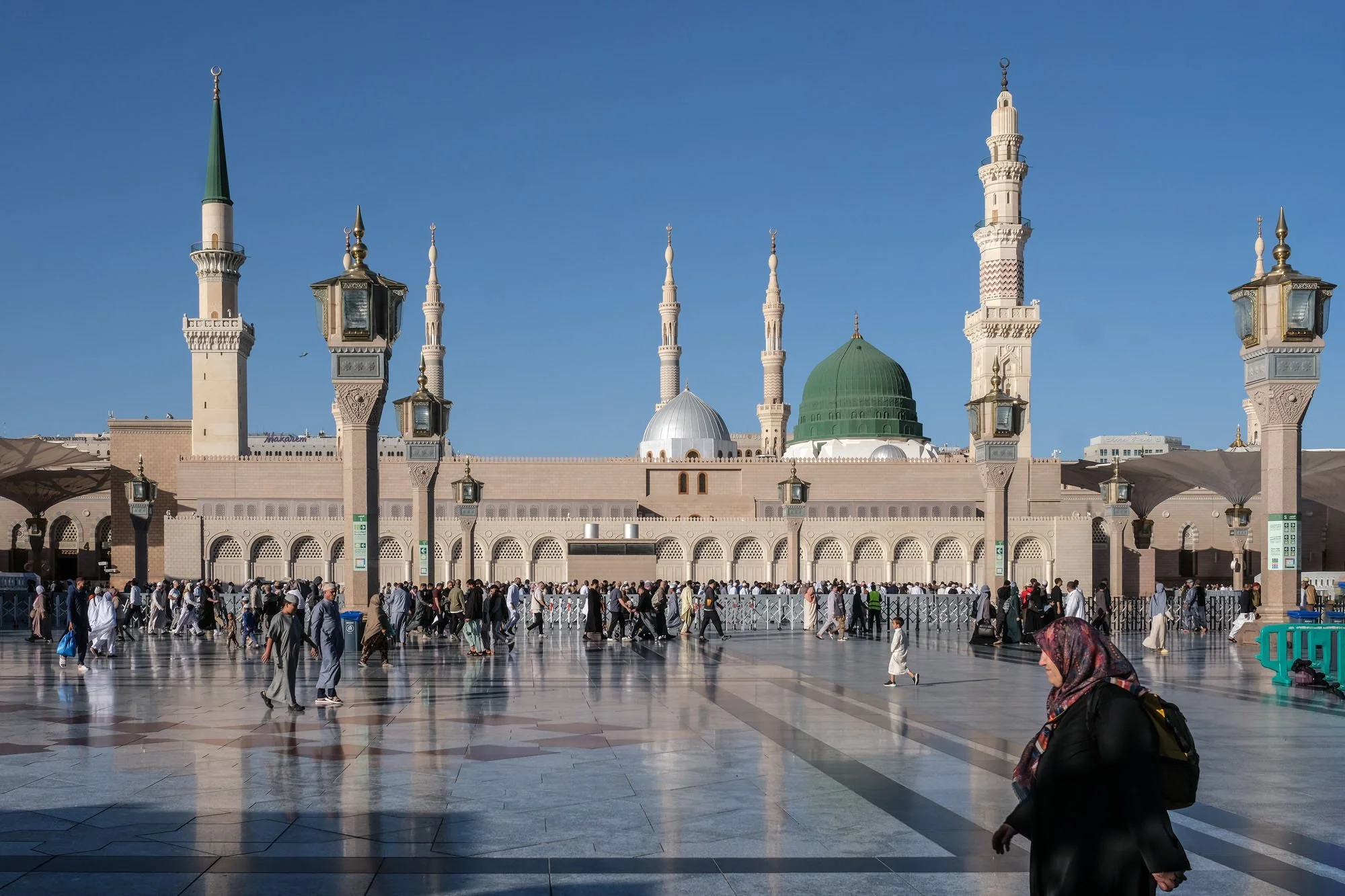
The Green Dome of the Prophet’s Mosque denotes the burial spot of the Prophet.
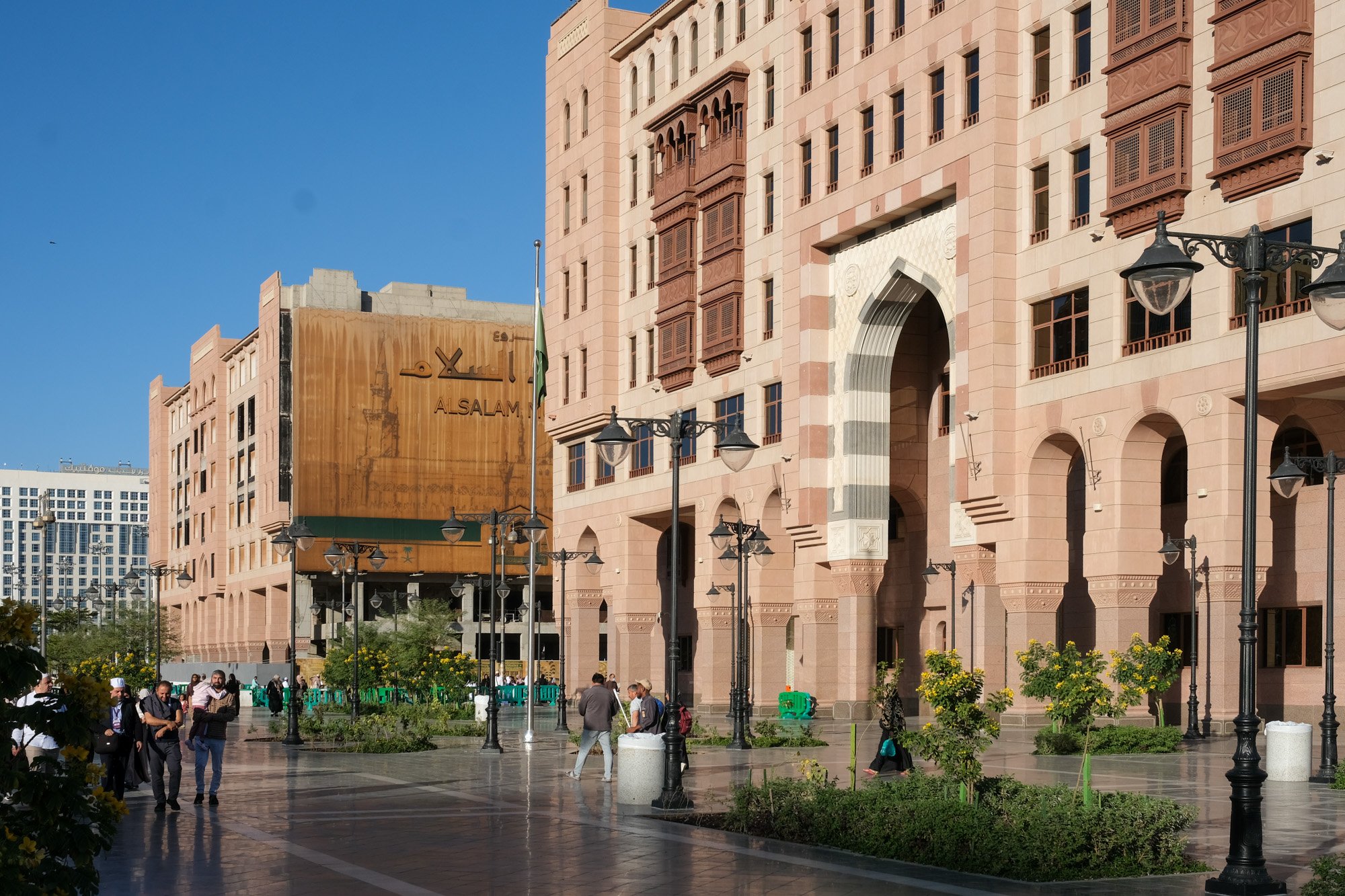
Much of Medinah is comprised of mid-rise modern buildings.
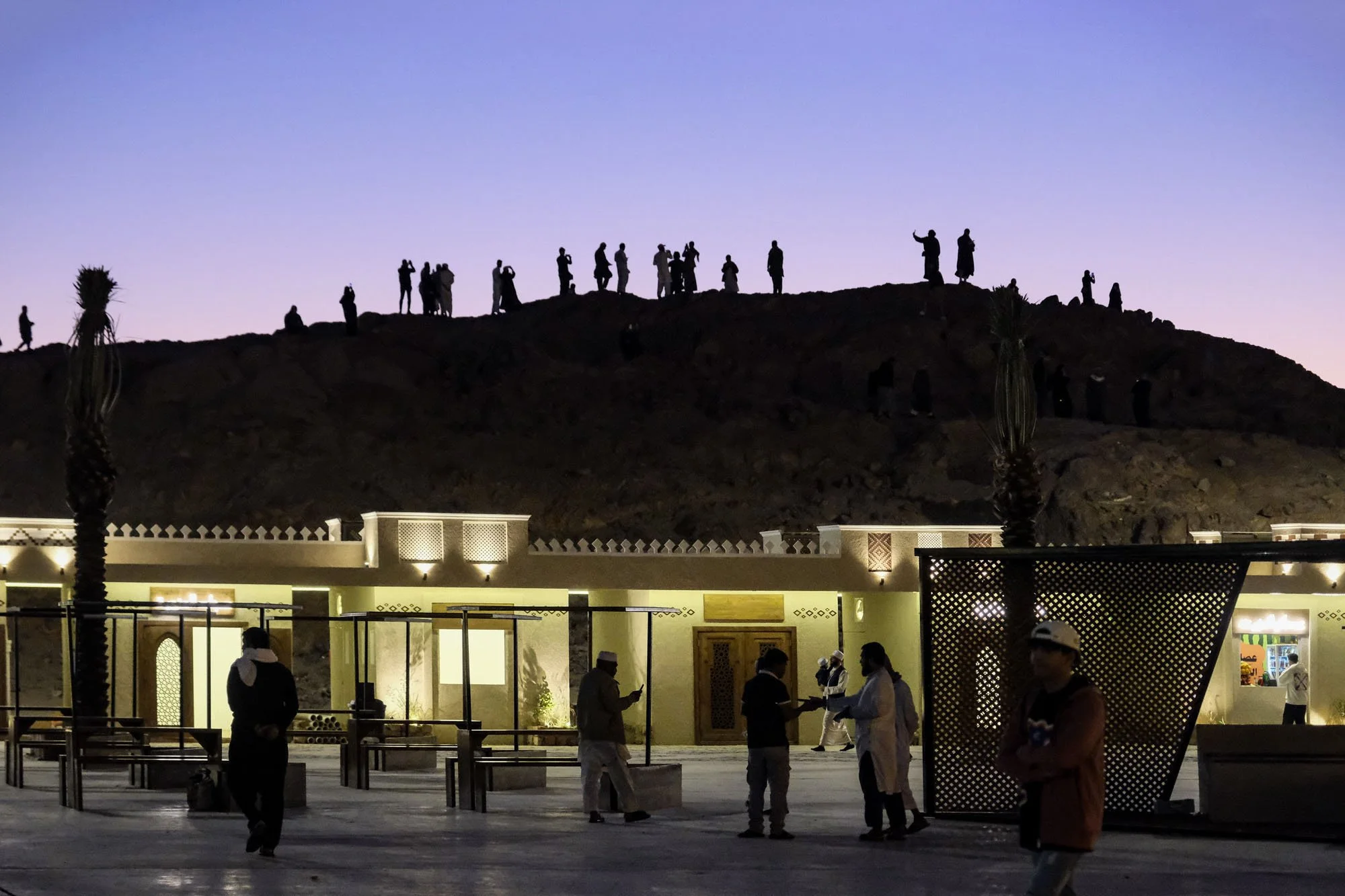
Sunset at Mount Uhud.
Just before sunset, I took an Uber to Mount Uhud at the northern edge of town. Mount Uhud was the site of the Battle of Uhud in 625, and it is one of the interesting pilgrimage sites in Madinah. Throngs of pilgrims climbed onto the little Archer's Mount to memorialize the painful defeat of the Islamic forces. It was definitely the best spot to enjoy the sunset in Madinah. I also inadvertently became the photographer for many pilgrims. After meeting up with Brian at Caesar Broasted, I headed back to the Prophet’s Mosque to just take in the conviviality. Without a doubt, Madinah was the highlight of this trip.
Day 11: Madinah - Jeddah
I may have wished to stay in Madinah for a few more days, but Brian was itching to get out. However, I simply had to drag him to a few more pilgrimage sites. Our first stop of the day was the Seven Mosques, a complex of small historic mosques that hold special religious significance and connections to the Battle of the Trench. The past twenty-four hours really made me regret not researhcing more about the history of these pilgrimage sites before this trip. I was definitely ignorant about Islam, and our visit to Medinah certainly piqued my interest in Islamic history, if not the theology.
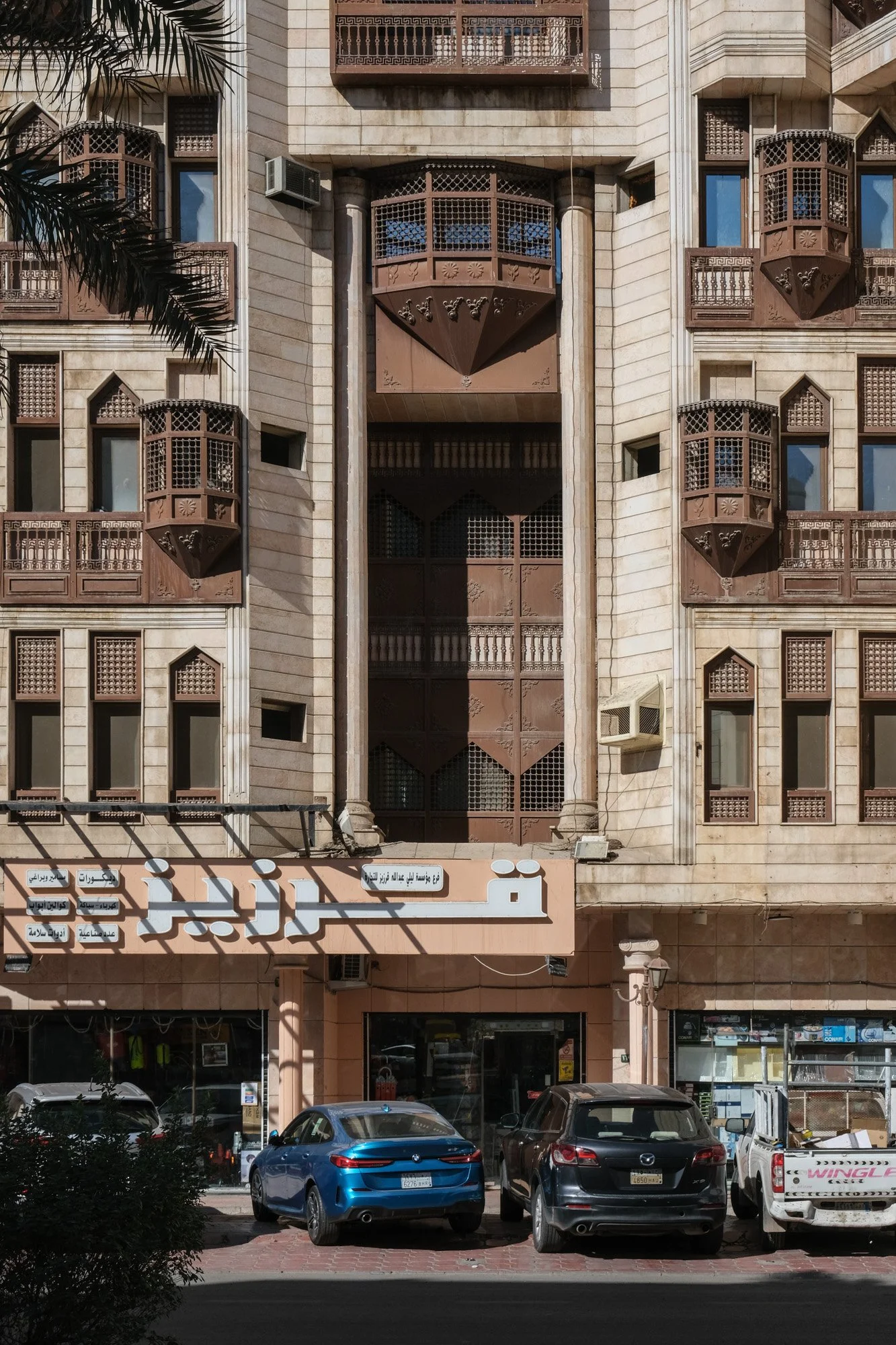
A residential building near the Seven Mosques.
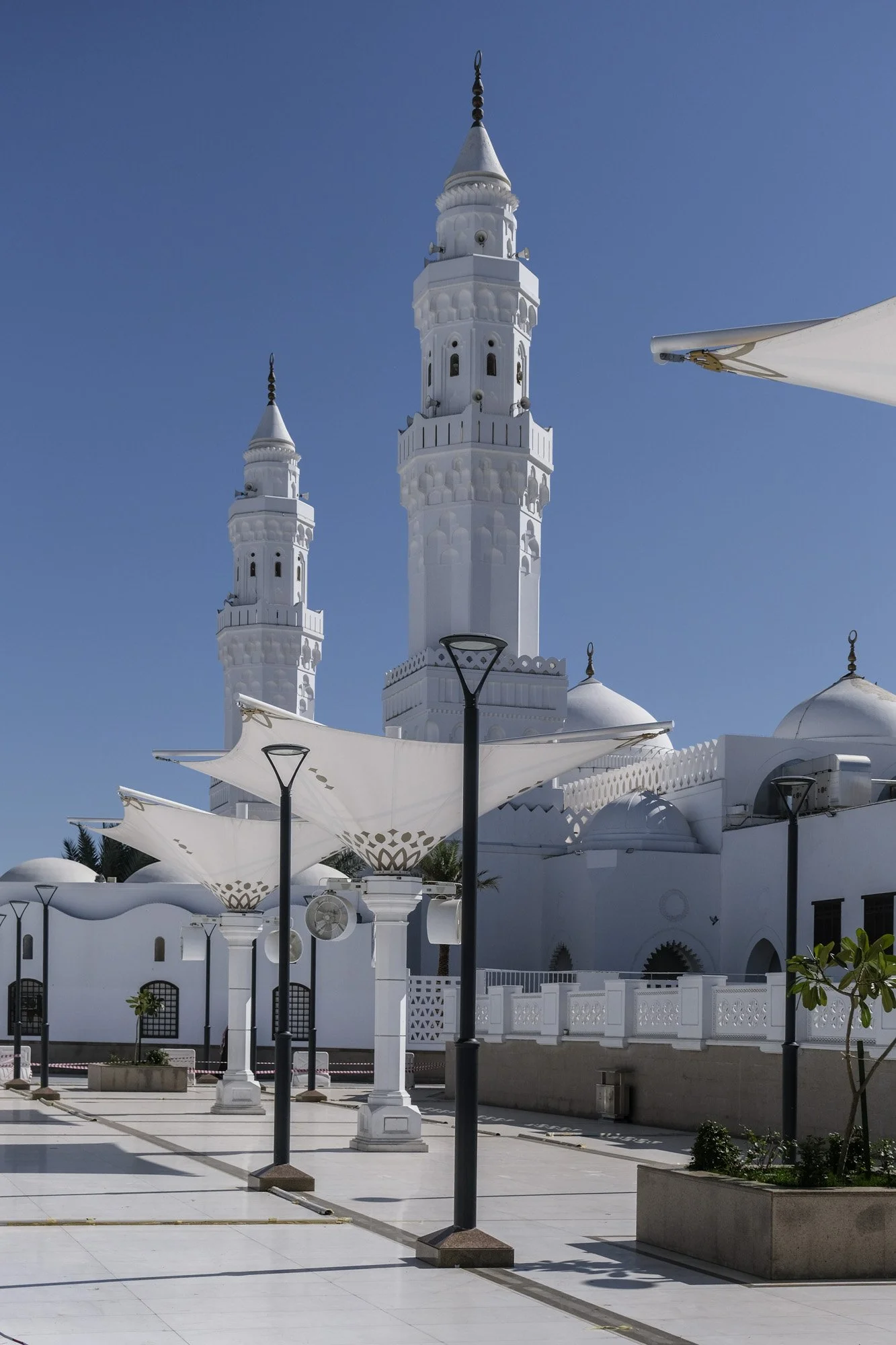
Masjid al-Qiblatayn.
Given how much I enjoyed my time at Mount Uhud, I can’t help but bring Brian here for a daytime visit. Not surprisingly, he could not care less about six-century-old Islamic battles and was genuinely confused by why the Muslim would celebrate a defeat. I had to explain to him that the battle is a symbolic warning to the faithful about disobedience to the Prophet. However, he was a little amused by how ecstatic the pilgrims were about climbing a two-story hill. The next and final stop was Masjid al-Qiblatayn, another important stop on the pilgrimage trail. This gleaming mosque was where Prophet Muhammad received the command to change the Qibla from Jerusalem to Mecca. Honestly, I still need to read up on the historical significance of the change of direction.
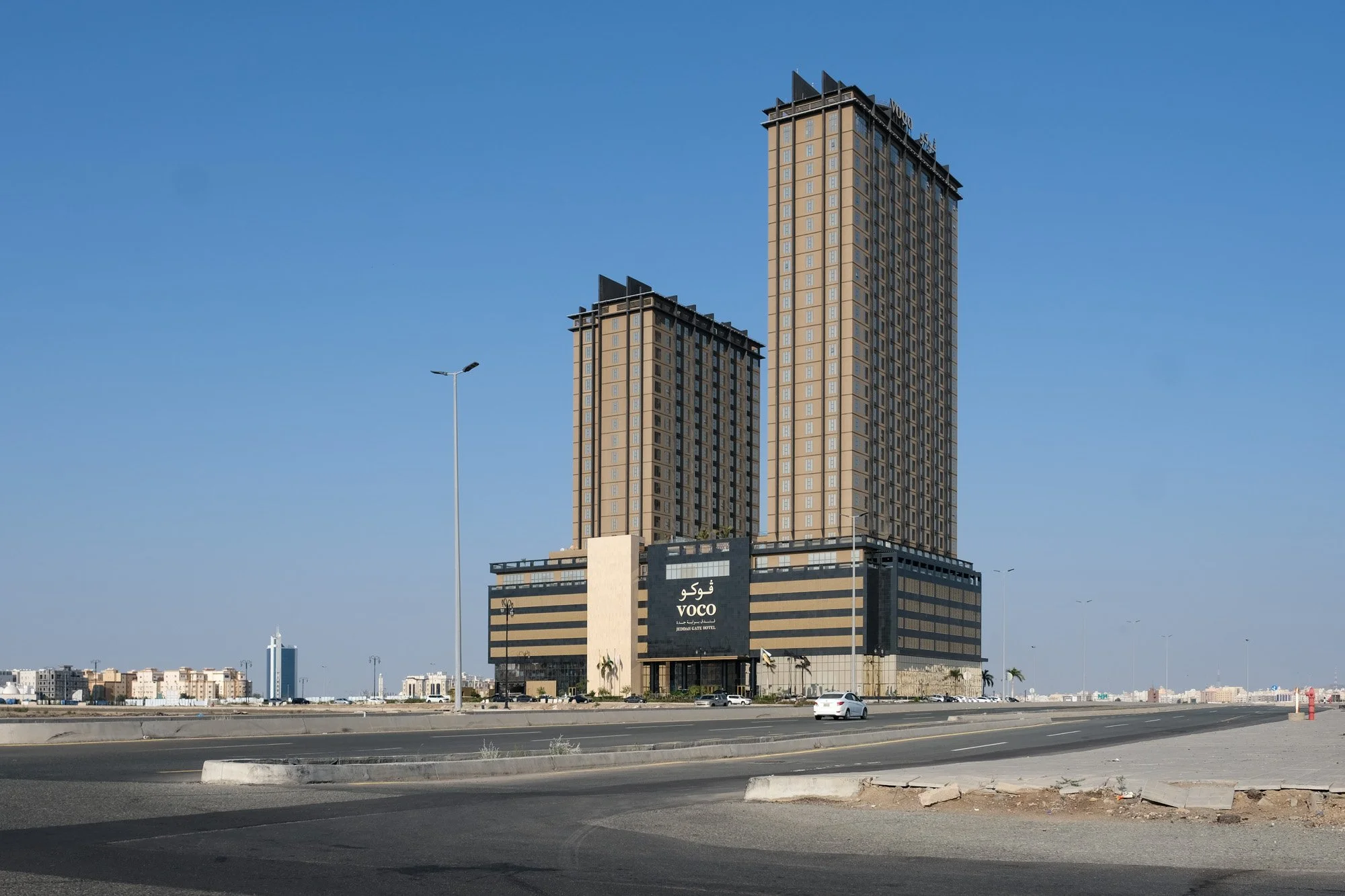
Our hotel feels like a mirage in a desert.
Bidding goodbye to Madinah, we were ready to head to the final city of our Saudi adventure. The port city of Jeddah has historically been the gateway to Mecca, contributing to its reputation as the most culturally diverse and progressive corner of Saudi Arabia. As we approached the city, we got a glimpse of the massive Jeddah Tower, a kilometer-tall skyscraper that has been under construction for the past thirteen years. Upon completion, it will be a fifth taller than Dubai’s Burj Khalifa, the current title holder. Similar to the Saudi capital, Jeddah is undergoing a building boom. A testament to the city’s rapid development is our hotel, voco Jeddah Gate, a giant complex rising from the empty field like a mirage.
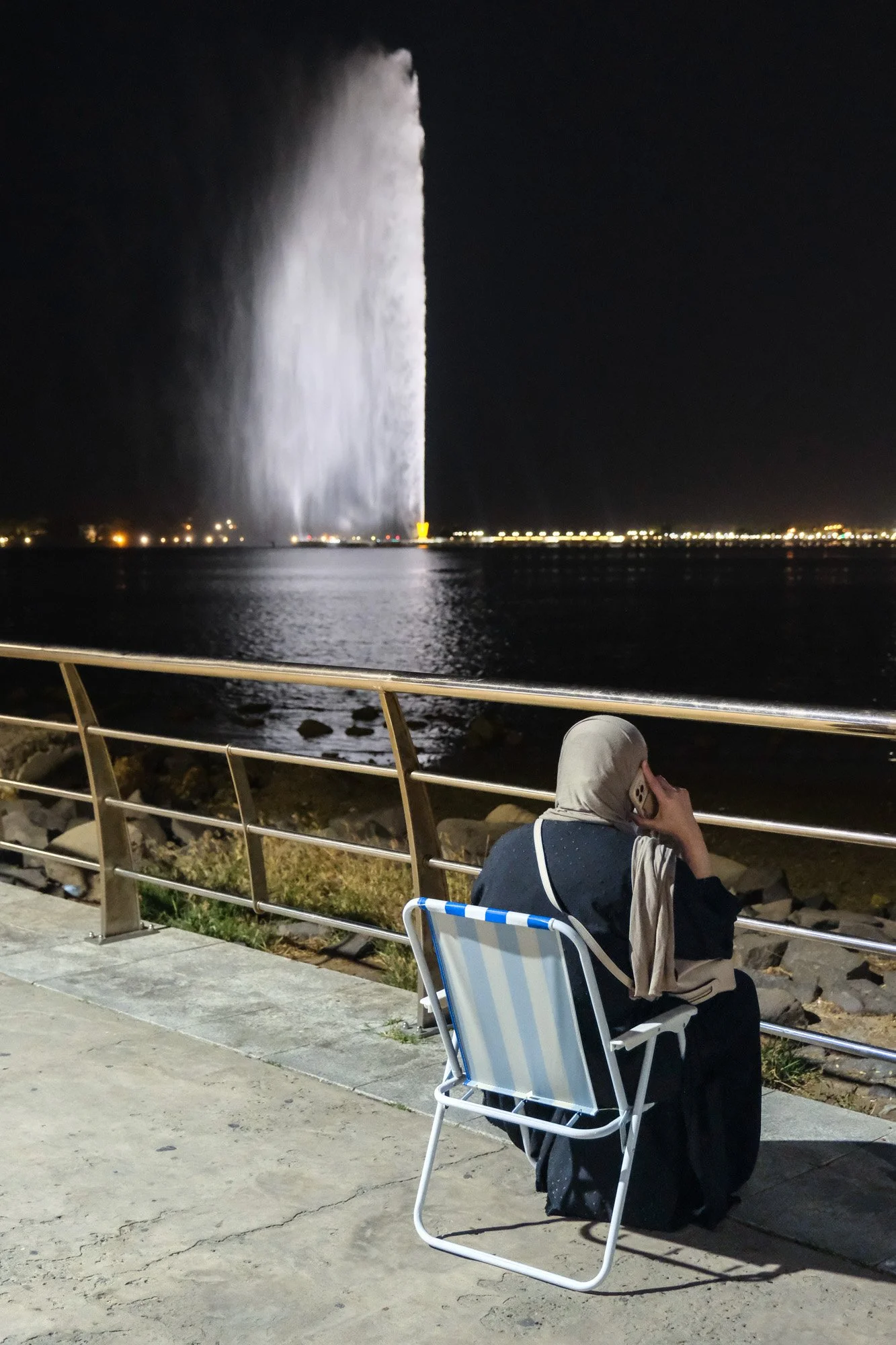
King Fahd’s Fountain.
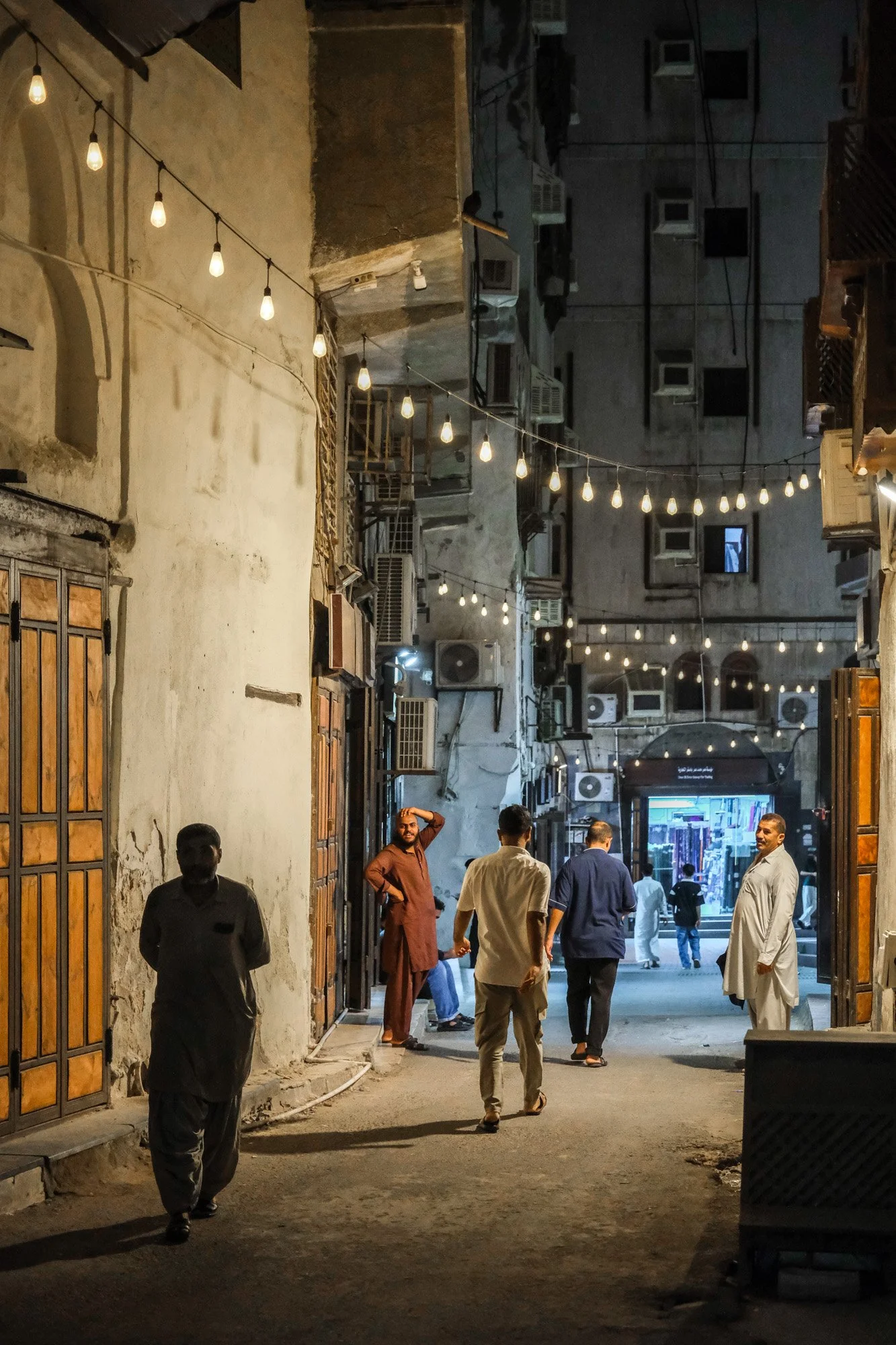
The back streets of Al-Balad.
It was already late by the time we settled in and were ready to head out of the hotel. Since Jeddah is a port city, we purposefully sought out a seafood restaurant near the waterfront. A restaurant by the name “Seafood” was fabulous, and it was easily the best feast on this trip. After dinner, we took a short stroll to the water to admire King Fahd's Fountain, the world’s tallest fountain, before heading to Al-Balad, the historic center of Jeddah. It was the best-preserved historic neighborhood in the country, and remains a thriving community to this day. With just an hour, we knew we had to come back to explore this amazing neighborhood more fully. I could see why Al-Balad alone makes Jeddah a worthy stop for any visitors.
Day 12: Jeddah
At this point of the trip, we knew that Saudis don’t really venture out in the morning. With that in mind, we decided to visit a museum. One of Jeddah’s most famous and eccentric museums is Al Taybat Museum. This private museum is unlike anything I had seen. It has over 300 rooms spread across 12 interconnected buildings. The collection focuses on Saudi Arabian culture but also aims to be an encyclopedic survey of the universe. From an exhibit on regional Saudi silverware to a gallery on world medicine, Al Taybat is probably as close to a cabinet of curiosities as you could get. With no exterior windows or rooms filled to the brim, this place gave me a massive headache after an hour, but I will still recommend it for its novelty and the founders’ passion.
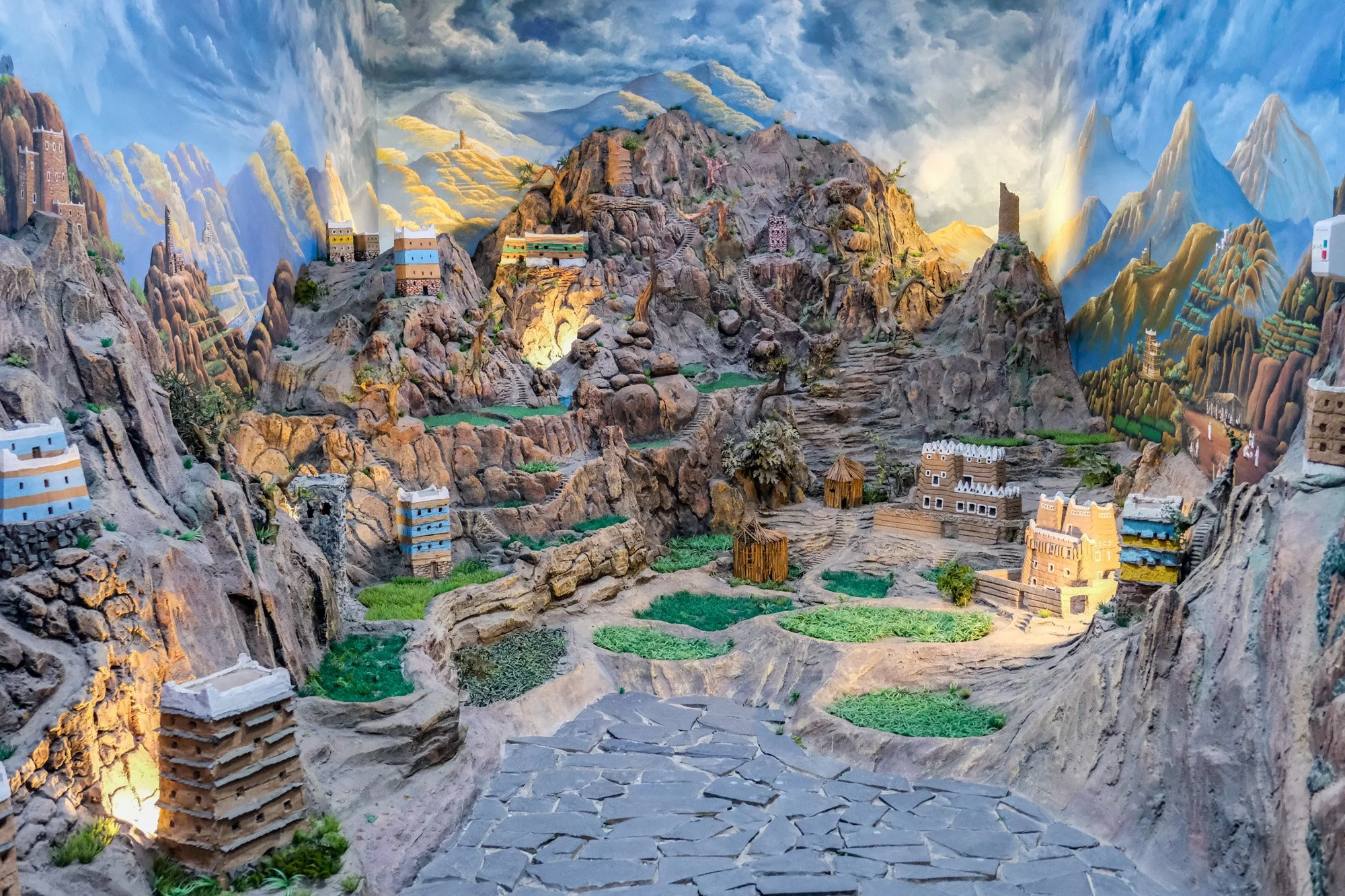
Al Taybat Museum is definitely…. interesting.
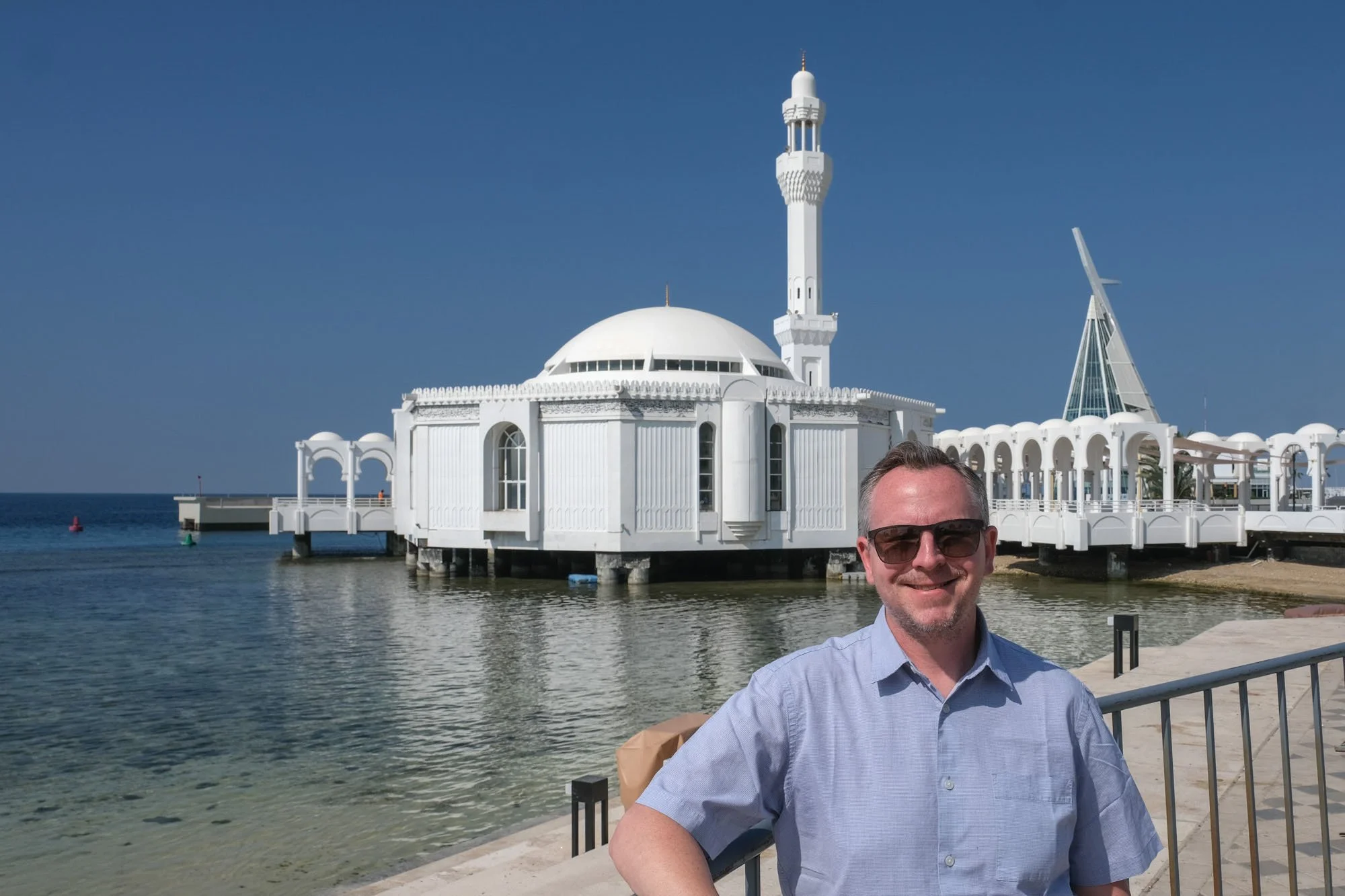
Al-Rahmah Mosque.
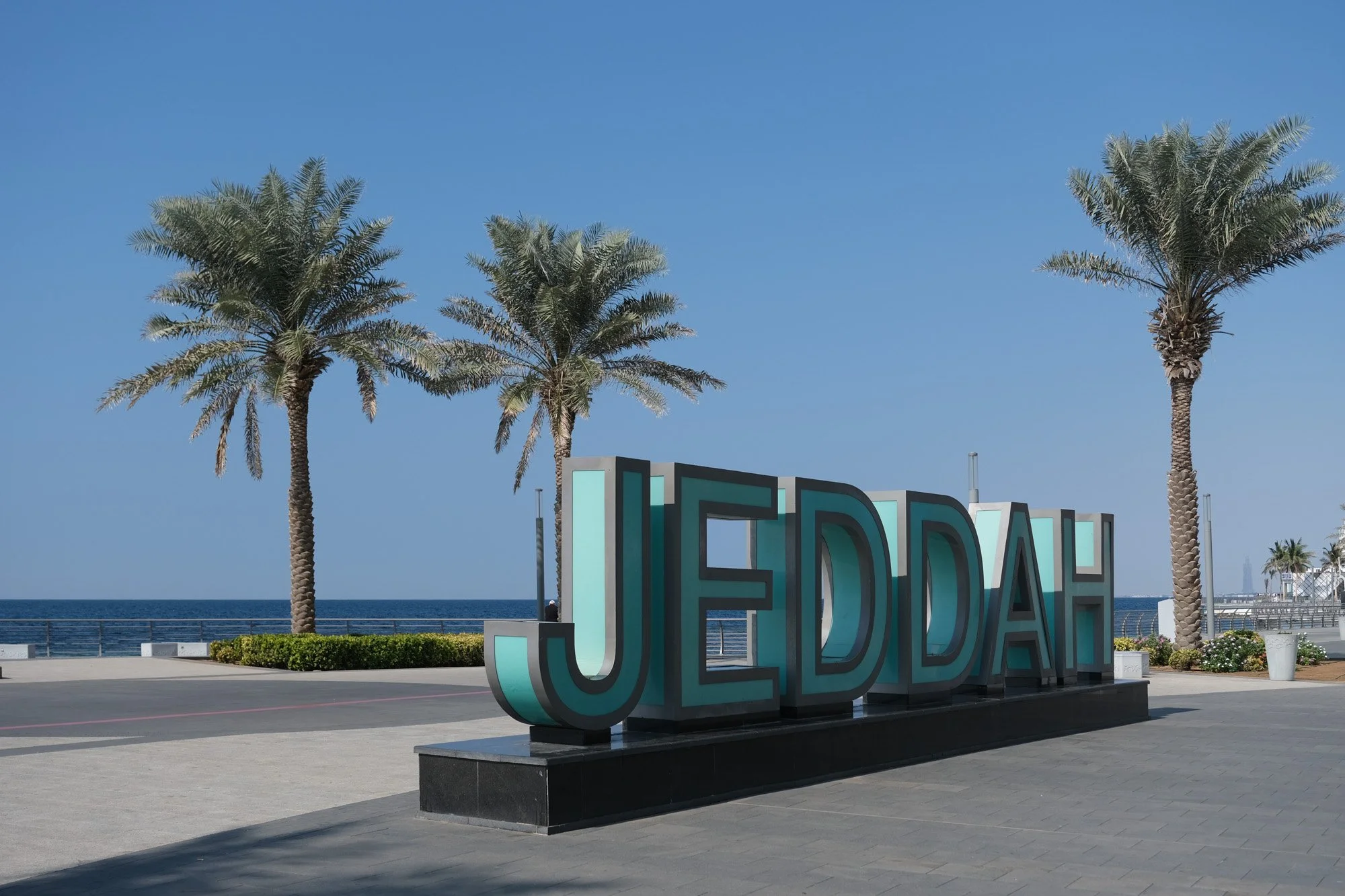
No respectable tourist city could go without a giant sign.
To clear our heads, we took a short drive to Jeddah’s waterfront to the north of the city center. The 2.6-mile Jeddah Corniche is impeccably designed and was only opened in 2017 as a tourist attraction. As with any good corniche, there are plenty of amenities and landmarks along the way here. The most famous among them is Al-Rahmah Mosque, or better known as the “Floating Mosque.” It is known for being the only mosque in Saudi Arabia open to non-Muslim visitors. The setting may be beautiful, but it is hardly among the more beautiful or impressive mosques in the city. As expected, the corniche was largely devoid of people in the middle of the day. For lunch, we found a Saudi restaurant called Tamees House.
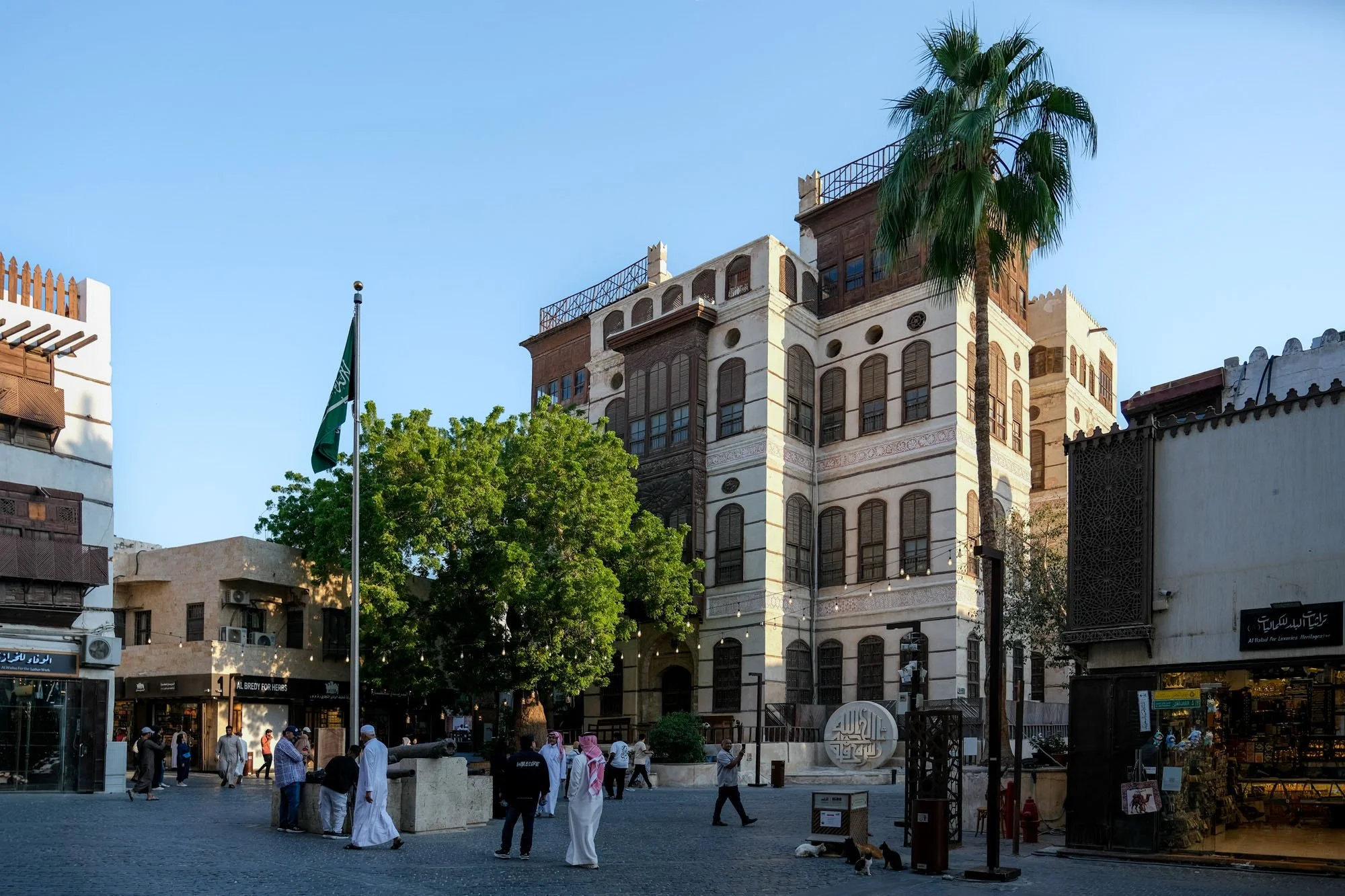
Nasseef House was the private residence Abdulaziz Ibn Saud.
Jeddah is comparatively warmer than Riyadh or Medinah. It was already pretty warm even in the depths of winter. We headed back to the hotel for a quick dip at the hotel pool for a few hours. After that, we returned to Al-Balad to explore the area further. One of the most recognizable landmarks here is the Makkah Gate, the ceremonial entrance for centuries of pilgrims. Curiously, the entire neighborhood immediately south and east of Al-Balad has been leveled. In fact, the original streets are still shown on Google Maps. Given what we learned at Diriyah, I would not be surprised that the entire neighborhood had been uprooted for redevelopment. Perhaps we could expect a Trump hotel or a Kushner development here in the next few years.
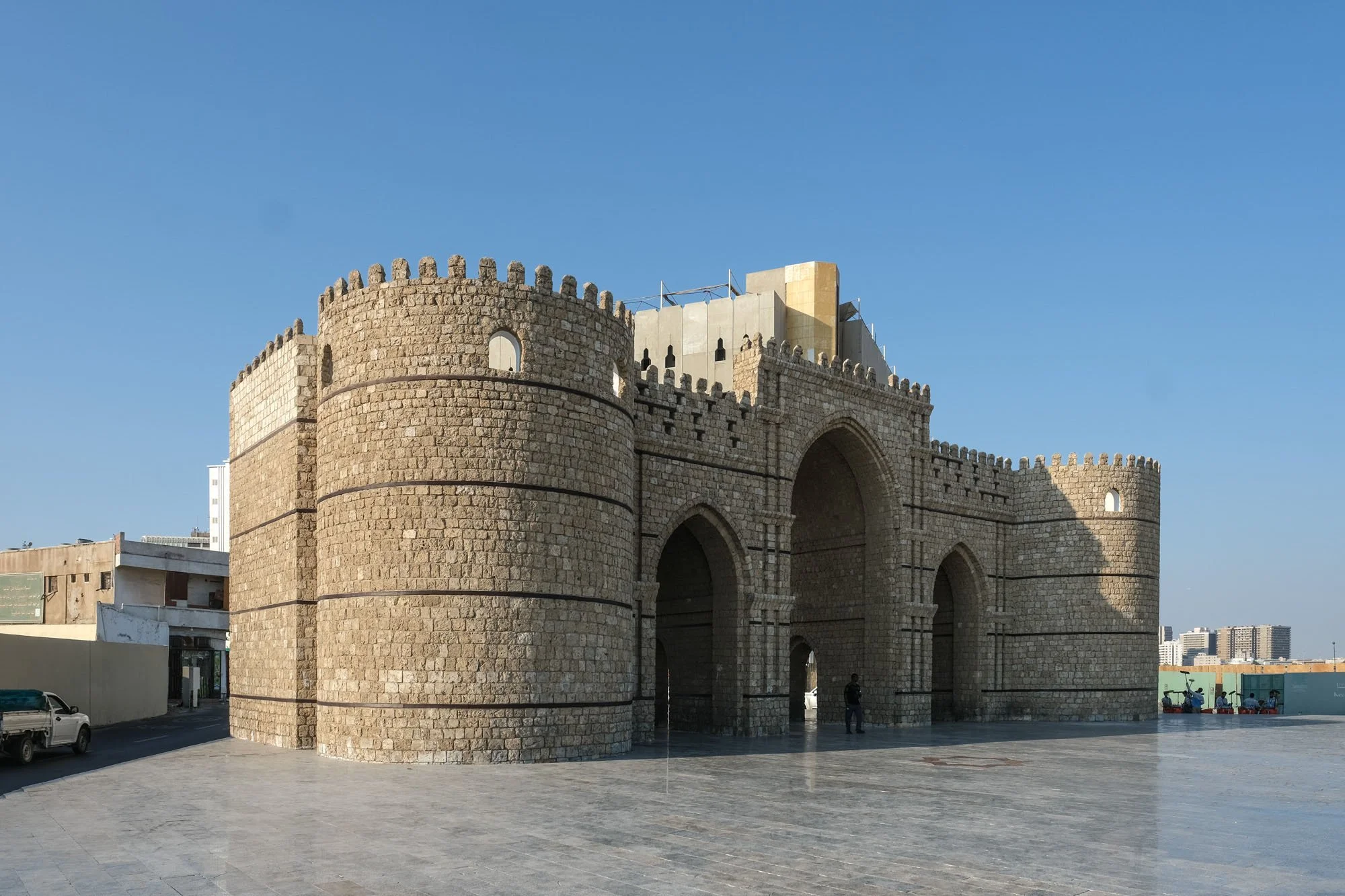
The historic Makkah Gate.
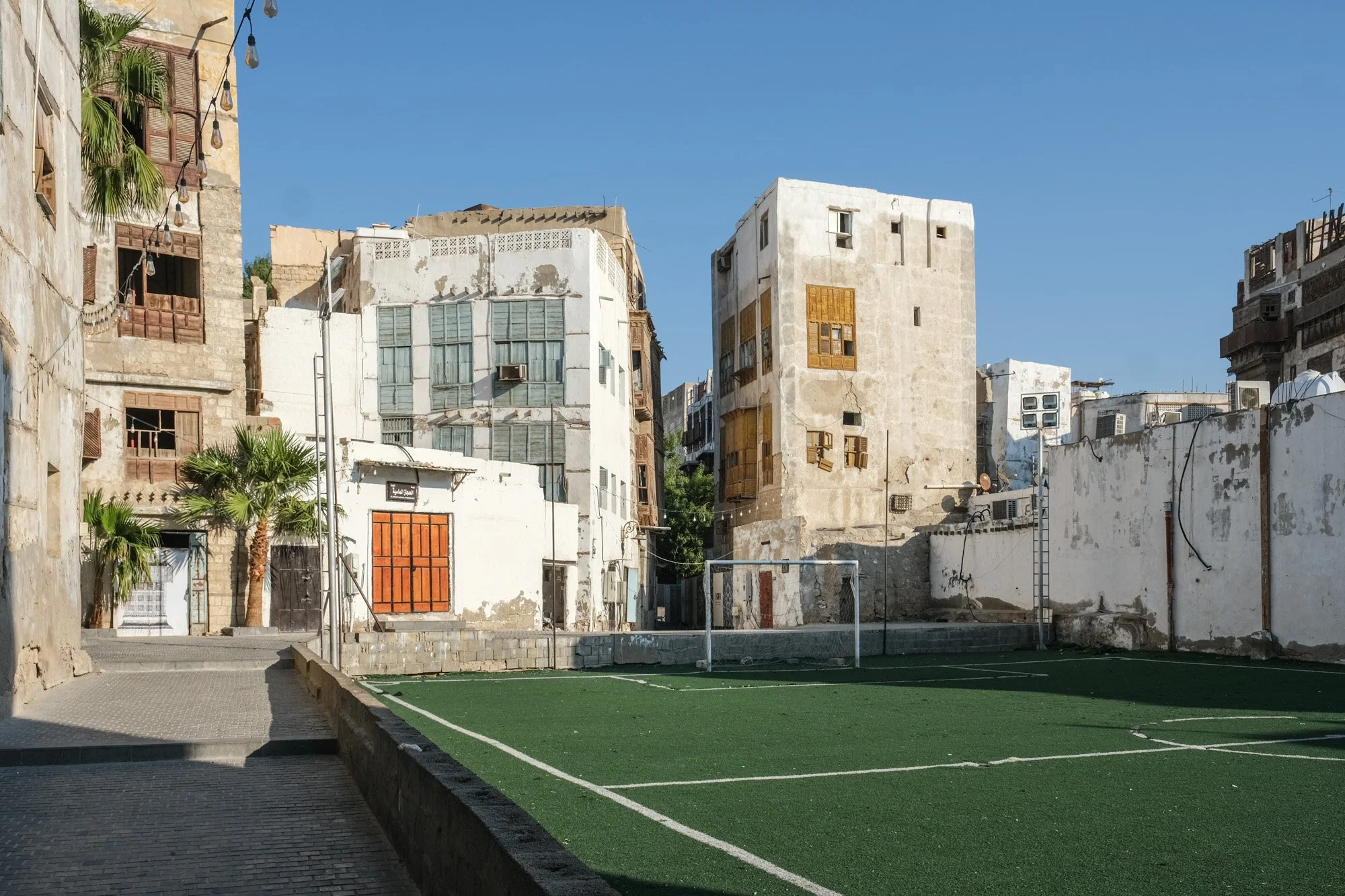
It was a surprise to find a soccer pitch amid the historic buildings of Al-Balad.
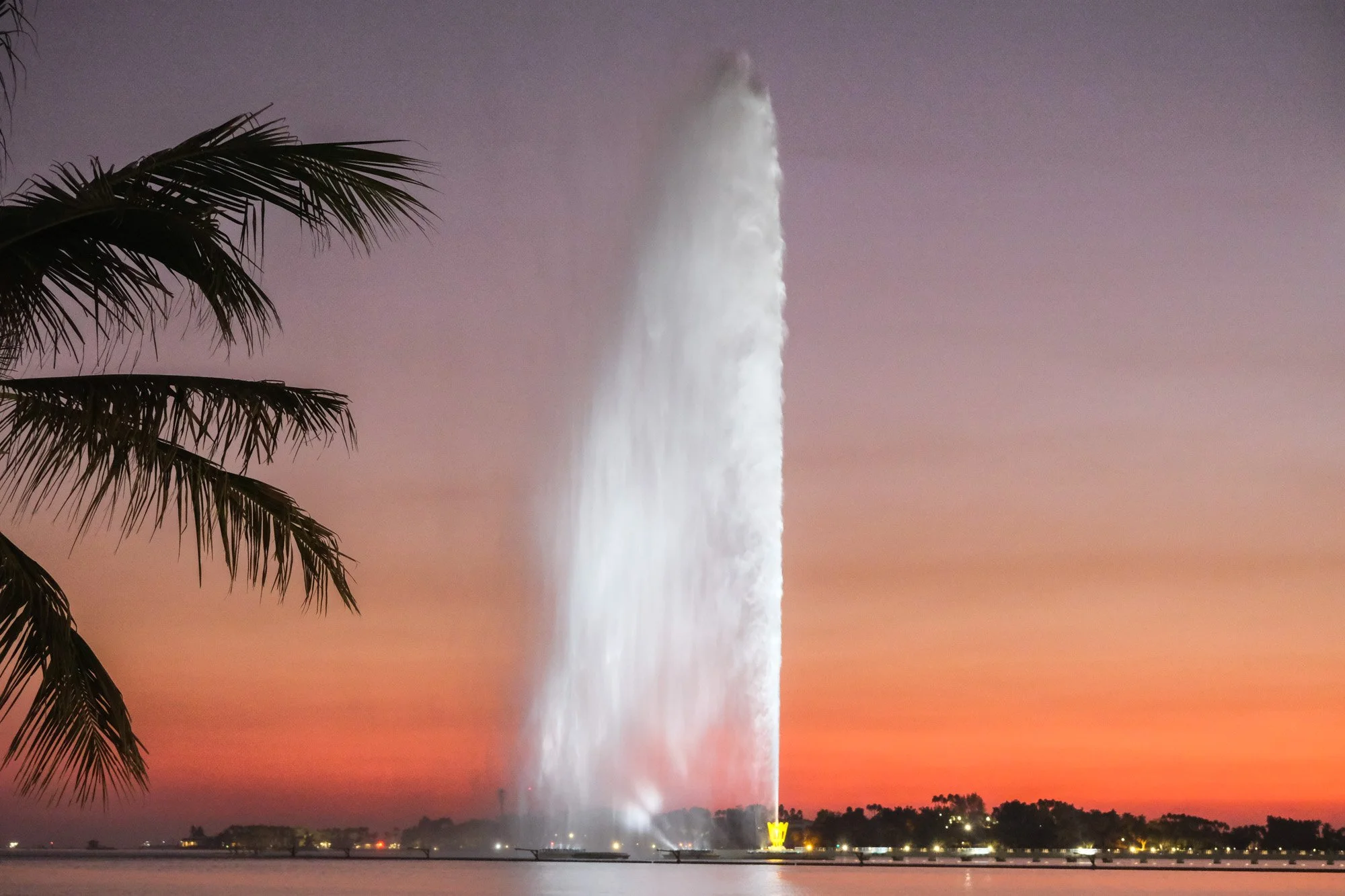
King Fahad’s Fountain is particularly beautiful at sunset.
As the sun set lower, I rushed back to the Jeddah Corniche to catch the sunset. The waterfront was teeming with people. While the sunset was exciting, the true excitement came when King Fahad's Fountain was turned on promptly at six o’clock. The fountain was allegedly inspired by the one in Geneva, but its grandeur far surpasses its Swiss counterpart. The fountain is so tall that we could easily see it from our hotel five miles away. For our final meal in Saudi Arabia, we paid a visit to Jeddah’s most popular culinary export: Albaik. This venerated fast food chicken joint is indeed giving Jolibee and Popeye’s a run for their money.
Day 13: Jeddah - Doha
Our last morning in Saudi Arabia was a relaxing one. With just a few hours to spare, we found ourselves drawn back to Al-Balad before heading to the airport. By all accounts, this has been a fantastic trip without any hiccups. None of our trepidation from before the trip materialized. Politics aside, I must say Saudis are among the most hospitable people I have come across from years of travel. When they greeted us in English, they often said “welcome" instead of hello. I suspect it was because the country has historically been closed off to foreign tourists; the people we met are genuinely happy to see their country transformed and opened up. I had to remind myself what a special experience it had been.
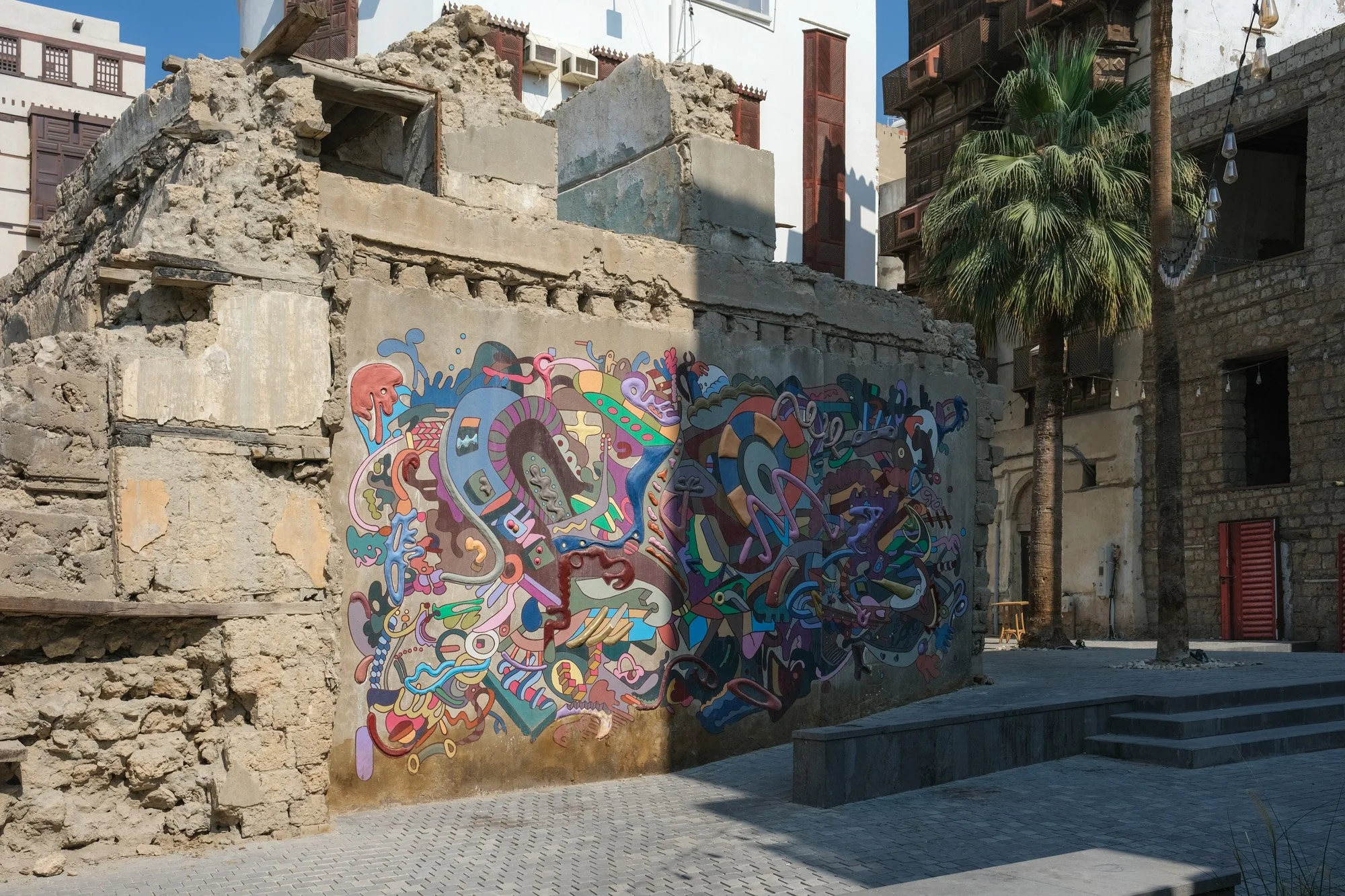
Wonderful murals at Al-Balad District.
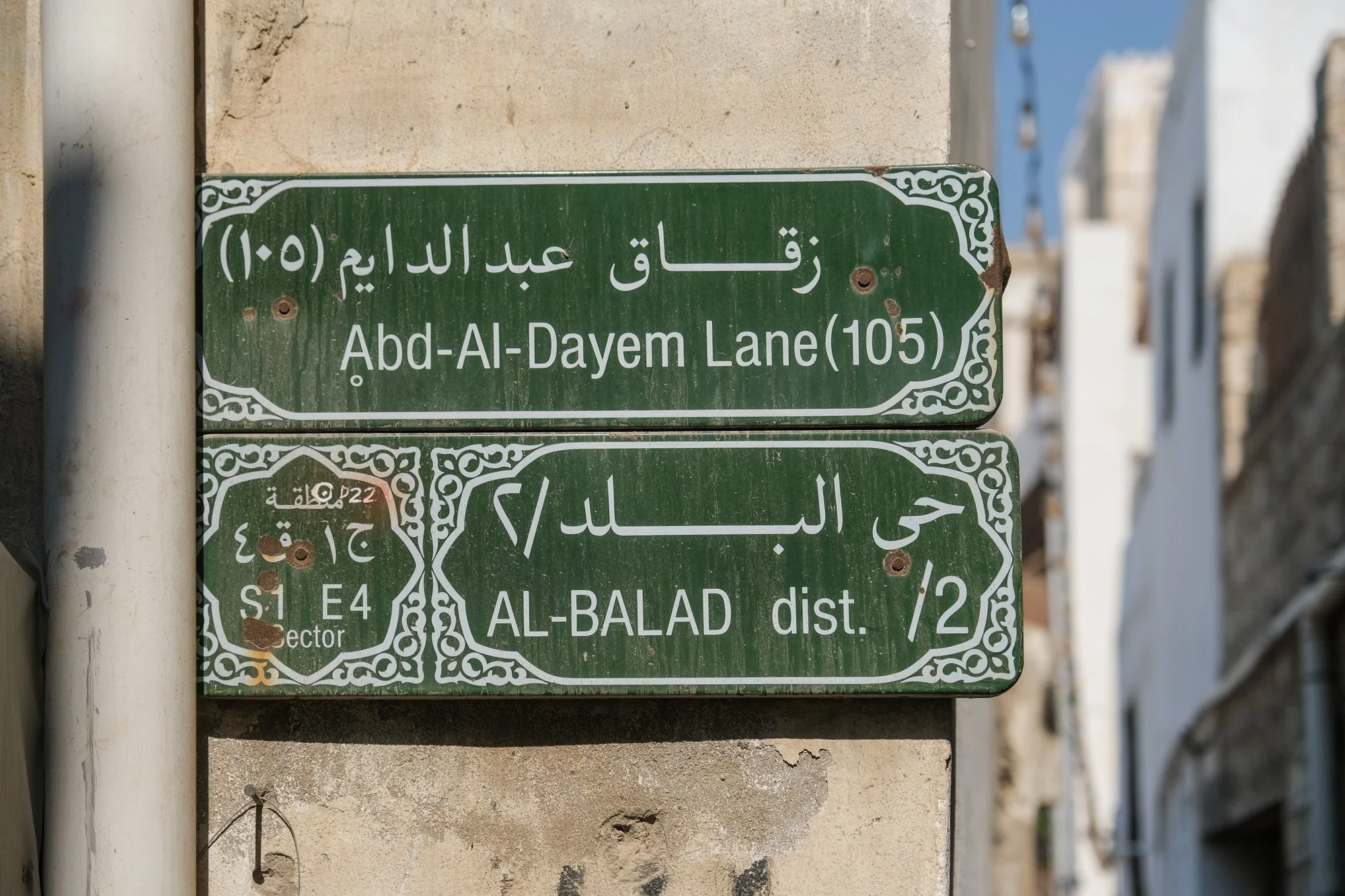
Al-Balad is definitely the most atmospheric neighborhood in the kingdom.
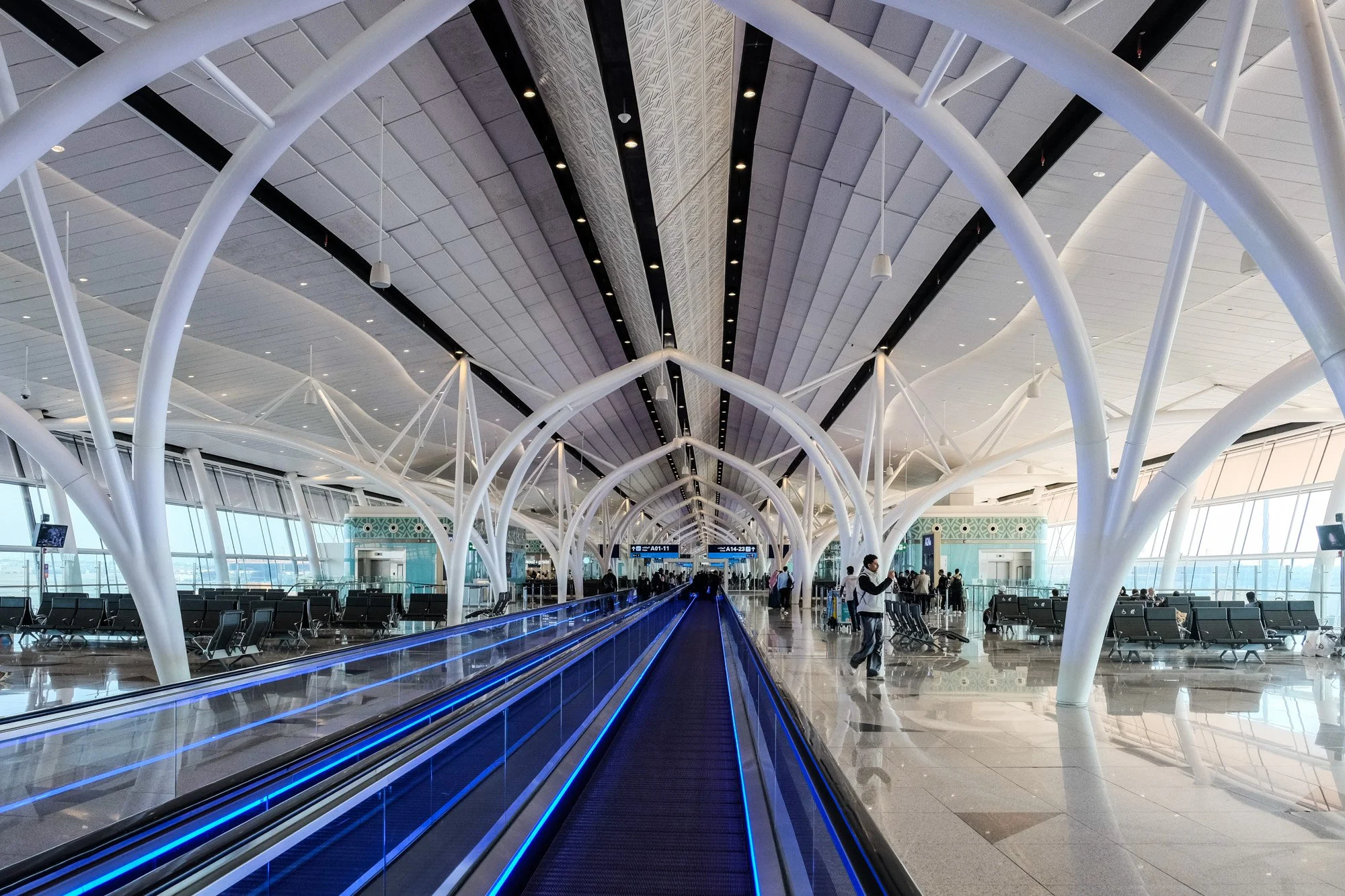
The beautiful terminal at King Abdulaziz International Airport.
As our flight began to descend in Qatar, I could sense Brian's palpable excitement when he saw the bright lights of Doha. I don’t think he ever felt comfortable or relaxed in Saudi Arabia. While Qatar has its own share of human rights issues, it is certainly much more westernized and less conservative. Our previous visit to Doha was in 2019, and we really enjoyed the short rendezvous. We were genuinely excited to see how the city had transformed since hosting the 2022 World Cup. Naturally, we chose to stay at Souq Waqif again. Al Mirqab Boutique Hotel put us right in the middle of all the action. In the back of my mind, I was kind of wondering if the Saudis regarded Souq Waqif as a role model. We wrapped up our evening at Baith Maryam Brothers Restaurant, a popular Kuwaiti eatery.
Day 14: Doha
With just one full day in Doha, I had planned this day long ago. The main destination of the day is a visit to the National Museum of Qatar. My one regret from our prior visit was that we just missed its opening by a few months. Ever since, I had been itching to return to Doha for the sole purpose of visiting this architectural masterpiece. Designed by French architect Jean Nouvel, the museum is the most daring showcase of Qatar’s architectural scene, blending avant-garde architecture with Qatari elements. In this case, the building design is inspired by the desert rose crystal. The museum exhibit is well curated, but it seemed like this young nation has trouble filling all the grand galleries. One of the more interesting sections of the museum was dedicated to the Qatar diplomatic crisis of 2017, when many neighboring nations severed diplomatic ties over a wide range of grievances.
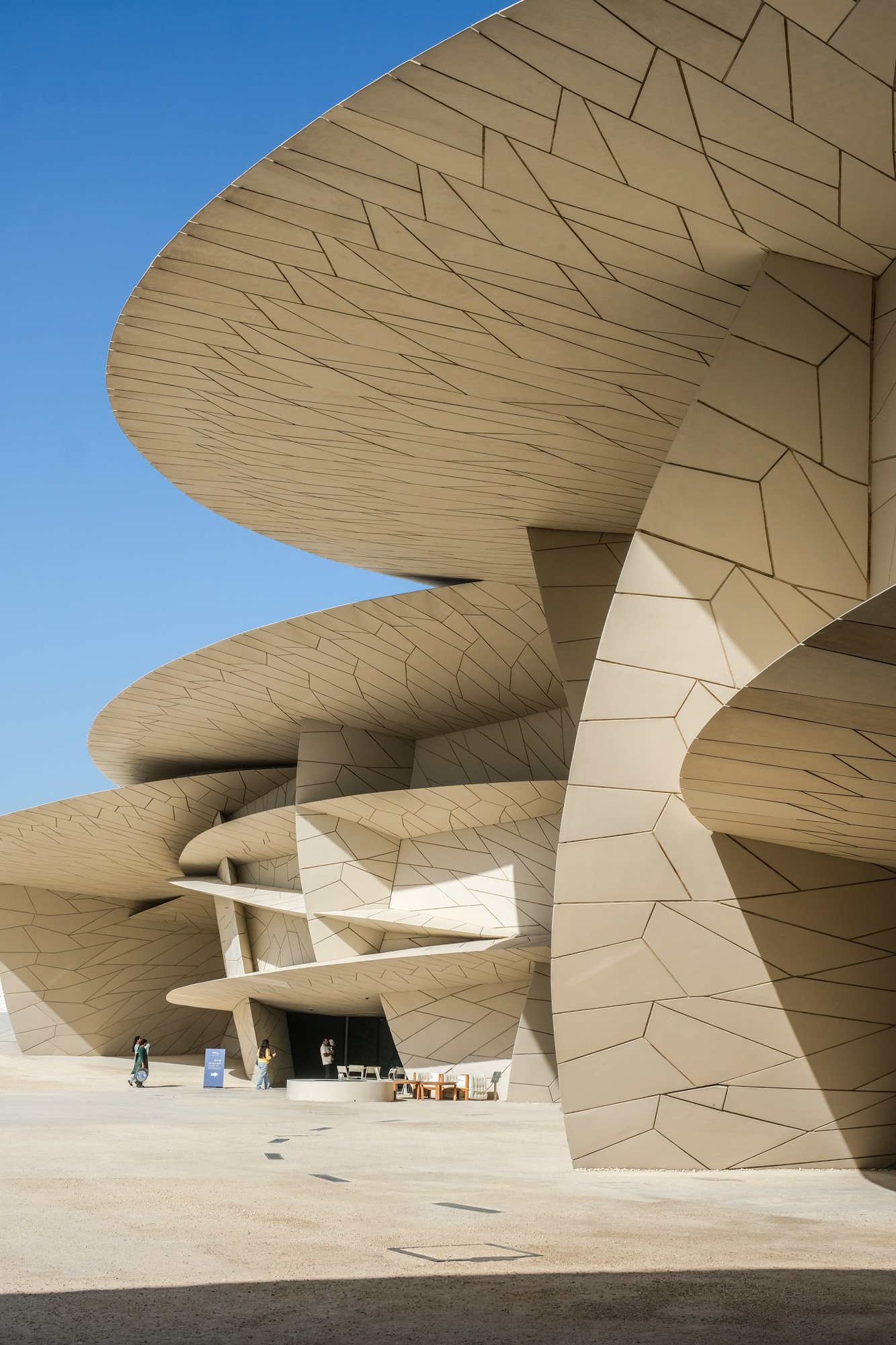
The National Museum of Qatar is one of the most sublime pieces of contemporary architecture.
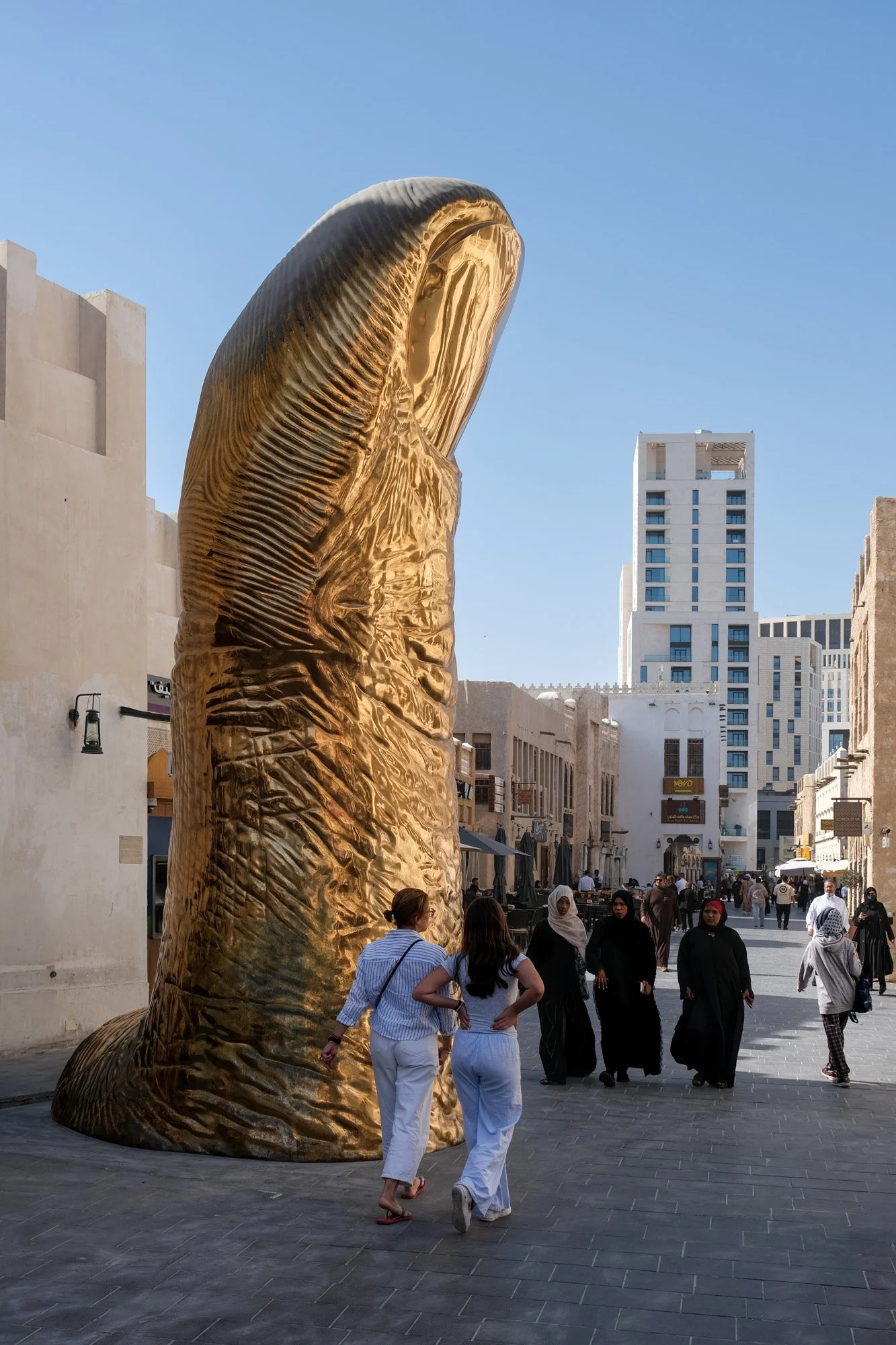
The Golden Thumb Statue commemorates Qatar’s 2019 Asia Cup football victory.
After a quick lunch at the nearby Lmadinah Restaurant, we took a stroll toward the Museum of Islamic Art, one of our all-time favorites, because of its architecture and collections. We don’t revisit the same museum twice while traveling. Much to our delight, we still enjoyed the exhibits as much as we did seven years ago. The highlight for me was actually a special exhibition on the legacy of Chinese-American architect I.M.Pei, the master behind this beautiful structure. His formula of regional modernism holds up surprisingly well. For someone with no prior experience in Islamic architecture, this is truly one of his foremost masterpieces. This museum shows that modernism need not be boring.
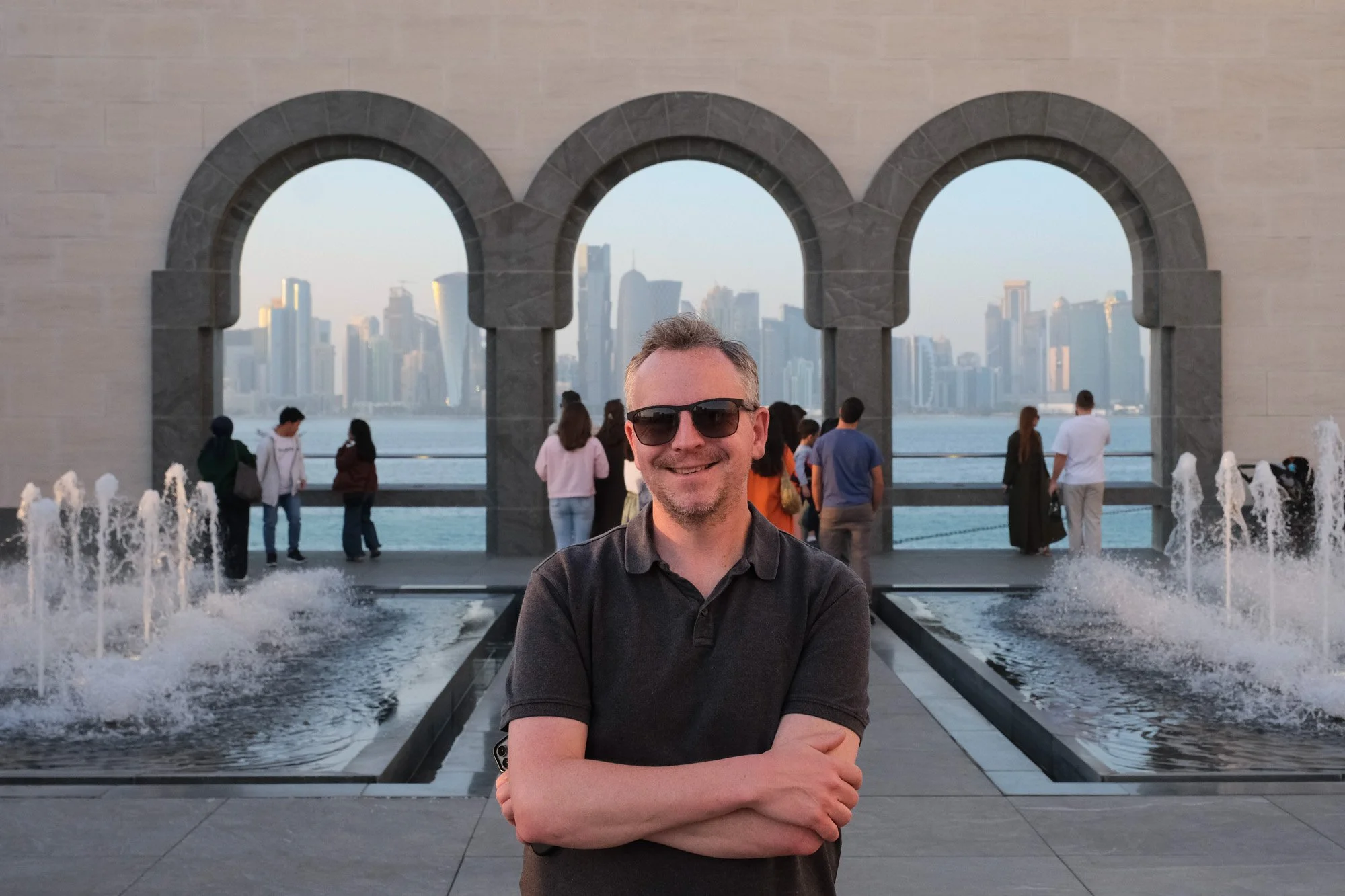
The skyline of Doha’s central business district from the courtyard of the Museum of Islamic Art.
After nightfall, we hopped on a last-minute harbor cruise. So far, we had stuck close to Souq Waqif, and we had not ventured to Doha’s gleaming central business district. Since we both worked in Manhattan, Doha’s skyline did not necessarily impress us, but it was still interesting to see the city draped in Qatari colors, similar to a Chinese metropolis. Afterward, we returned to the souk to soak up the atmosphere. We do need to check out other Gulf state capitals to see how they compare to Doha. After much perusing, I capped the night at Sama Beirut Restaurant.
Day 15: Doha - New York
The last day of a long vacation was always bittersweet, and I certainly was not going to sit around the hotel to wait for our mid-afternoon flight. I woke up early to take more photos of the National Museum. After meeting up with Brian for breakfast, we had just a few more hours to spare before heading to the airport. We used this time to check out a few of the most charming sections of Souq Waqif, including the falcon souq and horse stables. By serendipity, we happened to catch a parade of camels from the Qatar Amiri Guard. With the modern skyscrapers in the background, the camel parade was a nice send off for this trip.
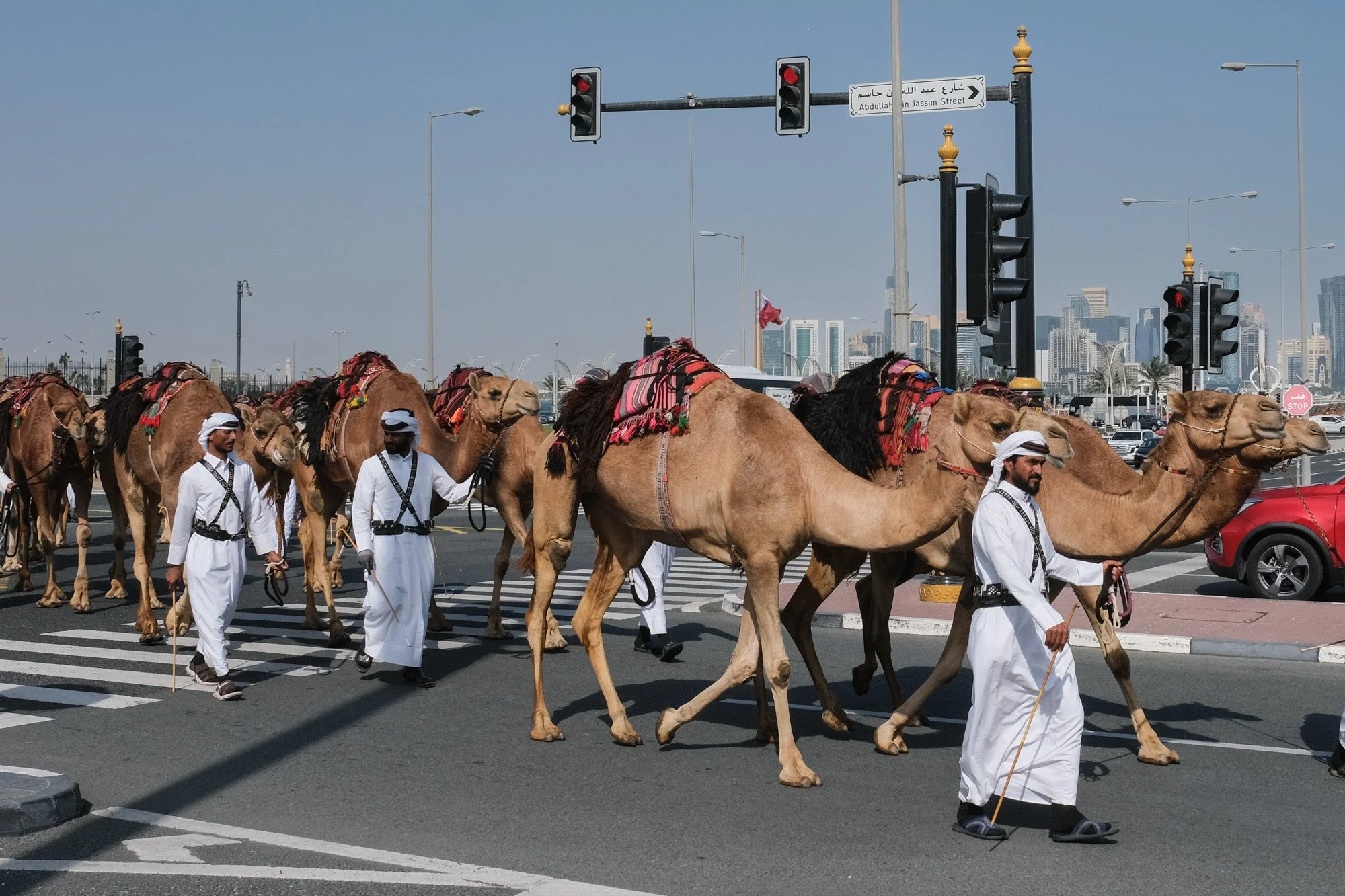
The camels of Qatar Amiri Guard.
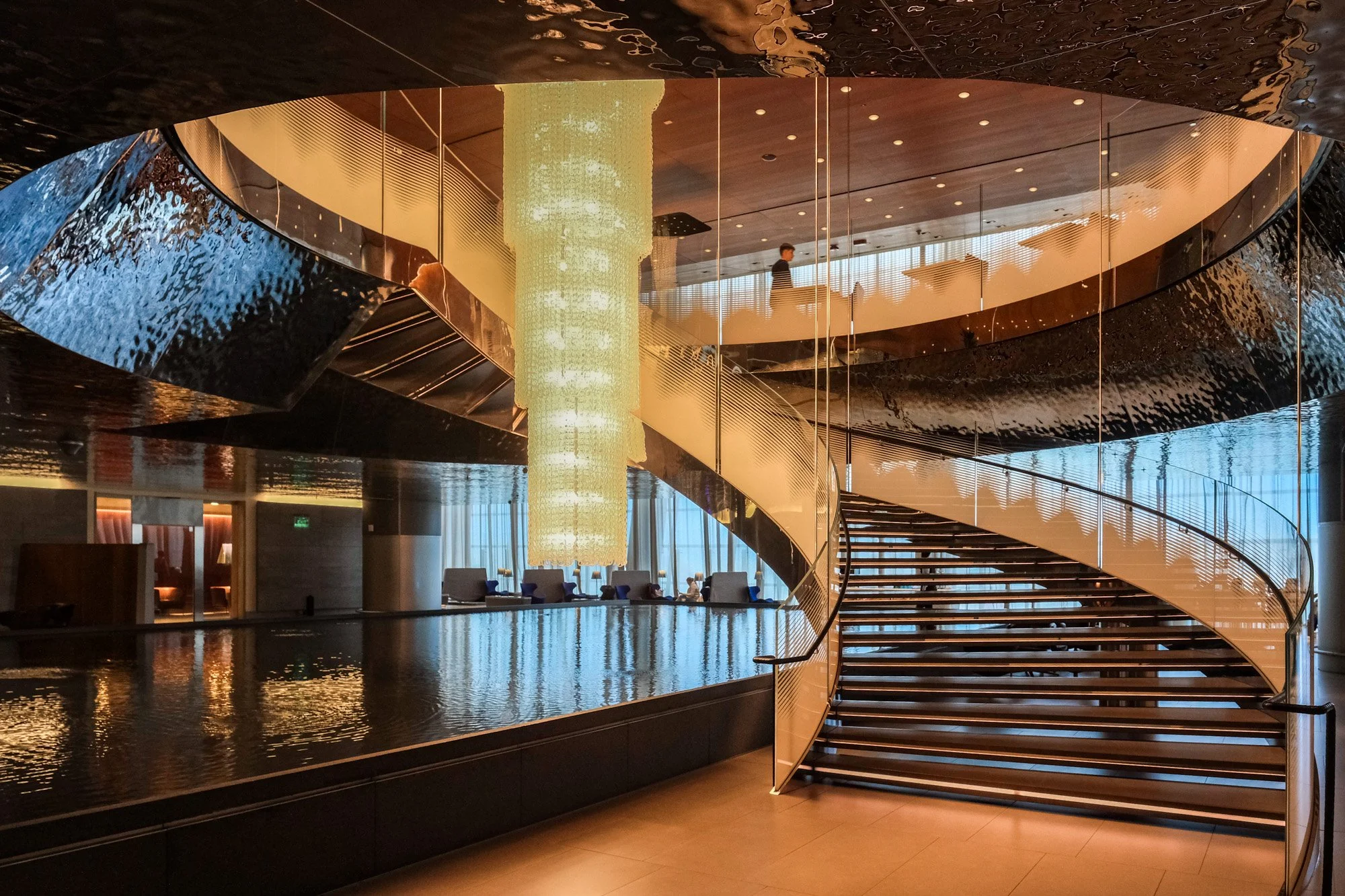
Al Mourjan Business Lounge South.
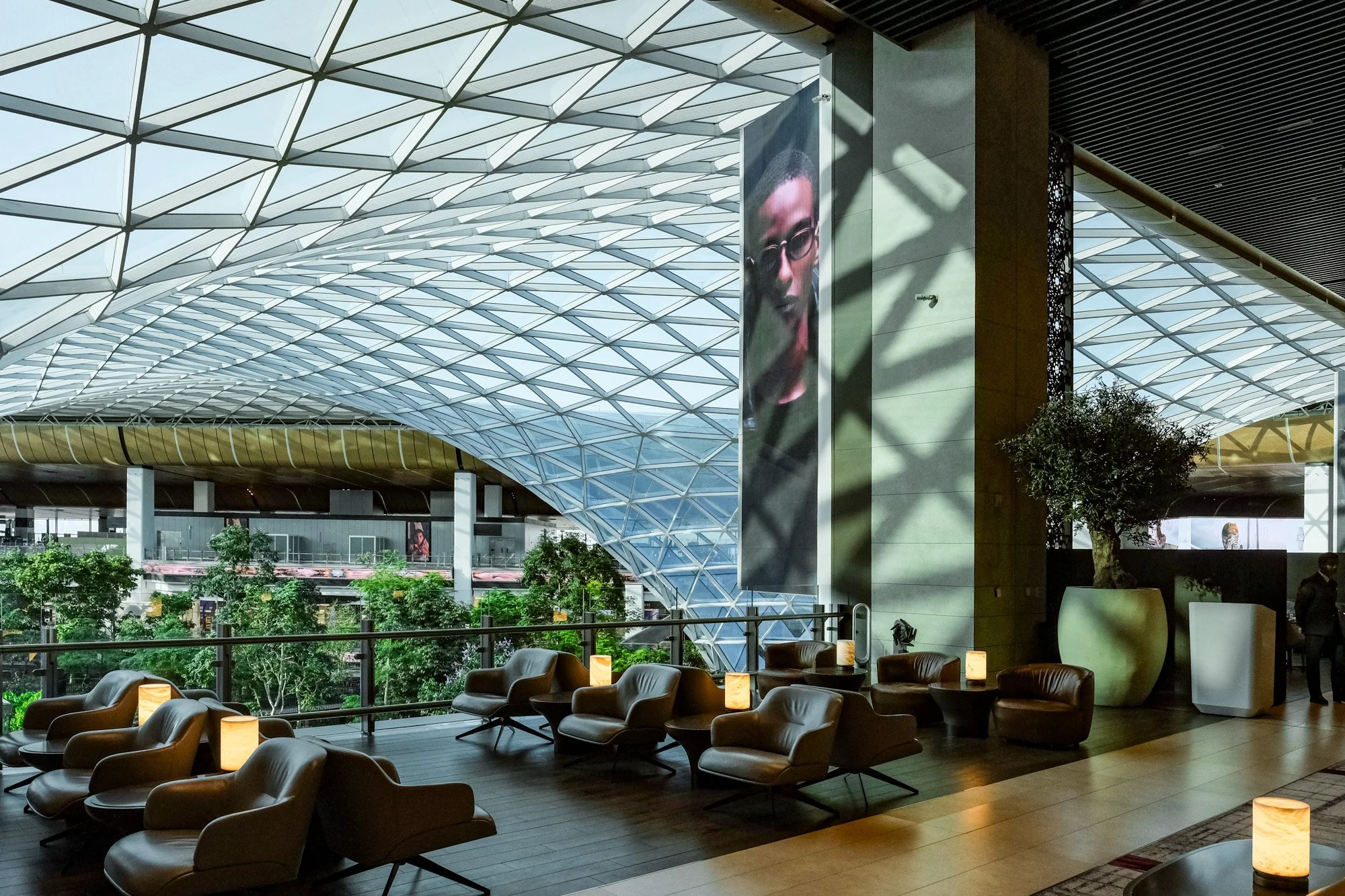
Al Mourjan Business Lounge - The Garden.
Brian jokingly called our flight home from Doha the highlight of this entire trip. As mentioned previously, this vacation was predicated on our award tickets on Qatar’s famous QSuite business class to New York. It was our first time flying long-haul business class with a five-star airline, and we wanted to fully enjoy every aspect of the experience. As such, we made sure to arrive at the airport as early as possible to visit their excellent lounges. Needless to say, Qatar Airways did not disappoint. It was definietely the best business class we ever experienced (not that we flew in the preminium cabin often).