

Around The World Via BLVD World
When it came to Saudi Arabia, visitors might think of holy mosques, expansive deserts, or mud-brick buildings. So it was a surprise to me that one of my most memorable nights was spent at an amusement park on the outskirts of Riyadh. Brian and I have never been fans of amusement parks, and it must have been a decade since we last visited one. So why did we go to one in Saudi Arabia of all places? If you had been in the Middle East, you would probably have known that social life typically starts only in the late afternoon because of the oppressive daytime heat. In a country with no legal alcohol, shopping malls, 24-hour coffee bars, and amusement parks seem to be the pillars of Saudi nightlife. Since we had no interest in shopping malls and there was only so much we could drink, we decided to check out Riyadh’s most popular night spot: BLVD World, or Boulevard World.
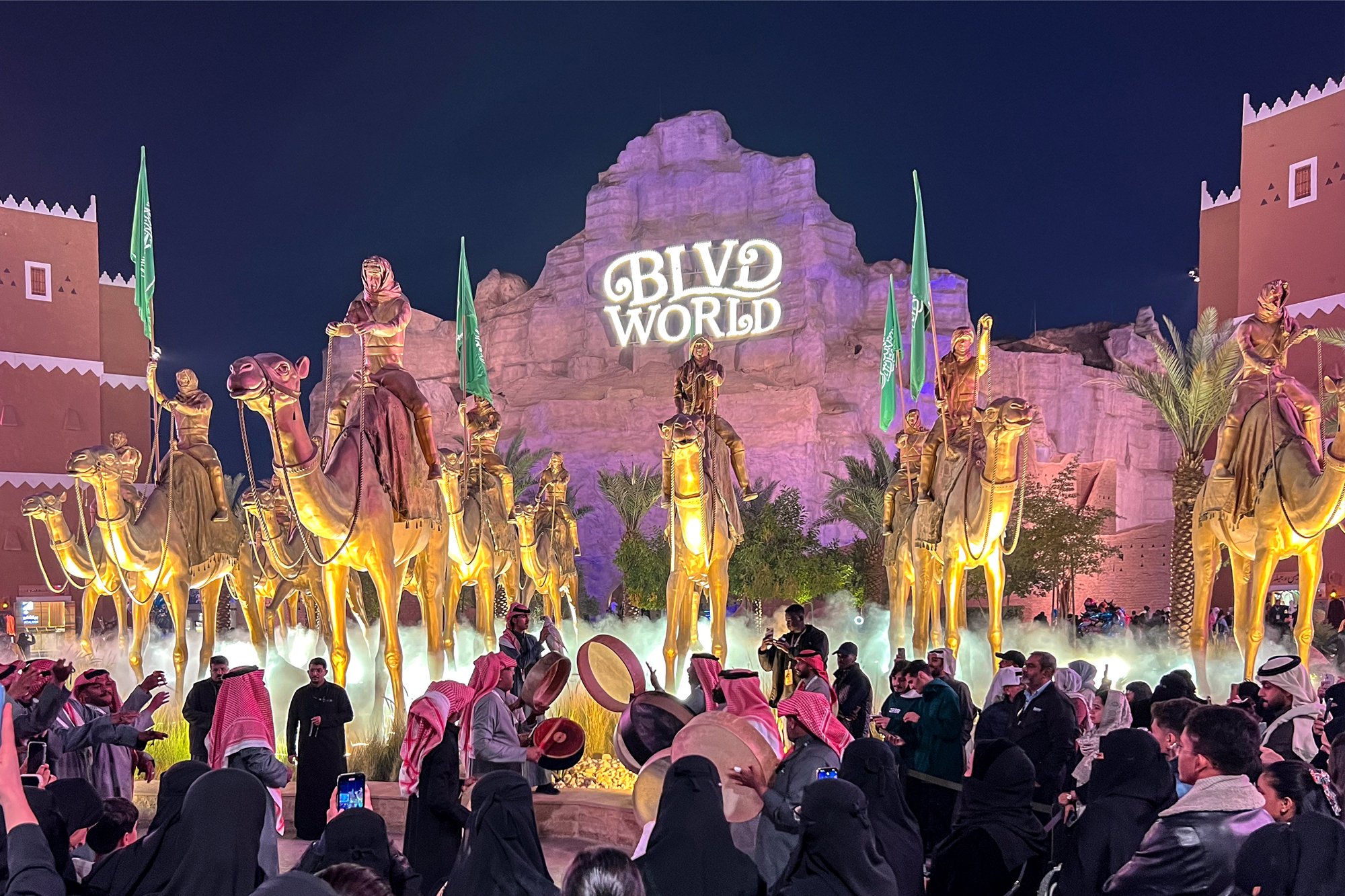
The grand entrance to BLVD World is dedicated to the Saudi heritage.
BLVD World is part of an annual entertainment initiative called Riyadh Season. Financed and organized by the national government, it is part of the Saudi Vision 2030 initiative. Following the lead of its Gulf neighbors, Saudi Arabia is eager to transform the kingdom into a global magnet for sports, entertainment, and conventions. Aside from BLVD World, there are other concurrent “zones”, such as BLVD City, BLVD Runway, and BLVD Flower. In fact, the “controversial” Riyadh Comedy Festival took place in BLVD City, which had a miniature replica of New York’s Times Square. For those of you aware of that whole controversy, check out my previous post on the ethics of visiting Saudi Arabia.
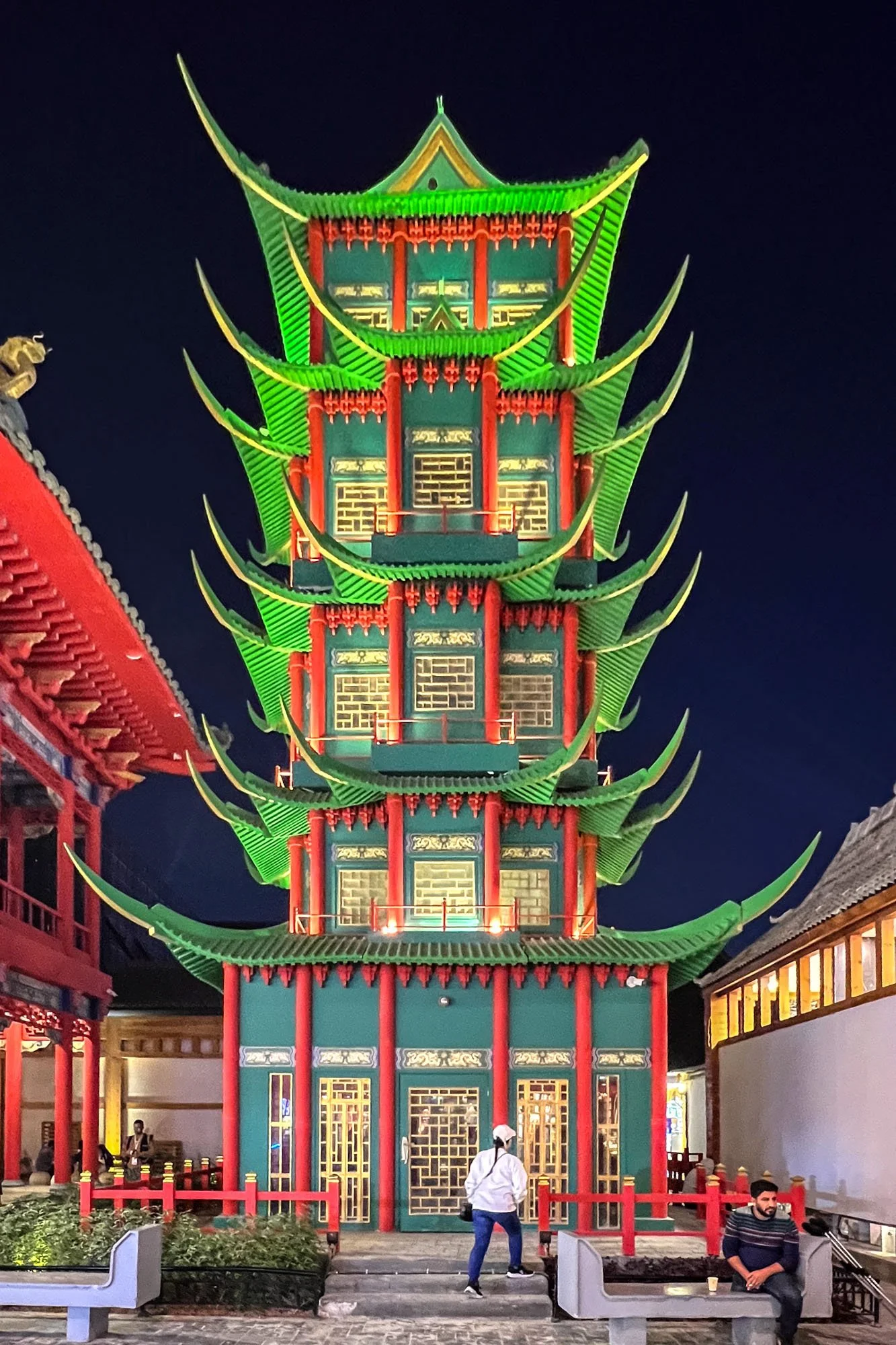
The proportion of Chinese pagoda is a little off.
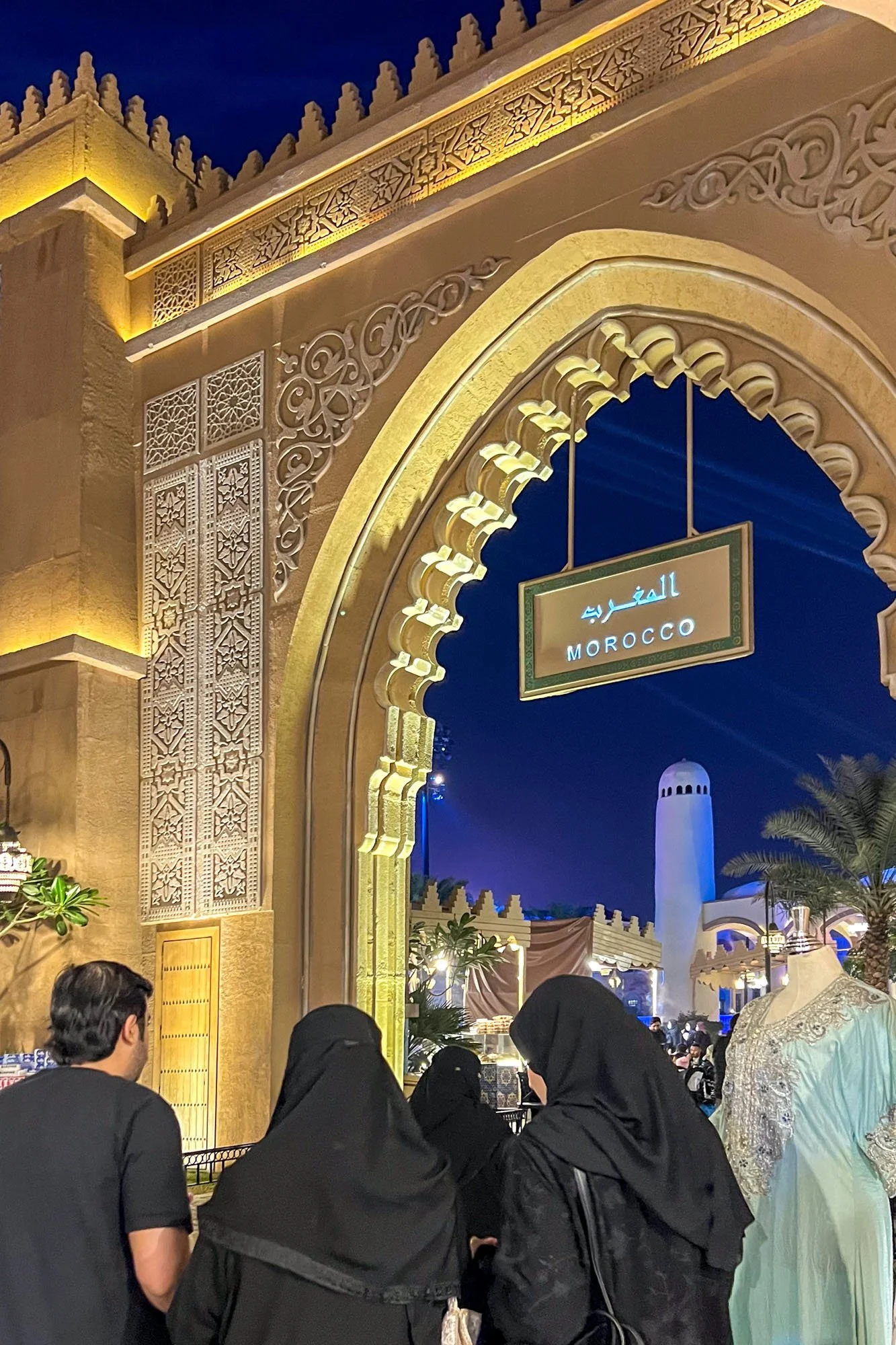
The Moorish style architecture of Moroccan zone.
Because of Riyadh’s harsh summers, BLVD World is a seasonal venue that operates only from mid-October to early May. Visitors must book their tickets in advance on webook.com. General admission without any rides or special experiences costs just SAR 29, which is rather affordable for an average Saudi. We arrived at the complex about an hour after sunset on a weekday, and it was already very busy. There was definitely a mad dash for a spot in the enormous parking lot. My excitement was through the roof as I saw the grand entrance from a distance, but it quickly waned when security told me that no DSLR cameras were allowed inside. Just like Diriyah, BLVD World somehow considers such a camera to be commercial in nature. I was very annoyed, to say the least.
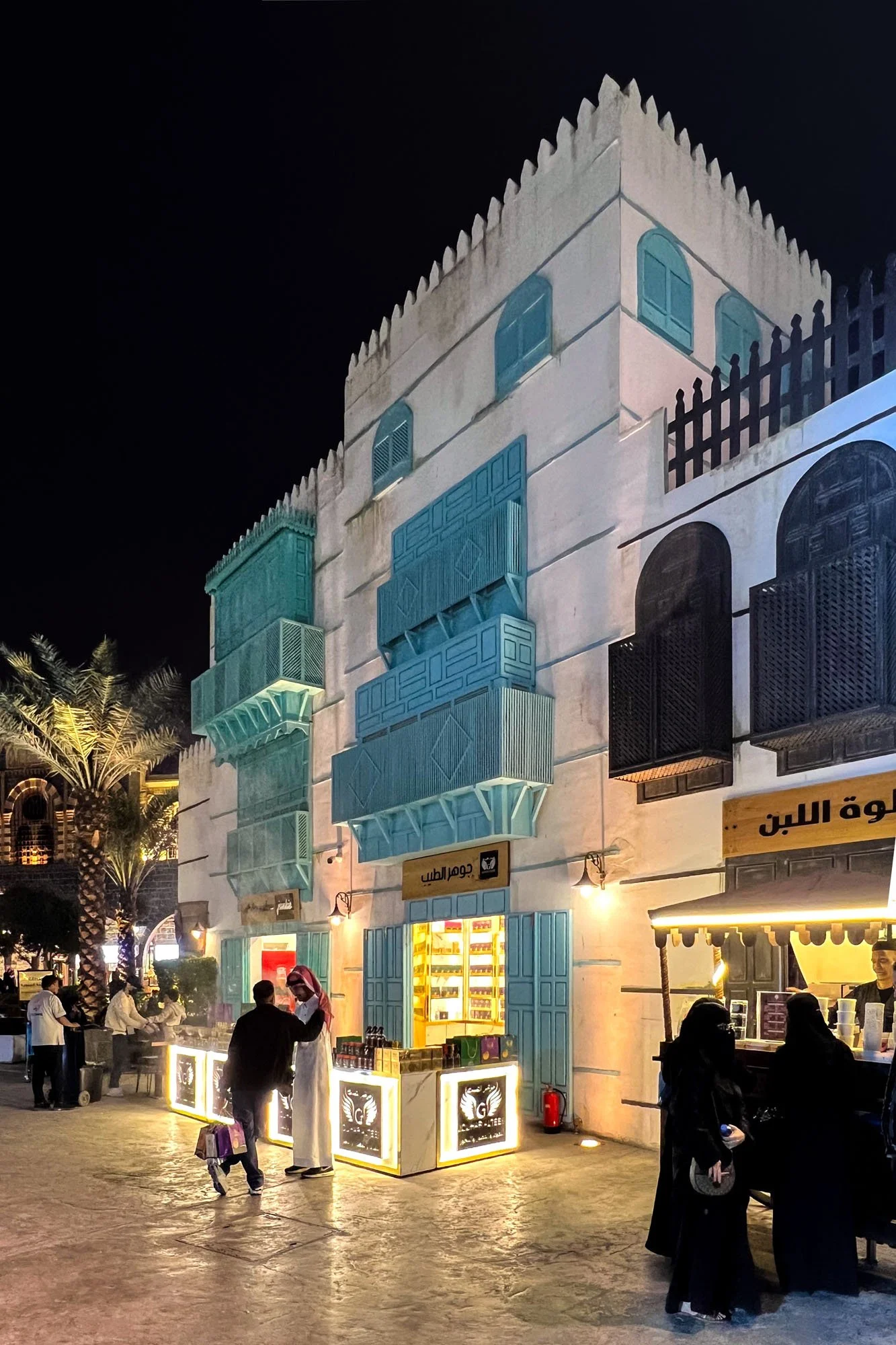
The traditional Saudi architecture of Jeddah’s Al-Balad District.
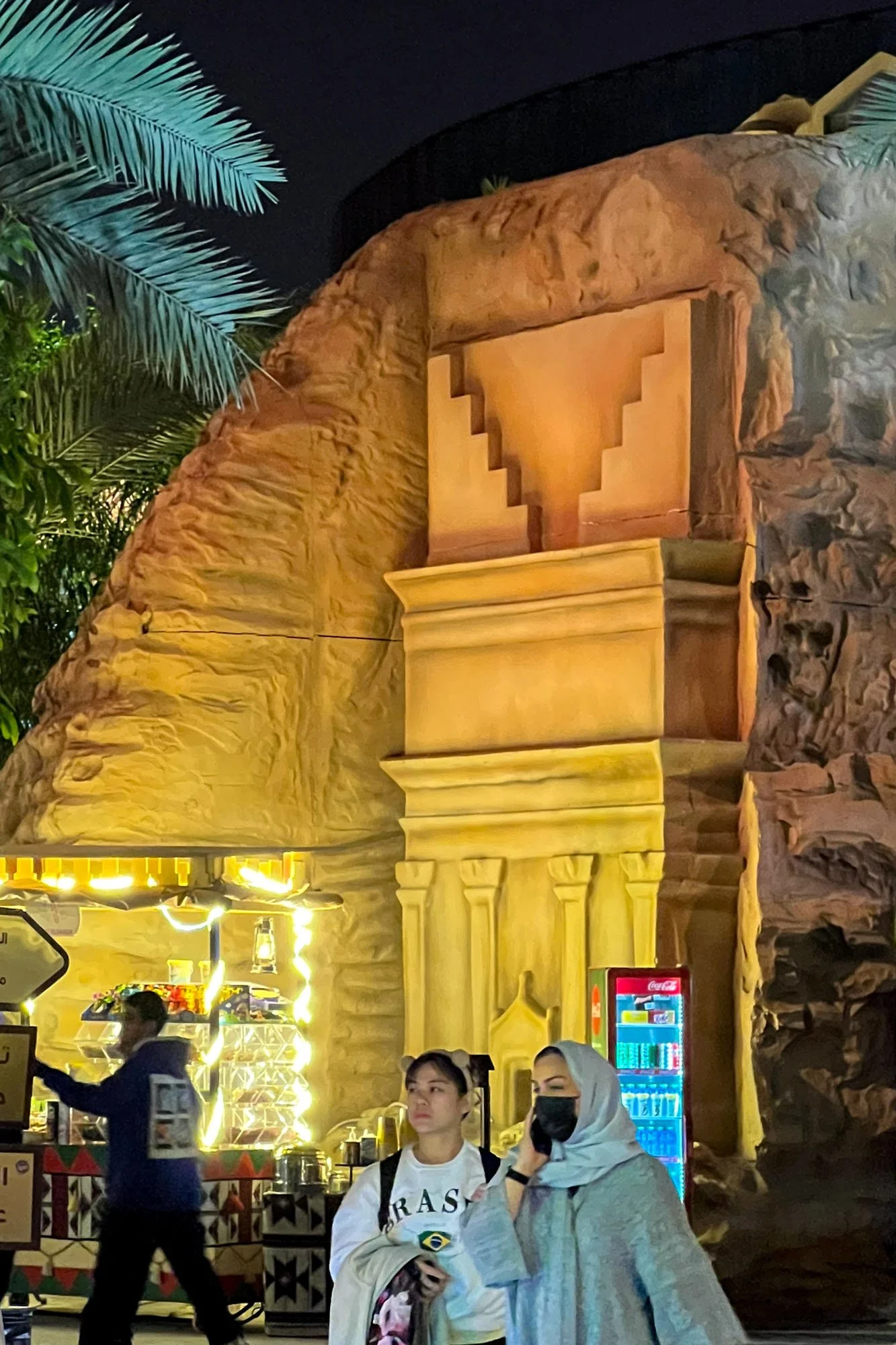
The Lonely Castle of Hegra.
As expected, the first “zone” next to the grand entrance is dedicated to Saudi Arabia. Any first-time visitor to the kingdom could use this section for travel inspiration. There are miniature replicas of Diriyah, Hegra, and Jeddah’s Al-Balad. There didn’t appear to be any monument to modern Riyadh itself here, but it did remind us of places we had to miss out on this trip, such as the ancient village in the Al-Baha Region at the southern corner of the kingdom. For anyone who has just spent a few days in Saudi Arabia, this would not be a bad place to spend an evening to get a taste of what the country has to offer. Obviously, I also understand that no foreign travelers could be this flexible with their travel planning.
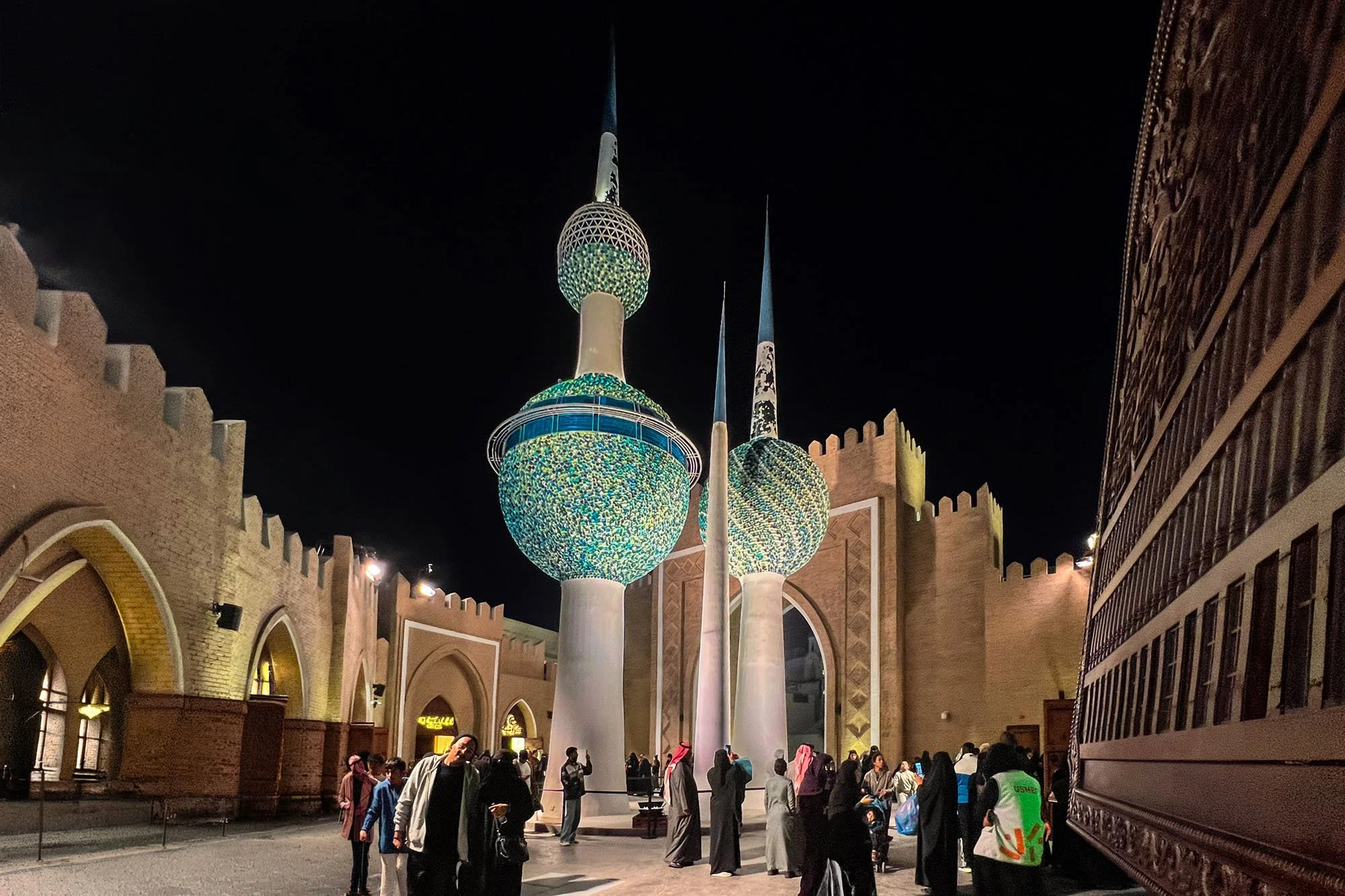
The Kuwait Towers is the most iconic landmark of Kuwait.
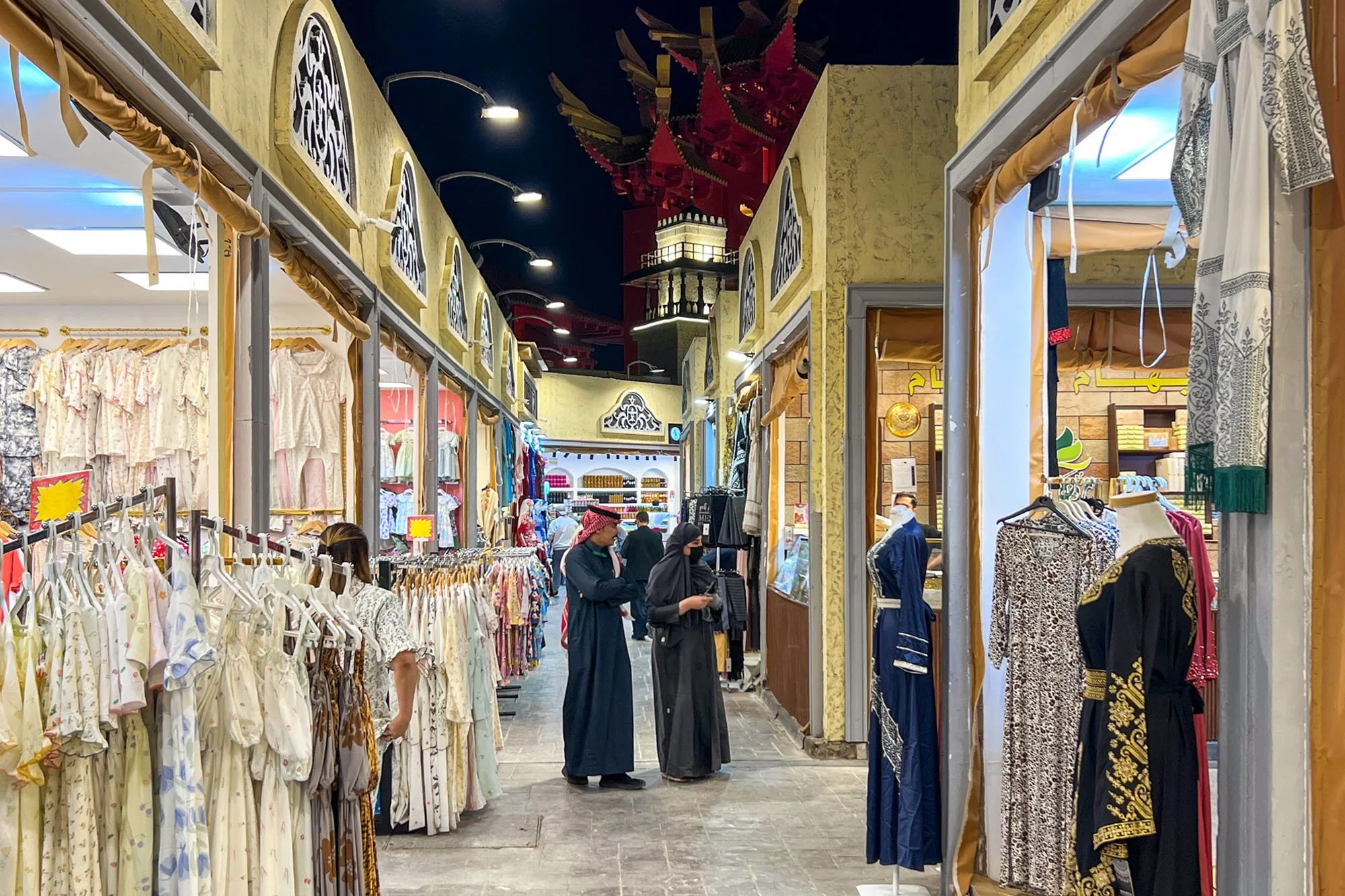
Many Saudis come to BLVD World for a fun evening of shopping.
Seeing how the organizers decide which countries to represent is fascinating. Obviously, the Muslim world is well-represented. The most unlikely appearance to me was Saudi’s Gulf neighbor, Kuwait. Saudi Arabia and Kuwait are the only two GCC countries represented here. Given Saudi’s rocky relationship with the United Arab Emirates and Qatar, I was not at all surprised by the absence of Burj Khalifa or Doha’s Museum of Islamic Arts. But I was not certain why Kuwait made the cut. From what I was told, Kuwait seems to be the partying capital of the region, as the Sharia laws are relatively lax there. I honestly did not know much about the country except for the supposedly iconic Kuwait Towers. It was not until later that I learned that Kuwait is known to have the best food in the region. Perhaps that was the biggest draw for visitors?
Just like in the real world. The heavyweight of the Middle East at BLVD World is Egypt. The most eye-catching landmarks in the whole complex are the miniatures of the Giza pyramids and the Great Sphinx of Giza. They also have replicas of the Temple of Karnak and the Abu Simbel Temple. From afar, they all look rather convincing, especially with beautiful architectural lighting at night. Much like the original pyramids, the replicas are also hollow inside. As much as I would like to think they have interesting exhibits on ancient Egyptian civilization, that is certainly too much to hope for. Instead, inside these architectural follies are your typical fairground attractions, such as escape rooms or haunted houses. Some of them may have some tangential relevance to their respective zone, but most are just generic attractions.
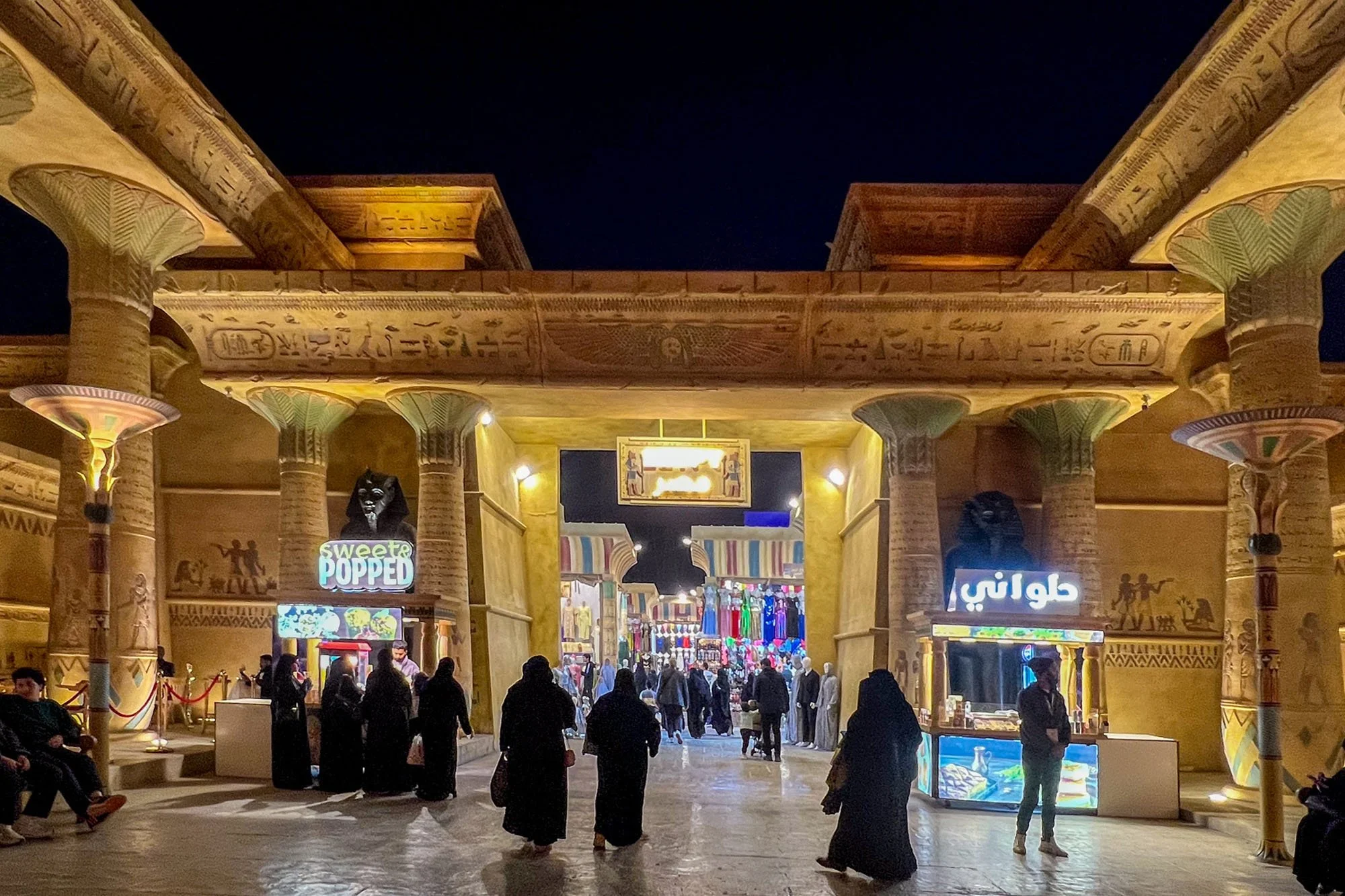
The architecture of Egyptian zone was amazing.
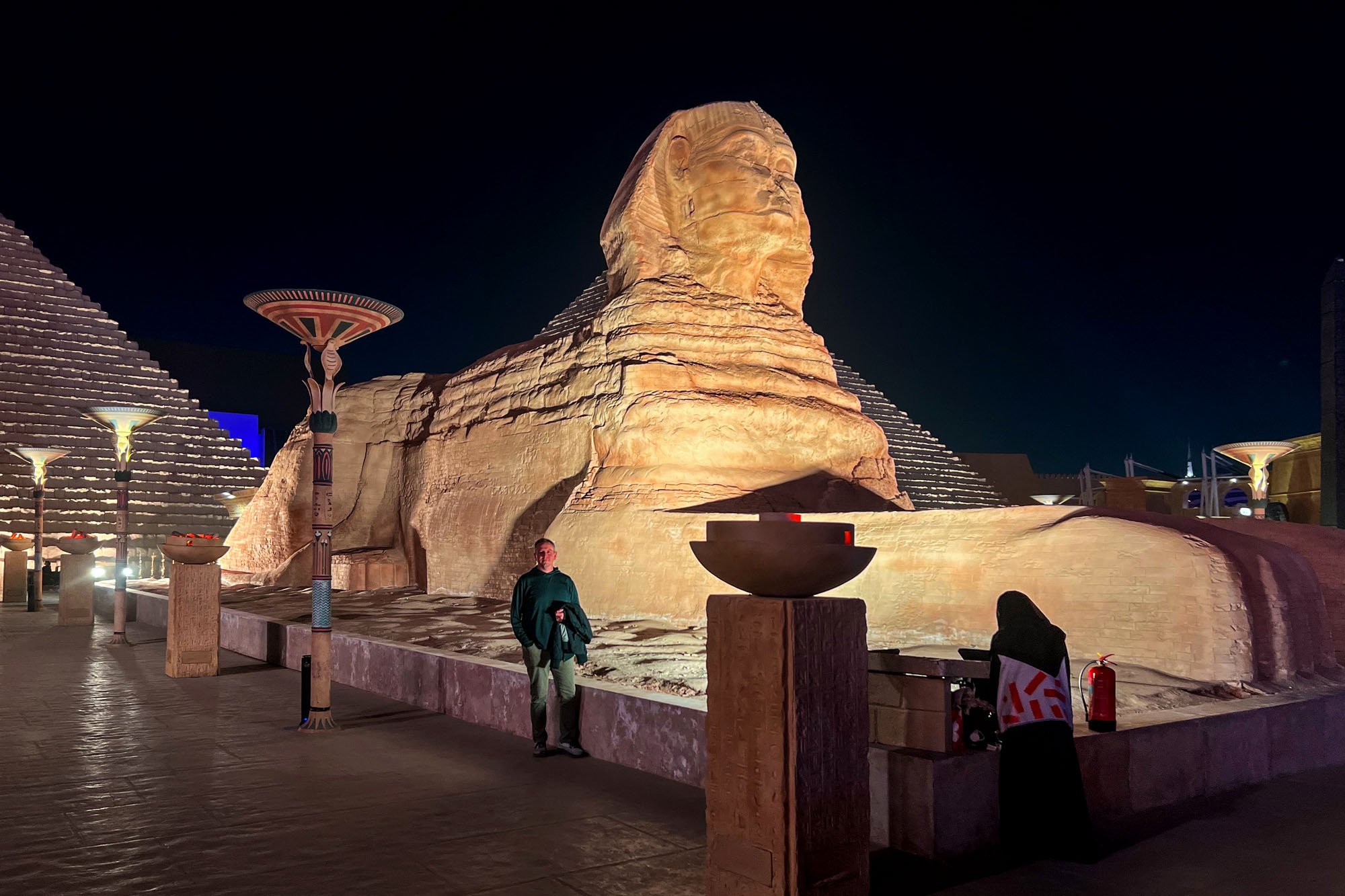
The Great Sphinx of Giza.
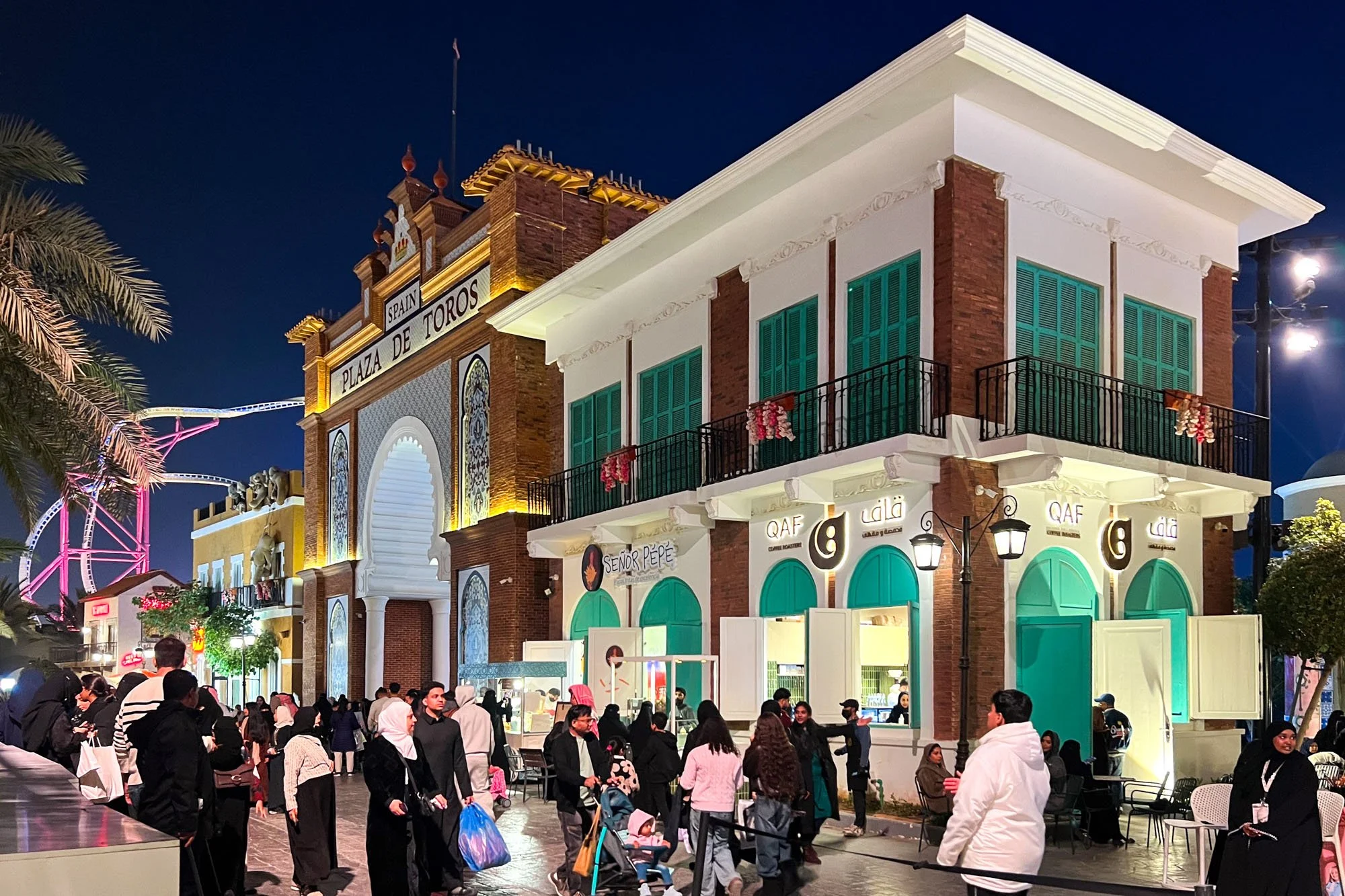
The architecture of Andalusia.
What BLVD lacked in “high culture” was made up for by its culinary offerings. Visitors got to indulge in Egyptian koshary and ful medame in the Egyptian zone and simit in the Turkish zone. Because of their cultural proximity to Turkey and Egypt, the food offerings in those areas seemed pretty spot-on. That was definitely not the case in other zones. My favorite example is the marquee restaurant in the Italian zone: Domino’s. It was certainly one of the most amusing things we saw during the visit; I was just glad that we did not see many Westerners or Italian tourists. That said, I was pleasantly surprised to see a hot pot restaurant in the Chinese zone, but I did see sushi on the same menu.
As in the United States, BLVD World is not particularly good with cultural authenticity. It was evident that the organizer and the public cared little about an accurate representation of a specific culture. Cultural purists could either be amused or annoyed by it, but that is certainly beyond the point. Predictably, most African countries are lumped together into an “African” zone with a generic “tribal” theme with thatched roofs and iconography of African wild animals. There is, of course, a special extra-charge exhibit for the white lion. Needless to say, don’t expect to learn much about the culture of a specific African country. At least, the “African marketplace” was filled with numerous colorful garments and traditional basketware, which seems at least appropriate.
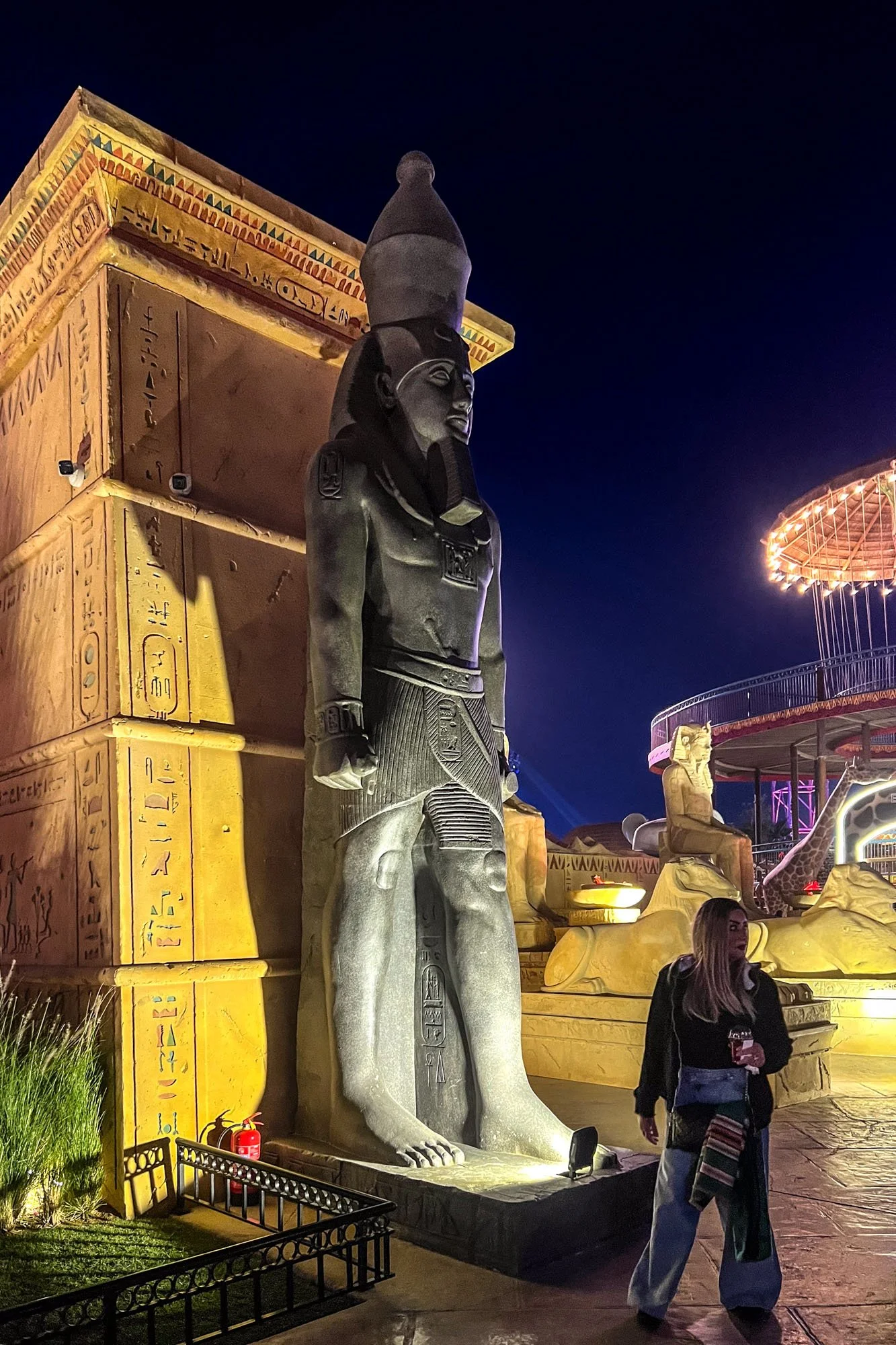
The Temple of Karnak.
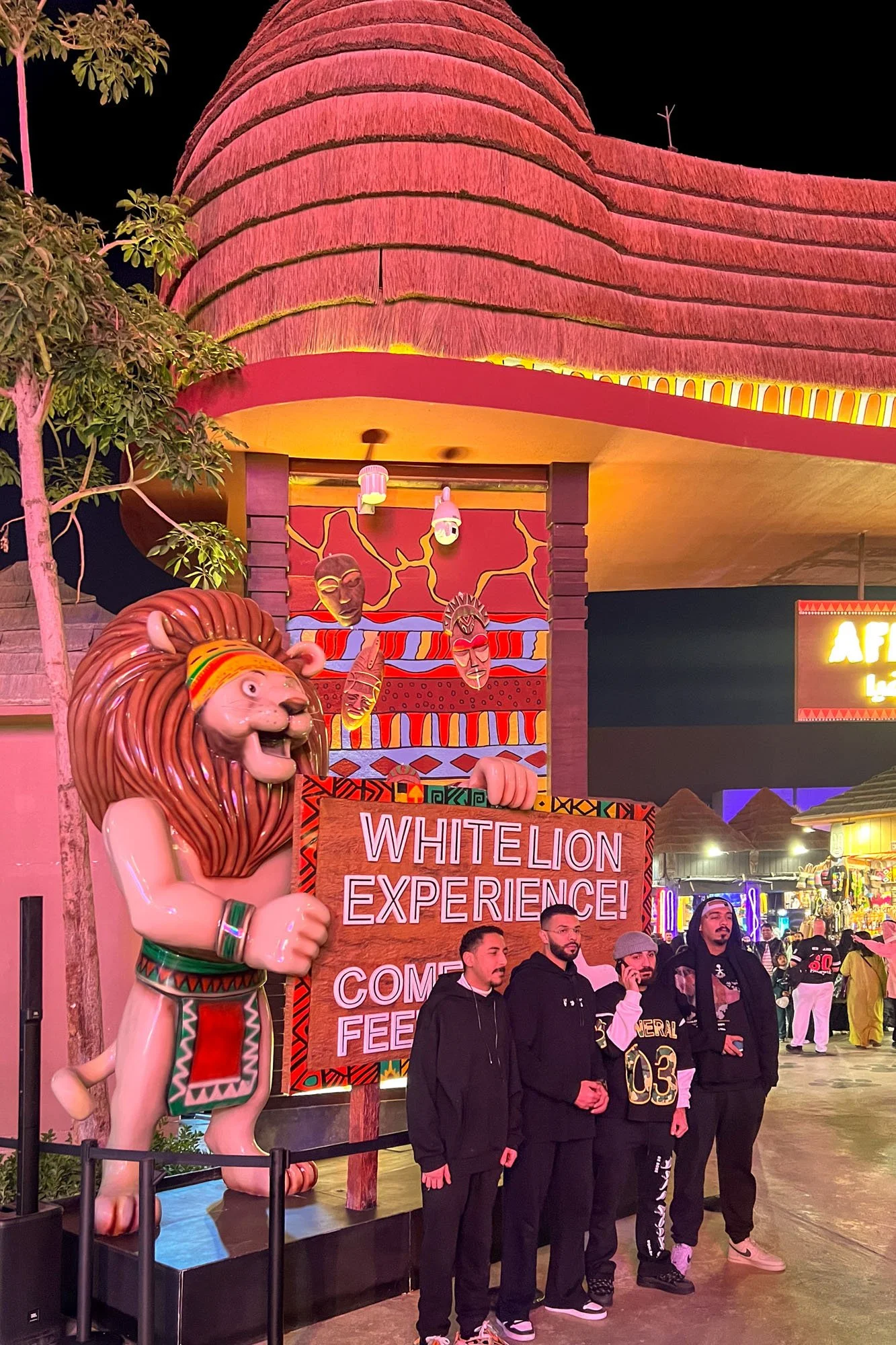
Unsurprisingly, the African zone does not appear to have references to a specific country.
Now, I acknowledge that I was perhaps overly critical of BLVD World, which is not entirely fair. Aside from the shock and awe of architectural replicas, the highlight of BLVD World should be the various cultural shows that seem to appear out of nowhere. They may be the most culturally enriching experiences that the place has to offer. From the Chinese dragon dances to Moroccan tagarrabt, these performers knew how to put on great shows. Some of the most memorable performances were the Mexican Mariachi band and the flamenco dancers from Andalucía. For a moment, I forgot we were in the Kingdom of Saudi Arabia; this was certainly not the closed-off country it was just a decade ago.
Objectively, the most “authentic” zone here might just be Mexico. Besides a miniature Chichen Itza, the zone’s hacienda-inspired architecture was beautifully decorated with the iconic papale picado banners and a massive piñata. It instantly transported us to central Mexico. I may not be a connoisseur of Mexican food, but the wide-ranging food offering here also did justice to the country’s culinary heritage. My favorite sight of the night was a group of Saudi women having a fun night out, wearing giant sombreros with their traditional black abayas. This was definitely not the stereotype of Saudi Arabia in the news. Ultimately, the point of visiting BLVD World was not to learn about the world’s culture, but Saudi Arabia. This is arguably the best place in Riyadh to see Saudis letting their guards down.
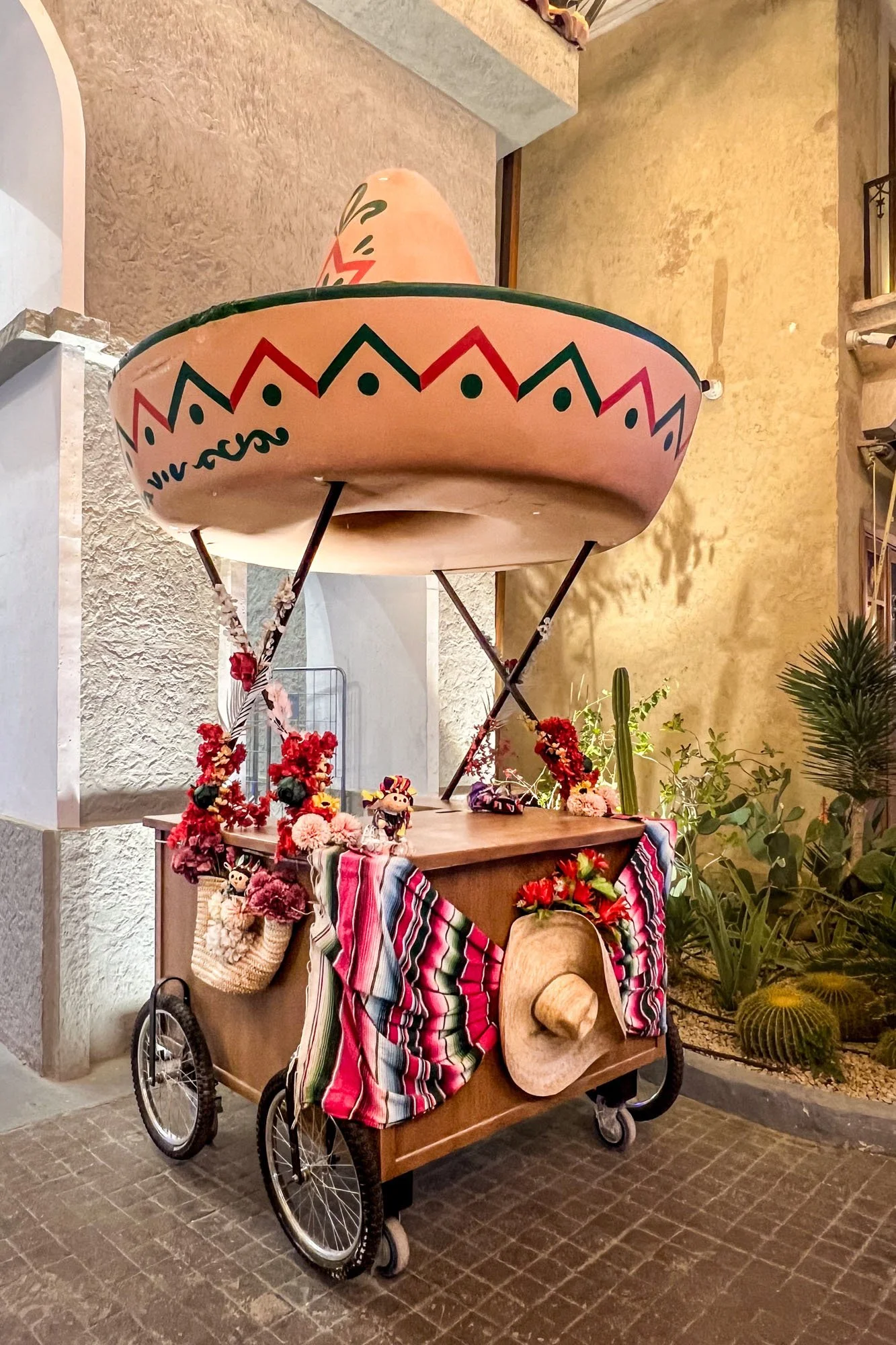
You got to love the vendors at the Mexican zone.
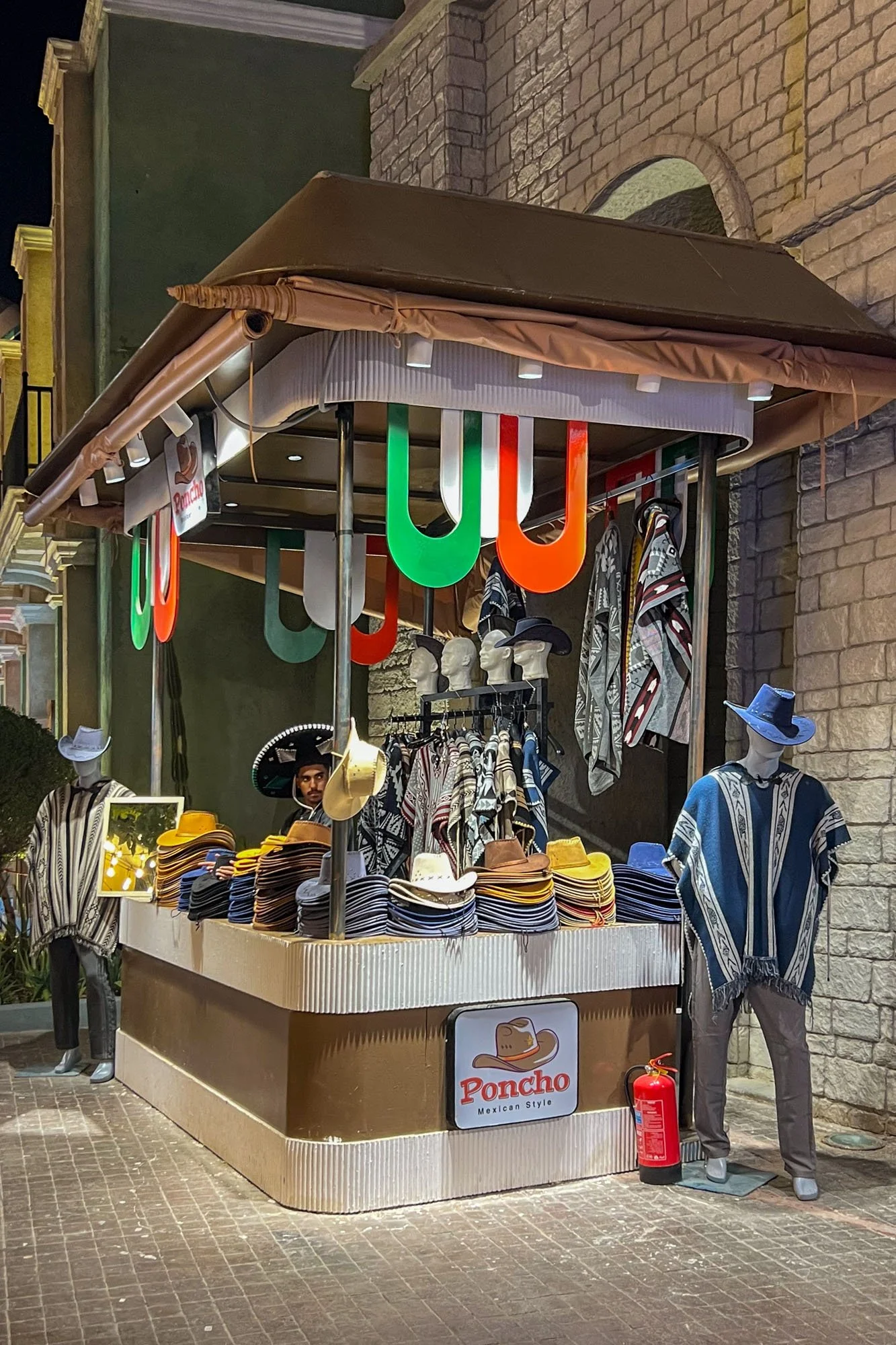
The Mexican zone is our favorite in BLVD World.
The other section that I was personally very fond of was the Japanese zone. What is fascinating about Japan’s representation at BLVD World is that it centers on modernity and pop culture. Instead of ancient pagodas or temples, Japan's “main monument” is a multi-story model of a Transformer. It stands before a backdrop of skyscrapers reminiscent of Shinjuku in Tokyo. The bright neon lights and Japanese billboards seemed otherworldly. The shops in the zone include anime stores and video game arcades, which gave it a uniquely youthful energy.
All the different zones are organized around an enormous central lagoon. At more than 30 acres, this is supposedly the world’s biggest man-made lagoon, according to the Guinness World Records as of 2022. It was a little maddening to think they actually created such a large body of water in the middle of a desert, which is hardly sustainable. That really speaks to the kingdom’s no-holds-barred approach when it came to tourism development, especially considering that this is only a seasonal venue. In addition to the light shows, visitors could also experience the grandeur of this place by hopping on a gondola or gondola lift. There is no shortage of options to soak in the energy of the place, for an extra charge, of course.
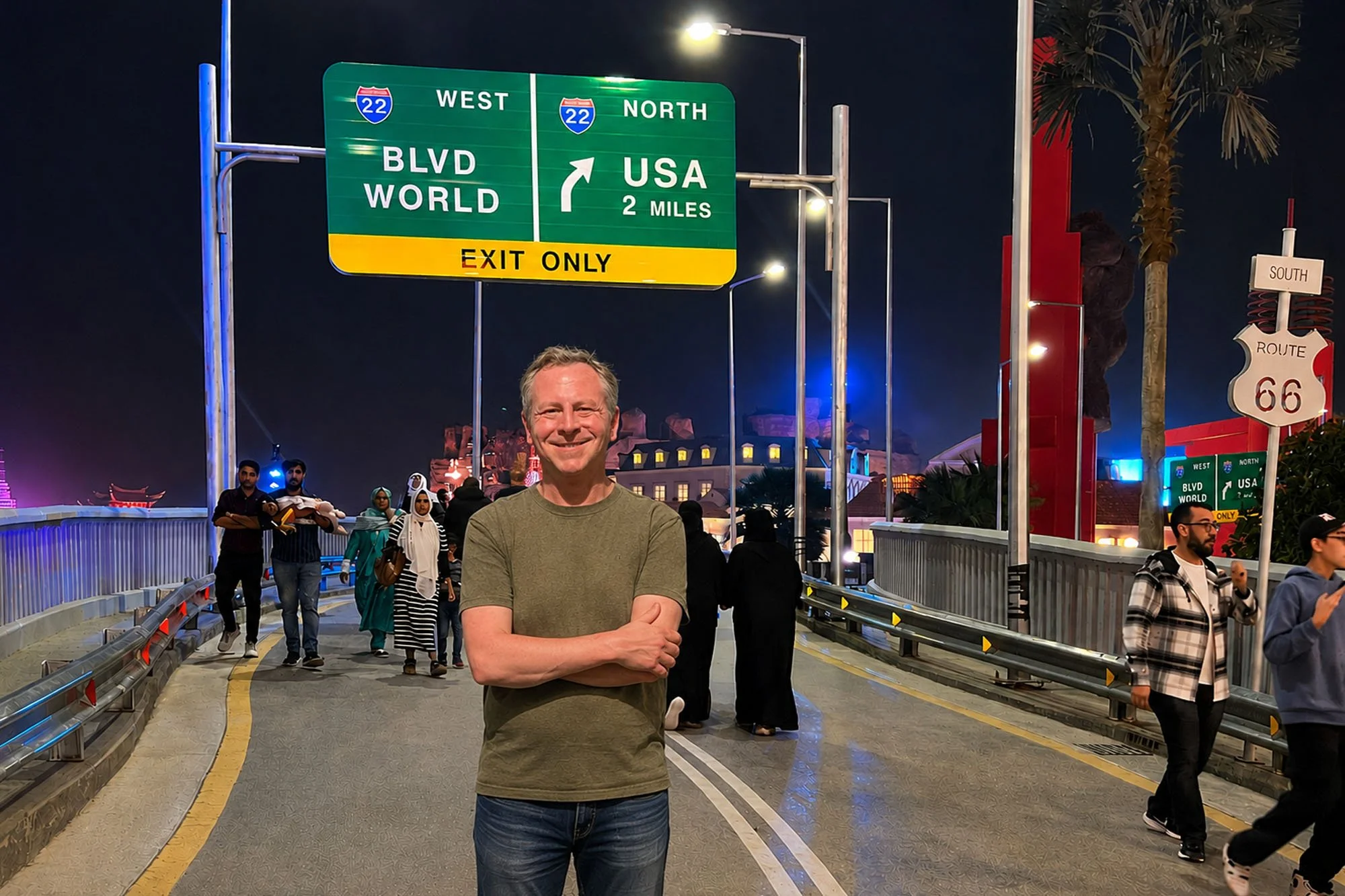
America’s Interstate Highway sign is perhaps the most authentic part of the American zone.
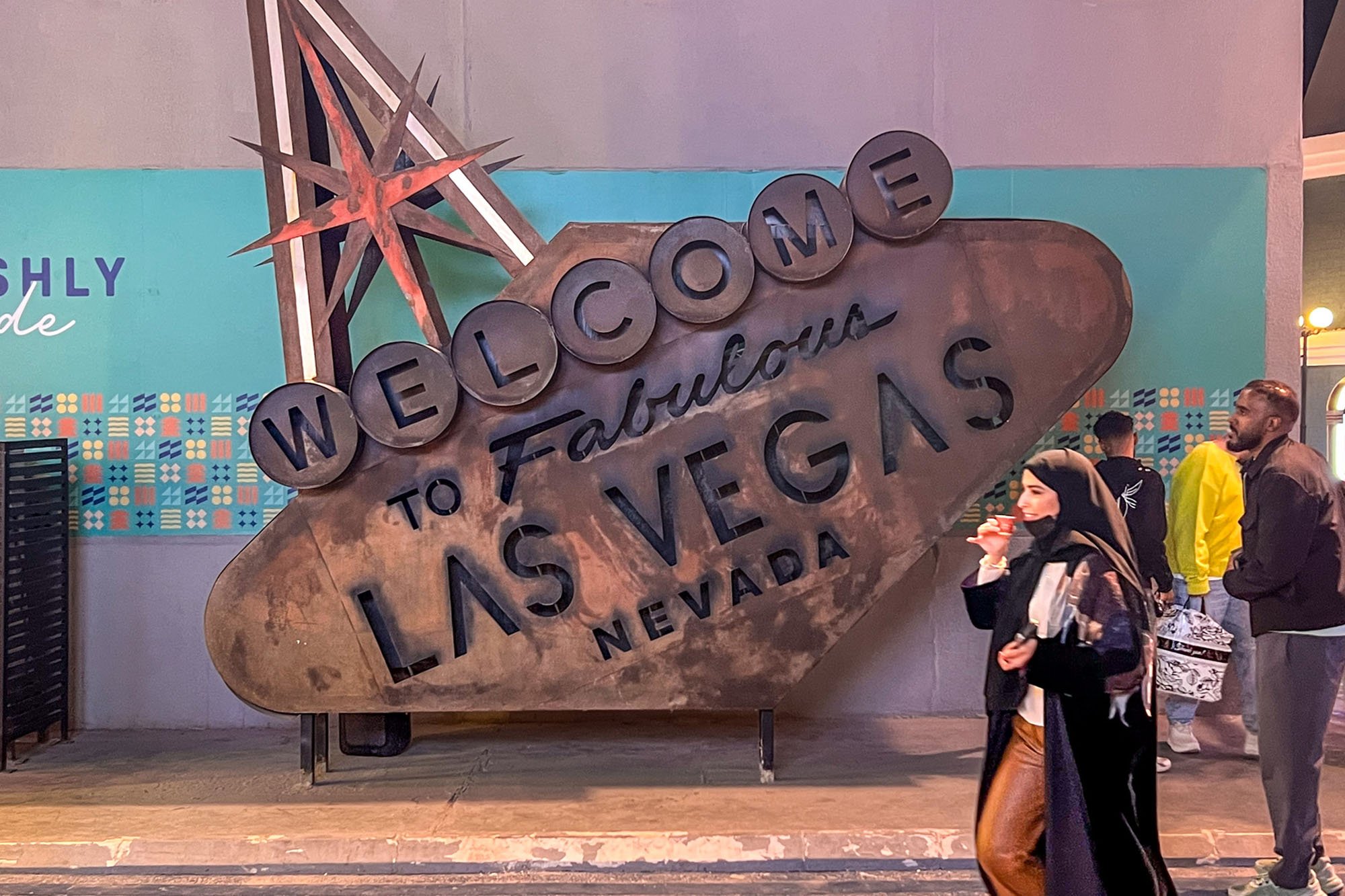
Unsurprisingly, Las Vegas got its representation in the American zone.
Naturally, the zone we were most interested in was the American section, and we were eager to see how the Saudis think of America. From afar, we spotted a miniature tower of the Golden Gate Bridge with King Kong hanging on it. What really caught our eyes, however, was the American-style signage for the interstate highway. From the font, safety barrier, to the lamp post, everything was on point and immediately reminded us of home. They were definitely the most authentic element of the American zone. But I must wonder just how recognizable American highway signs are for an average Saudi.
Food-wise, the American zone certainly delivers when it comes to fast-food offerings, including the likes of Philly cheesesteaks and crinkle-cut fries. Above one of the fast food kiosks, Bander’s Potato, was a digital animation of a dancing hot dog. For me, that was a perfect representation of the United States. Other representation of the United States includes dinner on Route 66, the Chrysler Building, Randy's Donuts, and the Los Angeles Memorial Coliseum. Unsurprisingly, there was also the famous Welcome to Fabulous Las Vegas sign and Las Vegas’s Sphere across the lagoon. We had been to the this part of the world enough to know that many Muslim, especially young men, consider Las Vegas the bucket list desitination. The sin city certainly holds some mystique in the Middle East.
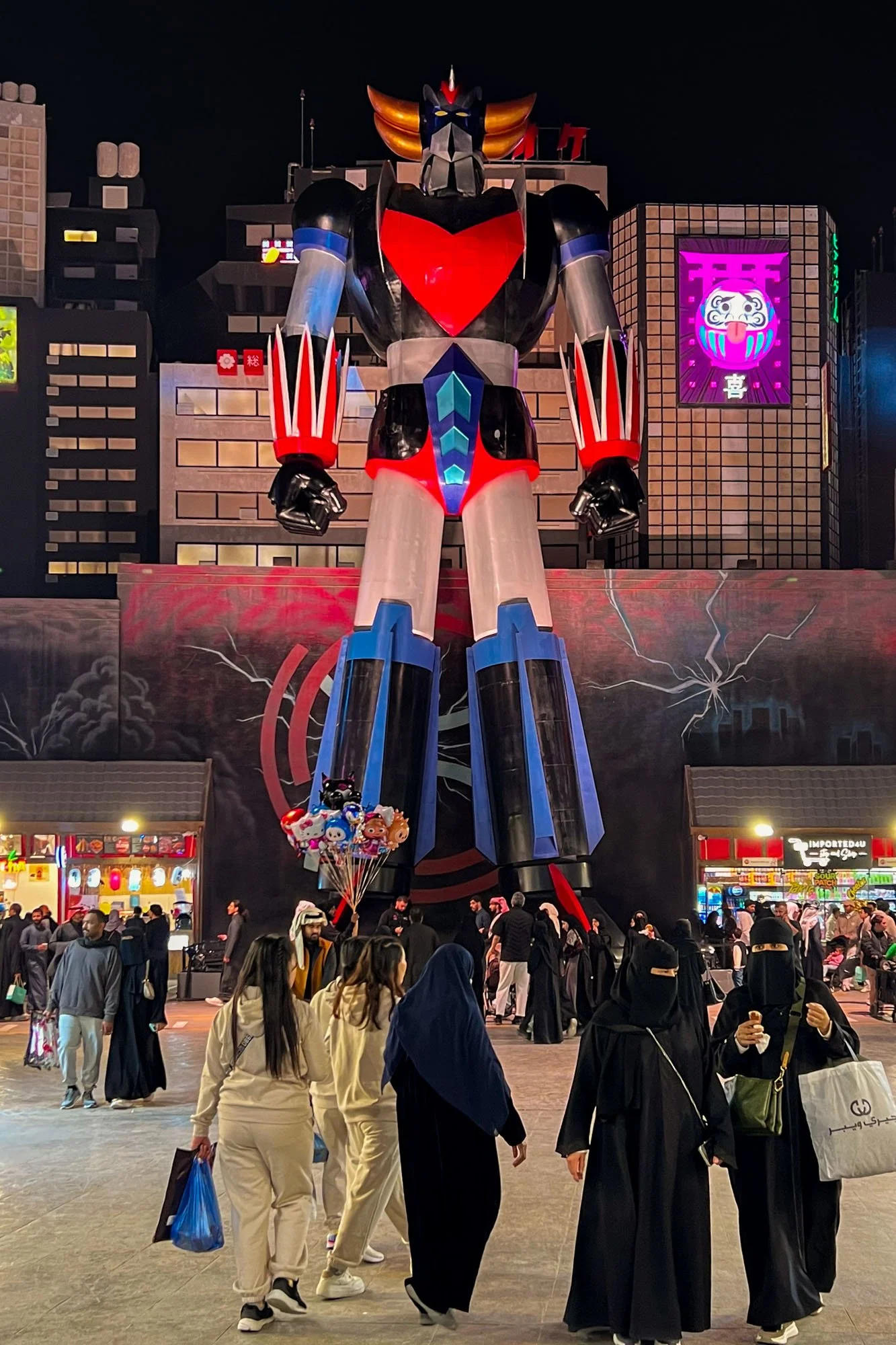
The Japanese zone was all about the pop culture.
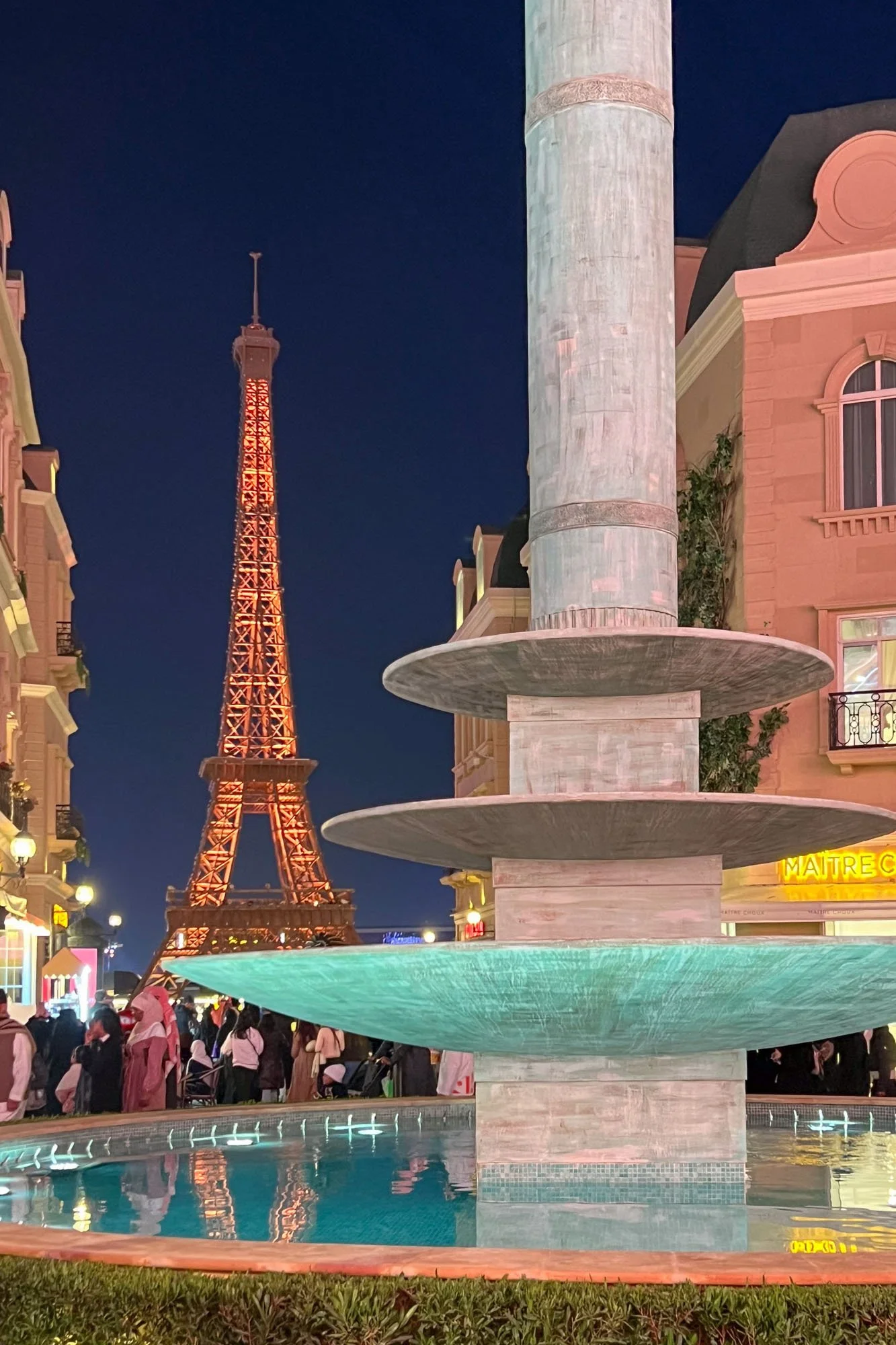
The French zone is definitely the biggest draw in BLVD World.
One of the last zones we visited was French. It is among the most polished and crowded sections in BLVD World. The zone is essentially a representation of Paris. From Haussmann-style architecture and the Arc de Triomphe to the Eiffel Tower, the architectural ensemble here appears to be a massive hit with visitors. The Eiffel Tower was particularly impressive and realistic; you could definitely fool people if taking pictures from certain angles. Although I could argue perhaps this could also be a reference to Las Vegas, which has a half-scale replica of the Eiffel Tower. Unsurprisingly, the food offerings there were more upscale than those in the American section.
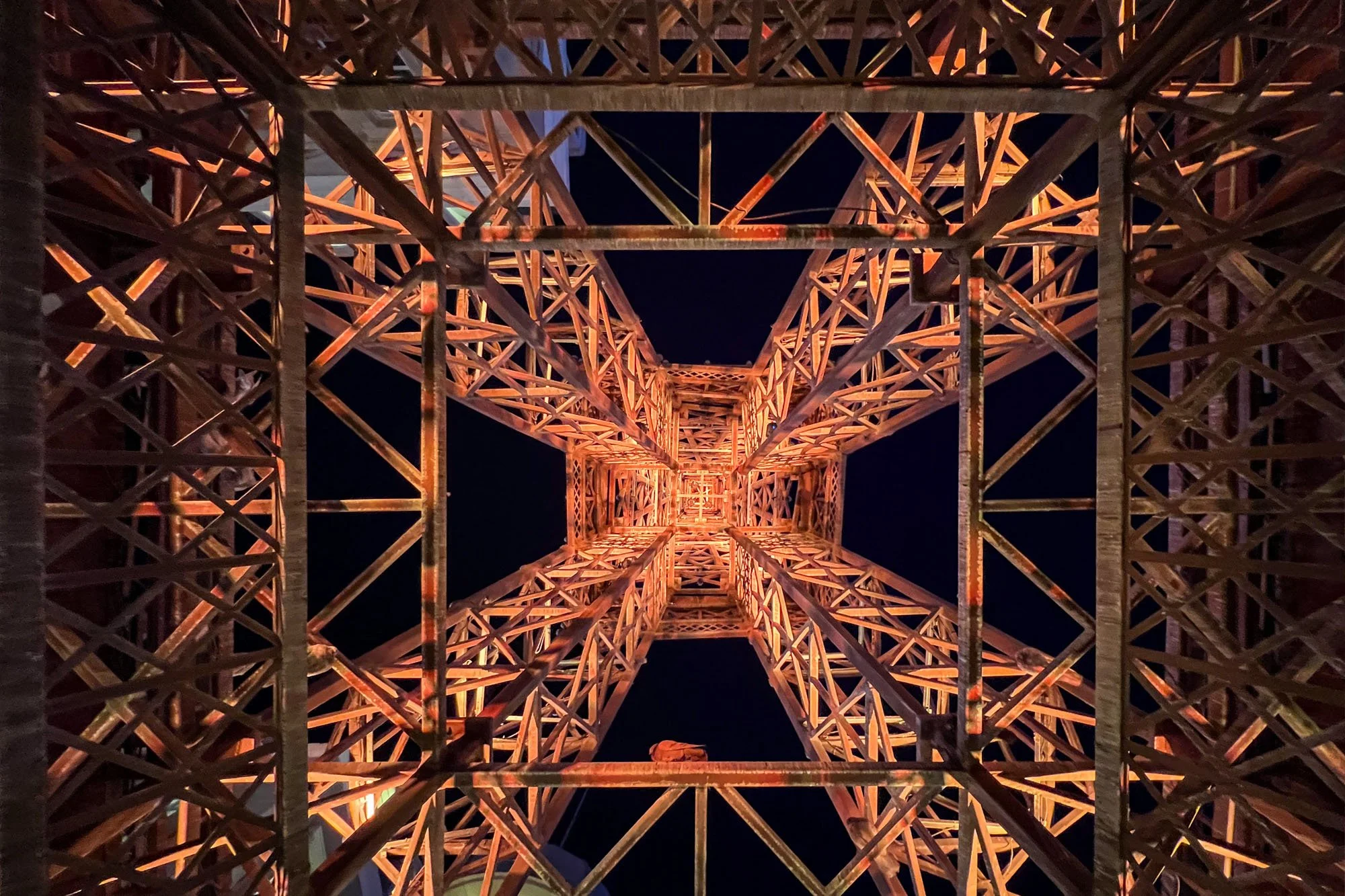
The Eiffel tower replica is probably the most accurate miniature at BLVD World.
I am definitely no expert on amusement parks, so I could not intelligently compare BLVD World to the likes of Disney’s Epcot World Showcase or Dubai’s Global Village. I have read somewhere that a theme park is “only as fun as you make it”, and that was absolutely the truth for BLVD World. One might be dismayed by numerous instances of cultural appropriation or a lack of authenticity, but I found this experience very fulfilling and somehow quite moving. This was a light-hearted and authentic side of Saudi Arabia that is seldom talked about in the West. BLVD World may be touristy, but it was a great venue to take a peek into the new Saudi Arabia.