

Our first full day in Saudi Arabia started as a blur. Because of a last-minute flight cancellation, the day of travel was quite stressful, and our flight did not land until one past midnight. After the rental car pickup and navigating Riyadh’s maze of expressways, we did not get to the hotel until three o’clock. When we got our first glimpse of Riyadh in the morning, I can’t say I was all that excited by the urban sprawl of the Saudi capital. This metropolis of seven million neither has the old-world charm of Muscat nor the modern flair of Doha. Part of me can’t help wondering how we managed to spend three full days here. I actually did not do much research on Riyadh ahead of this trip. The one sight I did know about for quite some time is Diriyah, a historic district on the outskirts of Riyadh. Since I had a penchant for history and architecture, I naturally made Diriyah our first stop in Saudi Arabia.
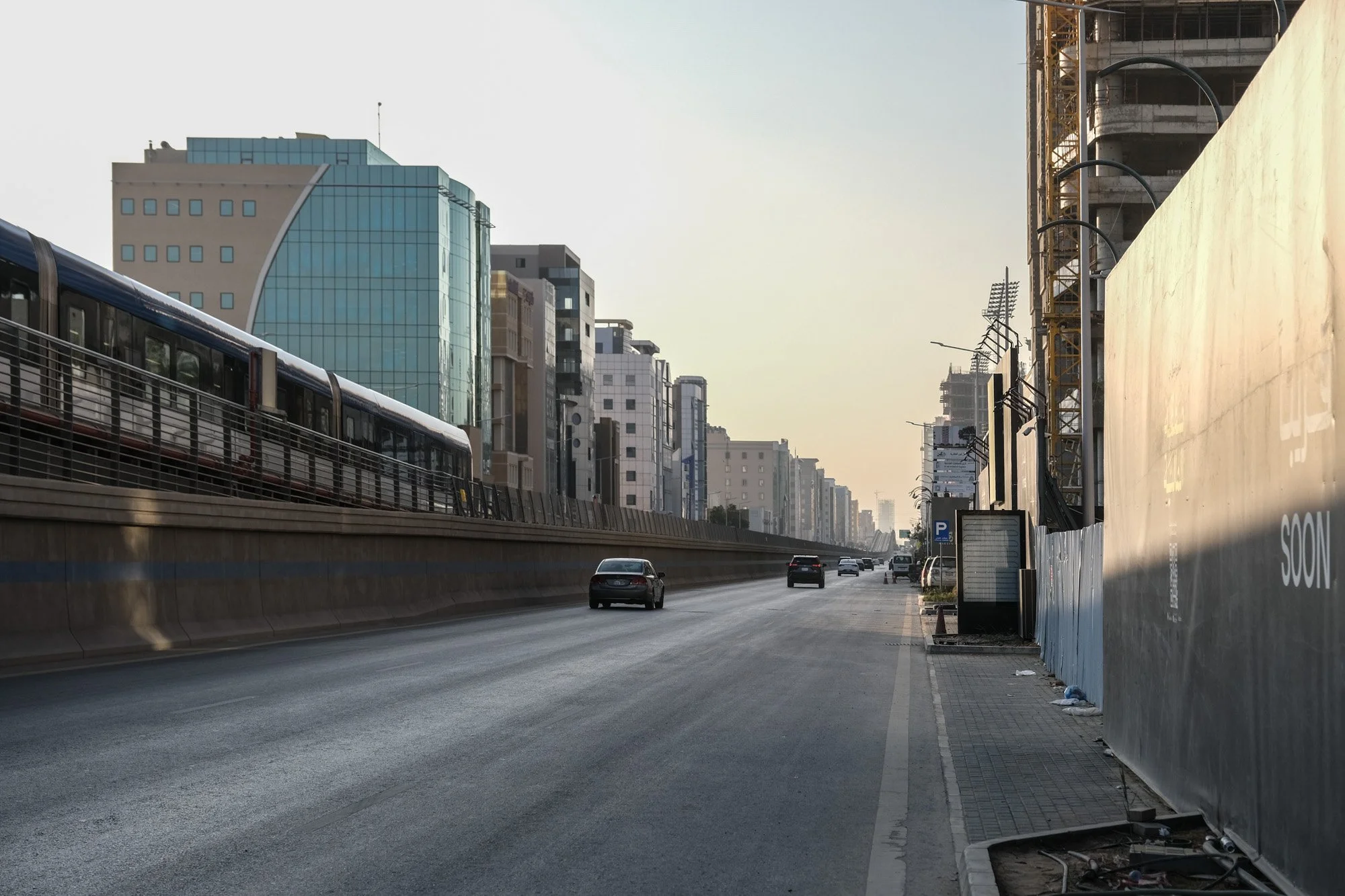
Modern Riyadh is a massive urban sprawl.
From our hotel in Al Sahafa District, it was a half-hour drive to Diriyah. As we approached Diriyah, the place immediately reminded us of California, and it actually took me a while to figure out why. The first thing I noticed was just how buttoned up the neighborhood was. Not only were all the traditional buildings immaculately maintained, but every tree and shrub was manicured as if it were a French garden. It was not until I parked at the underground garage and realized that the entire architectural ensemble was a contemporary creation not all that different from Disneyland. It turned out the Diriyah I entered into Google Maps was Diriyah Zallal, a brand-new commercial complex. The actual historic district was only a short five-minute walk away.
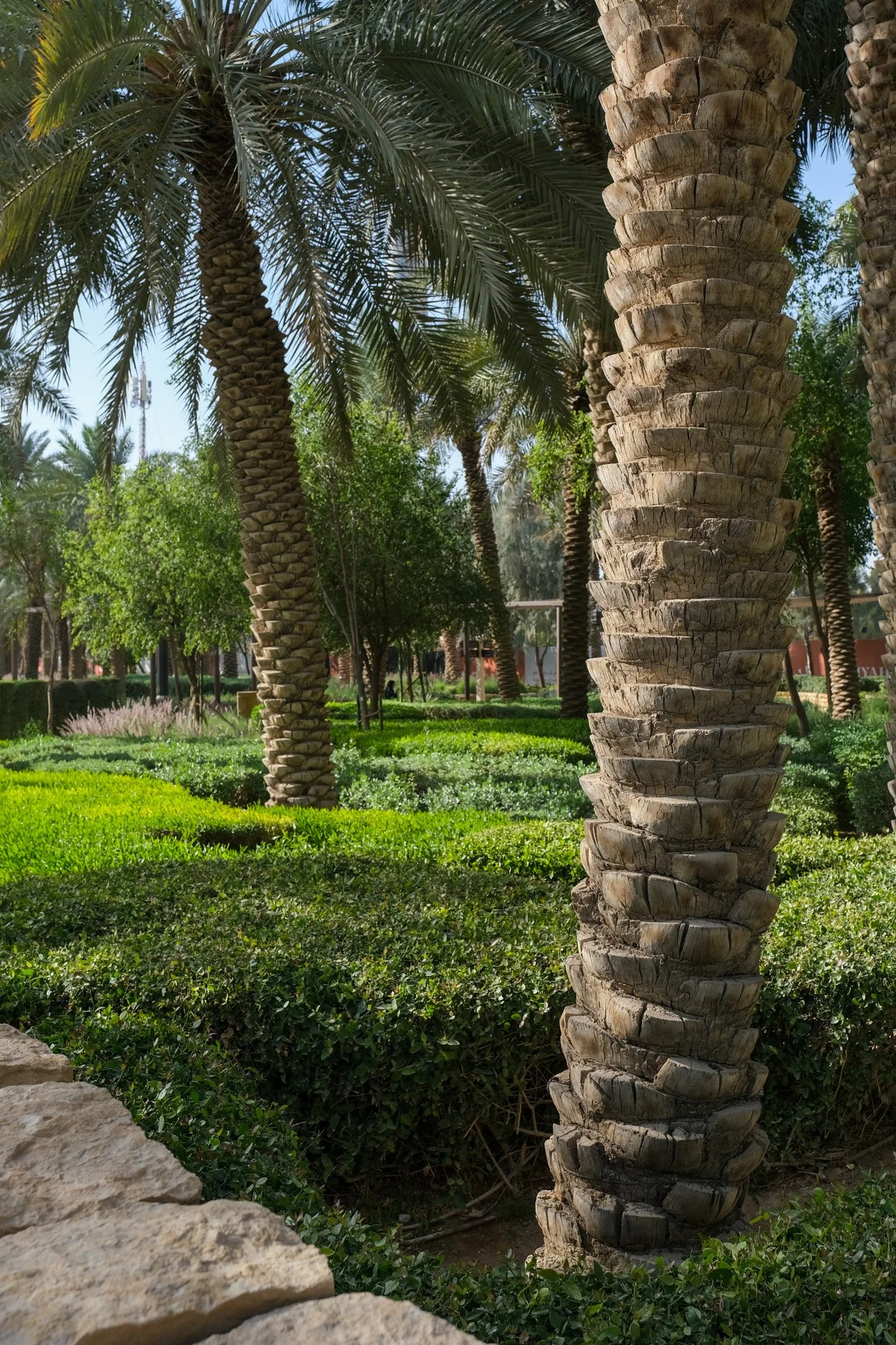
Everything in Diriyah is carefully manicured.
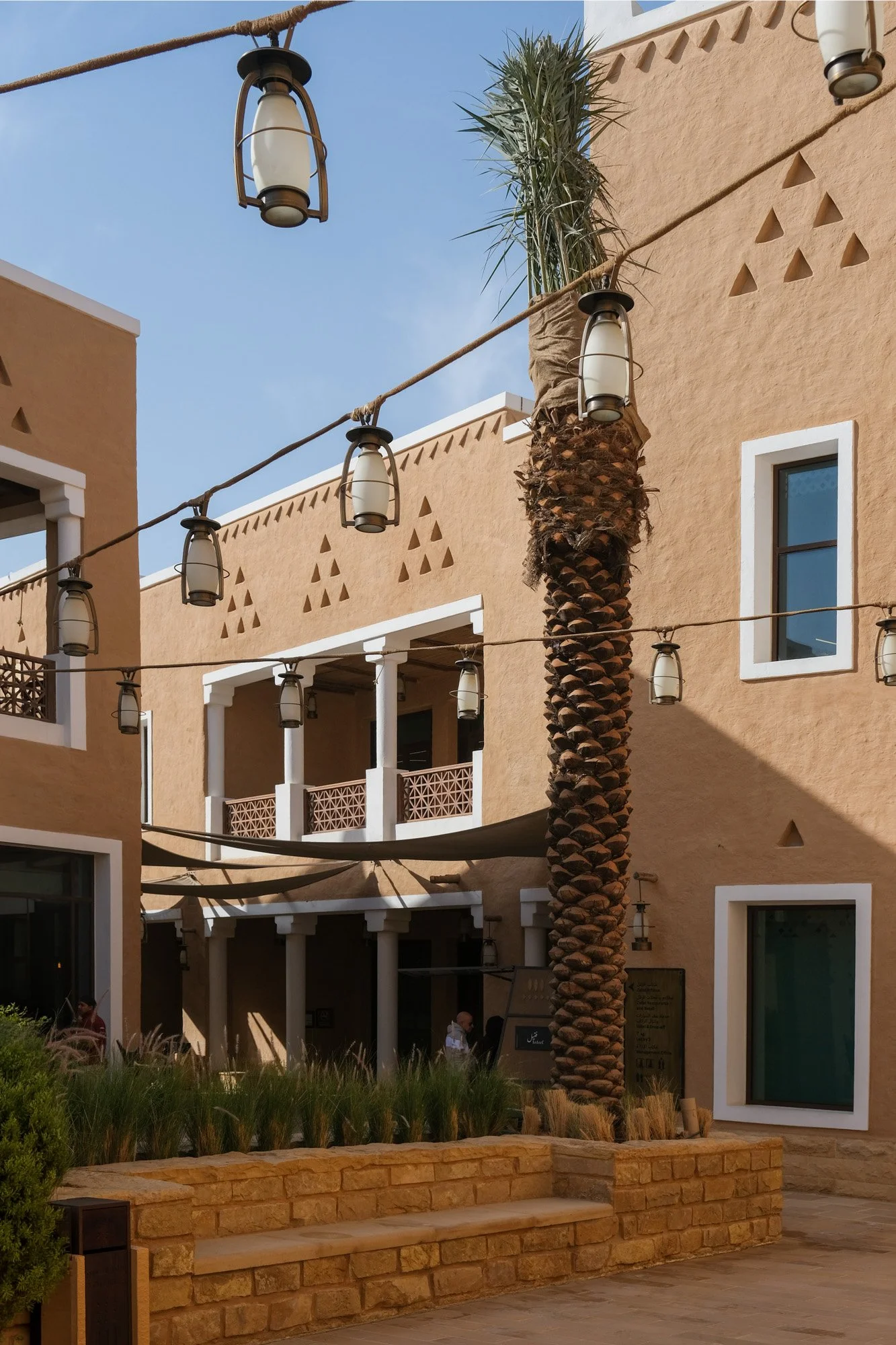
Diriyah Zallal.
It was apparent early on that the entire Diriyah District was undergoing rapid and massive transformation. It seemed like half of the neighborhood was hidden behind a fence, and there were construction cranes as far as the eye could see. As part of the Saudi Vision 2030 initiative, Diriyah is the marquee development project in Riyadh. The Saudi government leveraged its historical site and aimed to turn it into the city’s premier entertainment and hospitality destination. The amount of capital invested here was truly staggering. Diriyah’s development agency seemed to have staff stationed at every corner.
The heart of Diriyah consists of the historic ruins of At-Turaif and a brand-new dining/shopping complex called Bujairi Terrace. Both areas are fenced off from the rest of the district and require a joint reserve access pass. Because the Saudis prefer to stay indoors during the daytime, the admission charge is waived for entry before 4 pm. In fact, the site is admission-free from May through September due to the oppressive heat of the Saudi summer. Since we arrived in the morning, we were able to reserve the free access pass on the spot via a posted QR code at the main entrance.
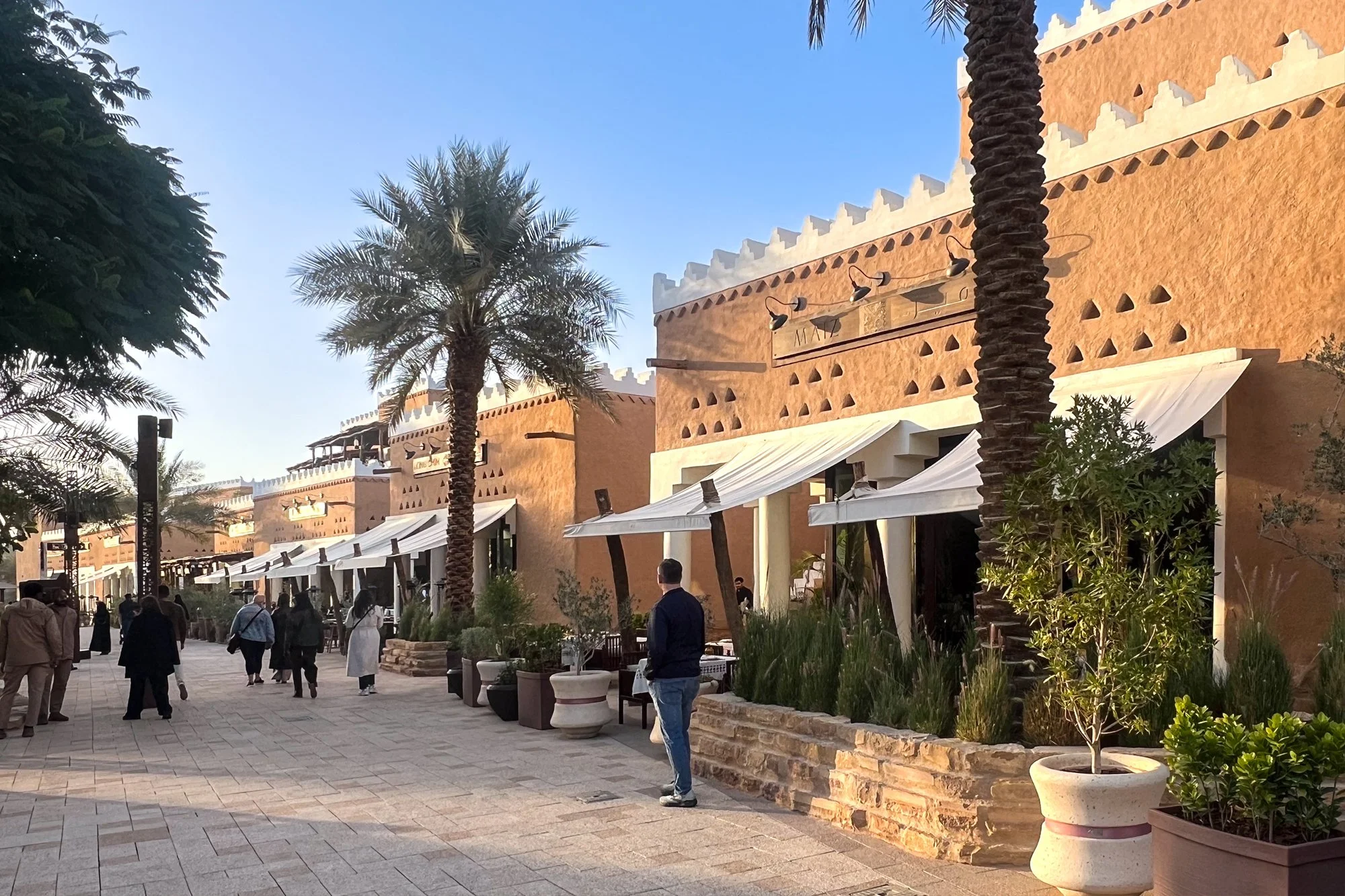
Bujairi Terrace is essentially a high-end gastronomic and retail destination, disguise as a Najdi village.
My excitement for the day was quickly dampened at security. The staff informed me that DSLR cameras are prohibited inside the security zone. There was no prohibition for general photography, but commercial photography or use of any DSLR camera is not allowed without prior authorization. While the prohibition of commercial shoots is common at historic sites, the blanket ban on standard cameras came as a surprise. Thankfully, I was able to stash the camera in our car; otherwise, I have read horror stories from travelers about how cameras were misplaced while in their custody. While I respect the regulations, I do find it odd that their official website features photos of foreign tourists using professional cameras. I honestly would not be as dismayed by the camera policies if it were not for this blog. That said, I had to remind myself just how lucky we were to be able to visit this place.
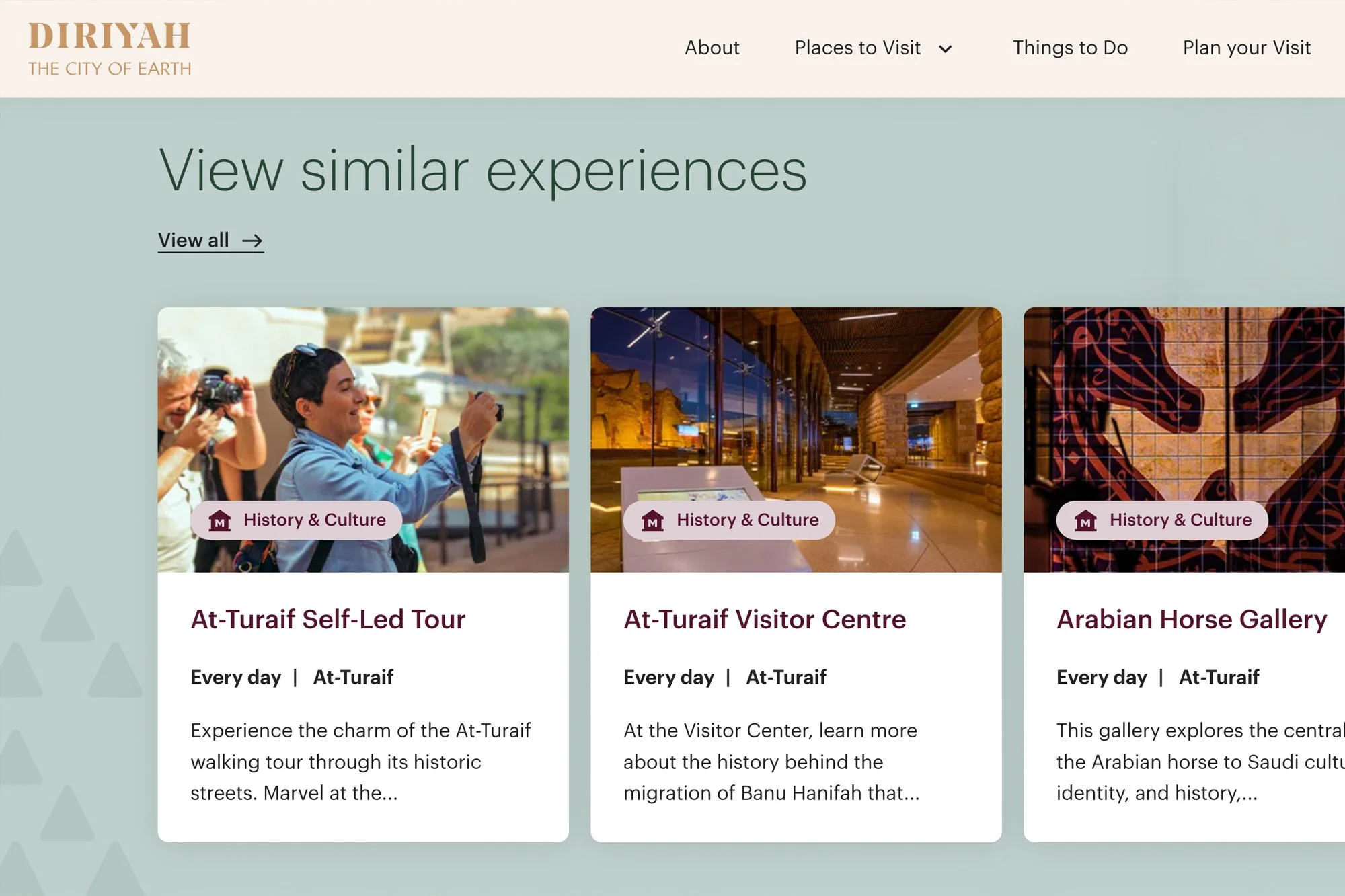
There are definitely some contradiction about the use professional camera on Diriyah’s official website.
Since most businesses at Bujairi Terrace did not open until the afternoon, we made a beeline toward At-Turaif. At the edge of the ruins is a state-of-the-art visitor center. The giant multimedia center gave visitors an abbreviated history of Diriyah. At-Turaif was once the seat of the Emirate of Diriyah in the 18th century and was one of the most fertile oases in the middle of the Arabian Desert. The founding emir, Muhammad bin Saud Al Muqrin, also known as Ibn Saud, is the head of the Saud royal dynasty that reigns in Saudi Arabia today. As a result, the Emirate of Diriyah is often referred to as the first Saudi State.
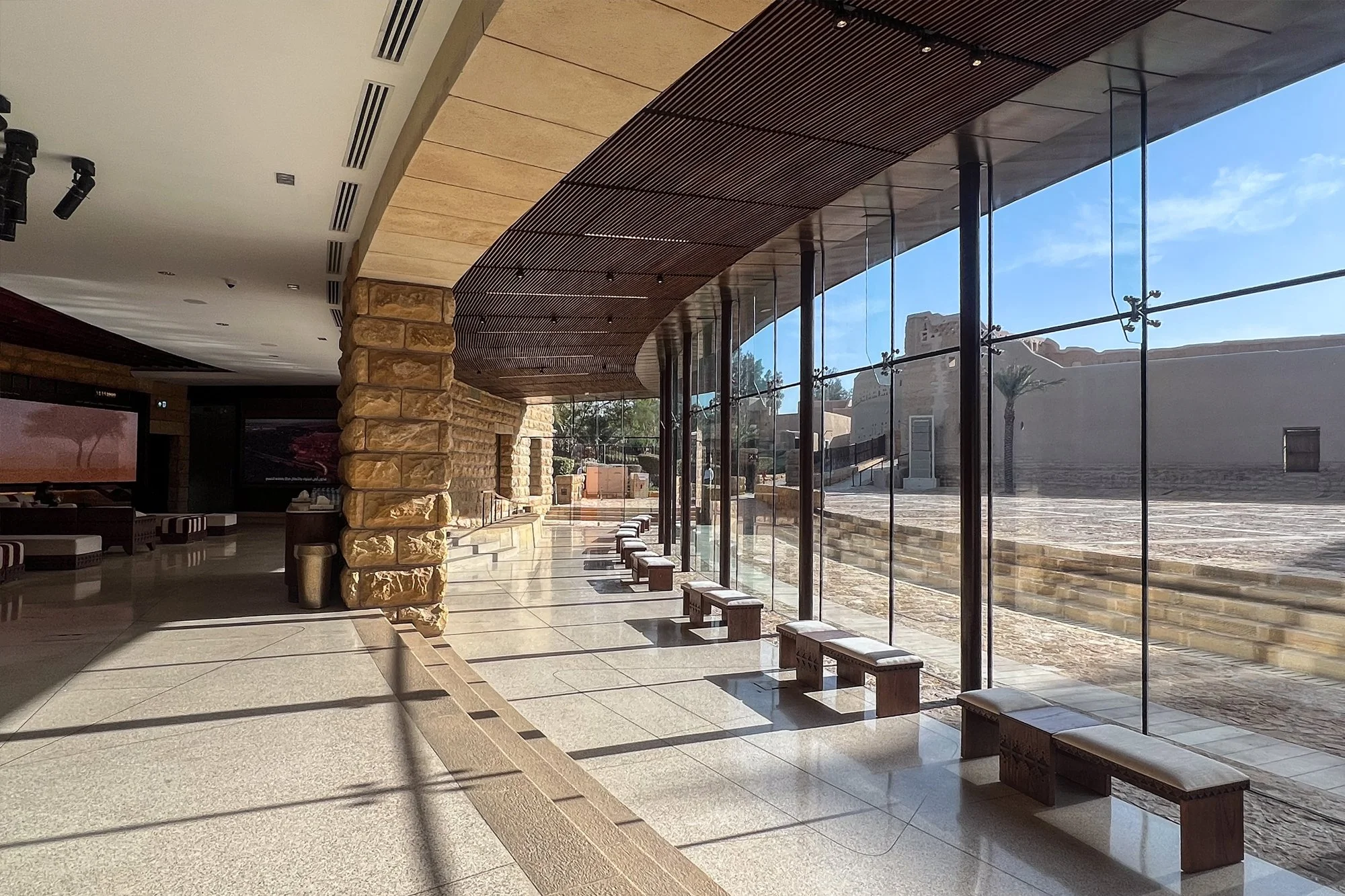
At-Turaif Welcome Center.
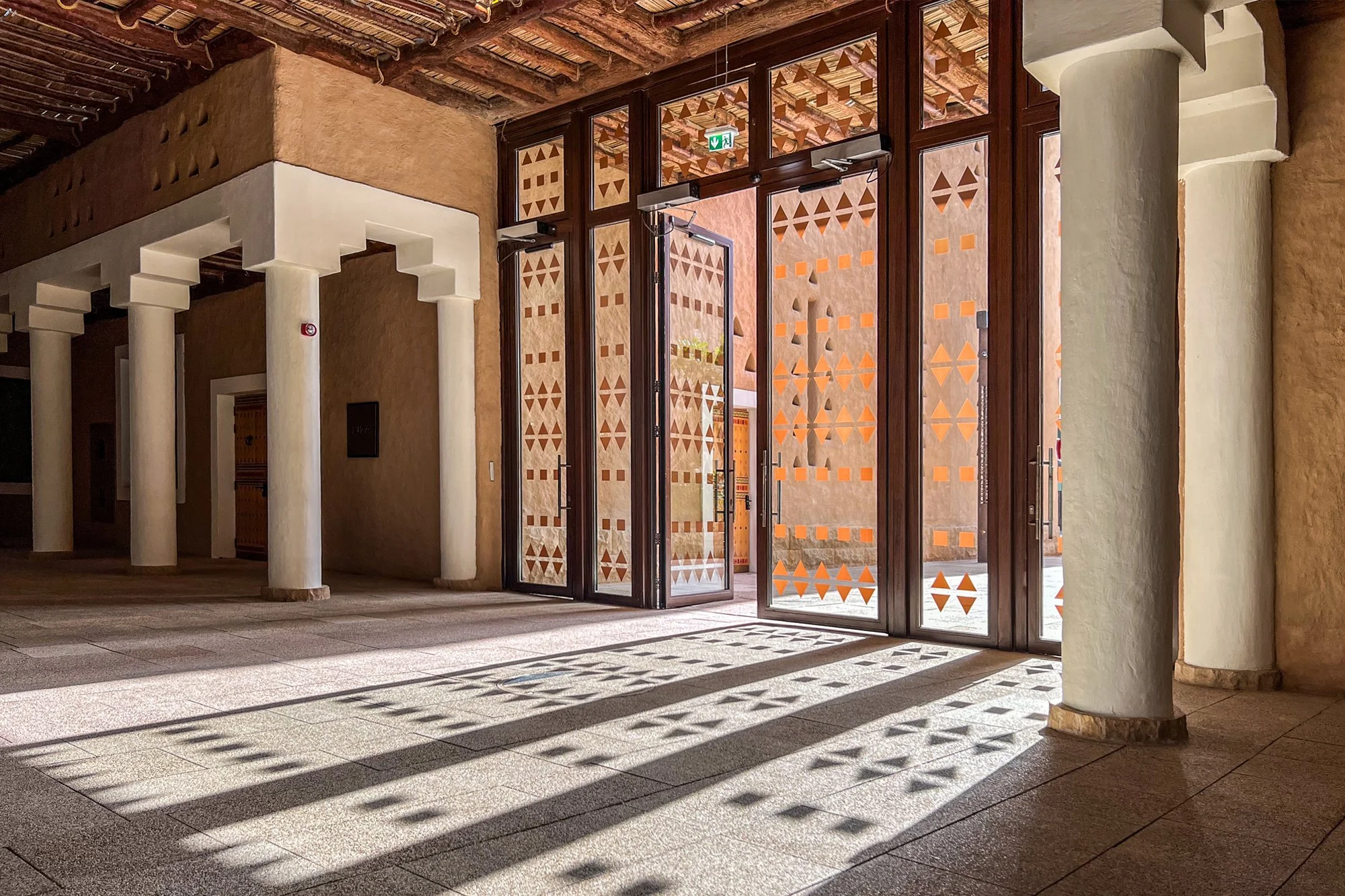
The architecture of Bujairi Terrace is a modern take of Najdi architecture.
What made Ibn Saud’s emirates so successful was the pivotal alliance with Muhammad ibn Abd al-Wahhab, a conservative theologian and reformer. He advocated strict adherence to the Sharia laws and believed that Islam must return to the text of the scripture, rather than traditionalist interpretation of the Quran. Like Martin Luther, he wanted all Muslims to be able to read the Quran and renounced the veneration and pilgrimage of Muslim saints. Commonly referred to as Wahhabism, this religious movement fused with the Saudi state to create a formidable force within the Muslim world. Until very recently, the alliance of Wahhabism and the Saudi royal family was the founding pillar of Saudi Arabia.
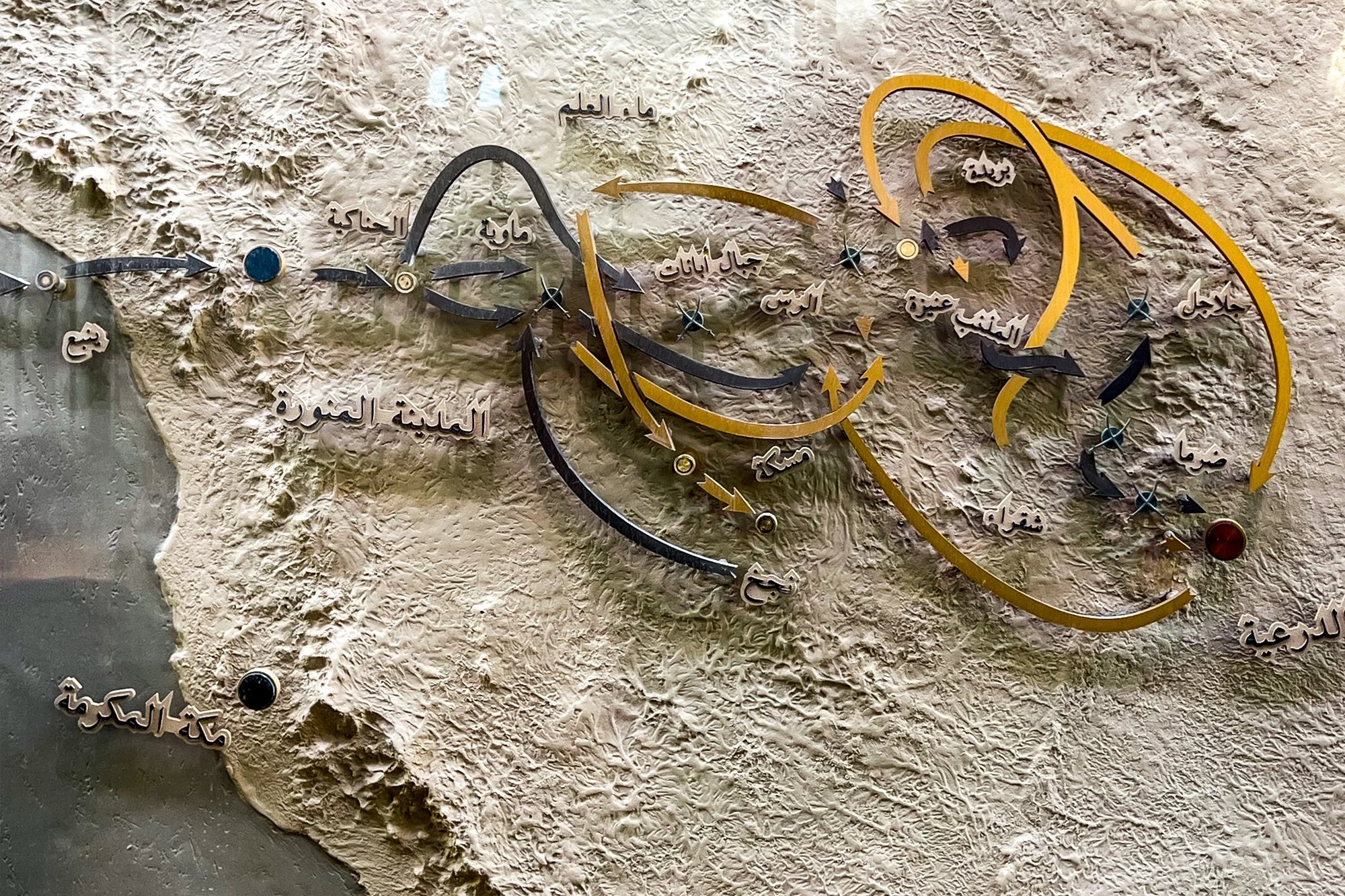
The map of Ottoman–Wahhabi war, which led to the siege and destruction of Diriyah.
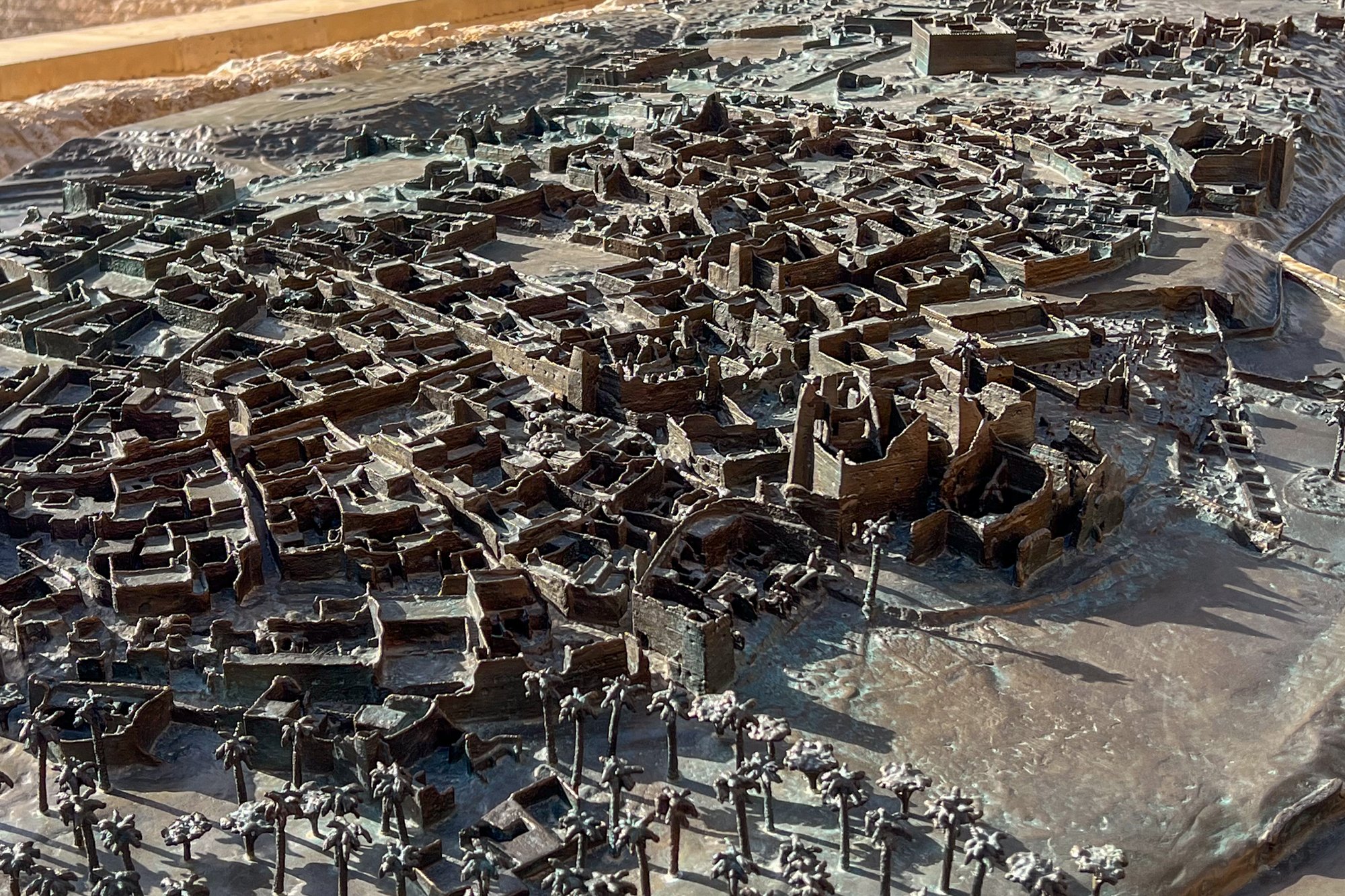
A large bronze model of the extend of old Diriyah.
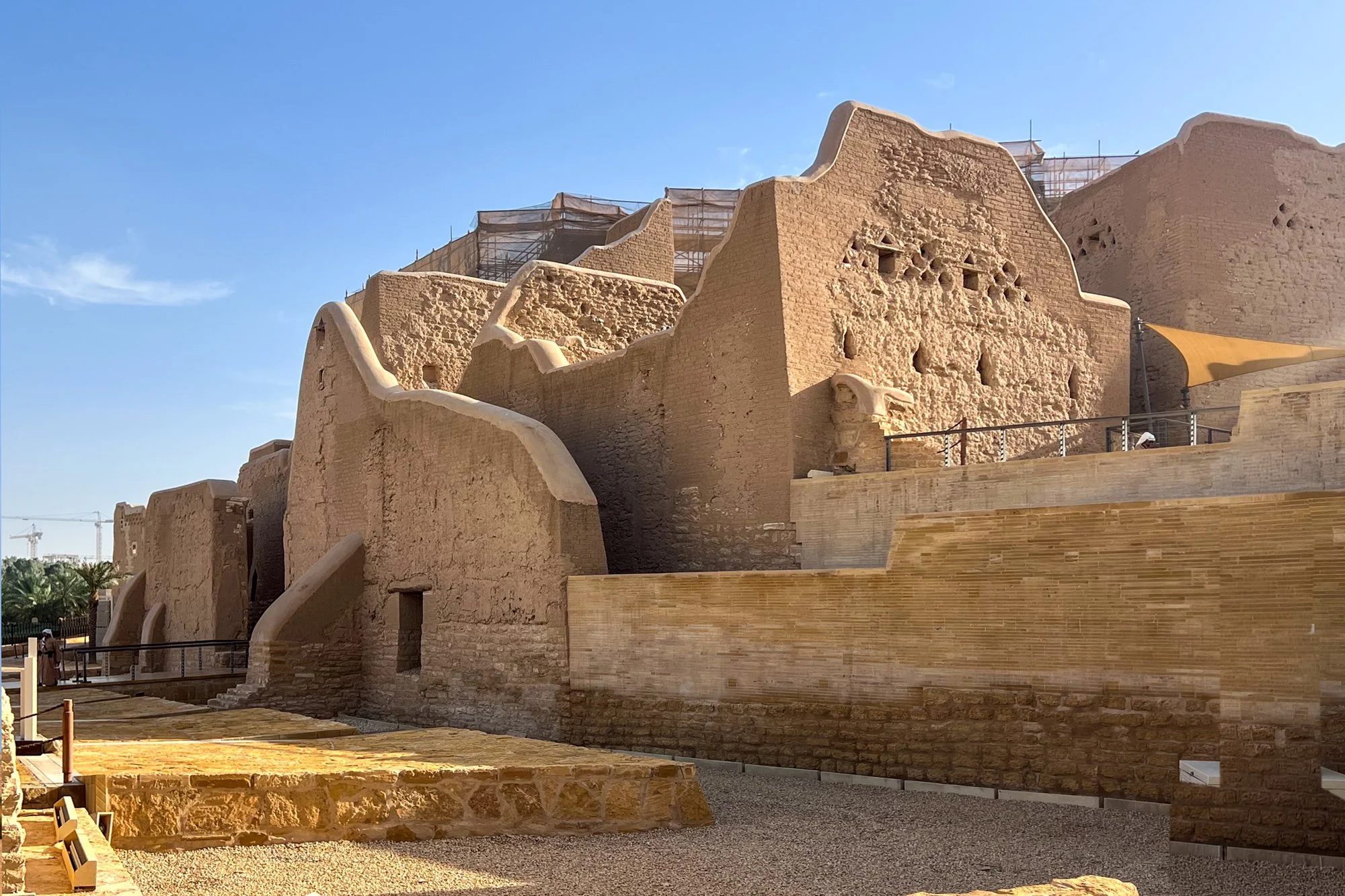
The ruins of Salwa Palace.
Within a few decades, the House of Saud managed to unite the entire Najd, a historic region of central Arabia. At its peak, the Emirates of Diriyah conquered a vast area, which included parts of the modern territories of Kuwait, Iraq, and Oman. Diriyah’s strict form of Islam did not necessarily endear it to its neighbors. For instance, when Ibn Saud’s son conquered the holy city of Karbala in modern-day Iraq, his troops razed the many holy sites of Islamic saints, causing much resentment from the locals and conflicts with much of the Muslim world. Diriyah’s military and territorial expansion eventually included the conquest of Mecca and Medinah, tow two of the holiest cities in Islam.
The Ottoman Empire was the preeminent power of the Muslim world and became increasingly concerned about the power amassed by the House of Saud. The Ottoman Empire launched a military campaign against Diriyah in 1811 to reclaim territories lost to the Saudis. Known as the Wahhabi War, the conflict also took on a religious dimension. If you have been to Istanbul, you could probably recall how important caliphate and pilgrimage were to the Ottoman identity. Diriyah’s Wahhabism posed an ecclesiastical challenge to Ottoman authority.
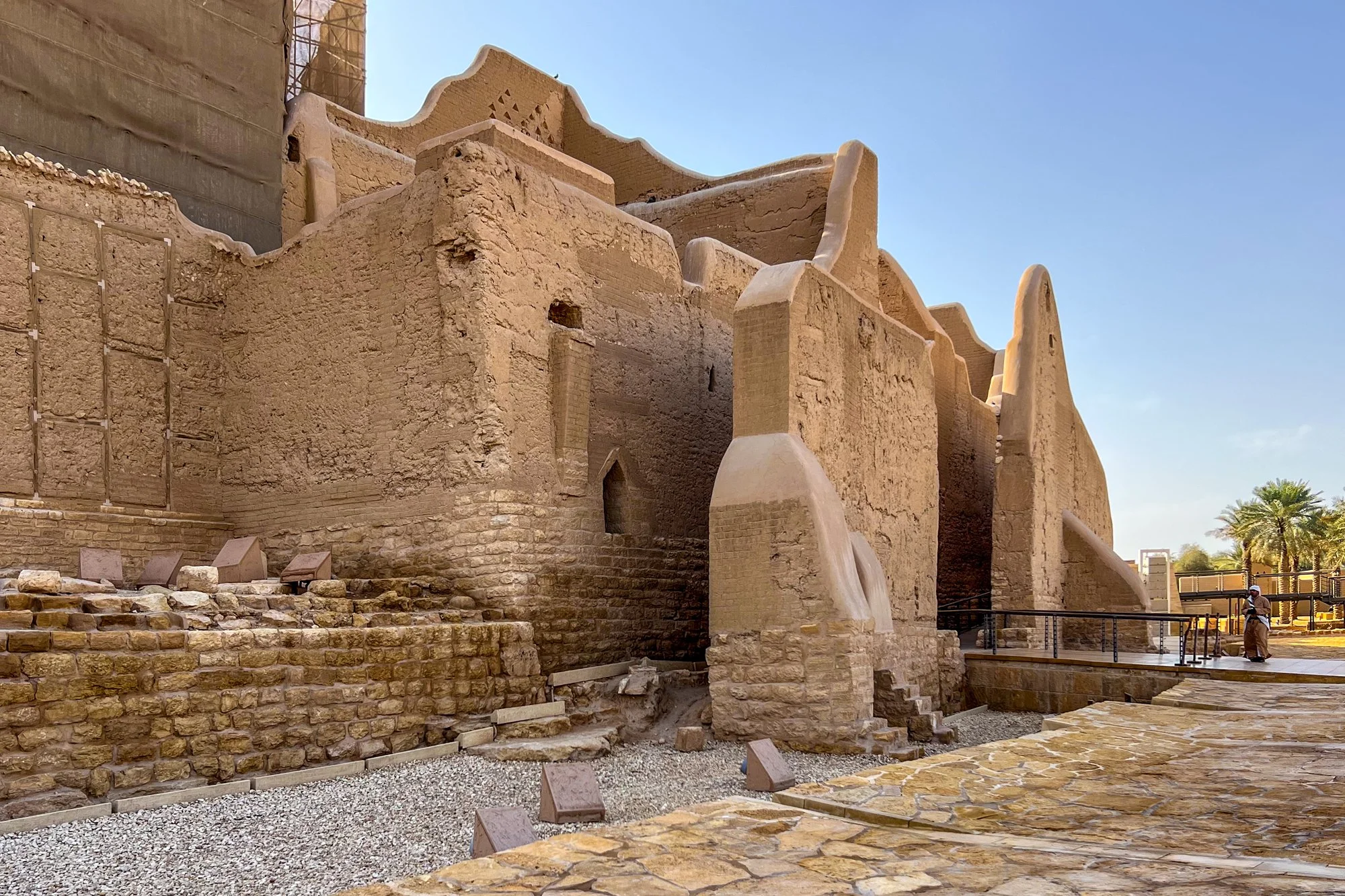
The imposing Salwa Palace is located right at the edge of the wadi.
With Egypt's assistance, the Ottoman campaign against Diriyah was effective and eventually led to the emirate's demise. The war culminated in the five-month-long siege of Diriyah. Exhausted of manpower and supplies, the reigning emir Abdullah bin Saud Al Saud negotiated the surrender. The House of Saud ceded their sovereignty over Najd in exchange for the family’s exile in Cairo. However, many of the families were immediately killed, and only Abdullah and three of his sons were brought to Egypt. Six months later, they were transferred to the Ottoman capital with a recommendation for pardon. However, Sultan Mahmud II overruled the pardon as punishment for the sacking of Karbala. After being paraded in the streets for several days, Abdullah was publicly beheaded in front of Hagia Sophia in 1819.
Following the fall of Diriyah, the city was looted and ransacked. The Ottoman and Egyptian forces were instructed to raze all standing structures to the ground and set the town on fire. When the House of Saud eventually returned to power in 1824, they left their former capital behind and set up their new base in nearby Riyadh. Diriyah was essentially left to further decay, and it was not until the 1970s that the government began to encourage resettlement in a nearby modern city. The city ruins were essentially left untouched for a few more decades.
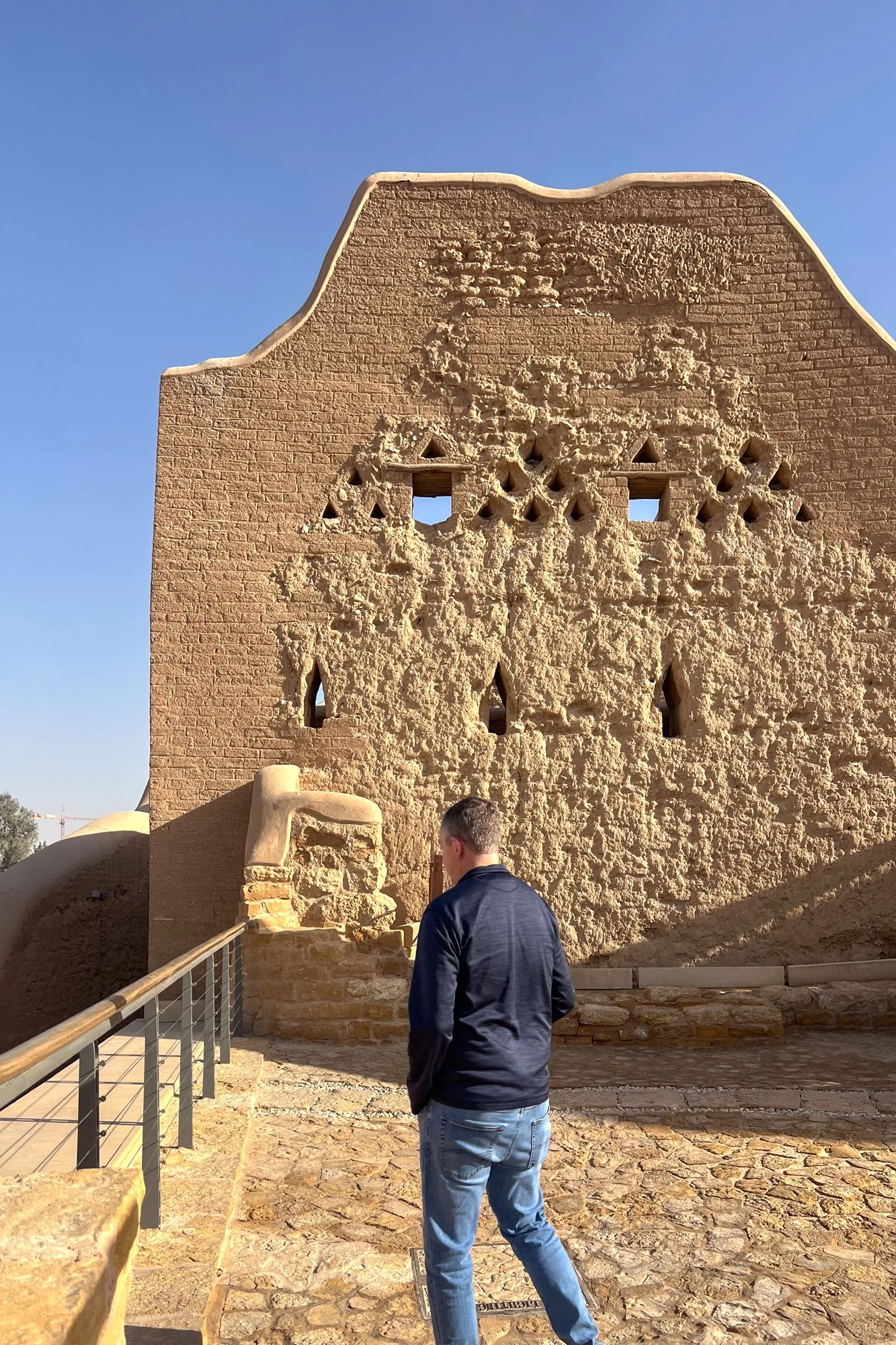
The ruins of Salwa Palace.
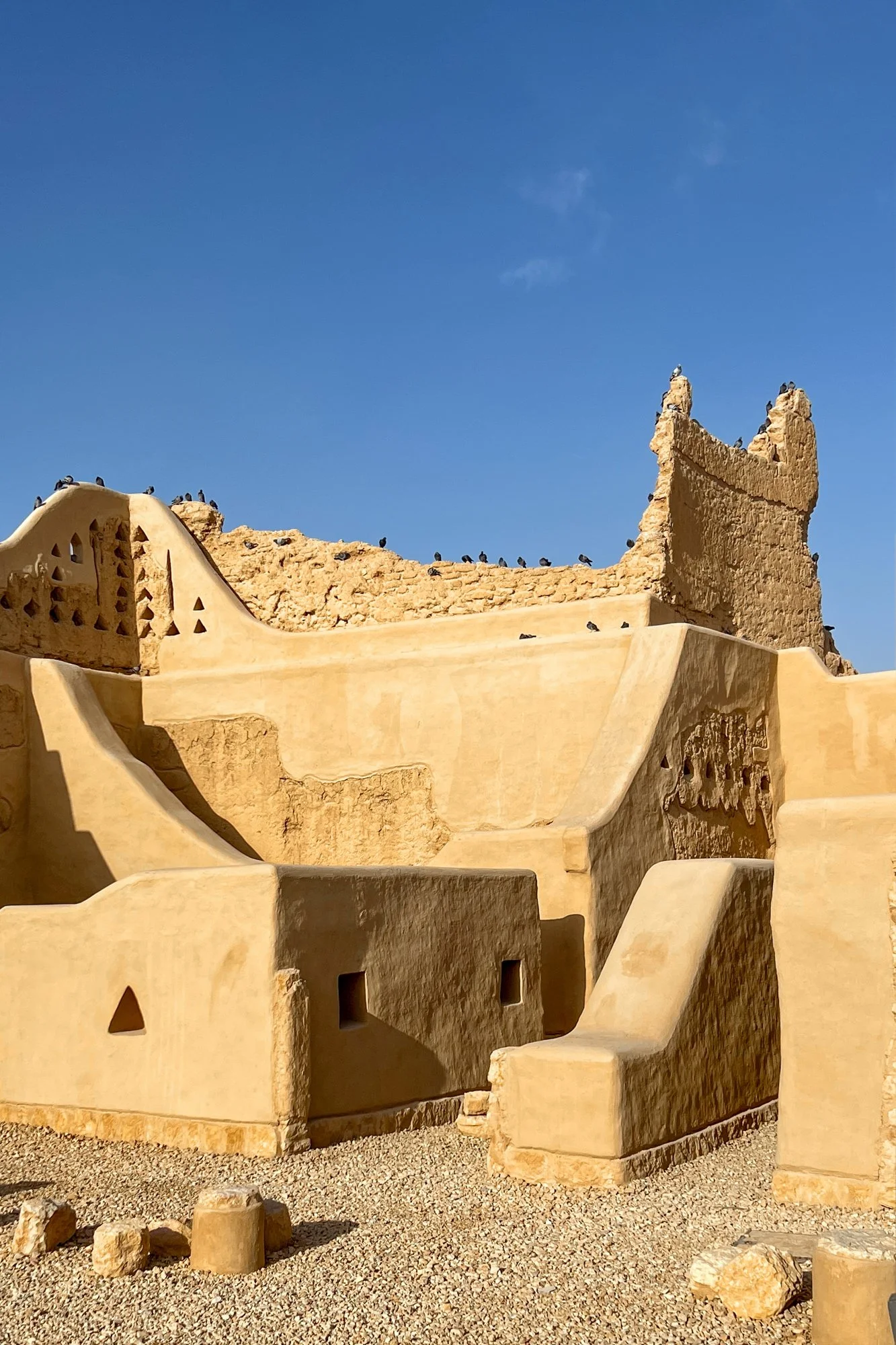
Preservation of traditional Najdi structures are never ending.
A turning point for the fortune of modern Diriyah came in 2000, when the government established a redevelopment agency to carry out a full-scale restoration of the abandoned city. It culminated in its inscription as a UNESCO World Heritage Site, the second site in Saudi Arabia. The development of Diriyah went into full gear with billions of dollars in funding from Vision 2030 plans. At-Turaif’s restoration is likely to take a few decades due to its size and the state of conservation. The traditional Najdi mudbrick architecture requires constant maintenance by default; the obvious preservation issue is how much of the ruins should be rebuilt and how authentic the reconstruction may be to a city that vanished more than two centuries ago.
The largest structure in At-Turaif is Salwa Palace, the residence of the first three Saudi rulers. It also housed the offices of the minister, councilors, and other important administrative offices. The palace ruins are noted for their towering walls and a series of intricate triangular openings toward the top. Curiously, there seemed to be no plan to reconstruct the main palace; I imagine that reconstructing such a grand structure may just be too controversial for the preservationists. Although visitors are allowed to enter the palace’s intersanctum, the palace's shell proved an evocative site in its own right.
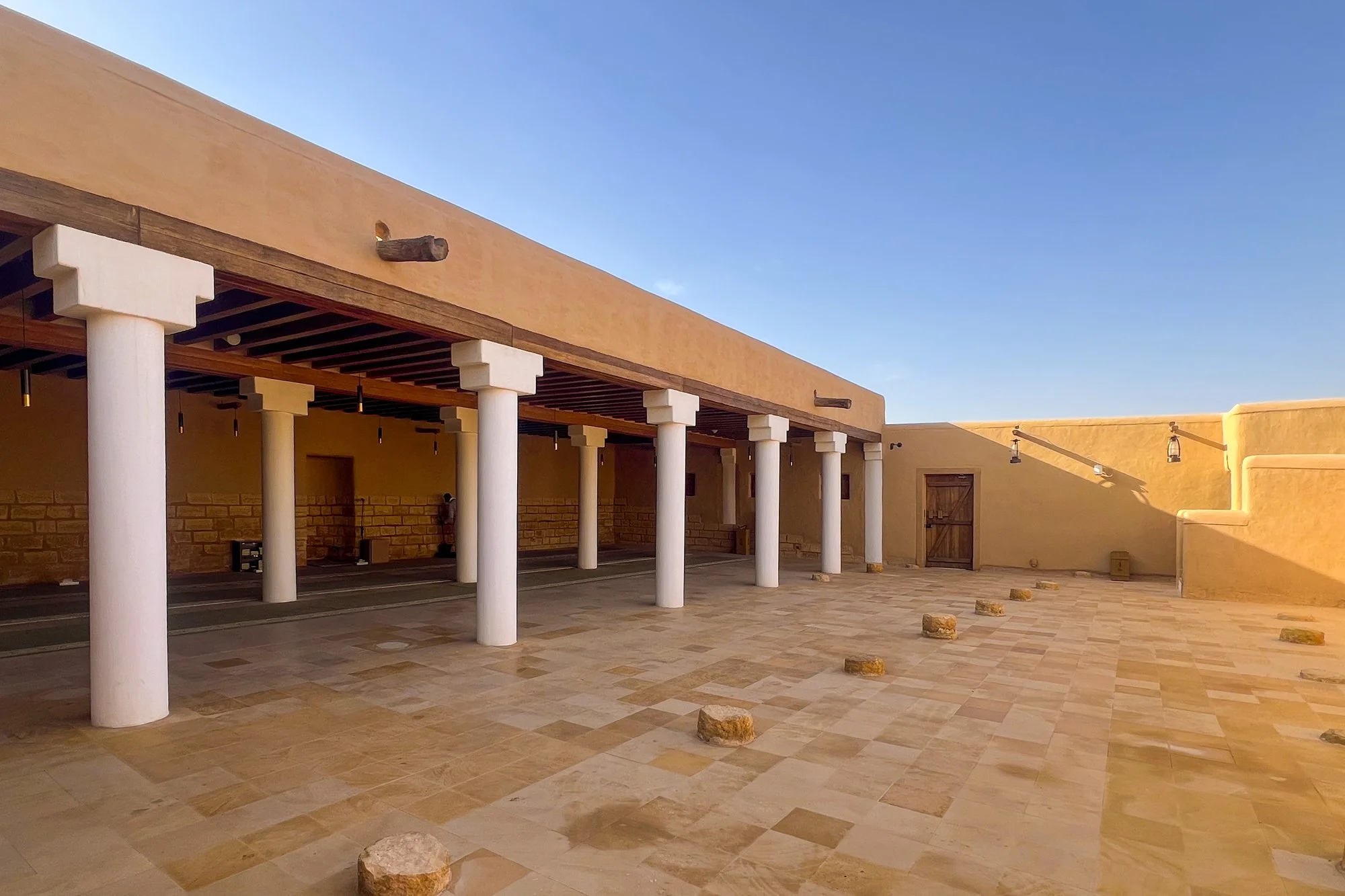
A small collection of structure are fully reconstructed.
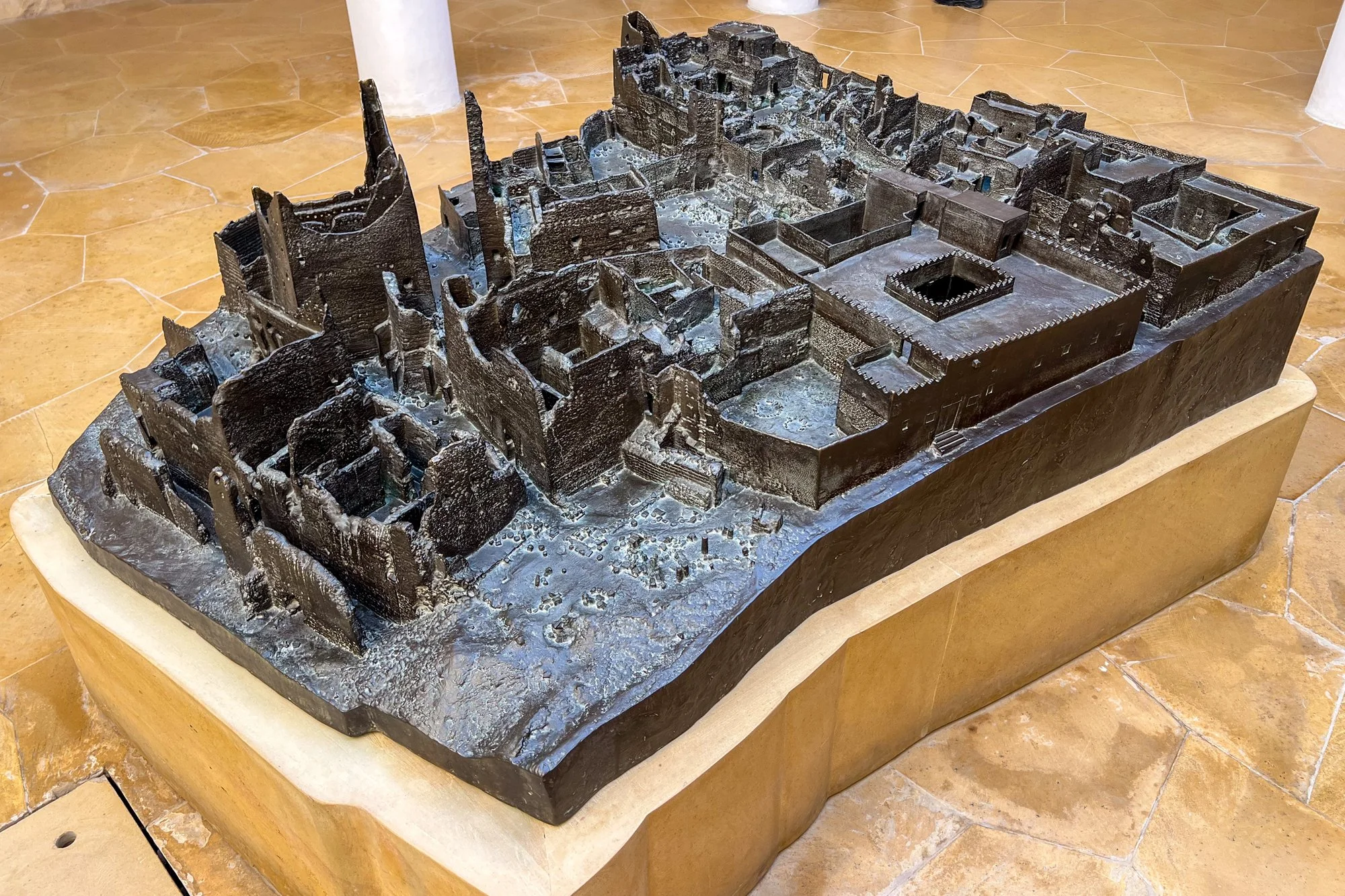
A model of Salwa Palace.
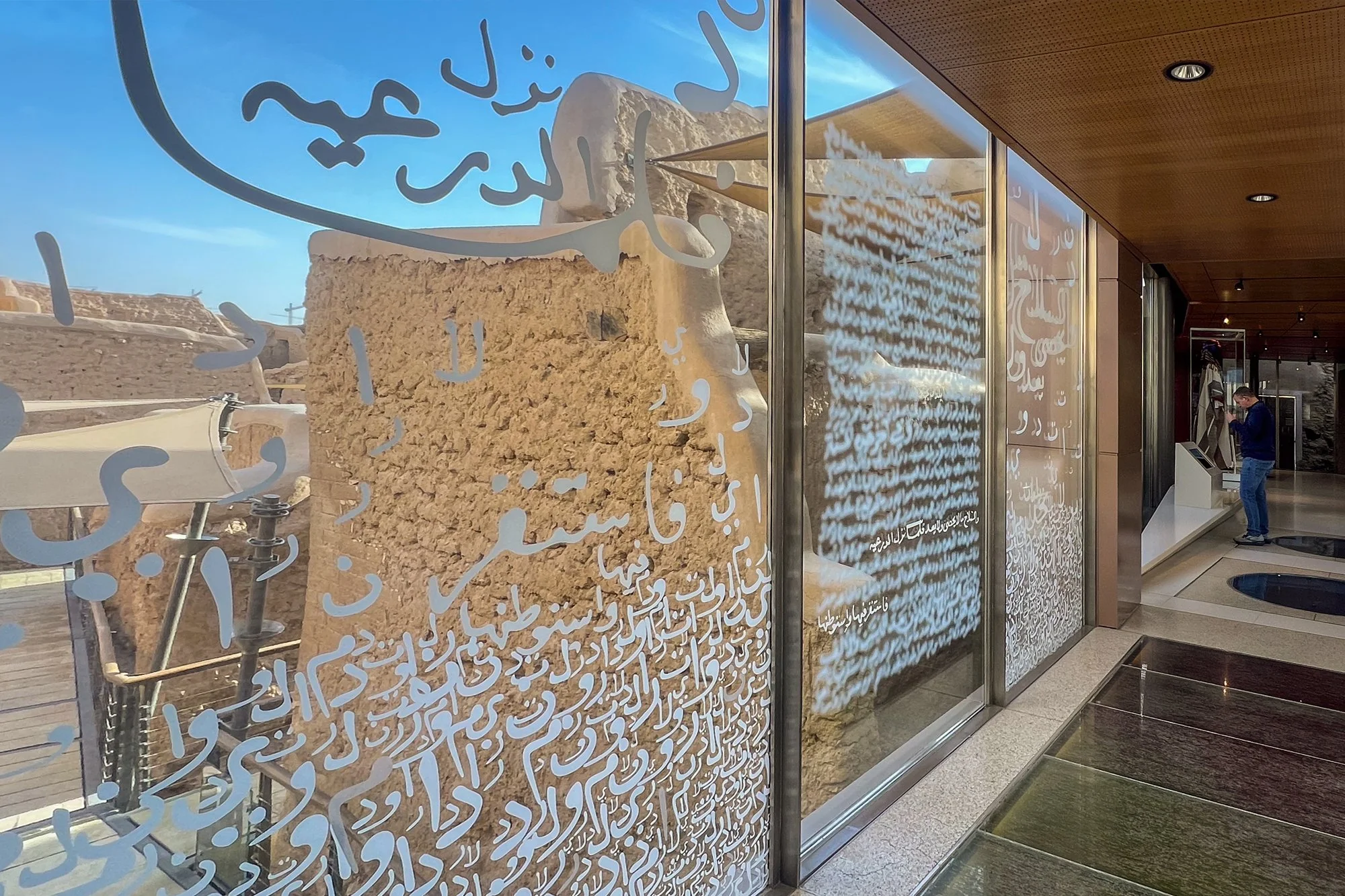
Diriyah Gallery is modern glass and steel structure inserted into the mud-brick ruins.
All in all, it seemed like less than ten percent of the At-Turaif complex was reconstructed. Many of the rebuilt buildings house an exhibition on the story of the first Saudi State. There are six museums on site, each featuring different aspects of the birth of Saudi Arabia. The most important among them was the Diriyah Gallery, which provides an overview of the House of Saud. The most pertinent work on exhibit was the elaborate family made of precious metal. Even though we can’t read Arabic, we could appreciate just how successful and sprawling the House of Saud is thanks to polygamy. Today’s Saudi royal family is famously large, allegedly including as many as 15,000 living members. The other notable item in the gallery is the replica costume of Abdullah bin Saud Al Saud, the last emir of Diriyah, and the sword of Imam Turki ibn Abdullah, the founder of the Second Saudi State.
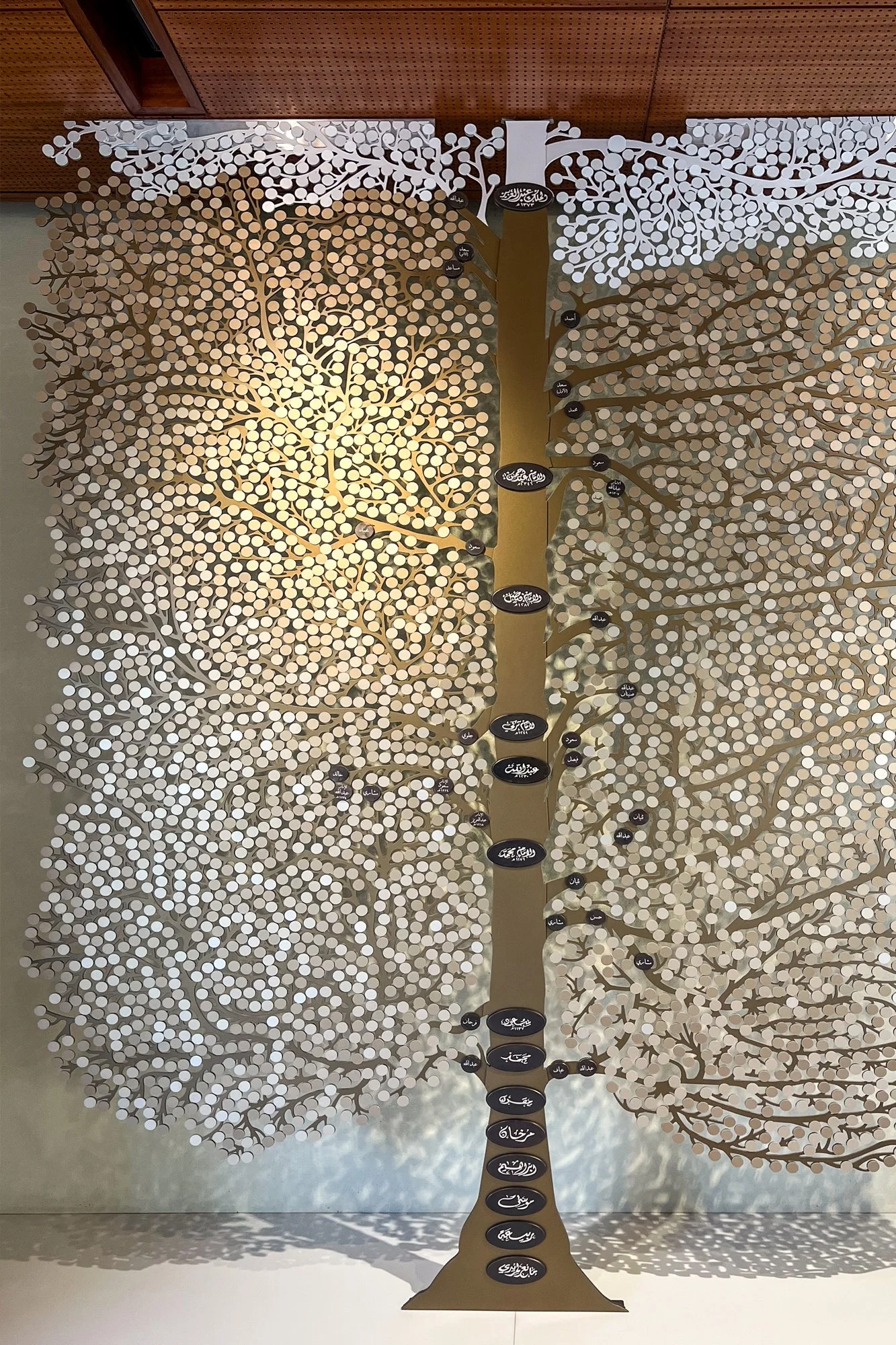
An elaborate family tree of the House of Saud.
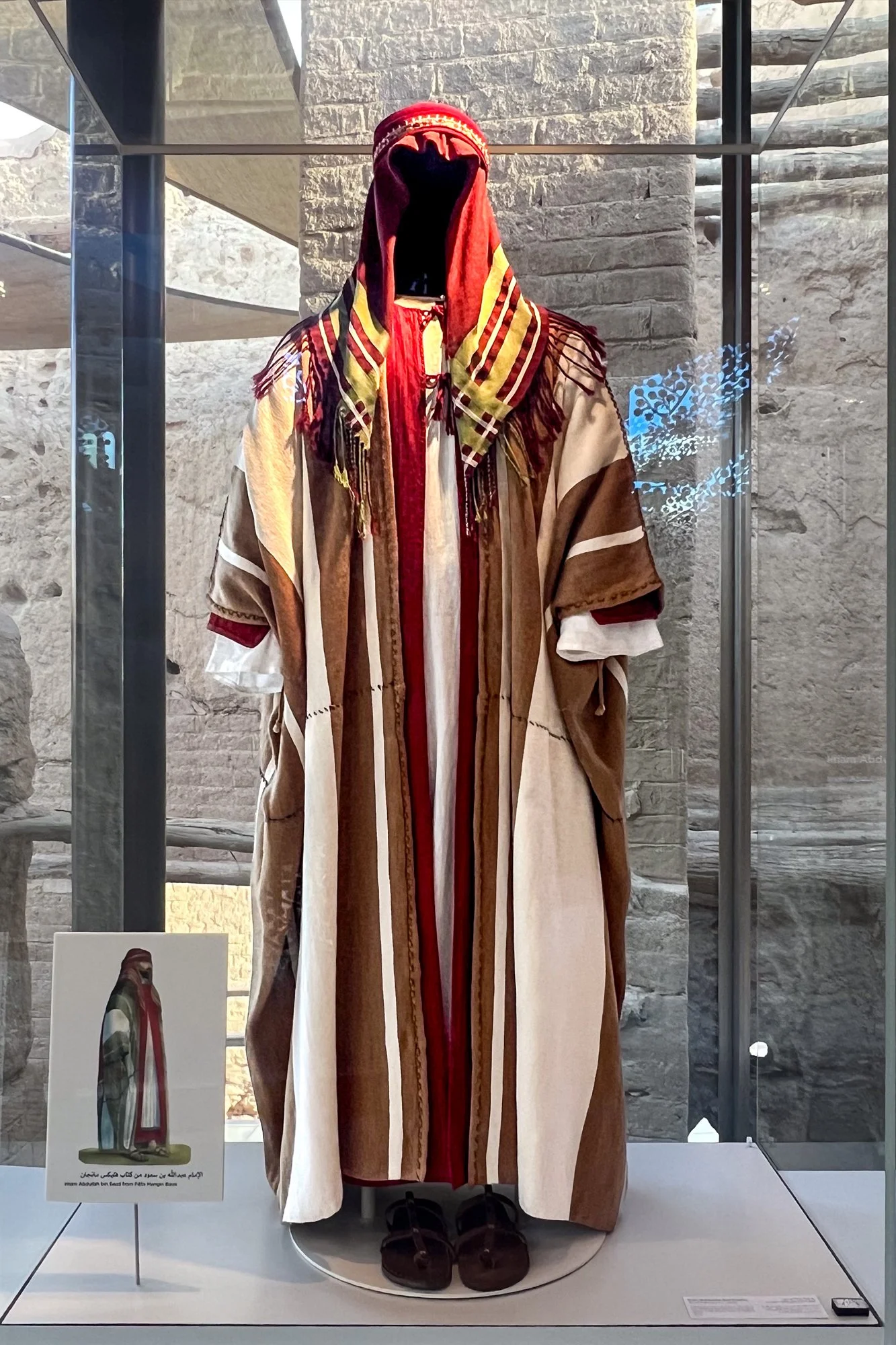
The replica of the garment of Abdullah bin Saud Al Saud, the last emir of Diriyah.
The other more memorable museum within At-Turaif is the Arabian Horse Gallery. As a warrior tribe, the Saudis had a long history and enduring affinity for Arabian horses. They were essential not only in warfare but also in trade and pageantry. Purebred Arabian horses are always highly prized for their muscular build and physical endurance. I can't say we could appreciate and comprehend all the specific classifications of horses. The exhibition includes ancient rock carvings of horses and a dozen beautifully crafted saddles. However, the most eye-catching item on display is a bronze life-size statue of Turfa, a white mare gifted to King George VI of England in 1937 as a coronation gift. Created by American artist Karen Kasper, the statue highlights the role of Arabian horses in modern diplomacy. The British royal family, Queen Elizabeth II in particular, is well known for its interest in horses. It is no surprise that the animal became a symbol of bilateral friendship.
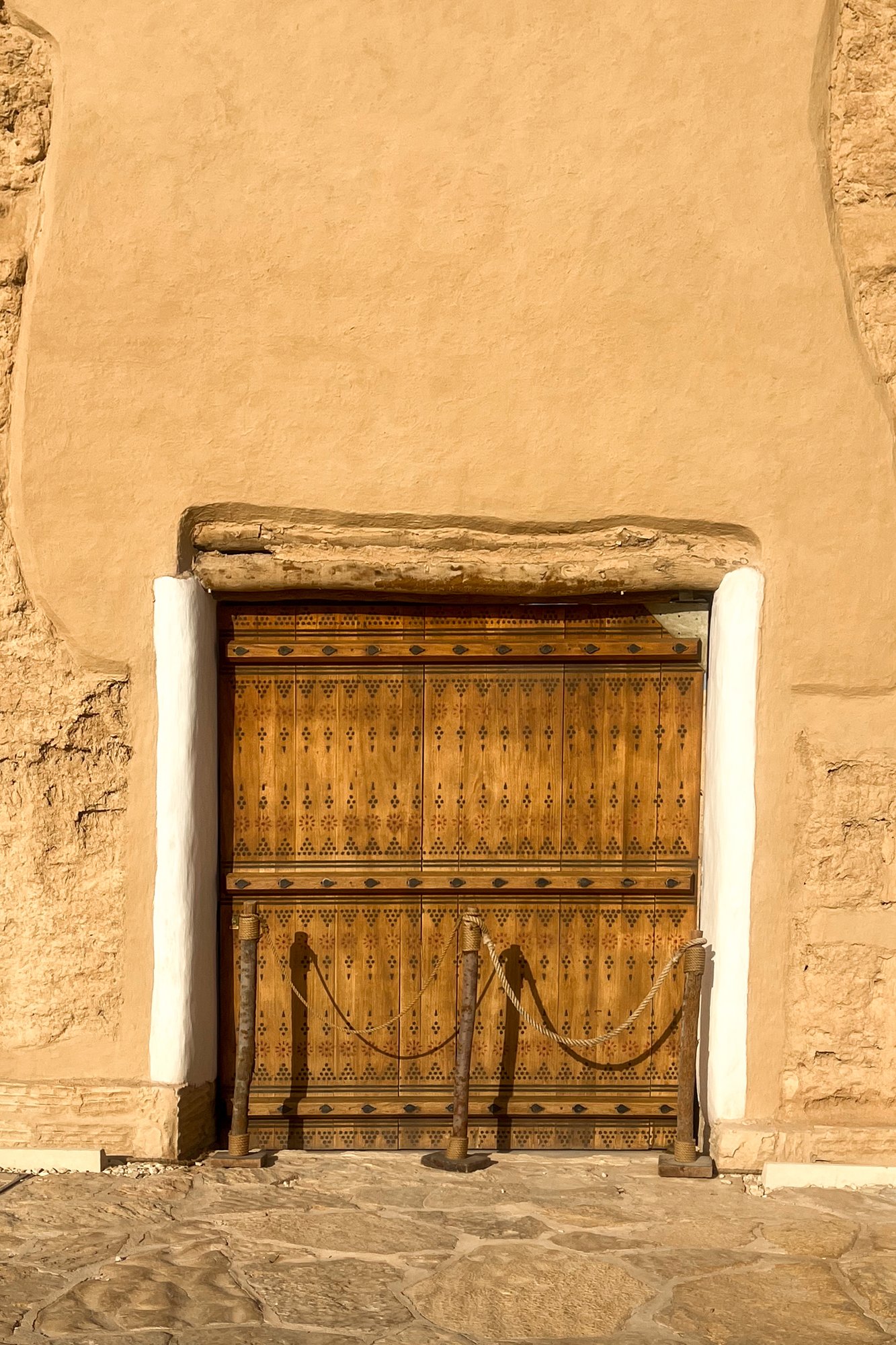
Many structures of At-Tuarif was closed to visitors during the day.
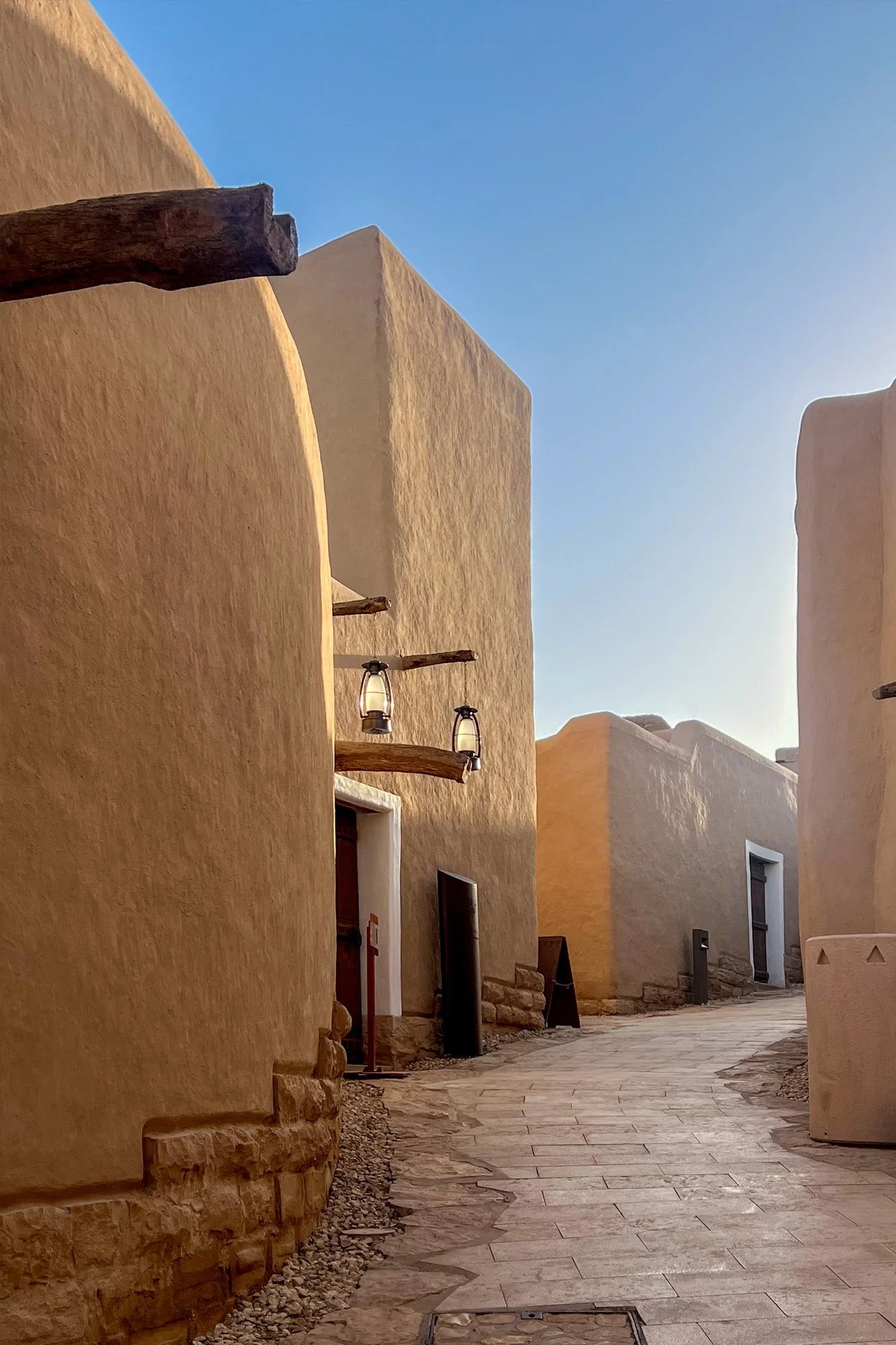
The beauty of At-Taurif is indisputable.
As the development authority is continuing to renovate and develop At-Turaif, there is no doubt that more and more amenities will be added to the historic district. For now, the area appears almost like a film set: beautifully renovated, pristine, and almost artificial. I would love to come back in ten years to see how this place has transformed. We certainly wished we had signed up for a regularly scheduled guided tour. Like the rest of the complex, the visit to At-Turaif was tightly controlled and choreographed. There was just a single entrance and a single route for visitors, with staff directing the flow at every corner. While I could appreciate all the help and directions, I can’t help but feel it is a little unnecessary and somewhat overbearing. Perhaps this was just one minor way to ameliorate Saudi’s chronic youth unemployment.
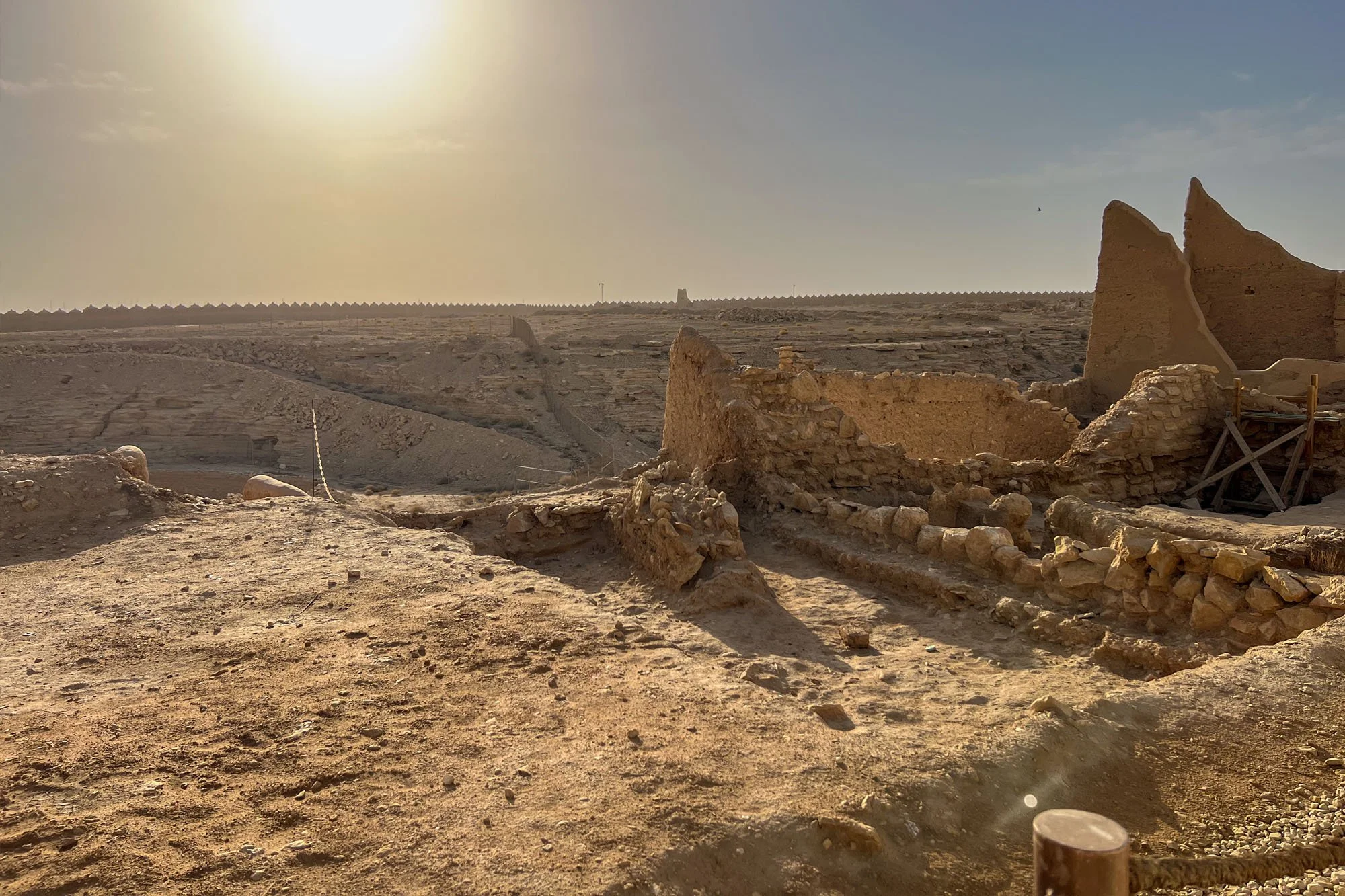
Much of At-Taurif still awaits for archaeological excavation and restoration.
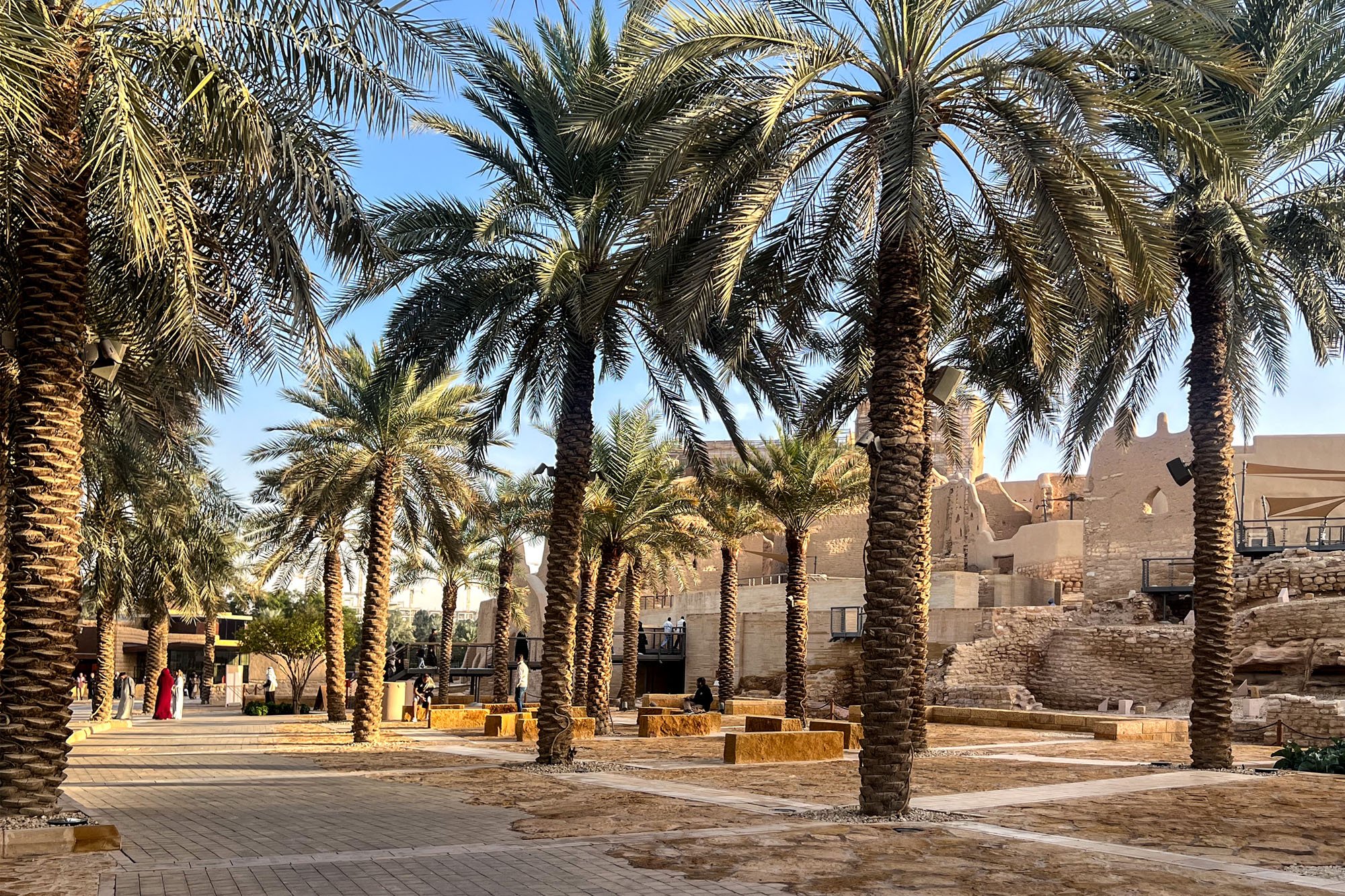
The restored oasis of Diriyah.
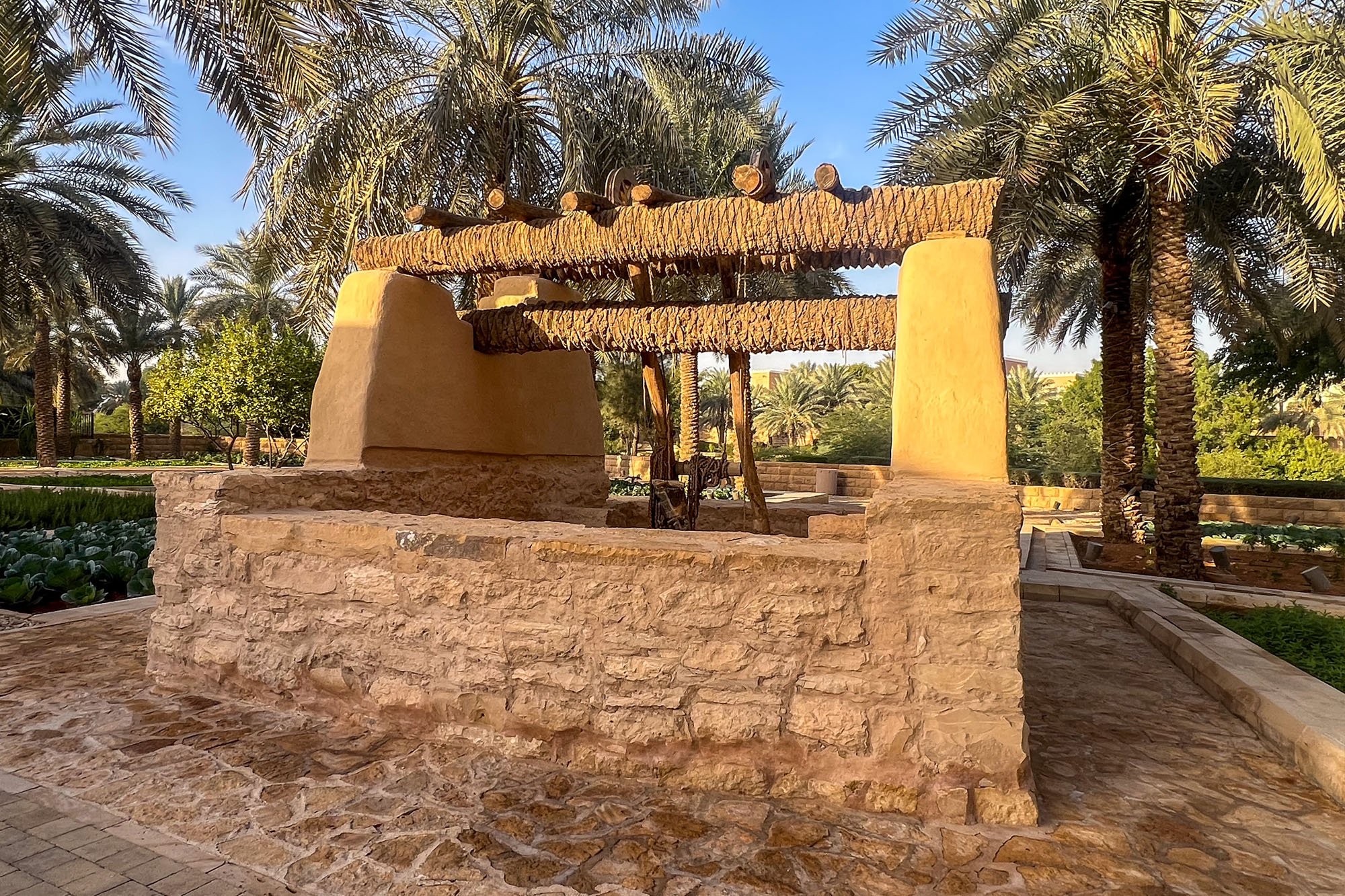
Recreation of historic well at the Diriyah oasis.
One of the most underappreciated areas of Diriyah is the “oasis” that separates At-Turaif and Bujairi Terrace. This former wadi was once the region's lifeline and is now recreated with irrigation channels and perfectly manicured planting beds. There is even a replica of a historical water well. Curiously, hidden within this oasis is a sunken road, which served as part of the Diriyah ePrix, the first Formula E race in the Middle East. In some ways, that event encapsulates my understanding of modern Saudi Arabia, blending heritage with the most hyper-masculine sporting events globally.
Objectively, Bujairi Terrace is beautifully architecturally, but it does have the ambiance of a high-end shopping mall. The complex includes an array of carefully curated vendors and kiosks selling Saudi coffee, treats, and handicrafts. The highlight for me was the Arabian-themed carousel, filled with falcons, camels, oryxes, and Arabian coffee cups. It is a great place to stroll and meet up with friends. In a car-dominant city, places like Diriyah are a blessing for locals and visitors alike. I could see how proud Saudis are of the transformation.
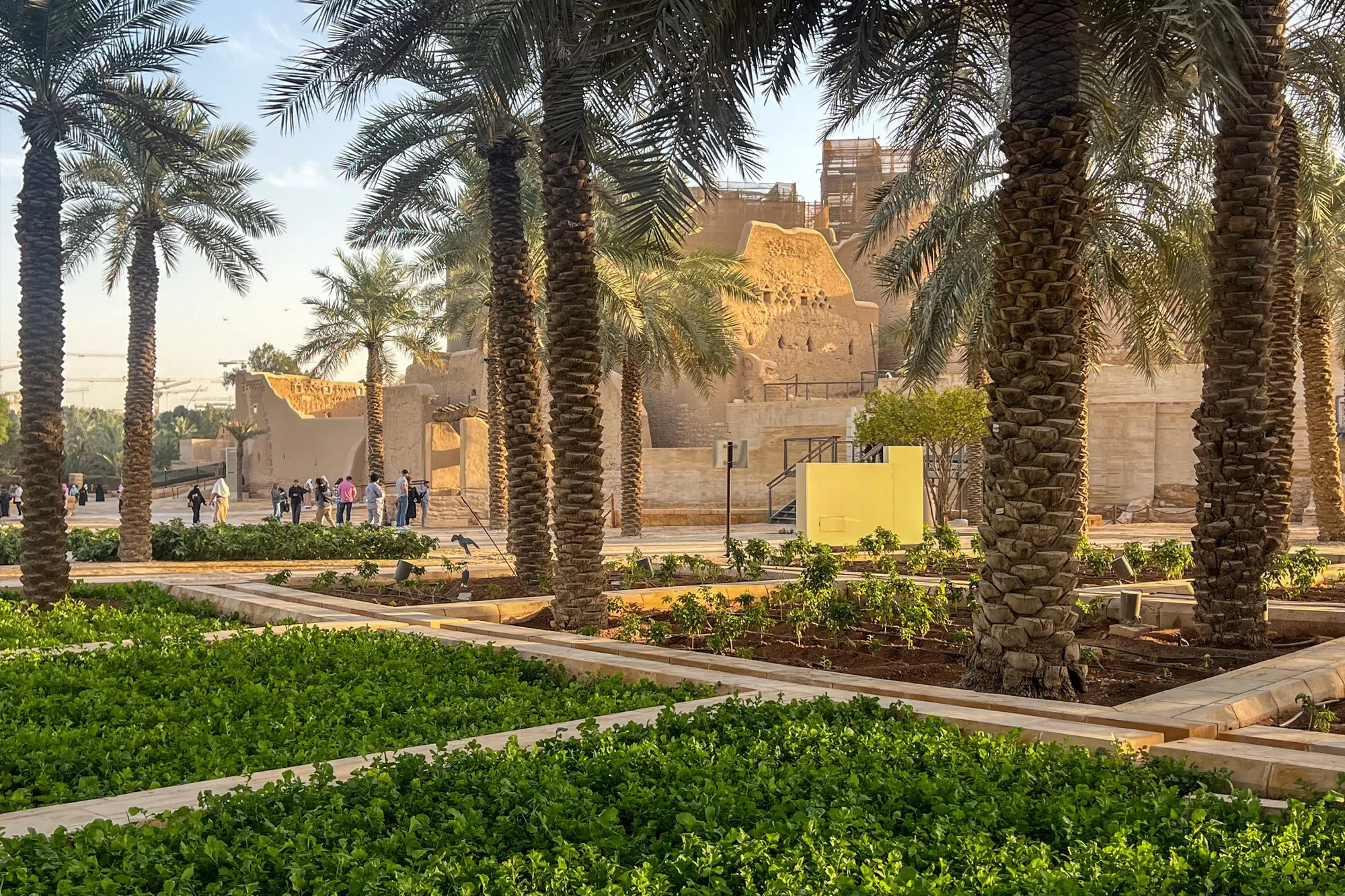
The restored oasis of Diriyah.
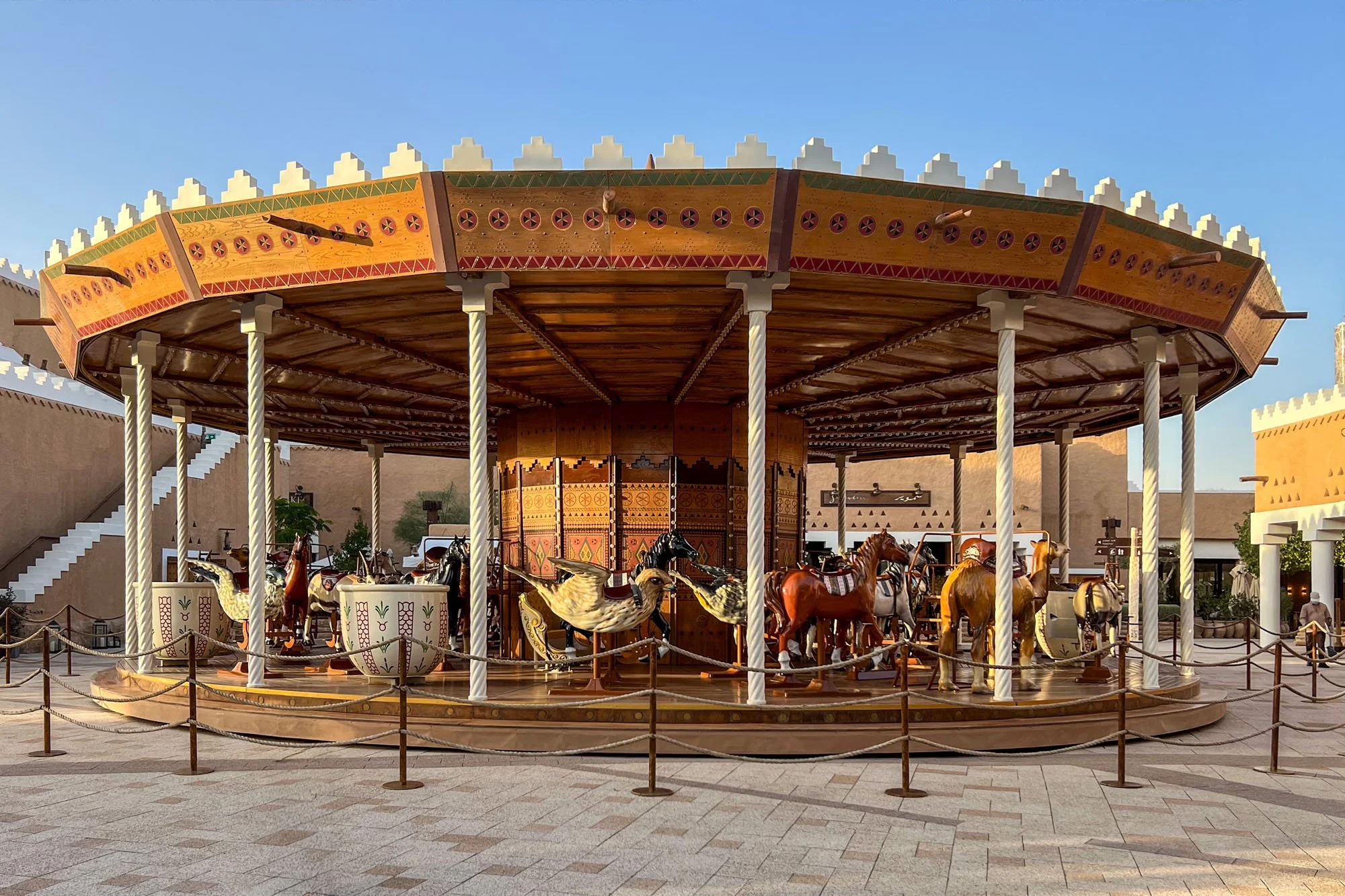
The Arabian themed carousel was my favorite in Bujairi Terrace.
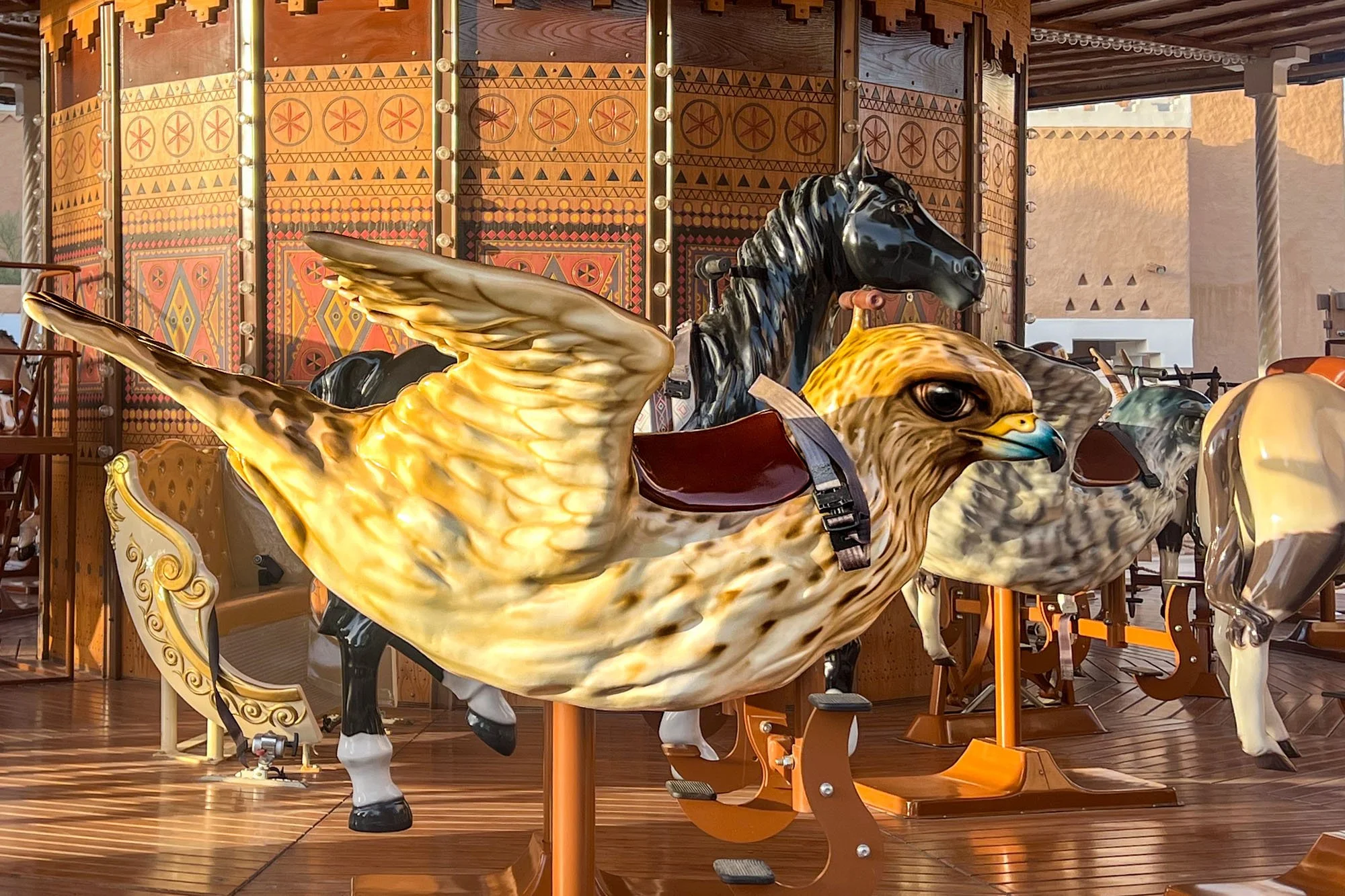
Falcons and Arabian horses are replaces pony and elephants.
With an hour until sunset, we decided to find a spot for dinner in the area. Luckily, Bujairi Terrace has no shortage of high-end eateries and boutiques. As a showcase of a new globalized Saudi Arabia, the collection of high-end restaurants ranges from a posh French bistro to a tasting-menu-only Saudi restaurant. Of course, visitors could also opt for $20 tiramisu at the Dolce & Gabbana Café. The one common thread running through them all is over-the-top fancy decor with prices to match. We eventually settled on a Middle Eastern restaurant called Somewhere. In all honesty, I don’t remember much about the food. I was more fascinated by all the impeccably dressed Saudis in the restaurant.
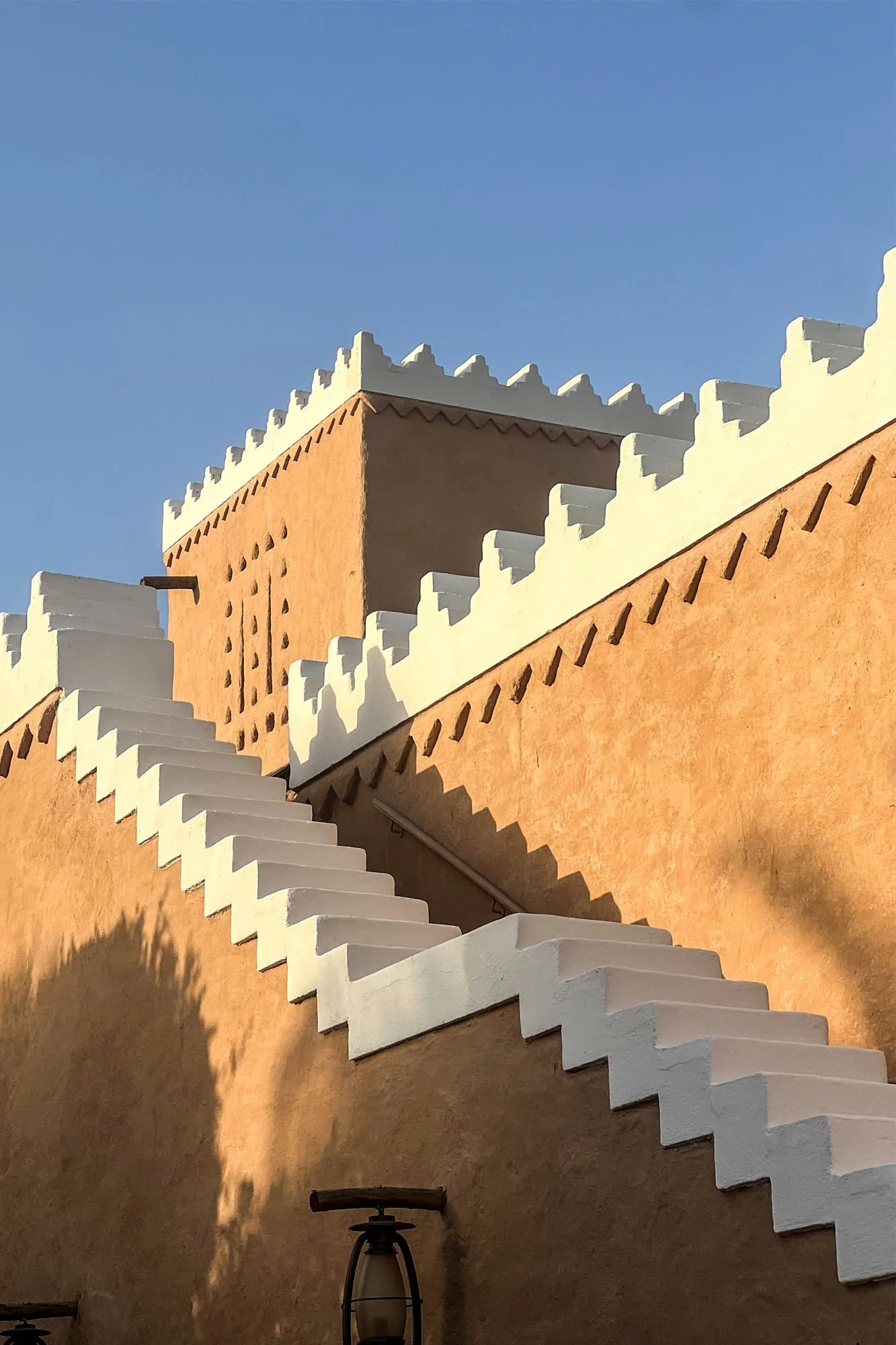
The Najdi revival architecture of Bujairi Terrace.
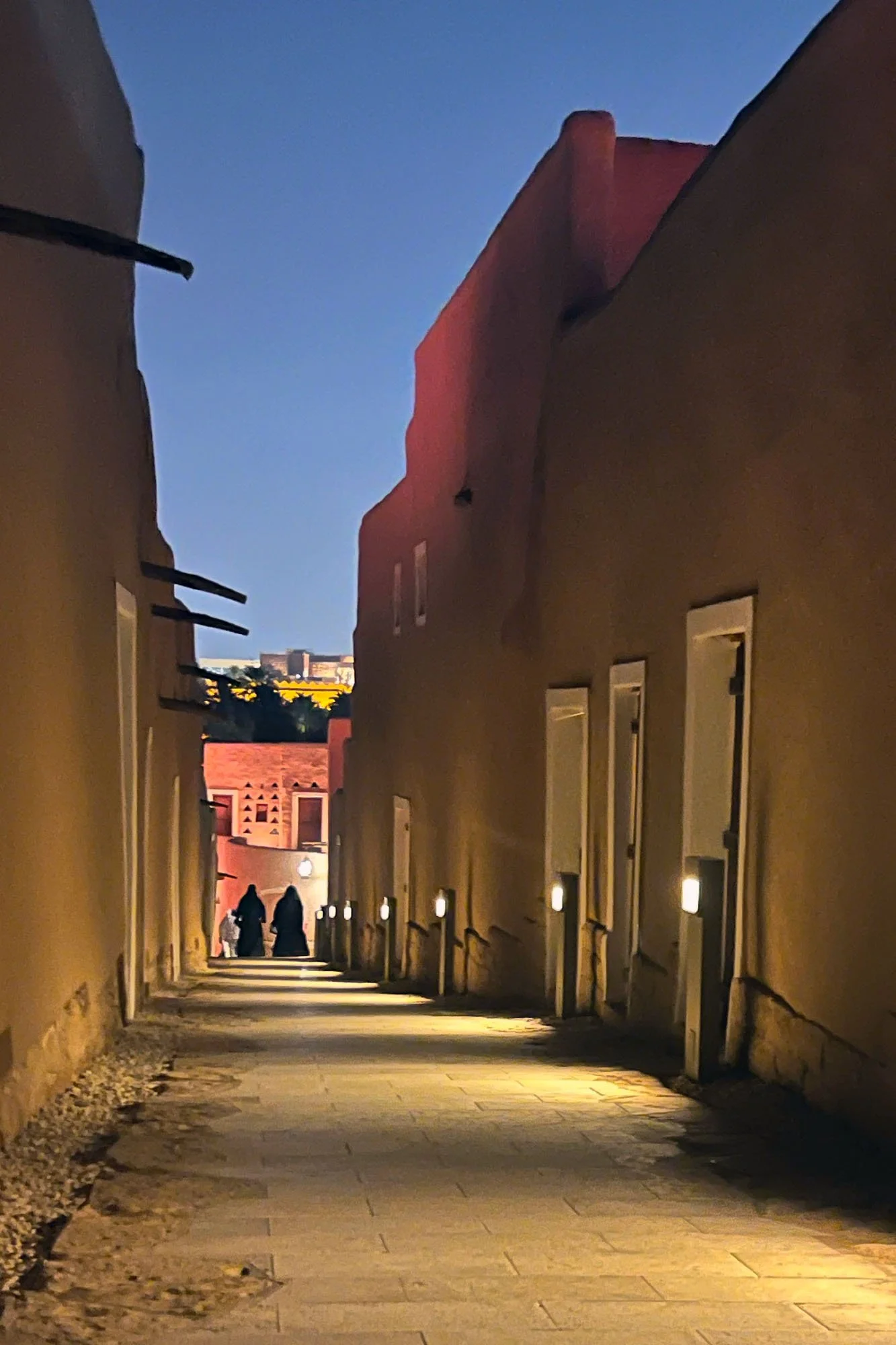
At-Turaif truly came to life after dark.
Since Diriyah is the ancestral home of the Al-Saud family, it is only natural that Saudi Arabia would make this a marquee development project. I later found out that President Donald Trump was here just a few months ago. It was the second foreign visit of his second term; the Saudis were ready to make private business deals with Trump in exchange for several diplomatic coups. The Trump Organization inked several development projects in Diriyah, including luxury hotels and residences, totaling over ten billion dollars. In addition to Diriyah, the Trump family is also in talks with the Saudi on additional projects in Jeddah and other parts of Riyadh.
The level of corruption is unprecedented, and I can’t help feeling a little uneasy being here. It was as if I were an accomplice in the corruption. Going back to my previous post on the ethics of visiting Saudi Arabia, a visit to the kingdom should require a level of introspection. Knowing Trump’s attitude toward preservation, I think it was ironic that the Saudi picked the ruins of At-Turaif as the backdrop of his state visit. I would not be surprised if Trump was thinking that they should raze the ruins and build more luxury condominiums on this site. The more I traveled, the more I became interested in the intersections between cultural assets and capitalism. The revival of Diriyah is a wonderful test case of how heritage and economic development could be symbiotic.
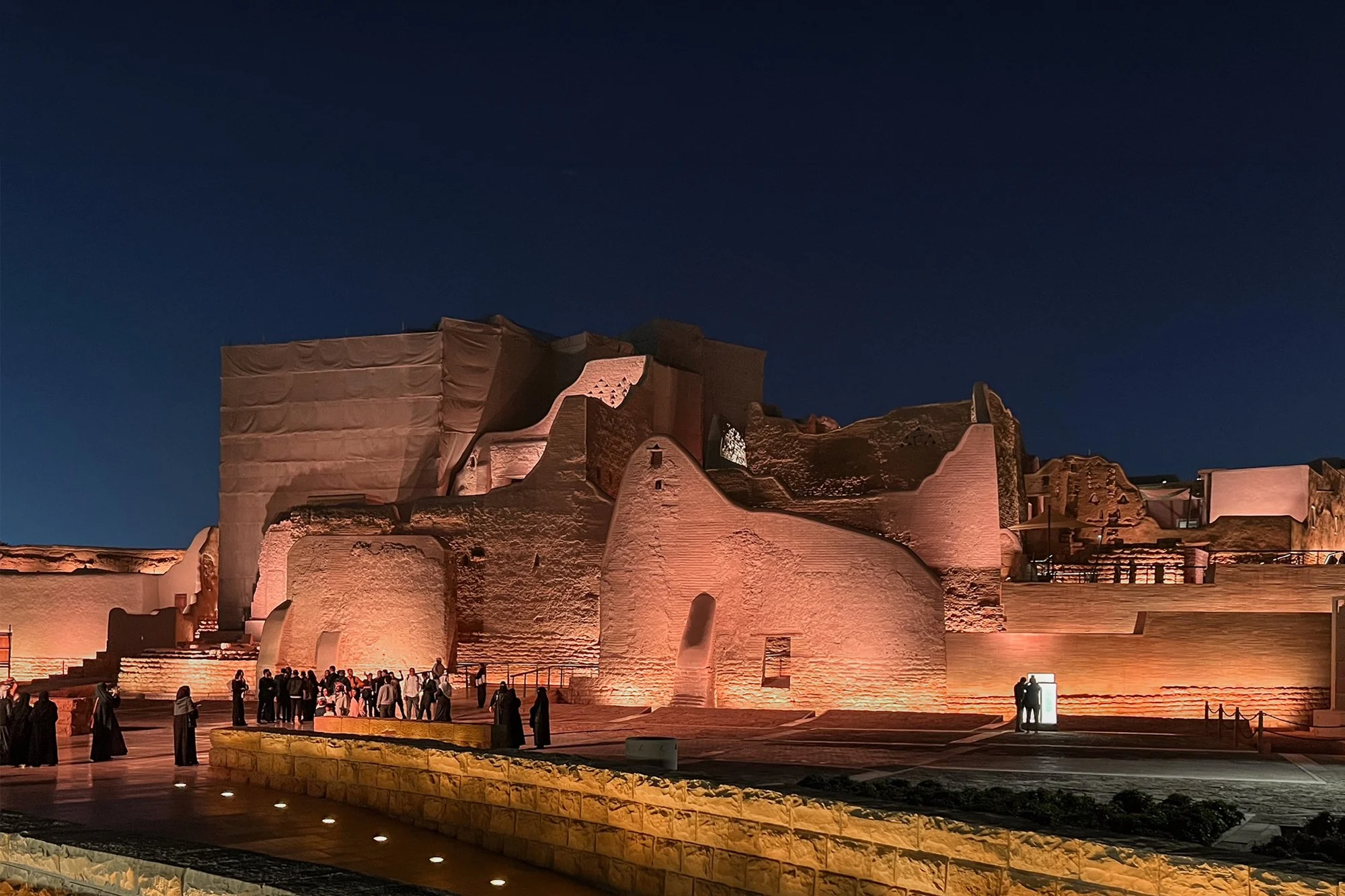
At-Turaif looks absolutely magical in the evening.
Like much of Saudi Arabia, Diriyah came to life after dark. Much of At-Turaif was beautifully illuminated by architectural floodlights. The soft orange glows created an inviting ambiance, drawing us back for a second visit. By nightfall, the entire area was teeming with visitors marveling at the beauty of the ruins. Most of the museums and galleries within At-Turaif remained open late into the evening. In fact, many additional structures are only open in the evening. There were numerous light shows, narrating memories of Diriyah, projected onto the architecture. The curator did a great job in turning it into an outdoor museum; several light shows include hand-held audio guides offering real-time translation into numerous languages.
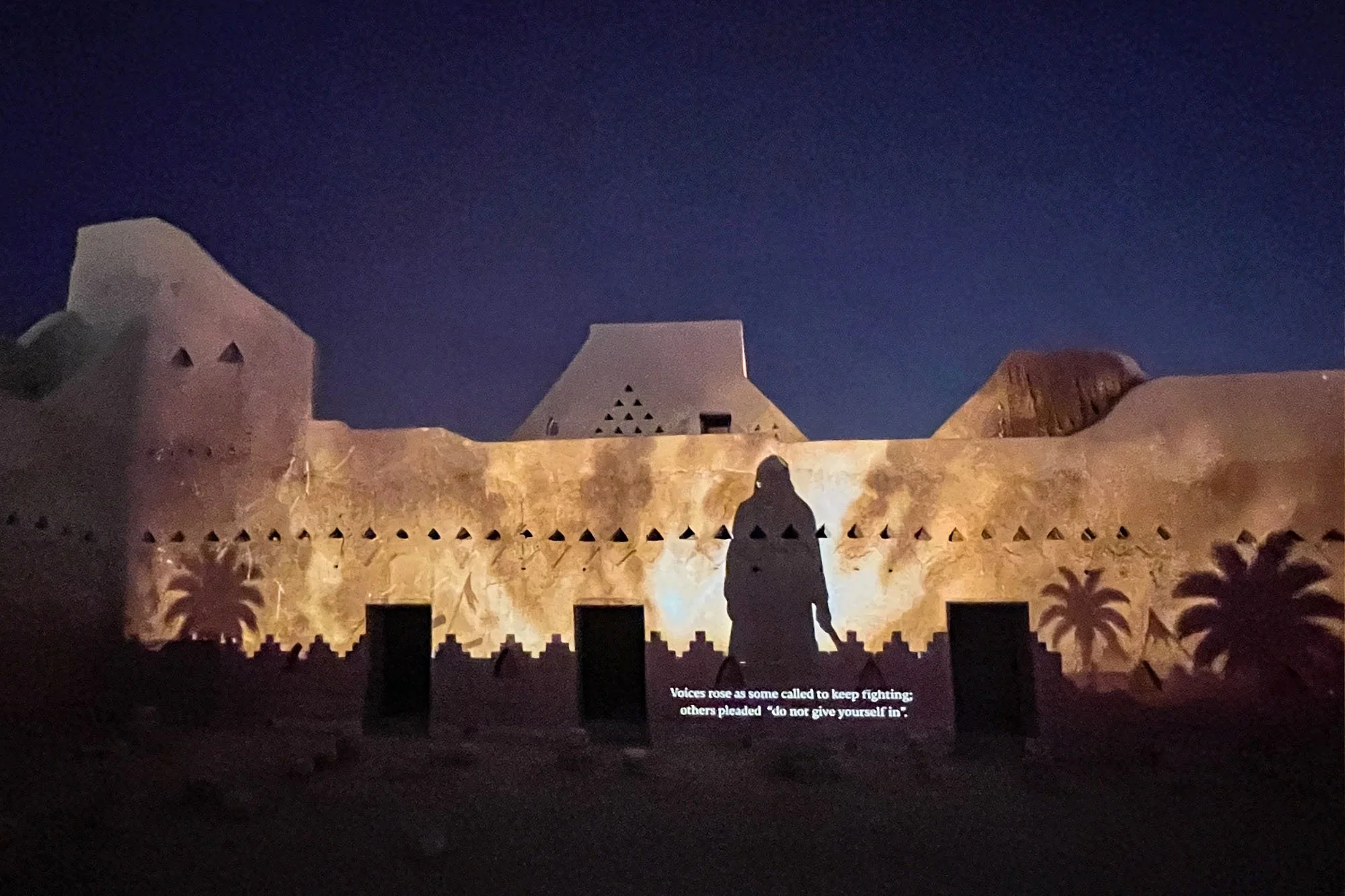
One of the numerous light shows around At-Taurif.
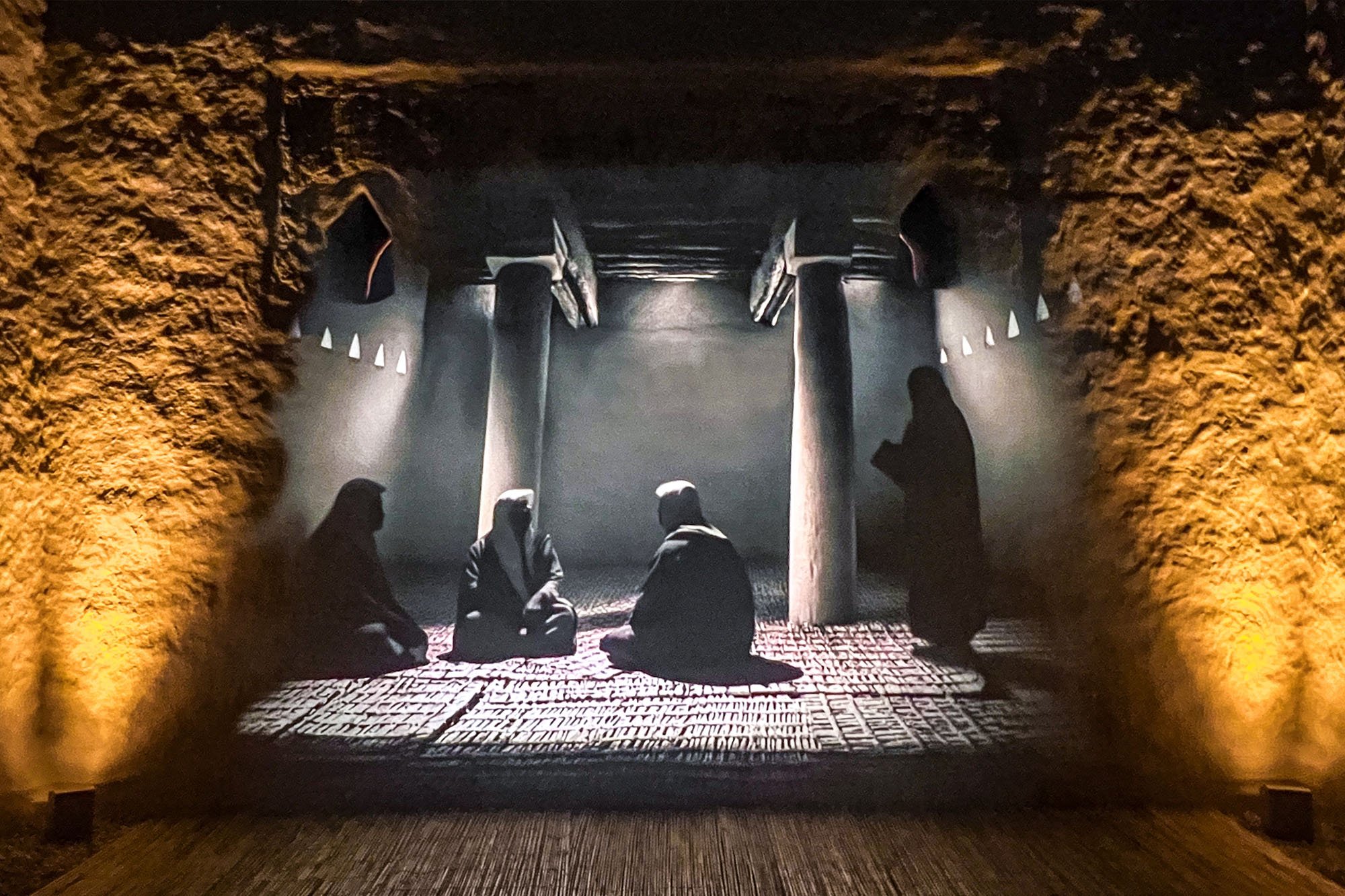
The light shows were well executed and offers real-time translation.
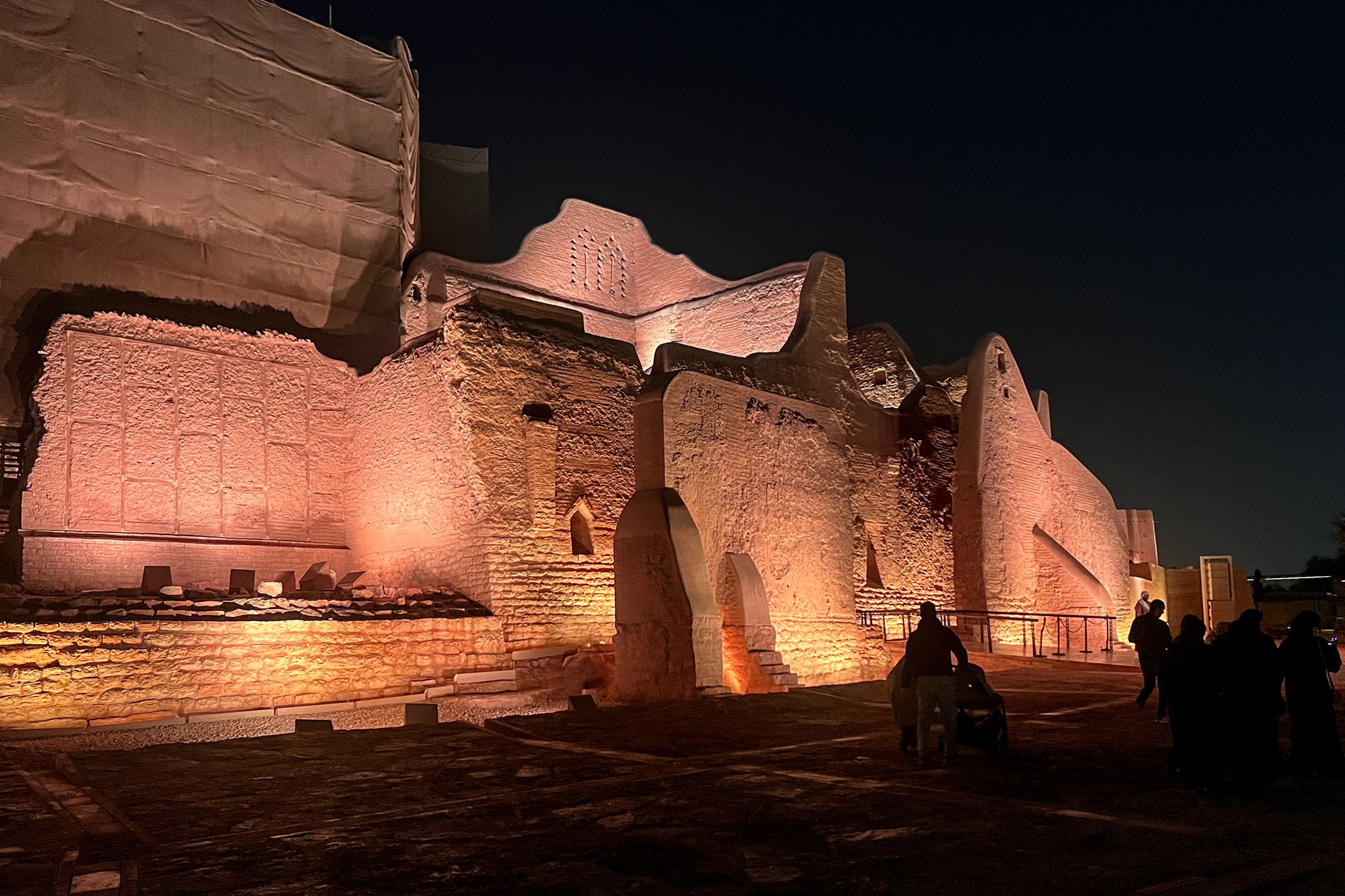
Diriyah is an unlikely monument to modern Saudi Arabia.
As I admired the beauty and serenity of Diriyah, I couldn’t help but reflect on how the revival of Saudi historic heritage is such a recent phenomenon. Economic development aside, I suspect there is a correlation between historic preservation and the recent liberalization in social policies. As the kingdom continued to modernize and westernize, it is more important than ever to preserve and celebrate the national heritage. In an absolute monarchy, nationalism is a vital political tool in consolidating power. Diriyah is perhaps the pertinent example.