

Puyo - A Taste of Ecuadorian Amazon
For our recent two-week visit to Ecuador, I was pretty good at sticking to our pre-planned itinerary. The one notable deviation took place toward the end of the trip. Before returning to Quito, I booked a three-night stay at Baños de Agua Santa, a backpacker haven. As the center of outdoor adventure, Baños was not an ideal home base without decent weather. After exploring a couple of waterfalls along the famous Ruta de las Cascadas on the first day, I was dismayed by the abysmal weather forecast for the rest of our stay. I began looking beyond Baños. I had read that Baños is regarded as the gateway to the Amazon, and it suddenly occurred to me: why not take a day trip to the Amazon?
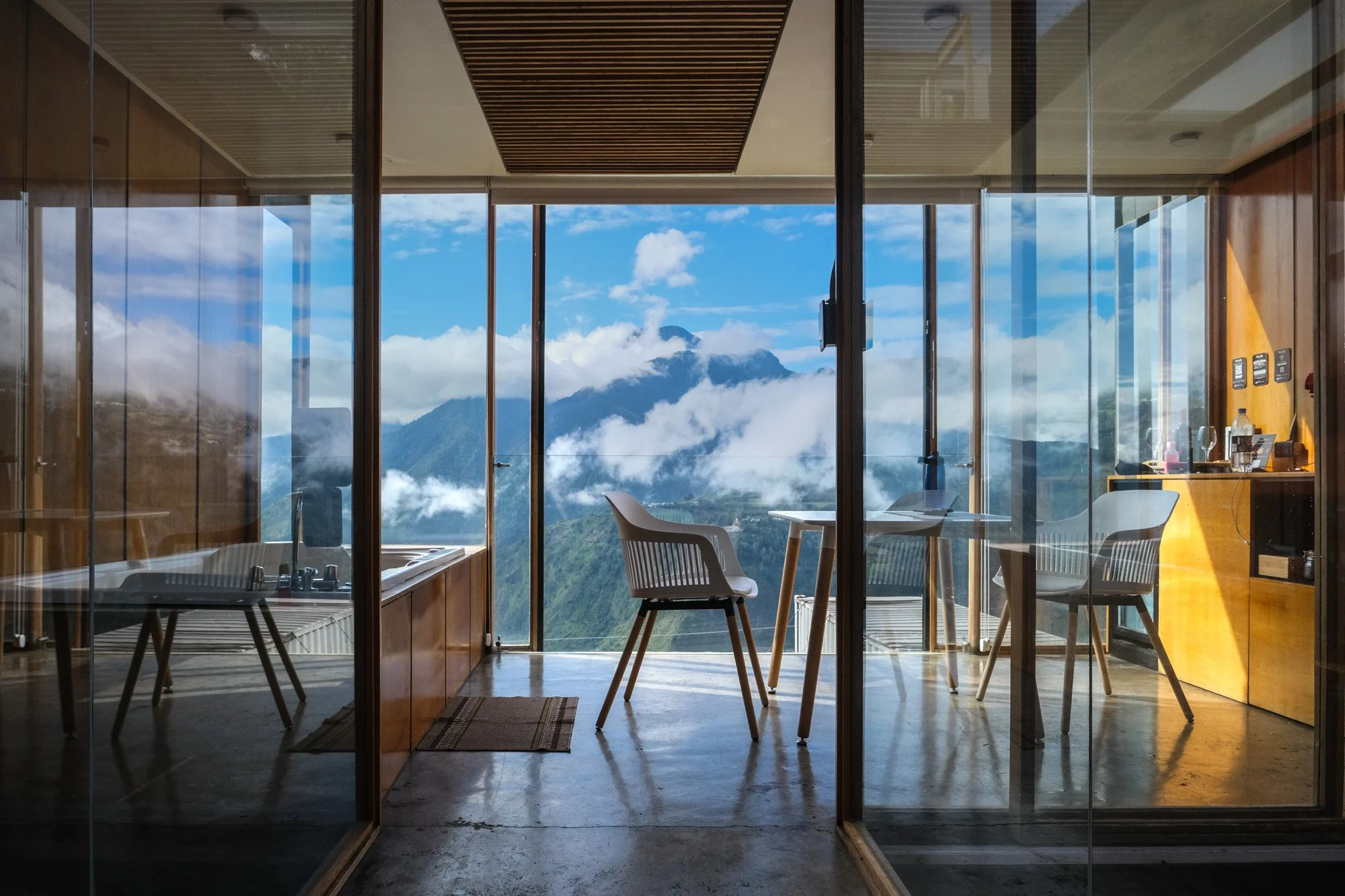
The view from our dig in Baños was nothing short of spectacular.
From Baños, the closest town in the Amazon is Puyo, the capital of Pastaza Province. The tour operators in Baños offer daily excursions to Puyo and the surrounding rainforest. These tours follow a standardized itinerary, including a traditional canoe ride down the Puyo River, a stop at Finca Mirador Indichuris, and a “visit” to the indigenous community, such as Ukuy Wasi. I debated whether to sign up for the tour and leave all the planning to others, but I soon realized it was already past the deadline for the next day’s tour. Well, I supposed I had to wing it based on my last-minute research and hoped for the best. Plus, it was nice to save about $100 for the day.
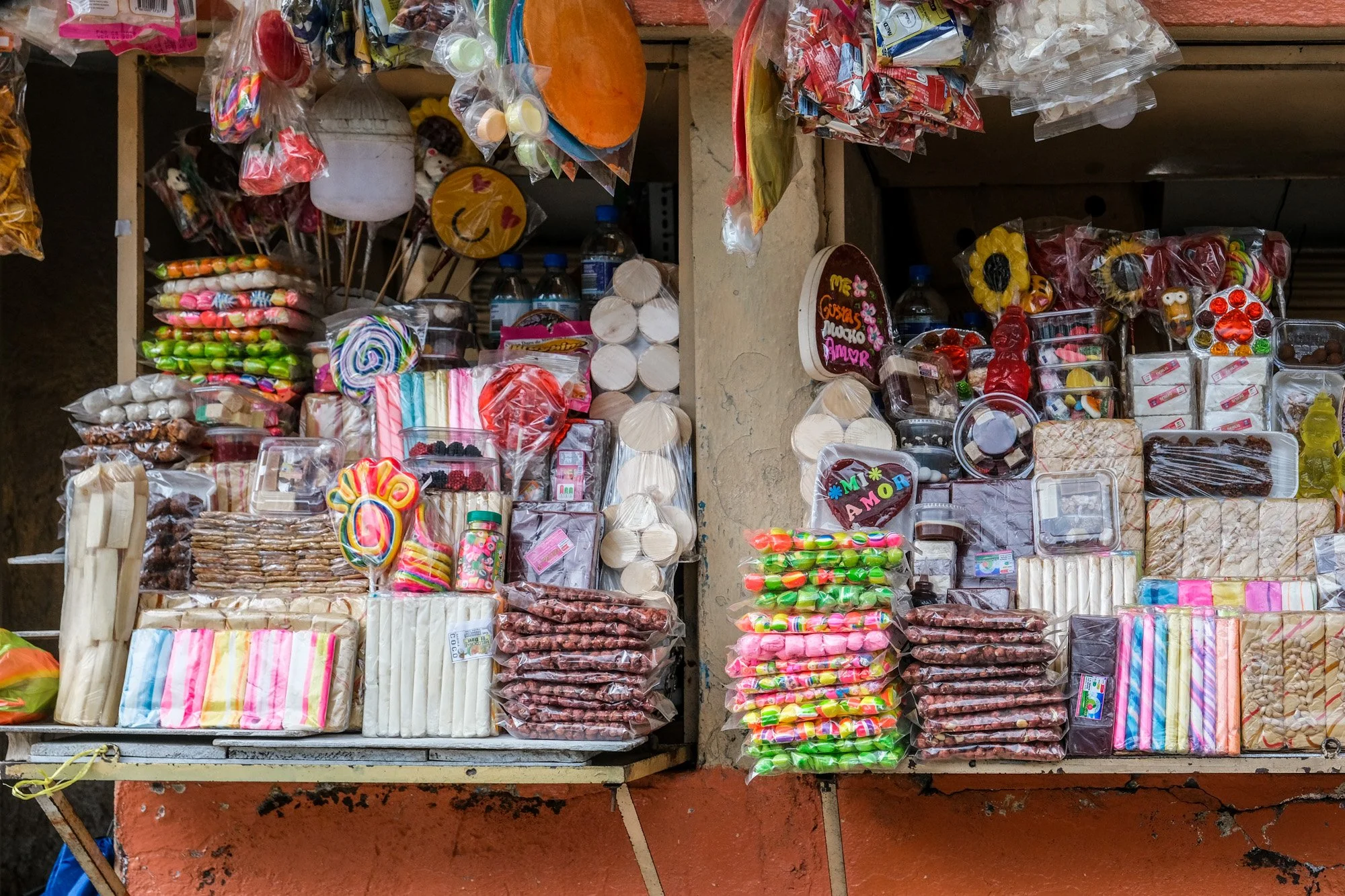
Stocking up on the traditional sweets of Baños for the roadtrip.
We woke up the next morning with surprisingly good weather. For the first time, we were able to peek through the clouds for a few patches of blue sky. Perhaps we would get lucky today and have a great visit to the Amazon. After breakfast, we made our way toward Puyo along La Ruta de las Cascadas. Along the 90-minute drive, the weather began to deteriorate. It was already drizzling by the time we drove past the famous Devil’s Cauldron. The scenery gradually transitioned into tropical foliage, and the narrow gorge eventually opened up into a dramatic rift valley. A popular stop along the way is Mirador Miramera, a lookout that seems to be on every tour itinerary. However, I decided to skip it due to the inclement weather.
The first town we encountered was Shell, a small place founded by Shell Oil Company in 1937 as a base for oil prospecting. One of the town's first infrastructures was a 5,000-foot airstrip, which is now an air force base. To this day, aviation heritage is integral to Shell’s identity, as evidenced by the full-size models of antique aircraft along the roadside. On the Amazon frontier, Shell also served as a base for Mission Aviation Fellowship, an Evangelical Christian missionary organization that provides aviation and technological services to rural communities worldwide. The most notable figure of this era was Nate Saint, a pilot from Pennsylvania who was killed in 1956 while trying to evangelize the indigenous Huaorani people. His house along the main road has been preserved as a museum, but can only be visited by prior appointment.
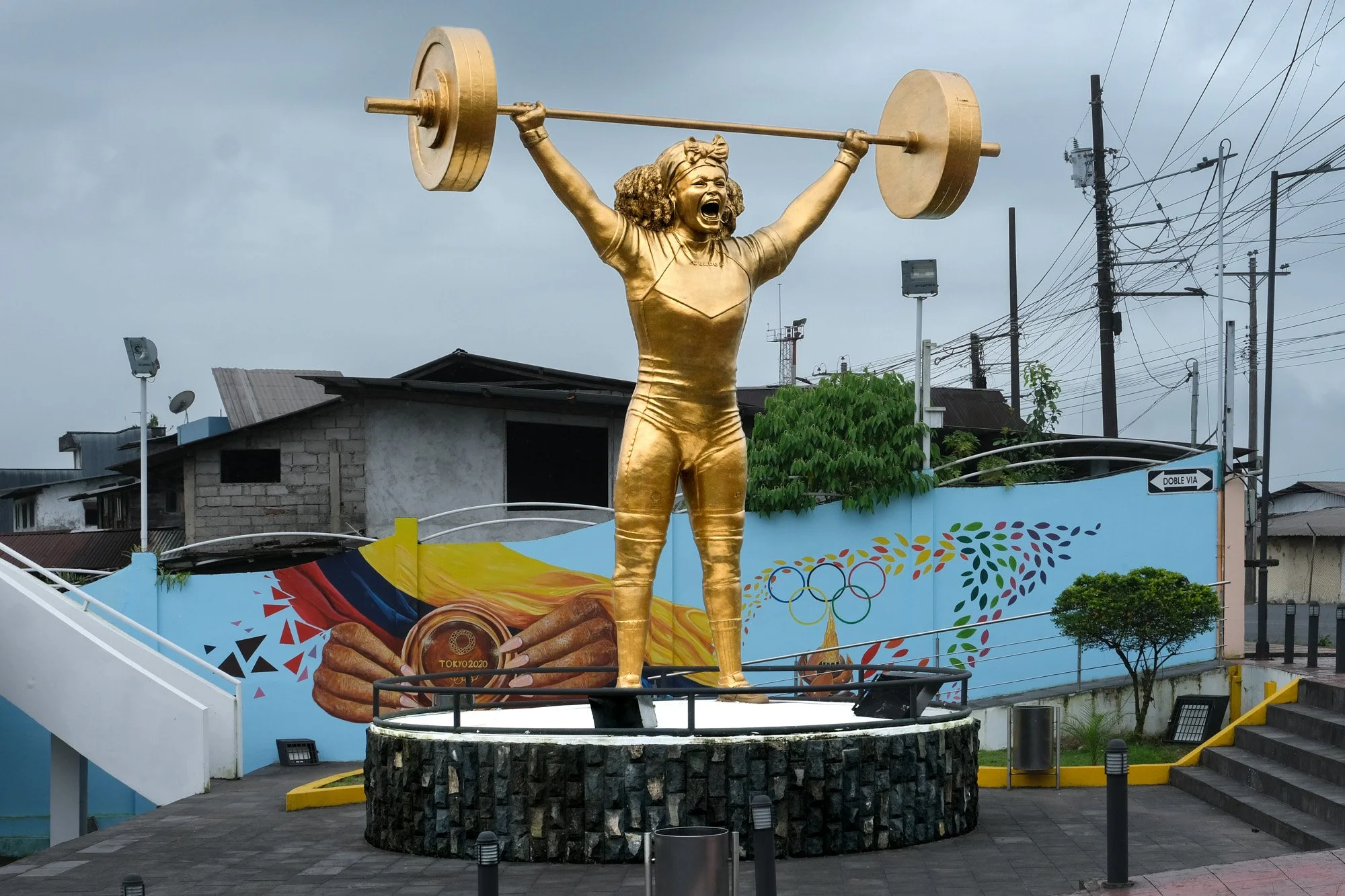
The golden statue of Neisi Dájomes, the gold medalist from Shell.
The most unique monument in Shell is an oversized golden statue of a weightlifter. It was actually a tribute to Neisi Dájomes, a Shell native daughter who received a gold medal in the 2020 Tokyo Olympics. She is one of the most celebrated living Ecuadorian athletes and was selected to be the flag bearer at the Paris Olympics. Seeing a golden colossus at the edge of the Amazon was jarring. I can’t help but wonder how often Dájomes still visits her hometown. Seeing a golden monument of herself must be somewhat amusing. That said, one can easily sense the genuine pride a small town has.
As we approached the outer edge of Puyo, the downpour began. I was suddenly at a loss, as I did not have a proper contingency plan for bad weather. I ended up sticking with my original plan, which brought us to "Las Orquídeas" Botanical Garden, about ten minutes’ drive southeast of the city center. I honestly did not recall how I came across this place. With its official sign down for maintenance, I could only go by the opening hours posted on Google Maps and hope for the best. When we arrived at the location marked on Google, we were confused about where the entrance and parking area were. Eventually, we found a locked entrance gate with a welcome sign. Just as we were about to dial the number, a staff member spotted us and rushed to open the gate.
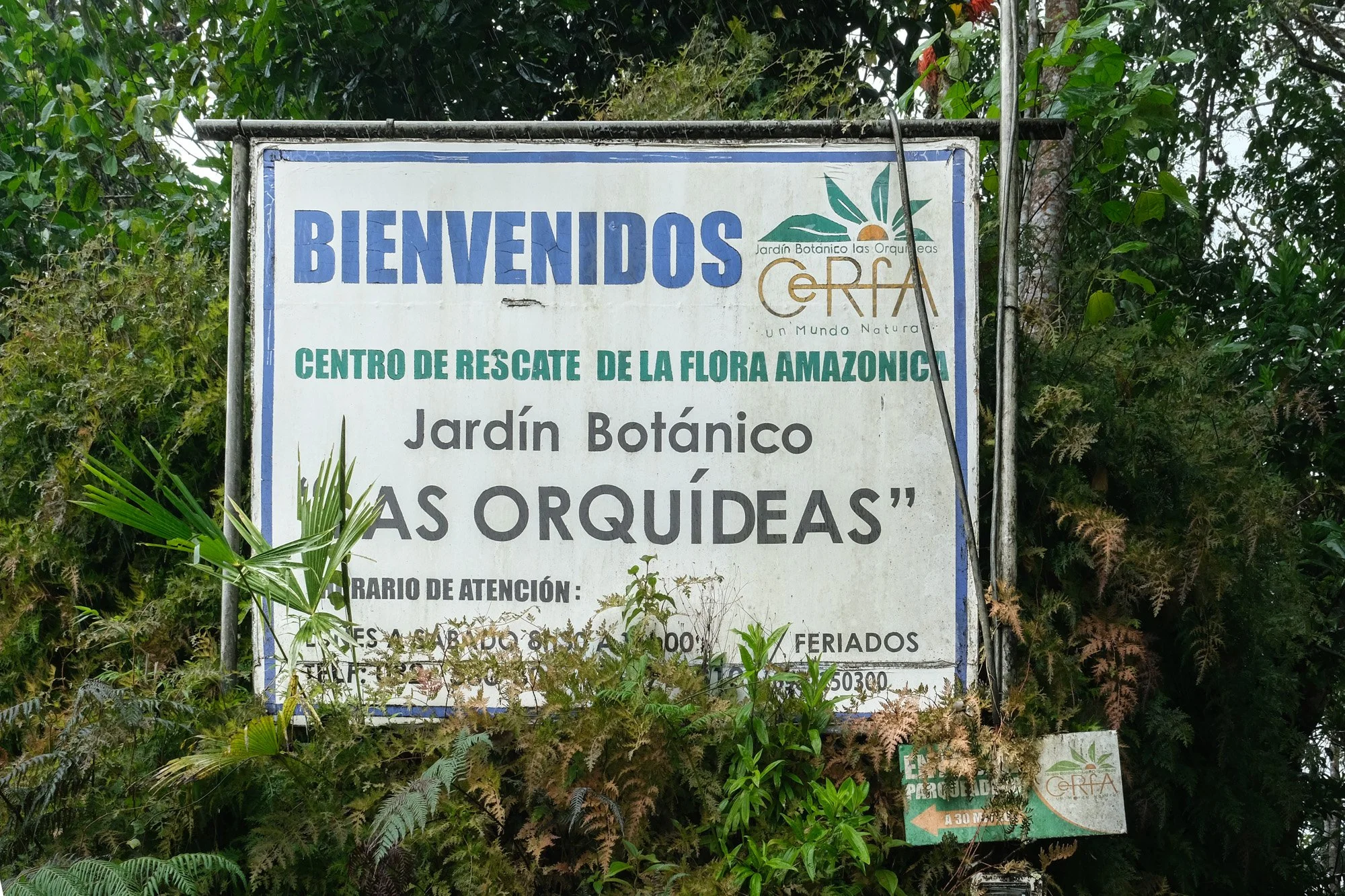
Upon arrival, the botanical garden appeared to be closed.
From the gate, we could spot a group of visitors in rain ponchos in the distance. It turned out that we had just arrived in time, as they were about to start a guided tour. I was the only person there who didn’t speak Spanish, so I was nervous about how enjoyable the guided tour would be given the language barrier. Thankfully, the owner and tour guide, Anglea, invited us to join in and said she spoke decent English. We had no idea how much the guided tour cost and how long it would take. I felt like it was inappropriate to ask these logistical questions at that particular moment.
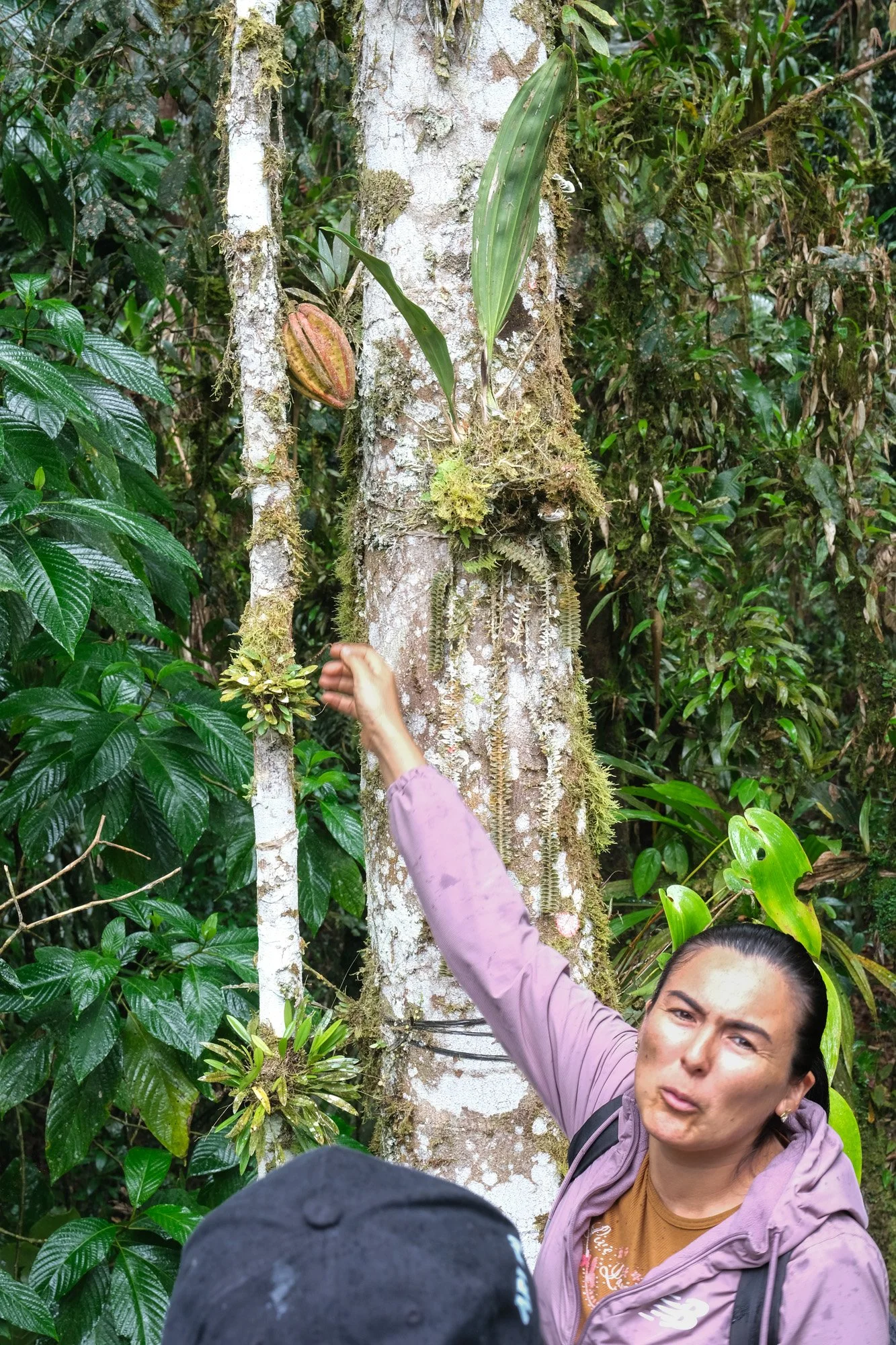
Seeing our first wild cocoa tree was exciting!
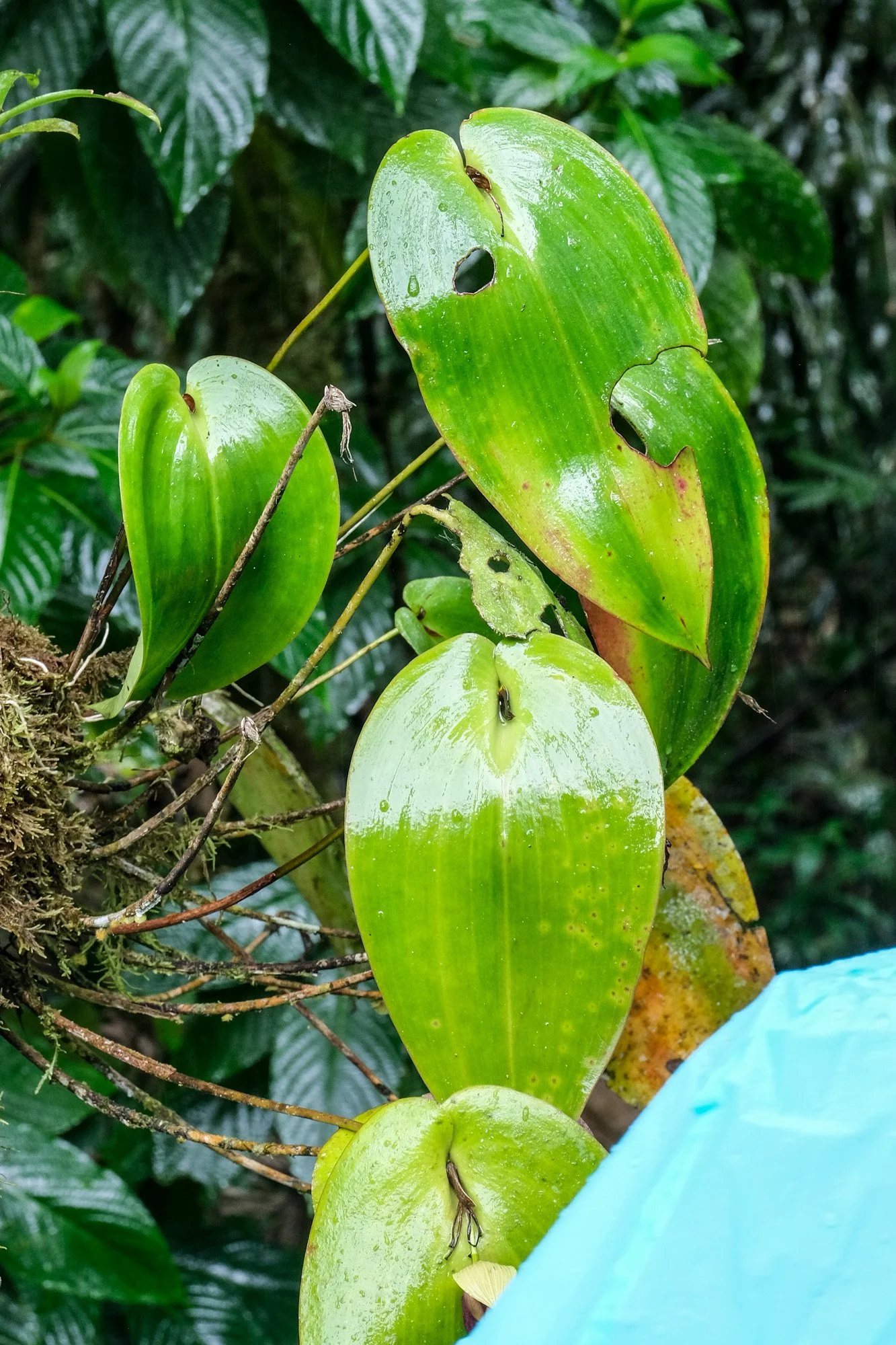
Could spot the tiny orchid?
Immediately upon entering the forest, Angela began pointing out various plants as if she had grown up with them as a long-term companion. One of the first plants she pointed out was wild cocoa. This was our first time seeing a live cocoa tree outside of a plantation. I was surprised by how the cocoa pod seemed to dangle precariously from the side of the main trunk. Although West Africa accounts for over half of global cocoa production today, the cocoa tree is actually native to the Amazon. In fact, evidence of the world’s oldest cocoa cultivation was found in southern Ecuador. Apparently, cocoa plantations are not exactly ecologically friendly, since they are still a form of monoculture.
As the downpour intensified, it did not take long for Brian and me to realize just how ill-prepared we were for our rainforest excursion. While the rest of the group wore hiking boots and ponchos, Brian and I came in gym shorts, flip-flops, and umbrellas. But, much to my surprise, a walk through the rainforest might be the best outdoor activity during a downpour. The thick canopy shielded us from much of the rain, so we barely had to use the umbrella during our visit. The rain also made the vegetation appear especially lush and pristine. I suspect the rain also kept the level of bugs and other vermin at bay, which was much appreciated.
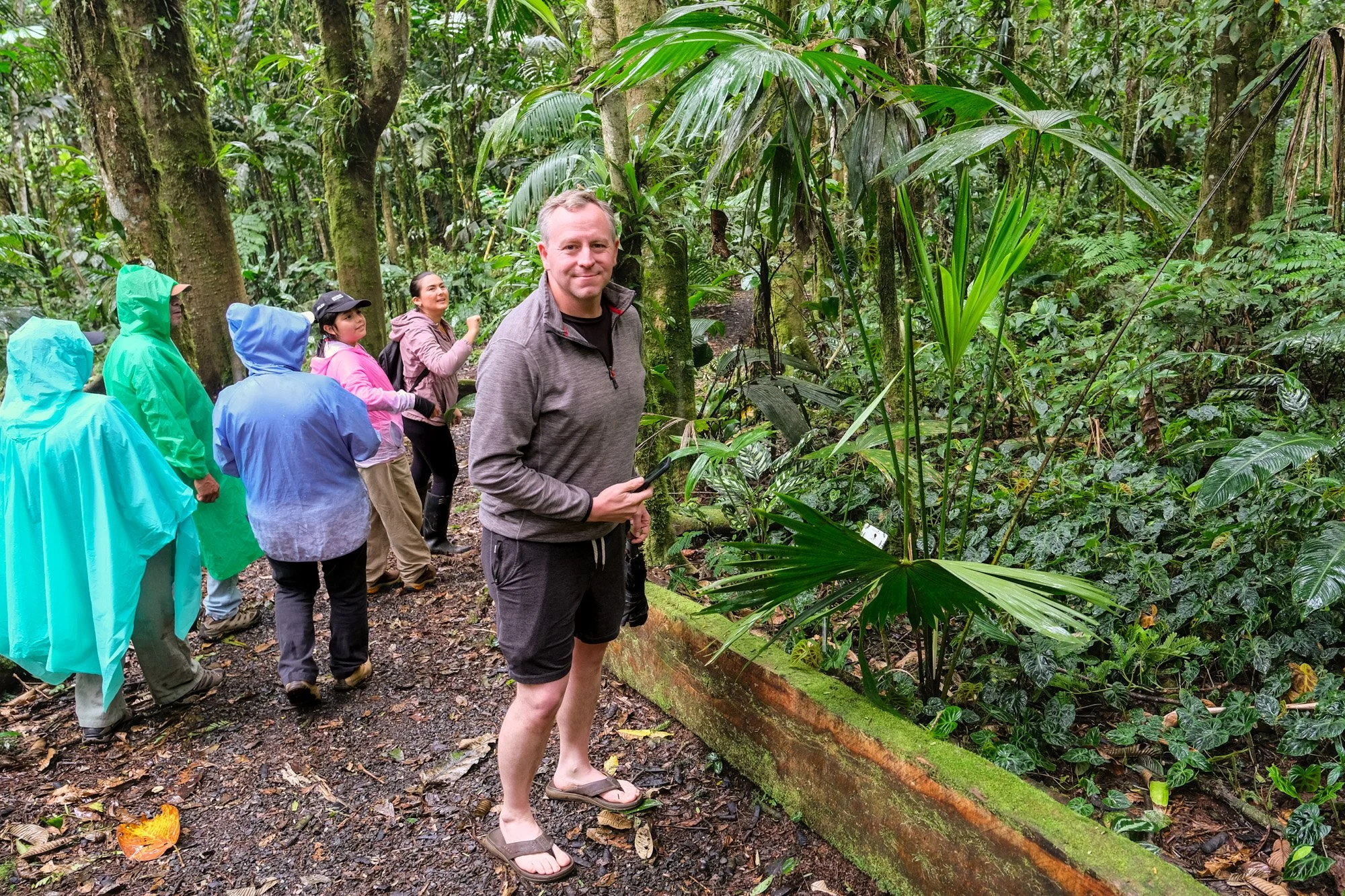
We were so unprepared for day out in the rainforest.
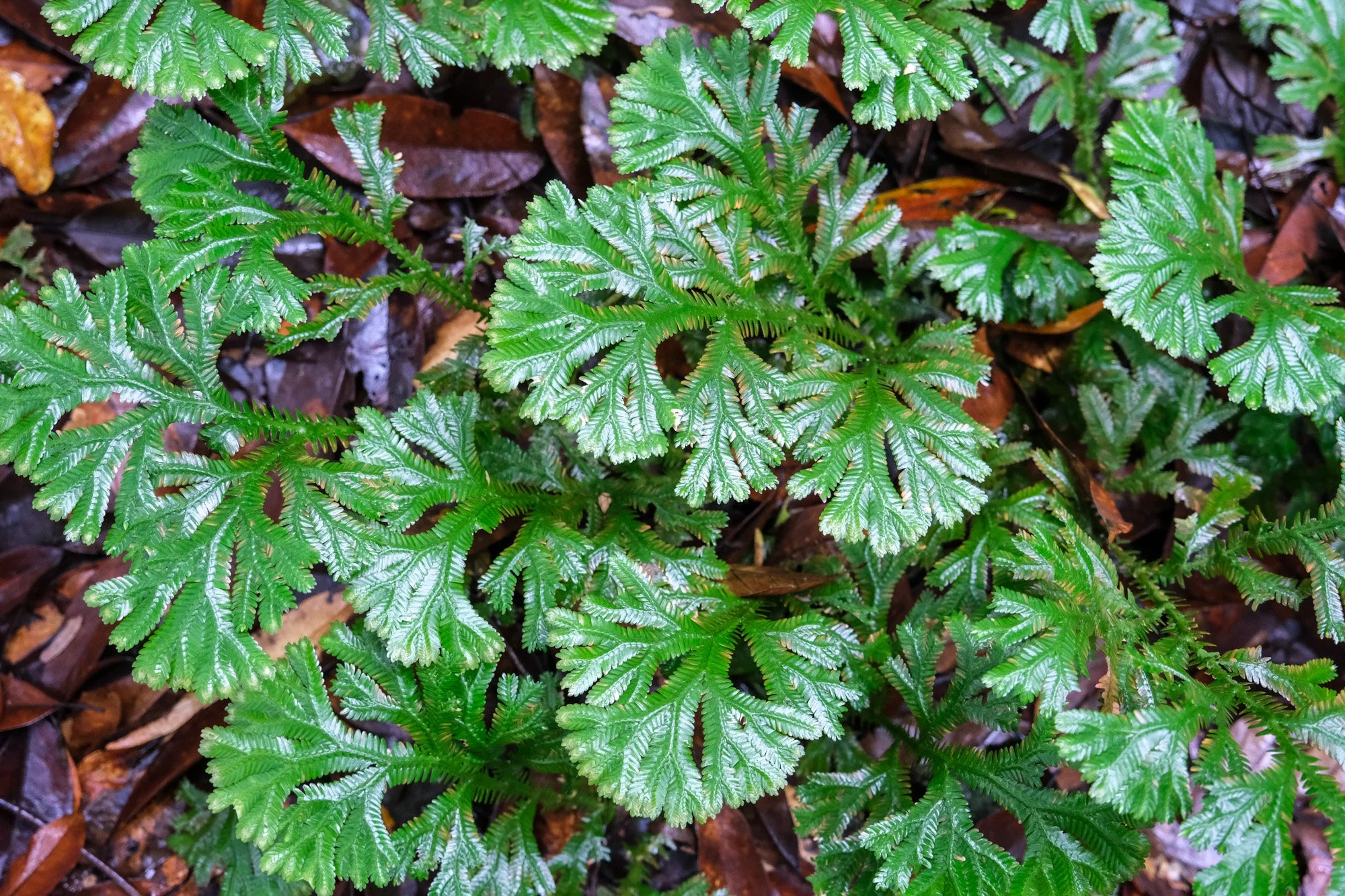
The rain certainly accentuated the textures of all the plants.
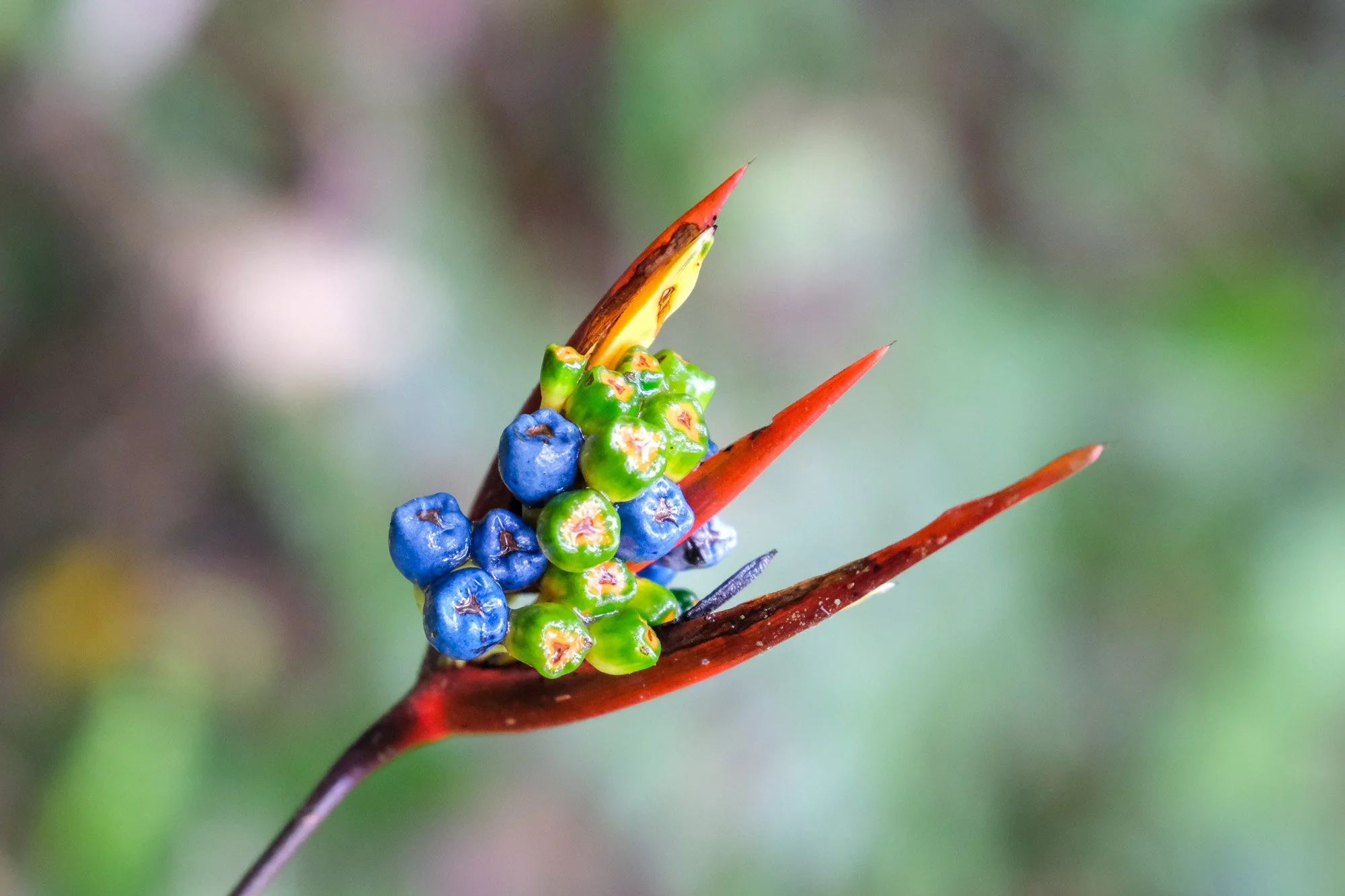
Heliconia.
Angela’s tour went far beyond pointing and naming different plants. She made a point of explaining how the different plants are integral to the cultural life of indigenous Amazonians. For instance, she pointed out a kapok tree, which the indigenous community traditionally uses to make dugout canoes. We might be able to do the touristy canoe ride on this visit, but I personally think seeing the kapok tree is just as special. It also demonstrates how protecting the rainforest goes hand in hand with preserving Amazonian culture. Of course, the most well-known species in the entire garden is the ayahuasca, the infamous plant known for its unique psychedelic properties. The ayahuasca ceremonies have been a draw for foreign tourists in recent decades despite well-documented instances of overdose. Interestingly, Angela did not elevate ayahuasca to cultural prominence on this guided tour.
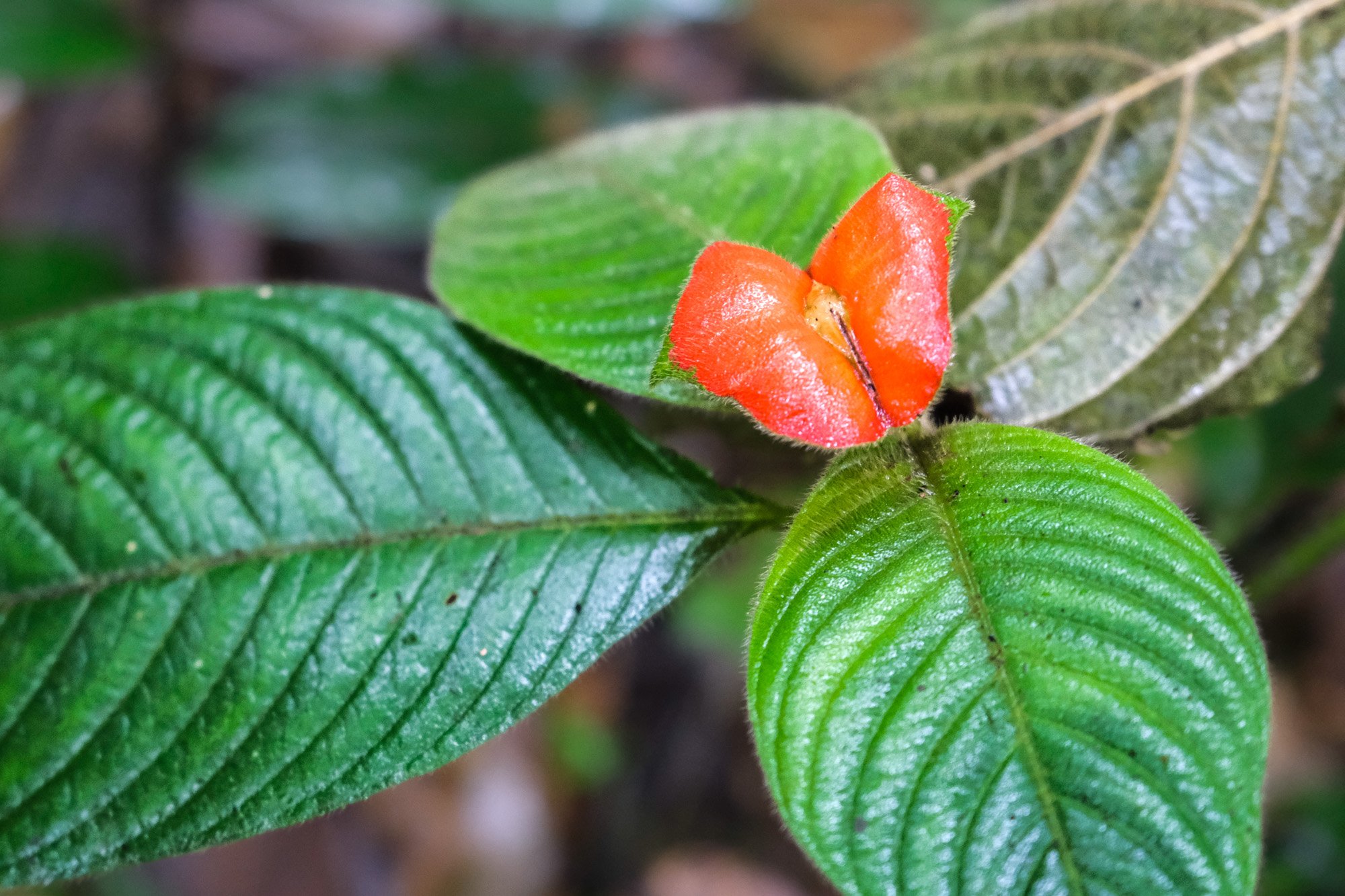
The “Hot Lip” plant lives up to its name.
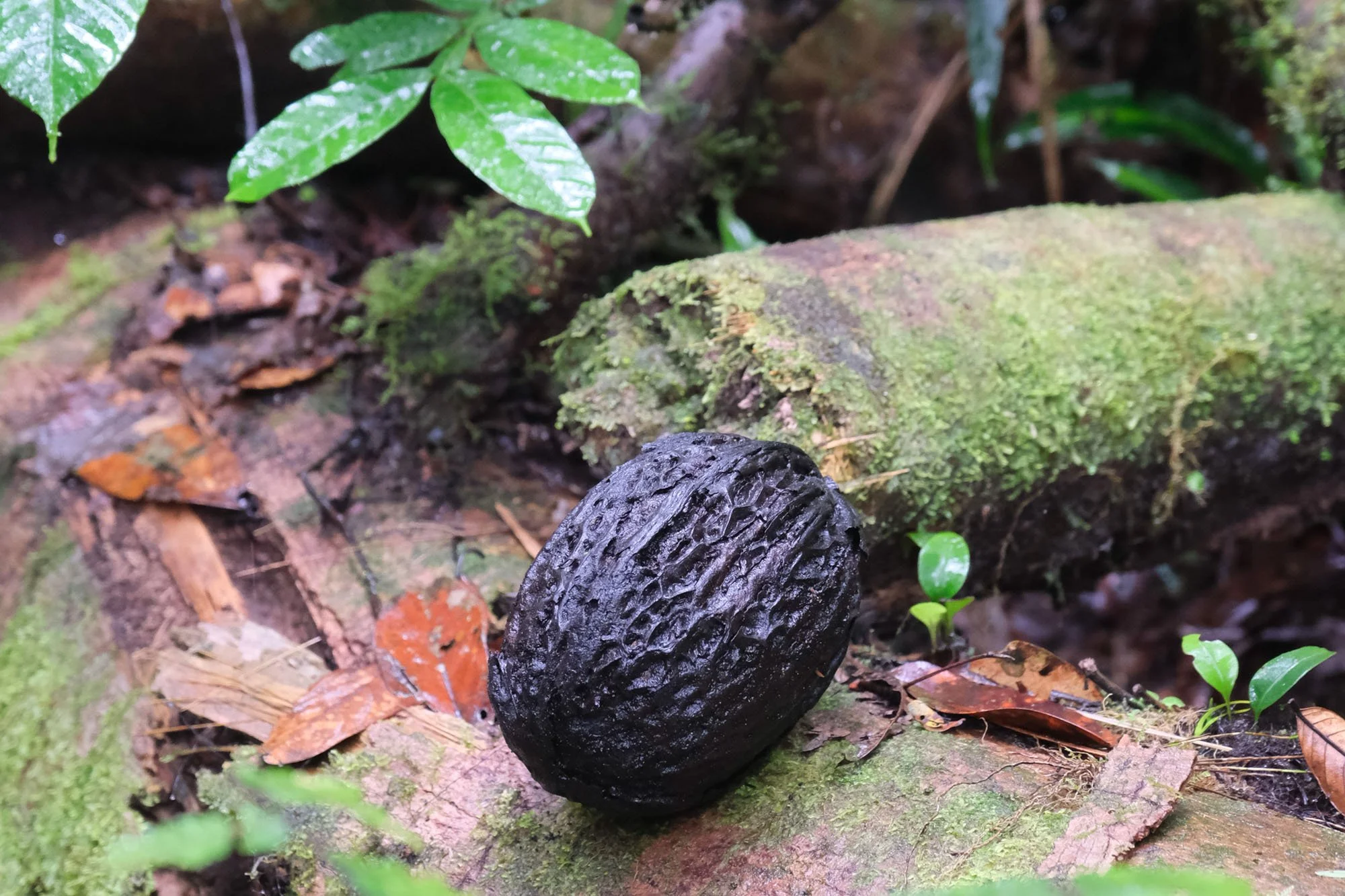
A pod of natural cocoa on the ground.
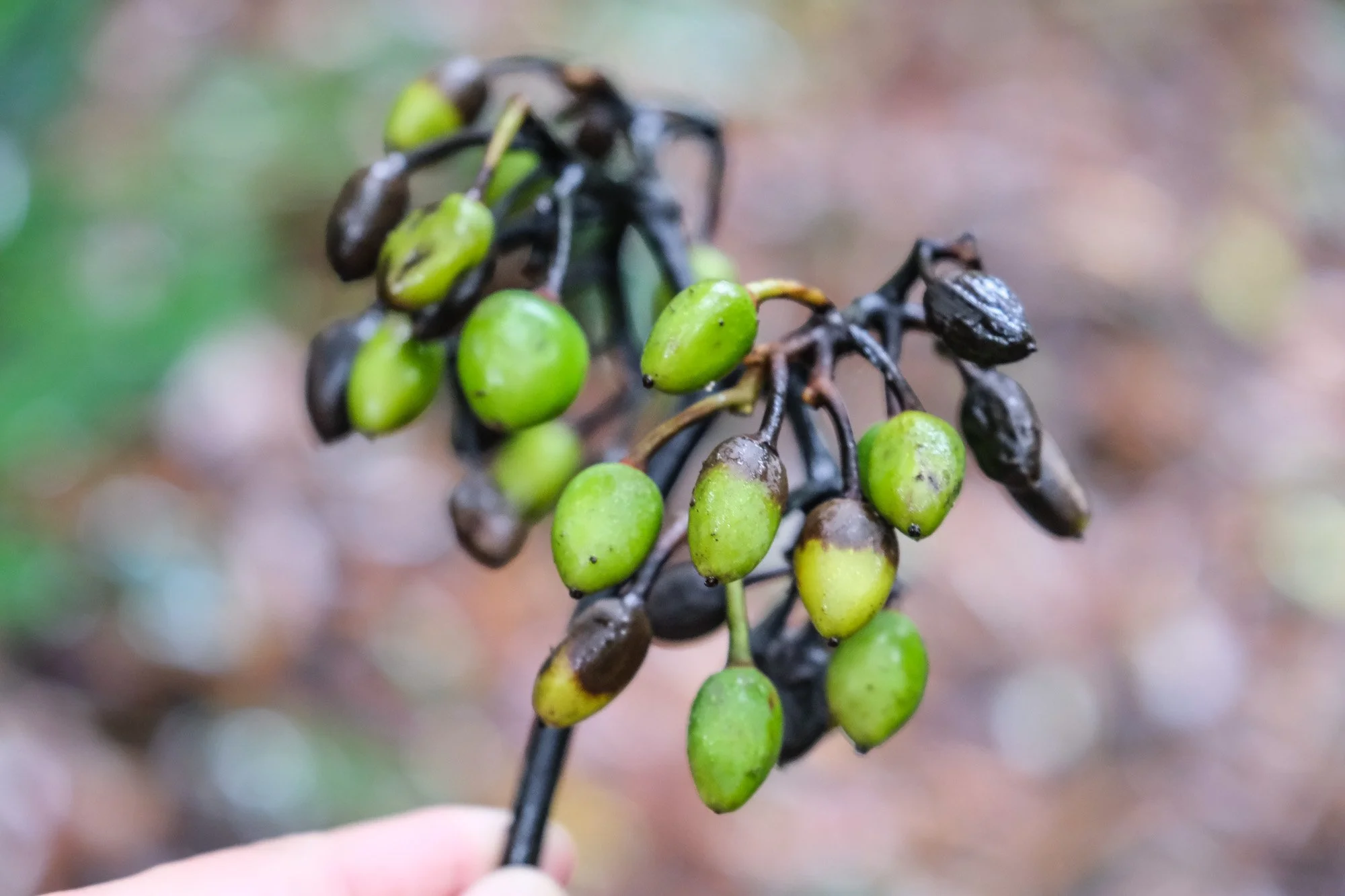
The Amazon tree-grape.
Another interesting plant Angela pointed out was the Amazon tree-grape. These five-story-tall trees produce edible fruits that resemble hardened grapes or olives. These berries are said to have numerous health benefits, including reducing blood sugar and body fat. Unfortunately, the berries spoil easily and are not commercially viable. However, the most memorable plant on this tour is the Sanbox tree. This unique plant is covered with sharp, long spikes; this type of tree is especially fierce, as the fruits will literally explode when ripe, earning it the nickname “dynamite tree”. But more interestingly, the sap of Sandbox trees contains potent neurotoxins that locals use as medicine and as poisons for hunting, particularly for hunting fish. Other native plants, such as Barbasco and curare, are also used as poisons by the native hunters.
According to Angela, the overuse of this natural poison depleted the native fish in this part of the Amazon. In recent decades, native fish stocks have been wiped out. Locals now exclusively eat farmed tilapia as a substitute for patarashca, the classic fish dish native to this region. In fact, I did notice many restaurants in and around Puyo advertising tilapia, which is typically not the kind of fish restaurants advertise in much of the world. Isn’t it ironic that the locals had to eat farmed tilapia in one of the most biologically diverse corners of the globe?
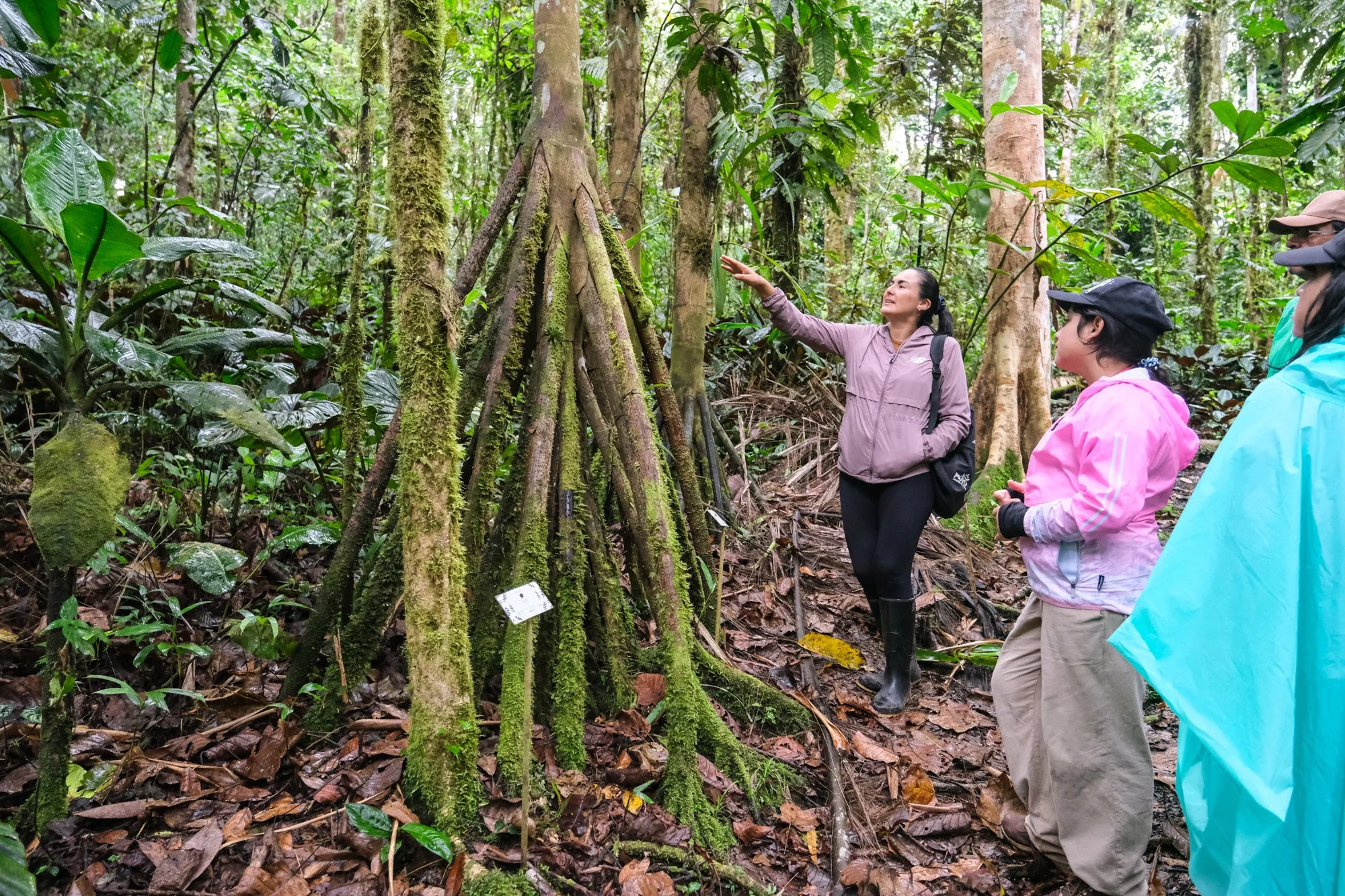
Cashapona is also known as the “walking palm.”
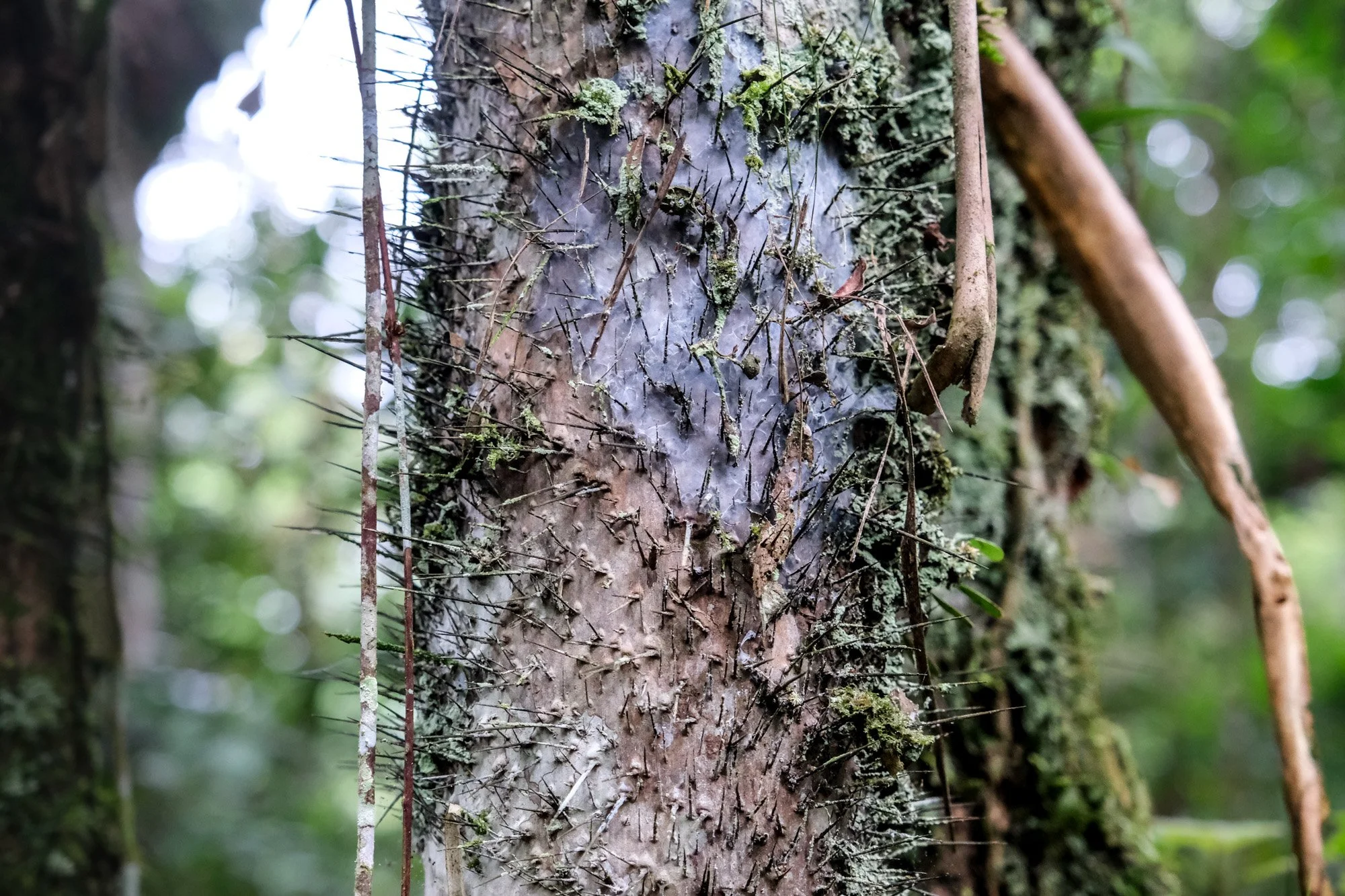
The Amazon could seem like a dangerous place.
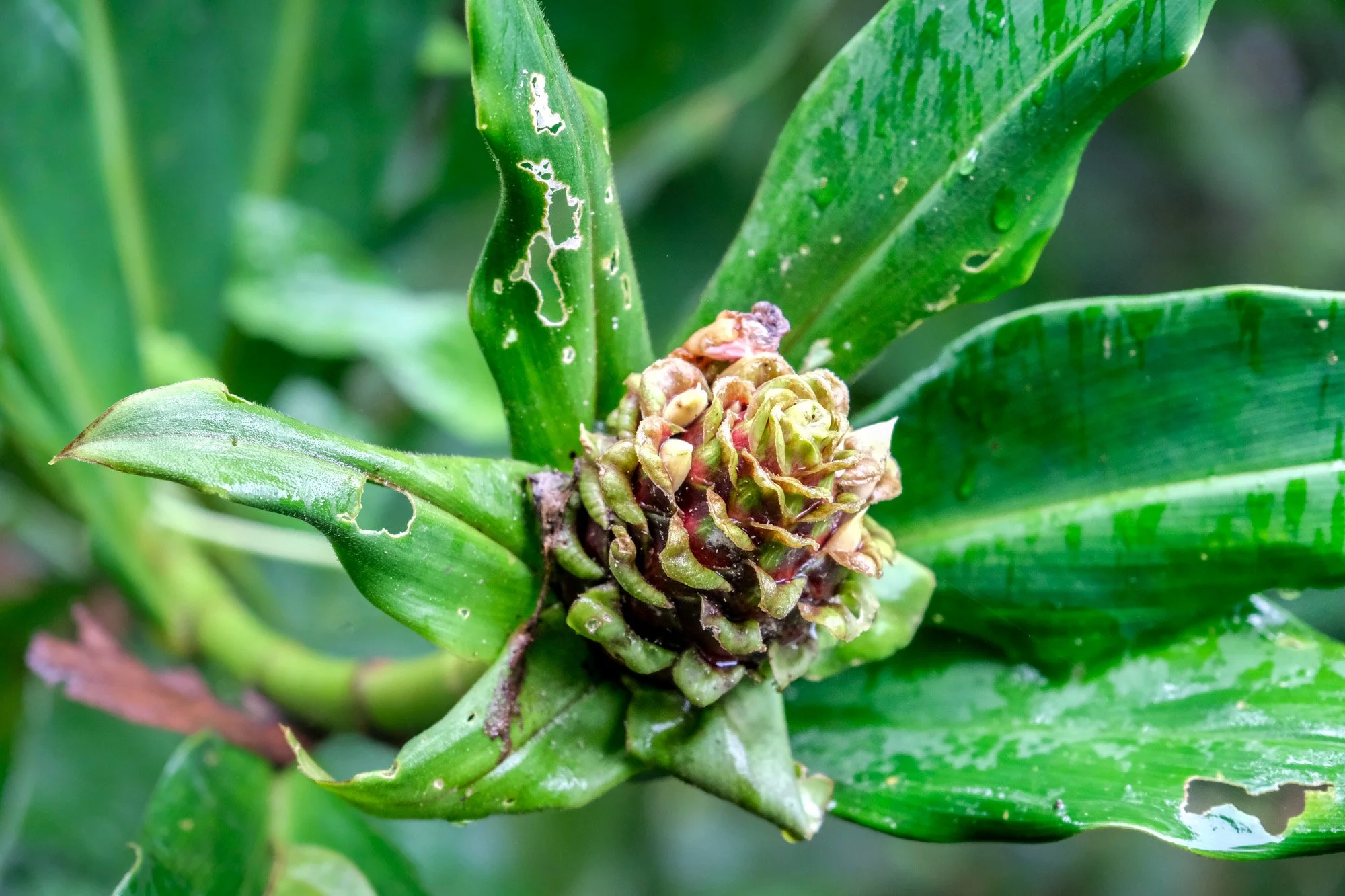
A beautiful cone of Costus.
During our visit, the most recognizable trees are cashapona, also known as the “walking palm.” As the name implies, they are especially known for their stilt roots, which could be more than ten feet in the height of their own. Allegedly, some arborists insist the roots naturally extend toward light and gradually “walk” toward a better patch of land over time. The tales of “walking” palms are definitely exaggerated, but these trees are definitely resilient at extracting nutrients and maximizing structural stability. Like many tree species in the rainforest, walking palms host a wide variety of epiphytes, colloquially called “air plants.” Among the epiphytes here is a dizzying array of orchids. Many orchid species we saw here are so microscopic that Anglea had to bring out a handheld magnifier to show us. The varieties of orchids taught us that orchids are among the most diverse plants on the planet. In fact, the name of this garden was the Spanish word for orchids.
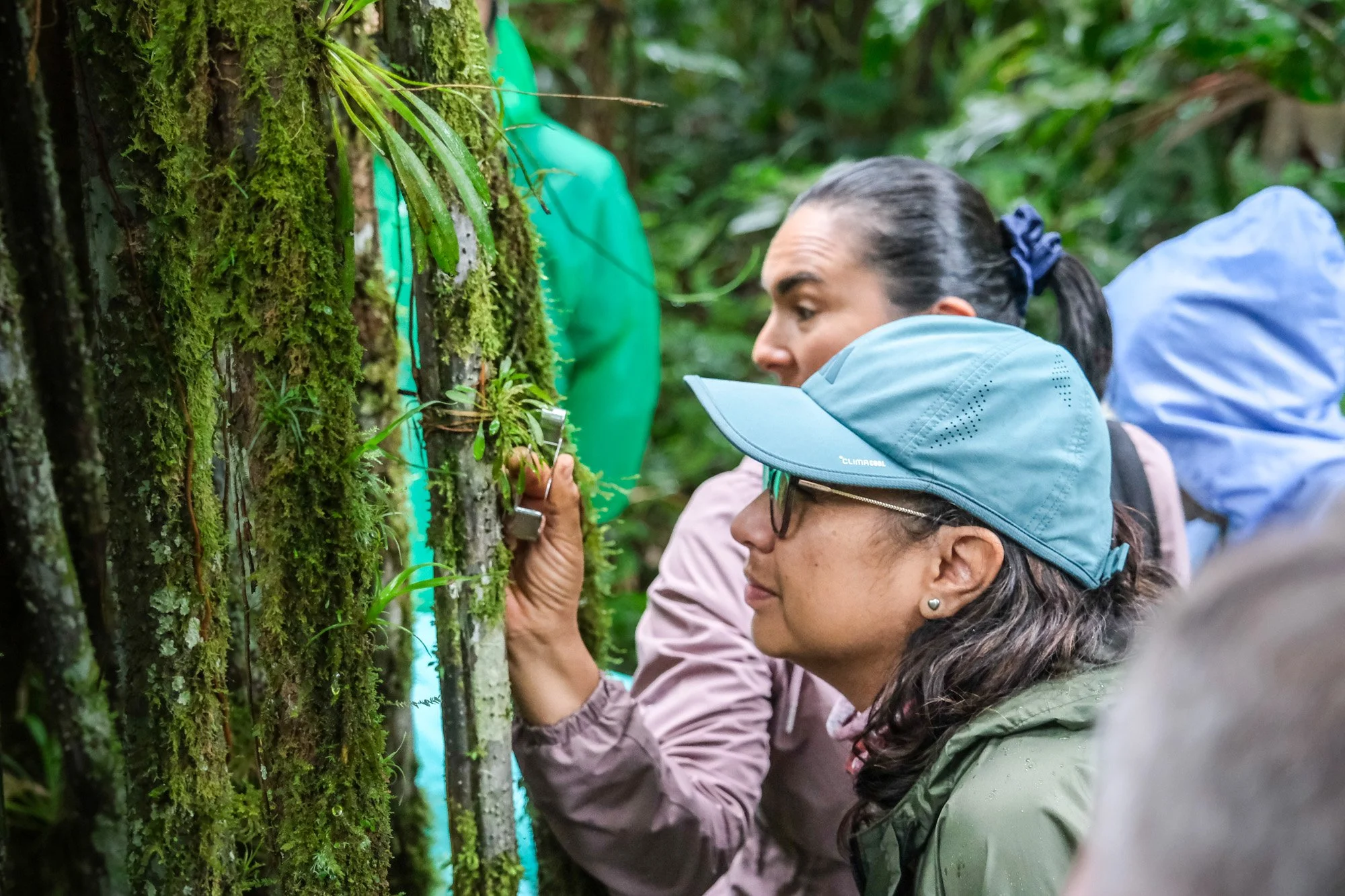
Some orchids are so tiny that they require a magnifying glass.
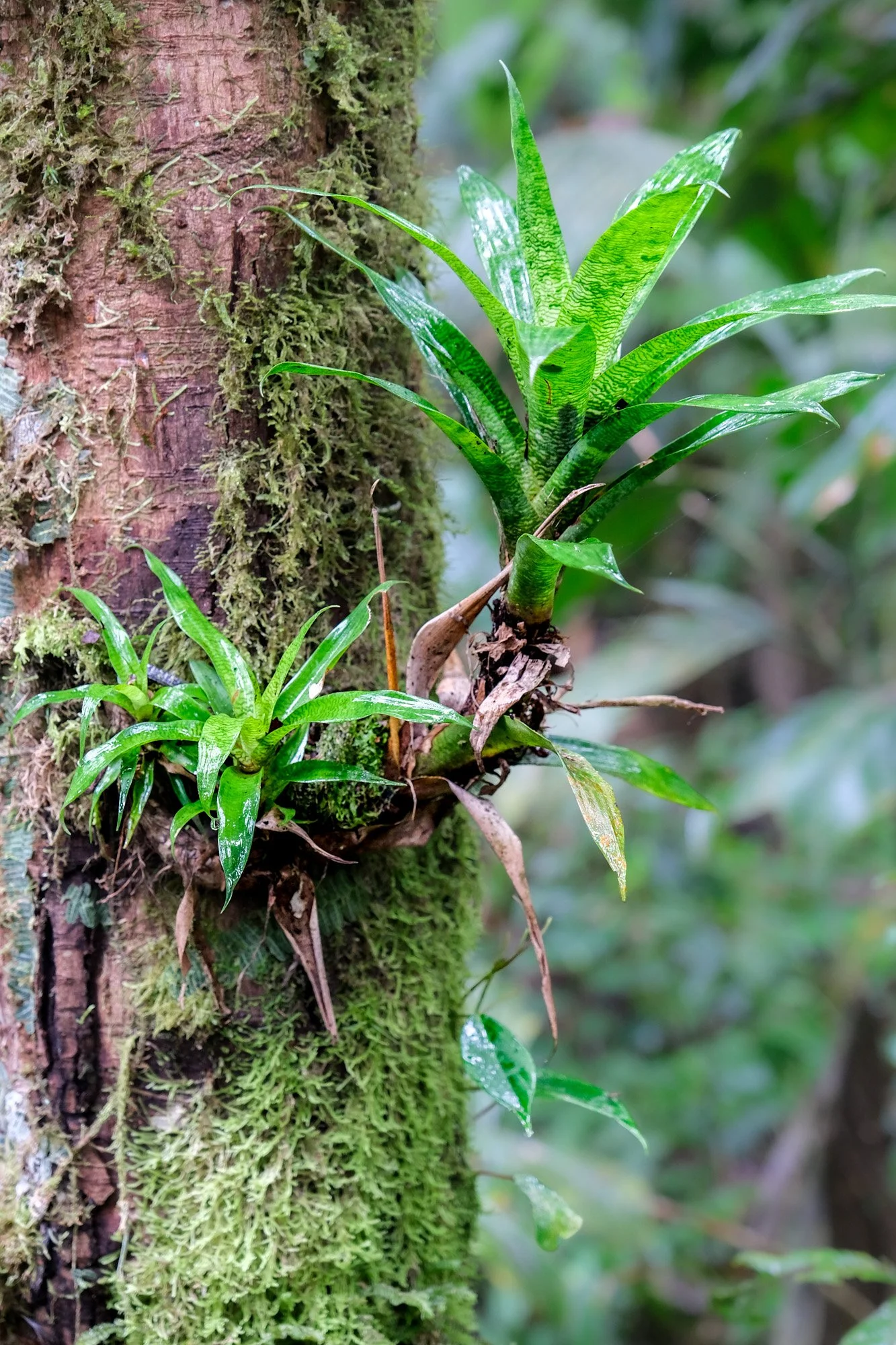
It was exciting to see the air plants in the wild.
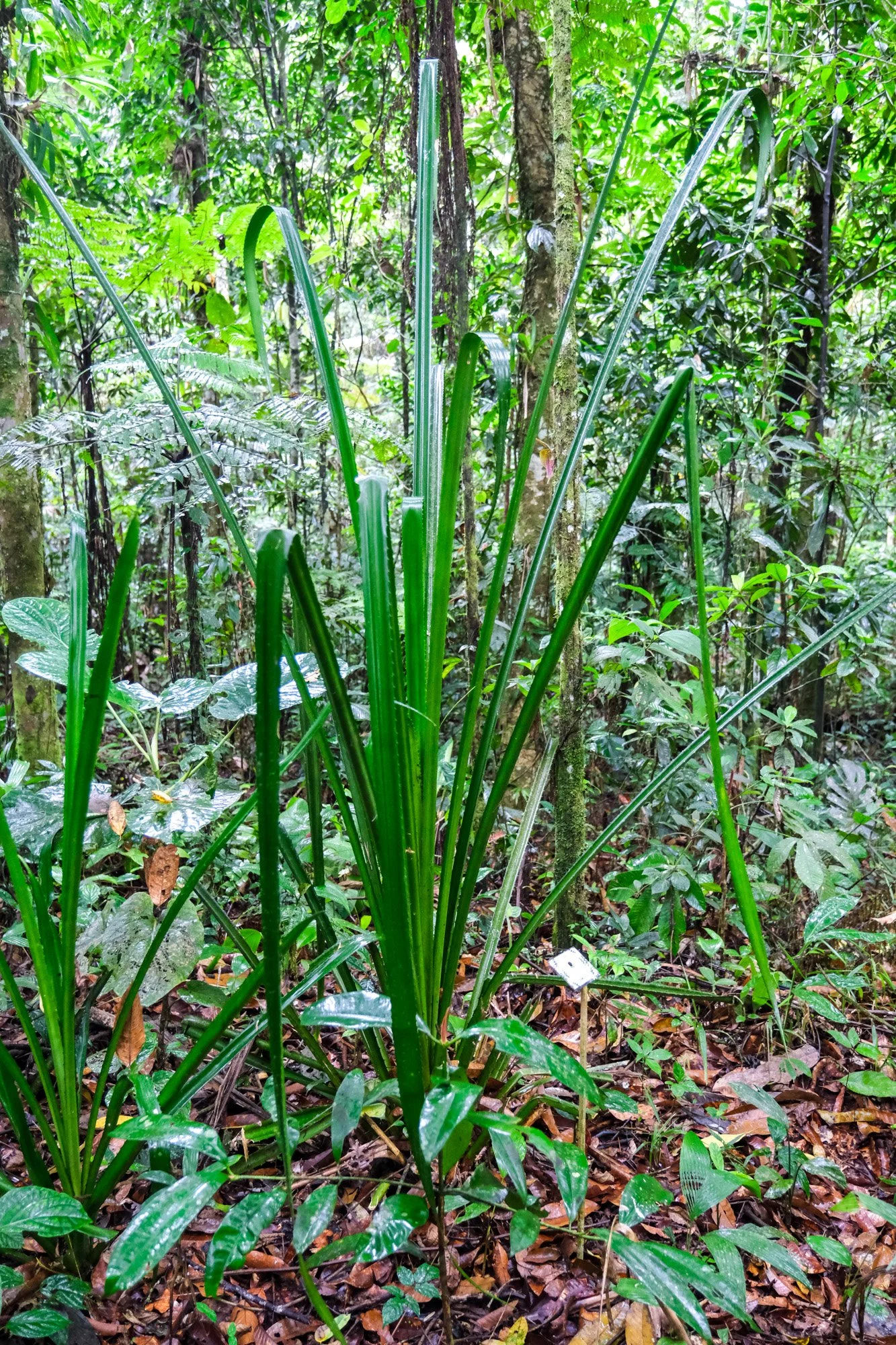
Toquilla palm is the ingredient for the Ecuadorian (Panama) hats.
Another iconic plant we saw was the toquilla palm. This rather inconspicuous plant is best known as the primary material for Panama hats. While this plant is native from the Amazon all the way to Central America, the so-called Panama hat is actually of Ecuadorian origin. The hats were popularized during the construction of the Panama Canal, hence earning the name Panama hats. We were just in Cuenca a few days prior, and we got to visit one of the most respected makers of Panama hats. It was fun to witness their factory floor, so we felt like we were coming full circle seeing toquilla palms here. Its transformation into the final products is nothing short of extraordinary.
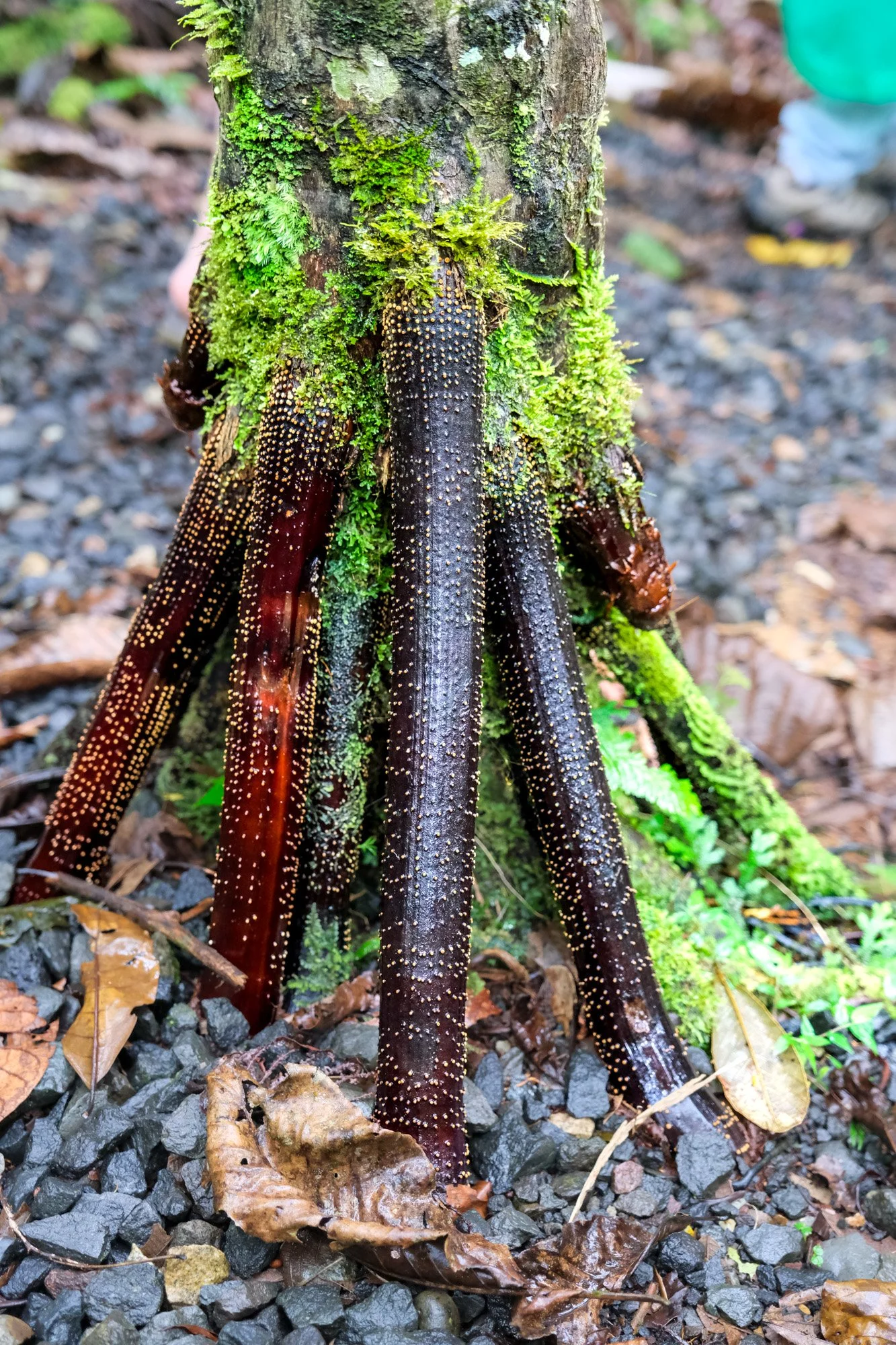
The stilt roots of walking palm has a very sharp texture.
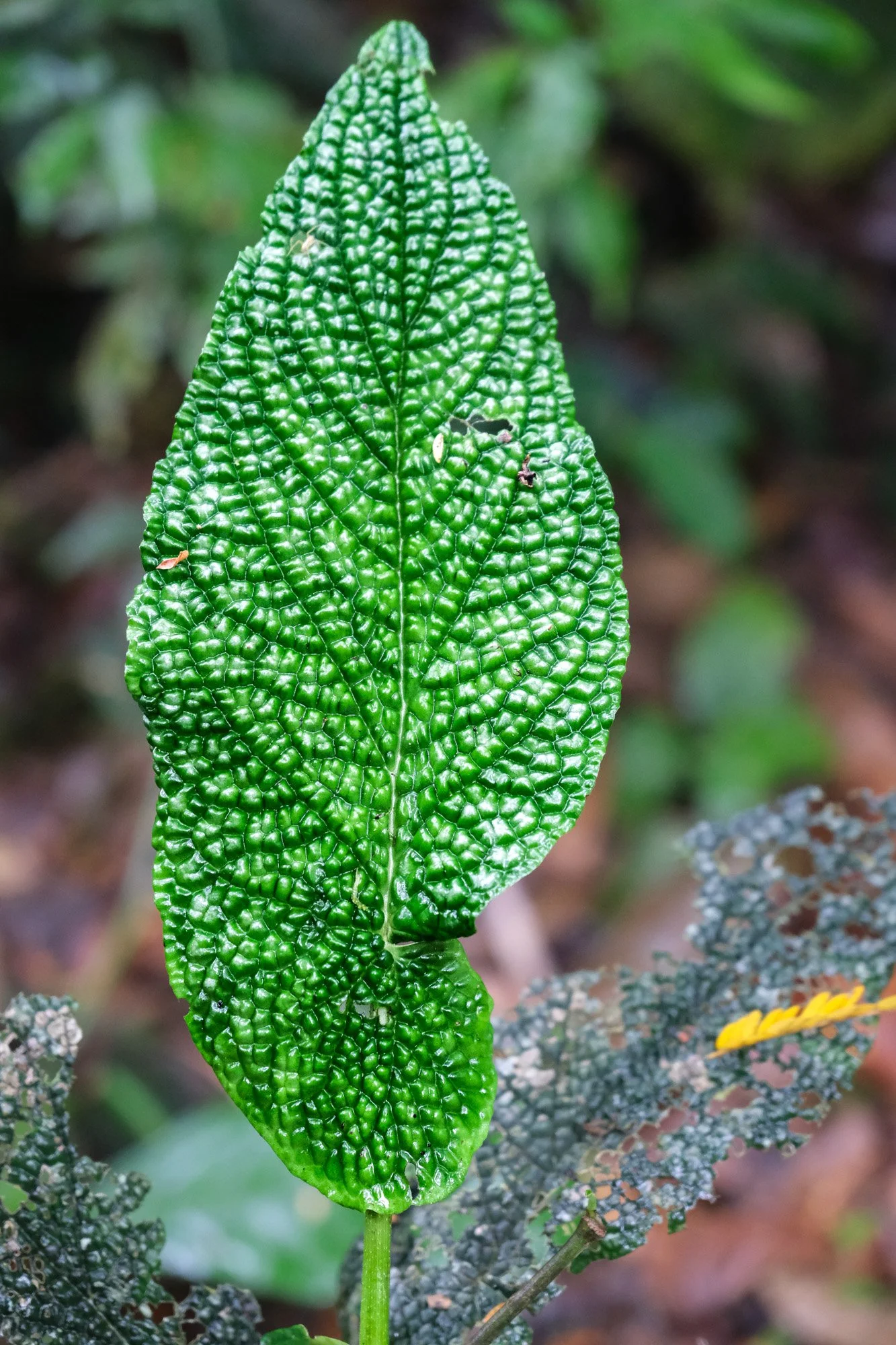
Isn’t this some of the most beautiful leaves ever?
We were very lucky that the family we toured with was extremely observant; no fungi, orchids, or flowers could escape their gaze. The little girl was particularly enthusiastic. Despite all the exotic-looking species in the garden, some of the most memorable plants we encountered were the wild garlic; the leaves are almost as fragrant as the garlic bulb. Another favorite plant of ours here is Mespilodaphne quixos, sometimes referred to as “Ecuadorian cinnamon.” The plant's cupule tasted like a blend of common cinnamon and licorice. At the end of the tour, we were treated to refreshing cups of tea brewed from Ecuadorian cinnamon flowers. That was easily the most delicious beverage I had in Ecuador.
After meandering through the dirt paths through the dense forest, we eventually arrived at the garden’s nursery. The nursery not only helps propagate plants for the garden but also donates many of them to others to help restore the region's rainforest. In addition to the effects of climate change, unfortunately, the region’s ecology is severely impacted by local customs. One prime example Angela gave was the chontacuro, an Amazonian larva and a delicacy in the local diet. The insects from these larvae naturally burrow into many trees in this region, but the popularity of chontacuro has led many to cut down mature trees just to harvest the larvae. It is clear to me that the mission of this garden is not only to showcase exotic plants to foreign visitors but also to educate locals about the importance of ecological conservation.
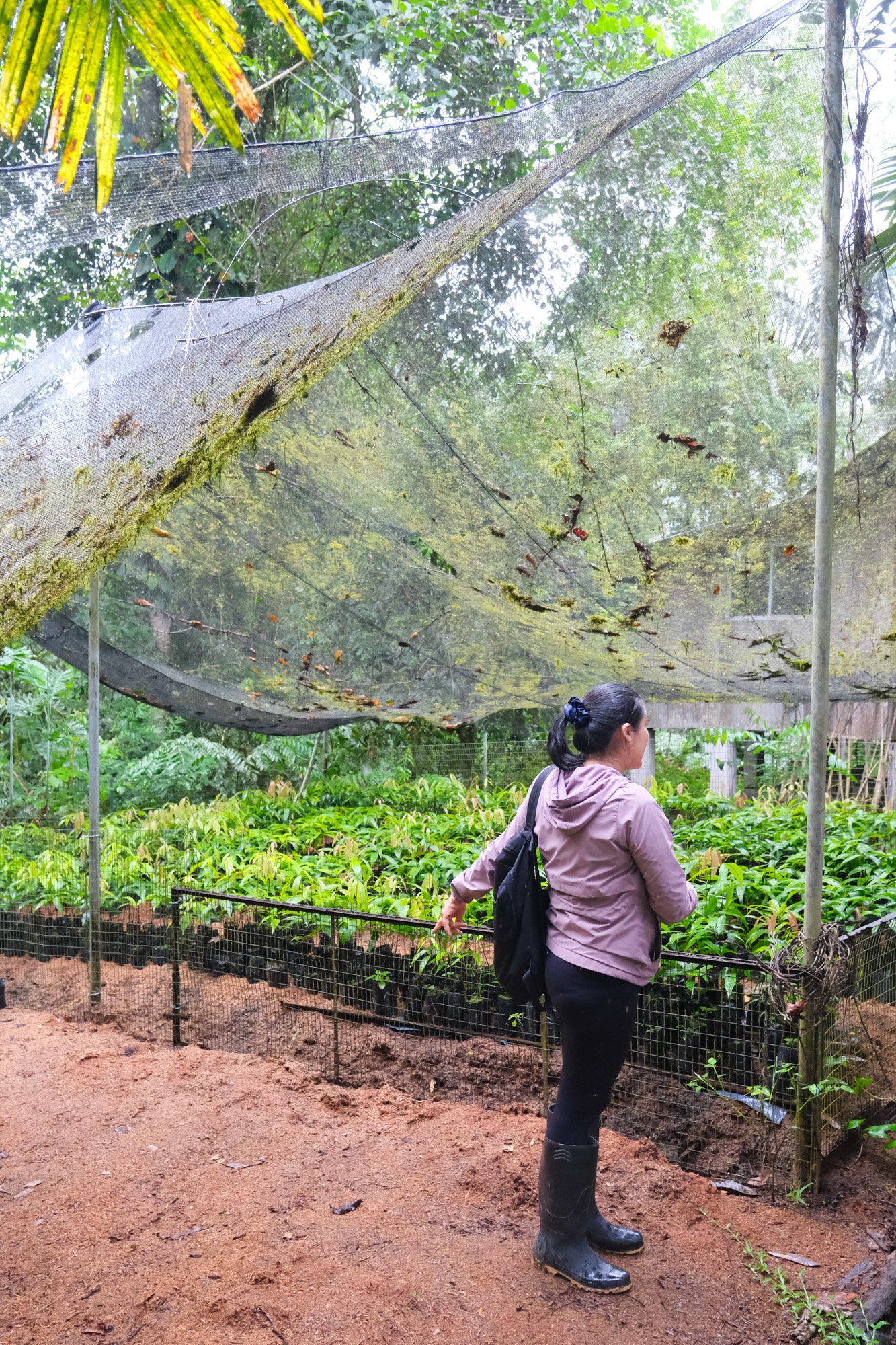
The garden’s nursery propagates native plants to be donated across the region.
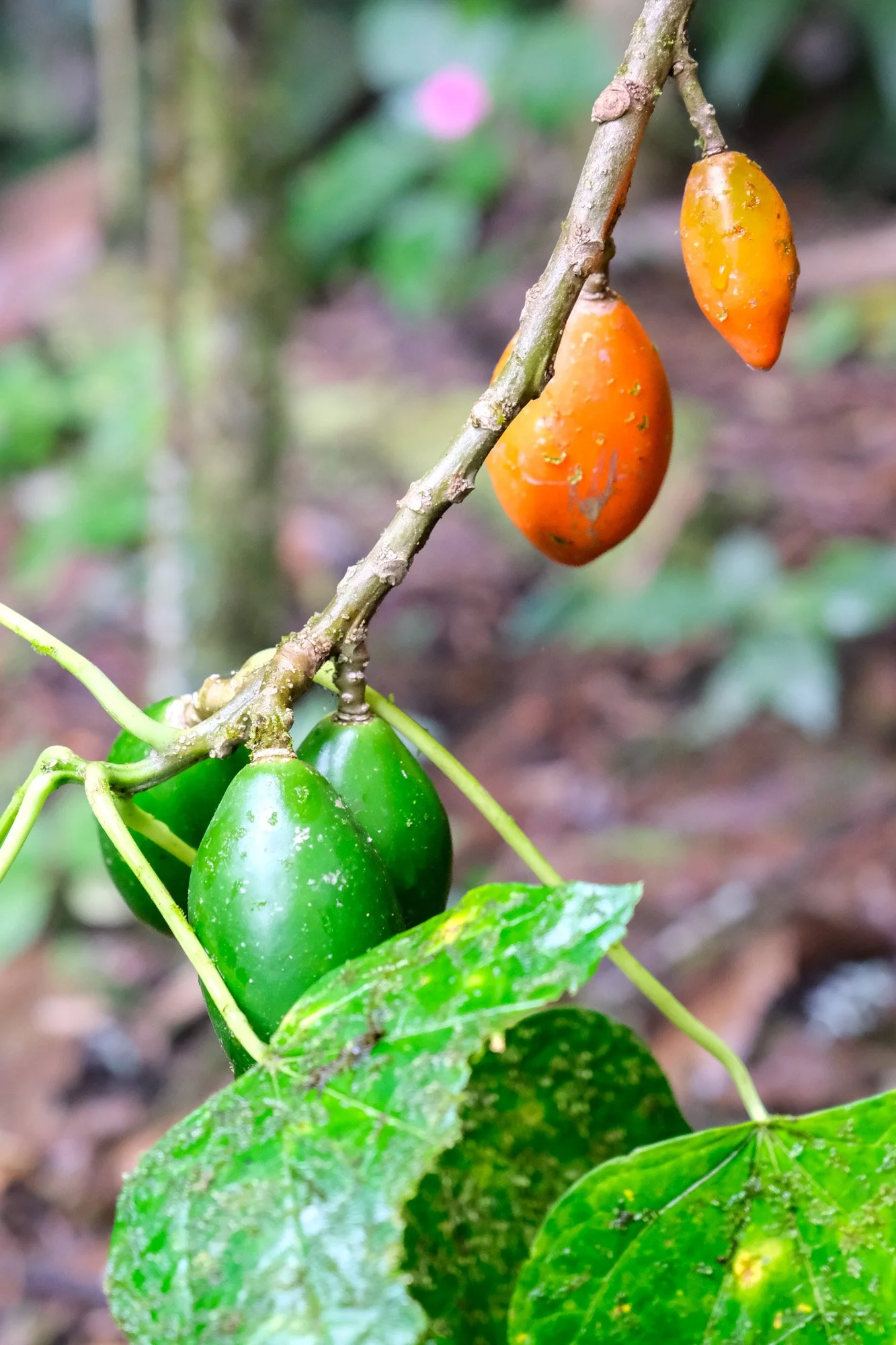
The “peanut butter fruit” produces an aroma similar to peanut butter.
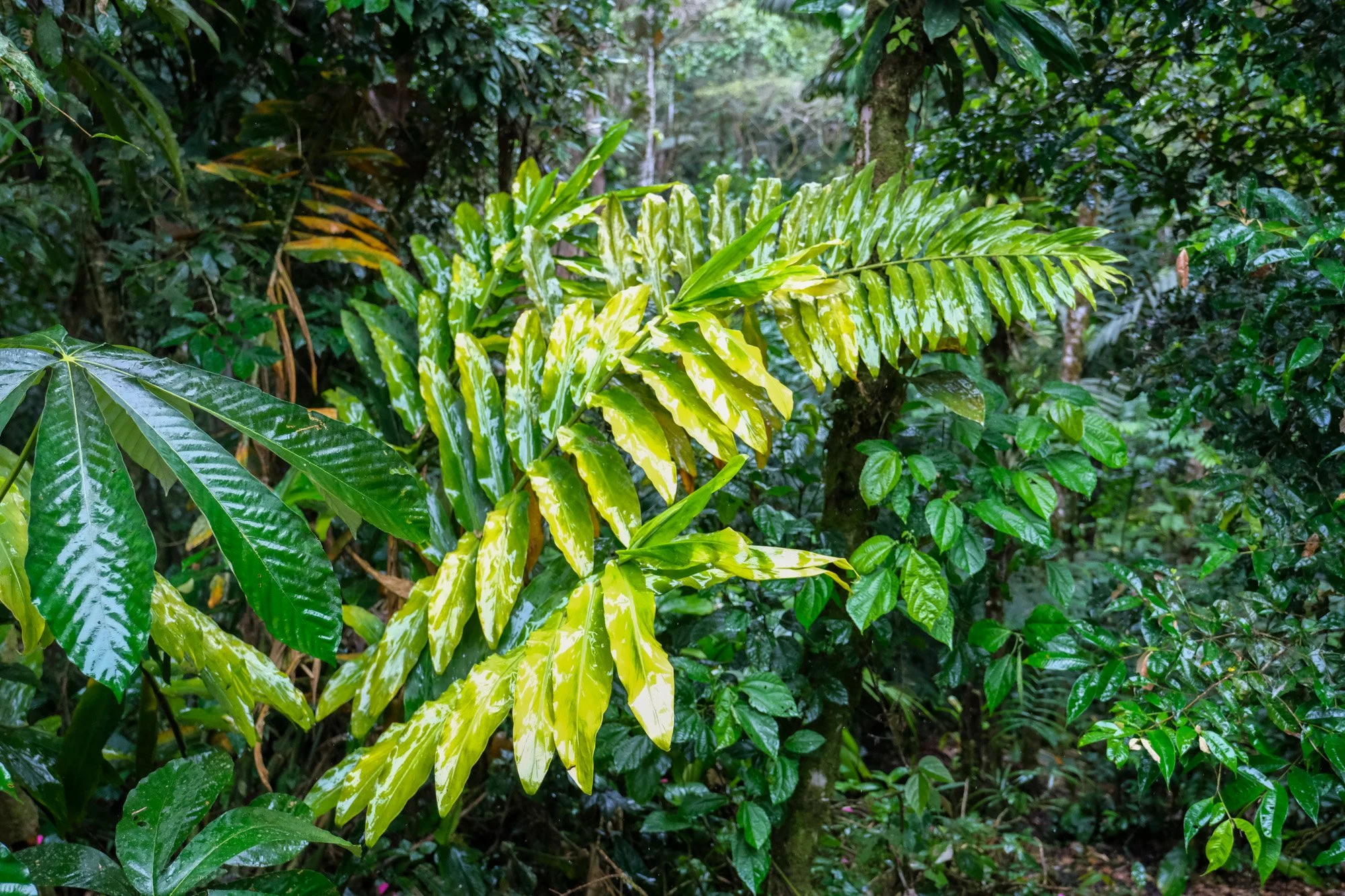
This foliage fits well into my stereotype for the Amazon.
After a two-hour walk through the forest, we made it back to the reception area by the entrance. Angela began speaking about the history of the garden. According to the record, the land where the current garden is located today was first cleared in 1920 for sugar cane. Angela’s father, Omar Tello, worked full-time as an accountant at the time and always dreamed of restoring a cattle-grazing field to a thriving rainforest. While holding on to his full-time job, he spent all his spare time working on this garden in the 1980s, without recognition or assistance. Angela spent much of her childhood here, which would explain why she seemed so intimately familiar with every plant, as if they were siblings.

Brian and my parents at my dad’s little garden in Hsinchu, Taiwan.
Five years ago, my father actually bought a little plot of land in my hometown and transformed it into a lush garden. Like Angela’s father, Dad spent just about all day at his little garden, transforming it from a pile of rubble into an oasis in the middle of the concrete jungle. That little plot of land is his baby. I instantly related to Angela and only wished my father could be there. He would have loved every second of it despite the language barrier. Knowing how much effort he put into his tiny garden, I can’t help but feel enormous respect for Mr. Tello. We had no idea that the lush forest we had just walked through was the product of the blood, sweat, and tears of one man and his immediate family.
Adjacent to the main reception area is a small museum dedicated to the garden's history and ecological diversity. Looking at the photos of the site from the 1980s, we were shocked by how barren it was. It was a great testament to a man’s dedication to the Amazon. Key to the restoration process was replenishing soils depleted by decades of farming and ranching. Ironically, the soil of the Amazon rainforest has never been regarded as nutrient-rich. It took a decade of introducing organic matter just to lay the foundation for reintroducing native plants back to the land. The nursery continued to produce compost by mixing sawdust, sugar cane husks, and manure.
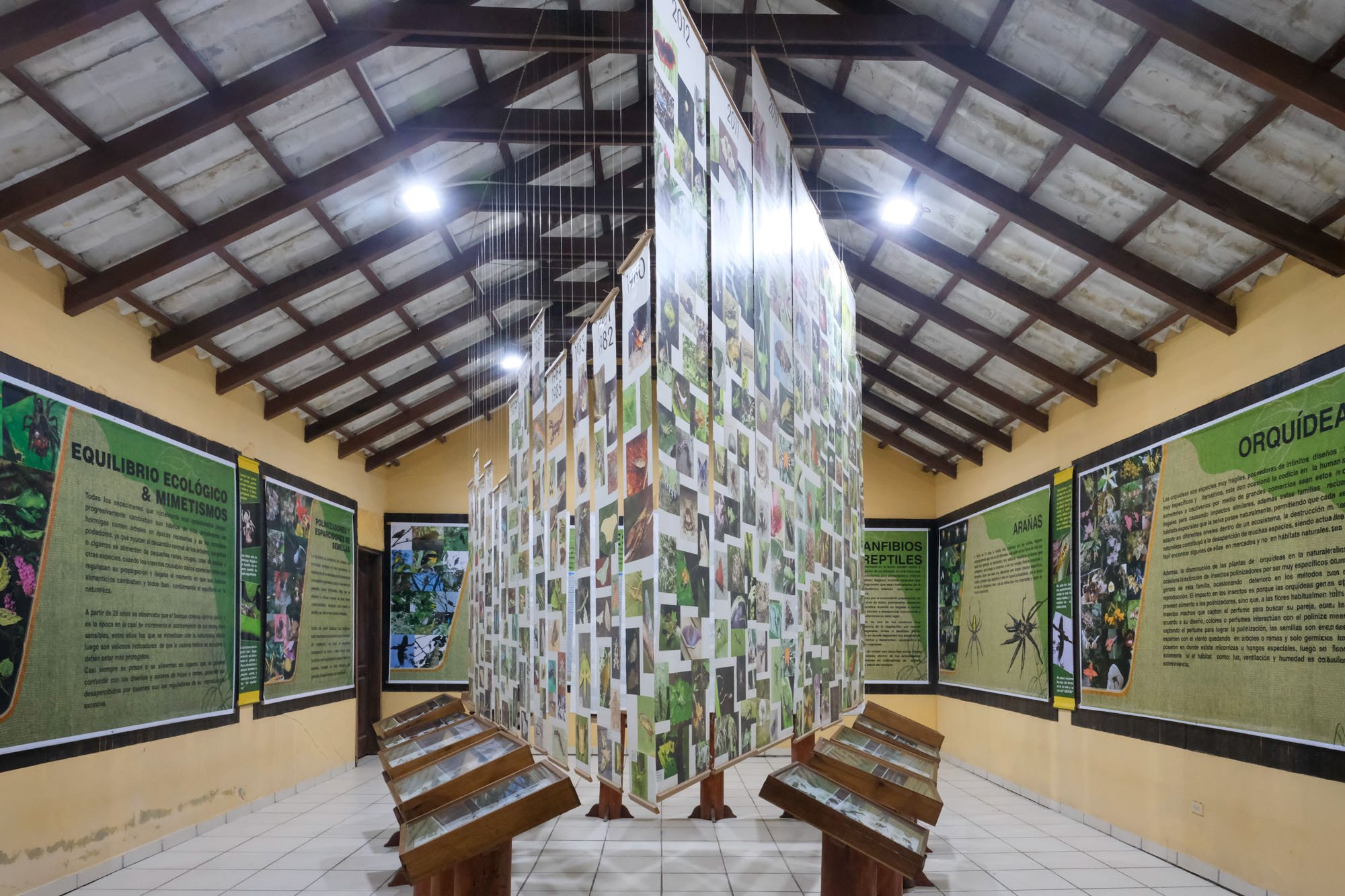
The garden’s small museum documents the ecological diversity observed here.
After two decades, they began to witness an explosion in the diversity of insects and wildlife. It would be easy to see this place as just a patch of virgin rainforest. Instead, this is a carefully curated garden for plants from all over the Amazon. In the middle of the museum is a chronological documentation of the appearance of various species. Amazingly, many unique species from outside the region appeared in the gardens, seemingly from hundreds of miles away. It was still unknown how all the species had come to be here. Some of the most interestingly looking insects are various orchid mantises. I was just glad that we did not witness one of the dozens of snake species present here.
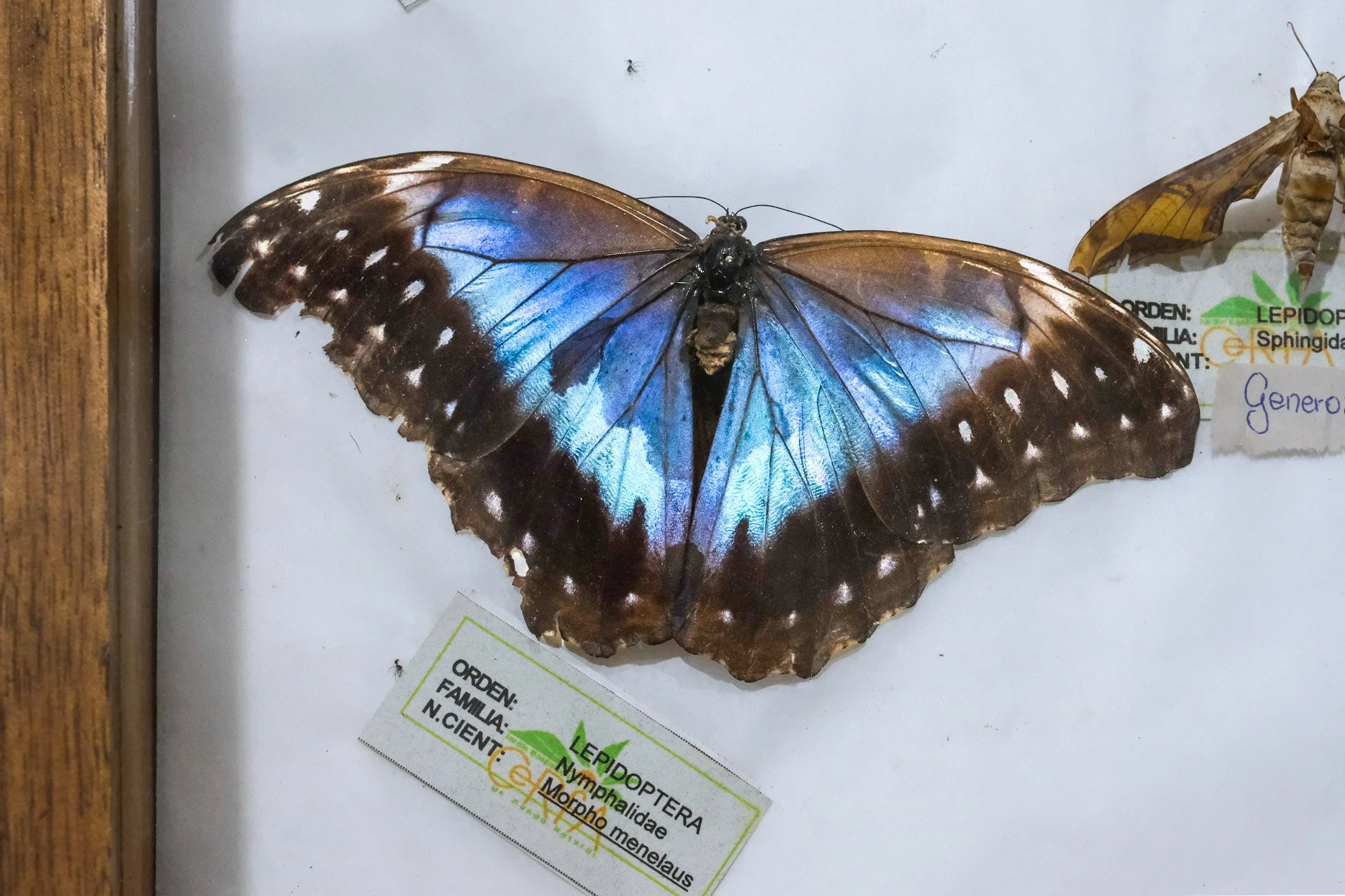
Many exotic insects “magically” appeared at the garden.
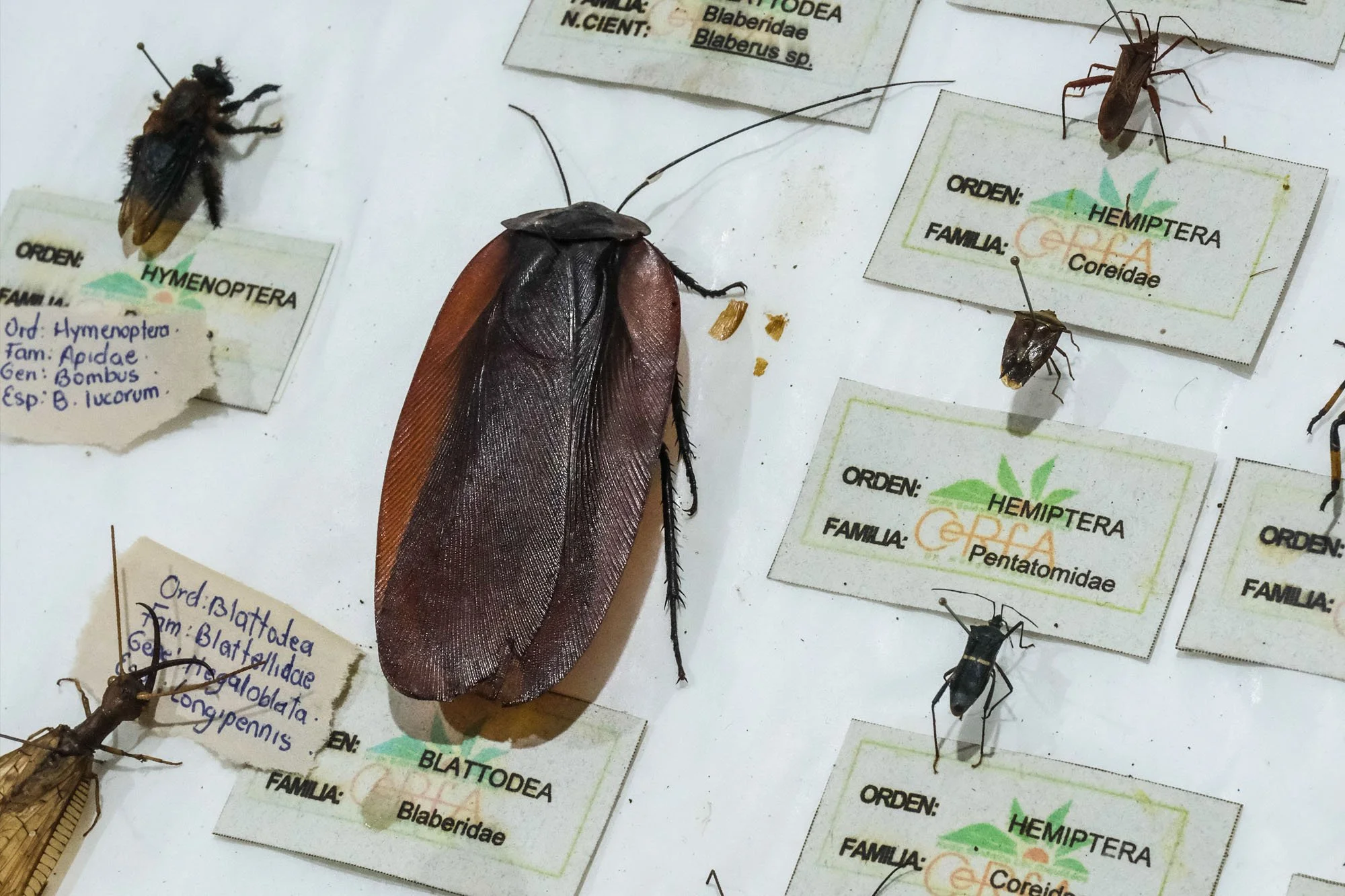
Thankfully, I did not see this type of bigs on our walk.
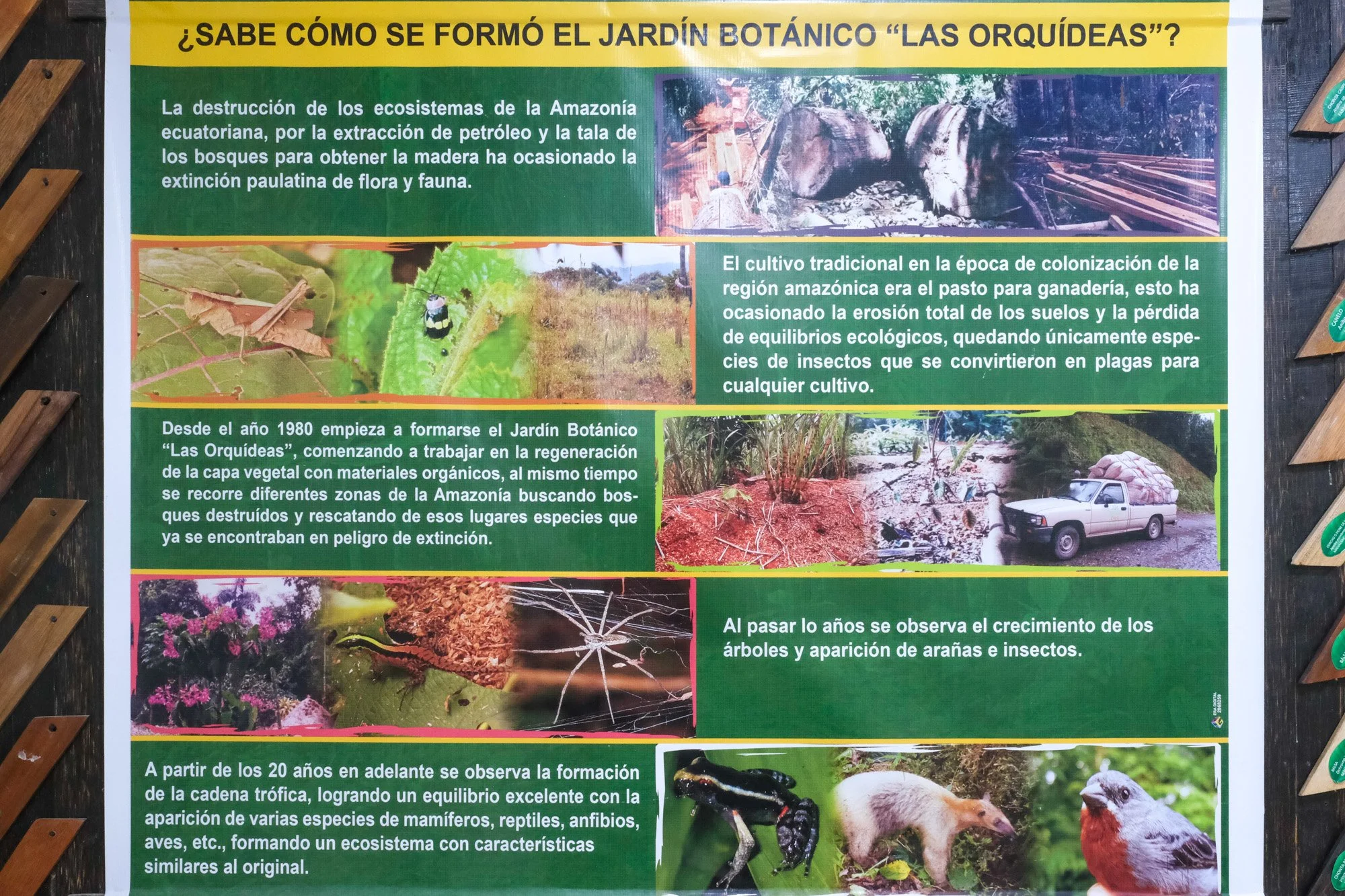
The history and evolution of "Las Orquídeas" Botanical Garden.
As we were exiting the museum, I noticed a deep freezer advertising the “Amazonian” ice cream. The exotic-flavored ice cream was wrapped in palm leaves, and it did seem a little too “homemade” outside the context of the Amazon. Angela told us these local artisanal products were born out of the desire to minimize plastic use and to embrace local produce. Among the dozen flavors on offer are soursop, guaba, and copuazú. I ended up picking one made from the fruits of native palm trees. I honestly wish I had taken a photo of all the ice cream flavors and jotted down the brand name.
We waited until the very last minute to ask Angela an important question. How much did we owe her for the museum visit, two-hour guided walk, and the ice cream? I honestly did not know what to expect. It turned out that entire experience cost the two of us $13 USD, making this the most worthwhile site we visited in Ecuador. I asked her how many guests they receive daily out of curiosity. Much to my amazement and horror, they received about thirty to forty walk-up visitors a month on average! Thankfully, the garden is now on the radar, so they occasionally receive student groups. It is a real shame that such an amazing place is not well known to foreign visitors. We ended up voluntarily doubling our payment as a donation. This experience also motivates me to write this very blog post.
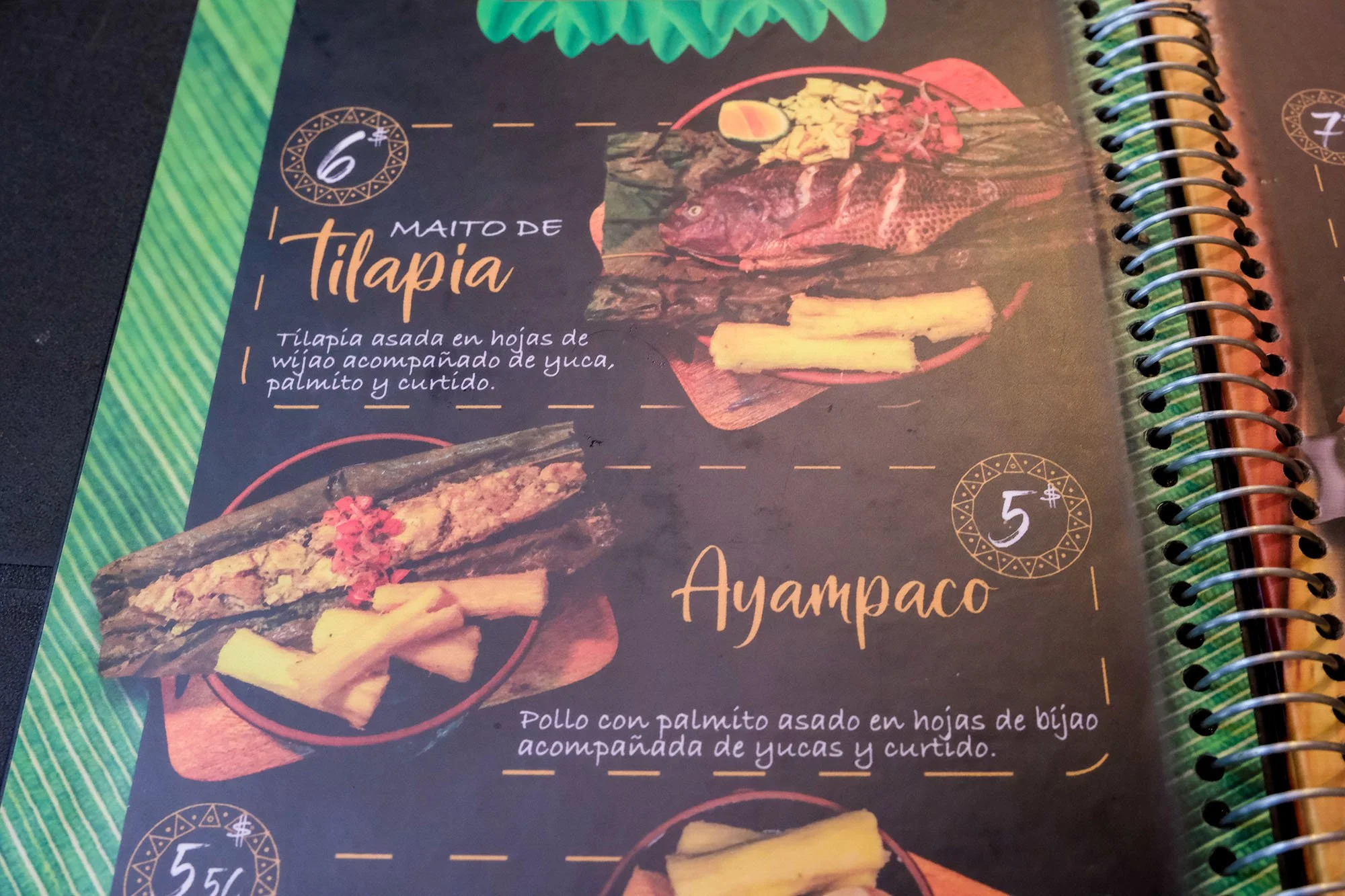
The menu at Nativa Comida Típica Amazónica.
After the garden, we were ready for a late lunch. We found ourselves at Nativa Comida Típica Amazónica. As the name suggests, this popular restaurant specializes in Amazonian cuisine. The fancy menu and trendy decor made me wonder if this was just a tourist trap. I was pleasantly surprised that we seemed to be the only foreigners in this packed restaurant. Since we were in the Amazon, I had to order the most iconic dish of the Pastaza region: maito de pescado, the wrapped seafood. The freshwater fish is wrapped in banana leaves and cooked over the wood fire. After previous conversations at the botanical garden, it was no surprise that it was tilapia. Served with steamed cassava and hearts of palm, the dish was surprisingly delicious. This may be the best-tasting tilapia I have had for quite a while. A jug of iced guayusa tea made this $5 plate especially memorable.
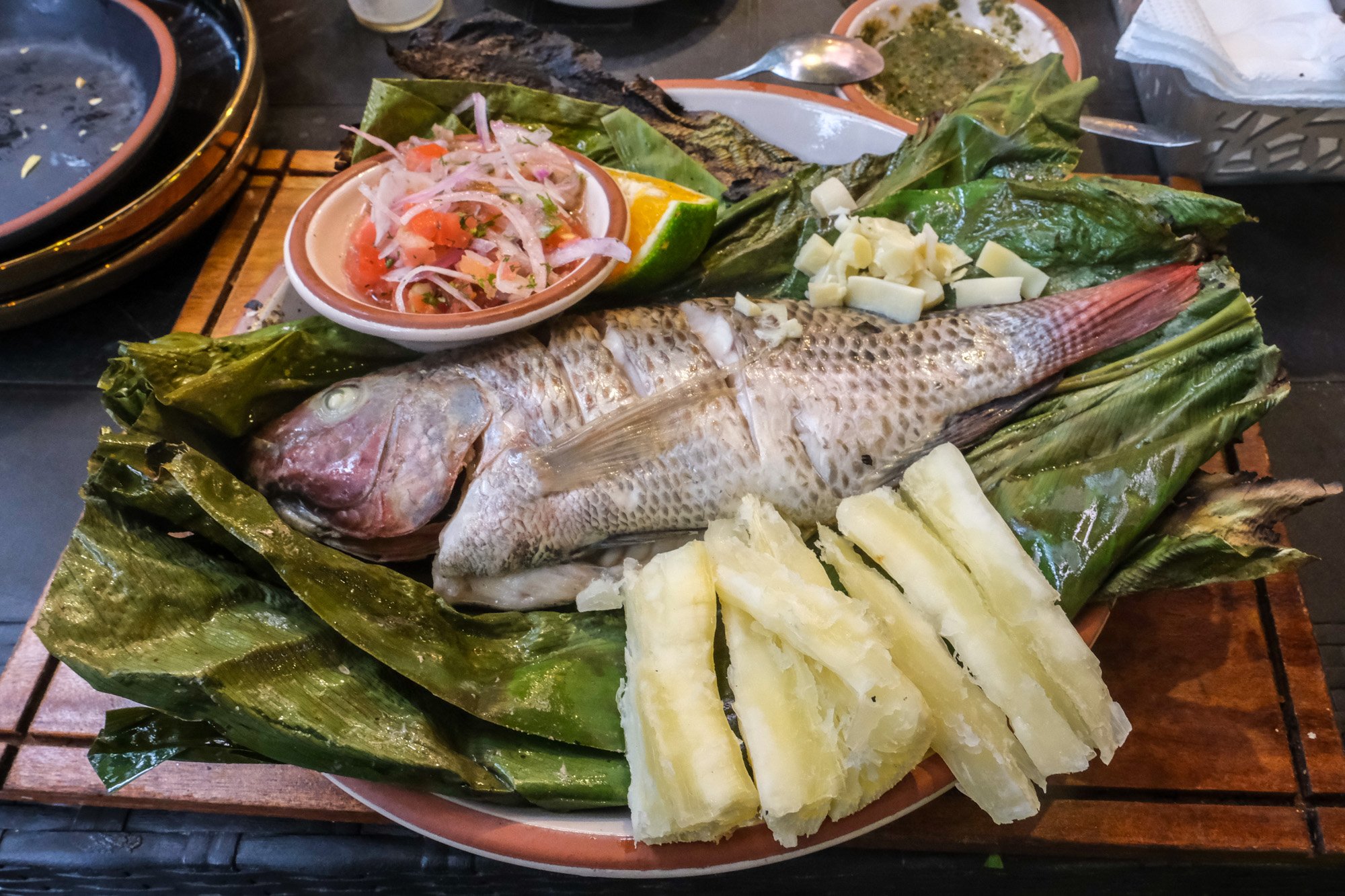
For $5, this may be one of the best deal on this trip.
After the fantastic visit to the botanical garden, it would be nice to get acquainted with the Amazon's cultural side. Most day trip packages to Puyo included a visit to the “local indigenous community” for cultural demonstrations, such as hunting skills, traditional dances, and face painting. But as far as I know, those places are not catered to independent travelers. Objectively, I do think those cultural shows could sometimes be quite “inauthentic” and awkward. That would be especially the case if Brian and I were the only audience. Unfortunately, Brian began to feel a little under the weather. With weather conditions not forecasted to improve, I was not sure what to do for the remaining few hours of daylight. In the end, I convinced him to visit Puyo’s Ethno-Archaeological Museum in the town center.
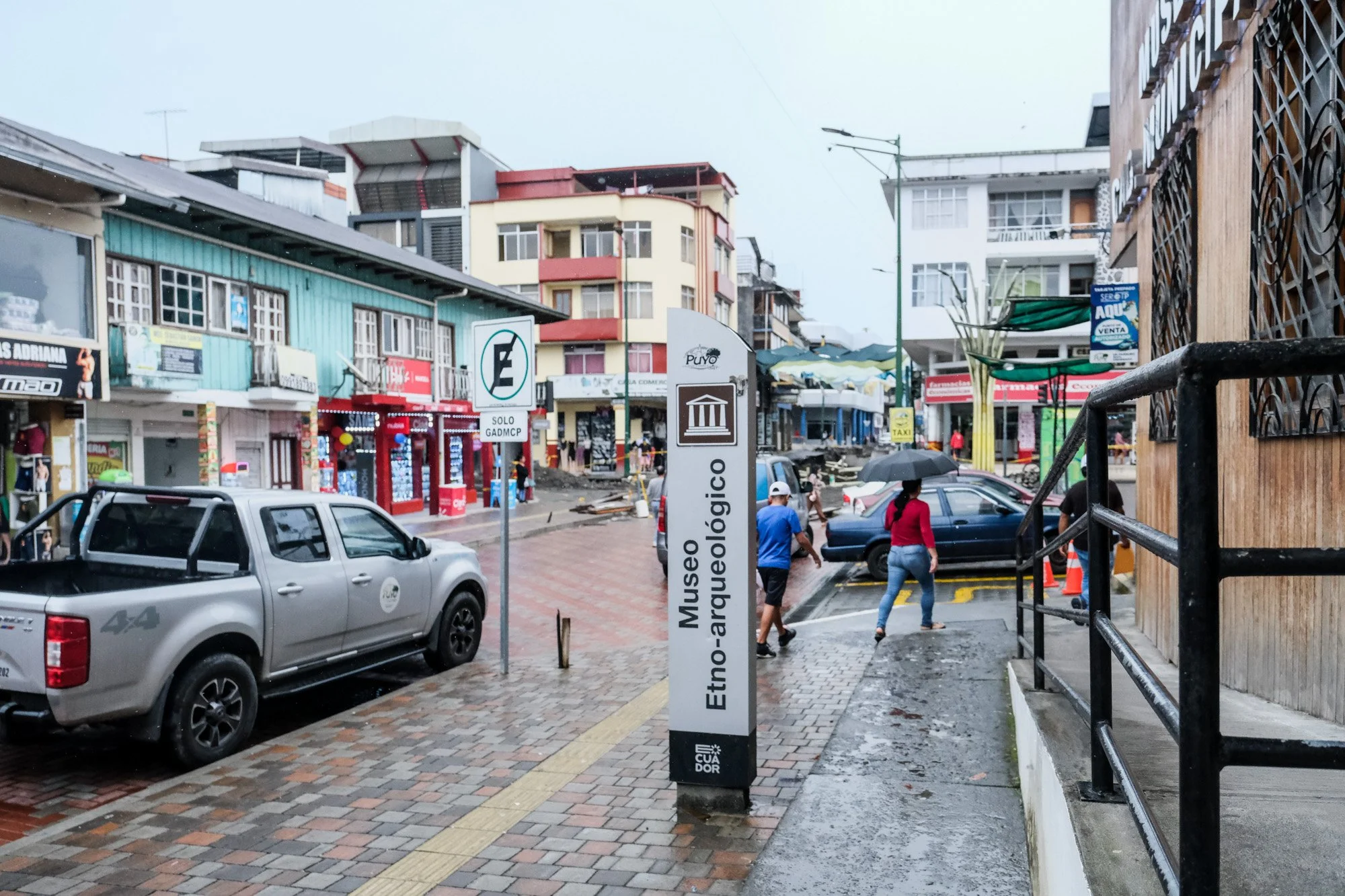
The entrance to the Ethno-Archaeological Museum.
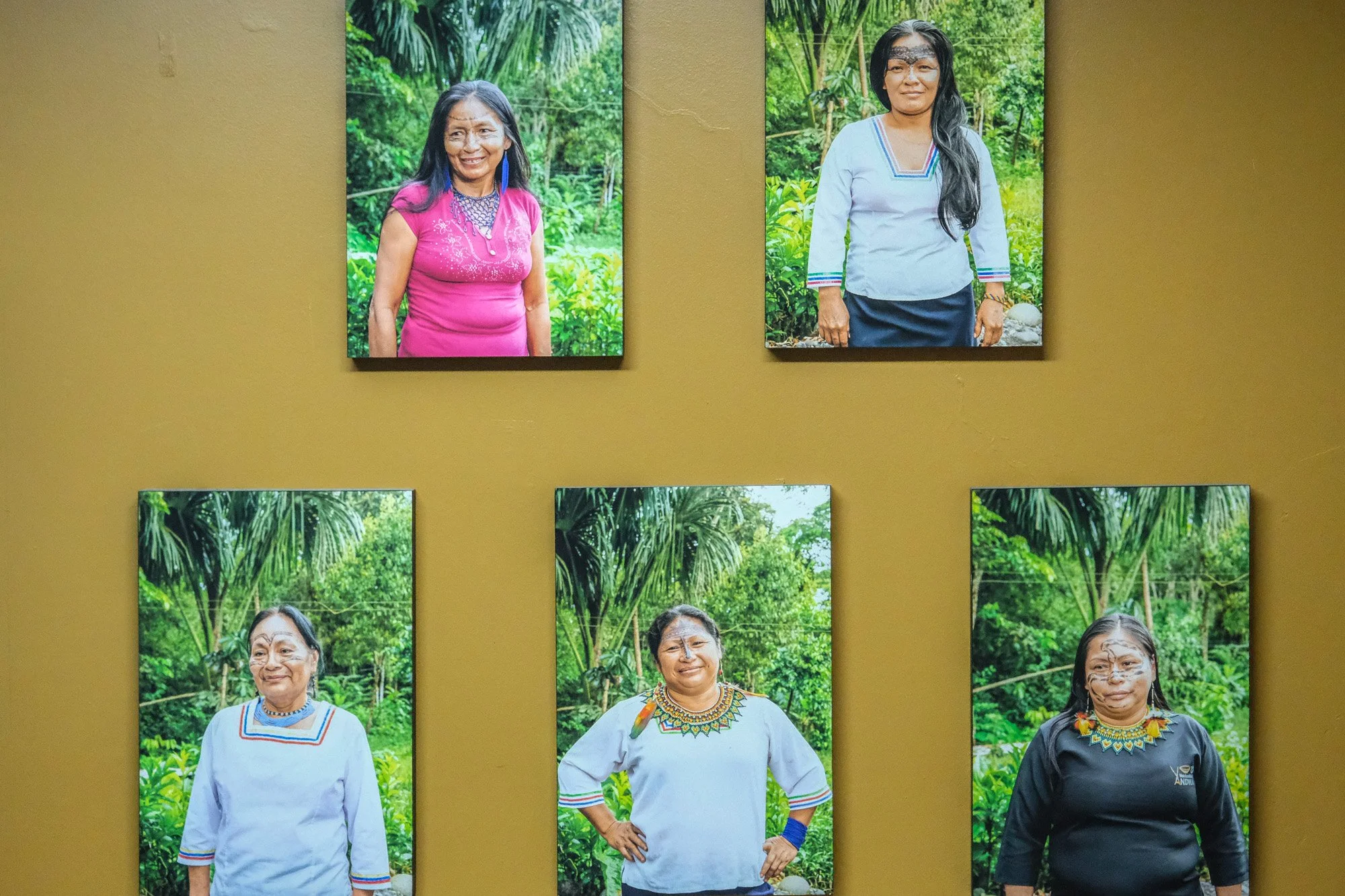
Ecuadorian Amazon is home to numerous and diverse ethnic groups.
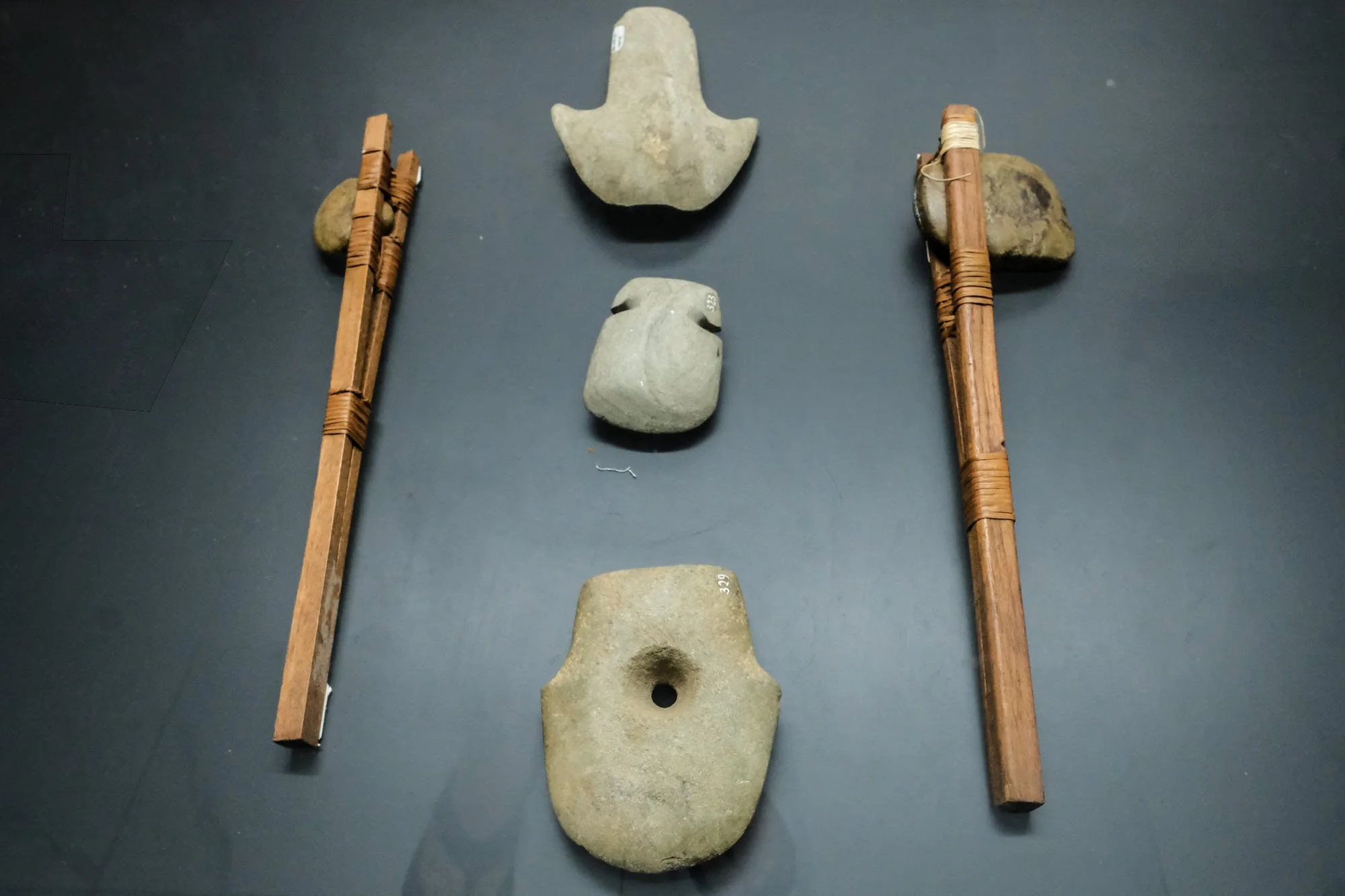
The traditional weapons from the indigenous community.
This little municipal museum occupies the second floor of a government building. There was no museum staff on site, except for a single security guard on the ground floor who signed us in. The dimly lit museum includes a few rooms with various exhibits of pottery, primitive weapons, and taxidermy. With signage limited to English, I did wish we had a professional tour guide there to explain the significance of these objects. One thing is clear: the inherent diversity within the Amazonian community. I suppose it was all too easy to generalize about Amazonian culture; I could see how this little museum deserves more attention, not just from tourists but perhaps from the government as well.
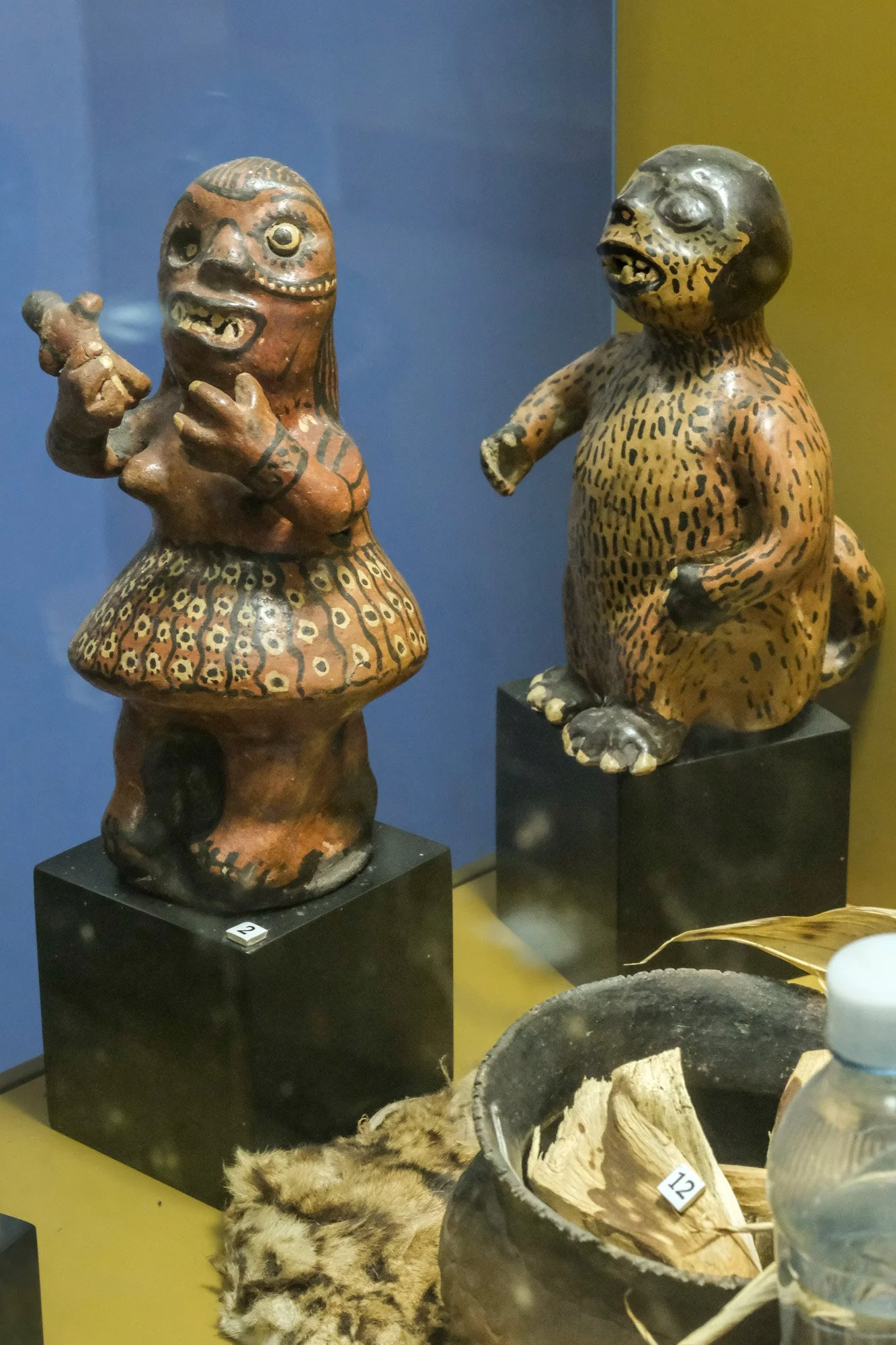
Traditional Amazonian figurines.
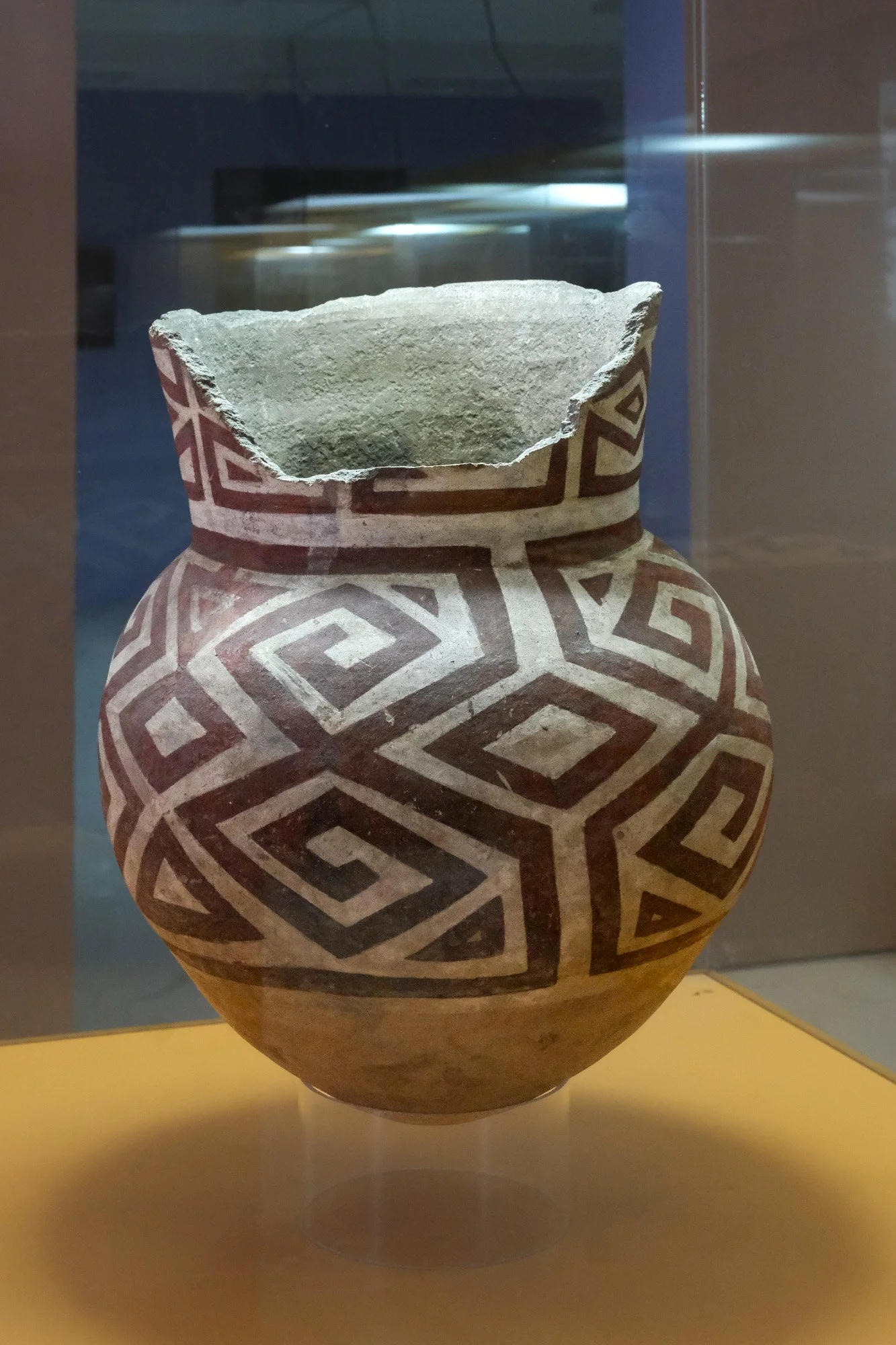
I can’t remember if this particular vase was a funerary urn.
As in most tropical cultures, preserving cultural artifacts is challenging due to the chronically humid climate. Many fragile items, such as feathered headgear and garments, were not particularly old. The most interesting objects in the museum for me were the pre-Columbian funerary urns. Made of ceramic, these urns contained the collected bones and precious objects of the deceased. According to online information, the families would lower the bodies into the river to let the fish consume the flesh, then collect the skeletons in urns. Other interesting artifacts include preserved fragments of wild animals used for religious ceremonies. I wonder how many of these indigenous practices survive to this day.
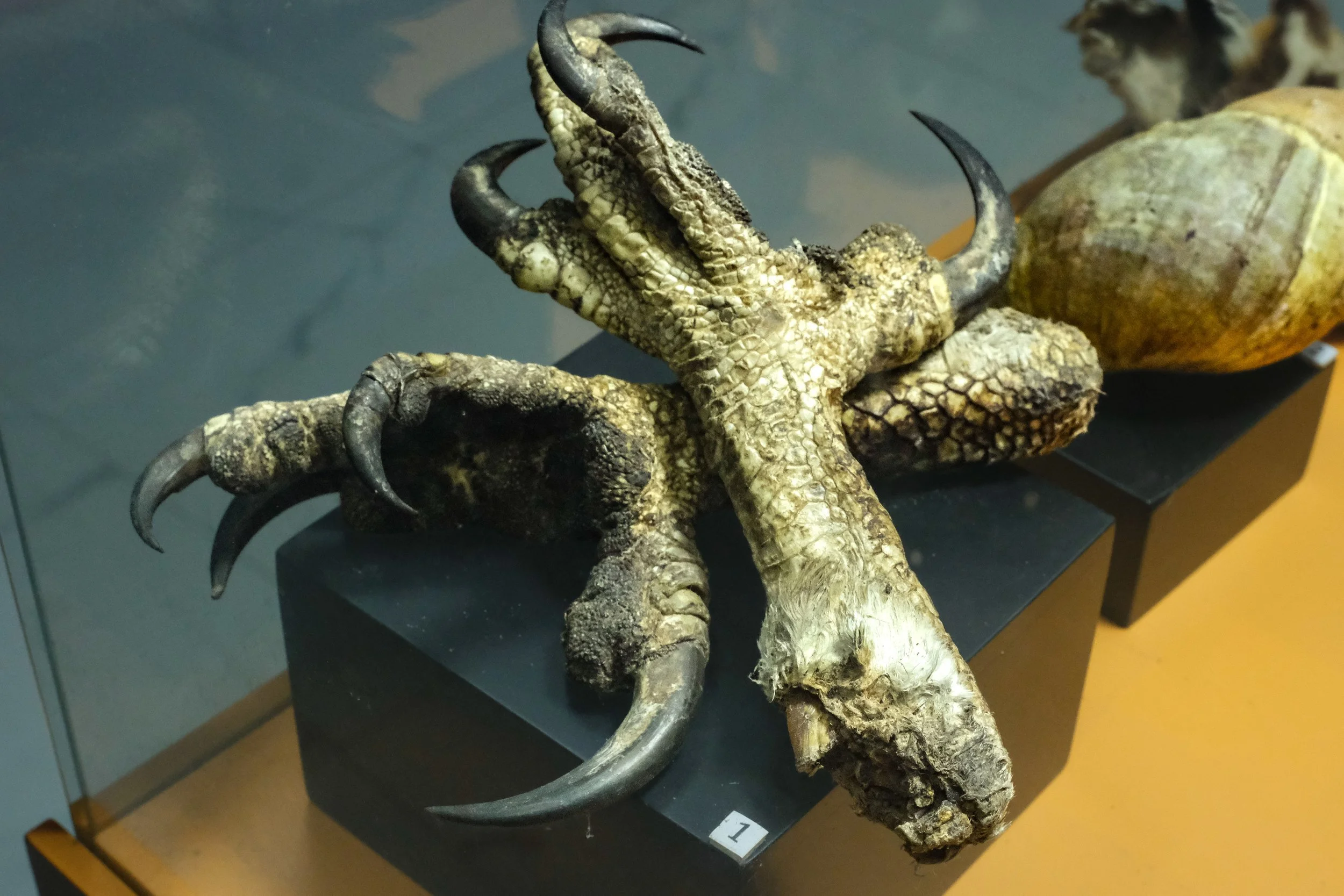
Animal parts used for religious ceremonies.
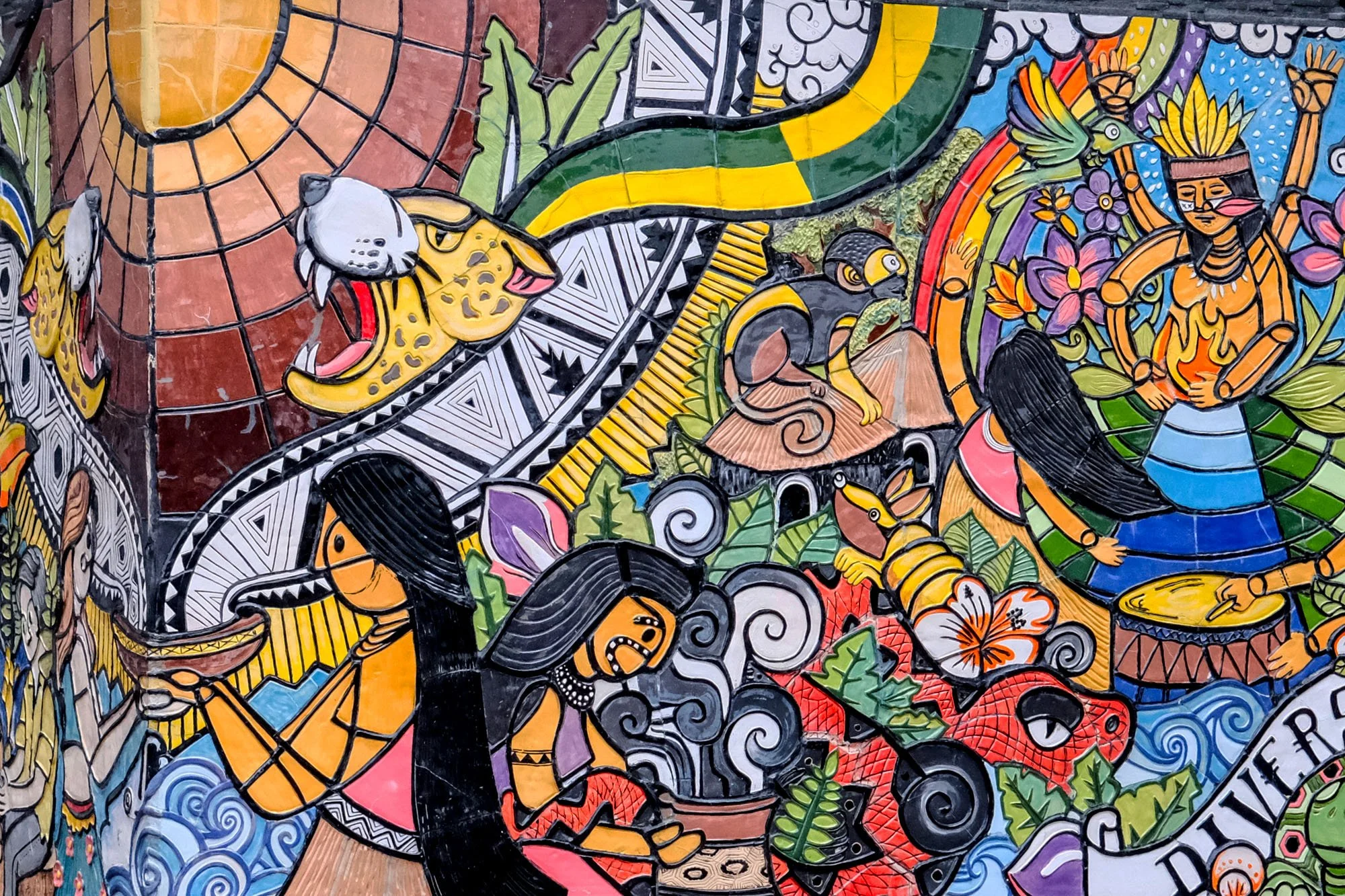
I am absolutely in love with this mural at Plaza José Garcés Pérez.
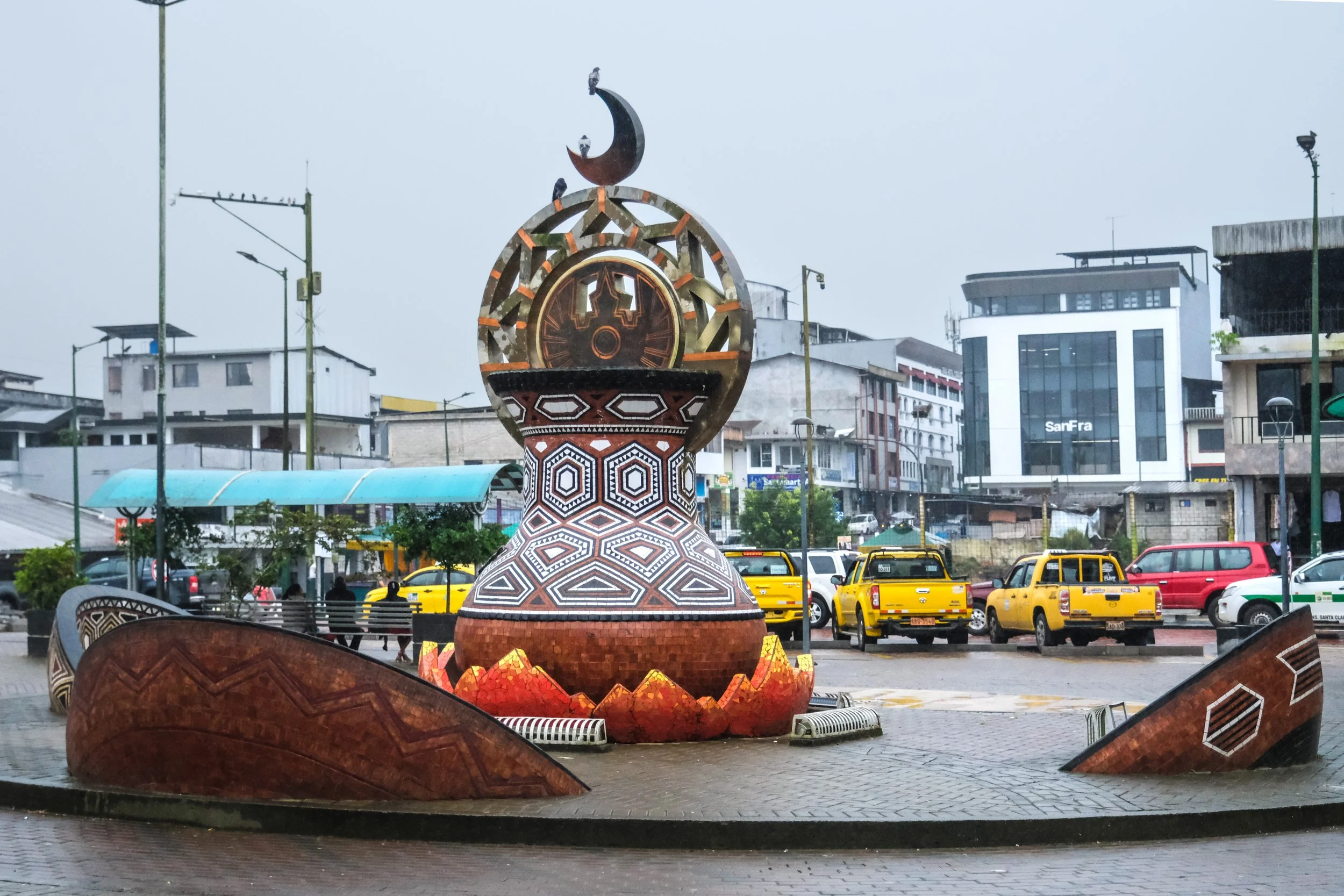
A public monument dedicated to the Amazonian ceramic.
Not surprisingly, there was not a single other soul at the museum during our visit. I suspect that most tourists visit Puyo on guided tours, so most don’t spend too much time wandering the streets of Puyo. With heavy downpours, we decided to just do a quick walk around the city center. Objectively, Puyo is not a particularly attractive city, but like all Ecuadorian cities, it has no shortage of interesting public arts and monuments. Next to the museum is an intriguing metal statute of an anthropromophic sloth? A blcok away is another giant monument dedicated to the Amazonian ceramic. Sadly, there seemed to be a dreath of information explaining the significance of these monuments.
Speaking of weather, I can’t help noticing that there are many shops selling rain gears. This being the Amazon, no body should be surprised by the rainy weather. However, I later learned that the name Puyo derives from the Quechua word “puyu”, meaning fog. In fact, the city is known overcast sky and the lack of a dry season. I suppose I was naive ot think we could catch sunny weather here. However, the temperature here is surprisingly pleasant, rnaging between 62 to 80 deegree fahrenheit daily. It was not the sticky kind of humid typical in Southeast Asia. This was actually the kind of tropical climate we could get used to.
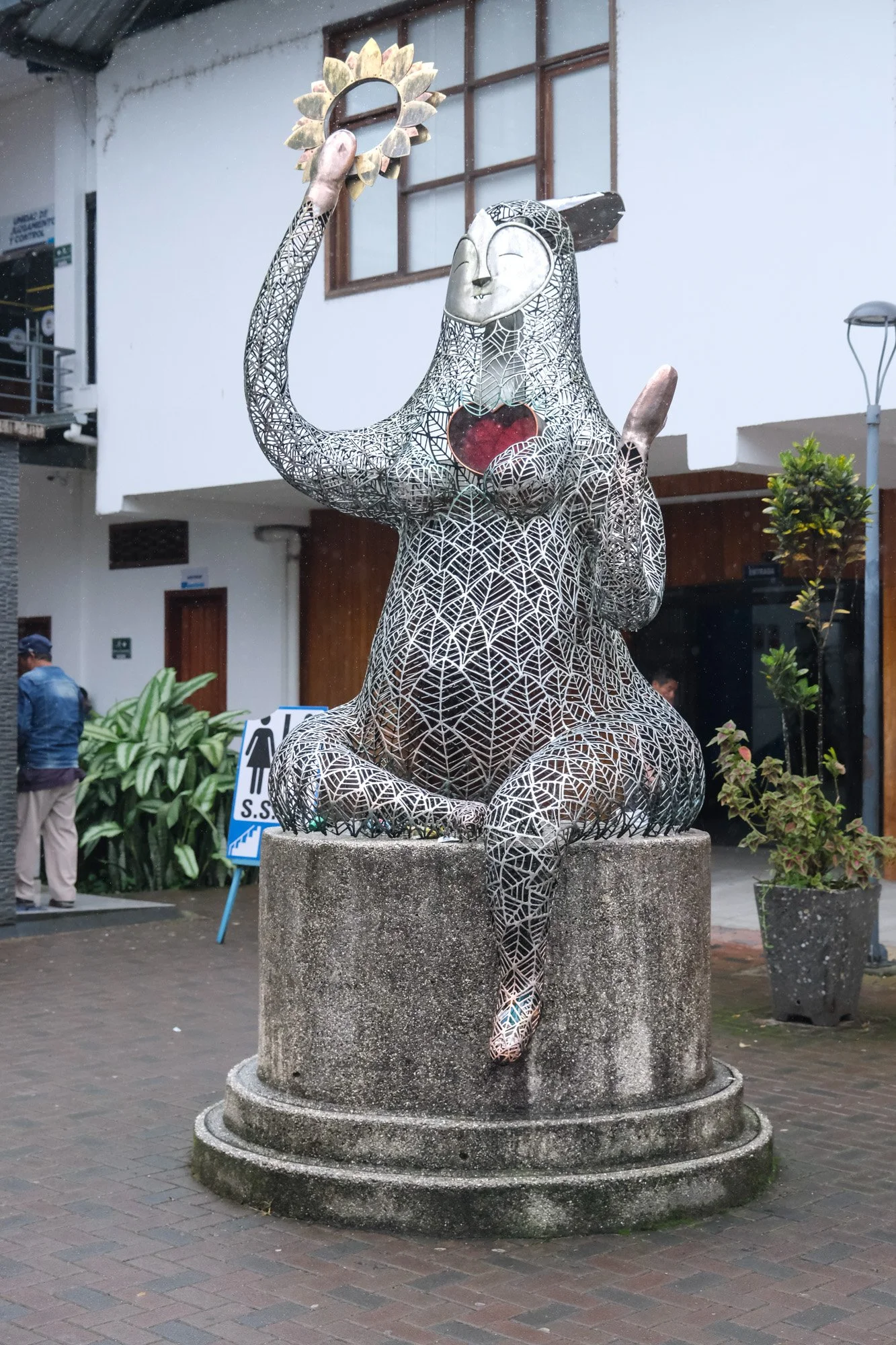
I am still curious behind the name and meaning behind the statue next to the Ethno-Archaeological Museum.
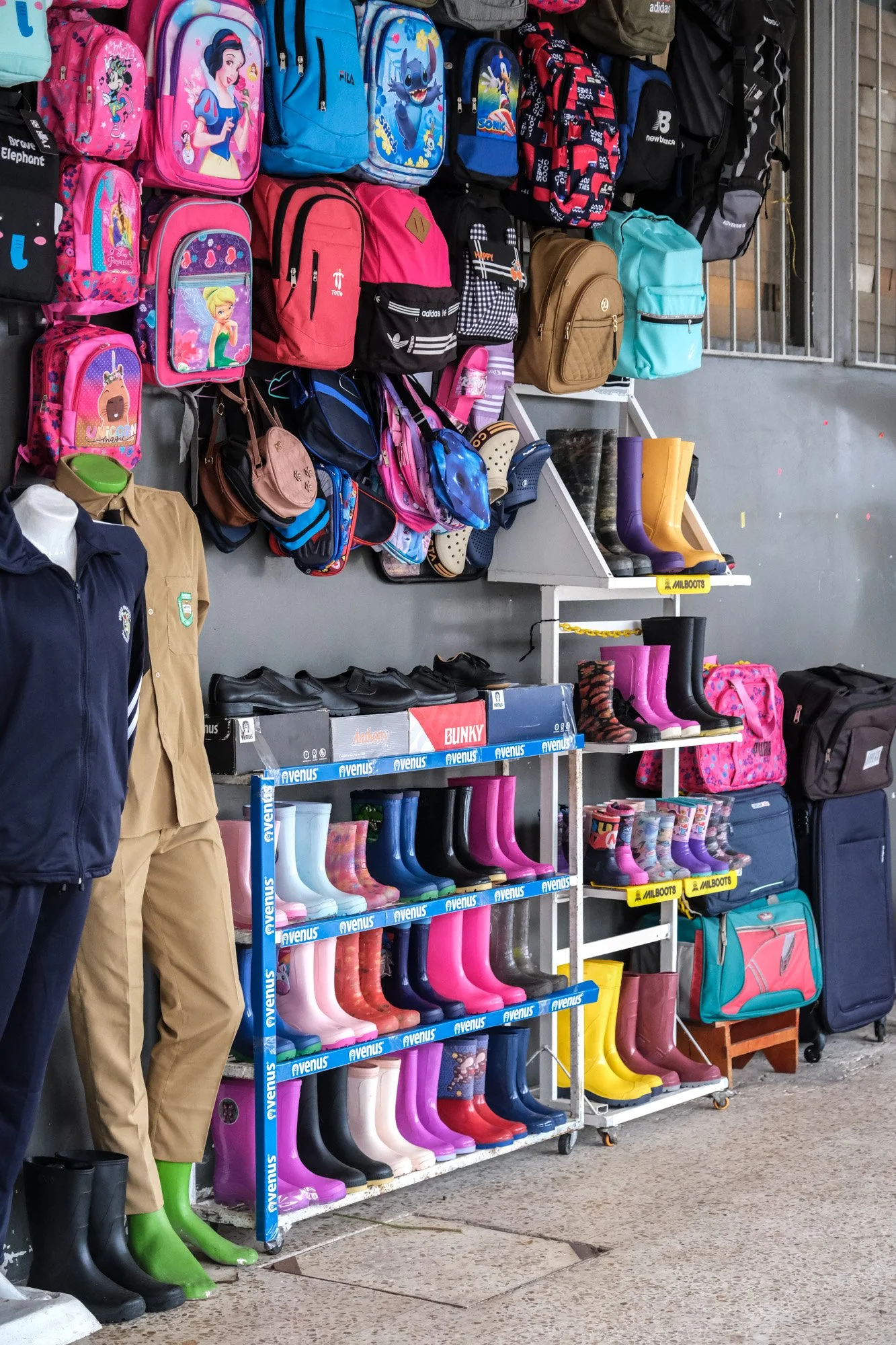
Known for the wet climate, Puyo has plenty of shops selling rain gears.
Our visit to Puyo was too brief and did not do justice to what the area has to offer. For an impromptu visit, the Ecuadorian Amazon really surprised us in so many ways. In hindsight, I would have spent one day less in Baños and spent a night in Puyo at one of a dozen rainforest eco-lodges in the area. While we missed nearly all the stops included in the package tour, the visit to the botanical garden alone made this a worthwhile trip for us. More importantly, who doesn’t want a chance to visit the Amazon?