
Uruguay Itinerary - Fall 2025
Oh, Uruguay! You will always hold a fond place in our hearts! This country, with fewer than 3.5 million people, is often overlooked by travelers. Sandwiched between the two giant nations of South America, Uruguay is jokingly referred to as the Canada of Argentina or Brazil because of its progressive politics and a slower pace of life. People are often surprised that we dedicated a whole trip to Uruguay, as it is often a day trip from Buenos Aires. We were even more of an oddball for visiting Uruguay before Argentina and Brazil. As an Uruguay-based travel blogger once said, there are two kinds of travelers coming here: those who have been everywhere else and those who like to brag to friends about visiting this seldom-visited nation.
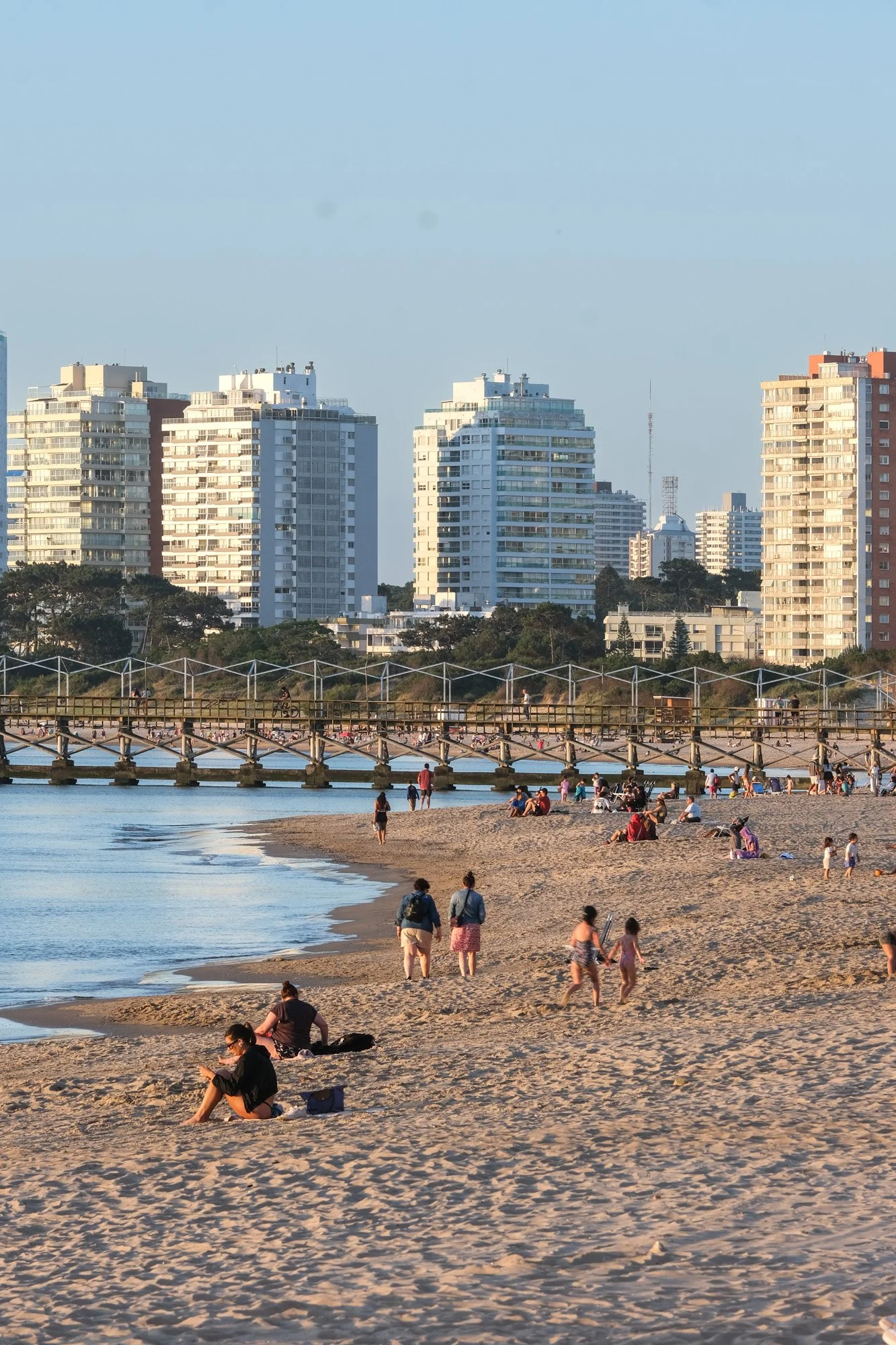
The beach of Punta del Este.
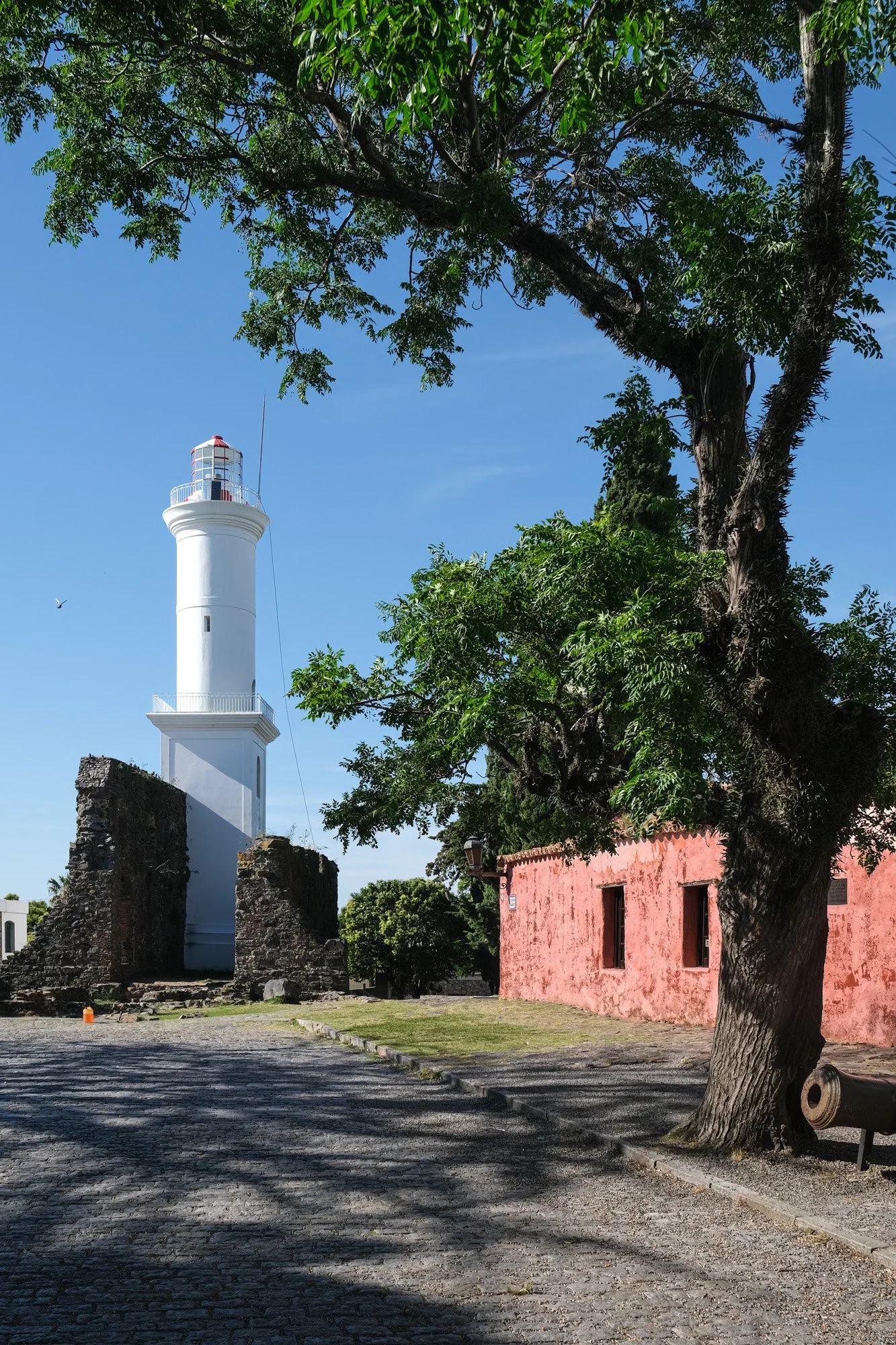
Colonia del Sacramento is the most popular and one of the oldest towns in Uruguay.
Uruguay may be the second-smallest nation in South America, but it is still roughly the size of New England. Ten days allowed us to barely scratch the surface. On this trip, we got to experience the cosmopolitan Montevideo, the ritzy Punta del Este, the laid-back José Ignacio, the historic Colonial del Sacramento, and the former industrial city of Fray Bentos. We would have loved a few more days to explore gaucho culture in the country’s vast interior. However, the cost of living in Uruguay was a shock for us.
Day 1: New York - Panama City - Montevideo
With a four-hour layover in Panama City, we arrived at Montevideo just before 10 pm and breezed through customs. I was certain our plane was the only aircraft on the tarmac, which was surprising for a national capital the size of Chicago. As an architect, I was completely smitten by the sight of Carrasco International Airport, one of the most beautiful terminal building of the world. Designed by Uruguayan-American architect Rafael Viñoly, this adorable little airport is not only a wonderful gateway but also an appropriate representation of Uruguay: petit, confident, and efficient.
By the time we checked into our service apartment in Ciudad Vieja, it was already 11:30 pm. We quickly discovered that the downtown areas were not exactly lively after dark. Fortunately, Uruguayans had dinner very late, so there were still plenty of options at this hour. For our first meal in the country, Pizzería DOS36, just around the corner, introduced us to Uruguay’s national dish: chivito. The massive steak sandwich is served with a heaping pile of French fries. If this were any indication, we should really worry about our cholesterol levels at the end of the trip.
Day 2: Montevideo
Things got off to a slow start this morning. After an espresso and breakfast pastry, Brian had to catch up on work emails back at the apartment, leaving me time to explore Ciudad Vieja at my own pace. Montevideo’s old town is an eclectic mix of colonial and low-rise modern buildings. A visit to the Montevideo Cabildo Historical Museum gave me much-needed lessons in the history of Montevideo and Uruguay. Ciudad Vieja is not a particularly large area, so I was able to walk the full length of the old town and check out some of the most popular tourist landmarks, such as the Metropolitan Cathedral and Plaza Zabala. The barbecue at Port Market was especially tempting.
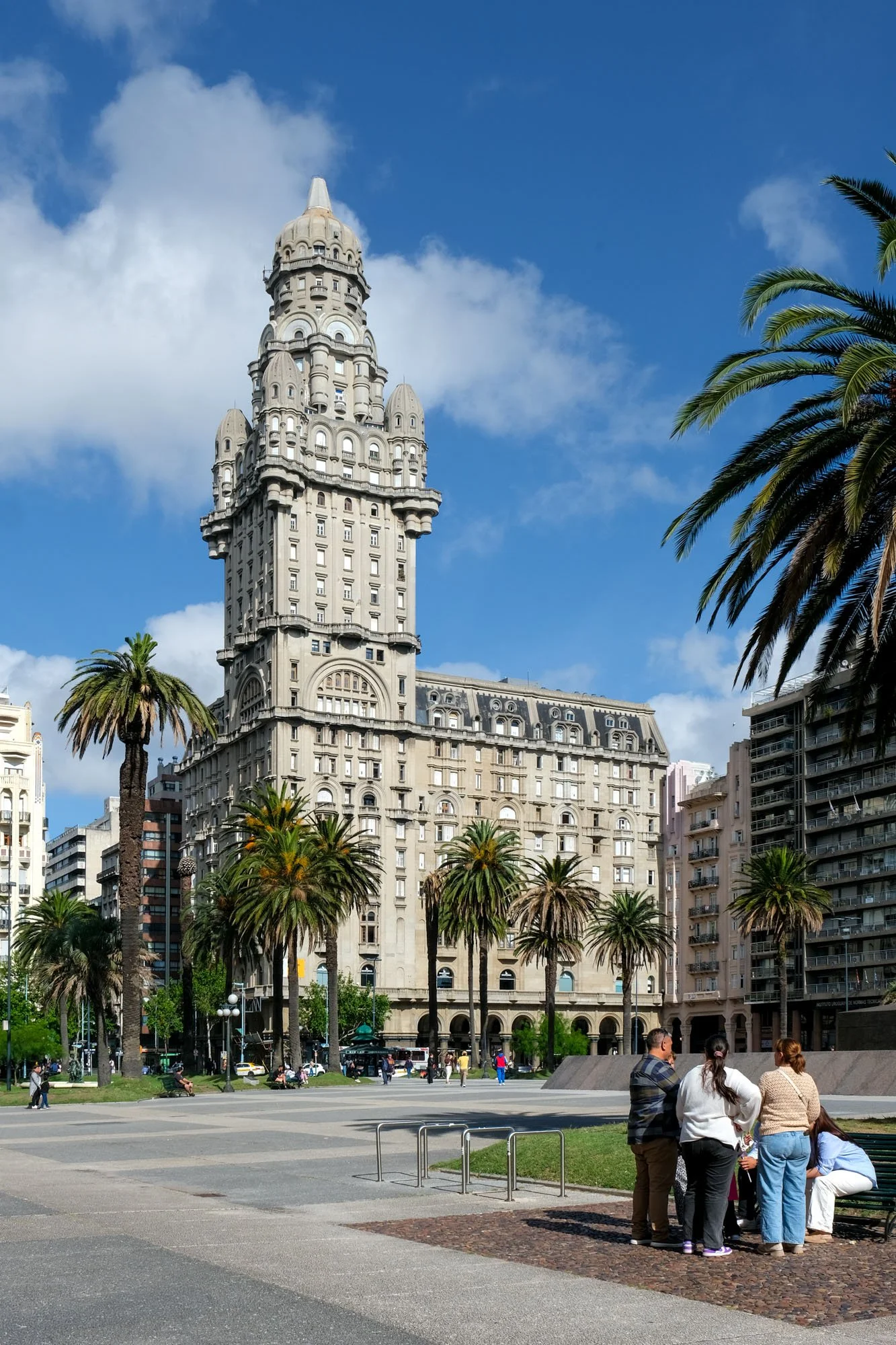
Palacio Salvo is Montevideo's most iconic building.
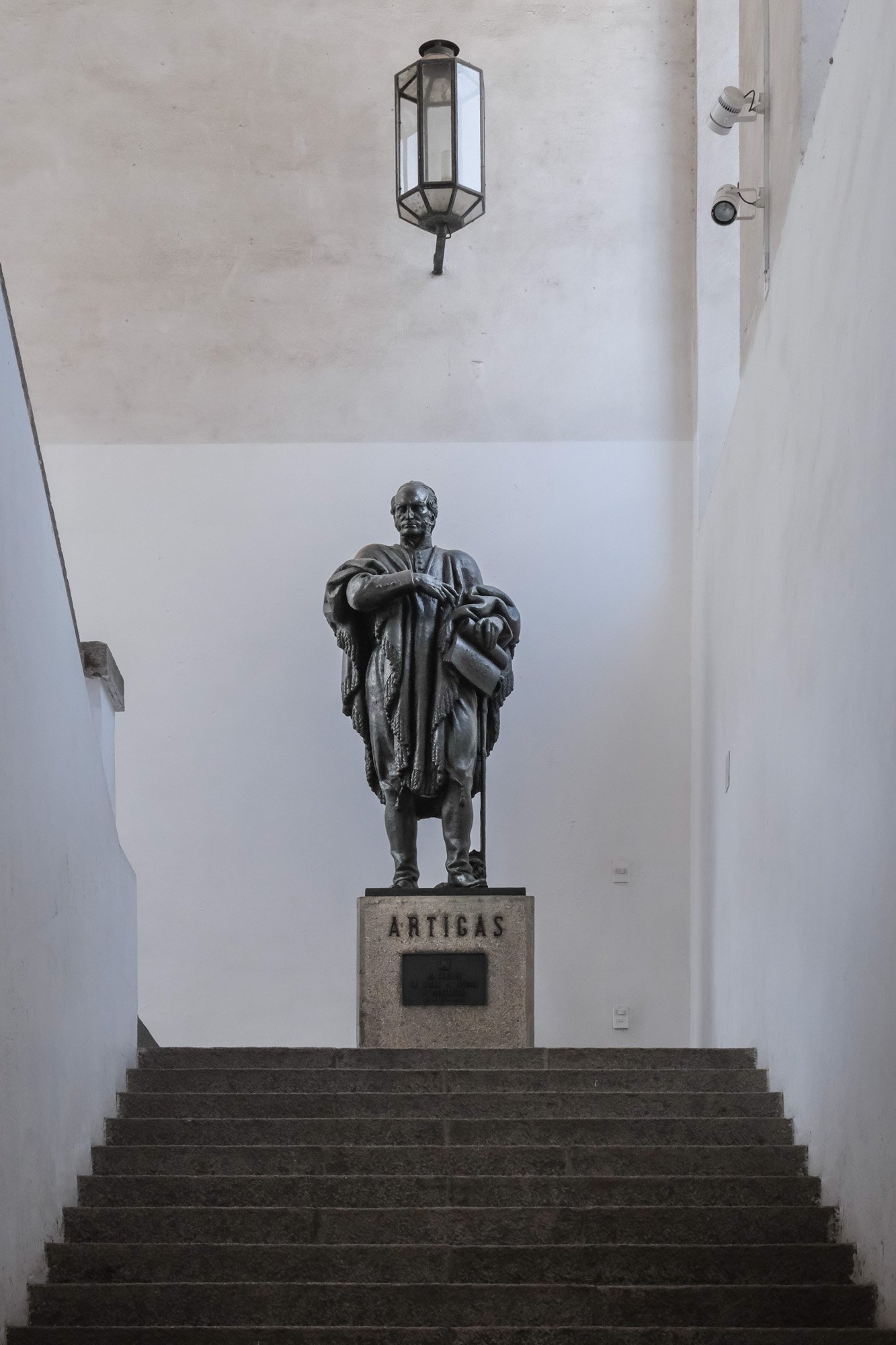
Statue of General Artigas, the founding father of Uruguay.
Even though we had only been on the ground for a few hours, I was already stunned by the cost of living here. Thankfully, the lunch special at Romesco Cantina was great value and had friendly service. The warmth of Uruguayans and Montevideo’s laid-back atmosphere really put us at ease. The highlight of the day was a visit to the Andes Museum 1972, a small private museum dedicated to the crash of Uruguayan Air Force Flight 571. Sixteen of the forty-five people survived the extreme conditions of the high Andes for seventy two days. Their stories of survival are not just a matter of national pride but also a celebration of the human spirit. It has been immortalized in several films, most recently Netflix’s 2023 movie Society of the Snow. It is easily the most exciting museum in Uruguay.
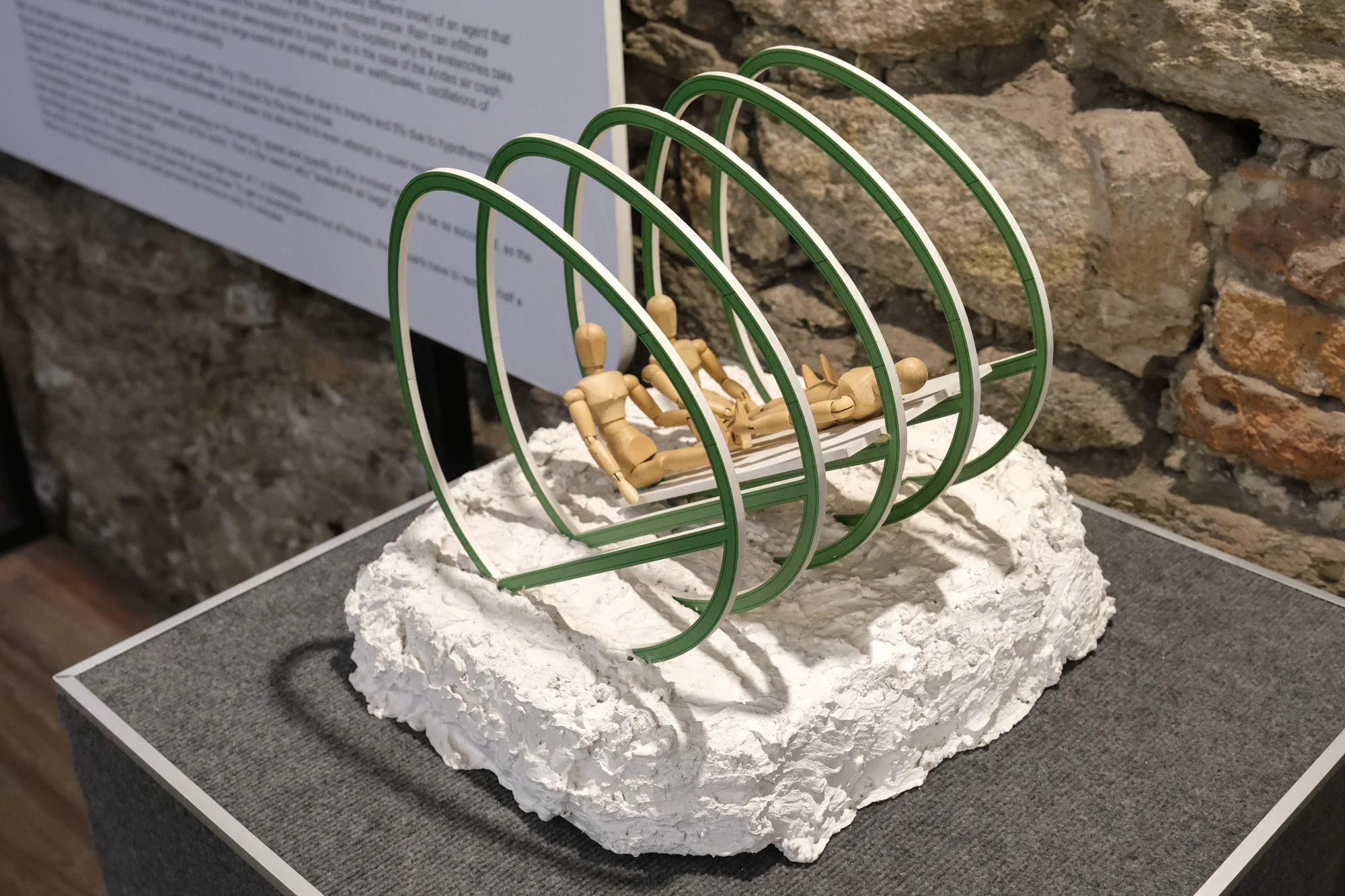
The Andes Museum 1972 is easily one of the most interesting museums in Uruguay.
Much to our surprise, much of the Ciudad Vieja began to empty out around mid-afternoon. Montevideo may be the most visited city in Uruguay, but it certainly does not have any issue with over-tourism. It seemed like the whole city emptied out for siesta, which meant we could get a table at many of the city’s most popular spots, such as Viti bar de vinos. This little wine bar was a great introduction to Uruguayan wine, which is often overlooked abroad because of its limited production compared to that of Chile and Argentina. We obviously tried the famous Uruguayan Tannat, but fell in love with Uruguayan Sangiovese.
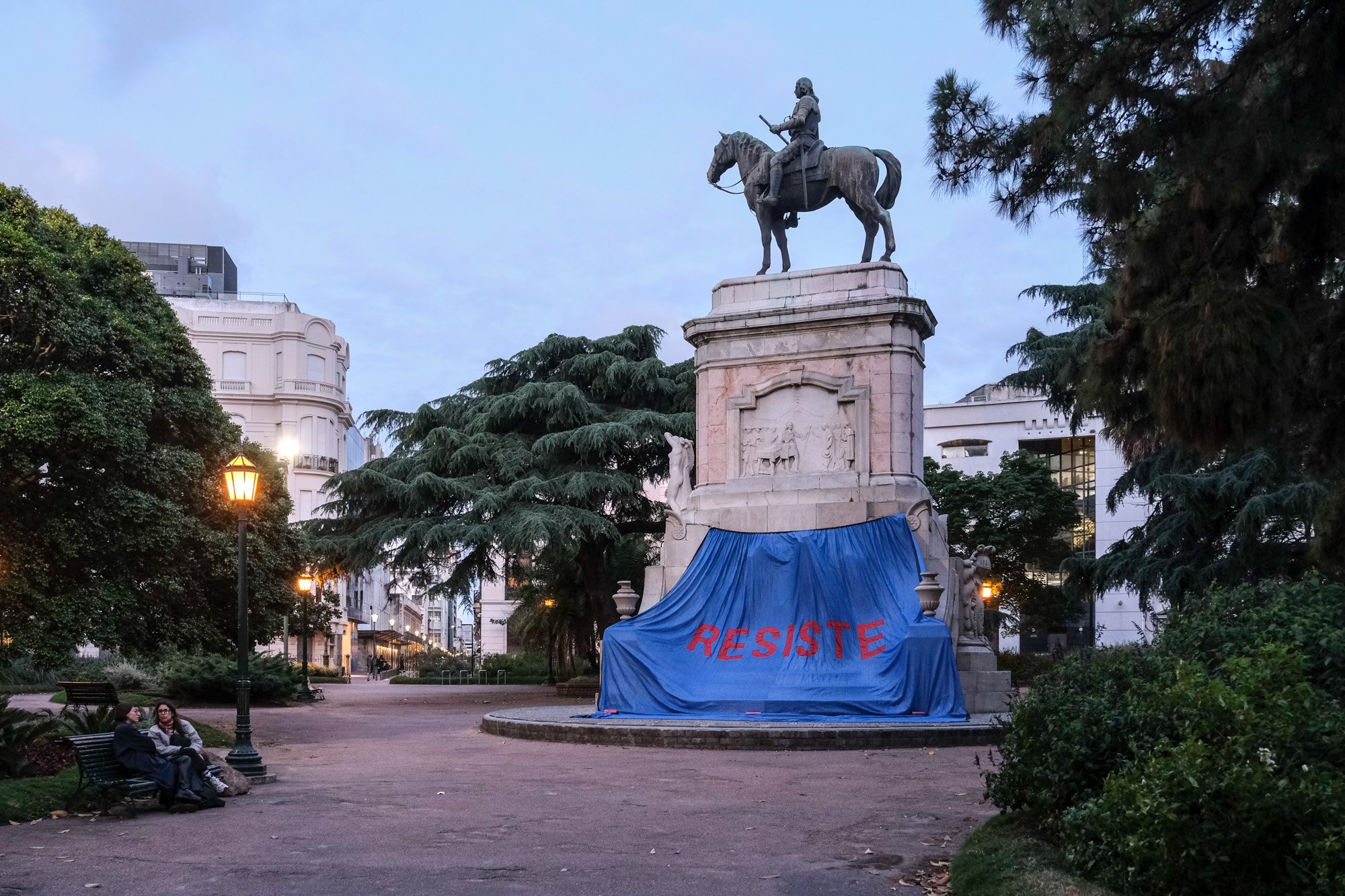
Unassuming protest sign at Plaza Zabala.
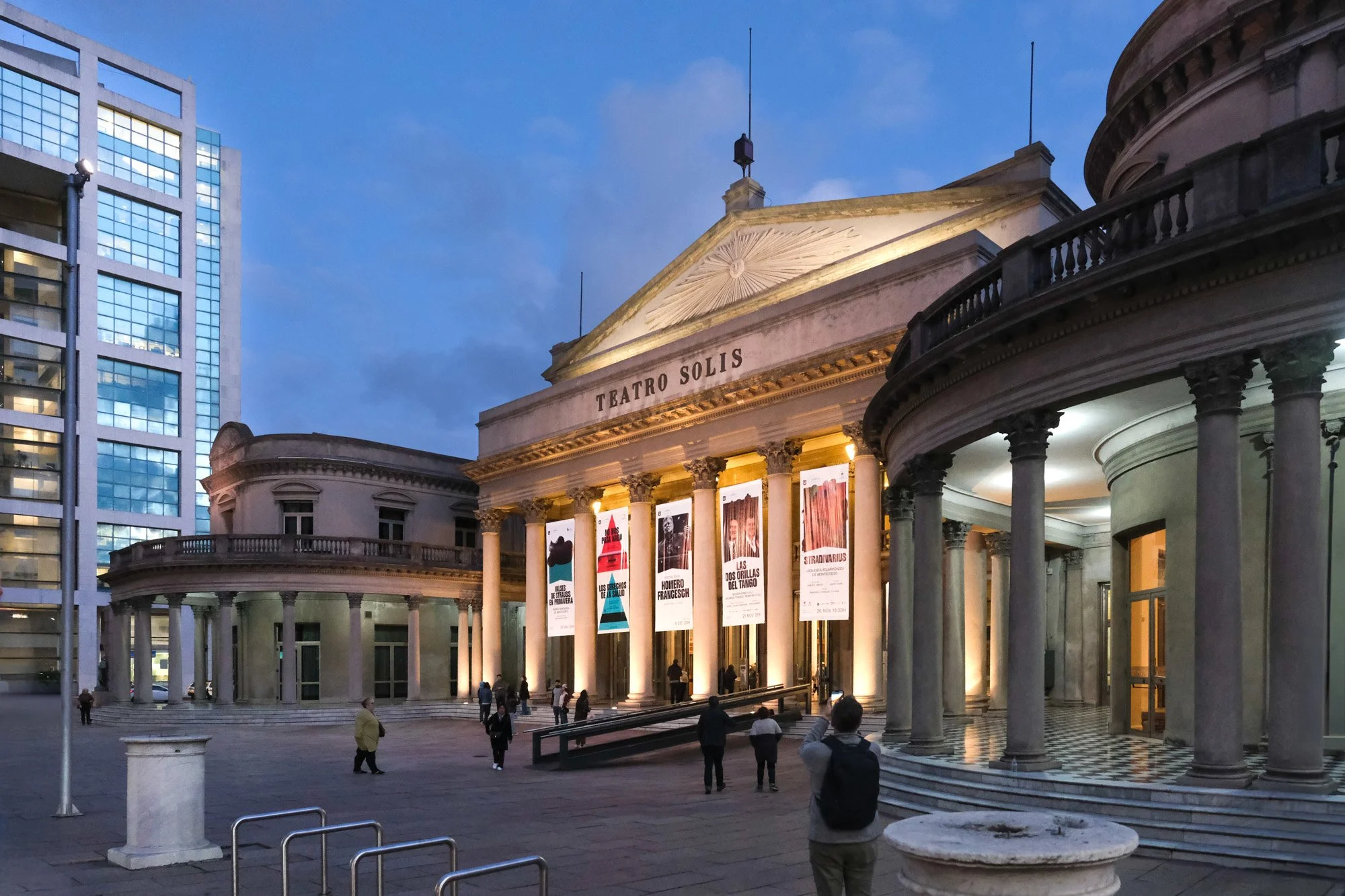
Solís Theatre is a classical venue worth a visit.
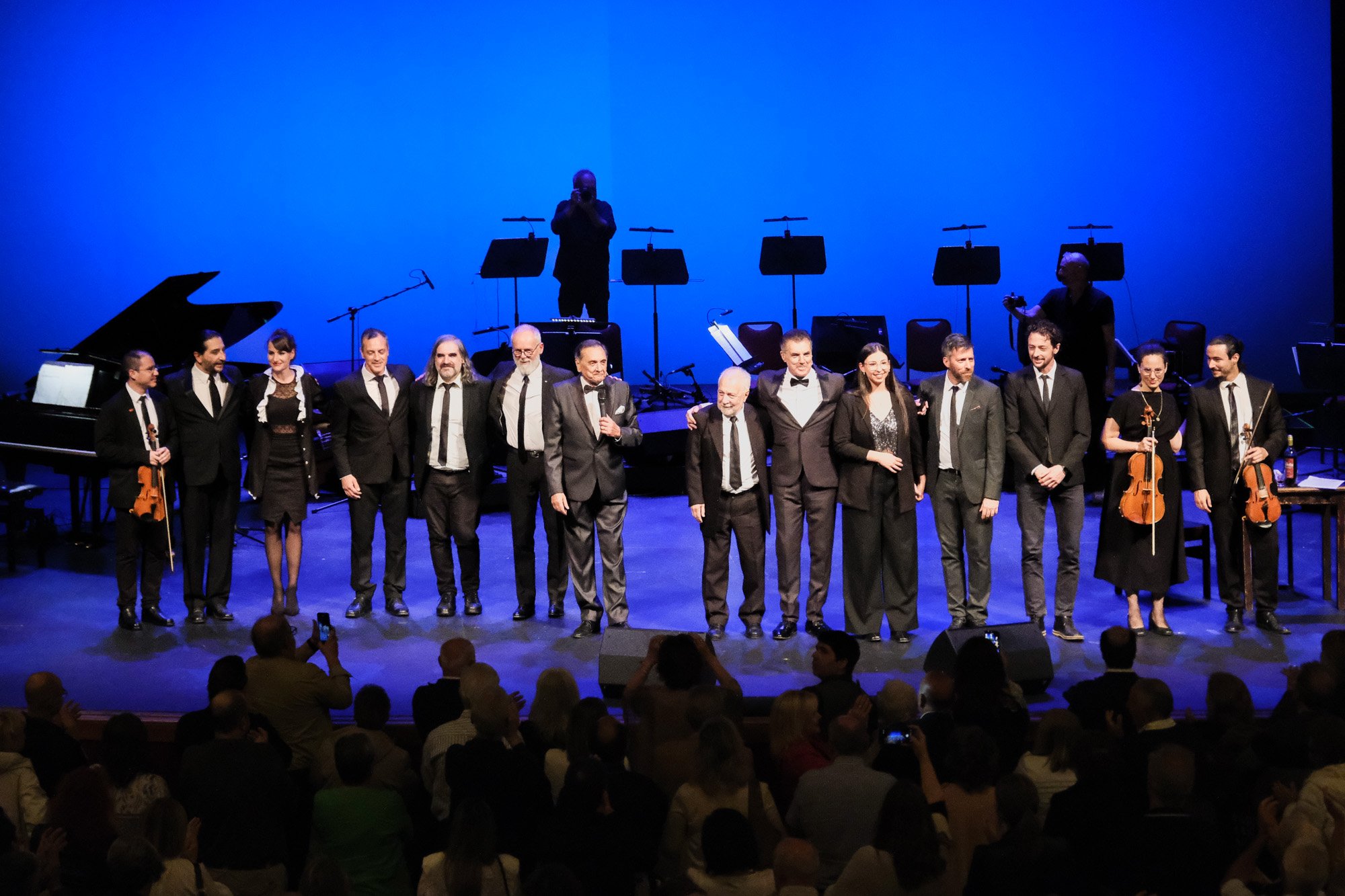
The Two Shores of Tango.
One of the few reservations I made for this trip was a concert at Solís Theatre, the country’s premier performance space. We were very lucky to get tickets for the sold-out performance by two of the great Tango singers. Titled The Two Shores of Tango, the concert featured Uruguay’s Nelson Pino and Argentina’s Ricardo “Chiqui” Pereyra. While tango is most often associated with Argentina, it originated from the traditional Candombe dance in Montevideo. After the concert, we treated ourselves to dinner at Los Leños; it was the first of many feasts of the famous Uruguayan asado we had on this trip.
Day 3: Montevideo
Having spent a day wandering through Ciudad Vieja yesterday, I was excited to learn more about the place on a free walking tour. The two-and-half-hour tour was a crash course on Uruguayan history and culture. The one unexpected surprise on this tour was actually a fellow tour attendee: Teresa. As the guide was telling us about the 1972 Uruguayan plane crash in the Andes, Teresa revealed that her uncle was one of the sixteen survivors. It made her an instant celebrity among the Uruguayan tour guides. Her own father was on the passenger manifest but missed the flight at the last minute because of a chemistry exam. The survivor's guilt was so intense that he refused to speak about it, and it sadly caused a rift within the extended family.
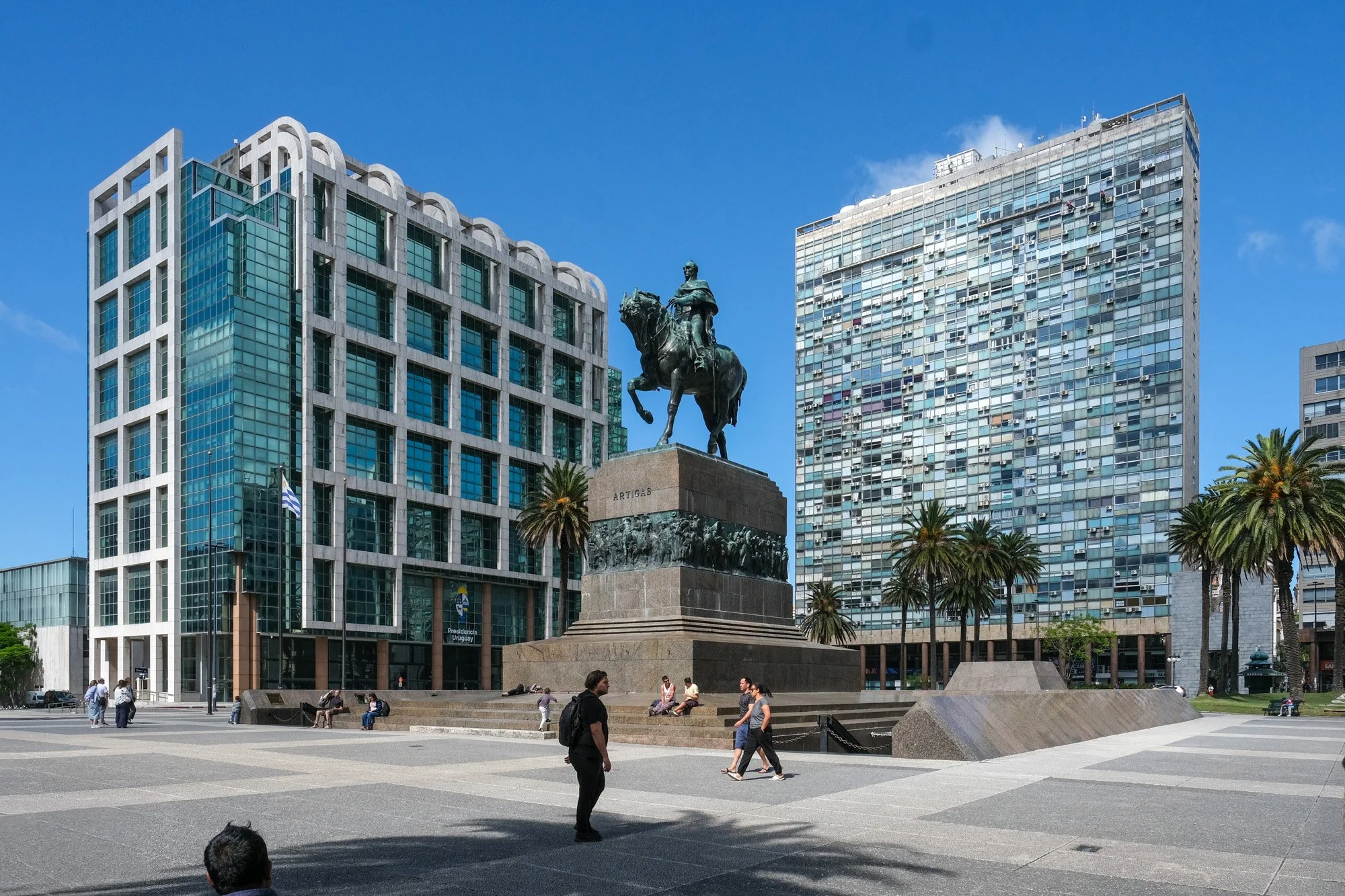
To the dismay of many locals, Plaza Independencia is surrounded by many unsightly modern buildings, including the presidential office.
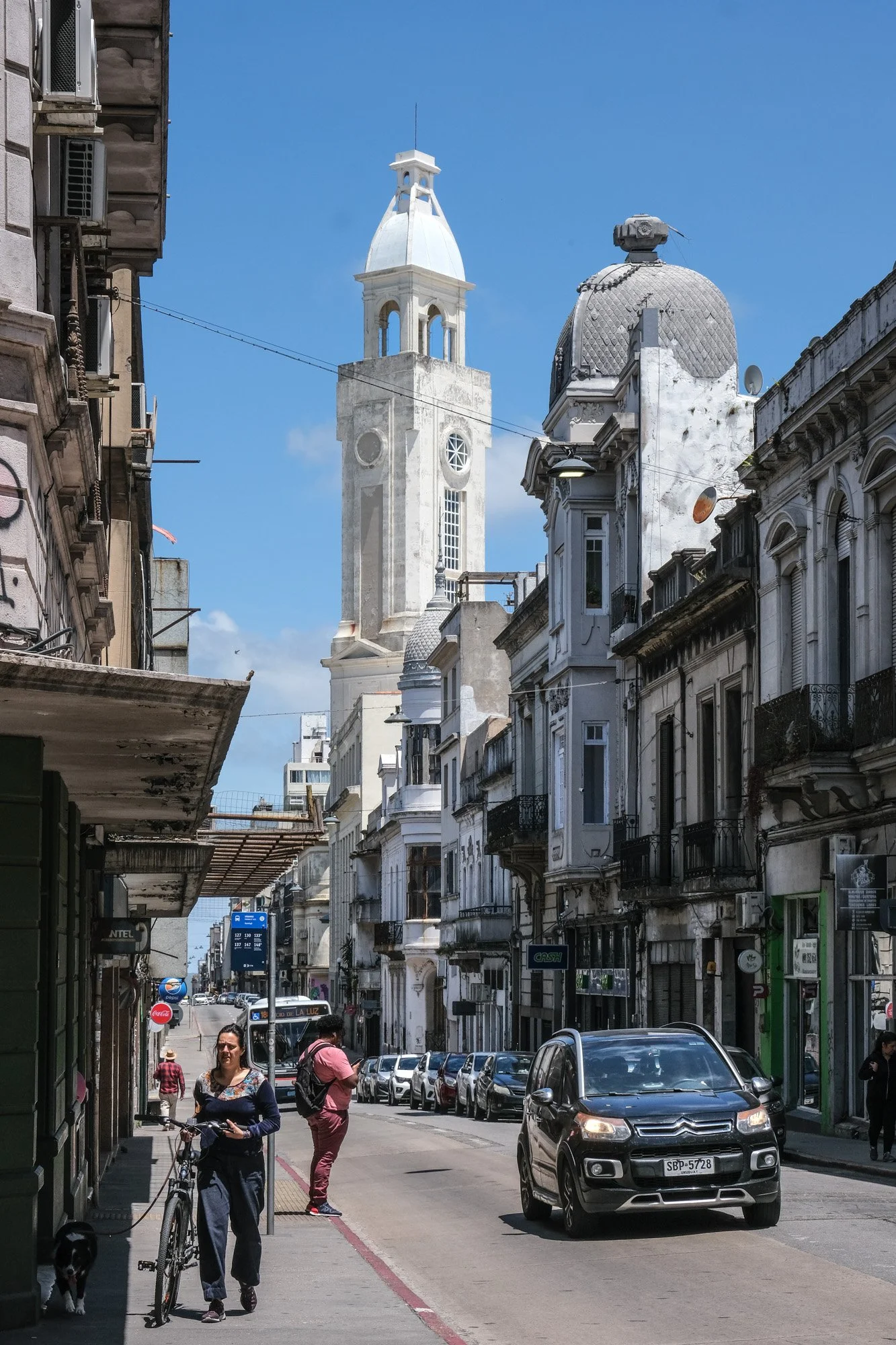
Montevideo’s Ciudad Vieja.
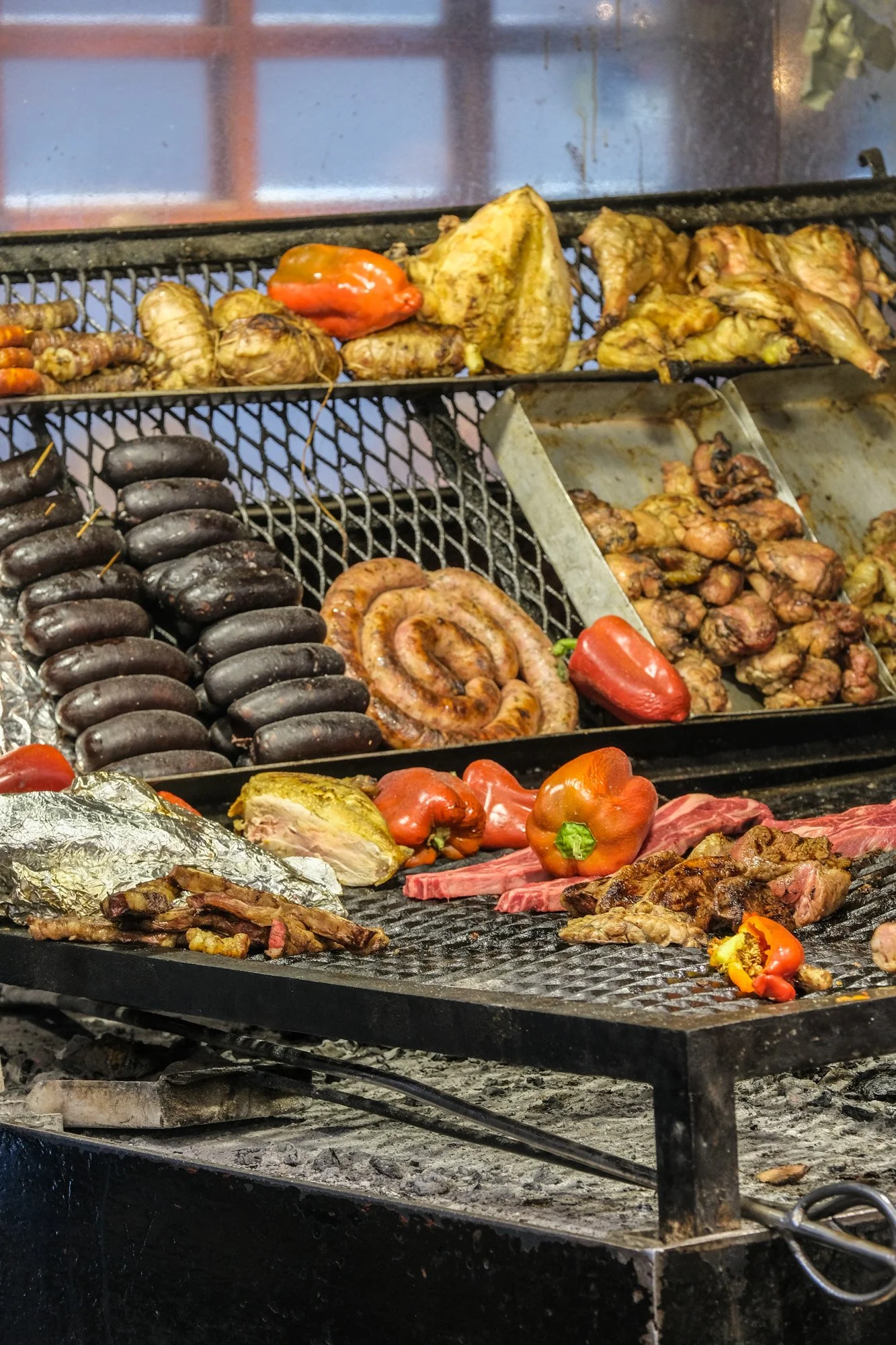
Cabaña Veronica is well recommended.
Since the guided tour ended at the Port Market, we took this opportunity to lunch at Cabaña Veronica, the only woman-run asado stand and one of the most popular. We splurged on their premium platters, which came with giant piles of short ribs and ribeye. The place is definitely touristy and expensive, but the atmosphere more than made up for it. After the feast, we dropped by the Carnival Museum a block away. While the carnival is most famously associated with Brazil and Germany, Uruguay holds the distinction of having the longest carnival, lasting forty days. We may not be able to experience the carnival or candombe rehearsal on this visit, but the museum’s excellent exhibit of videos and costumes gave us an excellent glimpse of this unique Uruguayan tradition.
Following the recommendations of the tour guide, we took a short ride along the Rambla, Montevideo’s waterfront promenade. Dubbed the world’s longest uninterrupted sidewalk, the Rambla is the city’s living room, filled with locals enjoying the splendid late spring weather. One of the best and most popular recreational spots around is Parque Rodó. With bucolic ponds to a castle-like children's library, the park is a great place to experience the “authentic” slice of Montevideo. Ironically, the highlight for me was a Confucius statue donated by Taipei. It was quite a serendipitous find on this side of the globe.
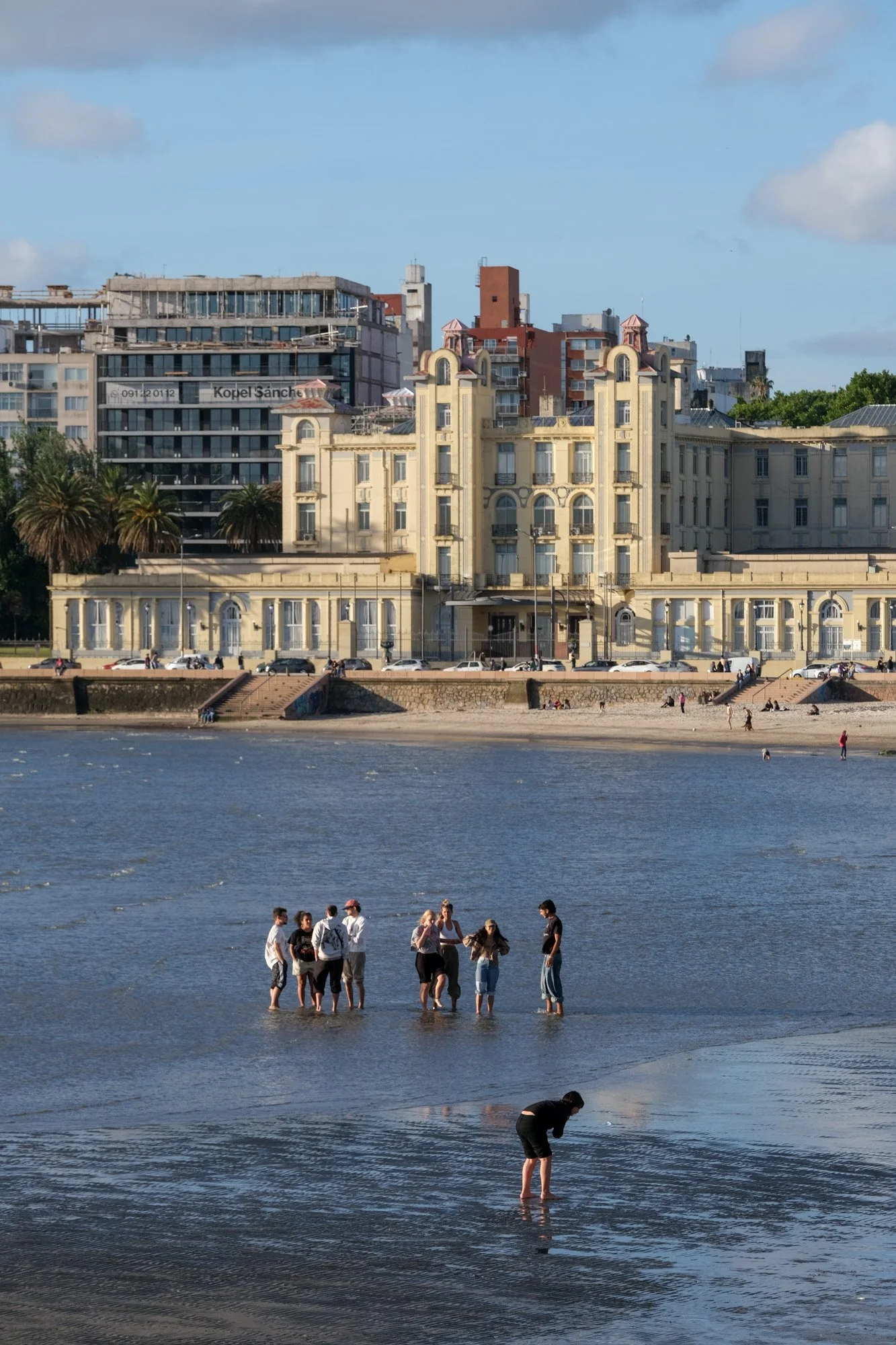
The headquarters of Mercosur.
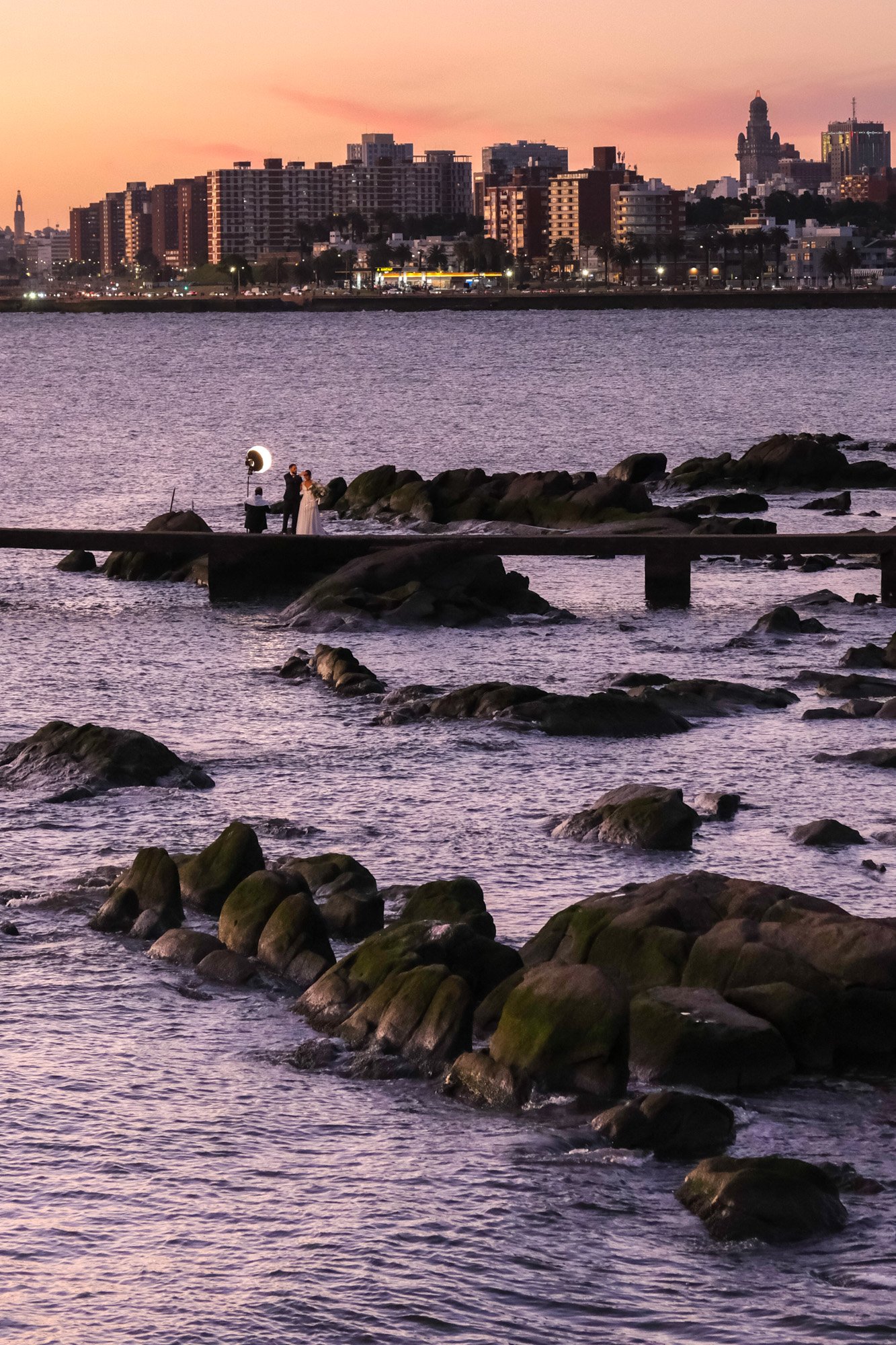
Sunset in Montevideo.
From Parque Rodó, it was a half-hour stroll to the Memorial to the Holocaust of the Jewish People. Set along the Rambla, this unassuming memorial is an architectural masterpiece and among the most beautiful and thoughtful Holocaust memorials I have visited. It was also a great spot to join the mate-seeping locals for a beautiful sunset over Río de la Plata. Little did we know this was one of the many Uruguayan sunsets we got to enjoy on this trip. We wrapped up our day at Baco Vino y Bistro in Punta Carretas. This wine restaurant was said to be one of the best in the city. Little did we know that this was an outpost of a popular restaurant in Santiago, Chile.
Day 4: Montevideo - Atlántida - Maldonado - José Ignacio
I woke up early to hop on a bus to visit the Legislative Palace of Uruguay and the nearby Agricultural Market before meeting Brian for breakfast at Vittatime café. Today, we started our Uruguayan roadtrip, and we were happy to leave behind the hustle and bustle of Montevideo. Our first stop was the town of Atlántida, thirty minutes east of the Carrasco International Airport. Since 2021, tourists have flocked to the outskirts of Atlántida to visit one of Uruguay’s three UNESCO World Heritage Sites. The Church of Christ the Worker and Our Lady of Lourdes was the most celebrated work of Uruguayan engineer Eladio Dieste. His innovative use of brick and concrete pushed the boundaries of architecture. As a practicing architect, I was embarrassed to admit that I did not know of his works until this trip.
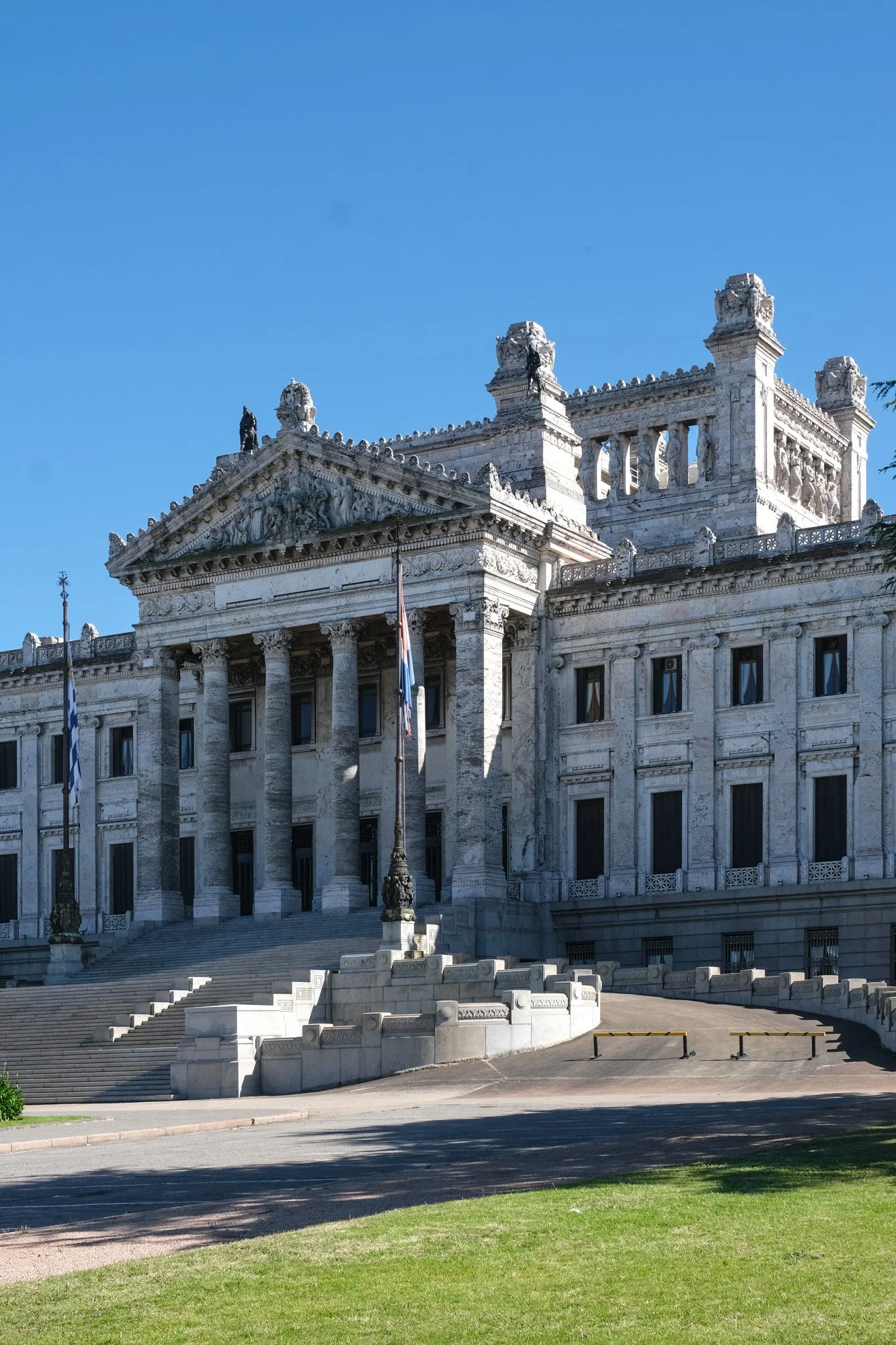
Legislative Palace of Uruguay.
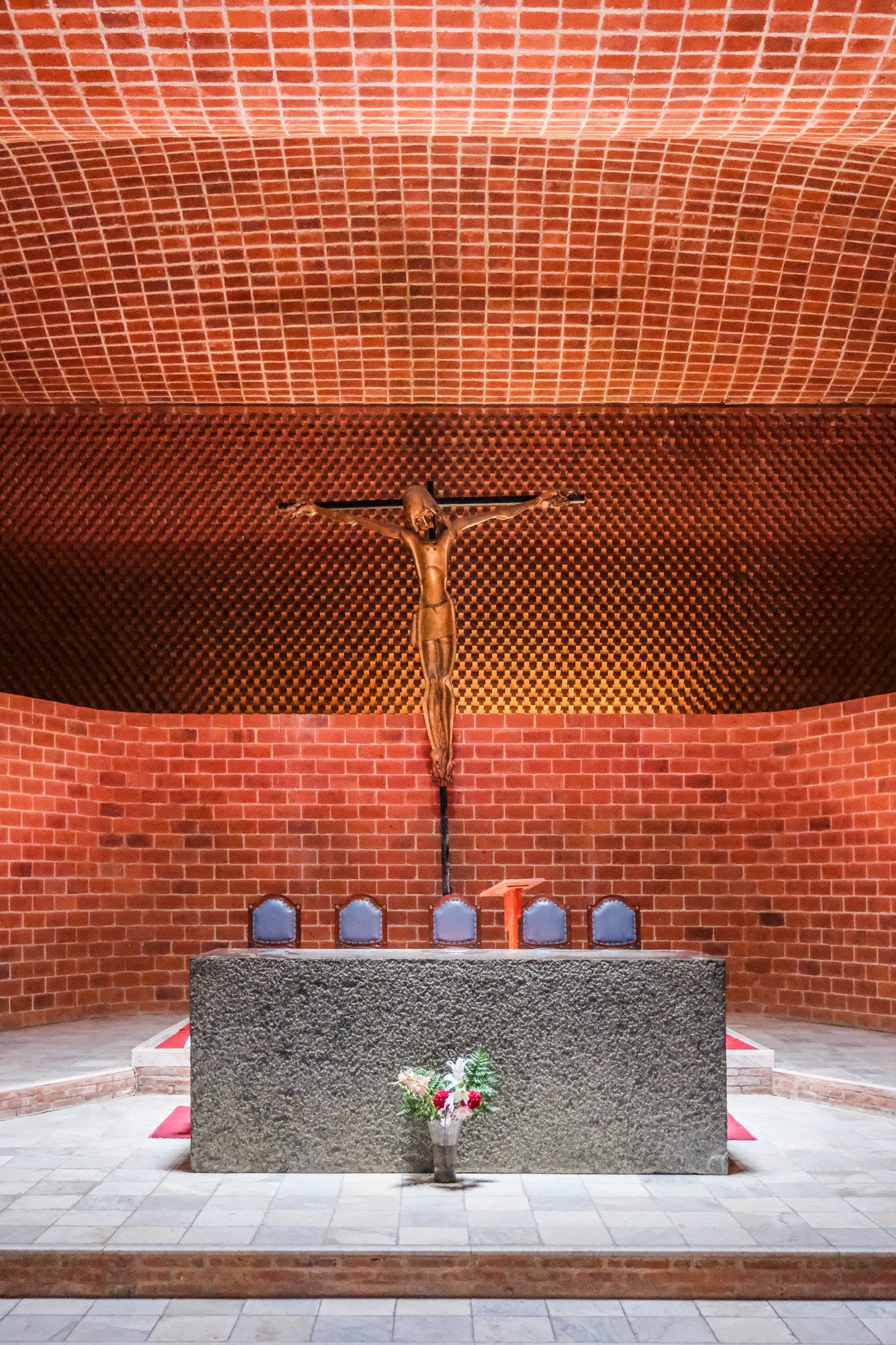
The Church of Christ the Worker and Our Lady of Lourdes.
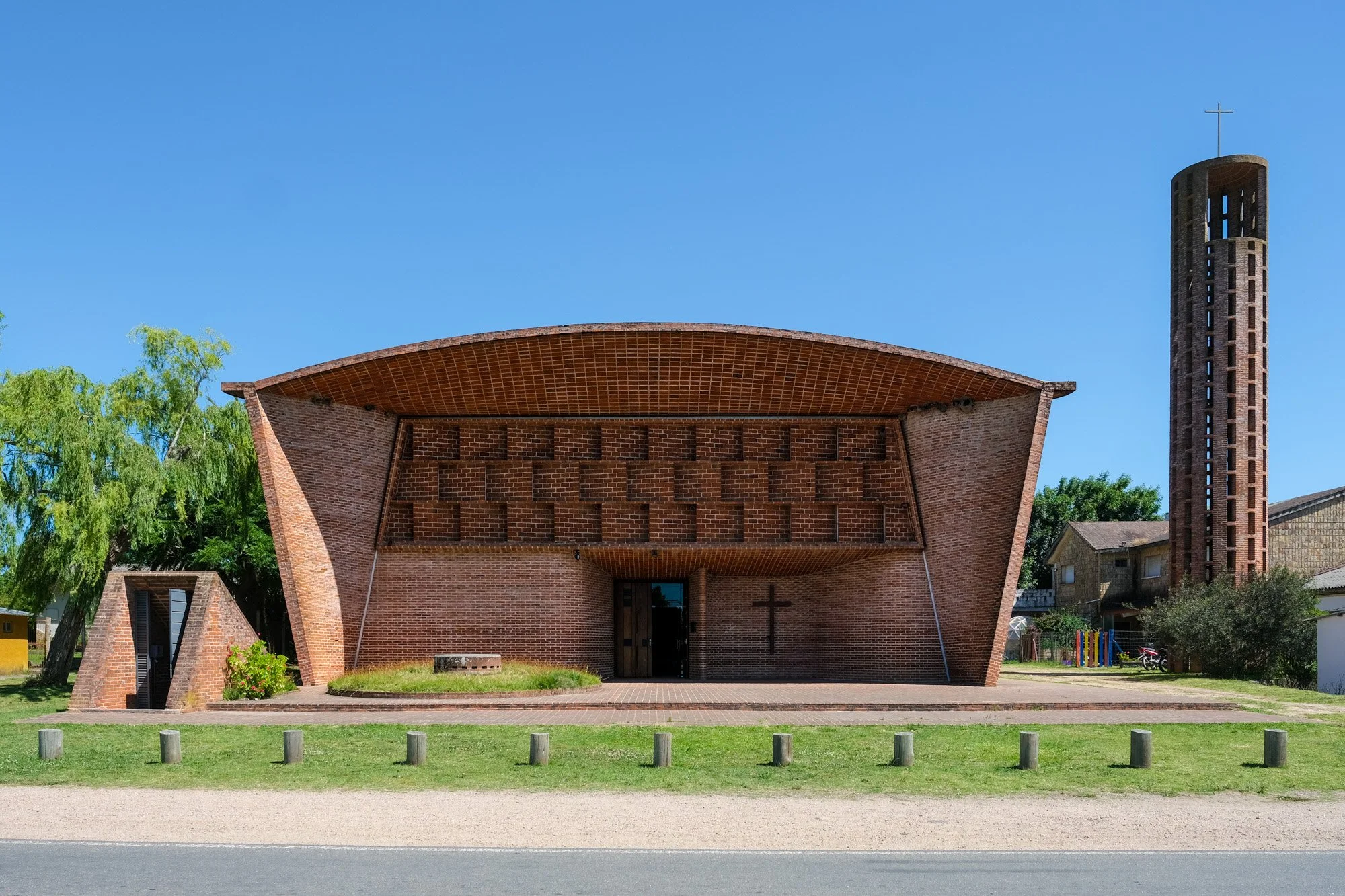
The Church of Christ the Worker and Our Lady of Lourdes.
On our way to José Ignacio, we stopped for a lovely lunch at a hidden roadside restaurant called Silvestre. This is where we truly came to understand the “Mediterranean lifestyle” in Uruguay. A two-course lunch somehow stretched to two hours, and nobody seemed to be in a hurry like we were. Our next stop was Casapueblo, the summer home and largest artworks by Uruguayan artist Carlos Páez Vilaró. Taking thirty-six years to complete, this sprawling complex looks straight out of Santorini and was particularly striking because of its surroundings. It encompasses a museum, restaurant, and a full-service hotel. For those visiting in the late afternoon, witnessing the daily “Sun Ceremony” would be a great way to cap a hectic day of sightseeing.
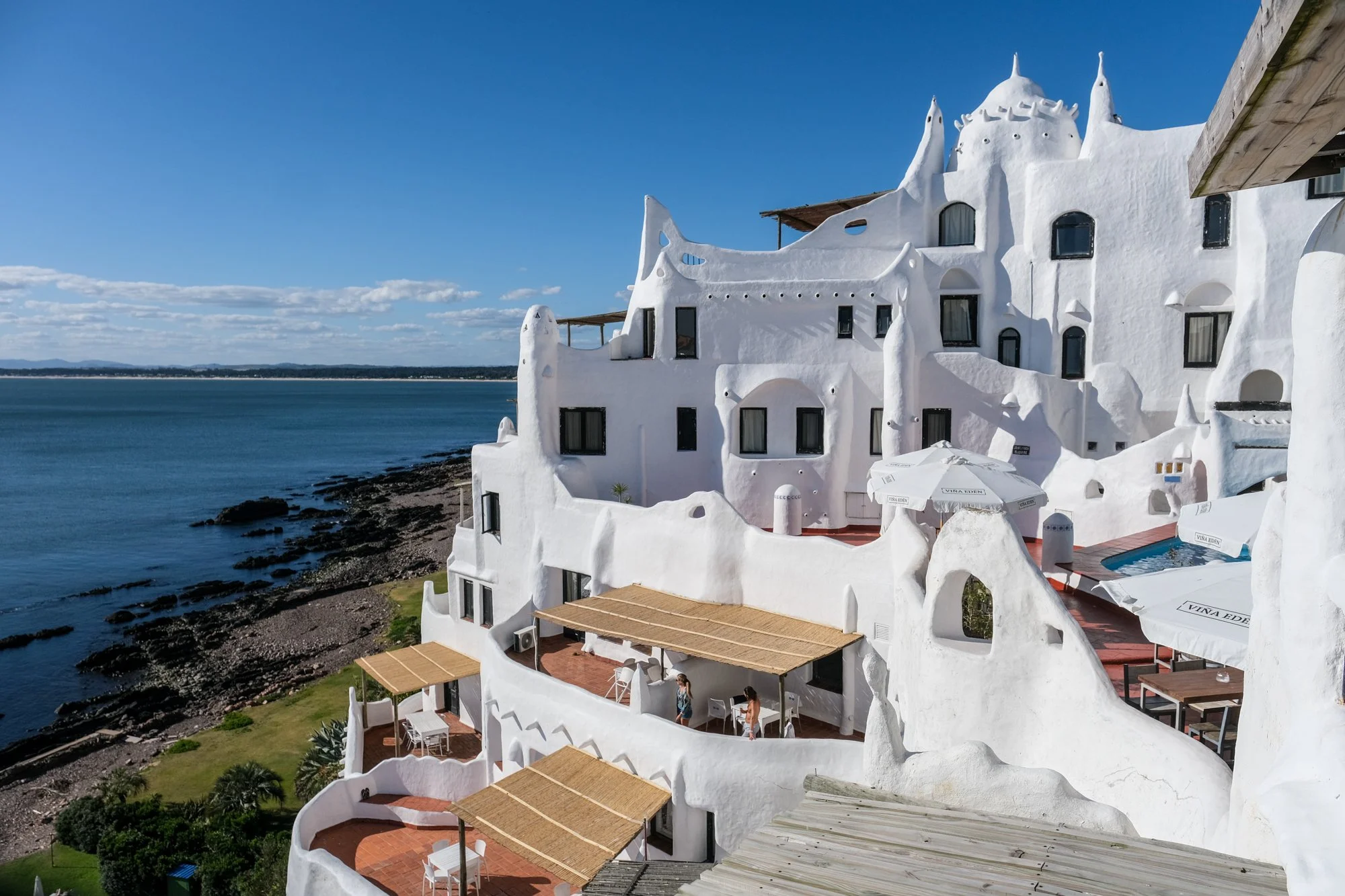
Casapueblo is the largest work of Uruguayan artist Carlos Páez Vilar.
It was already late afternoon by the time we reached José Ignacio, Uruguay’s beach town for the rich and famous. Even though we visited before the high season, the accommodation cost was already sky high. While we were tempted to splurge on one of the high-end resorts, we were perfectly happy with our stay at Casagrande Hotel & Beach Club. From the hotel, it was only a five-minute drive to the pristine beach of José Ignacio to watch the sunset. By coincidence, I reserved a table at the famous Parador La Huella. This little beach shack is one of the most famous restaurants in Uruguay and is “ranked” as one of Latin America’s top 100 restaurants. Our meal was excellent but pricey.
Day 5: José Ignacio
Brian and I typically aren’t big on beach vacations, but we figured we couldn't spend a week in Uruguay without spending some time on the beach. Some travel bloggers describe José Ignacio as an authentic and rustic beach town, but the truth is that today’s José Ignacio is more like the playground of the rich and famous. The small village of fewer than three hundred residents is now dotted with multimillion-dollar mansions and high-end boutiques selling overpriced beach-themed accessories. In the high-end retailer, Sentido José Ignacio, I saw $6 IKEA water carafes on sale for $30; I found it to be emblematic of how I feel about José Ignacio.
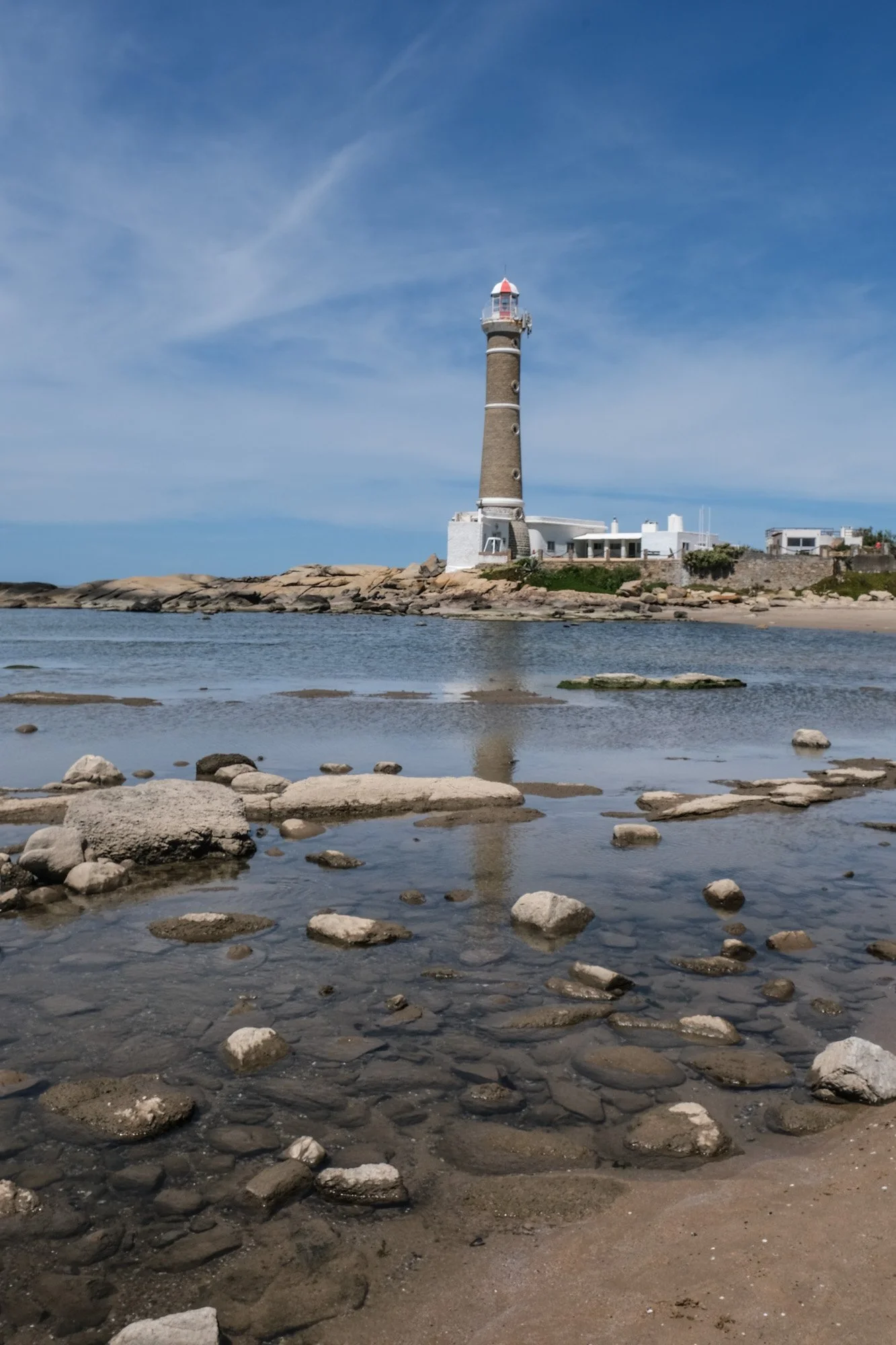
The lighthouse of José Ignacio.
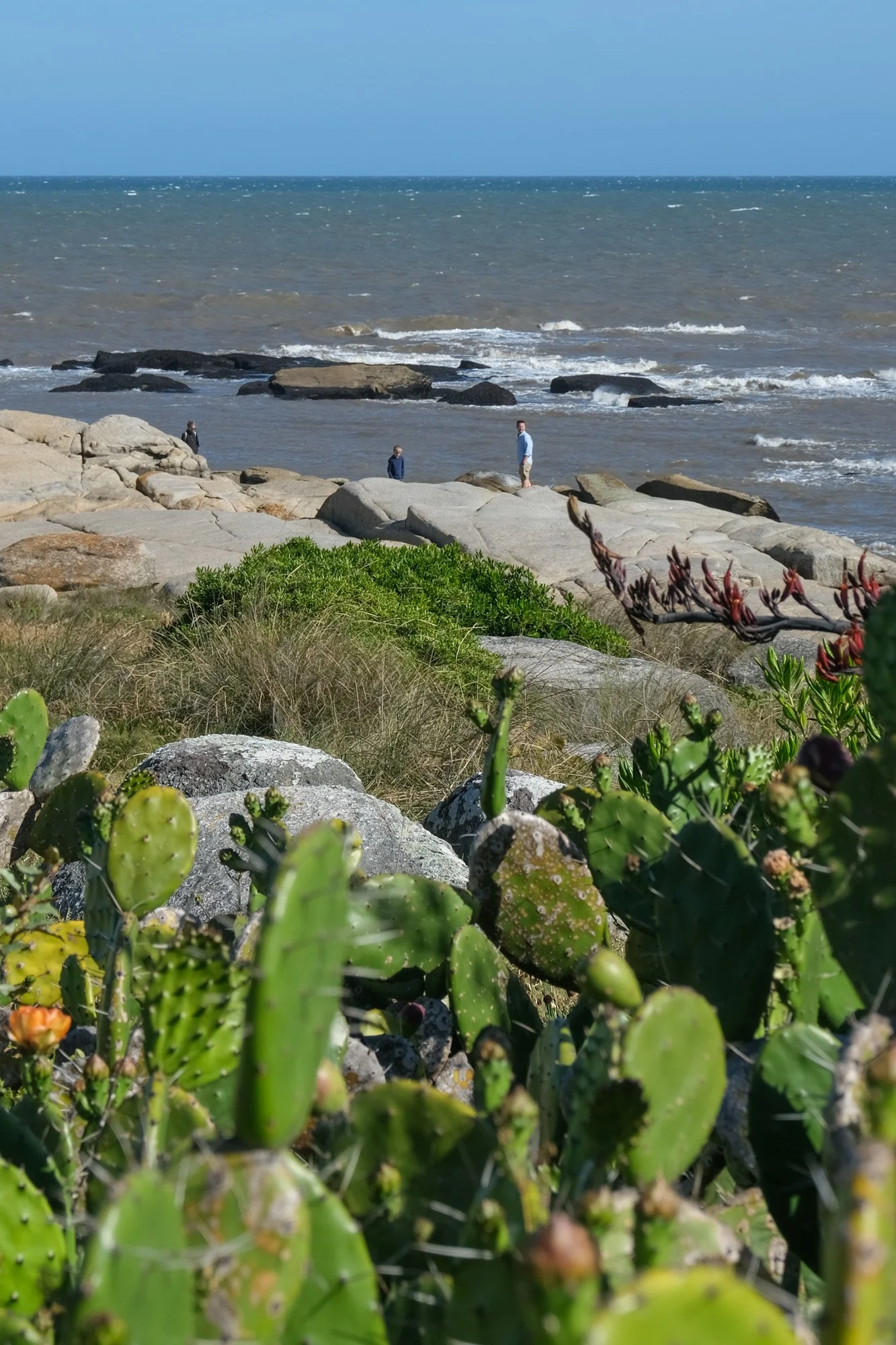
People came to José Ignacio to withdraw from the limelights.
While I may not seem enthusiastic about José Ignacio, we genuinely enjoyed the beach here. Since power-sand stretches as far as the eye can see, the beaches in Uruguay are never crowded by American standards. We could appreciate why Latin America’s rich and famous would choose this region to “disappear” from the public eye. Since the visitor demographic is decidedly affluent, there are plenty of upmarket eateries. One example is Panadería José Ignacio, which offers gourmet baked goods and light meals at the Hampton-level price point. Their chivito was hands-down the best I tried on this trip.
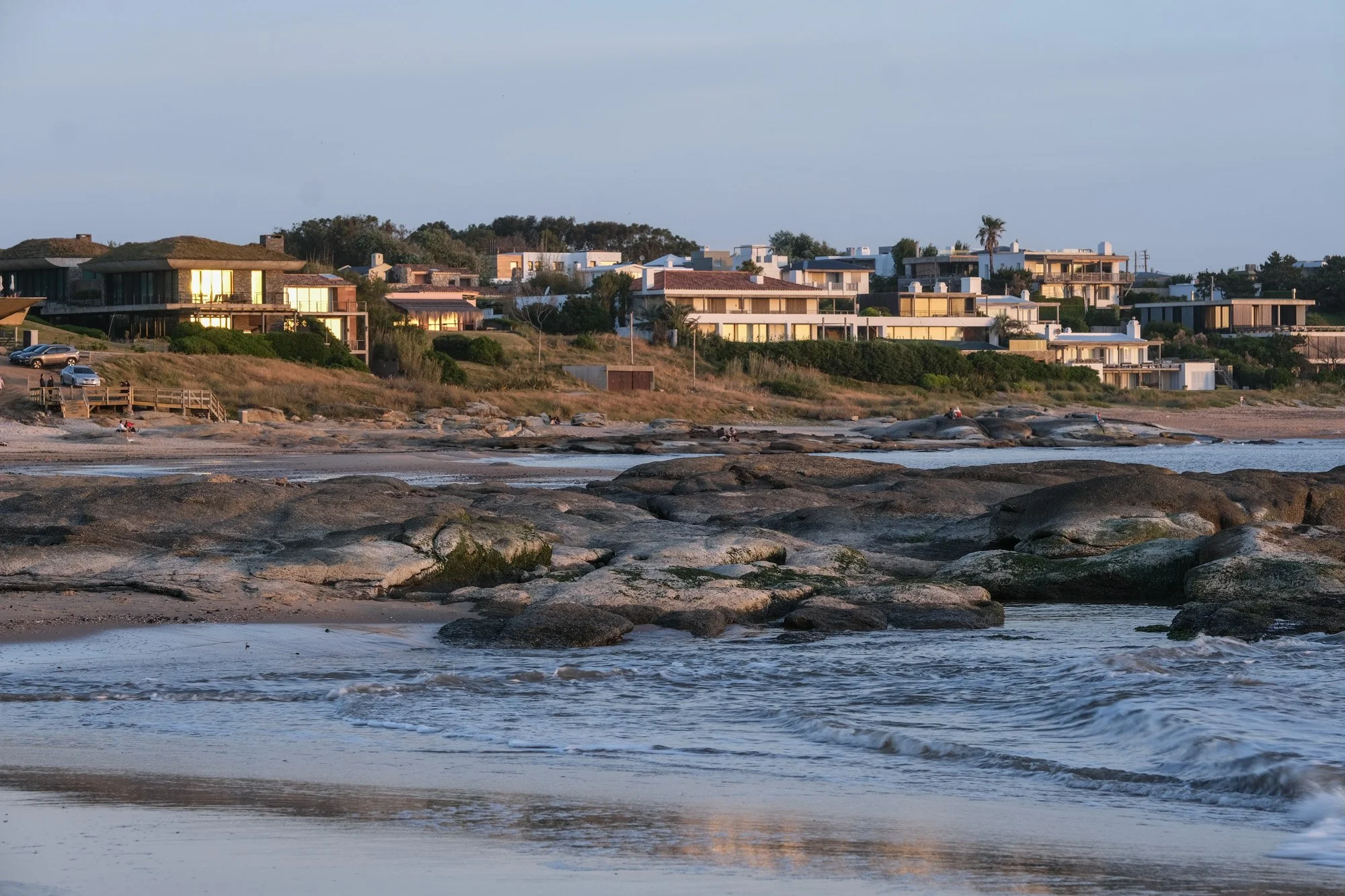
José Ignacio is now the playground of the rich and famous.
Unfortunately, the Atlantic was still quite cold in November, so we did not see anyone in the water except surfers. The most notable landmark around is the lighthouse. Otherwise, this is a place to relax and watch the waves go by. As someone who is used to fast-paced sightseeing, spending a day lounging on the beach was somewhat unnerving. So I couldn't help myself from driving fifteen minutes to Laguna Garzón Bridge, an unusual circular bridge by Rafael Viñoly. After another beautiful sunset, we settled for a lovely dinner at La Despensa.
Day 6: José Ignacio - Punta del Este
After a quick visit to the beach, we were on our way back west toward Punta del Este, Uruguay’s swanky seaside resort town. It is traditionally regarded as the point where the Atlantic and the Río de la Plata meet and is the southermost point of Uruguay. Often compared to Miami Beach, this city of less than 20,000 permanent residents saw its population swell tenfold during the summer season. It did not take me long to see how appropriate the comparison to Miami is. From the modern apartment blocks to the yachts, there is something really “American” about this place. However, we gravitated toward the peninsula to the south, the birthplace of Punta del Este.
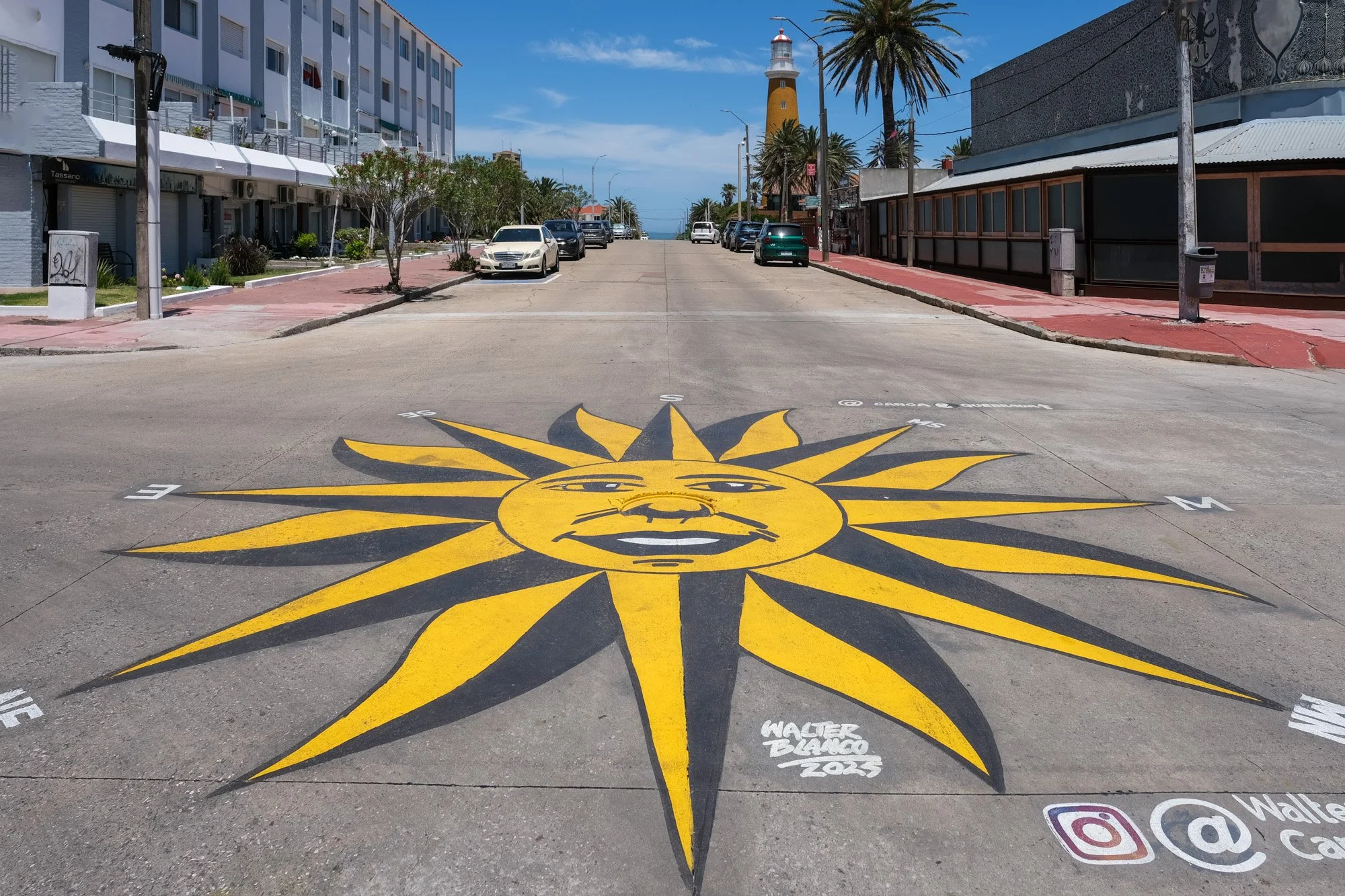
This mural of Uruguayan Sol de Mayo is our favorite spot in Punta del Este.
One of the city’s most unexpected attractions is the fish vendors at the city’s marina, where giant sea lions would leap out of the water and patiently wait for scraps from the fishermen. It was quite a sight to behold. After a seafood lunch at La Marea, we drove fifteen minutes out of town to Arboretum Lussich, a popular stop for nature lovers. While pleasant, it was not particularly interesting to us and probably not the best use of our time. For me, the best way to experience this city was to cruise down the oceanfront boulevard to take in the vast expanse of sandy beach and modern condominiums. I could understand why this is one of the most popular beach towns in South America.
Without a question, the most iconic symbol of Punta del Este is La Mano (The Hand). Created by Chilean artist Mario Irarrázaba in 1982, the evocative sculpture was created for an outdoor art festival in just six days. It soon gained popularity among locals and visitors and is probably the most photographed landmark in the country. Its popularity also spurred similar replicas in Venice and Madrid. I actually came across another replica in Puerto Natales a year ago.
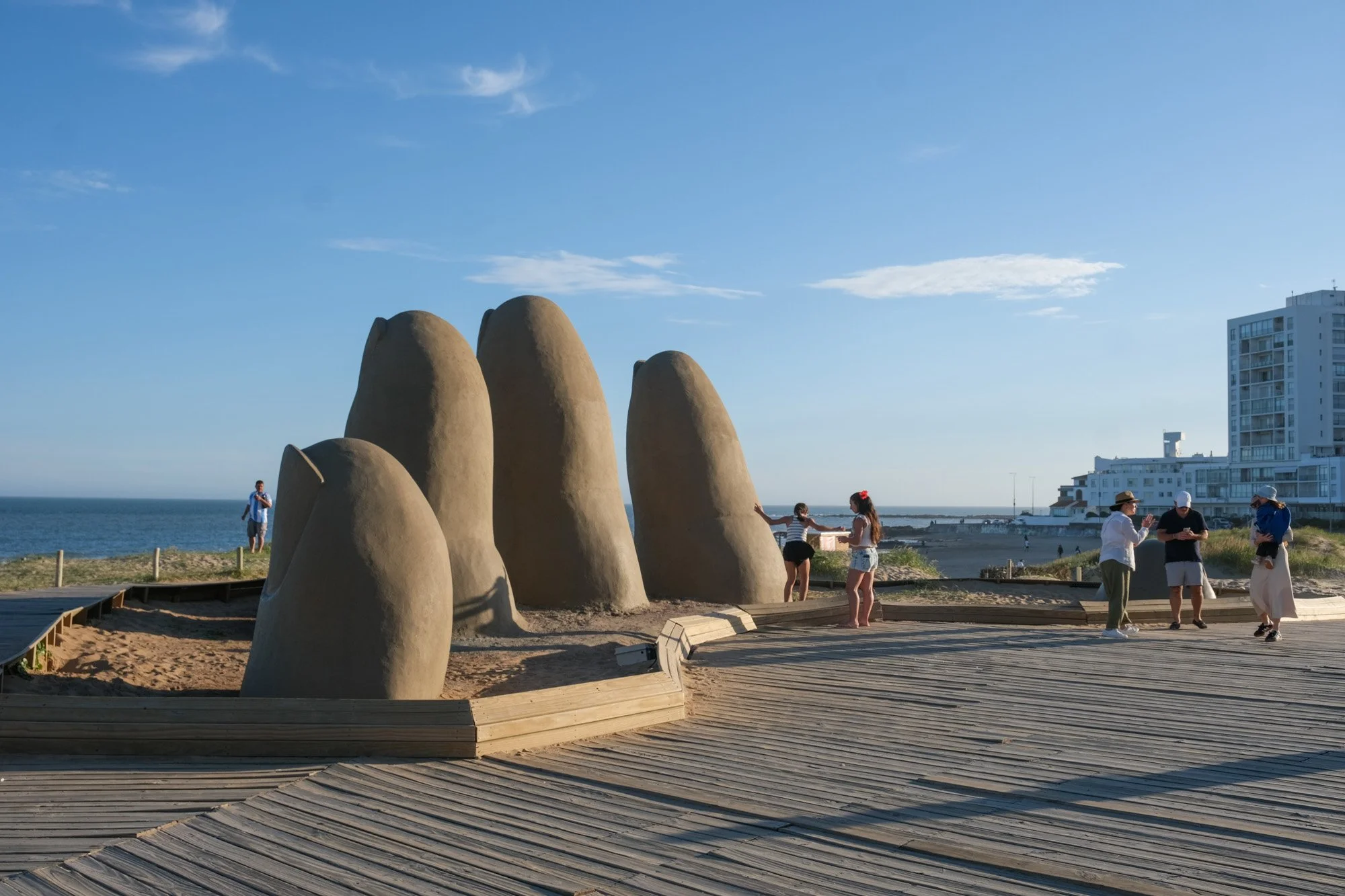
La Mano is Punta del Este’s most emblematic landmark.
To continue our newfound Uruguayan tradition, we once again found ourselves at an excellent spot for sunset. Surrounded by people sipping mate, it was an authentic Uruguayan experience. Despite Punta del Este’s plethora of dining options, we were ready for a break from the heavy diet of red meat. It led us to a rather light dinner at 100% Artesanal Empanadas before retiring to our cozy room at Bravo Hotel. I suppose we really missed out on the city’s legendary nightlife.
Day 7: Punta del Este - Colonia del Sacramento
On our way out of town, we made a point to make a stop at the Lionel Viera Bridge, the world’s first stressed ribbon bridge. From there, it was only a short drive to Atchugarry Museum of Contemporary Art, Uruguay’s premier outdoor art museum. Opened in 2022, this 99-acre museum was a brainchild of Uruguayan sculptor Pablo Atchugarry and hosts a wide collection of contemporary sculptures by both Uruguayan and international artists. The whale-like museum structure is designed by noted Uruguayan-Canadian architect Carlos Ott. It has been Punta del Este's most notable cultural anchor in recent years and a must-visit. Despite the caliber of the artworks, there were hardly any other guests during our visit.
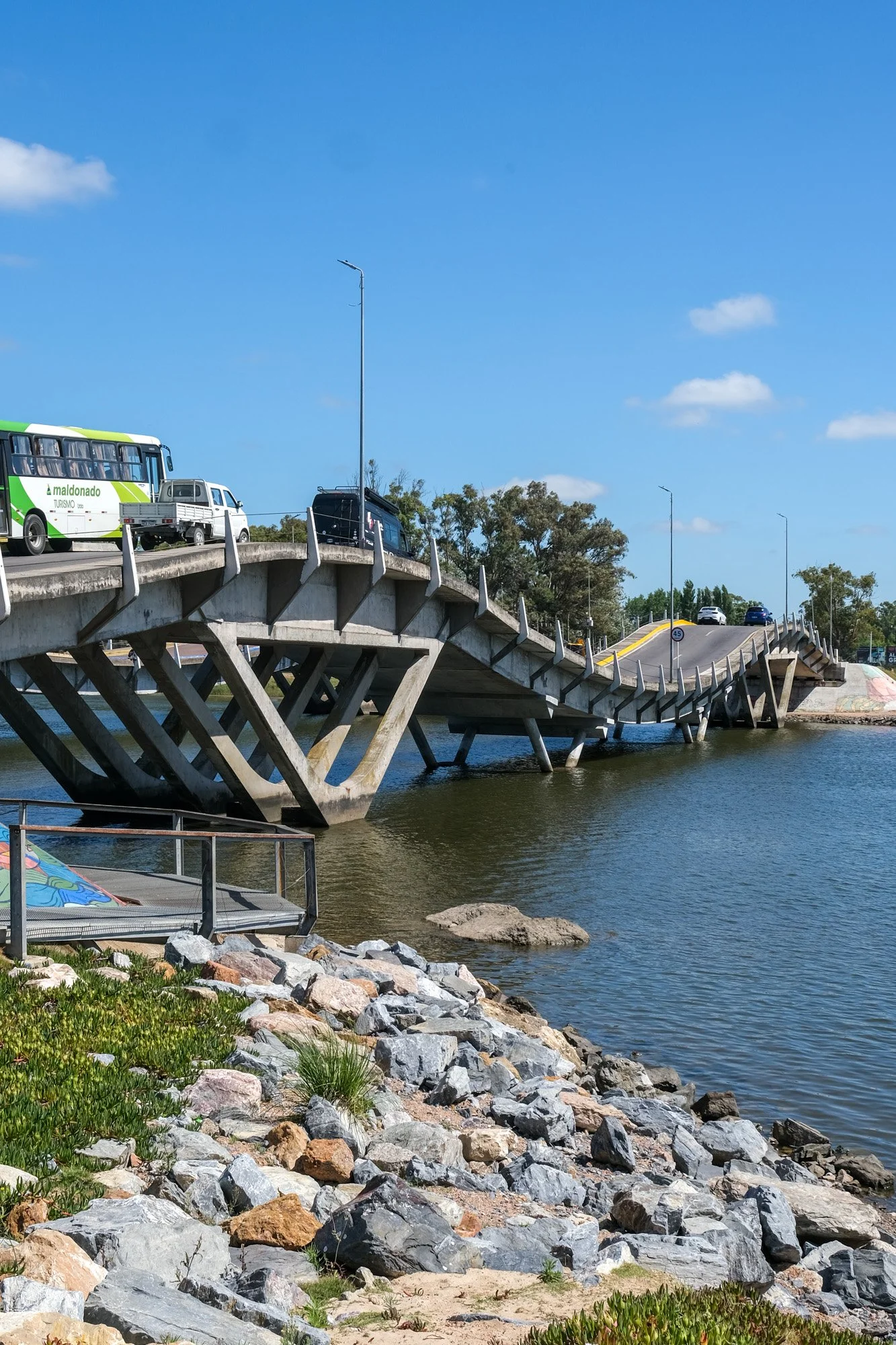
For more than half a century, the Lionel Viera Bridge has been an icon of Punta del Este.
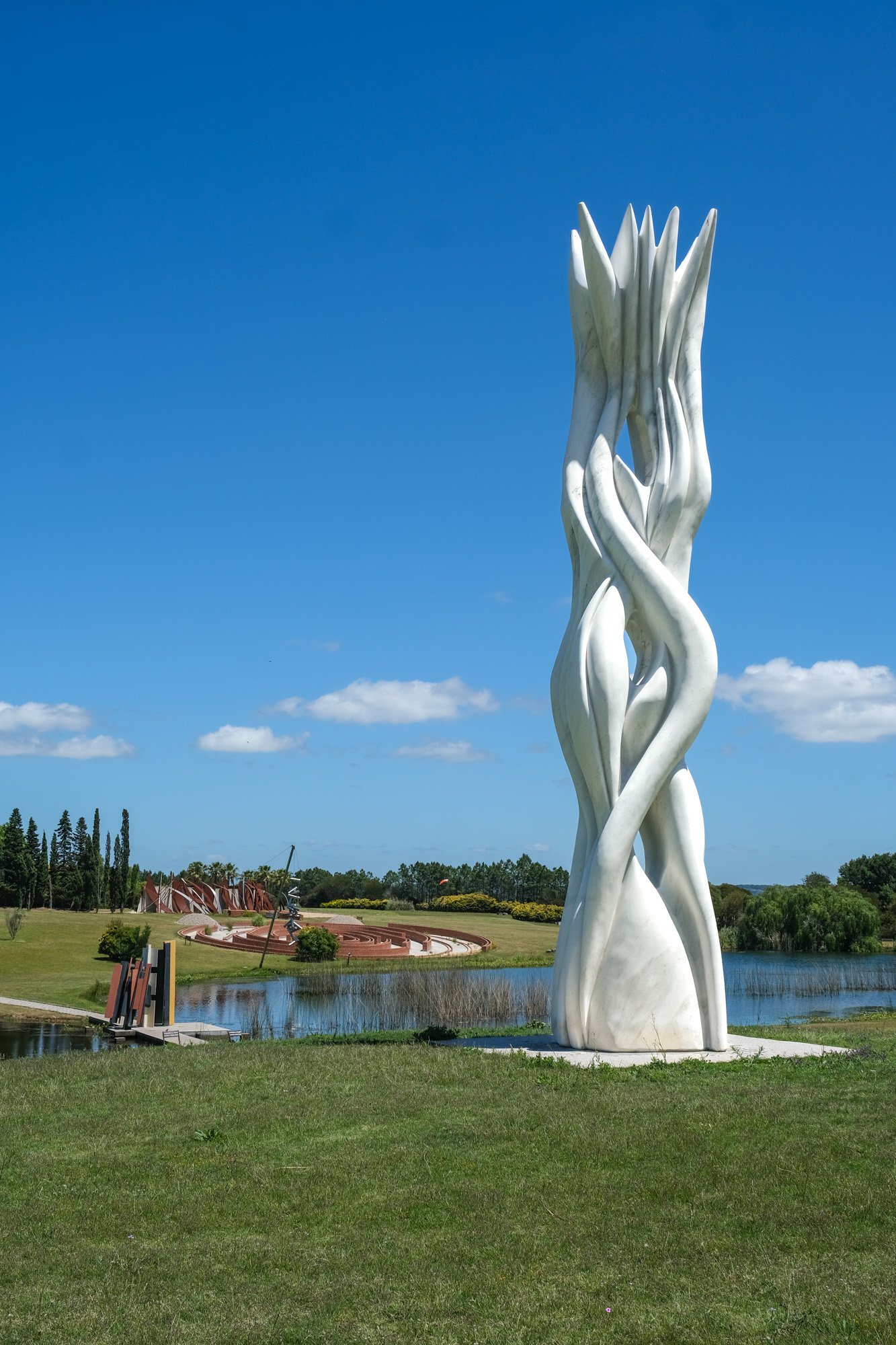
Pablo Atchugarry is most known for his monumental works in Carrara marble.
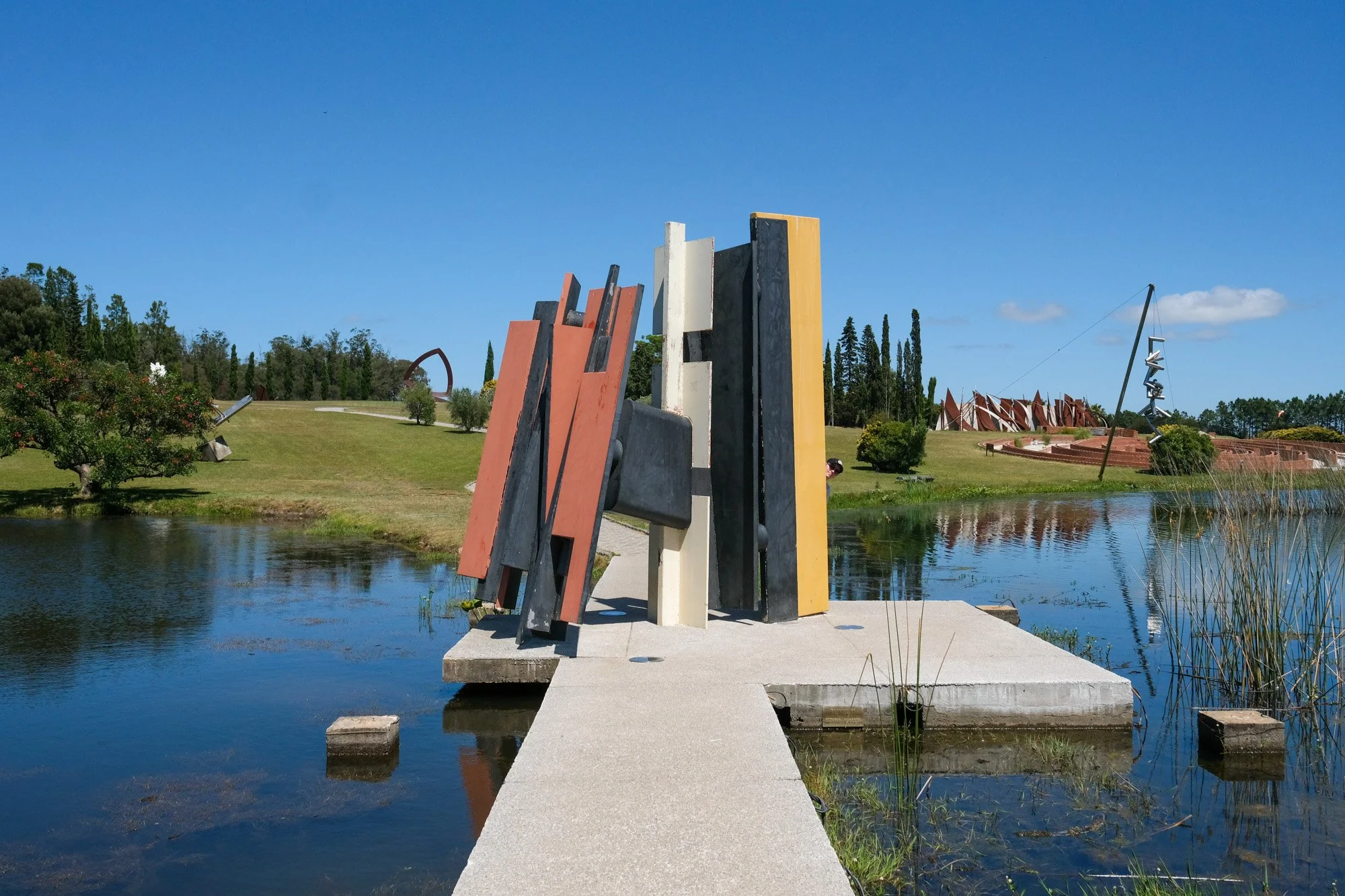
Atchugarry Museum of Contemporary Art.
Since our destination for the night was Colonia del Sacramento, we had quite a long drive ahead of us. Along the way, we stopped by Castillo Pittamiglio Las Flores, the home of eccentric Uruguayan architect Humberto Pittamiglio. Afterward, I felt compelled to return to Atlántida to revisit Eladio Dieste’s church and check out the town’s waterfront. As we were short on time, we stopped by the local McDonald’s to see if the succulent Uruguayan beef made the burger any tastier. Sadly, it tasted just like in the United States. I suppose we just had unrealistic expectations.
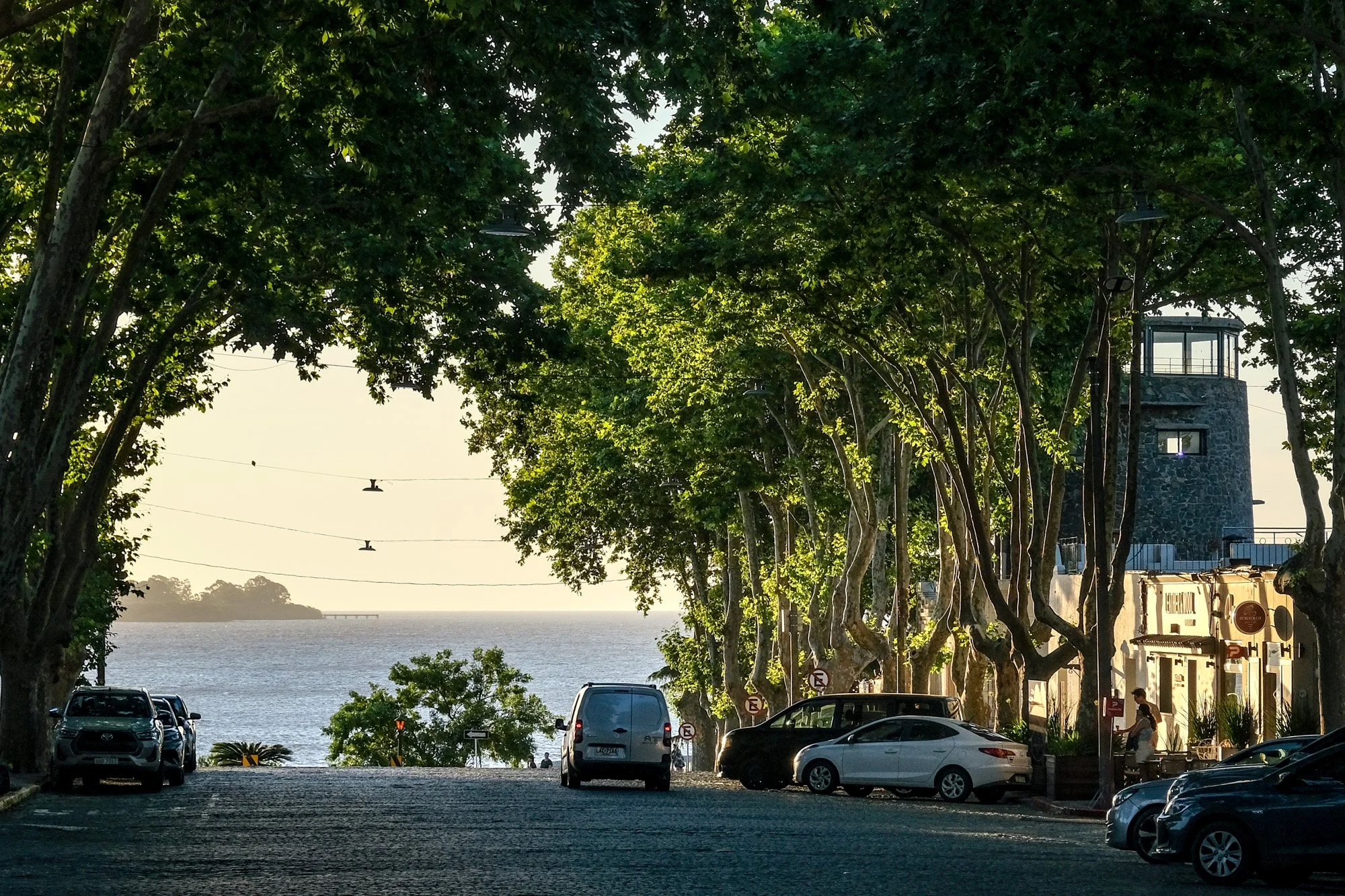
We were immediately taken by the beauty of Colonia’s sycamore trees.
It was already late afternoon before we arrived at Colonia del Sacramento. After checking into the lovely Hotel Casa Lahusen, we just had enough time to watch the sunset from the riverfront promenade. As we watched the sun slowly dip toward the horizon, we debated whether we could make out the skyline of Buenos Aires on the opposite shore. As much as we loved our time in Uruguay, we can’t help feeling guilty for not taking a short detour to Argentina. We ended our evening with an asada feast at Parrillada El Portón.
Day 8 - Colonia del Sacramento - Cerros de San Juan - Colonia del Sacramento
As the country’s most famous UNESCO World Heritage Site, Colonial del Sacramento is often the only place foreigners visit in Uruguay. The city’s pint-sized historic old town is a perfect encapsulation of Uruguay’s unique position as the buffer zone between competing empires. The picturesque lanes and colonial houses made this a popular day trip from Buenos Aires. However, I was surprised by just how compact it is and how few grand monuments there are. One could easily explore the entire historic district in just an hour. It was definitely not our favorite destination in Uruguay; spending two nights here was definitely an overkill.
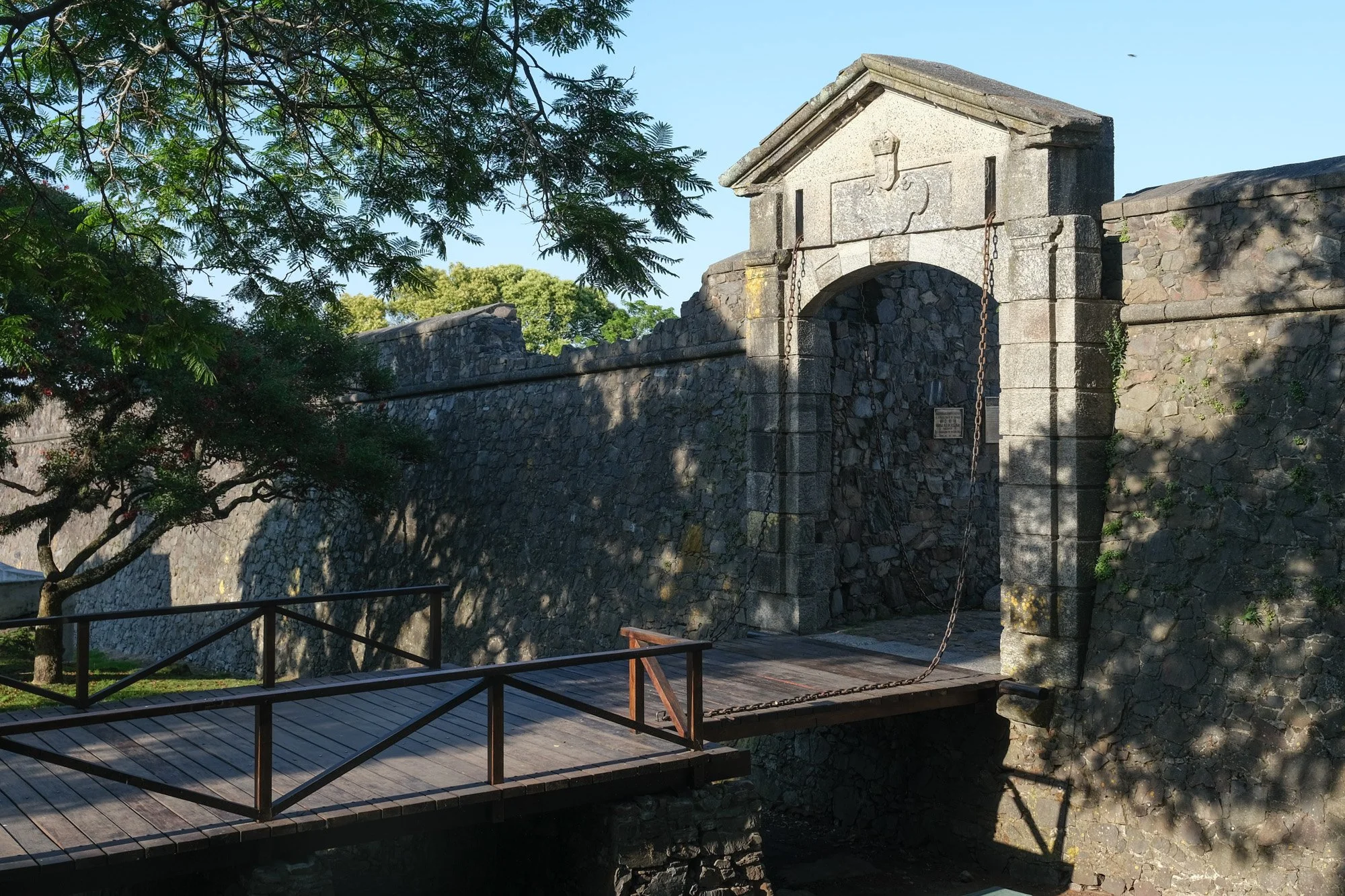
The reconstructed fortification of Colonia del Sacramento.
As the weather deteriorated in the afternoon, I made a last-minute trip to Bodega Los Cerros de San Juan, one of the most developed wineries in the area. This well-run winery has a beautiful tasting room and restaurant that seem to transport us back to the “old world.” Since the country has a zero-tolerance policy with alcohol, we opted for a pre-fix lunch menu, and Brian got to enjoy my wine. This was honestly one of our favorite meals in Uruguay. In hindsight, we should have arranged a taxi so that I could enjoy all the wine.
Back in Colonia, we found ourselves wandering the streets of the old town. It was surprising that half of the businesses were closed despite the number of tourists milling around. Before this trip, I always imagined Colonia would be the highlight. Instead, we found ourselves bored and wondered if we had missed something about this place. After another beautiful sunset, we had an interesting tapas dinner at La Taperia. We went to bed early, knowing that tomorrow would be a hectic day.
Day 9: Colonia del Sacramento - Fray Bentos - Nueva Helvecia - Montevideo
This is undoubtedly the most frantic travel day we have had in recent years. I had originally planned a two-night stay in the wine town of Carmelo. As much as I enjoyed our winery visit the day prior, I had something else in mind: why not take this opportunity to visit Uruguay’s third UNESCO World Heritage Site? A three-hour drive from Colonia, the small industrial city of Fray Bentos was the center of Uruguay’s meat-processing industry. For 117 years, Fray Bentos was one of the world’s largest suppliers of corned beef, earning it the nickname the “Kitchen of the World.” But given its distance, I was hesitant to tell Brian about the day’s plan. I was certain he would not be thrilled that we made such a long detour just to visit an abandoned meat factory.
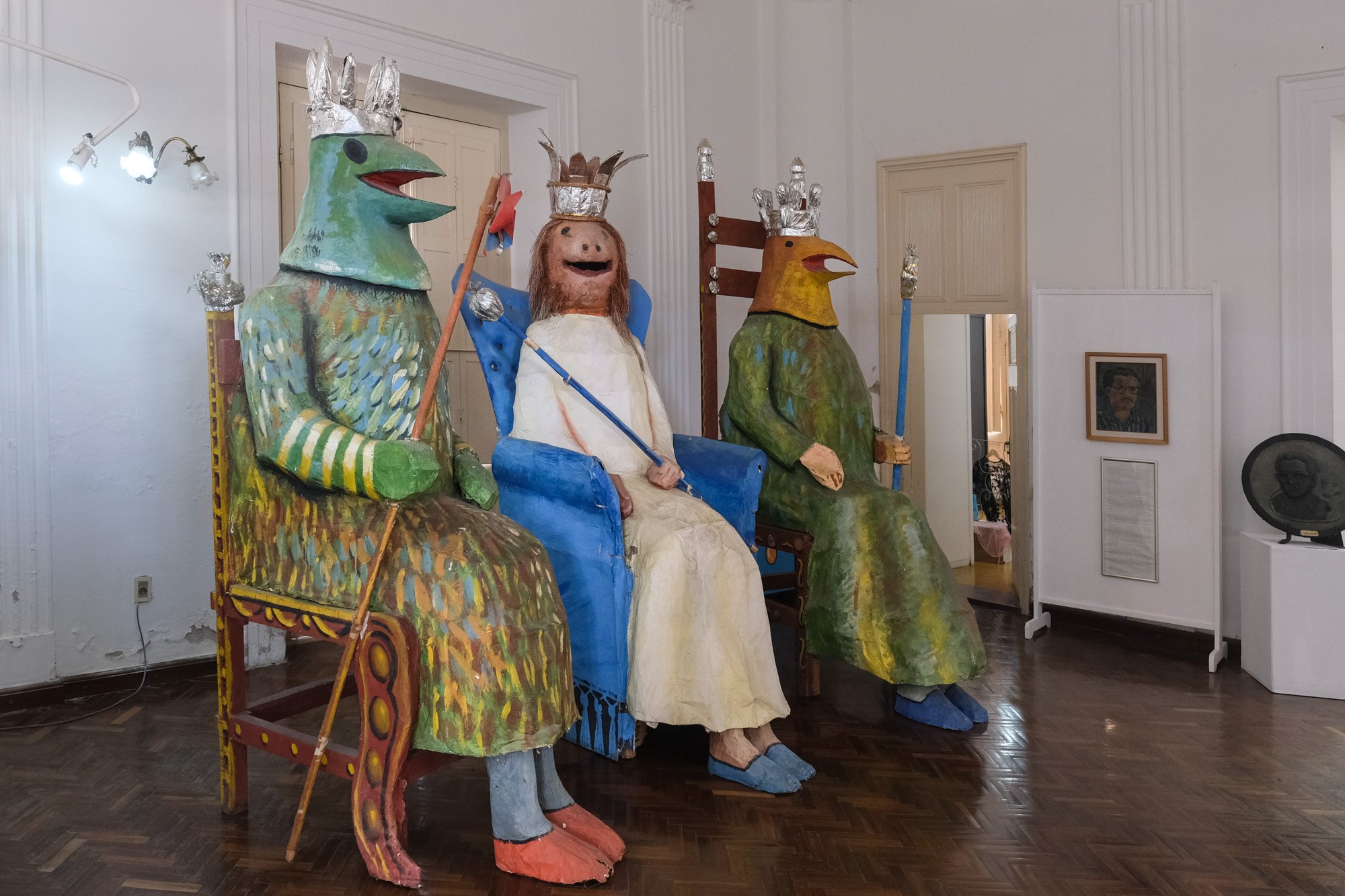
Solari Museum was an unexpected find.
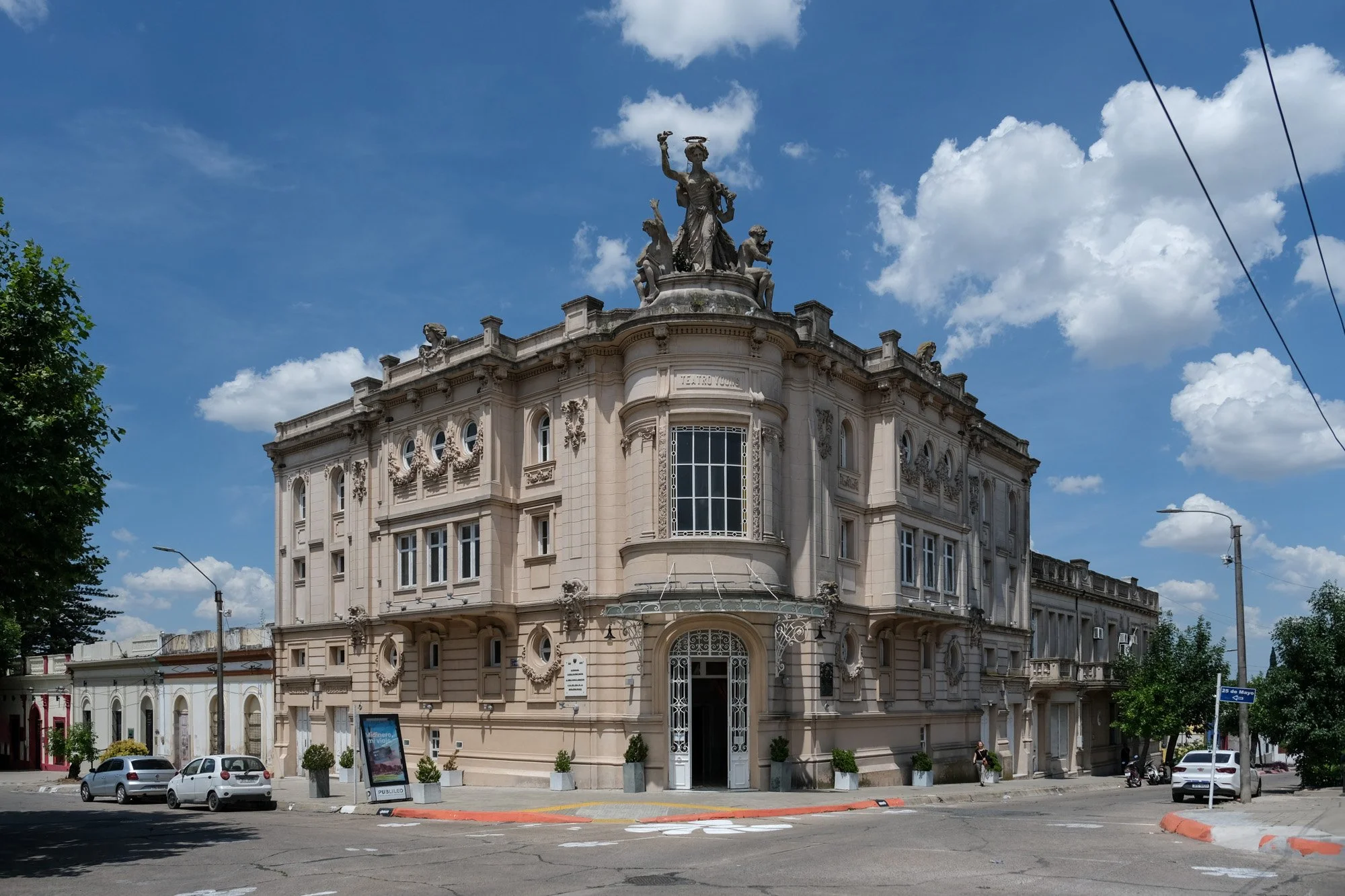
Miguel Young Theater.
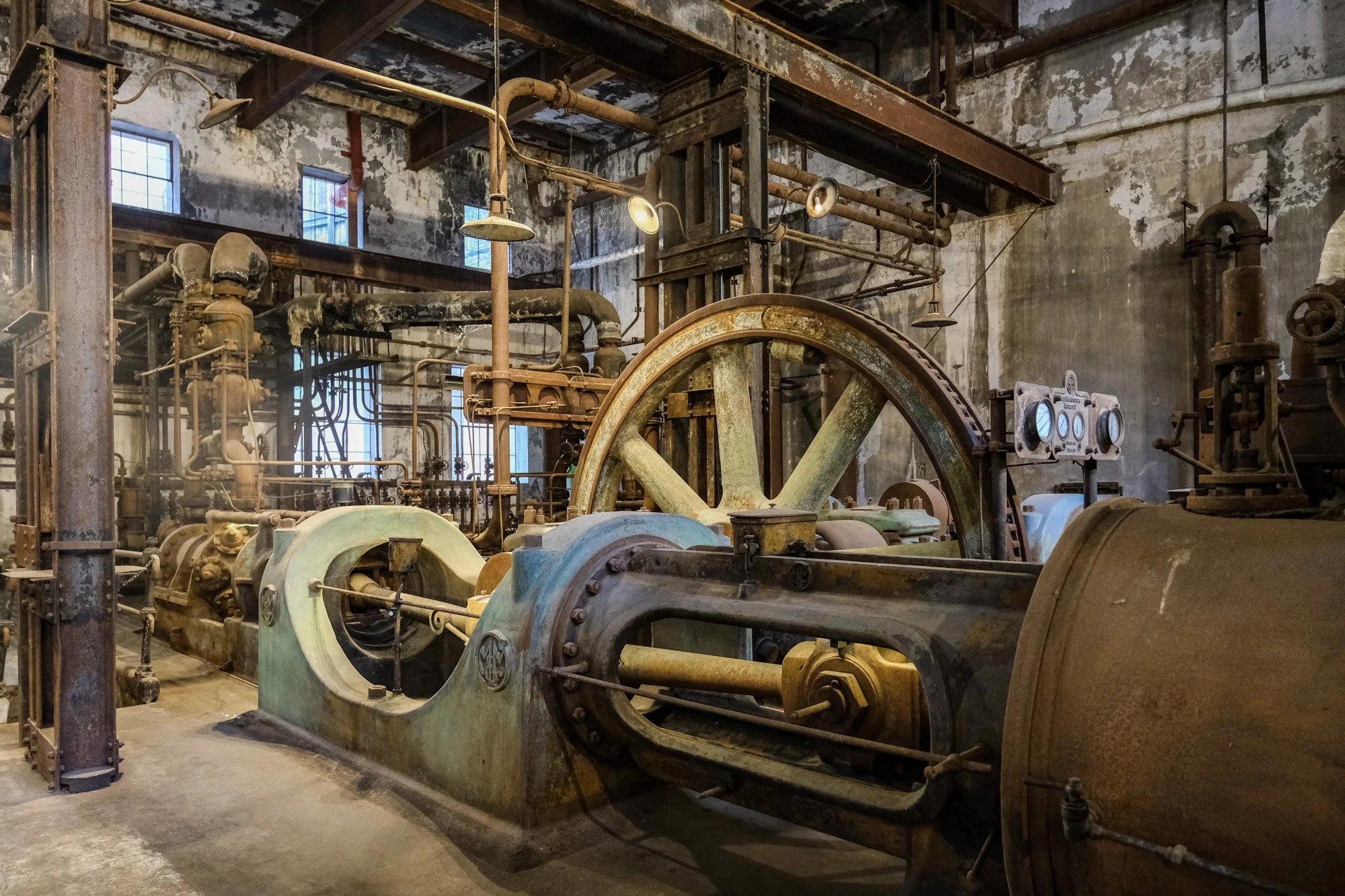
The former power station of the meatpacking plant.
Despite its prestigious UNESCO designation, there was very little information on the main museum, the Museum of Industrial Revolution, online for visitors. When we arrived around noon, we were told that the only English-language tour was at three o’clock, giving us a few hours to explore the downtown area. After a decent lunch at Resto Pizzería Al Timón, we spent an hour visiting a few of downtown’s main attractions, including Miguel Young Theater and the Solari Museum. The latter celebrates the works of the hometown artist of Fray Bentos, Luis Alberto Solari. He was best known for enigmatic anthropomorphic masks that are both fascinating and disconcerting.
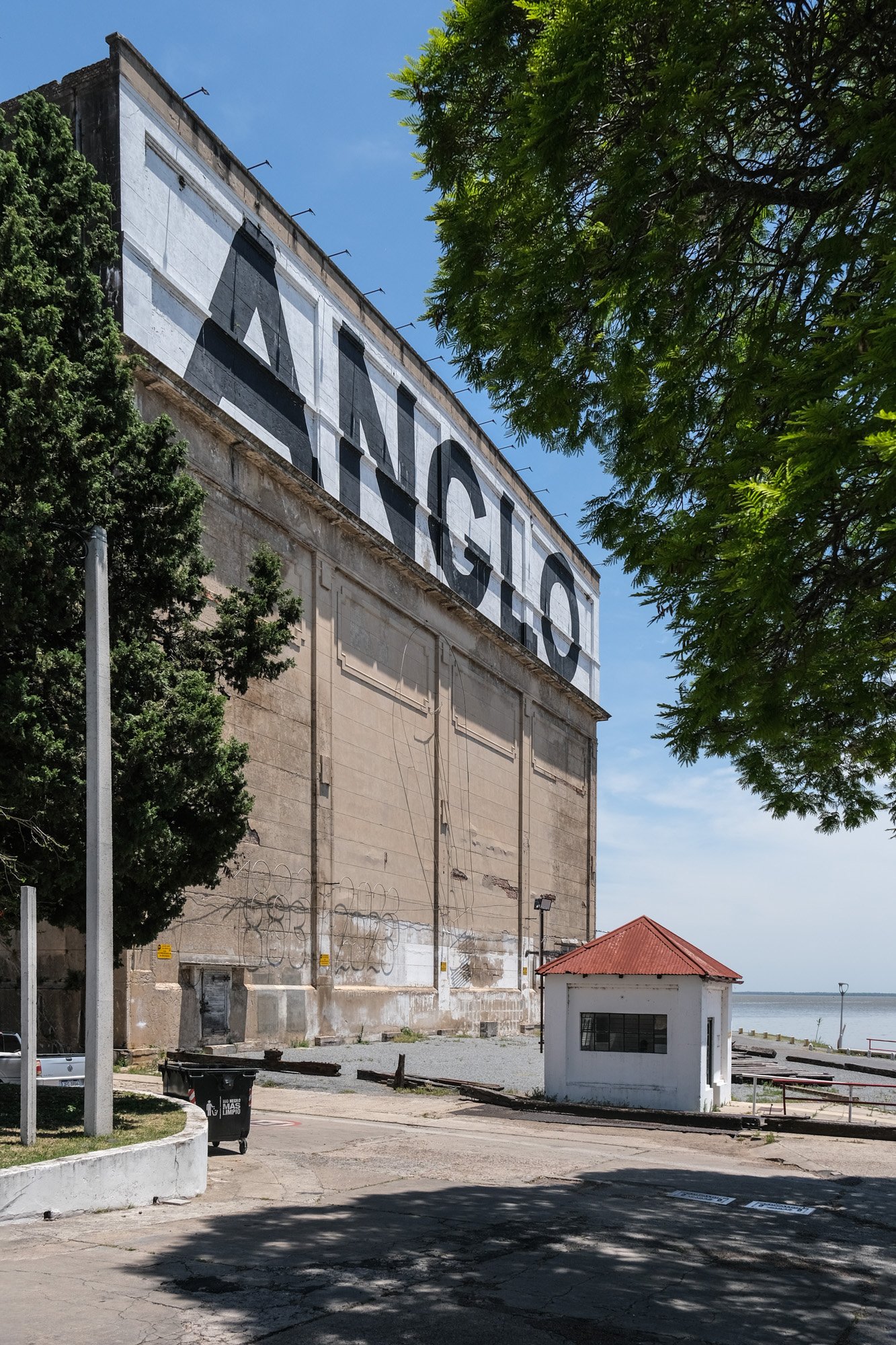
The abandoned factory of Fray Bentos.
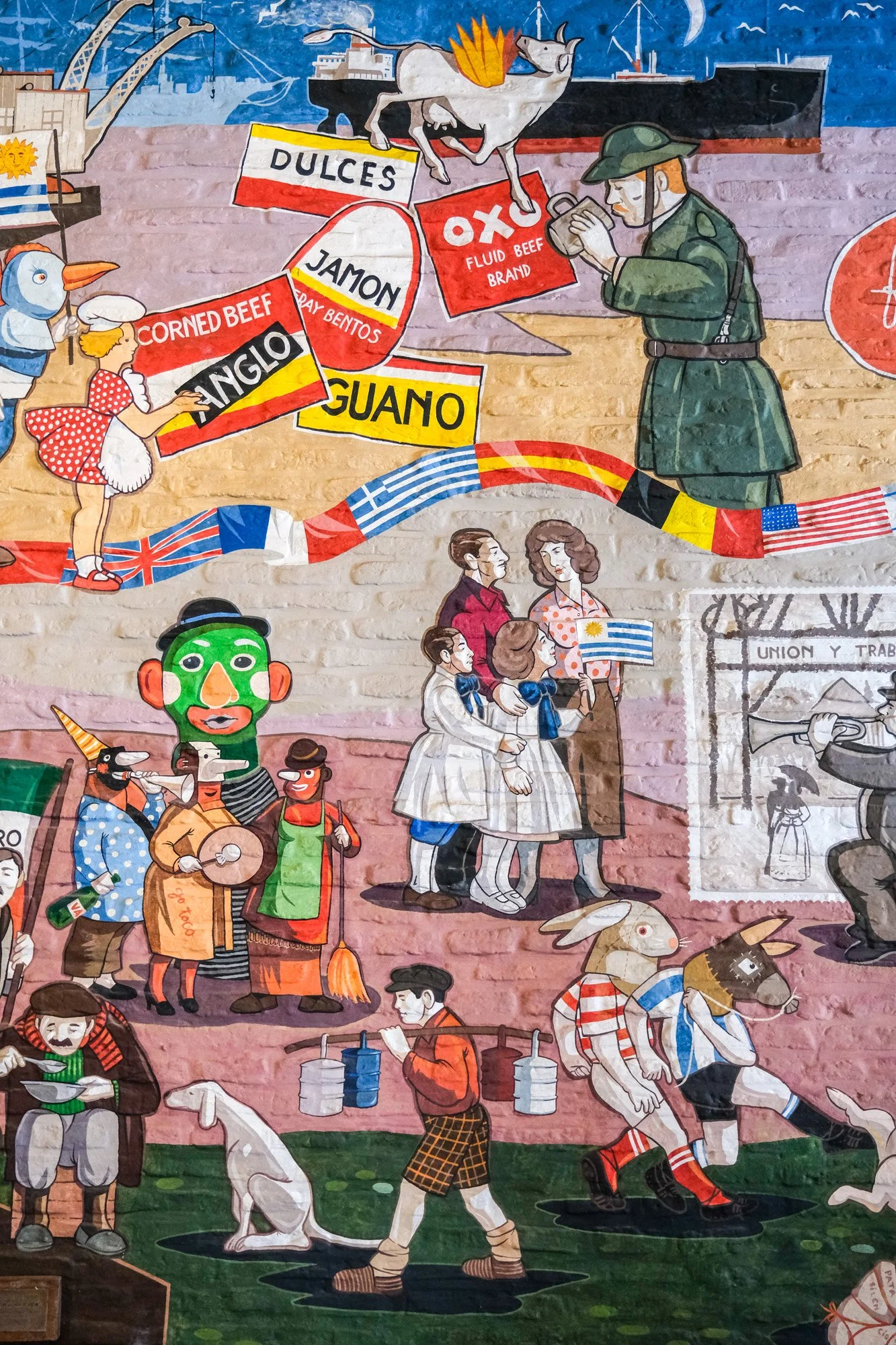
This may be my favorite wall mural of all time.
When we returned to the Museum of Industrial Revolution, we found out we were the only non-Spanish-speaking visitors of the day. We ended up having a private tour with the young German docent. The tour took us to the slaughterhouse, refrigeration depot, and the canning chamber. Of course, the factory itself was not particularly unique. It was the stories of globalization that made this place so captivating, especially in the age of isolationism. Much to my surprise, Brian actually really enjoyed the visit. Who knew an abandoned factory on the Argentinian border could be a highlight of this trip? I do wish they served the world-famous Fray Bentos canned meat pies at the museum cafeteria.
After the tour, we debated whether to spend a night in Fray Bentos. But having driven around town earlier, we much prefer a full day in Montevideo tomorrow, which means committing to another four and a half hours of driving. To break up the long journey, we had a minor detour to Nueva Helvecia. I first learned about this place from one of my favorite YouTube channels, Rare Earth. It is one of the best places to learn about European emigration to Uruguay, and it was a good stop to complement our visit to Fray Bentos.
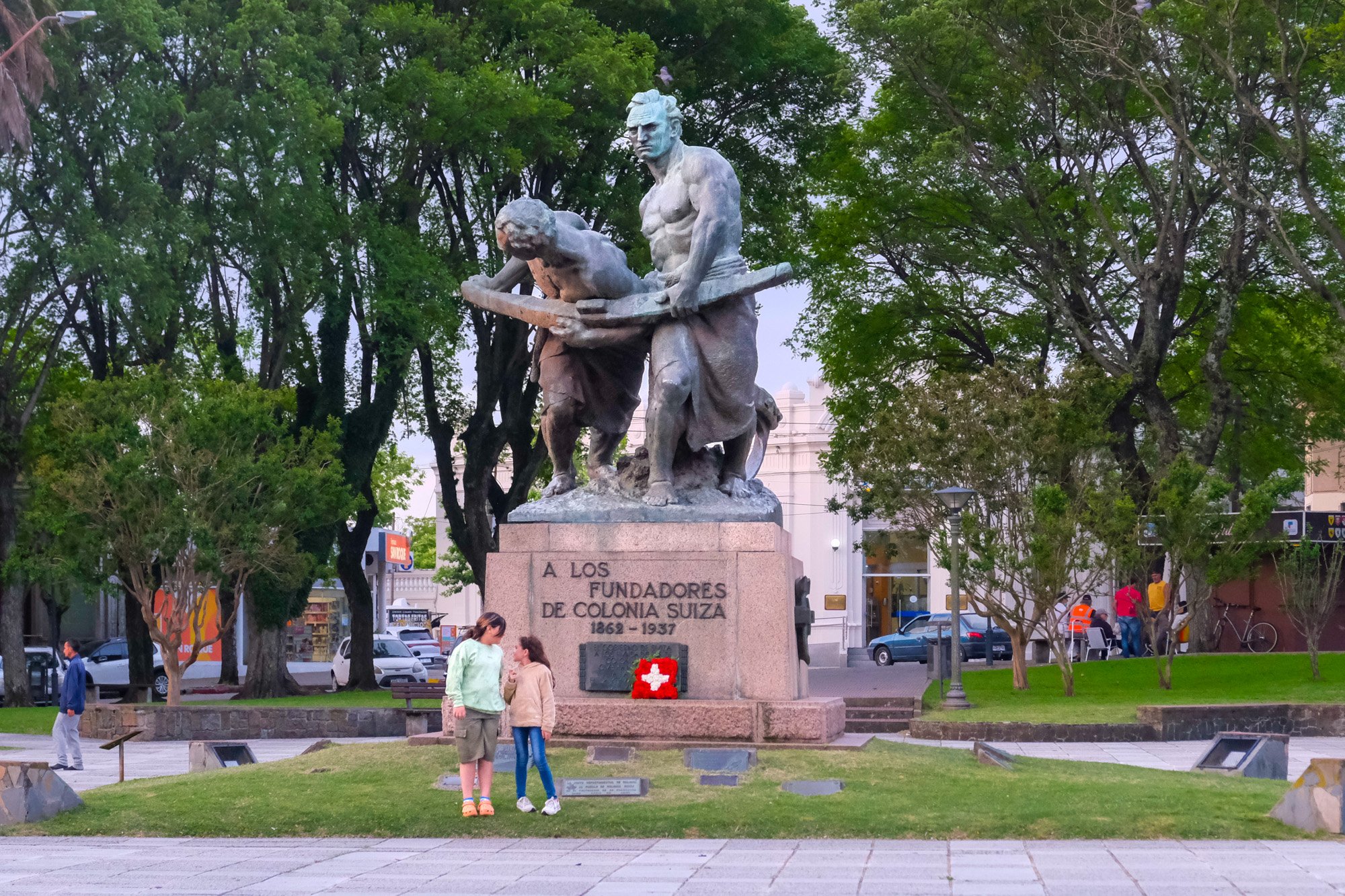
The central square in Nueva Helvecia proudly celebrates the Swiss heritage.
It was already late when we arrived at Montevideo. Since we previously stayed in Ciudad Vieja, we chose the upscale neighborhood of Punta Carretas to experience the “modern” side of Montevideo. Vivaldi Hotel may not be the most amazing hotel to end our trip, but its location could not be beat. We could see why most visitors prefer this area over the old town. We were too tired for a big meal at this moment, so we settled for a quick bite at the nearby Garage Burger Punta Carretas.
Day 10: Montevideo
Since this was our unexpected bonus day in Montevideo, I felt suddenly unprepared for a full day of sightseeing. After a mediocre hotel breakfast, our first stop was to get a good cup of coffee. No coffee in Montevideo is more photogenic than Ciudad Vieja’s Cafe La Farmacia, housed in the historic interior of an old pharmacy. The one historic monument we previously missed in Montevideo was Fortaleza del Cerro, a fortress that once protected Montevideo Bay. The fortress offers a splendid view of Montevideo's skyline and an excellent military museum.
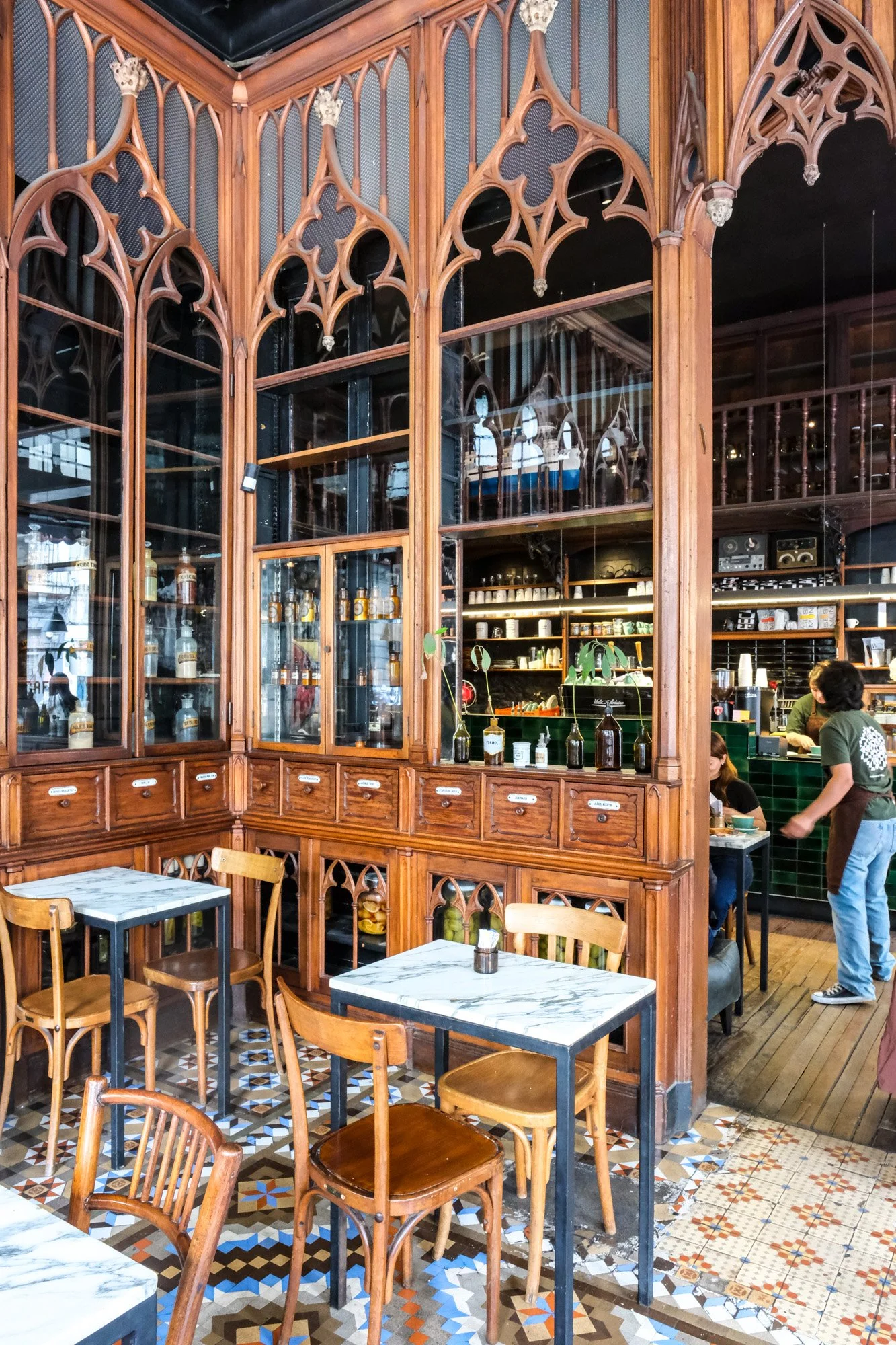
Cafe La Farmacia is Montevideo’s most photogenic espresso shop.
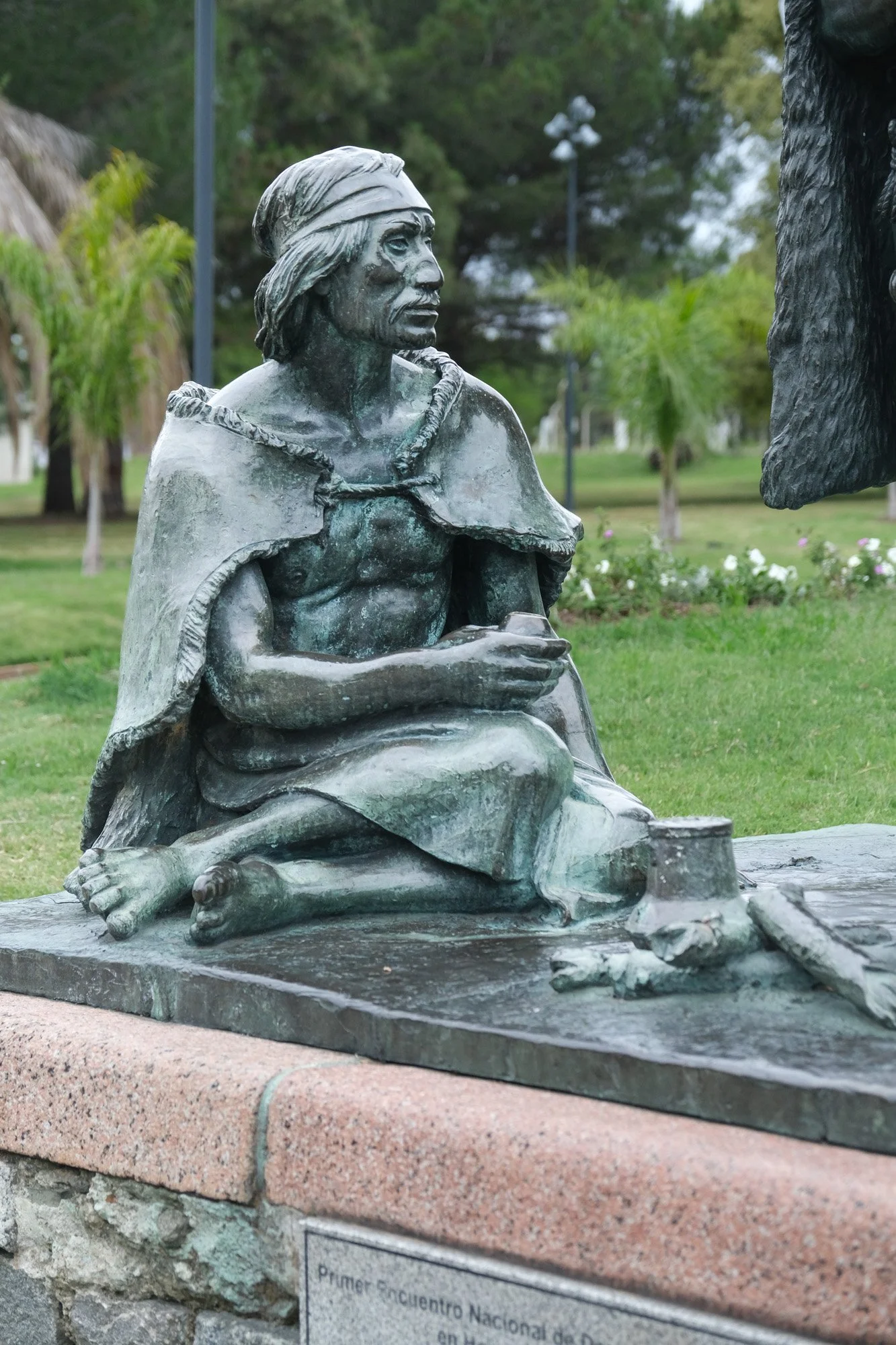
The Monument to the Last Charrúas.
True to Uruguay’s progressive policies, most of the city’s public museums have no admission fee. We took advantage of museum hopping. The first stop was the Montevideo Botanical Garden within Prado Park. But the highlight for me was the nearby Monument to the Last Charrúas, a tribute to Uruguay’s indigenous population, whose heritage is a subject of considerable debate nowadays. The best place to get a dose of the country’s history is probably Museo Juan Manuel Blanes. This small art museum is home to some of Uruguay’s most famous paintings, including some epic paintings on the founding of Uruguay by José Gervasio Artigas.
Being such a dreary day, we decided to treat ourselves to another epic lunch back at Cabaña Veronica. We probably should have sought out a less touristy parrilla, but in hindsight, it was just as good as we remembered it being a week ago. After our late lunch, Brian went back to the hotel to recover from the red meat coma. I used this time to visit the National Museum of Visual Arts. This unassuming museum looks like a semi-abandoned government building, but its collection of Uruguayan art is world-class and accessible. I only wish they had a decent gift shop to match.
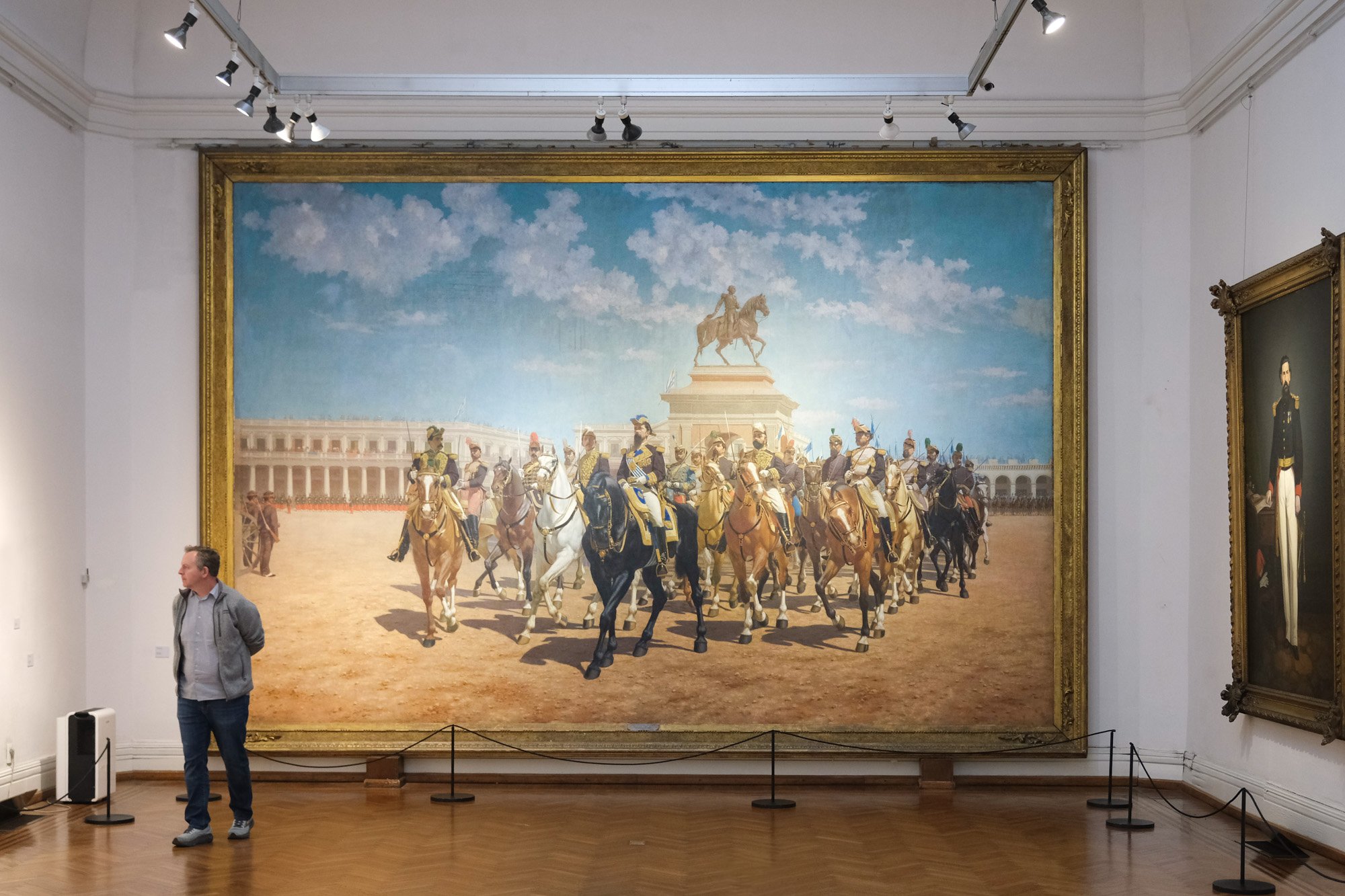
Most of us know so little about the history of Uruguay.
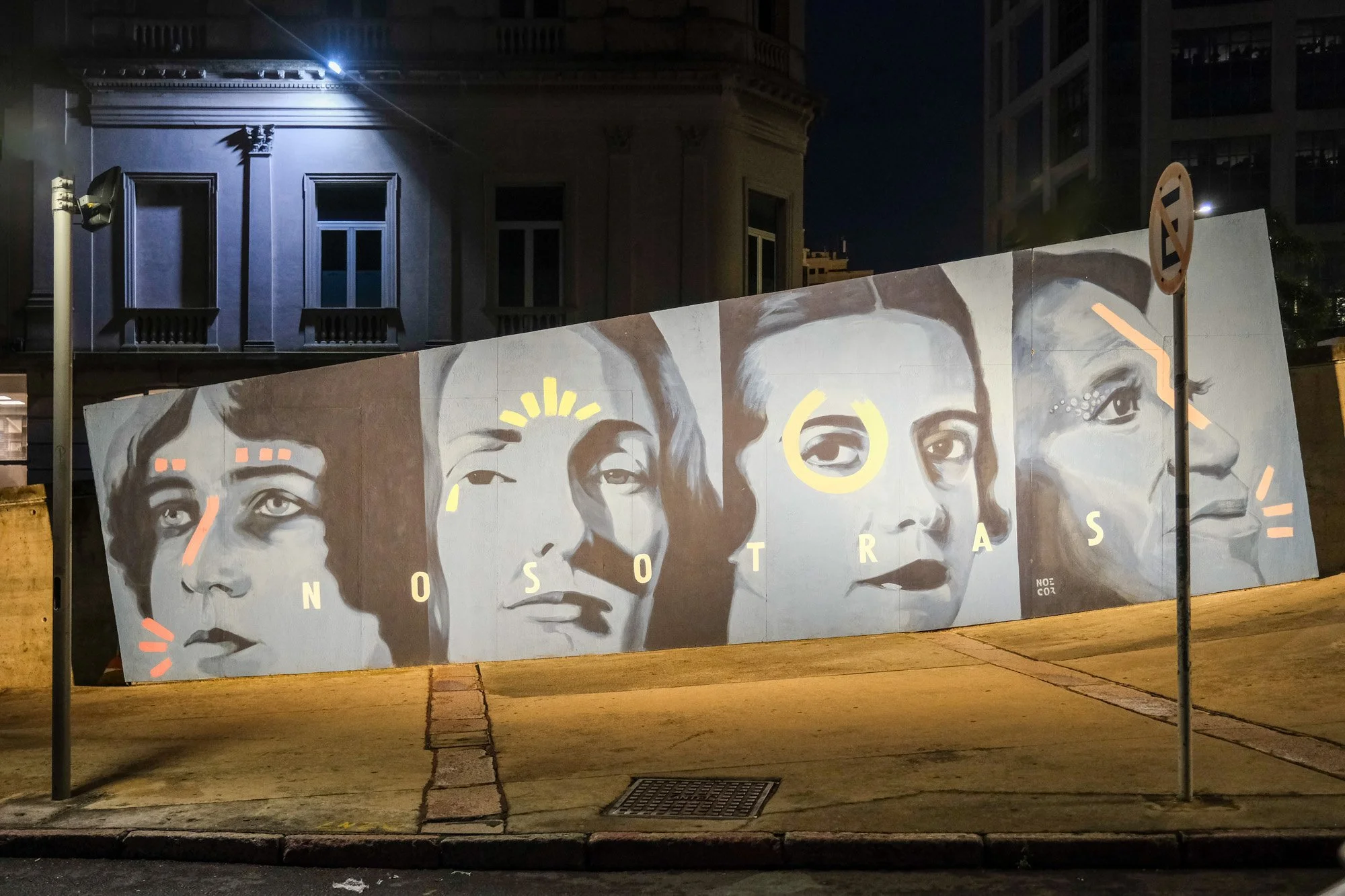
A mural outside of Solís Theatre.
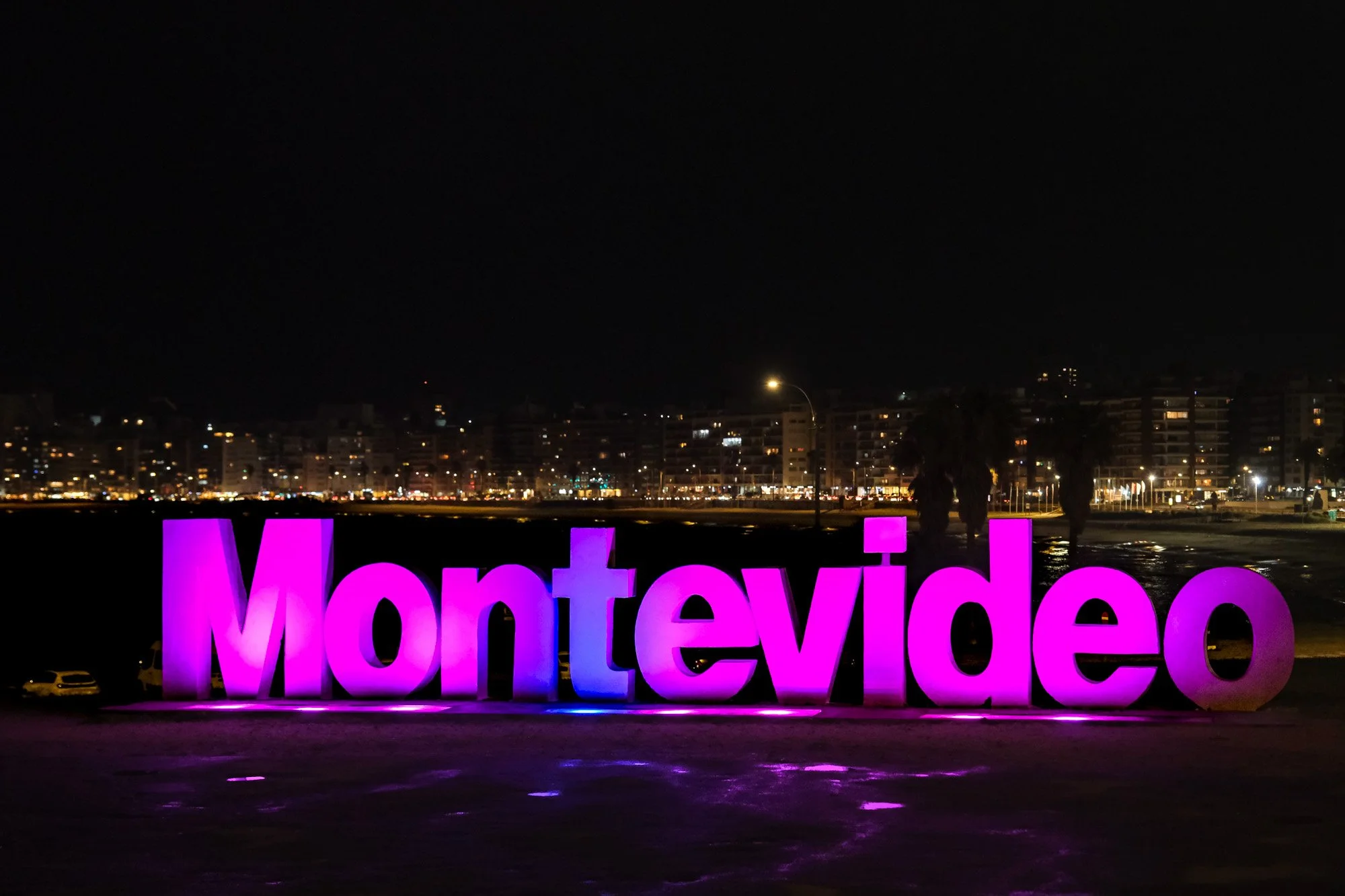
The iconic “Montevideo sign” at night.
For our last evening in the country, I initially reserved a table at Baar Fun Fun. This venerated venue has nightly shows of local music and tango performances. Because of its popularity, we had to arrive two hours early before the supposed showtime. It entailed a lot of additional expense for drinks and alcohol, and staying way past our bedtime. We ended up relinquishing our reservation and went for some last-minute shopping at the local grocery store. What did we buy, you ask? Well, what is more Uruguayan than alfajor and yerba maté? We capped our day with “pistachio cream” pizza at Rigor Pizza. which was a delightful surprise.
Day 11: Montevideo - Sao Paulo - New York
Even though we only had a few hours of sightseeing today, there is still plenty to see in Montevideo. Because it was Sunday, it meant it was time to get ourselves to the city’s famous Tristán Narvaja Street Market. Visiting this massive outdoor market was a time-honored tradition among Montevideans. The market spans a dozen city blocks, and the crowd was shoulder to shoulder. From fresh eggs to antique door knobs, spending an hour here gave us a glimpse into the workaday Montevideo. However, anybody with agoraphobia might find the market too overwhelming.
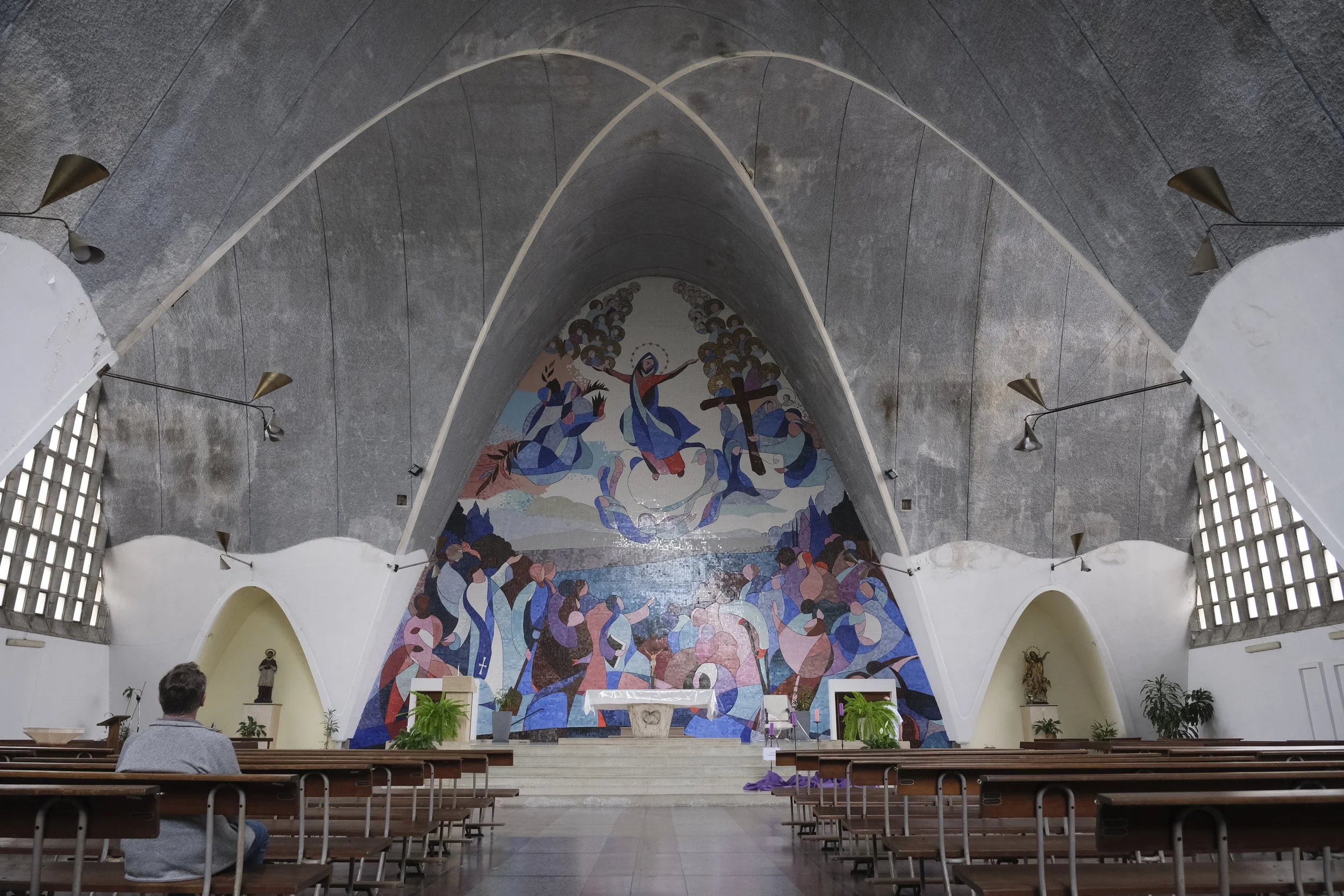
The Church of Saint Charles Borromeo and Our Lady of the Assumption.
After the market, we raced to check out two lesser-known works of Eladio Dieste: the Church of Saint Charles Borromeo and Our Lady of the Assumption, and the Montevideo Shopping Center. I hate to admit it, but I secretly like them better than his signature church in Atlántida. As an architect, I felt very privileged to have the opportunity to visit some of the world’s most underappreciated architectural gems. Before returning our rental car at the airport, we can’t help but indulge in one last asado at the charming La Tabla de Tere. We could not think of a better way to cap off our Uruguayan adventure.